
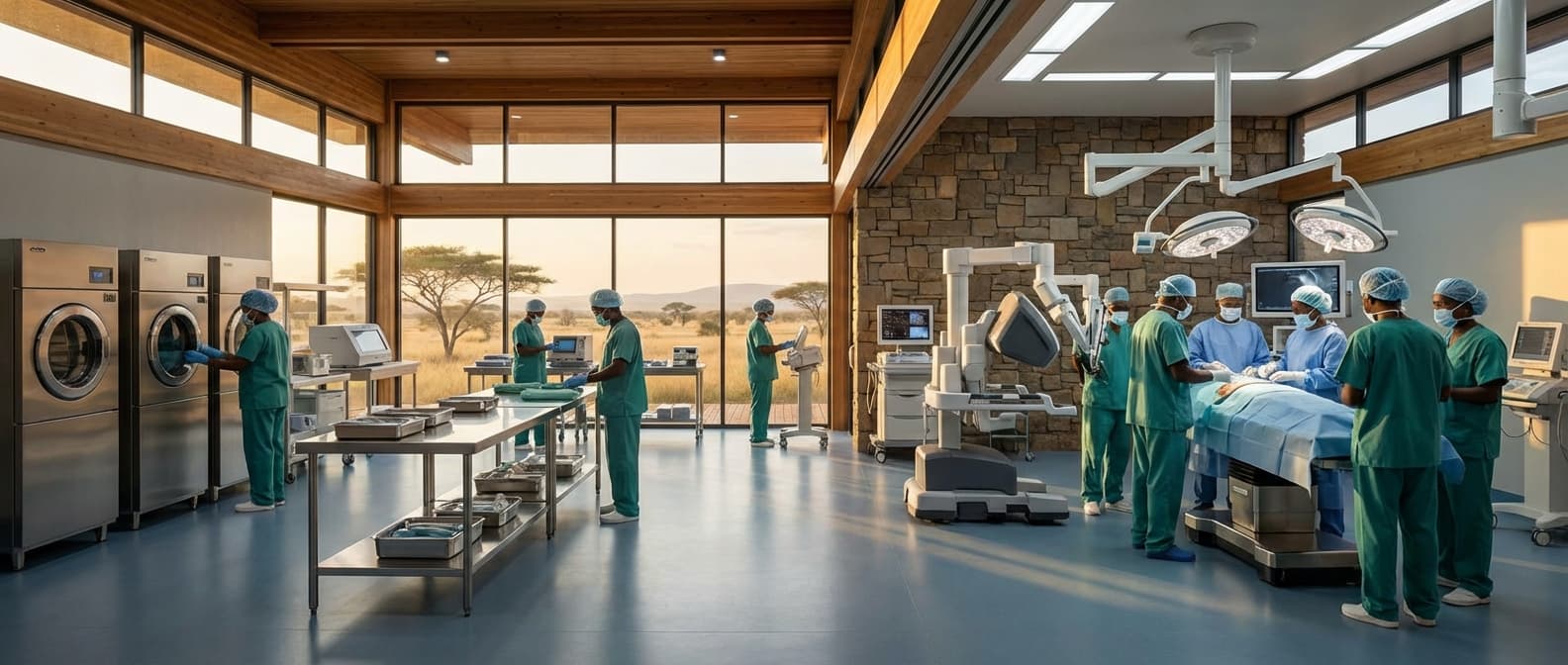
Medical Gas System Design & Installation in Seychelles
Engineering Excellence & Technical Support
Medical gas pipeline systems: O2, N2O, air, vacuum High-standard technical execution following OEM protocols and local regulatory frameworks.
National Hospital Medical Gas System Upgrade
Successfully designed and installed a state-of-the-art medical gas system for Seychelles' primary national hospital, enhancing patient safety and operational efficiency through the integration of modern pipeline distribution, alarm systems, and vacuum capabilities compliant with international healthcare standards.
Remote Island Clinic Gas Supply Solutions
Developed and implemented robust, climate-resilient medical gas solutions for several remote island clinics, overcoming logistical challenges and ensuring continuous supply of vital gases like oxygen and nitrous oxide through optimized generator and cylinder manifold configurations.
Regulatory Compliance & Commissioning Expertise
Led the comprehensive commissioning and certification process for all newly installed medical gas systems across various healthcare facilities in Seychelles, ensuring strict adherence to local and international safety regulations and providing thorough training to operational staff.
What Is Medical Gas System Design & Installation In Seychelles?
Medical Gas System Design & Installation in Seychelles refers to the comprehensive process of planning, engineering, and physically implementing piped medical gas systems within healthcare facilities. This service encompasses the selection and specification of appropriate medical gas sources (e.g., oxygen generators, liquid oxygen tanks, medical air compressors, vacuum pumps), distribution networks, control panels, alarm systems, and terminal units (outlets). The objective is to ensure a reliable, safe, and efficient supply of medical gases to patient care areas, operating rooms, intensive care units, and other critical locations. This includes adherence to stringent international standards and local regulations governing medical gas systems to prevent contamination, ensure purity, and maintain precise pressure and flow rates. The service involves detailed layout drawings, material selection, pipe sizing calculations, installation of piping, leak testing, purging, system commissioning, and handover with comprehensive documentation. Ongoing maintenance and validation of these systems are also critical components, though the primary focus of 'design and installation' is the initial build or significant renovation.
| Who Needs This Service? | Typical Use Cases | |
|---|---|---|
| Hospitals (Public and Private) | Operating Rooms (anesthesia, resuscitation) | |
| Clinics and Diagnostic Centers | Intensive Care Units (ventilatory support, oxygen therapy) | |
| Emergency Medical Services (EMS) Facilities | Emergency Rooms (resuscitation, oxygen administration) | |
| Specialized Medical Facilities (e.g., Dialysis Centers, Dental Clinics) | General Patient Wards (oxygen therapy, continuous positive airway pressure - CPAP) | |
| Government Health Ministries and Departments | Diagnostic Imaging Suites (e.g., MRI, CT scans - though less common for direct gas supply, related infrastructure might be considered) |
Key Components of Medical Gas System Design & Installation
- Medical Gas Source Equipment (e.g., O2 concentrators, compressors, vacuum pumps, vaporizers)
- Central Gas Manifolds and Changeover Systems
- Piping Networks (copper, stainless steel)
- Pressure Regulators and Control Panels
- Alarm Systems (audible and visual)
- Terminal Units (outlets, adapters)
- Gas Purification and Filtration Systems
- System Validation and Commissioning
- Documentation and Training
Who Needs Medical Gas System Design & Installation In Seychelles?
Ensuring the safe, reliable, and compliant provision of medical gases is paramount in healthcare facilities. In Seychelles, as in any nation striving for high-quality patient care, the design and installation of robust medical gas systems are critical. This service caters to a specific set of institutions and departments that depend on these essential life-support utilities.
| Customer Type | Key Departments/Areas of Need | Specific Medical Gas Requirements |
|---|---|---|
| Public Hospitals | ICU, OR, ED, Respiratory Therapy, General Wards | Oxygen (O2), Medical Air (MA), Vacuum (VAC), Nitrous Oxide (N2O), potentially Carbon Dioxide (CO2) & specialized mixes |
| Private Hospitals & Clinics | Surgical Suites, Recovery Rooms, Imaging Departments, Patient Rooms | Similar to Public Hospitals, with a focus on efficiency and advanced patient care technologies |
| Specialty Medical Centers | Cardiac Catheterization Labs, Pulmonary Function Labs, Chemotherapy Units | High-purity O2, specific gas mixtures for diagnostic procedures, potentially Helium (He) for MRI screening |
| Surgical Centers | Operating Rooms, Pre-operative & Post-operative Areas | O2, MA, VAC, N2O for anesthesia and patient support |
| Intensive Care Units (ICUs) | Patient Bedsides, Ventilator Support | Continuous high-flow O2, MA for mechanical ventilation, VAC for suctioning |
| Operating Rooms (ORs) | Anesthesia Machines, Surgical Suction | O2, MA, VAC, N2O are critical for patient safety and surgical procedures |
Target Customers in Seychelles Requiring Medical Gas System Design & Installation:
- Public Hospitals
- Private Hospitals & Clinics
- Specialty Medical Centers (e.g., Cardiac, Pulmonary, Oncology)
- Surgical Centers
- Intensive Care Units (ICUs)
- Operating Rooms (ORs)
- Emergency Departments (EDs)
- Anesthesia Departments
- Respiratory Therapy Departments
- Dialysis Centers
- Ambulance Services (for onboard gas systems)
- Veterinary Hospitals (though often a separate, specialized design)
Medical Gas System Design & Installation Process In Seychelles
This document outlines the typical workflow for the design and installation of a medical gas system in Seychelles, from the initial inquiry to the final execution and handover. The process involves several key stages, each with specific activities and considerations tailored to the local regulatory environment and project requirements.
| Stage | Key Activities | Key Deliverables/Outcomes | Seychellois Considerations |
|---|---|---|---|
| Client engagement, understanding needs, site visit, preliminary scope definition. | Project brief, initial requirements document, preliminary site assessment report. | Understanding Ministry of Health (MOH) requirements, local hospital standards. |
| Technical assessment, development of design options, cost estimation, proposal preparation. | Feasibility report, conceptual design drawings, project proposal. | Alignment with national health infrastructure development plans. |
| P&IDs, layout drawings, equipment specification, MTO, compliance checks. | Detailed design drawings, equipment specifications, material list, design report. | Adherence to Seychellois building codes, environmental regulations, MOH approval processes. |
| Permitting, sourcing materials and equipment, quality control. | Procured materials, installed equipment, import/customs clearances. | Compliance with import regulations, potential for local sourcing where feasible. |
| Site preparation, pipeline installation, equipment fitting, safety management. | Installed medical gas system infrastructure, completed construction work. | Compliance with on-site safety regulations, coordination with other site contractors. |
| Pressure testing, purging, cleaning, purity testing, flow/pressure testing, alarm testing, system validation. | Test reports, commissioning certificates, validated system performance data. | Requirement for certified testing personnel, potential MOH site inspections. |
| Staff training, provision of documentation, final inspection and acceptance. | Trained personnel, as-built drawings, O&M manuals, warranty, client acceptance. | Ensuring local staff are competent to operate and maintain the system. |
| Ongoing support, preventative maintenance, periodic validation. | Service agreements, maintenance records, ongoing system reliability. | Availability of skilled technicians for ongoing support. |
Medical Gas System Design & Installation Process in Seychelles
- 1. Initial Inquiry & Consultation:
- Client (hospital, clinic, etc.) expresses interest and provides basic project details.
- Initial meetings to understand scope, requirements, existing infrastructure, and budget.
- Site visit to assess current conditions and gather preliminary data.
- Preliminary discussions on system type (e.g., piped gases, cylinder manifold), gas types, and compliance standards.
- Information exchange regarding Seychellois building codes and healthcare regulations.
- 2. Feasibility Study & Conceptual Design:
- Detailed assessment of project viability and technical feasibility.
- Development of conceptual design options, including system layout, equipment selection, and preliminary cost estimates.
- Identification of potential challenges and risks, and development of mitigation strategies.
- Preparation of a detailed proposal outlining scope of work, deliverables, timeline, and cost.
- 3. Detailed Design & Engineering:
- System Schematics & P&IDs: Creation of detailed Piping and Instrumentation Diagrams (P&IDs) for all medical gas lines, specifying pipe materials, sizes, valves, and connections.
- Layout Drawings: Development of detailed floor plans showing the routing of medical gas pipelines, locations of outlets, alarms, central plant, and ancillary equipment.
- Equipment Specification: Selection and specification of all necessary equipment, including compressors, vacuum pumps, manifolds, regulators, alarms, and shut-off valves, adhering to international and local standards.
- Material Take-off (MTO): Preparation of a comprehensive list of all materials and components required for the installation.
- Compliance Review: Ensuring the design complies with relevant Seychellois regulations (e.g., Ministry of Health guidelines, building permits) and international standards (e.g., HTM 02-01, NFPA 99).
- 3D Modeling (Optional): Advanced visualization for complex installations.
- 4. Procurement & Material Sourcing:
- Obtaining necessary permits and approvals from relevant Seychellois authorities.
- Sourcing and procuring all specified materials and equipment from approved suppliers.
- Quality control checks on all incoming materials and equipment.
- 5. Installation & Construction:
- Site Preparation: Clearing the installation area, ensuring access, and establishing safety protocols.
- Pipeline Installation: Installation of medical gas pipelines according to the approved design drawings, ensuring proper welding, joining, and support.
- Equipment Installation: Installation of central plant equipment (compressors, vacuum pumps, manifolds), alarms, and shut-off valves.
- Medical Gas Outlet Installation: Installation of medical gas outlets in patient rooms and critical care areas.
- Testing & Commissioning (Pre-Installation): Individual component testing before integration.
- 6. Testing, Commissioning & Validation:
- Pressure Testing: Pressurizing pipelines to verify integrity and detect leaks.
- Purging & Cleaning: Thoroughly purging and cleaning all pipelines to remove contaminants.
- Gas Purity Testing: Verifying the purity of the supplied medical gases at various points in the system.
- Flow & Pressure Testing: Ensuring correct flow rates and pressures at all outlets.
- Alarm System Testing: Verifying the functionality of all alarm systems.
- System Validation: Comprehensive testing to ensure the entire system operates as designed and meets all performance criteria.
- Documentation: Recording all test results and commissioning data.
- 7. Training & Handover:
- Staff Training: Providing comprehensive training to hospital maintenance staff on system operation, maintenance, troubleshooting, and emergency procedures.
- Documentation Handover: Providing as-built drawings, O&M manuals, test certificates, and warranty information to the client.
- Final Inspection & Acceptance: Joint inspection by the client and contractor to confirm satisfactory completion and acceptance of the system.
- 8. Post-Installation Support & Maintenance:
- Ongoing technical support and troubleshooting.
- Scheduled preventative maintenance services.
- Annual or bi-annual system validation and testing.
Medical Gas System Design & Installation Cost In Seychelles
Designing and installing a medical gas system in Seychelles involves a range of costs influenced by several key factors. These systems are critical for healthcare facilities, providing essential gases like oxygen, medical air, nitrous oxide, and vacuum. The pricing is not fixed and can fluctuate significantly based on the project's complexity, the size of the facility, the quality of materials used, and the specific requirements of the healthcare provider. Local availability of specialized technicians and equipment also plays a role in the overall expense. It's important for healthcare providers to obtain detailed quotes from experienced and certified medical gas system installers operating within or familiar with the Seychelles context to ensure compliance with international standards and local regulations, while managing budget effectively.
| Component/Service | Estimated Cost Range (SCR) | Notes |
|---|---|---|
| Design & Engineering (per facility) | 50,000 - 250,000+ | Varies with facility size and complexity. |
| Medical Grade Piping & Fittings (per outlet) | 2,000 - 8,000+ | Depends on material, gas type, and installation difficulty. |
| Gas Outlets (each) | 500 - 2,500+ | Includes faceplate, valve, and rough-in. |
| Alarm & Monitoring Systems | 15,000 - 100,000+ | Range depends on the number of parameters monitored and features. |
| Bulk Gas Storage Tanks (Oxygen/Nitrous Oxide) | 100,000 - 500,000+ | Initial purchase/lease cost, excluding gas supply. |
| Gas Manifold Systems (Cylinder/Bulk) | 20,000 - 150,000+ | For switching between cylinders or primary/secondary sources. |
| Installation Labor (per technician, per day) | 1,000 - 3,000+ | Includes skilled trades, potentially with travel/accommodation. |
| Testing & Commissioning | 10,000 - 75,000+ | Essential for safety and regulatory compliance. |
| Project Management | 5% - 15% of total project cost | Covers planning, execution, and oversight. |
| Total System Installation (Small Clinic) | 200,000 - 800,000 | Excludes major bulk storage; for a few outlets. |
| Total System Installation (Medium Hospital Wing) | 1,000,000 - 5,000,000+ | Includes multiple gases, alarms, and moderate piping runs. |
Key Pricing Factors for Medical Gas System Design & Installation in Seychelles
- Facility Size and Scope: The total number of outlets, the distance of pipe runs, and the complexity of the system directly impact material and labor costs.
- Type and Quantity of Gases: Systems requiring multiple gases (e.g., oxygen, medical air, nitrous oxide, vacuum) will be more expensive than single-gas systems. The quantity of gas storage (cylinders vs. bulk tanks) also affects cost.
- Material Quality and Standards: Using medical-grade piping, fittings, and equipment that meet international standards (e.g., NFPA 99, ISO) is essential but can be more costly.
- System Complexity: Features like alarm systems, monitoring equipment, shut-off valves, and emergency backup systems add to the overall expense.
- Location within Seychelles: Accessibility to the installation site can influence transportation costs for materials and personnel, especially for more remote islands.
- Design and Engineering Fees: Professional design and engineering services are crucial for a compliant and efficient system and contribute to the total cost.
- Installation Labor: The cost of skilled and certified technicians experienced in medical gas systems, including their wages and any necessary travel/accommodation.
- Testing and Commissioning: Thorough testing and commissioning of the system to ensure safety and functionality are mandatory and incur separate costs.
- Project Timeline and Urgency: Expedited projects may incur higher costs due to overtime or the need to secure scarce resources quickly.
- Regulatory Compliance and Approvals: Costs associated with obtaining necessary permits and ensuring the system meets local health and safety regulations.
Affordable Medical Gas System Design & Installation Options
Designing and installing a medical gas system can be a significant investment for healthcare facilities. Fortunately, several affordable options exist, focusing on value bundles and strategic cost-saving measures. These approaches aim to provide essential medical gas infrastructure without compromising quality or compliance. Understanding the available choices allows facilities to make informed decisions that balance budget constraints with critical patient care needs.
| Value Bundle Component | Description | Cost-Saving Strategy | Benefit |
|---|---|---|---|
| Pre-engineered Packages | Bundled kits containing essential components like regulators, valves, and outlets for specific room types or service points. | Bulk purchasing, streamlined procurement, reduced design time. | Faster installation, predictable costs, simplified ordering. |
| Integrated Generation & Storage Solutions | Combined systems for on-site medical air or oxygen generation alongside storage tanks. | Reduced reliance on external suppliers, potential for lower long-term operational costs, efficient use of space. | Increased self-sufficiency, hedging against gas price fluctuations, consistent supply. |
| Phased Installation Plans | Breaking down the project into manageable stages, allowing for deployment based on budget availability and facility needs. | Spreading capital expenditure over time, prioritizing critical areas first. | Improved cash flow management, reduced immediate financial burden, flexibility in project execution. |
| Standardized Components & Materials | Utilizing widely available, industry-standard components and materials rather than custom-made parts. | Lower material costs due to economies of scale, easier sourcing and replacement. | Reduced material expenses, simplified maintenance and repairs, faster availability of spare parts. |
| Partnerships with Experienced Providers | Collaborating with medical gas system designers and installers who offer comprehensive service packages, including design, installation, and initial training. | Streamlined project management, reduced risk of design errors, bundled pricing for multiple services. | Consolidated project oversight, potential for discounts on combined services, ensured expertise. |
Key Considerations for Affordable Medical Gas System Design & Installation
- Needs Assessment: Accurately determining the required medical gases (e.g., oxygen, medical air, vacuum, nitrous oxide) and their distribution points is crucial to avoid overspending on unnecessary capacity.
- Scalability: Opting for systems that can be easily expanded in the future can prevent costly retrofits and upgrades as the facility grows.
- Technology Selection: Evaluating different technologies for gas generation, storage, and distribution can reveal more cost-effective solutions.
- Modular Design: Systems designed with modular components can simplify installation and maintenance, potentially reducing labor costs.
- Compliance and Standards: Ensuring the design and installation adhere to all relevant healthcare codes and standards (e.g., NFPA 99) is non-negotiable, even when seeking affordability. This prevents costly rework and potential fines.
- Long-Term Maintenance Costs: Considering the ongoing operational and maintenance expenses of different system options is vital for total cost of ownership.
Verified Providers In Seychelles
In Seychelles, ensuring you're engaging with verified healthcare providers is paramount for your well-being. Franance Health stands out as a leading entity in this regard, upholding rigorous credentialing processes that guarantee the quality and legitimacy of the medical professionals and facilities listed on their platform. This commitment to verification offers patients unparalleled peace of mind, knowing they are accessing safe and competent healthcare services.
| Franance Health Verification Component | What it Assesses | Patient Benefit |
|---|---|---|
| Professional Licenses & Registrations | Ensures providers are legally authorized to practice medicine in Seychelles. | Guarantees providers meet regulatory requirements for practice. |
| Medical Qualifications & Certifications | Confirms the authenticity and validity of educational degrees and specialized training. | Ensures providers possess the necessary expertise for their chosen field. |
| Experience & Track Record | Reviews relevant professional experience and patient feedback where applicable. | Provides insights into a provider's practical skills and patient satisfaction. |
| Ethical Conduct & Disciplinary History | Checks for any past disciplinary actions or ethical breaches. | Safeguards patients from potentially unethical or harmful practices. |
| Facility Accreditation (for clinics/hospitals) | Verifies that healthcare facilities meet safety, quality, and operational standards. | Ensures a safe and well-equipped environment for treatment. |
Why Franance Health Credentials Matter:
- Trust and Credibility: Franance Health's verification process meticulously checks qualifications, licenses, and certifications of all providers. This builds essential trust, allowing patients to make informed decisions without fear of fraudulent or unqualified practitioners.
- Quality Assurance: By adhering to stringent standards, Franance Health ensures that listed providers meet established benchmarks for medical excellence, ethical practices, and patient care. This translates to a higher likelihood of positive health outcomes.
- Safety and Security: Verified providers have undergone thorough background checks, minimizing risks associated with malpractice or negligence. This is crucial for patients seeking specialized treatments or sensitive medical procedures.
- Accessibility to Expertise: Franance Health's platform provides easy access to a comprehensive network of vetted specialists and facilities across Seychelles, connecting patients with the right care when they need it most.
- Streamlined Healthcare Journey: The verification process by Franance Health simplifies the patient's journey by eliminating the need for extensive personal research into provider legitimacy, saving time and reducing stress.
Scope Of Work For Medical Gas System Design & Installation
This Scope of Work (SOW) outlines the requirements for the design and installation of a medical gas system. It details the technical deliverables expected from the contractor and specifies the standard specifications that shall be adhered to throughout the project. The objective is to ensure the safe, efficient, and compliant operation of the medical gas system, meeting all relevant codes and standards.
| Category | Standard/Specification | Description/Notes |
|---|---|---|
| Piping Materials | ASTM B88 (Type K or L Copper) | Seamless copper tubing for medical gas applications, annealed for ease of brazing. |
| Brazing Materials | AWS B2.2 / ASME Boiler and Pressure Vessel Code, Section IX | Brazing filler metals and flux for medical gas piping, free of cadmium and zinc. |
| Medical Gas Outlets | NFPA 99: Health Care Facilities Code | Quick-connect or DISS style outlets for various medical gases, color-coded and labeled as per standard. |
| Gas Alarms | NFPA 99: Health Care Facilities Code | Central and local gas alarms to monitor pressure and flow of medical gases. |
| Valves | ANSI/ASME B16.34 | Bronze or brass valves rated for the specific medical gas service, with appropriate end connections. |
| Pressure Regulators | Manufacturer's Specifications & NFPA 99 | Regulators designed for medical gas service, providing stable downstream pressure. |
| Piping Identification | ASME A13.1 | Pipe and valve marking for identification of contents and direction of flow. |
| Installation Practices | NFPA 99: Health Care Facilities Code | Specific requirements for brazing, pipe support, protection from damage, and system cleanliness. |
| Testing and Commissioning | NFPA 99: Health Care Facilities Code | Comprehensive testing procedures including pressure decay, leak testing, gas purity, and flow testing. |
| Cross-Connection Prevention | NFPA 99: Health Care Facilities Code | Measures to prevent unintended mixing of medical gases or connection to non-medical gases. |
Key Technical Deliverables
- Detailed design drawings and schematics for all medical gas piping, outlets, alarms, and control systems.
- Bill of Materials (BOM) including all specified equipment, piping, fittings, valves, and accessories.
- Calculations and reports for pipe sizing, pressure drops, and system capacity.
- Shop drawings incorporating any field modifications or client-requested changes, approved by the engineer.
- As-built drawings reflecting the final installed system, including all testing and commissioning data.
- Operation and Maintenance (O&M) manuals for all installed equipment and the complete system.
- Testing and commissioning reports, including pressure tests, leak tests, purity tests, and flow tests.
- Training materials and conducted training sessions for facility maintenance personnel on system operation and maintenance.
- Compliance documentation demonstrating adherence to all applicable codes, standards, and regulations.
Service Level Agreement For Medical Gas System Design & Installation
This Service Level Agreement (SLA) outlines the agreed-upon service levels for the design and installation of medical gas systems. It defines response times for critical issues and specifies uptime guarantees for the operational readiness of the installed system following commissioning. This SLA applies to all medical gas system design and installation projects undertaken by [Your Company Name] for [Client Company Name].
| Service Type | Description | Response Time (Business Hours) | Resolution Target (Business Hours) | Uptime Guarantee (Post-Commissioning) |
|---|---|---|---|---|
| Critical System Failure (e.g., complete loss of a primary medical gas supply) | Immediate interruption of a critical medical gas supply, posing an imminent threat to patient care. | 1 Hour | 4 Business Hours | 99.9% Uptime |
| Major System Malfunction (e.g., significant pressure drop, contamination alert) | A serious issue that degrades the performance or safety of a medical gas system but does not constitute a complete failure. | 2 Business Hours | 8 Business Hours | 99.5% Uptime |
| Minor System Issue (e.g., alarm notification, minor leak detection) | A non-critical issue that requires investigation and potential correction, but does not immediately impact patient care. | 4 Business Hours | 24 Business Hours | N/A (Designed for optimal reliability, but specific uptime not guaranteed for minor issues) |
| Design Review & Approvals | Requests for review and approval of design documents, plans, and specifications. | 1 Business Day | 3 Business Days (for initial feedback) | N/A |
| Installation Progress Updates | Scheduled updates on the progress of the installation work. | As per agreed project schedule | N/A | N/A |
Key Service Level Objectives
- To ensure prompt and effective resolution of issues related to medical gas system design and installation.
- To minimize downtime and maximize the operational availability of newly installed medical gas systems.
- To establish clear expectations and responsibilities for both parties.
Frequently Asked Questions

Ready when you are
Let's scope your Medical Gas System Design & Installation in Seychelles project in Seychelles.

Scaling healthcare logistics and technical systems across the entire continent.