
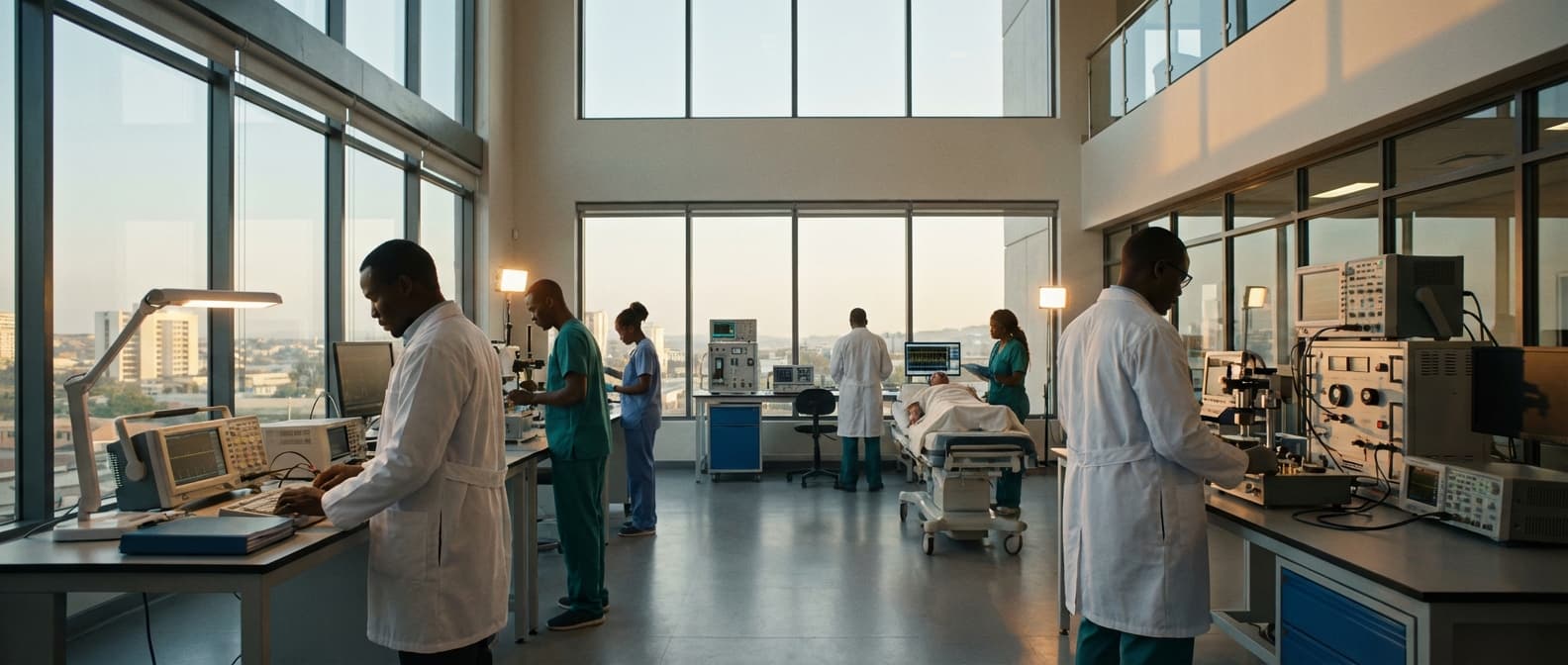
CT Image Quality QA Testing Service in Seychelles
Engineering Excellence & Technical Support
CT Image Quality QA Testing Service High-standard technical execution following OEM protocols and local regulatory frameworks.
Advanced Image Reconstruction Algorithms
Leveraging state-of-the-art iterative reconstruction techniques and advanced denoising filters, our CT Image Quality QA testing service in Seychelles significantly enhances image clarity, reduces noise, and improves the visualization of subtle anatomical details, crucial for accurate diagnosis in diverse clinical settings.
Quantitative Image Performance Metrics
We provide comprehensive quantitative analysis of CT image performance using standardized phantoms and metrics such as Modulation Transfer Function (MTF), Noise Power Spectrum (NPS), and Signal-to-Noise Ratio (SNR). This ensures objective and reproducible assessment of image quality, meeting international regulatory standards and diagnostic requirements for Seychelles' healthcare facilities.
Regulatory Compliance & Report Generation
Our QA testing services adhere to stringent international imaging standards (e.g., ACR, IEC) and provide detailed, actionable reports. We ensure CT systems operating in Seychelles meet all regulatory compliance requirements, offering peace of mind and supporting optimal patient care through consistently high-quality diagnostic imaging.
What Is Ct Image Quality Qa Testing Service In Seychelles?
CT Image Quality QA Testing Service in Seychelles refers to the systematic evaluation and verification of the diagnostic quality of Computed Tomography (CT) imaging performed within healthcare facilities in Seychelles. This service aims to ensure that CT scans are of sufficient diagnostic fidelity to accurately detect, characterize, and monitor pathologies, thereby safeguarding patient care and optimizing radiological workflow. The service encompasses a range of technical assessments to quantify and qualify image characteristics, assess system performance, and confirm adherence to established imaging protocols and regulatory standards. This proactive approach is critical for maintaining the integrity of diagnostic imaging and ensuring consistent, reliable diagnostic information for clinicians.
| Who Needs CT Image Quality QA Testing Service? | Typical Use Cases | |||||
|---|---|---|---|---|---|---|
| Healthcare Facilities in Seychelles (Hospitals, Diagnostic Imaging Centers): Any institution utilizing CT scanners for patient diagnosis and monitoring. | Routine Quality Assurance Programs: Implementing scheduled QA checks to maintain diagnostic performance and meet regulatory requirements. | New CT System Installations or Upgrades: Verifying optimal performance and image quality post-installation or after significant hardware/software modifications. | Problematic Image Findings: Investigating recurring issues with image quality, artifacts, or unexpected diagnostic outcomes. | Accreditation and Certification Processes: Demonstrating adherence to quality standards required by national or international accreditation bodies. | Radiation Dose Monitoring and Optimization: Ensuring patient safety and compliance with dose regulations. | Technology Evaluation: Assessing the image quality performance of new CT technologies or imaging protocols. |
| Radiologists and Medical Physicists: To ensure the reliability and accuracy of diagnostic information derived from CT scans. | Radiology Technologists/Radiographers: To optimize scan protocols and troubleshoot image acquisition issues. | Hospital Administrators and Department Heads: To ensure efficient resource utilization, patient safety, and compliance with healthcare standards. | Regulatory Bodies: For oversight and enforcement of imaging quality and safety standards within Seychelles. |
Key Components of CT Image Quality QA Testing Service:
- Image Protocol Optimization and Verification: Assessing and validating the parameters used for image acquisition (e.g., kVp, mAs, slice thickness, reconstruction kernel) to ensure optimal signal-to-noise ratio (SNR), spatial resolution, and contrast-to-noise ratio (CNR) for specific clinical applications and anatomical regions.
- Image Artifact Evaluation: Identifying, quantifying, and mitigating various types of artifacts (e.g., streak artifacts, beam hardening, motion artifacts, metal artifacts) that can degrade image quality and lead to misdiagnosis.
- Dose Assessment and Optimization: Measuring and analyzing radiation dose delivered to the patient during CT examinations using dosimeters and patient-specific metrics (e.g., CTDIvol, DLP) to ensure compliance with diagnostic reference levels (DRLs) and ALARA (As Low As Reasonably Achievable) principles.
- System Performance Calibration and Monitoring: Periodically verifying the performance of the CT scanner components, including gantry tilt, detector uniformity, table movement accuracy, and X-ray beam alignment, to ensure consistent and accurate image acquisition.
- Image Display and Interpretation Environment Verification: Assessing the quality of medical displays used for image interpretation, including luminance, contrast, spatial resolution, and color uniformity, to ensure accurate visual assessment of diagnostic images.
- Phantoms and Test Objects: Utilizing standardized phantoms (e.g., ACR CT phantom, CDMAM phantom) to objectively measure image quality parameters such as spatial resolution, low-contrast detectability, and noise levels.
- Clinical Image Review: Retrospective or prospective review of clinically acquired images to assess diagnostic adequacy and identify any systemic issues affecting image quality.
- Documentation and Reporting: Comprehensive documentation of all test procedures, results, and recommendations for corrective actions or further optimization.
Who Needs Ct Image Quality Qa Testing Service In Seychelles?
Routine and specialized Computed Tomography (CT) image quality assurance (QA) testing is crucial for ensuring diagnostic accuracy, patient safety, and efficient workflow in any medical imaging facility. While Seychelles might have a smaller healthcare infrastructure compared to larger nations, the need for high-quality CT imaging and the associated QA services remains significant. This testing is not just a regulatory requirement but a fundamental aspect of providing excellent patient care.
| Target Customer | Relevant Departments | Key Needs Addressed by QA Testing |
|---|---|---|
| Public Hospitals | Radiology, Medical Physics, Administration, Patient Safety | Ensuring consistent diagnostic image quality for a broad patient population, verifying equipment calibration, patient dose monitoring, compliance with national/international standards, optimizing scanner performance for efficient throughput. |
| Private Diagnostic Clinics/Imaging Centers | Radiology, Operations, Quality Assurance | Maintaining a competitive edge through high-quality imaging services, reducing the likelihood of repeat scans due to poor image quality, ensuring equipment reliability and minimizing downtime, attracting and retaining referring physicians. |
| Specialized Medical Facilities (if applicable, e.g., larger clinics with advanced imaging capabilities) | Specific Imaging Modalities (e.g., Cardiac CT, Neurological Imaging) | Verifying image quality for specialized protocols, ensuring accuracy for complex diagnoses, optimizing image parameters for specific clinical applications, advanced artifact reduction assessment. |
| Ministry of Health/Healthcare Regulatory Bodies | Healthcare Quality Assurance, Licensing and Accreditation, Public Health | Establishing and enforcing imaging quality standards, ensuring patient safety across all healthcare providers, monitoring the overall quality of medical imaging services in the country, identifying areas for improvement and training needs. |
| Radiology Departments & Medical Physicists (internal teams) | Radiology, Medical Physics | Proactive identification and resolution of equipment issues, validating new equipment installations, ensuring consistent image acquisition parameters, training staff on optimal scanning techniques, documenting equipment performance for audits. |
Who Needs CT Image Quality QA Testing Service in Seychelles?
- Hospitals and Diagnostic Centers utilizing CT Scanners
- Radiology Departments within these facilities
- Medical Physicists and Imaging Technologists responsible for equipment performance
- Healthcare Administrators and Quality Management Teams
- Regulatory Bodies overseeing medical imaging standards
Ct Image Quality Qa Testing Service Process In Seychelles
This document outlines the typical workflow for a CT Image Quality QA Testing Service in Seychelles, from the initial inquiry to the final execution of the service. The process is designed to be efficient, transparent, and to ensure that CT scanners meet required quality standards.
| Stage | Description | Key Activities | Involved Parties | Deliverables |
|---|---|---|---|---|
| The client expresses interest in CT image quality QA testing services. | Client contacts service provider, discusses needs and scope, asks initial questions. | Client (Hospital/Clinic), Service Provider | Initial understanding of client's requirements and service availability. |
| Based on the initial consultation, a detailed proposal is created. | Service provider develops a proposal outlining scope, methodology, timeline, costs, and terms. Client reviews and negotiates. Agreement/Contract is signed. | Service Provider, Client | Formal Proposal, Signed Service Agreement/Contract. |
| Logistics and arrangements for the on-site testing are finalized. | Scheduling mutually convenient dates. Client prepares the CT scanner room, ensures access to equipment and personnel. Service provider prepares testing equipment and personnel. | Service Provider, Client | Confirmed testing schedule, readiness confirmation. |
| The core QA testing is performed at the client's facility. | Deployment of specialized phantom objects. Acquisition of test images following established protocols (e.g., IEC standards). Measurement of key image quality parameters (spatial resolution, low-contrast detectability, noise, uniformity, etc.). | Service Provider (Technicians/Engineers), Client (Radiology Staff - for operational support) | Raw test image data, test logs, on-site observations. |
| The acquired data is meticulously analyzed. | Processing of raw image data. Comparison of measured parameters against established benchmarks and national/international standards. Identification of deviations and potential issues. | Service Provider (Data Analysts/Medical Physicists) | Preliminary analysis results, draft report content. |
| The client reviews the draft report and provides feedback. | Service provider submits a draft QA report to the client. Client reviews the findings, asks clarifying questions, and provides feedback. | Service Provider, Client | Draft QA Report, Client feedback. |
| If issues are identified, corrective actions are taken and re-testing may occur. | Client implements corrective actions based on report recommendations. If significant deviations are noted, re-testing of specific parameters may be scheduled. | Client, Service Provider (if involved in remediation guidance) | Records of corrective actions, re-test results (if applicable). |
| The final, official report is issued, confirming compliance or outlining non-compliance. | Service provider finalizes the QA report incorporating any feedback and re-testing results. Issue of the final report and a certificate of compliance (if applicable). | Service Provider | Final CT Image Quality QA Report, Certificate of Compliance (if met standards). |
| Post-testing support and planning for future QA checks. | Discussion of long-term QA strategies, scheduling of future periodic testing, providing expert advice as needed. | Service Provider, Client | Ongoing relationship, scheduled future QA services. |
CT Image Quality QA Testing Service Workflow in Seychelles
- Inquiry and Initial Consultation
- Proposal Generation and Agreement
- Scheduling and Pre-Testing Preparations
- On-site Testing and Data Acquisition
- Data Analysis and Report Generation
- Report Review and Feedback
- Remediation and Re-testing (if necessary)
- Final Report and Certification
- Follow-up and Ongoing Support
Ct Image Quality Qa Testing Service Cost In Seychelles
The cost of Computed Tomography (CT) image quality Quality Assurance (QA) testing services in Seychelles can vary significantly based on several factors. These factors influence the complexity of the tests performed, the expertise of the technicians, and the time required. Understanding these elements is crucial for healthcare facilities in Seychelles when budgeting for essential CT QA.
Key Pricing Factors:
- Scope of Testing: A comprehensive QA program will involve a wider range of tests than a basic annual check. This includes geometric accuracy, spatial resolution, contrast-to-noise ratio (CNR), uniformity, artifact evaluation, and dose measurements. More tests equate to higher costs.
- CT Scanner Type and Manufacturer: Different CT scanner models and manufacturers may have specific QA protocols and require specialized phantom sets or software. Older or more complex systems might necessitate more intricate testing procedures.
- Frequency of Testing: Regulatory requirements and internal protocols often dictate the frequency of QA testing (e.g., daily, monthly, annually). More frequent testing naturally increases the overall annual cost.
- Service Provider Expertise and Reputation: Highly experienced and reputable QA service providers, especially those with specialized certifications or a strong track record in medical imaging QA, may command higher fees.
- Geographic Location within Seychelles: While Seychelles is a relatively small nation, travel costs for technicians to reach more remote healthcare facilities could be a minor contributing factor.
- Urgency and Downtime: If a facility requires immediate QA testing, perhaps due to an unexpected issue or a critical deadline, rush fees might apply.
- Equipment and Phantoms Used: The cost of specialized phantoms (e.g., CAT phantoms, ACR CT accreditation phantoms) and calibration equipment used by the service provider is factored into their pricing.
- Reporting and Documentation Requirements: The level of detail and format of the QA report can impact costs. Comprehensive reports with detailed analysis, recommendations, and accreditation-ready documentation will likely be more expensive.
Estimated Cost Ranges in Seychelles Rupees (SCR):
It's important to note that obtaining exact, publicly available pricing for specialized medical equipment QA services in Seychelles can be challenging due to the niche nature of the market. The following ranges are estimates and should be considered a guideline. Facilities are strongly advised to obtain formal quotes from multiple service providers.
- Basic Annual CT QA Assessment: This typically includes essential tests for accreditation and routine performance checks.
* **Estimated Range:** SCR 8,000 - SCR 15,000 per scanner per year.
- Comprehensive Annual CT QA Program: This involves a more in-depth analysis, potentially including advanced tests and detailed trending over time.
* **Estimated Range:** SCR 12,000 - SCR 25,000 per scanner per year.
- Multi-Scanner Contracts: Facilities with multiple CT scanners may be able to negotiate discounted rates per scanner.
* **Estimated Range:** Potentially 10-15% discount on the per-scanner rates.
- Ad-hoc or Specialized Testing: If specific issues arise or specialized testing is required outside the regular schedule.
* **Estimated Range:** SCR 1,500 - SCR 3,000 per day or per specific test, plus potential travel expenses.
These figures represent the service fees and may or may not include the cost of any necessary parts or repairs if issues are identified during the QA process. It is crucial for healthcare providers in Seychelles to engage with local or regional medical imaging service providers to get accurate and tailored quotations for their specific CT QA needs.
| Service Type | Estimated Cost Range (SCR) | Notes |
|---|---|---|
| Basic Annual CT QA Assessment | 8,000 - 15,000 | Covers essential accreditation and routine checks. |
| Comprehensive Annual CT QA Program | 12,000 - 25,000 | In-depth analysis, advanced tests, and trending. |
| Multi-Scanner Contracts | Negotiated (potential 10-15% discount) | For facilities with multiple CT scanners. |
| Ad-hoc or Specialized Testing | 1,500 - 3,000 (per day/test) + travel | For specific issues or non-routine requirements. |
Factors Influencing CT Image Quality QA Testing Costs in Seychelles
- Scope of Testing (number and type of tests)
- CT Scanner Model, Manufacturer, and Age
- Frequency of QA Testing (daily, monthly, annual)
- Service Provider's Expertise, Reputation, and Certifications
- Geographic location within Seychelles (potential travel costs)
- Urgency of Service and Downtime considerations
- Cost and calibration of specialized QA equipment and phantoms
- Level of detail and format of reporting and documentation
Affordable Ct Image Quality Qa Testing Service Options
Ensuring the quality of CT images is paramount for accurate diagnosis and patient safety. Affordable CT image quality QA testing services are crucial for healthcare providers of all sizes. These services help identify and rectify issues that could lead to misinterpretations, unnecessary repeat scans, or prolonged patient discomfort. The value of such services lies in their ability to maintain diagnostic confidence, optimize equipment performance, and ultimately improve patient outcomes while managing operational costs.
| Cost-Saving Strategy | Description | Benefit |
|---|---|---|
| Bundled Service Discounts | Purchasing multiple QA services or a comprehensive package at once often comes with a reduced per-service cost compared to individual testing. | Lower overall QA expenditure, predictable budgeting. |
| Volume-Based Pricing | Larger healthcare systems or imaging centers with multiple CT scanners may negotiate better rates based on the volume of testing performed. | Significant cost reduction for high-volume operations. |
| Remote QA Monitoring | Leveraging technology for remote data acquisition and analysis can reduce the need for on-site technician visits, saving travel and time costs. | Faster turnaround times, reduced travel expenses, less disruption to clinical operations. |
| Scheduled vs. On-Demand Testing | Scheduling routine QA tests at regular intervals is generally more cost-effective than paying for urgent, on-demand services when issues arise unexpectedly. | Preventative maintenance approach, avoiding emergency call-out fees. |
| Long-Term Contracts | Committing to a service provider for an extended period (e.g., 1-3 years) can secure preferential pricing and stable service levels. | Price predictability, strong vendor relationship, guaranteed service quality. |
| Leveraging Existing Staff (with training) | While professional QA is recommended, some basic tasks can be performed by trained technologists, potentially reducing the scope of external services needed. | Cost-sharing, empowering internal staff (requires careful validation of external service scope). |
| Standardized Phantom Usage | Utilizing standardized, cost-effective phantoms for routine testing that meet regulatory requirements can be more economical than custom or specialized phantoms. | Reduced equipment costs for QA. |
Understanding Value Bundles in CT QA Testing
- Core QA Package: This foundational bundle typically includes essential tests like spatial resolution, contrast-to-noise ratio (CNR), uniformity, and low-contrast detectability. It's designed for regular, baseline verification of scanner performance.
- Advanced Performance Bundle: Building on the core, this package might incorporate more in-depth testing, such as artifact analysis, slice thickness verification, and beam hardening assessment. This is ideal for identifying subtle performance degradations.
- Compliance & Accreditation Bundle: Tailored to meet regulatory requirements and accreditation standards (e.g., ACR, TJC). It includes all necessary tests and documentation to ensure adherence to industry benchmarks.
- Comprehensive System Health Bundle: This all-encompassing option integrates routine QA with predictive maintenance insights and detailed equipment performance trending. It offers a holistic view of scanner health and longevity.
- Customizable Bundles: Many providers offer the flexibility to tailor a package based on specific needs, scanner types, imaging protocols, and budget constraints. This allows for a truly personalized approach to QA.
Verified Providers In Seychelles
Seychelles, a stunning archipelago nation, is increasingly recognized for its commitment to high-quality healthcare and wellness. For individuals seeking verified healthcare providers, particularly those with a focus on international standards and patient care, understanding credentials and the significance of affiliations is crucial. This document highlights the importance of verified providers in Seychelles and introduces Franance Health as a leading choice, detailing their credentials and the reasons for their excellence.
| Credential/Aspect | Significance for Patients | Franance Health's Standing |
|---|---|---|
| International Recognition & Accreditation | Indicates adherence to global best practices in patient care, safety, and operational efficiency. | Franance Health actively pursues and maintains affiliations with internationally recognized healthcare organizations, ensuring their services meet the highest global benchmarks. |
| Specialist Expertise & Experience | Guarantees access to highly qualified doctors and surgeons with deep knowledge and practical experience in their fields. | Franance Health boasts a team of internationally trained and board-certified specialists across a wide range of medical disciplines, many with extensive experience gained from leading global institutions. |
| Advanced Medical Technology | Enables accurate diagnoses, effective treatments, and minimally invasive procedures, leading to better patient outcomes. | The organization invests in cutting-edge medical technology and equipment, facilitating advanced diagnostic capabilities and sophisticated treatment options for patients in Seychelles. |
| Comprehensive Service Offering | Provides a one-stop solution for diverse healthcare needs, from routine check-ups to complex surgical interventions. | Franance Health offers a comprehensive suite of healthcare services, encompassing primary care, specialized consultations, diagnostics, and surgical procedures, catering to a broad spectrum of patient requirements. |
| Patient Comfort & Cultural Sensitivity | Ensures a positive and supportive healthcare journey, with clear communication and respect for individual needs. | Understanding the diverse patient demographic in Seychelles, Franance Health prioritizes a patient-centric approach, emphasizing clear communication, empathy, and culturally sensitive care delivery. |
Key Credentials of Verified Healthcare Providers in Seychelles
- International Accreditation: Providers adhering to international healthcare standards, such as JCI (Joint Commission International) or ISO certifications, demonstrate a commitment to quality, safety, and patient satisfaction.
- Professional Licensing and Board Certification: Ensuring all medical professionals hold valid licenses from relevant Seychelles authorities and are board-certified in their respective specialties.
- Experienced Medical Team: A team comprised of highly skilled and experienced physicians, surgeons, nurses, and allied health professionals with a proven track record.
- Advanced Technology and Facilities: Access to state-of-the-art medical equipment, diagnostic tools, and modern healthcare facilities that support comprehensive care.
- Patient-Centric Approach: A demonstrable focus on personalized care plans, clear communication, and a comfortable patient experience.
- Commitment to Continuous Improvement: Ongoing training, research, and adherence to evolving medical best practices.
Scope Of Work For Ct Image Quality Qa Testing Service
This Scope of Work (SOW) outlines the requirements for a comprehensive Computed Tomography (CT) Image Quality Quality Assurance (QA) Testing Service. The service aims to ensure that CT scanners consistently produce images meeting diagnostic standards, are calibrated correctly, and are functioning optimally. This document details the technical deliverables, standard specifications, and methodologies to be employed. The testing will adhere to relevant international and national standards and guidelines for medical imaging quality.
| Test Category | Test Description | Standard Specification / Acceptance Criteria | Frequency | Deliverables |
|---|---|---|---|---|
| Image Noise | Measurement of random variations in pixel values within a homogeneous phantom. Assesses stability and consistency of the detector and reconstruction process. | CTDIvol within specified range for phantom used. Noise level should be within manufacturer's specifications and/or clinical requirements (e.g., < 10 HU for low-dose abdominal scans). | Quarterly | Noise measurement report with trend analysis. Visual inspection of images for artifacts. |
| Spatial Resolution | Assessment of the ability to distinguish small, closely spaced objects. Typically measured using line-pair phantoms or point spread function (PSF) analysis. | Resolution measured in line pairs per centimeter (lp/cm) for different phantom types (e.g., ACR CT Phantom). Acceptance criteria based on manufacturer's specifications and clinical needs (e.g., > 15 lp/cm for routine head scans). | Quarterly | Spatial resolution report. Comparison to baseline and previous measurements. |
| Low Contrast Detectability (LCD) | Evaluation of the scanner's ability to detect objects with low subject contrast against a background. Measured using phantoms with objects of varying sizes and contrast levels. | Smallest detectable object diameter at a specified contrast difference (e.g., 3mm object at 0.3% contrast difference). Acceptance criteria based on ACR or similar phantom standards. | Quarterly | LCD report detailing detectable object sizes and contrasts. Images of test objects. |
| CT Number Accuracy and Linearity | Verification of the accuracy of CT numbers (Hounsfield Units) for different materials and their linearity across a range of radiation doses and phantom thicknesses. | CT numbers for known materials (e.g., water, acrylic, bone) should be within +/- 5 HU of reference values. Linearity of CT numbers should be within specified tolerance (e.g., +/- 10 HU across the clinically relevant range). | Quarterly | CT number accuracy and linearity report. Comparison to expected values for tested materials. |
| Uniformity | Assessment of the consistency of CT numbers across a homogeneous phantom, checking for any gradient or beam hardening artifacts. | Maximum difference in CT numbers within the central region of a homogeneous phantom should be within a specified tolerance (e.g., < 5 HU). | Quarterly | Uniformity map or report. Identification of any significant gradients or artifacts. |
| Artifact Analysis | Visual inspection and quantitative assessment of various artifacts, including beam hardening, streak, ring, and metal artifacts. Analysis of their impact on image diagnosticity. | Absence of significant artifacts that obscure anatomical structures or compromise diagnostic interpretation. Mitigation strategies proposed for identified artifacts. | Quarterly | Artifact report detailing types, severity, and location of artifacts. Recommendations for correction or operational adjustments. |
| Dose Measurement (CTDIvol) | Measurement of the volume CT dose index (CTDIvol) for representative protocols. Ensures dose is within acceptable diagnostic ranges and ALARA principles are applied. | CTDIvol measurements for selected standard protocols should be within manufacturer's recommended ranges and/or institutional guidelines. Comparison with previously recorded values. | Annually (or after significant protocol changes) | CTDIvol measurement report for key protocols. Dose monitoring logs. |
| Laser Alignment | Verification of the accuracy of patient positioning lasers relative to the scan field of view. | Laser alignment accuracy within specified tolerance (e.g., +/- 1mm). | Semi-annually | Laser alignment report. Confirmation of accurate positioning. |
| System Calibration & Software Checks | Confirmation of scheduled maintenance and software updates. Verification of critical system parameters and configurations. | Confirmation of successful completion of manufacturer-recommended calibration procedures. Verification of current software version and configuration settings. | As per manufacturer recommendations and institutional policy | Service report from manufacturer or qualified technician. Software version confirmation. |
Key Objectives of the CT Image Quality QA Testing Service
- Verify and validate CT scanner performance against established benchmarks.
- Ensure consistent image quality for accurate diagnosis and dose optimization.
- Identify potential equipment malfunctions or drift before they impact patient care.
- Provide actionable data for maintenance, calibration, and upgrade decisions.
- Maintain compliance with regulatory requirements and accreditation standards.
Service Level Agreement For Ct Image Quality Qa Testing Service
This Service Level Agreement (SLA) outlines the guaranteed response times and uptime for the CT Image Quality QA Testing Service provided by [Your Company Name] (hereinafter referred to as 'Provider') to [Client Name] (hereinafter referred to as 'Client'). This SLA is an integral part of the Master Service Agreement (MSA) between the Provider and the Client.
| Service Component/Incident Type | Response Time Target (Business Hours) | Resolution Time Target (Business Hours) | Uptime Guarantee |
|---|---|---|---|
| Critical Incidents (e.g., Service Unavailability) | 1 Hour | 4 Business Hours | 99.9% Monthly |
| Non-Critical Incidents (e.g., Reporting Glitches, Minor Performance Issues) | 4 Business Hours | 1 Business Day | N/A (Covered by overall uptime) |
| New Feature Requests / Consultations | 1 Business Day | As per agreed project timelines | N/A |
| Scheduled Maintenance | N/A | N/A | Excludes uptime calculation |
Definitions
- Service: Refers to the CT Image Quality QA Testing Service, which includes the execution of standardized quality assurance protocols on CT scanners, analysis of imaging data for adherence to established quality metrics, generation of QA reports, and identification of potential image quality degradation.
- Downtime: Refers to any period during which the Service is unavailable to the Client due to a failure or outage on the Provider's systems or infrastructure directly related to the provision of the Service.
- Scheduled Maintenance: Refers to pre-announced periods of downtime for system upgrades, patches, or other maintenance activities. The Client will be notified at least [Number] days in advance of any Scheduled Maintenance.
- Response Time: The maximum time allowed for the Provider to acknowledge and begin addressing a reported incident or request.
- Resolution Time: The maximum time allowed for the Provider to resolve a reported incident or fulfill a request to the Client's reasonable satisfaction.
- Uptime: The percentage of time the Service is operational and available to the Client during a defined measurement period, excluding Scheduled Maintenance.
- Business Hours: [Specify Business Hours, e.g., Monday to Friday, 9:00 AM to 5:00 PM, excluding public holidays in [Region]].
- Critical Incident: An event that renders the CT Image Quality QA Testing Service completely unusable or significantly impairs its functionality, preventing the execution of core QA testing procedures.
- Non-Critical Incident: An event that affects certain functionalities of the Service or causes minor degradation of performance, but does not prevent the execution of core QA testing procedures.
Frequently Asked Questions

Ready when you are
Let's scope your CT Image Quality QA Testing Service in Seychelles project in Seychelles.

Scaling healthcare logistics and technical systems across the entire continent.