
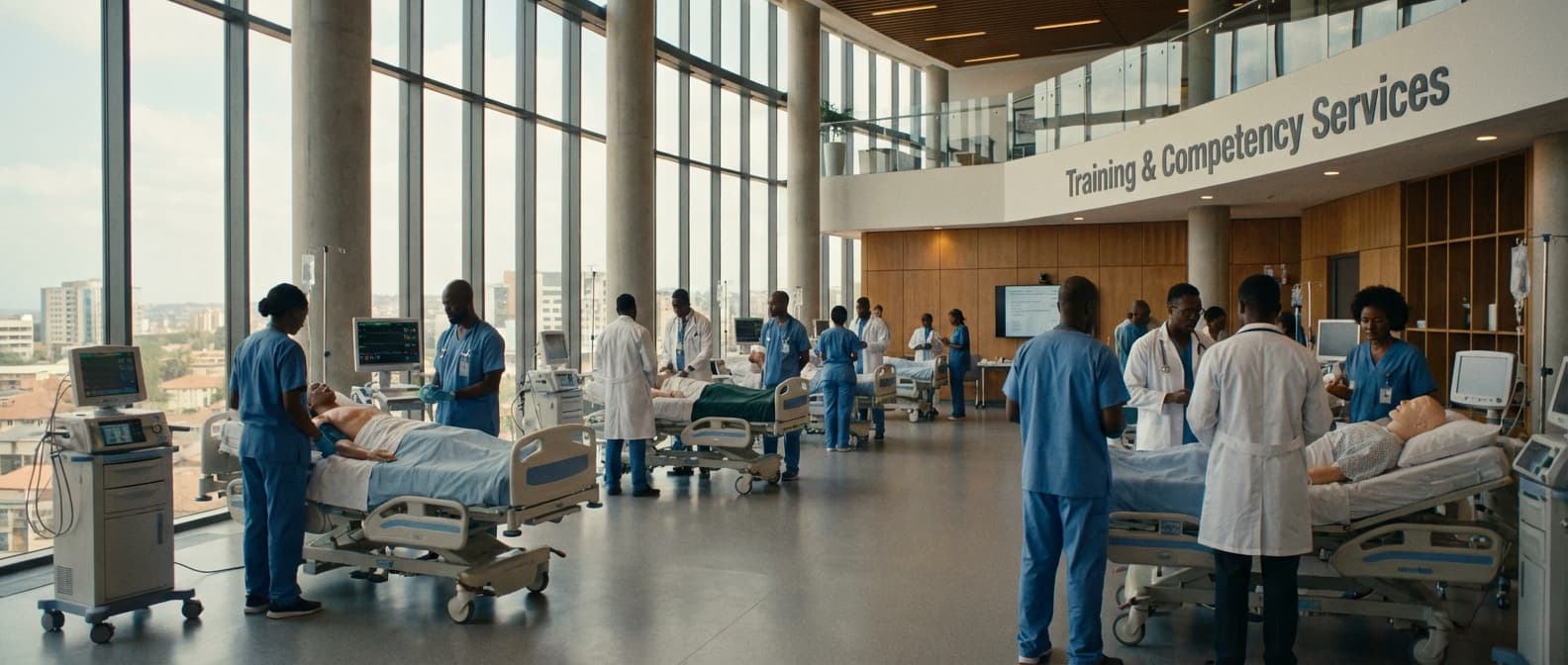
Ventilator User Training Service (Nurses) in Senegal
Engineering Excellence & Technical Support
Ventilator User Training Service (Nurses) High-standard technical execution following OEM protocols and local regulatory frameworks.
Mastering Ventilation Modes for Diverse Patient Needs
Gain proficiency in setting up and managing crucial ventilation modes like Pressure Support Ventilation (PSV), Volume Controlled Ventilation (VCV), and Synchronized Intermittent Mandatory Ventilation (SIMV) to optimize respiratory support for various patient conditions encountered in Senegal.
Real-time Hemodynamic Monitoring and Intervention
Enhance your skills in interpreting real-time hemodynamic data (e.g., SpO2, EtCO2, heart rate) displayed on the ventilator and initiating timely interventions to address hypoxemia, hypercapnia, and other critical physiological changes.
Ensuring Infection Prevention and Safe Equipment Handling
Learn and apply best practices for ventilator circuit management, disinfection, and sterilization protocols to minimize the risk of ventilator-associated pneumonia (VAP) and ensure patient safety in resource-sensitive environments.
What Is Ventilator User Training Service (Nurses) In Senegal?
Ventilator User Training Service (Nurses) in Senegal refers to a specialized educational program designed to equip registered nurses and other qualified healthcare professionals with the knowledge and practical skills necessary to safely and effectively operate, monitor, and manage mechanical ventilators in clinical settings within Senegal. This service is crucial for ensuring optimal patient outcomes in respiratory failure and critical care scenarios.
| Who Needs Ventilator User Training (Nurses)? | Typical Use Cases in Senegal | ||||||||
|---|---|---|---|---|---|---|---|---|---|
| Registered Nurses (RNs) working in Intensive Care Units (ICUs). | Management of patients with acute respiratory distress syndrome (ARDS) due to conditions like severe pneumonia, sepsis, or COVID-19. | Registered Nurses (RNs) working in Emergency Departments (EDs) or high-dependency units. | Stabilization of patients with acute exacerbations of chronic obstructive pulmonary disease (COPD) or asthma. | Nurses involved in perioperative care, especially in surgical settings where respiratory support may be required. | Management of post-operative respiratory complications. | Nurses in specialized units such as neonatal intensive care (NICU) or pediatric intensive care (PICU) (requiring specialized training). | Support for premature infants or children experiencing respiratory failure. | Healthcare professionals in resource-limited settings or remote areas facing a shortage of intensivists. | Providing essential respiratory support in primary or secondary healthcare facilities during outbreaks or emergencies. |
Key Components of Ventilator User Training for Nurses in Senegal:
- Theoretical Foundations: In-depth understanding of respiratory physiology, pathophysiology of respiratory failure, principles of mechanical ventilation (modes, settings, gas exchange mechanics), ventilator waveforms and interpretation.
- Ventilator Hardware and Software: Familiarization with specific ventilator models commonly used in Senegalese healthcare facilities, including their operational panels, alarms, safety features, and user interface.
- Patient Assessment and Initiation: Protocols for identifying patients requiring mechanical ventilation, appropriate weaning criteria, and the steps involved in intubation and ventilator connection.
- Parameter Management and Optimization: Skills in selecting appropriate initial ventilator settings based on patient condition, monitoring physiological parameters (SpO2, EtCO2, blood gases), and adjusting settings to achieve target goals and minimize complications.
- Troubleshooting and Alarm Management: Recognition and management of common ventilator-related complications (e.g., pneumothorax, ventilator-induced lung injury, dislodgement) and effective responses to various alarm conditions.
- Ventilator Weaning and Discontinuation: Strategies for assessing readiness for liberation from mechanical ventilation and the gradual reduction of support.
- Infection Control and Maintenance: Best practices for maintaining ventilator circuits, humidifiers, and filters to prevent nosocomial infections.
- Ethical and Legal Considerations: Understanding of relevant Senegalese healthcare regulations and ethical guidelines pertaining to mechanical ventilation.
- Simulation and Practical Application: Hands-on experience with ventilator simulators and actual patient care under supervision.
Who Needs Ventilator User Training Service (Nurses) In Senegal?
This document outlines the critical need for Ventilator User Training Services specifically for nurses in Senegal. Effective operation and management of ventilators are paramount for patient care, especially in critical settings. This training aims to equip nurses with the necessary knowledge and practical skills to ensure optimal ventilator performance, patient safety, and improved clinical outcomes.
| Target Customer Group | Primary Departments/Settings | Rationale for Training Need | |
|---|---|---|---|
| Registered Nurses (RNs) | Intensive Care Units (ICUs) | Direct management of critically ill patients requiring advanced respiratory support; complex ventilator settings and troubleshooting. | |
| Registered Nurses (RNs) | High Dependency Units (HDUs) | Step-Down Units | Continued monitoring and management of patients transitioning from critical care, requiring ongoing ventilator support. |
| Emergency Medical Technicians (EMTs) / Paramedics (if nurses are involved) | Emergency Medical Services (EMS) | Pre-hospital care | Initial assessment and management of respiratory distress, including the possibility of initiating ventilation in the field. |
| Pediatric Nurses | Neonatal Intensive Care Units (NICUs) | Pediatric ICUs (PICUs) | Specialized knowledge and delicate handling required for ventilating vulnerable populations. |
| Surgical Nurses | Post-Anesthesia Care Units (PACUs) | Recovery Rooms | Managing patients immediately post-surgery who may require mechanical ventilation. |
| General Duty Nurses | District & Regional Hospitals | Ensuring basic competence in ventilator operation and patient monitoring in resource-limited settings. | |
| Specialized Nurses | Pulmonology Departments | Respiratory Therapy Units | In-depth understanding of various respiratory conditions and their impact on ventilation requirements. |
| Nurse Educators | Nursing Schools & Universities | Training future nurses on current ventilator technology and best practices. | |
| Home Care Nurses | Home Healthcare Services | Managing patients with chronic respiratory failure requiring long-term ventilation in the community. |
Target Customers and Departments for Ventilator User Training Service (Nurses) in Senegal
- Nurses working in Intensive Care Units (ICUs) across all public and private hospitals.
- Nurses in High Dependency Units (HDUs) or Step-Down Units where ventilated patients may be managed.
- Nurses involved in emergency medical services and pre-hospital care, particularly those who may encounter ventilated patients.
- Nurses in specialized pediatric or neonatal units that utilize ventilators for young patients.
- Nurses in surgical recovery rooms where post-operative ventilation might be required.
- Nurses in regional and district hospitals that are equipped with ventilators, even if they do not have dedicated ICU/HDU facilities.
- Nurses involved in respiratory care and pulmonology departments.
- Nurses in teaching hospitals and nursing schools, to ensure future generations of nurses are well-trained.
- Nurses in organizations providing home healthcare services for patients requiring mechanical ventilation.
Ventilator User Training Service (Nurses) Process In Senegal
This document outlines the workflow for the Ventilator User Training Service for Nurses in Senegal, detailing the process from initial inquiry to the successful execution of the training. The service aims to equip nurses with the necessary skills and knowledge to safely and effectively operate and manage ventilators, thereby improving patient care outcomes in critical settings. The process is designed to be clear, efficient, and responsive to the needs of healthcare institutions.
| Stage | Description | Key Activities | Responsible Parties | Deliverables/Outcomes |
|---|---|---|---|---|
| Initial contact from a healthcare facility or individual nurse inquiring about ventilator training. | Receive inquiry (phone, email, website form). Conduct initial needs assessment (number of trainees, current skill level, specific ventilator models to be covered, desired training dates). Provide preliminary information on service offerings and availability. | Inquiring Institution/Nurse, Training Service Provider | Understanding of training requirements, preliminary scope of work, initial contact established. |
| Formalizing the training request into a detailed proposal and securing a contractual agreement. | Develop a comprehensive training proposal (curriculum, duration, trainers, venue requirements, cost, proposed dates). Review proposal with the inquiring institution. Negotiate and finalize terms and conditions. Sign a formal training agreement/contract. | Training Service Provider, Inquiring Institution | Approved training proposal, signed training agreement, confirmed dates and scope. |
| Detailed planning and preparation for the training execution. | Confirm trainee list and registration. Schedule trainers and confirm their availability. Arrange for training venue and necessary equipment (demonstration ventilators, manikins, projection equipment). Prepare training materials (manuals, presentations, case studies). Coordinate travel and accommodation for trainers if applicable. Communicate final logistics to the training institution. | Training Service Provider, Inquiring Institution | Finalized training schedule, confirmed venue and equipment, distributed training materials, prepared trainees. |
| The actual execution of the training program for the nurses. | Conduct theoretical sessions covering ventilator principles, operation, and troubleshooting. Provide hands-on practical sessions with demonstration ventilators and manikins. Facilitate interactive discussions, Q&A, and case study analysis. Conduct assessments (quizzes, practical evaluations) to gauge understanding and skill acquisition. | Lead Trainer, Assistant Trainers, Trainees | Nurses trained in ventilator operation and management, demonstrated competency, completed assessments. |
| Following the training, ensuring continued learning and assessing the program's effectiveness. | Provide post-training support (e.g., follow-up Q&A sessions, access to online resources). Collect feedback from trainees and the institution through evaluation forms. Analyze training feedback and assessment results. Provide a post-training report to the institution (including attendance, assessment scores, and recommendations). Offer refresher courses or advanced training as needed. | Training Service Provider, Inquiring Institution | Trainee satisfaction, identified areas for improvement in training, enhanced clinical practice, ongoing support mechanisms. |
Key Stages of the Ventilator User Training Service Workflow
- Inquiry and Needs Assessment
- Proposal Development and Agreement
- Logistics and Planning
- Training Delivery
- Post-Training Support and Evaluation
Ventilator User Training Service (Nurses) Cost In Senegal
The cost of ventilator user training services for nurses in Senegal can vary significantly based on several key pricing factors. These factors influence the overall investment required for comprehensive and effective training. Understanding these elements is crucial for healthcare facilities in Senegal to budget appropriately and select the best training provider. The local currency for Senegal is the West African CFA franc (XOF).
| Training Type/Scope | Estimated Price Range (XOF) | Notes |
|---|---|---|
| Basic Ventilator Operation & Monitoring (1-2 Days Workshop) | 150,000 - 300,000 XOF per nurse | Covers fundamental principles, common settings, alarms, and basic troubleshooting. May be group-based. |
| Intermediate Ventilator Management & Advanced Modes (3-4 Days Workshop) | 250,000 - 500,000 XOF per nurse | Expands on basic skills, includes different ventilation modes, weaning protocols, and more complex patient scenarios. |
| Comprehensive Critical Care Ventilation Training (5+ Days, including simulation) | 400,000 - 800,000+ XOF per nurse | In-depth coverage of all aspects of mechanical ventilation, advanced troubleshooting, and hands-on simulation. Often includes multi-vendor training. |
| Online/Blended Learning Modules (per course) | 50,000 - 150,000 XOF per nurse | Cost-effective for foundational knowledge. Practical skills may still require in-person components. |
| On-site Training (per day, for a group of nurses) | 200,000 - 600,000+ XOF | This fee is often for the instructor and the training session itself. It does not include travel, accommodation, or participant materials unless specified. The cost per nurse decreases with larger groups. |
Key Pricing Factors for Ventilator User Training in Senegal
- Provider's Reputation and Expertise: Established training providers with a proven track record and specialized expertise in critical care and respiratory therapy often command higher fees due to their credibility and the quality of their instructors.
- Scope and Duration of Training: The depth of the curriculum, the number of ventilator models covered, and the total hours of instruction directly impact the cost. Comprehensive programs covering a wide range of scenarios and equipment will be more expensive.
- Training Modality: Training can be delivered in various formats, including in-person workshops, online modules, blended learning (a combination of both), or simulation-based training. In-person and simulation-based training tend to be more costly due to logistical requirements and specialized equipment.
- Number of Participants: While some providers may offer bulk discounts, the cost per nurse can also increase with larger groups, especially if personalized attention or smaller workshop sizes are prioritized.
- Location of Training: If the training is conducted at the healthcare facility, travel and accommodation costs for instructors might be included in the overall price. Conversely, if nurses travel to a training center, their travel and living expenses would be an additional consideration for the facility.
- Customization of Curriculum: Tailoring the training content to the specific needs and existing equipment of a particular hospital or ward can add to the cost, as it requires additional curriculum development and instructor preparation.
- Materials and Resources: The provision of training manuals, handbooks, access to online resources, and any necessary simulation equipment will influence the final price.
- Certification and Assessment: The inclusion of formal assessments, practical evaluations, and the issuance of certificates upon successful completion of the training can also be factored into the cost.
- Ongoing Support and Refreshers: Some training packages may include post-training support, access to a helpdesk, or discounted rates for refresher courses, which contribute to a higher upfront investment.
- Regulatory Compliance: The training may need to adhere to specific national or international guidelines, which can necessitate a more rigorous and potentially expensive curriculum.
Affordable Ventilator User Training Service (Nurses) Options
This document outlines affordable ventilator user training services tailored for nurses, focusing on value bundles and cost-saving strategies to enhance their skills and ensure patient safety without significant financial burden.
| Training Option | Description | Value Bundle Includes | Estimated Cost Savings Strategy | Approximate Price Range (per nurse) |
|---|---|---|---|---|
| Basic E-Learning Module | Self-paced online course covering foundational ventilator concepts and common modes. | Access to recorded lectures, interactive quizzes, downloadable resources. | Reduced instructor time, flexible scheduling, no travel costs. | $50 - $150 |
| Virtual Live Workshop | Interactive, instructor-led training conducted via video conferencing, with Q&A. | Live demonstrations, group discussions, case study analysis. | Eliminates facility rental and travel expenses for both trainers and trainees. | $150 - $300 |
| Blended Learning Package | Combines e-learning modules with a short, in-person or virtual hands-on simulation session. | E-learning pre-work, simulation lab access or virtual simulation software, instructor-led debrief. | Optimizes in-person time for practical skills, leverages cost-effective e-learning for theory. | $250 - $500 |
| On-Site Group Training | Training delivered at the healthcare facility for a group of nurses. | Customized curriculum, hands-on practice with hospital equipment (if available), on-site debriefing. | Bulk discounts for multiple nurses, reduced travel costs for trainees, tailored to specific institutional needs. | Starting from $1000 - $3000 for a group (variable based on size and duration) |
| Advanced Simulation Lab (Premium Bundle) | Intensive training utilizing high-fidelity manikins and realistic scenarios for complex ventilation management. | Full-day simulation experience, personalized feedback, advanced case scenarios. | Higher initial investment, but leads to superior skill retention and reduced error rates, potentially saving costs in the long run. | $500 - $1000+ |
Value-Added Features of Affordable Ventilator Training
- Comprehensive Curriculum: Covers essential ventilator modes, settings, monitoring, troubleshooting, and patient interface management.
- Hands-on Simulation: Utilizes low-fidelity manikins or advanced simulation labs (depending on package) for practical skill development.
- Experienced Nurse Educators: Training delivered by seasoned registered nurses with extensive critical care and ventilator experience.
- Flexible Delivery: Offers a mix of in-person workshops, on-demand e-learning modules, and virtual live sessions to accommodate busy schedules.
- Certification/Completion Recognition: Provides certificates of completion or CEUs (Continuing Education Units) for professional development.
- Post-Training Support: Access to Q&A forums, refresher modules, or a designated point of contact for ongoing questions.
- Customization Options: Ability to tailor training content to specific hospital protocols or equipment types.
Verified Providers In Senegal
When seeking healthcare services in Senegal, especially those involving specialized treatments or high standards of care, it's crucial to identify 'Verified Providers.' These providers have undergone rigorous vetting processes and meet specific quality and safety benchmarks. Franance Health stands out as a leading example of such a verified provider, offering a comprehensive and trustworthy healthcare experience. Their credentials signify a commitment to excellence in patient care, ethical practices, and adherence to international standards.
| Credential Type | Franance Health Demonstration | Patient Benefit |
|---|---|---|
| International Accreditation (e.g., JCI, ISO) | Adherence to globally recognized standards for quality and patient safety. | Ensures a high level of care comparable to leading international hospitals, leading to better treatment outcomes and reduced risks. |
| Specialized Clinical Certifications | Expertise and advanced training in specific medical fields (e.g., cardiology, oncology, orthopedics). | Access to highly specialized treatments and cutting-edge medical knowledge for complex conditions. |
| Advanced Medical Technology | Investment in state-of-the-art diagnostic and therapeutic equipment. | More accurate diagnoses, less invasive procedures, faster recovery times, and improved treatment efficacy. |
| Highly Qualified Medical Team | Employment of board-certified physicians, experienced nurses, and specialized allied health professionals. | Expert care from the most skilled professionals, leading to confident and effective treatment. |
| Patient Safety Protocols | Strict adherence to infection control, medication management, and patient identification procedures. | Minimized risk of healthcare-associated infections and other adverse events, ensuring a safer healing environment. |
Why Franance Health Credentials Represent the Best Choice:
- Accreditation and Certifications: Franance Health likely holds accreditations from recognized national and international health organizations. These certifications are not easily obtained and demonstrate adherence to stringent quality management systems, patient safety protocols, and clinical effectiveness.
- Experienced and Qualified Medical Staff: Verified providers like Franance Health prioritize employing highly skilled and experienced medical professionals. This includes specialists with advanced training, surgeons with proven track records, and a dedicated support staff committed to patient well-being.
- State-of-the-Art Facilities and Technology: To ensure the best possible outcomes, Franance Health invests in modern medical equipment and up-to-date technology. This allows for accurate diagnostics, advanced treatment options, and minimally invasive procedures, leading to faster recovery times and improved patient comfort.
- Patient-Centric Approach: Verified providers place the patient at the heart of their services. This translates to clear communication, personalized treatment plans, active involvement of patients in decision-making, and a compassionate care environment. Franance Health's commitment to this approach ensures a positive and reassuring healthcare journey.
- Robust Safety and Infection Control Measures: Patient safety is paramount. Franance Health adheres to strict protocols for infection prevention and control, ensuring a sterile and secure environment for all patients. This reduces the risk of complications and promotes a swift recovery.
- Transparency and Ethical Practices: Verified providers operate with the highest ethical standards. This includes transparent billing practices, clear consent processes, and a commitment to patient privacy. Franance Health's dedication to these principles builds trust and confidence with their patients.
Scope Of Work For Ventilator User Training Service (Nurses)
This Scope of Work (SOW) outlines the requirements for providing comprehensive ventilator user training services specifically tailored for nursing staff. The objective is to ensure nurses possess the necessary knowledge and practical skills to safely and effectively operate, monitor, and manage patients requiring mechanical ventilation. This training will cover theoretical concepts, practical applications, troubleshooting, and emergency procedures related to various ventilator models commonly used in healthcare settings.
| Module Title | Key Topics Covered | Learning Objectives | Training Method(s) |
|---|---|---|---|
| Introduction to Mechanical Ventilation | Basic principles of respiratory mechanics, indications for ventilation, types of ventilators, ventilator waveforms and parameters. | Understand the physiological basis of mechanical ventilation. Identify indications for ventilatory support. Differentiate between common ventilator types. | Lecture, Interactive Discussion, Visual Aids |
| Ventilator Setup and Initial Settings | Pre-use checks, circuit setup, patient connection, establishing initial ventilator modes (e.g., Volume Control, Pressure Control, Pressure Support), PEEP, FiO2. | Perform correct pre-use checks. Accurately set up the ventilator for patient connection. Select and configure appropriate initial ventilator settings based on patient condition. | Demonstration, Hands-on Practice (Simulation), Checklist Review |
| Monitoring and Alarms | Understanding ventilator graphics (flow, volume, pressure loops), common alarm conditions (e.g., high pressure, low tidal volume, apnea), and appropriate nursing interventions. | Interpret key ventilator graphics. Recognize and respond to common alarm conditions promptly. Implement appropriate nursing interventions for alarm situations. | Case Studies, Simulation Exercises, Troubleshooting Scenarios |
| Ventilator Mode Management and Adjustments | Advanced ventilator modes (e.g., SIMV, AC, BiPAP/CPAP), weaning parameters, making adjustments to ventilator settings based on patient response and ABGs. | Understand the principles of various advanced ventilation modes. Identify appropriate weaning parameters. Safely adjust ventilator settings to optimize patient ventilation and oxygenation. | Role-playing, Scenario-based Learning, Clinical Application Discussions |
| Airway Management and Suctioning | Endotracheal tube care, tracheostomy care, sterile suctioning techniques, managing airway secretions. | Maintain optimal endotracheal tube and tracheostomy tube care. Perform sterile suctioning effectively and safely. Manage airway secretions to prevent complications. | Skills Demonstration, Practicum (Simulation), Video Tutorials |
| Troubleshooting and Emergency Procedures | Common ventilator malfunctions, disconnects, patient-ventilator asynchrony, management of critical events (e.g., pneumothorax, circuit failure). | Identify potential ventilator malfunctions. Respond effectively to ventilator disconnects and patient-ventilator asynchrony. Manage critical ventilation-related emergencies. | Crisis Simulation, Tabletop Exercises, Emergency Drills |
| Sedation and Analgesia Management | Pharmacological agents used for sedation and analgesia in ventilated patients, monitoring patient comfort and level of sedation. | Administer appropriate sedation and analgesia. Monitor patient comfort and level of sedation effectively. | Drug Information Review, Case Discussions, Protocol Review |
| Weaning from Mechanical Ventilation | Criteria for initiating weaning, different weaning protocols, monitoring the weaning process, extubation criteria and procedure. | Assess patient readiness for weaning. Implement appropriate weaning protocols. Monitor the patient during the weaning process. Perform safe extubation procedures. | Protocol Review, Simulation of Weaning Trials, Post-Extubation Care Planning |
| Documentation and Communication | Accurate documentation of ventilator settings, patient response, and interventions. Effective communication with the multidisciplinary team. | Document ventilator management comprehensively. Communicate critical information to the healthcare team effectively. | Documentation Review, Team Communication Exercises |
Technical Deliverables
- Detailed training curriculum and module breakdown.
- Training presentation slides (e.g., PowerPoint, PDF).
- Participant training manuals/handbooks.
- Hands-on simulation exercises and scenarios.
- Competency assessment tools (e.g., quizzes, practical checklists).
- Post-training evaluation forms for participants and instructors.
- Certificate of completion for each participant.
- Trainer qualifications and experience documentation.
- Reporting on training attendance, assessment results, and feedback.
Service Level Agreement For Ventilator User Training Service (Nurses)
This Service Level Agreement (SLA) outlines the guaranteed response times and uptime for the Ventilator User Training Service (Nurses), provided by [Your Company Name] (hereinafter referred to as "Provider"). This SLA is an integral part of the overall service agreement between the Provider and [Client Organization Name] (hereinafter referred to as "Client").
| Service Component | Response Time Guarantee | Uptime Guarantee |
|---|---|---|
Key Definitions
- {"term":"Training Session","definition":"A scheduled or on-demand virtual or in-person training session conducted by the Provider for nursing staff on the operation and maintenance of specific ventilator models."}
- {"term":"Technical Support Request","definition":"Any request submitted by the Client to the Provider's technical support team for assistance with the training platform, scheduling, or related technical issues."}
- {"term":"Service Interruption","definition":"Any unplanned outage or degradation of the Ventilator User Training Service that renders it unavailable or significantly impacts its functionality for a defined period."}
- {"term":"Scheduled Maintenance","definition":"Pre-announced periods during which the training service may be unavailable for updates, upgrades, or system maintenance. These periods will be communicated to the Client at least [Number] ([Number]) business days in advance."}
- {"term":"Business Hours","definition":"The standard working hours of the Provider, typically Monday through Friday, [Start Time] to [End Time] [Time Zone], excluding public holidays."}
Frequently Asked Questions

Ready when you are
Let's scope your Ventilator User Training Service (Nurses) in Senegal project in Senegal.

Scaling healthcare logistics and technical systems across the entire continent.