
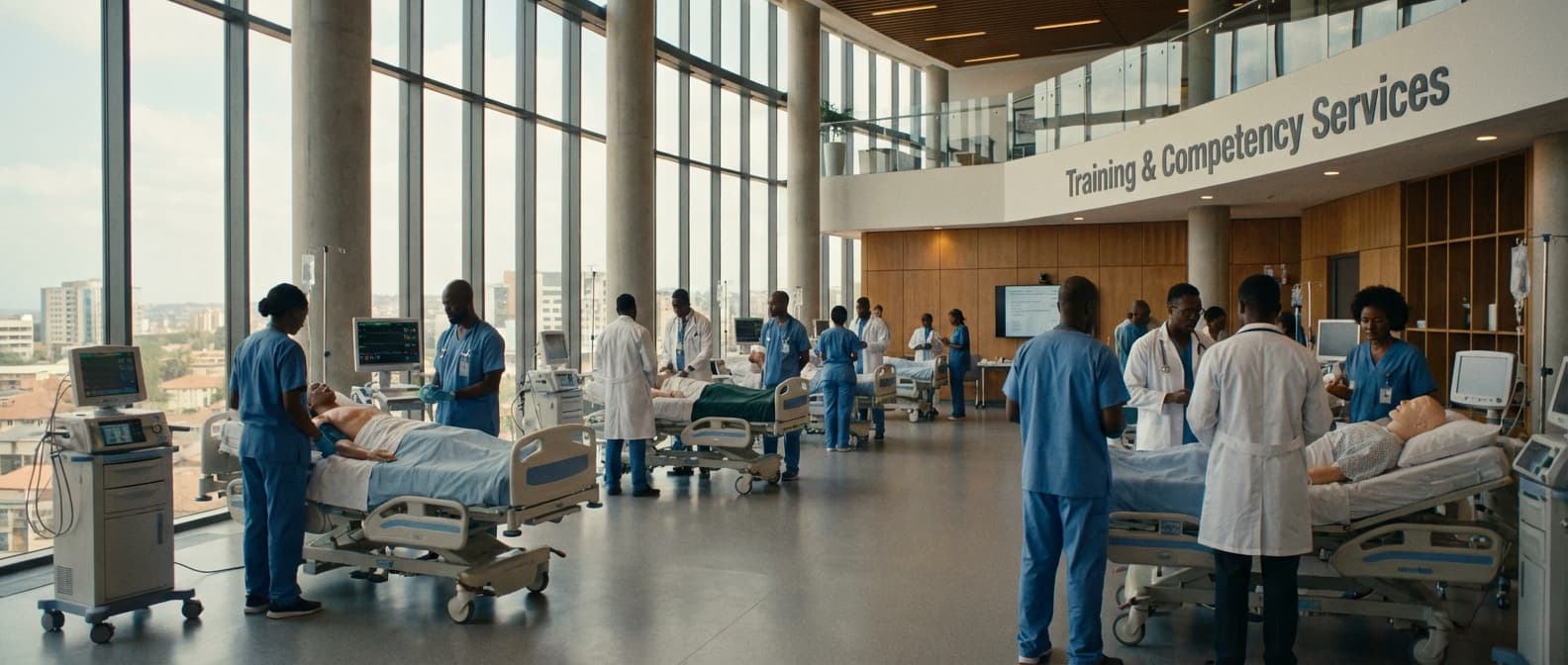
Ultrasound Application Training Service (Protocol-Based) in Senegal
Engineering Excellence & Technical Support
Ultrasound Application Training Service (Protocol-Based) High-standard technical execution following OEM protocols and local regulatory frameworks.
Standardized Protocol Mastery
Empower your Senegalese healthcare professionals with comprehensive training on established ultrasound protocols, ensuring consistent, high-quality diagnostic imaging across various specialties. Our systematic approach guarantees adherence to best practices for accurate patient care.
Hands-On Skill Development
Gain practical proficiency through intensive, hands-on ultrasound training sessions. Our curriculum focuses on real-world scenarios and case studies relevant to the Senegalese healthcare landscape, building confidence and competence in applying learned protocols.
Expert-Led Instruction & Support
Benefit from the expertise of experienced sonographers and radiologists delivering tailored training. Our service includes ongoing mentorship and support, enabling your team to effectively integrate protocol-based ultrasound into daily clinical practice in Senegal.
What Is Ultrasound Application Training Service (Protocol-based) In Senegal?
Ultrasound Application Training Service (Protocol-Based) in Senegal refers to a structured educational program designed to impart specialized knowledge and practical skills in the utilization of diagnostic ultrasound equipment for specific medical examinations, adhering to established clinical protocols. This service is crucial for healthcare professionals seeking to accurately and reliably perform ultrasound procedures, interpret findings, and integrate them into patient management pathways within the Senegalese healthcare context. The protocol-based approach ensures standardized, evidence-based practice, promoting diagnostic consistency and quality of care.
| Target Audience | Needs Addressed | Typical Use Cases |
|---|---|---|
| Radiologists | Enhancing expertise in advanced or subspecialty ultrasound applications. Staying updated with new protocols and technologies. Improving diagnostic accuracy in specific areas. | Advanced obstetric imaging (e.g., fetal anomaly scans, Doppler studies), interventional ultrasound, small parts imaging (thyroid, breast), superficial lesion characterization. |
| Obstetricians and Gynecologists | Performing routine obstetric scans (dating, anomaly, growth), gynecological evaluations (pelvic masses, IUD placement confirmation), fertility assessments. Integrating ultrasound findings into clinical decision-making. | First-trimester dating scans, second-trimester anomaly scans, third-trimester growth scans, transvaginal pelvic ultrasound for gynecological pathology, point-of-care ultrasound (POCUS) in obstetrics. |
| General Practitioners and Family Physicians | Acquiring foundational skills in point-of-care ultrasound (POCUS) for initial patient assessment and triage. Identifying urgent conditions requiring referral. Improving diagnostic efficiency in primary care settings. | FAST (Focused Assessment with Sonography for Trauma) scans, basic abdominal assessments (gallbladder, kidneys), basic pelvic scans, evaluation of pleural effusions, basic musculoskeletal assessments. |
| Sonographers and Ultrasound Technicians | Developing or refining specific ultrasound skill sets. Achieving certification or competency in specialized applications. Enhancing scan efficiency and quality. | Comprehensive abdominal ultrasound, Doppler studies (carotid, peripheral vascular), breast imaging, pediatric ultrasound, musculoskeletal ultrasound. |
| Medical Students and Residents | Gaining fundamental understanding and practical experience in ultrasound imaging. Preparing for future specialization in radiology or ultrasound-dependent specialties. | Introduction to ultrasound principles and basic anatomical scanning, participation in supervised clinical rotations involving ultrasound. |
Key Components of the Service
- Didactic Instruction: Theoretical sessions covering ultrasound physics, instrumentation, image optimization techniques, anatomical correlations, and pathological manifestations relevant to specific applications.
- Protocol Review and Application: In-depth study and practical application of standardized ultrasound examination protocols for various anatomical regions and clinical scenarios (e.g., obstetric, gynecological, abdominal, vascular, musculoskeletal).
- Hands-on Simulation and Supervised Practice: Practical training utilizing ultrasound phantoms and supervised scanning sessions on consenting patients under the guidance of experienced sonographers and radiologists.
- Image Acquisition and Interpretation: Training focused on acquiring high-quality diagnostic images and developing proficiency in the interpretation of ultrasound findings, including recognizing normal and abnormal structures.
- Report Generation: Guidance on documenting findings accurately and comprehensively in standardized ultrasound reports.
- Case Study Analysis: Review of real-world clinical cases to reinforce learning and critical thinking skills.
- Continuing Professional Development (CPD): Often structured to meet CPD requirements for medical professionals.
- Equipment Familiarization: Training on the operation and maintenance of specific ultrasound machines and transducers prevalent in Senegal.
Who Needs Ultrasound Application Training Service (Protocol-based) In Senegal?
Ultrasound application training services, particularly those that are protocol-based, are crucial for enhancing diagnostic accuracy, improving patient care, and ensuring standardized practices across Senegal's healthcare system. This type of training is designed for healthcare professionals who utilize ultrasound as a diagnostic tool, focusing on standardized protocols to ensure consistent and reliable image acquisition and interpretation.
| Customer Segment | Key Departments/Settings | Specific Training Needs (Protocol-Based) | Benefits of Protocol-Based Training |
|---|---|---|---|
| Hospital-Based Healthcare Professionals | Radiology Departments, Obstetrics & Gynecology, Cardiology, Pediatrics, Emergency Departments, Surgical Departments | Standardized protocols for routine scans (e.g., abdominal, pelvic, obstetric, cardiac, thyroid), emergency ultrasound protocols (e.g., FAST exam), interventional ultrasound guidance protocols. | Improved diagnostic consistency, reduced inter-operator variability, enhanced patient safety, efficient workflow, better training of junior staff. |
| Clinic and Private Practice Healthcare Providers | Gynecology clinics, cardiology clinics, family medicine practices with ultrasound capabilities | Focused protocols for specific applications relevant to their practice (e.g., transvaginal ultrasound for gynecological assessment, basic echocardiography, point-of-care ultrasound in primary care). | Accurate diagnosis in primary care settings, early detection of abnormalities, better patient management, reduced need for referrals. |
| Public Health Initiatives and Rural Healthcare | District hospitals, health centers, mobile medical units, programs focused on maternal and child health | Simplified, robust protocols for essential diagnostics like obstetric ultrasound for gestational dating and fetal well-being, basic abdominal scans, and screening programs. | Extending diagnostic capabilities to underserved areas, improving maternal and child health outcomes, enabling earlier disease detection in remote populations. |
| Academic and Training Institutions | Medical schools, nursing schools, paramedical training institutes | Curriculum integration of standardized ultrasound protocols for all medical imaging and relevant clinical specialties, hands-on training with protocol adherence. | Producing well-trained graduates proficient in standardized ultrasound techniques, establishing a foundation for evidence-based practice. |
| Government Health Ministries and Agencies | Ministry of Health, National Health Insurance Agencies, public health program managers | Ensuring nationwide adherence to quality standards in ultrasound diagnostics, developing national guidelines for ultrasound use, evaluating training programs. | Standardization of care across the country, improved health outcomes, efficient allocation of resources, data collection for public health planning. |
Target Customers and Departments for Ultrasound Application Training Service (Protocol-Based) in Senegal
- Radiologists (General and Specialized)
- Sonographers/Ultrasound Technicians
- Obstetricians and Gynecologists
- Cardiologists
- Pediatricians
- Emergency Medicine Physicians
- Anesthesiologists (for interventional ultrasound)
- General Practitioners (in remote or resource-limited settings)
- Medical Students and Residents
Ultrasound Application Training Service (Protocol-based) Process In Senegal
This document outlines the workflow for Ultrasound Application Training Services (Protocol-Based) in Senegal, from initial inquiry to the completion of the training program. The process emphasizes a structured, protocol-driven approach to ensure standardized and effective ultrasound education tailored to the Senegalese healthcare context. This service aims to equip healthcare professionals with the necessary skills and knowledge to perform ultrasound examinations effectively and efficiently.
| Stage | Key Activities | Responsible Parties | Deliverables/Outcomes | Timeline (Indicative) |
|---|---|---|---|---|
| Initial contact by potential client (e.g., Ministry of Health, hospital, clinic). Discussion of training needs, target audience, specific ultrasound applications, desired learning outcomes, and available resources. Site visit (if necessary) to assess existing infrastructure and equipment. Understanding of national healthcare priorities and existing protocols. | Client (Inquirer), Training Provider | Clarified training scope, confirmed participant profile, identified specific protocol needs, initial understanding of logistical requirements. | 1-2 Weeks |
| Training provider develops a detailed proposal outlining training curriculum (protocol-based), duration, methodology, trainers' profiles, required equipment, logistical arrangements, assessment methods, and cost. Review and negotiation of the proposal with the client. Signing of a formal training agreement. | Training Provider, Client | Detailed training proposal, signed training agreement, clear understanding of deliverables and financial commitments. | 2-3 Weeks |
| Client identifies and nominates participants based on agreed criteria. Training provider may assist with recruitment strategies if needed. Distribution of pre-training materials (e.g., introductory readings, self-assessment questionnaires) to participants. Arrangement of logistics such as venue, accommodation (if applicable), and necessary equipment procurement/rental. | Client, Training Provider | List of confirmed participants, pre-training materials distributed, all logistical arrangements in place (venue, equipment, travel/accommodation). | 2-4 Weeks |
| Theoretical sessions covering ultrasound physics, image acquisition principles, anatomy relevant to specific protocols, pathology recognition, and interpretation. Emphasis on standardized protocols relevant to common applications in Senegal (e.g., obstetrics, general imaging, specific point-of-care ultrasound). Interactive lectures, case studies, and group discussions. | Training Provider (Instructors) | Participants gain theoretical knowledge and understanding of ultrasound principles and specific protocols. | Varies based on module complexity (e.g., 1-5 Days per module) |
| Hands-on sessions using ultrasound phantoms and simulators. Supervised practice on real patients under the guidance of experienced instructors, adhering strictly to the agreed protocols. Gradual increase in autonomy as proficiency develops. Regular feedback and troubleshooting. | Training Provider (Instructors), Participants | Participants develop psychomotor skills, gain practical experience in applying protocols, and learn to manage different patient scenarios. | Varies based on module complexity (e.g., 3-10 Days per module) |
| Formative assessments (e.g., quizzes, in-session evaluations) throughout the training. Summative assessment at the end of the program, which may include written exams, practical skill assessments (observed examinations), and case study analysis to evaluate competency against protocol standards. | Training Provider, Participants | Demonstrated competency in theoretical knowledge and practical application of ultrasound protocols. Identification of areas for further development. | 1-2 Days |
| Upon successful completion of the training and assessment, participants receive a certificate. Post-training support may be offered, including access to online resources, refresher courses, or remote mentoring. Collection of feedback from participants and client for continuous improvement of the training program. | Training Provider, Client | Certified ultrasound practitioners, improved healthcare service delivery, feedback for program enhancement. | Ongoing (Certification within 1 week of assessment completion, follow-up as agreed) |
Ultrasound Application Training Service Workflow (Protocol-Based) in Senegal
- Inquiry and Needs Assessment
- Proposal Development and Agreement
- Participant Recruitment and Pre-Training Preparation
- Training Module Delivery
- Practical Skill Development and Supervised Practice
- Assessment and Evaluation
- Certification and Follow-up
Ultrasound Application Training Service (Protocol-based) Cost In Senegal
Ultrasound application training services in Senegal, particularly those following specific protocols, involve several cost drivers. These factors determine the overall price, which can vary significantly. Understanding these elements is crucial for institutions and individuals seeking such specialized training. The training itself often focuses on particular ultrasound modalities or specialized applications, such as obstetrics and gynecology, cardiology, abdominal, or musculoskeletal ultrasound. The duration of the training, the level of expertise of the instructors, the inclusion of hands-on practice with ultrasound equipment, and the provision of training materials all contribute to the final cost. Furthermore, logistical considerations like the training venue, travel and accommodation for instructors (if applicable), and the number of participants in a cohort can influence pricing. The complexity and depth of the protocol-based training will also dictate the resources required, thereby affecting the cost. Ultimately, a tailored approach based on specific needs and desired learning outcomes will shape the final investment.
| Training Package | Estimated Price Range (XOF) | Description |
|---|---|---|
| Basic Protocol Training (e.g., General Abdominal - 2-3 days) | 150,000 - 300,000 | Covers fundamental principles and common protocols for abdominal ultrasound. May include limited hands-on sessions. |
| Intermediate Protocol Training (e.g., Obstetrics/Gynecology - 3-5 days) | 250,000 - 500,000 | Focuses on specific protocols for obstetric and gynecological imaging. Likely includes more extensive hands-on practice. |
| Advanced Protocol Training (e.g., Cardiology or Specialized Modality - 5-7 days) | 400,000 - 800,000+ | In-depth training on complex protocols for specialized applications, requiring experienced instructors and significant hands-on time. |
| Custom/On-Site Protocol Training (Variable Duration) | Negotiable (often per day or per module) | Tailored training delivered at the client's institution, with costs dependent on duration, number of participants, and specific protocols. |
| Refresher/Update Protocol Training (1-2 days) | 100,000 - 200,000 | Designed for practitioners needing to update their knowledge on specific protocols or new guidelines. |
Key Pricing Factors for Ultrasound Application Training in Senegal
- Training Duration: Longer training programs naturally incur higher costs due to extended instructor time and resource utilization.
- Instructor Expertise and Qualification: Highly specialized or internationally recognized instructors will command higher fees.
- Scope of Ultrasound Application: Training in niche or advanced applications (e.g., interventional ultrasound) will be more expensive than generalist training.
- Hands-on Practice Availability: Access to functional ultrasound machines for practical sessions, including consumables, adds to the cost.
- Training Materials and Resources: Provision of comprehensive manuals, online resources, or simulated learning tools can influence pricing.
- Group Size and Participant Numbers: While larger groups might offer economies of scale per participant, the overall cost of facilities and equipment allocation needs to be considered.
- Venue and Logistics: Costs associated with renting training facilities, catering, and potential accommodation for participants or instructors.
- Certification and Assessment: Fees for formal certification exams or assessments will be factored into the total cost.
- Protocol Complexity: The depth and detail of the specific ultrasound protocol being taught will impact the resources and time needed for training.
- Provider Type: Training offered by specialized medical institutions, private training centers, or manufacturers may have different pricing structures.
Affordable Ultrasound Application Training Service (Protocol-based) Options
Our Affordable Ultrasound Application Training Service offers comprehensive, protocol-based training designed to equip sonographers with the skills and knowledge necessary for accurate and efficient ultrasound examinations. We understand the financial pressures faced by healthcare institutions and offer flexible, cost-effective solutions to meet your training needs. Our protocol-driven approach ensures standardization and adherence to best practices, improving diagnostic quality and patient care. We focus on practical application, hands-on experience, and case-based learning to foster confidence and proficiency in various ultrasound modalities.
| Training Bundle | Included Protocols | Target Audience | Key Cost-Saving Benefit |
|---|---|---|---|
| Core Application Bundle | Abdominal, Pelvic, Early Obstetric | New Sonographers, General Imaging Departments | Reduced per-application cost for foundational skills. |
| Advanced Specialization Bundle | Vascular (Carotid, Venous, Arterial), Basic Adult Echocardiography, Breast | Departments requiring specialized expertise | Significant discount on advanced module acquisition. |
| Comprehensive Imaging Suite Bundle | Abdominal, Pelvic, Early Obstetric, Vascular, Basic Adult Echo, Breast, Thyroid, MSK | Institutions seeking versatile sonography teams | Highest value, lowest per-protocol cost across all included applications. |
| On-Demand Refresher & Skills Enhancement | Customizable (e.g., Specific Protocol Update, Difficult Case Review) | All Sonographers | Minimizes errors and re-scans through continuous skill upkeep. |
Value Bundles for Enhanced Training & Cost Savings
- {"title":"Core Application Bundle","description":"This foundational bundle covers essential ultrasound applications, providing a strong base for new and experienced sonographers. Includes training in Abdominal, Pelvic, and Obstetric (early pregnancy) protocols.","costSavingStrategy":"Ideal for general imaging departments seeking a broad skill set at a reduced per-application rate. Bundling core modules significantly lowers the overall training investment."}
- {"title":"Advanced Specialization Bundle","description":"For departments requiring deeper expertise in specific areas. Includes training in Vascular (carotid, venous, arterial), Echocardiography (basic adult), and Breast Ultrasound protocols.","costSavingStrategy":"Purchasing advanced modules as a bundle provides significant discounts compared to individual course enrollment. Streamlines specialized training for your team."}
- {"title":"Comprehensive Imaging Suite Bundle","description":"The ultimate cost-saving solution, offering extensive training across multiple high-demand applications. Includes all modules from the Core and Advanced bundles, plus Thyroid and Musculoskeletal (MSK) Ultrasound protocols.","costSavingStrategy":"The most economical option for institutions aiming for a highly versatile sonography team. Maximizes training value and minimizes per-protocol costs across a wide range of applications."}
- {"title":"On-Demand Refresher & Skills Enhancement","description":"Targeted training modules for specific protocol updates, difficult case reviews, or reinforcing existing skills. Available as add-ons to any bundle or as standalone sessions.","costSavingStrategy":"Prevents costly errors and re-scans by ensuring continuous skill development. A cost-effective way to maintain high diagnostic accuracy without extensive retraining."}
Verified Providers In Senegal
Ensuring access to reliable and trustworthy healthcare is paramount. In Senegal, identifying 'Verified Providers' is crucial for individuals seeking quality medical services. Franance Health stands out as a leading platform for this verification process, offering a robust system that builds confidence and empowers patients. Their rigorous credentialing process ensures that listed healthcare professionals and facilities meet high standards of competence, ethical practice, and patient safety. Choosing a Franance Health-verified provider means opting for assurance, expertise, and a commitment to your well-being.
| Credential Type | Franance Health Verification Process | Benefit to Patient |
|---|---|---|
| Medical Licenses | Confirmed and up-to-date with Senegalese medical boards. | Guarantees the provider is legally authorized to practice. |
| Specialty Certifications | Validated through recognized medical institutions and professional bodies. | Ensures expertise in specific medical fields. |
| Continuing Medical Education (CME) | Records reviewed to confirm ongoing professional development. | Indicates a commitment to staying current with medical advancements. |
| Hospital/Clinic Accreditation | Facilities assessed against national and international healthcare standards. | Confirms a safe and well-equipped healthcare environment. |
| Patient Feedback & Reviews | Monitored for adherence to service quality and ethical conduct (where applicable). | Provides insights into patient experiences and satisfaction. |
Why Franance Health Credentials Matter:
- Uncompromising Quality Assurance: Franance Health meticulously vets all providers, confirming their qualifications, licenses, and certifications.
- Commitment to Patient Safety: Verification includes checks on adherence to safety protocols and best practices in healthcare delivery.
- Ethical Practice Standards: Franance Health ensures providers uphold the highest ethical principles in their interactions with patients.
- Transparency and Trust: Their verification system provides a transparent overview of a provider's credentials, fostering patient trust.
- Access to Competent Professionals: By relying on Franance Health verification, patients can confidently access skilled and knowledgeable healthcare practitioners.
- Streamlined Healthcare Navigation: The platform simplifies the process of finding reliable healthcare, reducing stress and uncertainty.
Scope Of Work For Ultrasound Application Training Service (Protocol-based)
This document outlines the Scope of Work for Protocol-Based Ultrasound Application Training Services. It details the objectives, methodology, technical deliverables, and standard specifications required for the successful execution of this training program. The training will focus on standardized ultrasound protocols to ensure consistent and high-quality diagnostic imaging across different users and equipment.
| Phase | Description | Technical Deliverables | Standard Specifications |
|---|---|---|---|
| Phase 1: Curriculum Development & Customization | Develop or customize ultrasound protocol-based training modules for specific applications (e.g., Abdomen, OB/GYN, Vascular, Small Parts). This includes defining learning objectives, content outline, and assessment methods for each protocol. | Detailed training curriculum and manual for each ultrasound application. Protocol checklists and image parameter guides. | Curriculum aligns with recognized professional standards (e.g., AIUM, ASE). Protocols are clearly documented, concise, and easily reproducible. Training materials are in digital format (PDF) with interactive elements where applicable. |
| Phase 2: Instructor Training & Certification | Train designated instructors on the developed protocols and training methodologies. This ensures consistency in delivery and assessment. | Certified trainers for each protocol. Instructor training guide and competency assessment report. | Instructors demonstrate a high level of proficiency in both theory and practical application of the protocols. Certification is based on knowledge assessment and practical demonstration. |
| Phase 3: Participant Training Delivery | Conduct theoretical and practical training sessions for end-users based on the protocol modules. Sessions will include lectures, demonstrations, hands-on scanning practice, and case study reviews. | Participant training sessions (in-person or virtual). Hands-on scanning practice sessions. Post-training assessments (quizzes, practical evaluations). | Training sessions are interactive and engaging. Participant-to-instructor ratio is optimized for effective hands-on learning (e.g., 1:4). Scanners provided are representative of typical clinical equipment. Feedback forms for participants. |
| Phase 4: Competency Assessment & Evaluation | Evaluate participant competency in applying the learned protocols. This may involve direct observation of scanning, review of acquired images, and case-based scenarios. | Participant competency assessment reports. Image quality assessment scores based on protocol adherence. Certificate of completion (if applicable). | Assessment criteria are clearly defined and objective, directly referencing the protocol requirements. Image analysis uses standardized criteria for optimal visualization and diagnostic information. Reports are detailed and provide actionable feedback. |
| Phase 5: Ongoing Support & Refinement | Provide post-training support, answer queries, and gather feedback for continuous improvement of the training program and protocols. | Post-training support documentation (FAQs, troubleshooting guides). Program evaluation report with recommendations for improvement. Updated protocol documentation (if required). | Support channels are clearly defined (e.g., email, dedicated helpline). Feedback mechanism is efficient and responsive. Program refinement incorporates user feedback and evolving best practices. |
Key Objectives of the Training Program
- To equip participants with a comprehensive understanding of specific ultrasound application protocols.
- To develop proficiency in image acquisition and optimization according to established protocols.
- To enhance diagnostic accuracy through standardized scanning techniques.
- To ensure proper documentation and reporting practices aligned with protocols.
- To promote safe and efficient use of ultrasound equipment in accordance with protocols.
Service Level Agreement For Ultrasound Application Training Service (Protocol-based)
This Service Level Agreement (SLA) outlines the performance and availability commitments for the Ultrasound Application Training Service. This SLA is protocol-based, meaning it defines service levels based on established communication protocols and their associated performance characteristics. It covers response times for technical support and uptime guarantees for the training platform.
| Metric | Service Level Target | Description |
|---|---|---|
| Support Ticket Response Time (Initial Acknowledgment) | 1 Hour (Business Hours) | Time from ticket submission to initial acknowledgment from the support team. |
| Support Ticket Resolution Time (Critical Issues) | 4 Business Hours | Maximum time to resolve issues impacting core training functionalities and preventing multiple users from accessing training. |
| Support Ticket Resolution Time (High Issues) | 8 Business Hours | Maximum time to resolve issues significantly impacting user experience or specific training modules. |
| Support Ticket Resolution Time (Medium Issues) | 24 Business Hours | Maximum time to resolve issues that are inconvenient but do not prevent core functionality. |
| Support Ticket Resolution Time (Low Issues) | 48 Business Hours | Maximum time to resolve cosmetic or informational issues. |
| Platform Uptime Guarantee | 99.5% (Monthly) | Percentage of time the Ultrasound Application Training Platform is accessible and operational, excluding scheduled maintenance. |
| Scheduled Maintenance Window | Saturday 2:00 AM - 6:00 AM (Local Time) | Time reserved for system updates and maintenance. Uptime is not guaranteed during these periods. |
Key Service Metrics
- Response Times: Guaranteed maximum time for initial acknowledgment and resolution of support tickets.
- Uptime Guarantees: Percentage of time the Ultrasound Application Training Platform is accessible and fully functional.
- Maintenance Windows: Scheduled periods for system updates and maintenance, outside of which uptime is guaranteed.
- Support Channels: Available methods for users to request assistance.
- Severity Levels: Classification of support issues based on their impact on user productivity.
Frequently Asked Questions

Ready when you are
Let's scope your Ultrasound Application Training Service (Protocol-Based) in Senegal project in Senegal.

Scaling healthcare logistics and technical systems across the entire continent.