
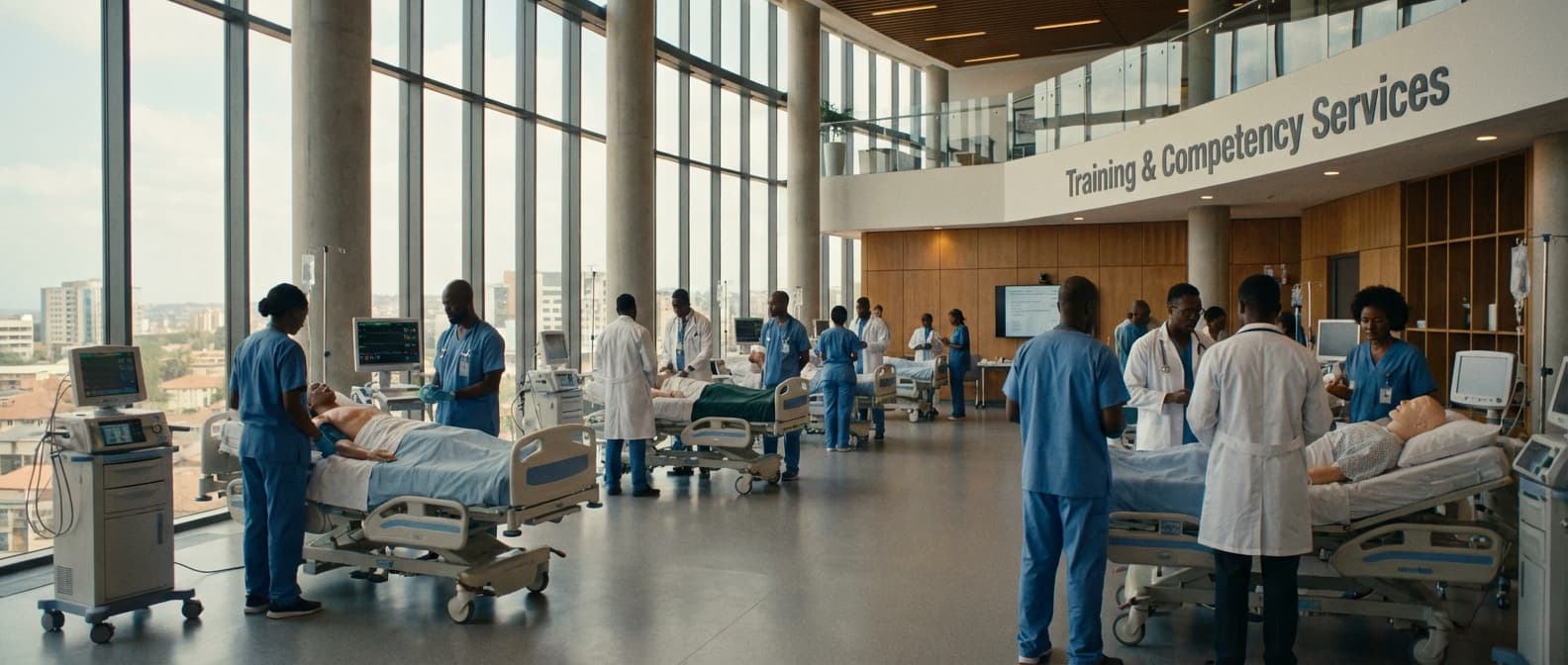
MRI Operator Training Service (Radiographers) in Senegal
Engineering Excellence & Technical Support
MRI Operator Training Service (Radiographers) High-standard technical execution following OEM protocols and local regulatory frameworks.
Advanced Neuroimaging Protocols
Master state-of-the-art MRI protocols for comprehensive neurological examinations, including diffusion tensor imaging (DTI) and functional MRI (fMRI), enhancing diagnostic accuracy for complex brain conditions in Senegal's diverse patient population.
Musculoskeletal & Abdominal MRI Expertise
Gain hands-on proficiency in acquiring high-resolution musculoskeletal and abdominal MRI scans. Our training emphasizes artifact reduction techniques and contrast administration best practices for precise diagnosis of injuries and pathologies common in Senegal.
Quality Assurance & Patient Safety
Implement rigorous quality assurance measures and adhere to international patient safety standards. Learn to optimize MRI workflows and troubleshoot common issues, ensuring reliable imaging outcomes and a safe patient experience within the Senegalese healthcare system.
What Is Mri Operator Training Service (Radiographers) In Senegal?
MRI Operator Training Service (Radiographers) in Senegal refers to specialized educational programs designed to equip radiographers in Senegal with the necessary theoretical knowledge and practical skills to operate Magnetic Resonance Imaging (MRI) scanners safely and effectively. This service is crucial for advancing diagnostic imaging capabilities within the Senegalese healthcare system, ensuring high-quality patient care, and adhering to international standards in medical imaging. The training typically covers principles of MRI physics, scanner operation, patient preparation, imaging protocols, image optimization, artifact reduction, safety procedures, and basic quality assurance measures. It aims to enhance the competence of radiographers in performing diagnostic MRI examinations across various anatomical regions and clinical applications.
| Who Needs MRI Operator Training Service? | Typical Use Cases in Senegal | |||||
|---|---|---|---|---|---|---|
| Registered Radiographers: Professionals currently practicing radiography in Senegal who wish to specialize in or expand their skillset to include MRI operation. | New Radiography Graduates: Individuals entering the field of diagnostic imaging in Senegal requiring foundational knowledge and practical skills in MRI. | Healthcare Facilities: Hospitals, clinics, and diagnostic imaging centers in Senegal acquiring or upgrading MRI equipment and needing to train their existing or new radiographer staff. | Medical Imaging Technologists: Allied health professionals involved in patient care and imaging procedures who may benefit from advanced MRI training. | Radiology Departments: Ensuring a competent workforce capable of delivering advanced diagnostic services. | ||
| Neurological Diagnoses: Imaging of the brain and spinal cord for conditions such as stroke, tumors, multiple sclerosis, and degenerative diseases. | Musculoskeletal Imaging: Assessment of joints, bones, and soft tissues for injuries, arthritis, and sports-related conditions. | Abdominal and Pelvic Imaging: Evaluation of organs like the liver, kidneys, pancreas, and reproductive organs for tumors, infections, and structural abnormalities. | Cardiovascular Imaging: Assessment of heart structure and function, and vascular abnormalities. | Oncology: Staging and monitoring of cancer through detailed soft tissue contrast. | Research and Development: Facilitating advanced diagnostic imaging research within Senegalese medical institutions. | Public Health Initiatives: Supporting diagnostic capabilities in underserved areas through well-trained personnel. |
Key Components of MRI Operator Training Service:
- Theoretical Instruction: In-depth modules on MRI physics (e.g., nuclear magnetic resonance, RF pulses, gradient fields, signal generation), hardware components of MRI scanners, image formation principles, and contrast mechanisms.
- Practical Skills Development: Hands-on training with MRI scanners, including patient positioning, protocol selection, parameter optimization (e.g., TR, TE, flip angle), image acquisition sequences, and post-processing techniques.
- Safety Protocols: Comprehensive training on MRI safety, including screening of patients and personnel for contraindications (e.g., metallic implants, pacemakers), understanding magnetic field hazards, and emergency procedures.
- Clinical Applications & Protocols: Study of specific imaging protocols for different anatomical areas (e.g., neuroimaging, musculoskeletal, abdominal, cardiac) and common pathologies encountered in clinical practice.
- Image Quality & Artifact Management: Techniques for optimizing image quality, identifying common artifacts (e.g., motion, susceptibility, aliasing), and implementing strategies for their reduction or elimination.
- Quality Assurance & Control: Introduction to quality assurance procedures to maintain scanner performance and ensure diagnostic image reliability.
- Ethical and Legal Considerations: Understanding of patient consent, data privacy, and professional responsibilities in MRI imaging.
Who Needs Mri Operator Training Service (Radiographers) In Senegal?
This service is essential for ensuring that radiographers in Senegal are proficient in operating MRI machines, interpreting scans, and adhering to safety protocols. This leads to improved diagnostic accuracy, patient care, and operational efficiency within healthcare facilities.
| Customer Type | Primary Departments Requiring Training | Key Benefits of Training |
|---|---|---|
| Public Hospitals | Radiology Department, Diagnostic Imaging | Enhance diagnostic capabilities for a larger patient population, standardize imaging protocols, improve patient outcomes. |
| Private Hospitals & Clinics | Radiology Department, Imaging Services | Attract more complex cases, offer advanced diagnostic services, maintain high-quality patient care, competitive advantage. |
| Radiology Clinics & Diagnostic Centers | Imaging Technologists, Radiographers | Expand service offerings, ensure compliance with international standards, improve scan quality and throughput. |
| University Teaching Hospitals | Radiology Department, Medical Education Faculty | Train future radiographers, facilitate research, integrate cutting-edge MRI techniques into curriculum. |
| Ministry of Health | Public Health Facilities, Training Institutions | Address national healthcare needs, improve accessibility to advanced diagnostics, build a skilled workforce. |
| Private Healthcare Groups | All affiliated imaging facilities | Ensure consistent quality and training across all sites, optimize resource utilization, enhance brand reputation. |
Target Customers and Departments for MRI Operator Training Service in Senegal:
- Hospitals (Public and Private)
- Radiology Clinics
- Diagnostic Centers
- University Teaching Hospitals
- Ministry of Health and Social Action (for public health initiatives)
- Private Healthcare Groups
Mri Operator Training Service (Radiographers) Process In Senegal
This document outlines the typical workflow for an MRI Operator Training Service (Radiographers) in Senegal, from initial inquiry to the successful execution of the training program. The process emphasizes a structured approach to ensure all client needs are met and the training is effective and compliant with local regulations.
| Phase | Key Activities | Responsible Party | Deliverables/Outcomes | Timeline (Typical) |
|---|---|---|---|---|
| Client expresses interest in MRI operator training. Service provider gathers information on existing radiographer skill levels, specific MRI equipment, training objectives, desired dates, and budget. Discussion of desired learning outcomes and any specific areas of focus (e.g., specific MRI sequences, safety protocols, advanced techniques). | Client, Service Provider | Understanding of client's training requirements. Identification of key stakeholders. Initial scope of training defined. | 1-3 business days |
| Service provider develops a detailed training proposal based on the needs assessment. Proposal includes curriculum outline, training methodology (lectures, practical sessions, simulations), duration, trainer profiles, proposed dates, pricing, and terms & conditions. Customization of the curriculum to address specific client needs and equipment. | Service Provider | Comprehensive training proposal. Detailed curriculum and schedule. | 3-7 business days |
| Client reviews the proposal. Negotiation of terms, pricing, and any modifications. Signing of a formal training agreement or contract. | Client, Service Provider | Signed training agreement/contract. Confirmation of booking and commitment. | 2-5 business days |
| Service provider confirms trainers and schedules. Logistics coordination (venue, equipment availability, accommodation for trainers if applicable). Communication with the client regarding participant registration, prerequisites, and any pre-reading materials. Finalization of training materials and equipment checklists. | Service Provider, Client | Confirmed trainers and schedule. Logistical arrangements in place. Participant list and necessary documentation. Training materials prepared. | 1-2 weeks prior to training |
| Execution of the training program as per the agreed curriculum. Includes theoretical sessions (lectures, case studies) and practical sessions (hands-on MRI operation, image acquisition, patient positioning, safety procedures). On-site or remote delivery, depending on the agreement. | Service Provider (Trainers) | Knowledge transfer to radiographers. Development of practical skills. Live demonstrations and supervised practice. | As per agreed duration (e.g., 3-5 days) |
| Collection of feedback from participants and client through evaluation forms. Debriefing session with the client to discuss training outcomes and address any immediate concerns. Provision of additional resources or guidance as needed. | Service Provider, Client | Training evaluation reports. Client satisfaction assessment. Identification of areas for improvement in future training. | Immediately after training |
| Issuance of certificates of completion to participants who meet the training requirements. Potential for follow-up sessions or advanced training modules based on client needs. Long-term support and consultancy if required. | Service Provider | Certificates of attendance/completion. Reinforcement of learning. Client relationship management. | 1-2 weeks after evaluation |
MRI Operator Training Service (Radiographers) Process in Senegal
- Initial Inquiry & Needs Assessment
- Proposal Development & Customization
- Agreement & Contract Finalization
- Pre-Training Preparations
- Training Delivery
- Post-Training Support & Evaluation
- Certification & Follow-up
Mri Operator Training Service (Radiographers) Cost In Senegal
The cost of MRI operator training services for radiographers in Senegal can vary significantly due to several factors. These include the reputation and accreditation of the training provider, the duration and intensity of the program, the specific modules covered (e.g., basic operation, advanced techniques, specific MRI sequences, patient safety, image interpretation basics), the inclusion of hands-on practical sessions with actual MRI equipment, and whether the training is delivered on-site at a healthcare facility or at a dedicated training center. Additional costs might arise from examination fees, certification, and materials. Generally, training can range from a few days to several weeks or even months for more comprehensive programs.
| Training Duration (Approximate) | Estimated Cost Range (CFA Francs) | Typical Inclusions |
|---|---|---|
| Short Course (2-5 days) | 150,000 - 400,000 CFA | Basic MRI principles, common sequences, safety protocols. |
| Intermediate Course (1-2 weeks) | 350,000 - 800,000 CFA | Includes short course content plus hands-on practice, basic protocol optimization, introduction to specific applications. |
| Comprehensive/Advanced Program (3 weeks - 2 months) | 700,000 - 2,000,000+ CFA | Extensive theoretical and practical training, advanced sequences, quality control, troubleshooting, introduction to interpretation, potential for certification preparation. |
Factors Influencing MRI Operator Training Costs in Senegal:
- Training Provider Reputation & Accreditation: Well-established institutions with recognized certifications often command higher fees.
- Program Duration & Intensity: Longer and more in-depth courses will naturally be more expensive.
- Curriculum & Specialization: Advanced modules or specialized training (e.g., neuro-MRI, musculoskeletal MRI) may increase costs.
- Hands-on Practical Experience: Access to functional MRI scanners for practical training is a significant cost driver.
- Location of Training: On-site training at a hospital might have different cost structures than off-site courses.
- Included Materials & Certification: The cost of textbooks, manuals, and official certification exams contributes to the overall price.
- Trainer Expertise: The qualifications and experience of the instructors play a role in pricing.
Affordable Mri Operator Training Service (Radiographers) Options
This service offers comprehensive and affordable MRI operator training for radiographers. We understand that budget constraints are a significant factor, so we've designed flexible options to maximize value and minimize costs. Our training programs are crafted to equip radiographers with the essential knowledge and practical skills required for safe and effective MRI operation, adhering to industry standards. We focus on both theoretical understanding and hands-on experience, ensuring our graduates are well-prepared for the demands of an MRI environment. Exploring our value bundles and cost-saving strategies will empower you to invest in professional development without compromising your financial objectives.
| Strategy | Description | Benefit |
|---|---|---|
| Early Bird Registration | Register for a training program within a specified early period and receive a discount. | Reduced tuition fees. |
| Online & Hybrid Learning Options | Leverage our flexible online modules for theoretical learning, supplemented by in-person practical sessions or workshops. | Reduced travel and accommodation costs; greater scheduling flexibility. |
| Bundled Coursework | Enroll in multiple related training modules or comprehensive packages to receive an integrated discount. | Lower overall training expenditure compared to individual module purchases. |
| Payment Plans | Interest-free or low-interest payment options to spread the cost over a manageable period. | Improved cash flow management and accessibility for tighter budgets. |
| Referral Program | Receive a discount or credit for referring new participants to our training services. | Further reduces individual or departmental training costs. |
| Continuing Education Units (CEUs) | Our courses are designed to offer valuable CEUs, contributing to professional license renewal and skill enhancement. | Provides added value and essential for career progression without extra cost. |
Value Bundles for Enhanced Training & Cost Savings
- {"title":"Core MRI Fundamentals Package","description":"This foundational package covers essential MRI physics, safety protocols, patient care, image acquisition basics, and common artifact identification. Ideal for radiographers new to MRI or those seeking a solid refresher."}
- {"title":"Advanced MRI Techniques Bundle","description":"Builds upon the fundamentals, delving into specialized sequences (e.g., diffusion, perfusion, spectroscopy), contrast agent administration, advanced imaging protocols for specific anatomical regions (neurology, musculoskeletal, abdominal), and basic quality assurance."}
- {"title":"Comprehensive MRI Specialist Program","description":"Our all-encompassing program, combining both Core Fundamentals and Advanced Techniques. This provides the most thorough training for radiographers aiming for full MRI competency. Often includes simulation time or supervised clinical practicums."}
- {"title":"Customizable Training Modules","description":"For facilities with specific needs, we offer the ability to tailor training modules. This allows you to focus on particular areas of MRI, optimizing your training investment and addressing unique operational challenges."}
- {"title":"Team Training & Group Discounts","description":"Significant cost savings are available for groups of radiographers. We offer tiered discounts based on the number of participants, making professional development accessible for entire departments."}
Verified Providers In Senegal
In Senegal, the pursuit of quality healthcare is paramount. When it comes to medical services, especially those involving sensitive procedures and advanced diagnostics, verified providers are not just a preference; they are a necessity. Franance Health stands out as a leading example of such a verified provider, distinguished by its stringent credentials and unwavering commitment to excellence. This ensures that patients receive the highest standard of care, safety, and medical expertise available.
| Credential/Attribute | Franance Health's Commitment | Benefit to Patients |
|---|---|---|
| Regulatory Adherence | Strict compliance with Senegalese and international healthcare standards and certifications. | Ensures patient safety, quality of care, and legitimate medical practices. |
| Expert Medical Staff | Employment of highly qualified, experienced, and specialized medical professionals. | Access to top-tier medical expertise and personalized treatment plans. |
| Technological Investment | Utilization of advanced diagnostic and therapeutic medical equipment. | Accurate diagnoses, effective treatments, and improved patient outcomes. |
| Patient Experience | Focus on personalized care, clear communication, and a supportive environment. | Reduced anxiety, increased trust, and a more comfortable healing process. |
| Ethical Standards | Upholding principles of patient confidentiality, informed consent, and fairness. | Trustworthy and respectful healthcare delivery. |
Franance Health Credentials and Why They Represent the Best Choice:
- Accreditation and Regulatory Compliance: Franance Health adheres to all national and international healthcare regulations. This includes certifications from recognized bodies that audit facilities, staff qualifications, and operational procedures, guaranteeing adherence to best practices in patient care and safety.
- Highly Qualified Medical Professionals: The team at Franance Health comprises experienced and board-certified physicians, specialists, and support staff. Their continuous professional development and specialization in various medical fields ensure patients benefit from cutting-edge medical knowledge and techniques.
- Advanced Technology and Equipment: Investing in state-of-the-art medical technology and diagnostic equipment is a hallmark of Franance Health. This enables accurate diagnoses, minimally invasive procedures, and effective treatment plans, significantly improving patient outcomes.
- Patient-Centric Approach: Franance Health prioritizes patient well-being and comfort. This is reflected in their personalized care plans, transparent communication, and a supportive environment designed to reduce stress and anxiety associated with medical treatments.
- Commitment to Ethical Practices: Integrity and ethical conduct are fundamental to Franance Health's operations. They uphold the highest standards of medical ethics, ensuring patient confidentiality, informed consent, and equitable access to care.
- Proven Track Record and Reputation: A consistent history of successful treatments and positive patient testimonials underscores Franance Health's reliability and effectiveness. Their strong reputation within the Senegalese healthcare landscape is a testament to their consistent delivery of superior medical services.
Scope Of Work For Mri Operator Training Service (Radiographers)
This Scope of Work (SOW) outlines the services to be provided by a qualified training provider for Magnetic Resonance Imaging (MRI) Operator Training targeted at radiographers. The objective is to equip radiographers with the necessary theoretical knowledge and practical skills to safely and effectively operate MRI scanners, acquire diagnostic-quality images, and manage patient care during MRI procedures. This document details the technical deliverables and outlines the standard specifications expected for the training program.
| Area of Training | Key Topics | Learning Objectives | Assessment Methods | Standard Specification |
|---|---|---|---|---|
| Introduction to MRI Physics | Basic principles of MRI (magnetism, RF pulses, signal detection), relaxation mechanisms (T1, T2, T2*), contrast mechanisms, image weighting. | Understand the fundamental physics underlying MRI image formation. | Written quiz on MRI physics principles. | Content to be aligned with current international MRI physics standards (e.g., ISMRM guidelines). |
| MRI Safety | Static magnetic field safety, RF field safety, gradient field safety, screening procedures, contraindications, quench procedures, emergency protocols, biological effects of MRI. | Identify and mitigate potential hazards associated with MRI procedures for patients and staff. | Practical demonstration of patient screening and emergency scenario simulation. | Adherence to ACR (American College of Radiology) and other relevant safety guidelines. |
| MRI Hardware and Software | Components of an MRI scanner (magnet, RF coils, gradient system, computer system), image acquisition parameters (TR, TE, Flip Angle, FOV, Matrix), pulse sequences (spin echo, gradient echo, FLAIR, DWI, etc.), image reconstruction and processing. | Operate the MRI scanner interface and select appropriate parameters for various imaging protocols. | Hands-on operation of the MRI console, including protocol selection and parameter adjustment. | Familiarity with common MRI vendor platforms (e.g., GE, Siemens, Philips) if specified by the client. |
| MRI Protocols and Techniques | Anatomy and pathology imaging for specific body regions (e.g., neuro, musculoskeletal, abdominal, cardiac), contrast administration and timing, advanced imaging techniques (fMRI, spectroscopy, perfusion imaging). | Develop and apply appropriate MRI protocols to image various anatomical regions and pathologies. | Case-based study analysis and protocol selection for simulated patient scenarios. | Protocols should cover common clinical applications and be adaptable to specific departmental needs. |
| Image Quality Optimization and Artifact Management | Factors affecting image quality, troubleshooting common artifacts (motion, susceptibility, aliasing), post-processing techniques (windowing, leveling, filtering). | Acquire diagnostic-quality images and effectively troubleshoot common artifacts. | Practical session on identifying and correcting artifacts in acquired images. | Techniques taught should be evidence-based and contribute to improved diagnostic accuracy. |
| Patient Care and Management | Patient preparation, communication, comfort measures, management of anxious or claustrophobic patients, monitoring during scans, post-scan care. | Provide excellent patient care throughout the MRI examination process. | Role-playing scenarios focusing on patient communication and management. | Emphasis on patient-centered care principles and adherence to ethical standards. |
Technical Deliverables
- Comprehensive Training Manual (Digital & Hardcopy)
- Practical Training Modules (Simulated & Live Scan Sessions)
- Competency Assessment Tools (Quizzes, Practical Examinations, Case Studies)
- Certificate of Completion (Digital & Hardcopy)
- Post-Training Support Plan
- Training Evaluation Report (for client review)
Service Level Agreement For Mri Operator Training Service (Radiographers)
This Service Level Agreement (SLA) outlines the guaranteed response times and uptime for the MRI Operator Training Service provided to certified radiographers. This SLA is designed to ensure prompt support and consistent availability of the training platform.
| Service Component | Uptime Guarantee | Response Time (Critical Incident) | Response Time (Major Incident) | Response Time (Minor Incident) |
|---|---|---|---|---|
| MRI Operator Training Platform Availability | 99.5% during Business Hours | 1 hour | 4 business hours | 8 business hours |
| Technical Support (Live Chat/Email) | N/A (Support is provided during business hours) | 1 business hour | 2 business hours | 4 business hours |
| Access to Training Modules | 99.5% during Business Hours | 1 hour | 4 business hours | 8 business hours |
Key Definitions
- MRI Operator Training Service: Refers to the online platform and associated resources provided for radiographers to gain or enhance MRI operational skills.
- Critical Incident: An event that renders the MRI Operator Training Service completely unavailable or significantly impairs its core functionality, preventing users from accessing training modules.
- Major Incident: An event that degrades the performance of the MRI Operator Training Service, impacting specific features or user experience, but not rendering it entirely inaccessible.
- Minor Incident: A non-critical issue that does not significantly affect the usability of the MRI Operator Training Service, such as minor cosmetic issues or documentation clarifications.
- Business Hours: Defined as Monday through Friday, 9:00 AM to 5:00 PM (Time Zone of Service Provider), excluding public holidays.
Frequently Asked Questions

Ready when you are
Let's scope your MRI Operator Training Service (Radiographers) in Senegal project in Senegal.

Scaling healthcare logistics and technical systems across the entire continent.