
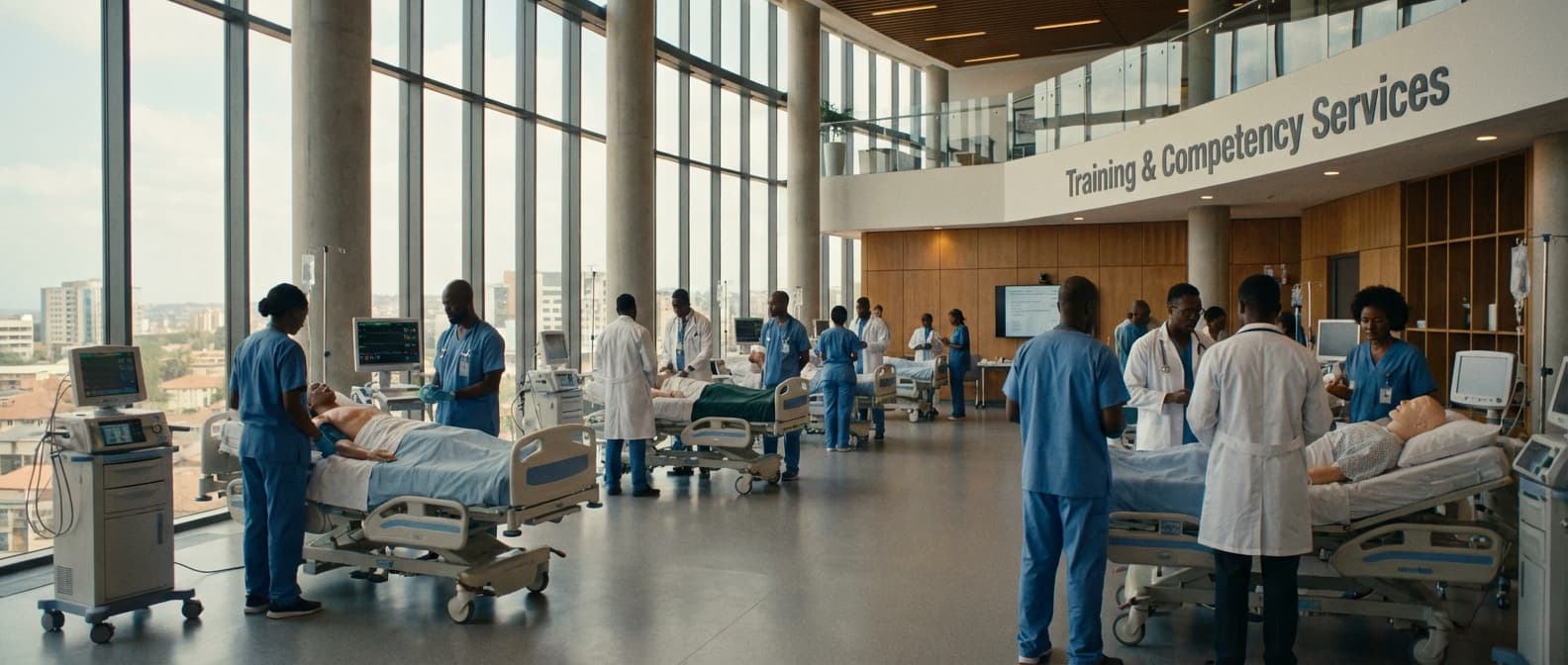
CT Operator Training Service (Radiographers) in Senegal
Engineering Excellence & Technical Support
CT Operator Training Service (Radiographers) High-standard technical execution following OEM protocols and local regulatory frameworks.
Advanced Geospatial Training for Radiographers
Equip Senegalese radiographers with cutting-edge skills in interpreting CT scans for precise anatomical localization and disease staging, leveraging advanced geospatial visualization techniques for enhanced diagnostic accuracy and treatment planning.
Machine Learning-Powered CT Image Analysis
Empower radiographers with training on AI-driven tools for automated anomaly detection, quantitative image analysis, and workflow optimization in CT imaging, leading to faster diagnoses and improved patient care.
CT Dose Optimization and Radiation Safety Protocols
Provide specialized training on the latest techniques and technologies for minimizing radiation dose to patients and staff during CT examinations, ensuring adherence to international safety standards and best practices in Senegal.
What Is Ct Operator Training Service (Radiographers) In Senegal?
CT Operator Training Service (Radiographers) in Senegal refers to specialized educational programs designed to equip radiographers with the knowledge and practical skills necessary to operate Computed Tomography (CT) scanners safely and effectively. This training is crucial for ensuring high-quality diagnostic imaging, patient safety, and adherence to radiation protection protocols within the Senegalese healthcare system. The service encompasses theoretical instruction on CT physics, image acquisition parameters, patient positioning, contrast media administration, artifact recognition and mitigation, as well as hands-on practical training on specific CT scanner models commonly utilized in Senegalese medical facilities.
| Target Audience | Need for Service | Typical Use Cases |
|---|---|---|
| Newly graduated radiographers in Senegal. | To acquire fundamental skills for independent CT operation and meet entry-level competency requirements. | Initial certification or onboarding onto a CT scanner in a hospital or clinic. |
| Experienced radiographers seeking to specialize or enhance their CT expertise. | To learn advanced techniques, operate newer CT scanner models, or improve diagnostic imaging capabilities. | Transitioning to a facility with advanced CT technology, performing complex neurovascular or cardiac CT, or adhering to updated clinical guidelines. |
| Radiographers working in facilities with newly acquired CT equipment. | To ensure proficiency with specific manufacturer hardware and software, and to optimize workflow and imaging protocols. | Installation of a new CT scanner, implementation of new imaging software or applications. |
| Healthcare institutions in Senegal aiming to improve imaging services and patient outcomes. | To ensure staff competence, reduce repeat scans due to poor image quality, and maintain compliance with national standards. | Developing or expanding radiology departments, ensuring diagnostic accuracy for various medical conditions, and adhering to regulatory compliance for medical imaging. |
Key Components of CT Operator Training Service:
- CT Physics and Principles: Understanding X-ray generation, beam hardening, attenuation, reconstruction algorithms (e.g., filtered back-projection, iterative reconstruction), and image formation.
- CT Scanner Anatomy and Functionality: Familiarization with gantry components (X-ray tube, detectors), table movement mechanisms, console operation, and associated hardware.
- Image Acquisition Protocols: Learning to select appropriate parameters (kVp, mA, pitch, slice thickness, reconstruction kernels) based on anatomical region, patient characteristics, and diagnostic objectives.
- Patient Care and Safety: Principles of radiation protection (ALARA principle), patient preparation, contrast media administration (including contraindications and adverse reactions), emergency procedures, and infection control.
- Image Quality Assessment: Identifying and mitigating common CT artifacts (e.g., motion, beam hardening, metallic artifacts) and understanding factors influencing image resolution and signal-to-noise ratio.
- Quality Assurance and Control: Implementing and performing routine quality control tests on CT equipment.
- Ethical and Legal Considerations: Understanding professional responsibilities, patient confidentiality, and regulatory requirements in Senegal.
- Hands-on Practical Training: Supervised operation of CT scanners in a clinical setting, including patient scanning scenarios.
Who Needs Ct Operator Training Service (Radiographers) In Senegal?
CT Operator Training Service (Radiographers) in Senegal is crucial for enhancing the skills and knowledge of radiographers in utilizing Computed Tomography (CT) scanners effectively and safely. This training is essential for improving diagnostic accuracy, patient care, and operational efficiency within healthcare facilities. The service aims to equip radiographers with the latest techniques, protocols, and safety measures related to CT imaging.
| Target Customer Group | Specific Departments/Roles | Key Training Needs |
|---|---|---|
| Public Hospitals | Radiology Department, Imaging Units | Basic and advanced CT operation, patient positioning, radiation safety, image acquisition protocols, quality control, troubleshooting common issues. |
| Private Hospitals | Radiology Department, CT Scan Units | Advanced CT techniques (e.g., CT angiography, cardiac CT, interventional CT), protocol optimization, CT-based interventions, multidisciplinary team collaboration. |
| Diagnostic Imaging Centers | CT Scan Operators, Radiographers | Efficient workflow management, patient throughput optimization, specialized CT applications, new technology integration, continuous professional development. |
| Tertiary Care Centers | Radiology Technologists, CT Specialists | Complex CT imaging for specialized conditions (e.g., trauma, pediatrics, oncology), advanced image processing, research-oriented CT protocols, staff supervision and training. |
| Specialized Medical Clinics (e.g., Oncology, Neurology) | Radiographers with focus on specific modalities | CT protocols for cancer staging and treatment monitoring, neuroimaging protocols for stroke, tumor characterization, and neurological disorders, collaboration with oncologists and neurologists. |
Target Customers and Departments
- Hospitals (Public and Private)
- Diagnostic Imaging Centers
- Radiology Departments
- Tertiary Care Centers
- Specialized Medical Clinics (e.g., Oncology, Neurology)
Ct Operator Training Service (Radiographers) Process In Senegal
This document outlines the typical workflow for a CT Operator Training Service for Radiographers in Senegal, from initial inquiry to the successful execution of the training program. The process is designed to ensure clarity, efficiency, and a high-quality learning experience for participants.
| Phase | Key Activities | Responsible Party | Deliverables/Outcomes |
|---|---|---|---|
| Inquiry & Initial Contact | Client expresses interest, initial communication. | Client, Training Provider | Initiation of training discussion. |
| Needs Assessment & Consultation | Understanding specific training needs, scope, and objectives. | Training Provider, Client | Defined training requirements, scope of work. |
| Proposal & Quotation | Development of detailed training plan and cost estimate. | Training Provider | Formal training proposal, detailed quotation. |
| Contract & Agreement | Negotiation and finalization of service agreement. | Training Provider, Client | Signed service contract/agreement. |
| Planning & Preparation | Curriculum finalization, scheduling, material preparation, logistics. | Training Provider | Finalized curriculum, training schedule, prepared materials, confirmed logistics. |
| Execution | Delivery of theoretical and practical training sessions. | Training Provider (Trainers) | Trained radiographers, practical skill development. |
| Assessment & Evaluation | Testing of knowledge and skills, feedback collection. | Training Provider, Client, Trainees | Assessment results, feedback reports, completion certificates. |
| Closure | Final invoicing, payment, and program review. | Training Provider, Client | Completed financial transaction, documented program review for future improvement. |
CT Operator Training Service (Radiographers) Workflow in Senegal
- Inquiry and Initial Contact: The process begins with a prospective client (e.g., a hospital, clinic, or government health agency) expressing interest in CT operator training.
- Needs Assessment and Consultation: A detailed discussion is held to understand the specific training requirements, including the target audience's existing knowledge, the desired learning outcomes, the number of participants, and any specific CT equipment the trainees will be operating.
- Proposal Development and Quotation: Based on the needs assessment, a comprehensive training proposal is developed. This includes the training curriculum, methodology, duration, location (on-site or off-site), trainer qualifications, required resources, and a detailed cost quotation.
- Contract Negotiation and Agreement: Upon acceptance of the proposal, a formal contract or service agreement is drafted. This document outlines the terms and conditions, payment schedule, responsibilities of both parties, and confidentiality clauses.
- Curriculum Customization and Scheduling: The training curriculum is finalized and potentially customized to align with the specific needs identified. Training dates and times are agreed upon, considering the operational schedules of the trainees and the availability of trainers and facilities.
- Participant Registration and Pre-Assessment: Trainees are formally registered for the program. Depending on the program's structure, a pre-assessment might be conducted to gauge the baseline knowledge of the participants and tailor the training further.
- Training Material Preparation: All necessary training materials, including presentations, handouts, case studies, practical exercises, and evaluation forms, are prepared and reviewed by the training team.
- Logistics and Facility Arrangement: If the training is to be conducted at a specific location, all logistical arrangements are made. This includes booking training rooms, ensuring access to CT scanners for practical sessions, and arranging for any necessary equipment or software.
- Training Delivery: The training program is delivered by qualified and experienced CT radiographers/trainers. This typically involves a combination of theoretical lectures, interactive discussions, case study analysis, and hands-on practical sessions on CT equipment.
- Ongoing Assessment and Feedback: Throughout the training, the trainers monitor the participants' progress through informal assessments, quizzes, and observation during practical sessions. Regular feedback is provided to trainees to help them improve.
- Final Assessment and Evaluation: At the end of the training, a comprehensive assessment is conducted to evaluate the trainees' understanding and competency. This may include written exams, practical skill demonstrations, and case report evaluations.
- Post-Training Support and Certification: Upon successful completion of the training and assessments, participants receive a certificate of completion. Depending on the agreement, some level of post-training support may be offered, such as follow-up consultations or access to online resources.
- Feedback Collection and Program Review: Feedback from both the participants and the client organization is collected to evaluate the effectiveness of the training program. This feedback is crucial for continuous improvement of future training offerings.
- Invoicing and Payment Finalization: Final invoices are issued based on the agreed-upon terms, and payment is processed, concluding the financial aspect of the service.
Ct Operator Training Service (Radiographers) Cost In Senegal
The cost of CT Operator Training (Radiographers) in Senegal can vary significantly based on several key factors. These include the reputation and accreditation of the training institution, the duration and intensity of the program, the qualifications and experience of the instructors, and the specific curriculum offered. Furthermore, whether the training is conducted as an in-person course, an online module, or a blended learning approach will influence pricing. The inclusion of practical, hands-on training with actual CT equipment, simulation labs, and access to clinical placements will also command a higher price. The market is influenced by supply and demand, with specialized or advanced training potentially being more expensive. Government-subsidized programs or initiatives might offer lower costs for eligible individuals or institutions.
| Training Type/Level | Estimated Cost Range (XOF per person) | Typical Duration | Notes |
|---|---|---|---|
| Basic CT Operator Certification | 150,000 - 300,000 | 1-3 months (part-time/full-time) | Covers fundamental principles of CT, patient positioning, basic protocols, radiation safety. |
| Advanced CT Protocols & Image Optimization | 200,000 - 450,000 | 2-4 weeks (intensive) | Focuses on specialized CT applications (e.g., cardiac CT, neuro CT), advanced image reconstruction, troubleshooting. |
| Refresher/Continuing Education Courses | 75,000 - 150,000 | 2-5 days | For certified radiographers to update skills, learn new techniques, or meet continuing professional development requirements. |
| On-site Institutional Training (Group Rates) | Negotiable (per program/per participant) | Varies | Tailored programs for hospitals or imaging centers, often with cost savings for larger groups. |
| Online/Distance Learning Modules | 100,000 - 250,000 | Varies (self-paced) | May require supplementary practical sessions if not fully integrated. |
Key Pricing Factors for CT Operator Training in Senegal:
- Training Institution Reputation & Accreditation
- Program Duration & Intensity
- Instructor Qualifications & Experience
- Curriculum Scope & Specialization
- Training Modality (In-person, Online, Blended)
- Inclusion of Practical/Hands-on Components
- Access to CT Equipment & Simulation Labs
- Clinical Placement Opportunities
- Market Demand & Supply Dynamics
- Government Subsidies & Initiatives
Affordable Ct Operator Training Service (Radiographers) Options
Acquiring specialized training in Computed Tomography (CT) operation is crucial for radiographers seeking career advancement and expanded skill sets. This training can significantly enhance a facility's capabilities and patient care. However, the cost of comprehensive CT operator training can be a barrier for individuals and institutions. This guide explores affordable training options, emphasizing value bundles and effective cost-saving strategies for radiographers and healthcare facilities. We'll delve into how to maximize the return on investment for CT training.
| Value Bundle Component | Cost-Saving Strategy | Benefit to Radiographers/Facilities |
|---|---|---|
| Basic CT Principles & Protocols Course | Enroll in an online, self-paced module. Leverage early-bird discounts. | Lower entry cost, foundational knowledge, flexible learning. Ideal for new entrants or those needing a refresher. |
| Advanced CT Techniques & Applications (e.g., Cardiac CT, Neuro CT) | Bundle with a foundational course for a package discount. Group registration for multiple staff members. | Specialized skills, expanded service offerings, improved patient outcomes. Cost reduction through bulk enrollment. |
| CT Safety & Radiation Management | Integrate into existing departmental training. Utilize simulator-based training to reduce scanner downtime. | Enhanced patient and staff safety, compliance with regulations. Reduced operational costs by minimizing scanner unavailability. |
| Hands-on Scanner Training/Simulation Workshops | Partner with CT equipment vendors for training at their facilities or on-site. Utilize simulators that mimic real-world scenarios. | Practical skills development, reduced learning curve on actual equipment. Cost savings through vendor-provided training or reduced wear on facility equipment. |
| Continuing Education Credits (CEUs) | Seek programs that offer CEUs as part of the core curriculum. Bundle CEU-eligible courses with primary training. | Maintains professional licensure and credentials. Maximizes training investment by fulfilling ongoing requirements. |
| Mentorship Programs | Establish internal mentorship with experienced CT technologists. Seek programs that include mentorship components. | Personalized guidance, accelerated skill development, institutional knowledge transfer. Reduced external training costs. |
| Equipment Vendor Training Packages | Negotiate training as part of a new CT scanner purchase or service contract. Inquire about refurbished equipment training discounts. | Directly relevant to specific equipment, often includes updates. Potential for significant cost savings when bundled with hardware acquisition. |
| Online Learning Platforms & Webinars | Subscribe to platforms offering a wide range of CT-related courses. Participate in free or low-cost webinars. | Access to diverse topics and experts, cost-effective continuous learning. Broadens knowledge base without extensive travel. |
Key Considerations for Affordable CT Operator Training
- Accreditation and Certification: Ensure training programs are accredited by recognized bodies to guarantee quality and meet professional requirements.
- Curriculum Relevance: Choose programs that cover essential CT principles, safety protocols, image acquisition techniques, and quality control.
- Hands-on Experience: Prioritize programs that offer practical, hands-on experience with CT scanners or high-fidelity simulators.
- Instructor Expertise: Look for instructors with extensive clinical experience and a strong understanding of CT technology.
- Learning Modalities: Consider the flexibility of online, hybrid, or in-person learning options to suit individual schedules and preferences.
- Ongoing Support: Investigate whether the training provider offers post-training support, such as continuing education opportunities or technical assistance.
Verified Providers In Senegal
In Senegal's rapidly evolving healthcare landscape, discerning access to reliable and competent medical services is paramount. Franance Health distinguishes itself by rigorously verifying its network of healthcare providers, ensuring that patients receive not only care but also confidence. This meticulous credentialing process underscores their commitment to quality, safety, and ethical practice. By partnering exclusively with Franance Health-verified providers, individuals and organizations are aligning themselves with the pinnacle of healthcare expertise and integrity in Senegal. Their comprehensive vetting includes scrutinizing academic qualifications, professional licenses, continuing education, patient feedback, and adherence to international healthcare standards. This dedication to transparency and excellence positions Franance Health as the definitive choice for accessing the best healthcare providers in the nation.
| Provider Type | Franance Health Verification Benefit | Why it's the Best Choice |
|---|---|---|
| General Practitioners | Confirmed academic qualifications and valid practice licenses. | Guarantees access to a foundational level of medical expertise for everyday health needs, ensuring accurate diagnosis and appropriate initial treatment. |
| Specialist Physicians (e.g., Cardiologists, Dermatologists) | Verified board certifications, specialized training, and successful completion of rigorous credentialing. | Provides assurance of advanced knowledge and skills in specific medical fields, leading to more precise diagnoses and effective treatments for complex conditions. |
| Surgeons | Extensive verification of surgical training, experience, and a track record of successful procedures. | Ensures that patients undergoing surgery are treated by highly skilled and experienced professionals, minimizing risks and optimizing outcomes. |
| Dentists | Confirmation of dental degrees, licenses, and adherence to dental practice standards. | Offers confidence in receiving safe, effective, and high-quality dental care, from routine check-ups to complex restorative procedures. |
| Diagnostic Laboratories & Imaging Centers | Verification of equipment calibration, quality control measures, and qualified technical staff. | Ensures the accuracy and reliability of diagnostic tests and imaging results, which are critical for correct medical decision-making. |
| Hospitals & Clinics | Assessment of infrastructure, safety protocols, staff qualifications, and adherence to healthcare management standards. | Provides peace of mind knowing that facilities are well-equipped, safe, and staffed by competent professionals, offering comprehensive care in a secure environment. |
Key Franance Health Credentials and Their Significance:
- Accreditation & Licensing Verification: Franance Health confirms that all providers possess valid and up-to-date licenses and accreditations from recognized Senegalese and international bodies. This ensures they meet minimum standards of competence and legal operation.
- Educational & Professional Background Checks: Rigorous examination of academic degrees, specialized training, and professional experience. This validates the provider's theoretical knowledge and practical expertise.
- Continuing Medical Education (CME) Compliance: Ensuring providers actively participate in ongoing professional development to stay abreast of the latest medical advancements, techniques, and research.
- Peer Review & Performance Monitoring: In some cases, Franance Health may incorporate peer review processes or monitor provider performance metrics to maintain high standards of care and identify areas for improvement.
- Ethical & Professional Conduct Standards: Providers must adhere to strict ethical codes and professional conduct guidelines, safeguarding patient rights and ensuring respectful, compassionate care.
- Facility & Equipment Assessment (where applicable): For clinics and hospitals, Franance Health may assess the quality of facilities, equipment, and safety protocols to ensure a conducive and secure environment for treatment.
- Patient Satisfaction & Feedback Integration: Incorporating patient feedback mechanisms allows Franance Health to gauge patient experience and address any concerns, fostering a patient-centric approach.
Scope Of Work For Ct Operator Training Service (Radiographers)
This Scope of Work (SOW) outlines the requirements for providing comprehensive CT Operator Training Services for Radiographers. The objective is to equip radiographers with the necessary theoretical knowledge and practical skills to safely and effectively operate CT scanners, ensuring high-quality image acquisition, patient care, and adherence to radiation safety protocols. The training will cover fundamental CT principles, scanner operation, image acquisition techniques, image processing, quality assurance, and patient management specific to CT procedures.
| Specification Category | Standard Specification | Description |
|---|---|---|
| Training Duration | As per agreement (e.g., 5-10 business days per cohort) | Total duration for a cohort of radiographers to complete the full training program, including theoretical and practical sessions. |
| Trainer Qualifications | Certified CT Technologist/Radiographer with a minimum of 5 years of CT operational experience and proven training delivery expertise. | Ensures trainers possess both practical knowledge and pedagogical skills. |
| CT Scanner Access | Access to a functional CT scanner (client-provided or agreed-upon simulation environment) for practical training. | Essential for hands-on experience and competency development on relevant equipment. |
| Patient Simulation | Use of phantoms and simulated patient scenarios for practice in patient positioning, protocol selection, and image acquisition. | Allows for safe and ethical practice of all CT procedures. |
| Curriculum Alignment | Curriculum aligned with current international best practices and relevant professional standards (e.g., ACR, ESR guidelines). | Ensures the training is up-to-date and meets industry benchmarks. |
| Assessment Pass Rate | Minimum 85% score on written assessments and successful completion of practical skills checklist. | Defines the minimum standard for demonstrating competency and receiving certification. |
| Class Size | Maximum 8-10 radiographers per trainer for practical sessions. | Ensures adequate individual attention and supervision during hands-on training. |
| Feedback Mechanism | Formal feedback collection from participants at the end of each training module and overall program. | Crucial for program evaluation and continuous improvement. |
| Reporting Frequency | Interim progress reports (if applicable) and a comprehensive final training report submitted within 10 business days of training completion. | Keeps the client informed of progress and provides a summary of outcomes. |
| Language | English (or client-specified language). | Ensures clear communication and understanding for all participants. |
Technical Deliverables
- Training Curriculum Document: A detailed curriculum outlining all modules, learning objectives, topics covered, duration, and assessment methods. This document will be reviewed and approved by the client prior to training commencement.
- Training Materials (Digital & Print): Comprehensive training manuals, presentations, handouts, case studies, and relevant reference materials. Materials will be provided in both digital (PDF, PPT) and printable formats.
- Hands-on Training Sessions: Practical, supervised training on actual CT scanner(s) provided by the client or a designated training facility. This will include simulated patient scenarios and real-time operational guidance.
- Competency Assessment Tools: Written examinations (multiple-choice, short answer), practical skills checklists, and simulation-based assessments to evaluate radiographer competency at the end of the training program.
- Training Completion Certificates: Certificates of completion issued to each radiographer who successfully meets the defined competency standards. Certificates will include the radiographer's name, training dates, scope of training, and issuing organization's details.
- Training Evaluation Reports: Post-training evaluation reports summarizing the overall effectiveness of the training program, participant feedback, assessment results, and recommendations for future training or improvement.
- Radiation Safety Protocol Adherence Guide: A specific document detailing radiation safety principles, ALARA principles, shielding techniques, dose monitoring, and emergency procedures relevant to CT operations.
- Troubleshooting and Maintenance Guide (Basic): An introductory guide covering common CT scanner operational issues and basic troubleshooting steps, as well as awareness of preventive maintenance schedules.
- Image Quality Assurance Checklist: A checklist to be used by operators for routine quality control and assurance of CT images, ensuring diagnostic acceptability.
- On-site Support (Optional, as per contract): Provision of trainers for on-site support during initial operational phases post-training to address any emergent issues or reinforce learning.
Service Level Agreement For Ct Operator Training Service (Radiographers)
This Service Level Agreement (SLA) outlines the guaranteed response times and uptime for the CT Operator Training Service (Radiographers) provided by [Your Company Name]. This SLA is an appendix to the Master Services Agreement (MSA) between [Your Company Name] and [Client Company Name].
| Service Component | Uptime Guarantee | Response Time (during Service Hours) | Target Resolution Time (upon successful diagnosis) |
|---|---|---|---|
| CT Training Platform (Online Modules & Account Access) | 99.5% (excluding Scheduled Downtime) | Critical Issue: 1 hour Major Issue: 4 business hours Minor Issue: 8 business hours | Critical Issue: 4 business hours Major Issue: 1 business day Minor Issue: 2 business days |
| CT Simulator Access (if applicable) | 98.0% (excluding Scheduled Downtime) | Critical Issue: 2 hours Major Issue: 8 business hours | Critical Issue: 8 business hours Major Issue: 2 business days |
| Instructor-Led Session Access (Virtual) | 99.8% (excluding Scheduled Downtime) | Critical Issue: 30 minutes prior to session start (for technical access issues) | N/A (focus is on immediate access for scheduled sessions) |
| General Technical Support (excluding training content) | N/A (response times apply) | Critical Issue: 1 business hour Major Issue: 4 business hours Minor Issue: 8 business hours | Critical Issue: 4 business hours Major Issue: 1 business day Minor Issue: 2 business days |
Definitions
- CT Operator Training Service: Refers to the provision of online modules, simulator access, instructor-led sessions, and related support for training radiographers on CT equipment operation.
- Service Hours: Refers to the hours during which the CT Operator Training Service is available and support is provided. Typically, this will be Monday to Friday, 9:00 AM to 5:00 PM [Client's Time Zone], excluding public holidays.
- Downtime: Refers to the period during which the CT Operator Training Service is unavailable to the Client. This includes unavailability of online modules, simulator access, and critical training platform functionalities.
- Scheduled Downtime: Planned maintenance periods communicated to the Client at least 48 hours in advance.
- Unscheduled Downtime: Any Downtime not classified as Scheduled Downtime.
- Response Time: The maximum time allowed for [Your Company Name] to acknowledge and begin addressing a reported issue with the CT Operator Training Service.
- Resolution Time: The maximum time allowed for [Your Company Name] to resolve a reported issue. This may vary based on the severity of the issue.
- Uptime: The percentage of time the CT Operator Training Service is available and functional during Service Hours.
- Critical Issue: An issue that renders the CT Operator Training Service completely unusable or significantly impacts the ability of multiple users to access core training functionalities.
- Major Issue: An issue that degrades the performance of the CT Operator Training Service or affects a limited number of users, but does not render the service completely unusable.
- Minor Issue: An issue that affects the user experience but does not impact the core functionality of the CT Operator Training Service.
- Support Request: A request for assistance or reporting of an issue submitted through the designated support channels.
Frequently Asked Questions

Ready when you are
Let's scope your CT Operator Training Service (Radiographers) in Senegal project in Senegal.

Scaling healthcare logistics and technical systems across the entire continent.