
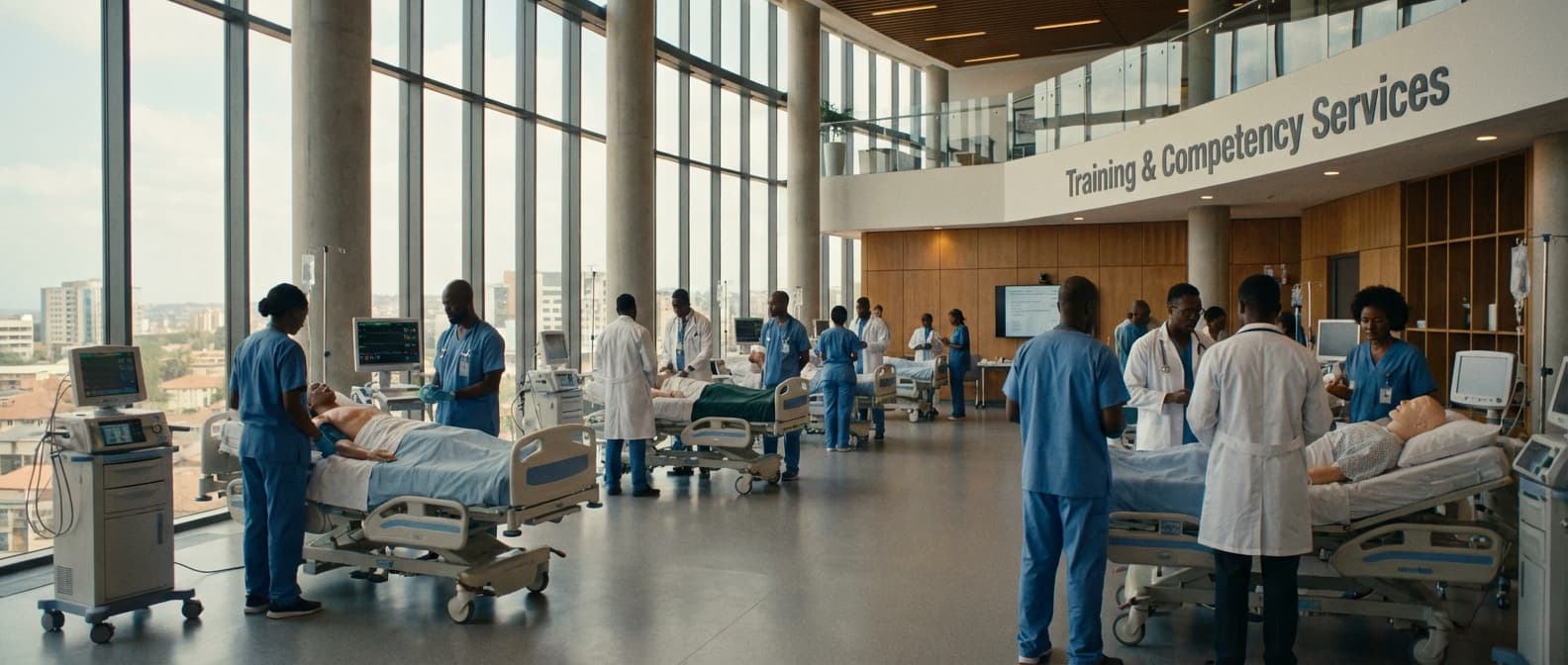
Biomedical Engineering First-Line Support Training Service in Senegal
Engineering Excellence & Technical Support
Biomedical Engineering First-Line Support Training Service High-standard technical execution following OEM protocols and local regulatory frameworks.
Diagnostic Imaging Equipment Mastery
Comprehensive training on the principles and first-line maintenance of X-ray, ultrasound, and CT scanners, ensuring rapid response to common operational issues and ensuring optimal diagnostic accuracy.
Critical Care & Patient Monitoring Systems Proficiency
Hands-on training covering essential patient monitoring devices (ECG, SpO2, NIBP), ventilators, and infusion pumps, focusing on routine checks, calibration, and immediate troubleshooting for uninterrupted patient care.
Laboratory & Diagnostic Instrument Fundamentals
Detailed instruction on the operation, basic maintenance, and common error resolution for key laboratory equipment such as centrifuges, spectrophotometers, and automated analyzers to support timely and accurate clinical diagnostics.
What Is Biomedical Engineering First-line Support Training Service In Senegal?
Biomedical Engineering First-Line Support Training Service in Senegal refers to the specialized training programs designed to equip personnel with the foundational knowledge and practical skills necessary to perform initial troubleshooting, maintenance, and basic repair of biomedical equipment within healthcare facilities. This service is critical for ensuring the operational readiness and longevity of medical devices, thereby directly impacting patient care quality and safety. The training focuses on common equipment failures, preventive maintenance protocols, and the identification of issues requiring escalation to specialized biomedical engineering teams.
| Target Audience | Needs and Objectives | Typical Use Cases |
|---|---|---|
| Hospital Technicians and Biomedical Support Staff | To enhance their capacity for immediate issue resolution, reduce equipment downtime, and ensure consistent availability of functional medical devices. Aims to improve operational efficiency and reduce reliance on external support for minor issues. | Performing daily equipment checks on vital signs monitors, infusion pumps, and laboratory analyzers. Addressing minor power supply issues on patient monitoring systems. Conducting basic cleaning and disinfection procedures for medical equipment. Replacing consumable parts like filters or batteries. Identifying and documenting faults for reporting to senior engineers. |
| Clinical Staff (Nurses, Doctors, Lab Technicians) | To provide a fundamental understanding of how to operate and perform basic checks on frequently used medical equipment, enabling them to identify and report issues promptly and accurately. This reduces misdiagnosis due to equipment malfunction and minimizes disruption to clinical workflows. | Conducting pre-use checks on nebulizers, ECG machines, and defibrillators. Recognizing error messages or unusual equipment behavior. Safely powering on/off and connecting/disconnecting basic medical devices. Reporting equipment defects to the biomedical department. |
| Healthcare Facility Administrators and Managers | To understand the importance of effective first-line support for optimizing equipment lifecycle, managing maintenance budgets, and ensuring compliance with healthcare regulations. The training indirectly supports better resource allocation and operational continuity. | Developing and implementing proactive maintenance schedules. Evaluating the effectiveness of in-house support capabilities. Justifying investments in training and equipment for the biomedical department. Ensuring patient safety through reliable medical device functionality. |
Key Components of Biomedical Engineering First-Line Support Training in Senegal
- Basic principles of biomedical equipment operation and function.
- Identification of common equipment malfunctions and diagnostic procedures.
- Standard operating procedures for preventive maintenance and routine checks.
- Safe handling and operation of various biomedical devices.
- Basic troubleshooting methodologies and component-level identification of faults.
- Understanding of regulatory requirements and safety standards pertaining to medical equipment.
- Documentation and reporting protocols for maintenance and repair activities.
- Introduction to essential tools and testing equipment.
- Principles of infection control and sterilization relevant to equipment maintenance.
- Escalation procedures for complex or unresolved technical issues.
Who Needs Biomedical Engineering First-line Support Training Service In Senegal?
Biomedical Engineering First-Line Support Training Service in Senegal is crucial for ensuring the proper functioning, maintenance, and longevity of medical equipment across various healthcare facilities. This specialized training aims to equip personnel with the foundational knowledge and practical skills necessary to address common issues and perform basic troubleshooting for a wide range of biomedical devices, thereby minimizing downtime and improving patient care outcomes. The service is designed to empower local technicians and healthcare professionals to become the first point of contact for equipment-related challenges, before requiring the intervention of more specialized engineers or external service providers.
| Customer Type | Primary Departments Requiring Training | Specific Roles/Personnel | Rationale for Training |
|---|---|---|---|
| Public Hospitals | Biomedical Engineering Department, Clinical Departments (e.g., ICU, Operating Room, Radiology, Cardiology, Pediatrics), Maintenance Department, IT Department (for networked equipment) | Biomedical Technicians, Clinical Engineers (junior level), Nurses, Doctors, IT Support Staff | To ensure immediate response to common equipment malfunctions, reduce reliance on external support, improve equipment availability for patient care, and empower local expertise. |
| Private Hospitals | Biomedical Engineering Unit, Technical Services, Clinical Departments | Biomedical Technicians, Facility Managers, Senior Nurses | To optimize equipment uptime, control maintenance costs, enhance service delivery efficiency, and maintain high standards of patient safety and care. |
| Clinics and Health Centers | General Maintenance Staff, Clinical Officers, Nursing Staff | Healthcare Technicians, Clinical Officers, Senior Nurses | To enable basic troubleshooting and preventative maintenance for essential medical devices, extending their lifespan and ensuring functional availability in resource-constrained settings. |
| Diagnostic Laboratories | Laboratory Technical Staff, Biomedical Equipment Maintenance Team | Laboratory Technologists, Biomedical Technicians | To ensure the accurate and consistent performance of diagnostic equipment, minimize sample processing delays due to equipment issues, and maintain quality control. |
| Research Institutions | Research Technicians, Laboratory Managers, Biomedical Support Staff | Research Assistants, Lab Technicians, Junior Biomedical Engineers | To support the reliable operation of specialized research equipment, facilitate uninterrupted research activities, and reduce the impact of equipment downtime on research timelines. |
| Medical Training Schools | Technical Departments, Simulation Labs, Biomedical Engineering Programs | Instructors, Technical Support Staff, Students (in practical training) | To provide hands-on training for future biomedical professionals, equip educators with the skills to maintain training equipment, and foster a culture of proactive equipment care. |
Target Customers and Departments
- Hospitals (Public and Private)
- Clinics and Health Centers
- Diagnostic Laboratories
- Research Institutions
- Medical Training Schools
Biomedical Engineering First-line Support Training Service Process In Senegal
This document outlines the typical workflow for a Biomedical Engineering First-Line Support Training Service in Senegal, detailing the process from initial inquiry to the completion of the training execution. The service aims to equip healthcare professionals and technical staff with essential skills for basic maintenance, troubleshooting, and safe operation of biomedical equipment, thereby improving healthcare delivery and reducing equipment downtime.
| Stage | Description | Key Activities | Responsible Party(ies) | Output/Deliverable |
|---|---|---|---|---|
| The process begins when a healthcare facility or relevant institution expresses interest in first-line support training for their biomedical equipment. | Initial contact, understanding training needs (specific equipment, number of trainees, skill levels), identifying objectives, and assessing existing resources. | Client (Healthcare Facility/Institution), Training Service Provider (TSP) | Needs Assessment Report, Initial Understanding of Requirements |
| Based on the identified needs, the TSP prepares a detailed proposal outlining the training scope, methodology, duration, costs, and expected outcomes. | Developing a tailored training proposal, cost estimation, negotiation of terms, and refinement of scope. | Training Service Provider (TSP) | Training Proposal, Budget Breakdown |
| Once the proposal is accepted, a formal contract is established, defining the legal and financial terms of the service. | Drafting and reviewing the contract, finalizing terms, obtaining signatures from both parties. | Client, TSP | Signed Service Contract/Agreement |
| The training content is refined to specifically address the equipment and skill gaps identified during the needs assessment. A detailed training plan is developed. | Reviewing and adapting existing training modules, developing new content if necessary, scheduling training dates and times, identifying trainers and venues. | TSP (Training Department, Subject Matter Experts) | Customized Curriculum, Detailed Training Schedule, Trainer Assignment |
| All necessary resources and arrangements are made to ensure the smooth execution of the training. | Procuring/arranging training equipment, materials (manuals, tools), booking venue, coordinating travel and accommodation for trainers and trainees (if applicable), preparing participant lists. | TSP (Operations/Logistics Department) | Training Materials, Equipment, Venue Confirmation, Logistics Plan |
| The actual training is conducted, involving theoretical instruction, practical demonstrations, and hands-on exercises. | Conducting lectures, practical sessions, simulations, case studies, and assessments. Ensuring participant engagement and understanding. | TSP (Trainers), Trainees | Delivered Training Sessions, Participant Engagement, Performance during exercises |
| Following the formal training, support is offered, and the effectiveness of the training is evaluated. | Providing on-site or remote follow-up support, answering queries, conducting post-training assessments (quizzes, practical tests), collecting feedback from trainees and supervisors. | TSP (Trainers, Support Staff), Trainees, Supervisors | Post-Training Assessment Results, Trainee Feedback, Initial Support Provided |
| A comprehensive report summarizing the training execution, outcomes, and recommendations is provided. Further follow-up actions are planned. | Compiling training reports, detailing attendance, performance, feedback, and recommendations for further improvement. Discussing any long-term support needs or future training requirements. | TSP, Client | Final Training Report, Recommendations for Future Training/Support |
Biomedical Engineering First-Line Support Training Service Process in Senegal
- Inquiry and Needs Assessment
- Proposal Development and Negotiation
- Contracting and Agreement
- Curriculum Customization and Planning
- Logistics and Resource Preparation
- Training Delivery
- Post-Training Support and Evaluation
- Reporting and Follow-up
Biomedical Engineering First-line Support Training Service Cost In Senegal
Understanding the cost of first-line support training for biomedical engineers in Senegal requires a nuanced approach, as several factors influence pricing. These factors can range from the training provider's reputation and the depth of the curriculum to the duration of the program and the inclusion of practical, hands-on sessions. The local currency, the West African CFA franc (XOF), is used for all pricing. Training organizations may vary significantly in their pricing structures. Factors influencing cost include: the training provider's credentials and experience; the specific modules covered, which can range from basic equipment troubleshooting to advanced diagnostics; the training methodology (e.g., online, in-person, blended); the number of participants; and the provision of training materials and certifications. For short, introductory courses, costs might be in the lower range, while comprehensive, multi-day programs with certification would command higher prices. The economic climate and market demand also play a role in shaping these costs within Senegal.
| Training Type/Duration | Estimated Cost Range (XOF) | Typical Inclusions |
|---|---|---|
| Short Introductory Workshop (1-2 days) | 50,000 - 150,000 XOF | Basic troubleshooting, introduction to common equipment, theoretical overview. |
| Standard First-Line Support Course (3-5 days) | 150,000 - 350,000 XOF | Comprehensive troubleshooting, basic maintenance, common equipment modules, some practical exercises, training materials. |
| Advanced/Specialized Training Module (2-3 days) | 200,000 - 500,000 XOF | Focus on specific equipment categories (e.g., imaging, patient monitoring), in-depth diagnostics, advanced practical sessions, potential for manufacturer-specific training. |
| Certification Programs (variable duration) | 300,000 - 700,000+ XOF | Rigorous curriculum, extensive practical assessment, official certification, often includes advanced modules and materials. |
Key Pricing Factors for Biomedical Engineering First-Line Support Training in Senegal
- Training Provider Reputation and Expertise
- Curriculum Depth and Specialization
- Duration and Intensity of Training (Days/Hours)
- Training Methodology (Online, In-Person, Blended)
- Inclusion of Practical/Hands-on Sessions
- Number of Participants per Session
- Provision of Training Materials (Manuals, Software)
- Certification Costs and Recognition
- Location of Training (e.g., Dakar vs. other regions)
- Logistics and Venue Costs (for in-person training)
Affordable Biomedical Engineering First-line Support Training Service Options
Acquiring effective first-line support training for biomedical engineering teams is crucial for ensuring patient safety, equipment uptime, and operational efficiency. This service aims to provide accessible and cost-effective solutions for organizations of all sizes. We understand that budget constraints are a significant factor, and therefore, we've developed flexible training options that prioritize value and minimize expenditure without compromising quality.
| Value Bundle Option | Description | Included Services | Ideal For | Estimated Cost Range (per participant/per module) |
|---|---|---|---|---|
| Essential Skills Fundamentals | A foundational program covering core troubleshooting, safety, and preventative maintenance for common medical devices. | Online modules, downloadable checklists, basic troubleshooting guides, live Q&A sessions. | Small to medium-sized facilities, new hires, or teams needing a refresh on fundamental principles. | $150 - $300 |
| Equipment-Specific Deep Dive | In-depth training on specific classes of medical equipment (e.g., imaging, patient monitoring, surgical tools) including common failure points and repair strategies. | Customized online modules, hands-on virtual labs (if applicable), detailed service manuals, on-demand expert support. | Teams with a focus on particular equipment types or facilities undergoing significant equipment upgrades. | $300 - $600 |
| On-Site Intensive Workshop | A comprehensive, instructor-led training session conducted at your facility, offering personalized attention and practical application. | Customized curriculum, on-site practical demonstrations, group problem-solving exercises, direct access to trainers. | Teams requiring immediate, hands-on skill development or those with unique logistical challenges. | $800 - $1500 (plus travel expenses if applicable) |
| Blended Learning Package | Combines the flexibility of online learning with the interactivity of on-site sessions for a comprehensive and efficient training experience. | Access to online modules, virtual simulations, targeted on-site workshops for practical application, ongoing online support. | Organizations seeking a balanced approach to training that maximizes engagement and cost-effectiveness. | $250 - $500 |
Key Features of Our Affordable Training Service:
- Tailored curriculum development to meet specific organizational needs and equipment types.
- Flexible delivery methods, including online modules, on-site workshops, and blended learning approaches.
- Experienced and certified biomedical engineering trainers with practical industry knowledge.
- Focus on essential skills: troubleshooting, preventative maintenance, safety protocols, and basic repair.
- Post-training support and resources to reinforce learning and address ongoing challenges.
- Scalable training packages to accommodate teams of varying sizes and skill levels.
Verified Providers In Senegal
In the realm of healthcare, finding reliable and credentialed providers is paramount. In Senegal, Franance Health has established itself as a leading organization, distinguished by its rigorous credentialing process and commitment to quality. This dedication ensures that patients have access to the best possible care, delivered by highly qualified and trustworthy professionals.
| Provider Type | Franance Health Credentialing Focus | Benefits for Patients |
|---|---|---|
| Physicians | Board certification, peer review, continuous medical education, clean disciplinary record. | Access to specialists with verified expertise and a commitment to evidence-based medicine. |
| Nurses | Licensure validation, specialized certifications, performance evaluations, ethical practice. | Care from skilled and compassionate nurses who have met recognized standards of competence. |
| Specialized Therapists (e.g., Physical Therapists, Mental Health Professionals) | Professional licensure, advanced training, relevant certifications, client feedback. | Reassurance of receiving therapy from qualified individuals with proven efficacy. |
| Diagnostic Centers & Laboratories | Accreditation by relevant bodies, quality control measures, advanced technology, skilled technicians. | Reliable and accurate diagnostic results from facilities adhering to strict quality protocols. |
Why Franance Health Credentials Matter:
- Rigorous Verification: Franance Health employs a comprehensive vetting process that goes beyond basic licensing. They scrutinize educational backgrounds, professional experience, malpractice history, and ethical conduct.
- Commitment to Excellence: Holding a Franance Health credential signifies a provider's dedication to maintaining high standards of practice and continuous professional development.
- Patient Confidence: The Franance Health seal offers patients peace of mind, assuring them that their chosen provider has met stringent quality and safety benchmarks.
- Enhanced Access to Quality Care: By partnering with Franance Health, patients in Senegal can more easily identify and access healthcare professionals who have demonstrated a commitment to excellence.
Scope Of Work For Biomedical Engineering First-line Support Training Service
This Scope of Work (SOW) outlines the requirements for providing a comprehensive First-Line Support Training Service for Biomedical Engineering personnel. The training aims to equip technicians with the foundational knowledge and practical skills necessary to effectively diagnose, troubleshoot, and resolve common issues with biomedical equipment, escalating complex problems appropriately. This SOW details the technical deliverables and standard specifications expected from the training service provider.
| Training Area | Key Topics Covered | Learning Objectives | Standard Specifications |
|---|---|---|---|
| Introduction to Biomedical Equipment Management | Role of First-Line Support, regulatory compliance (e.g., FDA, ISO), safety standards, documentation | Understand the importance of first-line support, basic regulatory requirements, and fundamental safety protocols. | Modules shall be aligned with relevant industry standards (e.g., AAMI, IEC). Training shall include case studies demonstrating the impact of compliance and safety. |
| Basic Electrical Safety and Principles | Understanding electrical hazards, grounding, isolation, fuse types, basic circuit components | Identify and mitigate common electrical hazards associated with biomedical equipment. Understand basic circuit principles for troubleshooting. | Training must emphasize practical application of safety principles. Practical demonstrations of electrical testing equipment and procedures are required. |
| Common Biomedical Equipment Types and Functionality | Overview of high-volume equipment (e.g., patient monitors, infusion pumps, ECG machines, ventilators), basic operational principles | Recognize common biomedical equipment, understand their basic functions, and identify their primary operational components. | Content should cover at least 80% of the organization's most frequently encountered equipment. Visual aids and equipment demonstrations are mandatory. |
| Troubleshooting Methodology and Diagnostic Techniques | Systematic troubleshooting approaches, symptom analysis, use of diagnostic tools (multimeters, oscilloscopes), common failure modes | Apply a structured approach to diagnose equipment malfunctions. Effectively utilize basic diagnostic tools to pinpoint issues. | Training shall incorporate simulated troubleshooting scenarios. A minimum of 10 common failure scenarios for key equipment types must be covered. |
| Preventive Maintenance (PM) Basics | Importance of PM, basic PM procedures for common equipment, documentation of PM tasks | Understand the critical role of preventive maintenance in equipment reliability. Perform basic PM checks and record findings. | Training should include hands-on practice with PM checklists for at least 3 different equipment types. Adherence to manufacturer-recommended PM schedules is emphasized. |
| Basic Repair and Component Replacement | Identifying replaceable components, safe handling of components, basic soldering techniques (if applicable), reassembly procedures | Perform simple component replacements safely and correctly. Understand the process of reassembling equipment post-repair. | Practical exercises on component replacement for non-critical parts. If soldering is included, proficiency must be demonstrated on practice boards. |
| Documentation and Reporting | Accurate record-keeping, service reports, escalation procedures, use of CMMS (Computerized Maintenance Management System) | Maintain accurate and detailed service records. Understand and follow proper escalation protocols. Efficiently utilize the organization's CMMS for reporting. | Training must include a dedicated module on the organization's specific CMMS. Sample service reports demonstrating best practices will be provided. |
| Customer Service and Communication | Interacting with clinical staff, clear communication of technical issues, managing user expectations | Communicate effectively with clinical users, clearly explaining technical problems and resolutions. Manage user expectations regarding repair times. | Role-playing exercises and scenario-based discussions are required to simulate real-world interactions. |
Technical Deliverables
- Training Curriculum Document: A detailed document outlining learning objectives, modules, topics covered, and assessment methods for each training program.
- Training Materials: Comprehensive set of training materials, including presentations, handouts, case studies, practical exercises, and reference guides.
- Trainee Performance Assessment Reports: Individualized reports detailing each trainee's performance, including assessment scores, strengths, and areas for improvement.
- Certification: Upon successful completion of the training, participants will receive a recognized certification from the training provider.
- Post-Training Support Plan: A documented plan for ongoing support, including access to resources, refresher courses, or expert consultation.
- Training Feedback Forms: Standardized forms for trainees to provide feedback on the training content, delivery, and instructors.
Service Level Agreement For Biomedical Engineering First-line Support Training Service
This Service Level Agreement (SLA) outlines the response times and uptime guarantees for the Biomedical Engineering First-Line Support Training Service. This SLA is designed to ensure timely and effective support for training participants and the smooth operation of the training infrastructure.
| Service Component | Response Time Target (Business Hours) | Resolution Target (Business Hours) | Uptime Guarantee |
|---|---|---|---|
| Technical Support (Platform Issues) | 1 Business Hour | 4 Business Hours | 99.5% |
| Live Q&A Session Support | 15 Minutes (prior to session start) | N/A (real-time support) | N/A (dependent on scheduled sessions) |
| Knowledge Base Access | Immediate | N/A | 99.9% |
| Training Module Access | Immediate | N/A | 99.9% |
| User Account Management | 2 Business Hours | 2 Business Hours | 99.5% |
Scope of Service
- On-demand access to pre-recorded training modules.
- Live Q&A sessions with certified trainers.
- Access to a knowledge base of common troubleshooting steps.
- Technical support for the training platform (e.g., login issues, video playback).
- User management for training accounts.
Frequently Asked Questions

Ready when you are
Let's scope your Biomedical Engineering First-Line Support Training Service in Senegal project in Senegal.

Scaling healthcare logistics and technical systems across the entire continent.