
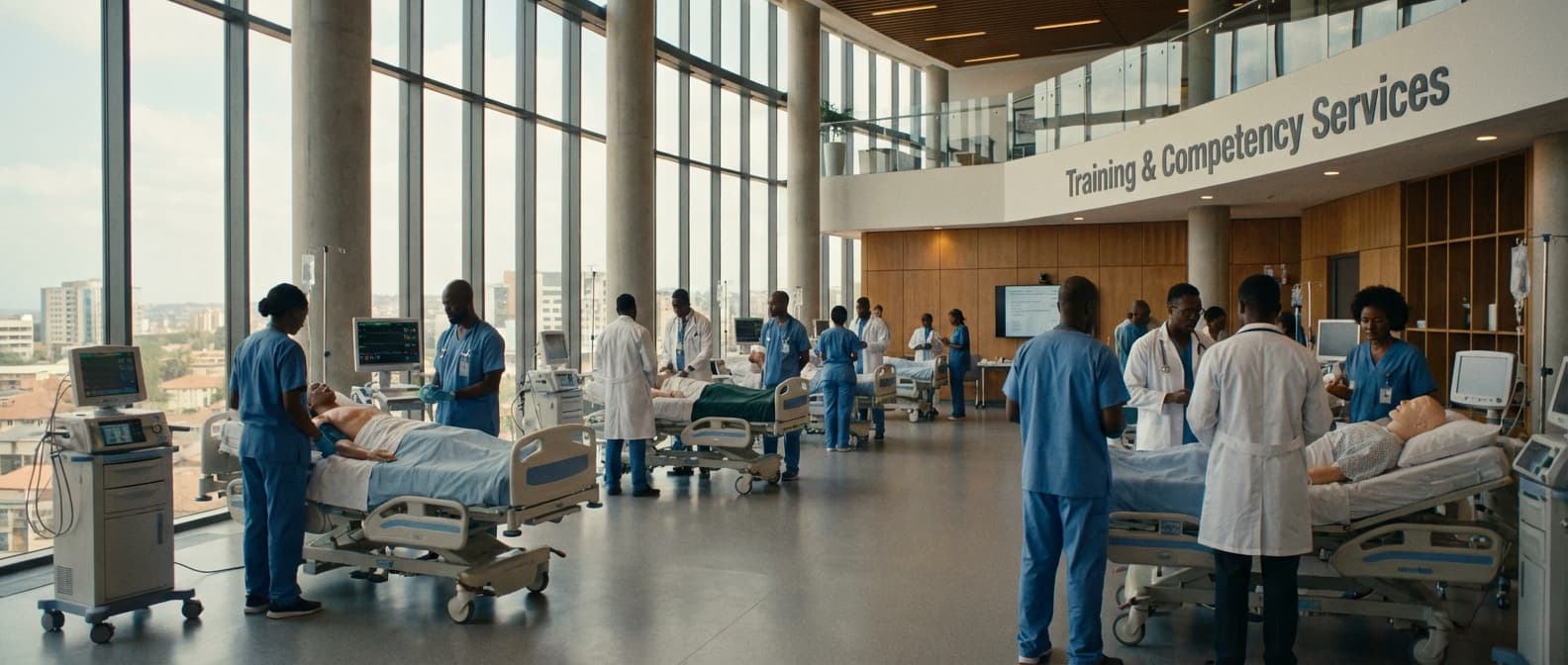
Anesthesia Workstation User Training Service in Senegal
Engineering Excellence & Technical Support
Anesthesia Workstation User Training Service High-standard technical execution following OEM protocols and local regulatory frameworks.
Expert-Led Practical Skills Training
Hands-on sessions with experienced anesthesiologists, focusing on safe and efficient operation of anesthesia workstations, intubation techniques, and emergency management scenarios.
Workstation Maintenance & Troubleshooting Essentials
Training on routine maintenance, calibration procedures, and common troubleshooting for anesthesia workstations, ensuring equipment reliability and minimizing downtime in clinical settings.
Advanced Ventilation & Monitoring Mastery
In-depth modules covering advanced ventilation modes, real-time patient monitoring interpretation, and effective use of integrated workstation features to optimize patient care and safety.
What Is Anesthesia Workstation User Training Service In Senegal?
Anesthesia Workstation User Training Service in Senegal refers to a specialized educational program designed to equip healthcare professionals with the knowledge and practical skills necessary for the safe and effective operation of anesthesia workstations within the Senegalese healthcare system. This service is critical for ensuring patient safety during surgical and procedural interventions requiring anesthetic management. It encompasses theoretical instruction on workstation functionalities, alarm management, troubleshooting, and practical hands-on training on specific models of anesthesia machines and associated equipment. The training is tailored to the local context, considering available resources, common clinical practices, and regulatory guidelines in Senegal.
| Target Audience | Rationale for Need | Typical Use Cases |
|---|---|---|
| Anesthesiologists | Requires advanced proficiency in operating complex anesthetic delivery and ventilation systems to manage patient airways and physiological parameters. | General surgery, specialized surgical procedures (e.g., cardiac, neurosurgery), emergency surgery, pain management. |
| Anesthetic Nurses/Technicians | Needs to understand workstation operation for setup, patient monitoring assistance, and basic troubleshooting to support the anesthesiologist. | Pre-operative patient preparation, intra-operative monitoring, post-operative recovery assistance, equipment maintenance and stocking. |
| Medical Equipment Engineers/Biomedical Technicians | Requires training for installation, calibration, preventive maintenance, and repair of anesthesia workstations to ensure operational readiness and safety. | Routine maintenance, fault diagnosis and repair, new equipment installation and commissioning, safety inspections. |
| New Healthcare Facilities/Expanded Surgical Units | Essential for establishing new operating rooms or upgrading existing ones with modern anesthesia technology to meet evolving healthcare demands. | Setting up new operating theaters, equipping expanded surgical departments, implementing advanced anesthetic techniques. |
Key Components of Anesthesia Workstation User Training Service:
- Theoretical understanding of anesthetic gas delivery, ventilation modes (e.g., volume-controlled, pressure-controlled, SIMV), and patient monitoring parameters.
- Practical demonstration and hands-on operation of specific anesthesia workstation models, including setup, pre-use checks, and shutdown procedures.
- In-depth training on alarm recognition, interpretation, and appropriate response strategies for critical events.
- Familiarization with integrated vaporizers, anesthetic gas scavenging systems (AGSS), and their maintenance.
- Basic troubleshooting techniques for common workstation malfunctions and emergency procedures.
- Principles of infection control and sterilization protocols for anesthesia equipment.
- Review of manufacturer-specific user manuals and local hospital protocols.
Who Needs Anesthesia Workstation User Training Service In Senegal?
In Senegal, robust anesthesia workstation user training is essential for healthcare facilities aiming to provide safe and effective surgical care. This training is not a luxury but a necessity for maximizing the performance and longevity of expensive medical equipment, ensuring patient safety, and equipping healthcare professionals with the skills to handle emergencies. The primary beneficiaries are institutions that regularly perform surgical procedures and rely on modern anesthesia delivery systems.
| Customer Type | Key Departments Requiring Training | Specific Needs & Benefits |
|---|---|---|
| Public Hospitals (Tertiary & Secondary) | Anesthesiology Department, Operating Rooms, Intensive Care Units (ICUs) | Ensuring consistent safe use across multiple shifts and staff. Training on advanced modes and ventilation strategies. Reducing equipment downtime and maintenance costs. |
| Private Hospitals & Clinics | Anesthesia Providers (Anesthesiologists, Nurse Anesthetists), Surgical Teams, Biomedical Engineering | Maximizing investment in modern equipment. Enhancing patient safety and satisfaction. Providing competitive service offerings. Training on specific workstation features for specialized procedures. |
| University Teaching Hospitals | Anesthesiology Residents, Medical Students (rotations), Faculty Anesthesiologists, Perfusionists (where applicable) | Foundation for future practitioners. Standardizing training protocols. Incorporating latest technological advancements into curriculum. Research and development applications. |
| Surgical Centers | Anesthesia Technicians, Anesthesiologists, Registered Nurses | Efficient workflow optimization. Quick familiarization for visiting anesthetists. Ensuring compliance with safety regulations. Handling high patient volume. |
| Medical Missions & NGOs with Surgical Facilities | Volunteer Anesthesiologists, Local Medical Staff | Rapid deployment of trained personnel. Ensuring safe use of donated or shared equipment. Empowering local healthcare capacity. Adapting to diverse equipment models. |
| Ministry of Health & Regional Health Directorates | Training Coordinators, Biomedical Engineers, Clinical Educators | Developing national standards for anesthesia care. Facilitating large-scale training programs. Evaluating and procuring new equipment. Monitoring equipment utilization and maintenance across the public sector. |
Target Customers and Departments in Senegal Requiring Anesthesia Workstation User Training Service
- Public Hospitals (Tertiary & Secondary)
- Private Hospitals & Clinics
- University Teaching Hospitals
- Surgical Centers
- Medical Missions & NGOs with Surgical Facilities
- Ministry of Health & Regional Health Directorates (for capacity building initiatives)
Anesthesia Workstation User Training Service Process In Senegal
This document outlines the service process for Anesthesia Workstation User Training in Senegal, detailing the workflow from the initial inquiry to the successful execution of the training program.
| Phase | Steps | Description | Key Stakeholders | Deliverables/Outcomes |
|---|---|---|---|---|
| 1. Inquiry and Needs Assessment | 1.1 Initial Contact | Client (e.g., hospital, training institution) expresses interest in anesthesia workstation user training. | Client Representative, Service Provider Sales/Consultant | Acknowledgement of inquiry, initial understanding of client needs. |
| 1.2 Needs Assessment Meeting | Detailed discussion to understand the specific anesthesia workstation models, the target audience (e.g., anesthesiologists, residents, nurses), skill levels, number of participants, desired learning objectives, and preferred training dates/location. | Client Technical/Training Lead, Service Provider Training Manager/Technical Expert | Identified training needs, target audience profile, scope of work, preliminary schedule. | |
| 2. Proposal and Agreement | 2.1 Proposal Development | Service provider creates a comprehensive proposal including training curriculum, methodology, trainer qualifications, duration, logistics, pricing, and terms and conditions. | Service Provider Training Manager/Proposal Team | Detailed training proposal. |
| 2.2 Proposal Review and Negotiation | Client reviews the proposal. Negotiations may occur regarding content, schedule, or cost. | Client Representative, Service Provider Sales/Management | Agreement on training scope, schedule, and cost. | |
| 2.3 Contract/Agreement Signing | Formal agreement is signed by both parties, outlining all agreed-upon terms and responsibilities. | Client Management, Service Provider Management | Signed contract/service agreement. | |
| 3. Pre-Training Preparation | 3.1 Curriculum Customization | The standard curriculum is adapted to the specific anesthesia workstation models and the identified needs of the participants. | Service Provider Training Specialists | Tailored training modules and materials. |
| 3.2 Logistics Planning | Arrangement of venue, equipment (anesthesia workstations for training), training materials (handouts, presentations), travel and accommodation for trainers, and any necessary local permits. | Service Provider Logistics Coordinator, Client Facility Manager | Confirmed training venue, accessible equipment, ready training materials, logistical arrangements. | |
| 3.3 Participant Registration | Client provides a list of registered participants, including their roles and any pre-existing knowledge relevant to anesthesia workstations. | Client HR/Training Department | Participant roster. | |
| 3.4 Pre-Training Communication | Service provider communicates training schedule, location, pre-reading materials (if any), and expectations to participants. | Service Provider Training Coordinator, Participants | Informed participants. | |
| 4. Training Execution | 4.1 On-site/Remote Training Delivery | Delivery of theoretical sessions (lectures, presentations) and practical hands-on sessions (simulations, real equipment operation) by qualified trainers. | Service Provider Trainers, Participants | Knowledge transfer, skill development, practical experience. |
| 4.2 Assessment and Feedback | Ongoing assessment of participant understanding through quizzes, practical demonstrations, and interactive Q&A. Collection of immediate feedback from participants. | Service Provider Trainers, Participants | Evaluation of learning progress, identification of areas needing reinforcement, participant satisfaction data. | |
| 4.3 Competency Verification | If required, a final assessment to verify that participants have achieved the desired level of competency in operating the anesthesia workstation. | Service Provider Trainers | Confirmation of participant competency. | |
| 5. Post-Training Follow-up | 5.1 Training Report and Certification | Submission of a comprehensive training report to the client, including attendance records, assessment results, and feedback summary. Issuance of certificates of completion to participants. | Service Provider Training Manager, Participants | Formal documentation of training completion, certificates. |
| 5.2 Post-Training Support | Provision of limited post-training support (e.g., Q&A via email, access to online resources) to address any lingering questions or challenges. | Service Provider Technical Support/Training Team | Ongoing learning reinforcement. | |
| 5.3 Performance Review and Future Planning | Review of training effectiveness with the client and discussion of potential future training needs or advanced courses. | Service Provider Account Manager, Client Management | Client satisfaction, identification of future training opportunities. |
Anesthesia Workstation User Training Service Process in Senegal
- Phase 1: Inquiry and Needs Assessment
- Phase 2: Proposal and Agreement
- Phase 3: Pre-Training Preparation
- Phase 4: Training Execution
- Phase 5: Post-Training Follow-up
Anesthesia Workstation User Training Service Cost In Senegal
The cost of anesthesia workstation user training services in Senegal can vary significantly due to several factors. These include the type and complexity of the anesthesia workstation, the duration and depth of the training program, the qualifications and experience of the trainers, the location of the training (on-site at a hospital vs. at a training facility), and the number of participants. Additionally, the specific vendor or training provider offering the service will also influence pricing. For instance, training on a basic, single-function anesthesia machine will generally be less expensive than comprehensive training on a state-of-the-art, multi-parameter anesthesia workstation with advanced ventilation modes and monitoring capabilities.
| Training Type | Estimated Cost Range (XOF) | Notes |
|---|---|---|
| Basic User Training (1-2 days) | 150,000 - 300,000 | Focuses on core functions, setup, and basic operation. Suitable for entry-level users. |
| Intermediate User Training (2-3 days) | 250,000 - 500,000 | Covers advanced ventilation modes, alarm management, and troubleshooting. For experienced users. |
| Advanced/Specialized Training (3-5 days) | 400,000 - 800,000+ | Includes in-depth technical aspects, specific clinical applications, and maintenance. May involve specialized equipment or software. |
| On-site Training (Per day/group) | 100,000 - 250,000 | Cost for bringing trainers to the hospital. May be added to the overall program cost. Travel and accommodation for trainers might be extra. |
| Group Discounts | Varies | Many providers offer reduced per-participant costs for larger groups. |
Key Pricing Factors for Anesthesia Workstation User Training in Senegal
- Workstation Complexity and Features
- Training Program Duration and Depth
- Trainer Qualifications and Experience
- Training Location (On-site vs. Off-site)
- Number of Participants
- Training Provider/Vendor
Affordable Anesthesia Workstation User Training Service Options
Investing in proper user training for your affordable anesthesia workstation is crucial for patient safety, operational efficiency, and maximizing your equipment's lifespan. This service aims to equip your clinical staff with the knowledge and skills to operate, troubleshoot, and maintain your chosen workstation effectively. We understand that budget constraints are a primary consideration for affordable equipment, hence this guide explores various user training service options, highlighting value bundles and cost-saving strategies to ensure you get the most out of your investment without compromising quality or safety.
| Training Service Option | Description | Value Proposition | Cost-Saving Strategies |
|---|---|---|---|
| On-Site Comprehensive Training | Trainer comes to your facility to provide hands-on training to your entire team. | Tailored to your specific workstation and workflow; immediate Q&A and practical application. | Bundle with initial equipment purchase; train multiple staff members simultaneously to reduce per-person cost; schedule during off-peak hours if possible. |
| Remote/Virtual Training | Live instructor-led sessions conducted via video conferencing, screen sharing, and interactive modules. | Flexible scheduling; reduces travel costs for both trainers and staff; accessible from anywhere. | Utilize bundled training packages with remote support; smaller group sessions can be more cost-effective than large on-site events. |
| E-Learning Modules & Self-Paced Courses | Pre-recorded video lessons, interactive simulations, and online quizzes accessible on demand. | Highly flexible and cost-effective; allows staff to learn at their own pace and revisit content as needed. | Purchase module bundles; integrate with internal training programs; minimal instructor time required, driving down costs. |
| Train-the-Trainer Program | Empowers selected staff members to become internal experts who can then train their colleagues. | Sustainable training solution; reduces reliance on external trainers over time; fosters internal expertise. | Significant long-term cost savings; focus on training a few key individuals intensively; partner with manufacturers for initial certification. |
| Refresher & Advanced Training | Targeted sessions for existing users to reinforce knowledge, cover new features, or address specific challenges. | Ensures continued competence and adaptation to evolving practices; addresses skill gaps. | Schedule periodic refreshers for a group to distribute costs; focus on high-impact topics identified through user feedback. |
| Basic Maintenance & Troubleshooting Workshop | Focuses on practical skills for routine maintenance, minor troubleshooting, and identifying when professional service is required. | Reduces downtime; empowers staff to handle common issues; extends equipment lifespan. | Combine with other training modules; offer as a standalone workshop for departments needing specific skills; discounts for bulk registration. |
Key Training Areas Covered
- Basic Operation & Controls
- Patient Monitoring Integration
- Ventilator Settings & Management
- Gas Delivery & Vaporizer Settings
- Emergency Procedures & Troubleshooting
- Routine Maintenance & Cleaning
- Data Management & Record Keeping
- Advanced Features & Customization
- Safety Protocols & Alarms
Verified Providers In Senegal
In Senegal's rapidly evolving healthcare landscape, identifying reliable and high-quality medical services is paramount. Franance Health stands out as a beacon of trust and excellence, offering a network of verified providers who meet stringent credentialing standards. This commitment ensures patients receive the best possible care, backed by expertise, ethical practices, and advanced medical knowledge.
| Provider Type | Key Verification Criteria | Benefit to Patients |
|---|---|---|
| General Practitioners | Valid medical license, board certification, minimum years of practice, positive patient feedback. | Reliable primary care, early diagnosis of common illnesses, proactive health management. |
| Specialist Physicians (e.g., Cardiologists, Dermatologists, Pediatricians) | Specialized board certification, advanced training in their field, demonstrated surgical or diagnostic proficiency, research contributions (where applicable). | Expert diagnosis and treatment for complex conditions, access to specialized procedures and therapies. |
| Surgeons | Accredited surgical residency completion, relevant certifications, a strong track record of successful procedures, adherence to surgical safety protocols. | Safe and effective surgical interventions, minimizing risks and optimizing recovery. |
| Diagnostic Centers (Laboratories & Imaging) | Accreditation by national/international bodies, state-of-the-art equipment, qualified technologists and radiologists, robust quality control measures. | Accurate and timely diagnostic results, crucial for effective treatment planning. |
| Hospitals and Clinics | Licensing and accreditation, compliance with safety and infection control standards, availability of essential medical equipment and resources, qualified medical staff. | Comprehensive medical services, access to a multidisciplinary team, and a safe healthcare environment. |
Why Franance Health Verified Providers Represent the Best Choice:
- Rigorous Credentialing Process: Franance Health employs a comprehensive vetting system that scrutinizes the qualifications, licenses, experience, and professional standing of every provider. This meticulous process guarantees that only the most competent and ethical practitioners are included in their network.
- Commitment to Patient Safety and Quality: Patient well-being is the cornerstone of Franance Health's philosophy. Verified providers adhere to the highest standards of medical practice, ensuring safe procedures, accurate diagnoses, and effective treatment plans.
- Access to Specialized Expertise: The Franance Health network encompasses a diverse range of medical specialists, offering access to cutting-edge treatments and highly specialized care across various disciplines, from general medicine to complex surgical procedures.
- Ethical Practice and Patient-Centric Care: Beyond technical skills, Franance Health prioritizes providers who demonstrate a strong commitment to ethical conduct, patient privacy, and a compassionate, patient-centered approach to healthcare.
- Enhanced Patient Confidence and Peace of Mind: By choosing a Franance Health verified provider, patients can be assured they are receiving care from a trusted professional, alleviating concerns about the quality and reliability of medical services.
- Streamlined Healthcare Navigation: Franance Health simplifies the process of finding and accessing quality healthcare, saving patients valuable time and effort in their search for the right medical professional.
Scope Of Work For Anesthesia Workstation User Training Service
This Scope of Work (SOW) outlines the requirements for providing comprehensive user training services for anesthesia workstations. The objective is to ensure that all designated healthcare professionals are proficient in the safe and effective operation, maintenance, and troubleshooting of the anesthesia workstation.
The training will cover theoretical knowledge and practical application, emphasizing patient safety and adherence to best practices. This SOW details the technical deliverables and standard specifications for the training program.
| Deliverable | Description | Standard Specifications / Requirements | Acceptance Criteria |
|---|---|---|---|
| Training Curriculum | Development and delivery of a comprehensive training curriculum for anesthesia workstation users. | Must be modular, covering all key training modules listed above. Content must be accurate, up-to-date, and evidence-based. Shall include both theoretical and practical components. Curriculum format to be agreed upon (e.g., presentation slides, instructor guides, participant manuals). | Curriculum reviewed and approved by the client's medical and biomedical engineering departments prior to delivery. Documented evidence of coverage of all specified modules. |
| Training Materials | Provision of all necessary training materials for instructors and participants. | High-quality, legible, and well-organized materials. Include participant handbooks, presentation slides, case studies, practical exercises, and assessment tools. Materials should be provided in electronic and/or hard copy format as agreed. | All training materials are complete, accurate, and readily accessible to participants. Content aligned with the approved curriculum. |
| Certified Instructors | Deployment of qualified and experienced instructors to conduct the training. | Instructors must possess relevant clinical experience in anesthesia and expertise in operating the specific anesthesia workstation model. Must have demonstrated training and facilitation skills. Proof of instructor qualifications and experience to be provided. | Client to confirm instructor suitability based on provided credentials. Feedback from participants to indicate instructor effectiveness. |
| Hands-on Training Sessions | Delivery of practical, hands-on training sessions using actual anesthesia workstations or high-fidelity simulators. | Sufficient number of workstations/simulators available for effective participant-to-equipment ratio (e.g., 1:4). Training environment to simulate a clinical setting. Practical exercises designed to reinforce theoretical knowledge. | Observable proficiency of participants in performing key functions during practical sessions. Instructor assessment and sign-off on individual practical competencies. |
| Competency Assessments | Development and administration of assessments to evaluate user competency. | Assessments to include written (e.g., multiple choice, short answer) and practical components. Passing score to be defined and agreed upon. Assessments to cover all critical aspects of workstation operation and safety. | Completion of all assessments by participants. Minimum passing score achieved by a specified percentage of participants. Analysis of assessment results to identify areas for further training if needed. |
| Training Schedule and Logistics | Development and management of the training schedule, including coordination of logistics. | Schedule to be developed in collaboration with the client, considering operational needs. Includes booking of training rooms, equipment, and participant attendance. Clear communication of schedule to all stakeholders. | Training sessions conducted according to the agreed schedule. All logistical arrangements (room booking, equipment availability) are successfully managed. |
| Training Report | Provision of a comprehensive report detailing training activities and outcomes. | Report to include participant attendance, assessment results, feedback summaries, identified skill gaps, and recommendations for ongoing training. Report to be delivered within a specified timeframe after training completion. | Report delivered on time and containing all required information. Client review and acceptance of the report's findings and recommendations. |
| Post-Training Support (Optional/As agreed) | Provision of limited post-training support to address user queries. | Defined scope and duration of support (e.g., email, phone). Clear escalation procedures for complex issues. May include access to online resources or FAQs. | Timely responses to user queries within agreed service level agreements (SLAs). Resolution of a defined percentage of queries within the support period. |
Key Training Modules
- Anesthesia Workstation Fundamentals (Principles of Operation, Components, and Design)
- System Setup and Pre-use Checks (Patient preparation, Circuit setup, Gas delivery calibration)
- Ventilator Modes and Settings (Volume Control, Pressure Control, Support Modes, and their application)
- Anesthetic Gas Delivery and Monitoring (Vaporizer function, Agent identification, Out-of-circuit analysis)
- Gas Monitoring and Alarms (Oxygen, CO2, Volatile agents, Spirometry, Pressure monitoring, Alarm management and troubleshooting)
- Patient Monitoring Integration (ECG, SpO2, NIBP, Invasive Pressure - basic setup and interpretation relevant to the workstation)
- Emergent Scenarios and Troubleshooting (Ventilator disconnects, gas supply failures, circuit leaks, troubleshooting common issues)
- Cleaning, Disinfection, and Sterilization Procedures (Workstation hygiene and infection control)
- Routine Maintenance and Calibration (User-level maintenance tasks and scheduling)
- Advanced Features and Workflow Optimization (Specific workstation features, ergonomic considerations, efficiency tips)
Service Level Agreement For Anesthesia Workstation User Training Service
This Service Level Agreement (SLA) outlines the guaranteed response times and uptime for the Anesthesia Workstation User Training Service. This SLA is designed to ensure that users receive timely support and that the training platform is consistently available for scheduled sessions and on-demand learning.
| Service Component | Response Time Guarantee (Initial Response) | Uptime Guarantee |
|---|---|---|
| Technical Support (Critical Issue - e.g., training platform unavailable for scheduled session) | 1 Hour | 99.5% per month |
| Technical Support (High Issue - e.g., inability to access training materials) | 4 Business Hours | 99.5% per month |
| Technical Support (Medium Issue - e.g., minor functionality problem) | 8 Business Hours | 99.5% per month |
| General Inquiries (e.g., training schedule, access requests) | 24 Business Hours | N/A (Service Availability focus) |
Key Performance Indicators (KPIs)
- Response Time: The maximum time allowed for an initial response to a support request.
- Uptime: The percentage of time the training platform is operational and accessible to users.
Frequently Asked Questions

Ready when you are
Let's scope your Anesthesia Workstation User Training Service in Senegal project in Senegal.

Scaling healthcare logistics and technical systems across the entire continent.