
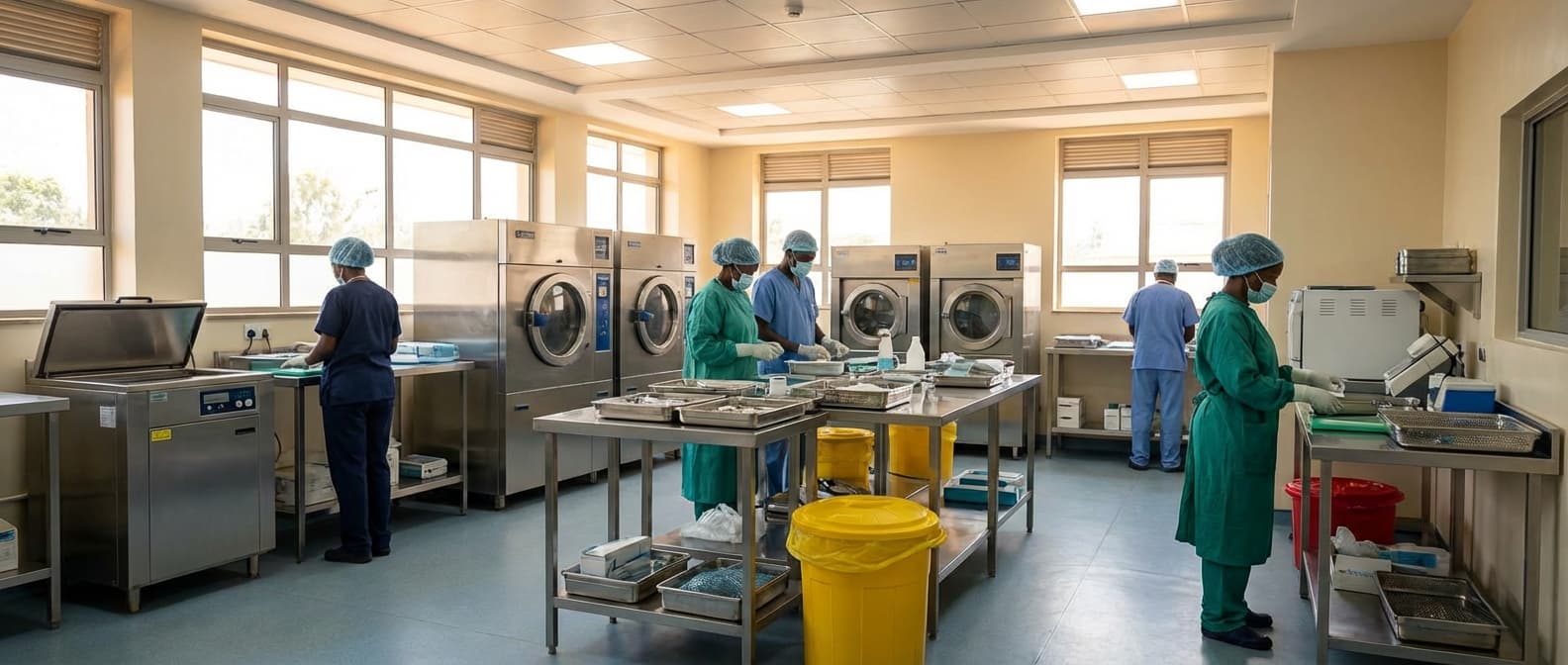
Medical Equipment Decontamination Service (Pre-Repair/Pre-Relocation) in Senegal
Engineering Excellence & Technical Support
Medical Equipment Decontamination Service (Pre-Repair/Pre-Relocation) High-standard technical execution following OEM protocols and local regulatory frameworks.
Validated Decontamination Protocols
Leveraging industry-standard, validated decontamination protocols specifically adapted for Senegal's climate and common pathogens. Our rigorous multi-step process ensures a sterile environment, minimizing cross-contamination risks before equipment repair or relocation.
Compliance & Certification
Adherence to international best practices and national health regulations. We provide comprehensive documentation and certification for all decontamination services, guaranteeing regulatory compliance and peace of mind for healthcare facilities and equipment manufacturers.
Specialized Biohazard Containment
Expert handling of a wide range of medical equipment, including high-risk items. Our trained technicians utilize specialized biohazard containment procedures and appropriate personal protective equipment (PPE) to safely manage and neutralize infectious agents prior to servicing or transport.
What Is Medical Equipment Decontamination Service (Pre-repair/pre-relocation) In Senegal?
Medical Equipment Decontamination Service (Pre-Repair/Pre-Relocation) in Senegal refers to a specialized process of cleaning, disinfecting, and/or sterilizing medical devices prior to their transport for repair or relocation. This service is crucial for ensuring bio-safety and preventing the transmission of infectious agents during handling and transit, thereby protecting both service technicians and the general public. The decontamination protocols employed are typically based on international standards and regulatory guidelines relevant to healthcare waste management and biohazard containment.
| Who Needs the Service? | Typical Use Cases | ||||||||
|---|---|---|---|---|---|---|---|---|---|
| Hospitals and Healthcare Facilities (Public and Private):** For all types of medical equipment requiring off-site repair or internal relocation. | Diagnostic Imaging Equipment: CT scanners, MRI machines, X-ray units requiring maintenance or relocation between departments or facilities. | Surgical and Anesthesia Equipment: Monitors, ventilators, electrosurgical units, endoscopes undergoing servicing. | Laboratory Equipment: Analyzers, centrifuges, incubators that may have been exposed to biological samples. | Sterilization Equipment: Autoclaves, sterilizers themselves requiring repair or relocation. | Dental Equipment: Dental chairs, X-ray units, handpieces undergoing maintenance. | Rehabilitation and Physical Therapy Equipment: Devices that may come into contact with patients' bodily fluids. | Medical Equipment Manufacturers and Service Providers: As part of their repair, refurbishment, or installation processes. | Third-Party Biomedical Engineering Companies: Providing maintenance and repair services to healthcare institutions. | Logistics and Transportation Companies: Specializing in the movement of medical equipment, often requiring certified decontamination prior to handling. |
Key Aspects of Medical Equipment Decontamination Service
- Definition: A pre-emptive procedure to render medical equipment biologically safe for subsequent handling, repair, or movement.
- Objective: To eliminate or significantly reduce the presence of pathogenic microorganisms (bacteria, viruses, fungi) and hazardous biological materials from the equipment's surfaces and internal components.
- Scope: Encompasses thorough cleaning (removal of visible soil and debris), disinfection (killing most microorganisms), and/or sterilization (elimination of all viable microorganisms, including spores), depending on the equipment's nature and intended subsequent use.
- Methodology: Utilizes a range of validated chemical agents, physical methods (e.g., high-level disinfection, autoclaving if applicable to the component), and specialized cleaning techniques.
- Documentation: Typically involves detailed record-keeping of the decontamination process, including agents used, exposure times, temperatures, and personnel involved, often forming part of the equipment's service or transfer documentation.
Who Needs Medical Equipment Decontamination Service (Pre-repair/pre-relocation) In Senegal?
In Senegal, specialized medical equipment decontamination services are crucial for a range of healthcare facilities and professionals before critical procedures like repair or relocation. This ensures the safety of technicians, the integrity of the equipment, and the prevention of cross-contamination. The service caters to a diverse clientele, ensuring that potentially hazardous or sensitive medical devices are rendered safe and sterile.
| Customer Type | Key Departments Involved | Reasons for Decontamination |
|---|---|---|
| Public Hospitals | Central Sterilization Supply Department (CSSD), Biomedical Engineering, Operating Rooms, Intensive Care Units (ICUs), Infection Control | Preventing technician exposure to biohazards, protecting sensitive repair components, ensuring sterile environment during relocation, meeting regulatory standards. |
| Private Hospitals & Clinics | CSSD, Biomedical Engineering, Various Clinical Departments (e.g., Radiology, Cardiology, Gastroenterology), Administration | Maintaining high standards of patient safety and staff well-being, minimizing downtime of critical equipment, complying with international best practices for equipment handling. |
| Diagnostic Laboratories | Laboratory Equipment Maintenance, Infection Control, Specimen Handling Areas | Protecting lab technicians from infectious agents, preventing contamination of diagnostic equipment, ensuring accuracy of tests after handling. |
| Surgical Centers | CSSD, Surgical Teams, Biomedical Engineering | Ensuring sterility of surgical instruments and equipment before repair to avoid compromising future procedures, safe handling during moves between surgical suites. |
| Medical Equipment Manufacturers/Distributors | Service and Repair Departments, Logistics and Warehousing, Quality Control | Safe handling of returned or recalled equipment, decontamination of demo units before resale or transfer, compliance with environmental and safety regulations. |
| Research Institutions | Research Labs, Equipment Management, Safety Officers | Protecting researchers from biological samples, preventing cross-contamination of research equipment, ensuring experimental integrity. |
| NGOs & Government Agencies | Healthcare Project Managers, Logistics Coordinators, Equipment Technicians | Ensuring donated or transferred equipment is safe for use, standardizing decontamination procedures across various health facilities, promoting public health and safety. |
Target Customers and Departments in Senegal Requiring Medical Equipment Decontamination Service (Pre-Repair/Pre-Relocation)
- Hospitals (Public and Private)
- Clinics and Polyclinics
- Diagnostic Laboratories
- Surgical Centers
- Specialized Medical Practices (e.g., Dentistry, Ophthalmology, Dermatology)
- Medical Equipment Manufacturers and Distributors (for returned/refurbished equipment)
- Research Institutions and Universities with Medical Programs
- Non-Governmental Organizations (NGOs) involved in healthcare delivery
- Government Health Agencies and Ministries
Medical Equipment Decontamination Service (Pre-repair/pre-relocation) Process In Senegal
This document outlines the standard operating procedure (SOP) for Medical Equipment Decontamination Services, specifically for pre-repair and pre-relocation processes, within Senegal. This service ensures that medical devices are rendered safe and sterile before being handled by repair technicians or transported to new locations, minimizing the risk of cross-contamination and biohazard exposure for all stakeholders. The workflow is designed to be efficient, transparent, and compliant with relevant health and safety regulations.
| Phase | Step | Description | Key Personnel/Departments Involved | Output/Deliverable |
|---|---|---|---|---|
| Phase 1: Inquiry and Initial Assessment | 1.1 Initial Contact | Client (hospital, clinic, repair center) contacts the decontamination service provider with a request for pre-repair or pre-relocation decontamination of medical equipment. | Client Representative, Decontamination Service Provider (Sales/Inquiry Team) | Service Request Logged |
| 1.2 Information Gathering | Provider collects details about the equipment (type, model, serial number, known contaminants), quantity, current location, and desired service timeline. A preliminary risk assessment may be conducted based on this information. | Decontamination Service Provider (Technical Assessor/Sales) | Equipment Profile, Preliminary Risk Assessment | |
| 1.3 Site Visit (if necessary) | For complex or large-scale decontaminations, a site visit may be scheduled to assess the environment and specific decontamination needs. | Decontamination Service Provider (Technical Assessor) | Site Assessment Report | |
| Phase 2: Quotation and Service Agreement | 2.1 Service Proposal | Based on the gathered information, the provider prepares a detailed service proposal outlining the scope of work, decontamination methods, chemicals to be used, timeline, and cost. | Decontamination Service Provider (Sales/Technical Department) | Service Proposal |
| 2.2 Quotation Submission | The proposal and quotation are submitted to the client for review and approval. | Decontamination Service Provider (Sales) | Quotation Submitted | |
| 2.3 Contract Negotiation and Signing | Upon agreement on terms, a formal service contract is drafted, reviewed, and signed by both parties. This contract details responsibilities, liabilities, and service level agreements. | Client Representative, Decontamination Service Provider (Legal/Management) | Signed Service Agreement | |
| Phase 3: Scheduling and Logistics | 3.1 Service Scheduling | The decontamination service is scheduled according to the agreed timeline and client availability, considering the equipment's repair or relocation schedule. | Decontamination Service Provider (Operations/Scheduling Team), Client Representative | Service Schedule Confirmation |
| 3.2 Resource Allocation | Appropriate decontamination teams, equipment, and specialized cleaning agents are assigned and prepared. | Decontamination Service Provider (Operations/Logistics) | Team and Equipment Prepared | |
| 3.3 Transportation Planning | If the decontamination is performed off-site, transportation arrangements for the equipment are made, ensuring safe and secure handling. | Decontamination Service Provider (Logistics) | Transportation Plan | |
| Phase 4: On-site Decontamination Execution | 4.1 Pre-Decontamination Site Preparation | The service area is secured and prepared to contain any potential spills or airborne particles. Personnel wear appropriate Personal Protective Equipment (PPE). | Decontamination Team | Site Secured, PPE in Place |
| 4.2 Equipment Identification and Documentation | Each piece of equipment is identified, photographed, and its condition documented before decontamination begins. | Decontamination Team | Pre-Decontamination Records | |
| 4.3 Decontamination Process | The agreed-upon decontamination methods are applied. This may involve manual cleaning, disinfection, sterilization (e.g., using chemical sterilants or UV-C light), depending on the equipment and its intended use. Specific protocols are followed for different types of contaminants (e.g., biohazards, chemical agents). | Decontamination Team | Equipment Decontaminated | |
| 4.4 Decontamination Validation (if applicable) | For certain high-risk equipment or clients, validation tests (e.g., ATP testing, microbial swabbing) may be performed to confirm the effectiveness of the decontamination process. | Decontamination Team (or external laboratory) | Validation Results | |
| 4.5 Waste Disposal | All contaminated materials and waste generated during the process are collected, treated, and disposed of according to national environmental and health regulations. | Decontamination Team | Waste Management Records | |
| Phase 5: Documentation and Handover | 5.1 Post-Decontamination Inspection | The equipment is inspected to ensure all decontamination procedures have been completed successfully. | Decontamination Team Lead | Post-Decontamination Check Complete |
| 5.2 Decontamination Certificate Issuance | A formal decontamination certificate is issued for each piece of equipment, detailing the service performed, date, methods used, and confirmation of decontamination. | Decontamination Service Provider (Administration/Technical) | Decontamination Certificates | |
| 5.3 Handover to Client/Repair Technician | The decontaminated equipment is formally handed over to the client or the designated repair technician, along with the certificates. | Decontamination Team Lead, Client Representative/Repair Technician | Equipment Handed Over | |
| 5.4 Final Documentation and Billing | All service records, certificates, and waste disposal manifests are compiled. An invoice is generated and sent to the client. | Decontamination Service Provider (Administration/Finance) | Final Service Report, Invoice | |
| Phase 6: Post-Service Follow-up | 6.1 Client Feedback | The decontamination service provider may contact the client to gather feedback on the service provided. | Decontamination Service Provider (Customer Service/Sales) | Client Feedback Collected |
| 6.2 Record Keeping | All service-related documentation is archived for future reference, compliance, and quality assurance purposes. | Decontamination Service Provider (Records Management) | Archived Service Records |
Medical Equipment Decontamination Service (Pre-Repair/Pre-Relocation) Workflow in Senegal
- Phase 1: Inquiry and Initial Assessment
- Phase 2: Quotation and Service Agreement
- Phase 3: Scheduling and Logistics
- Phase 4: On-site Decontamination Execution
- Phase 5: Documentation and Handover
- Phase 6: Post-Service Follow-up
Medical Equipment Decontamination Service (Pre-repair/pre-relocation) Cost In Senegal
The cost of medical equipment decontamination services in Senegal, particularly for pre-repair or pre-relocation purposes, can vary significantly based on several factors. These services are crucial to prevent the spread of infectious agents and ensure the safety of technicians and the environment. Pricing is typically influenced by the type and complexity of the equipment, the level of contamination expected, the specific decontamination methods employed, the urgency of the service, and the location of the service provider and the equipment. Service providers often offer tailored quotes rather than fixed price lists due to these variables. Local currency, the West African CFA franc (XOF), is used for all transactions. While specific price ranges are difficult to pinpoint without a detailed assessment, general cost drivers and potential ranges can be outlined.
| Equipment Category | Estimated Cost Range (XOF) |
|---|---|
| Small, non-complex equipment (e.g., thermometers, stethoscopes, blood pressure cuffs) | 15,000 - 40,000 |
| Medium-sized equipment (e.g., portable X-ray machines, basic lab equipment, infusion pumps) | 30,000 - 80,000 |
| Large or complex equipment (e.g., diagnostic imaging units, ventilators, sterilization units - external/superficial) | 75,000 - 200,000+ |
| Highly specialized or potentially heavily contaminated equipment (requires specific protocols) | 100,000 - 500,000+ (Quote-based) |
Factors Influencing Medical Equipment Decontamination Costs in Senegal:
- Type and Size of Equipment: Larger, more complex, or specialized medical equipment (e.g., MRI machines, surgical robots, intensive care ventilators) will naturally incur higher decontamination costs due to the time, resources, and expertise required compared to smaller, simpler devices (e.g., stethoscopes, blood pressure monitors).
- Level of Contamination: If the equipment is known or suspected to be contaminated with highly virulent pathogens (e.g., Ebola, tuberculosis, multi-drug resistant organisms), a more rigorous and specialized decontamination protocol will be necessary, increasing the cost. Routine decontamination for general use is less expensive.
- Decontamination Method: Different methods have varying costs. Standard cleaning and disinfection with approved chemicals are generally the most affordable. Advanced methods like high-level disinfection, sterilization (e.g., autoclaving, ethylene oxide), or specialized UV-C light treatments can be more costly.
- Scope of Service: Does the service include only external decontamination, or does it involve internal components as well? Does it include disposal of contaminated materials? The extent of the service provided directly impacts the price.
- Urgency/Turnaround Time: Rush services or those requiring immediate attention will likely come with a premium charge compared to standard scheduling.
- Service Provider's Expertise and Reputation: Established decontamination specialists with specialized training, certifications, and a good track record may command higher prices due to their reliability and quality of service.
- Geographic Location: Costs might differ slightly between major urban centers like Dakar and more remote regions within Senegal due to logistical considerations and the availability of specialized personnel and equipment.
- Consumables and Disposal: The cost of specialized disinfectants, cleaning agents, protective gear for technicians, and the safe disposal of contaminated waste are factored into the overall service fee.
- Volume Discounts: For healthcare facilities decontaminating multiple pieces of equipment, service providers might offer discounted rates.
Affordable Medical Equipment Decontamination Service (Pre-repair/pre-relocation) Options
Maintaining the hygiene and safety of medical equipment is paramount, especially before repair or relocation. Our affordable decontamination service offers a cost-effective solution to ensure your equipment is clean, sterile, and ready for its next phase. We understand that budgets are a concern, so we've developed flexible value bundles and implemented smart cost-saving strategies to make this essential service accessible.
| Cost-Saving Strategy | Description | Benefit |
|---|---|---|
| Bulk Service Discounts | Schedule decontamination for multiple pieces of equipment at once and receive a reduced per-unit cost. | Significant savings for healthcare facilities with regular equipment turnover or large inventory. |
| Recurring Service Agreements | Commit to a regular decontamination schedule (e.g., monthly, quarterly) and benefit from preferential pricing and guaranteed availability. | Predictable budgeting, consistent equipment readiness, and enhanced operational efficiency. |
| Bundled Services | Combine decontamination with other pre-repair or pre-relocation services, such as minor cosmetic repairs or inventory management, to unlock package deals. | Streamlined process, reduced administrative overhead, and lower overall project costs. |
| Standardized Protocols | Our efficient, standardized decontamination procedures minimize labor time and resource utilization, allowing us to offer competitive pricing. | Lower operational costs passed on as savings to our clients. |
| Environmentally Conscious Practices | Utilizing eco-friendly cleaning agents and waste reduction techniques can contribute to cost savings on disposal and materials. | Reduced environmental impact and potentially lower material costs. |
| Tiered Service Options | Our value bundles allow you to select the level of decontamination needed, preventing overspending on unnecessary services. | Ensures you only pay for the service level that matches your equipment's specific requirements. |
Value Bundles for Decontamination Services
- {"title":"Basic Decontamination Package","description":"Ideal for routine cleaning and surface disinfection of standard medical devices. Includes exterior wipe-down, disinfection of accessible surfaces, and packaging for safe handling. Best for items with low bioburden or for pre-storage cleaning."}
- {"title":"Standard Decontamination Package","description":"A comprehensive package suitable for most medical equipment. Includes all features of the Basic package, plus deeper cleaning of internal vents (where accessible), disinfection of specialized components (e.g., probes, handles), and initial barrier protection. Recommended for equipment undergoing minor repairs or standard relocation."}
- {"title":"Advanced Decontamination Package","description":"Our most thorough decontamination service, designed for equipment with higher risk of contamination or those requiring stringent sterile conditions. Includes all features of the Standard package, plus ultrasonic cleaning of removable parts, steam sterilization (where applicable and safe), and end-to-end disinfection protocols. Essential for critical care equipment or before critical repairs/relocations."}
- {"title":"Customizable Decontamination Solutions","description":"We can tailor a decontamination plan to your specific equipment and needs. Contact us to discuss unique requirements, bulk discounts, or recurring service agreements."}
Verified Providers In Senegal
In the landscape of healthcare services in Senegal, identifying reliable and trustworthy providers is paramount for ensuring quality care. Franance Health has emerged as a leading entity, distinguished by its rigorous credentialing process and commitment to upholding the highest standards in the industry. This dedication to verification ensures that all healthcare professionals and facilities operating under their umbrella meet stringent criteria for expertise, ethical practice, and patient safety. By choosing Franance Health, individuals are selecting providers who have undergone thorough vetting, offering peace of mind and confidence in the medical services they receive.
| Credentialing Aspect | Franance Health Standard | Benefit to Patients |
|---|---|---|
| Professional Licensing & Certification | Mandatory verification of all active and valid licenses and certifications. | Ensures practitioners are legally qualified and possess the required expertise. |
| Educational Background | Thorough review of academic qualifications and degrees from accredited institutions. | Confirms a strong foundational knowledge and appropriate training. |
| Clinical Experience | Verification of past work experience and professional references. | Guarantees practical application of skills and a proven track record. |
| Ethical Conduct & Disciplinary Records | Background checks and review of any past disciplinary actions. | Upholds integrity and protects patients from unethical practices. |
| Continuing Professional Development | Requirement for ongoing training and adherence to current medical advancements. | Ensures providers remain up-to-date with the latest treatments and technologies. |
| Facility Accreditation (where applicable) | Verification of operational standards, safety protocols, and equipment quality. | Ensures a safe and well-equipped environment for treatment. |
Why Franance Health Credentials Represent the Best Choice:
- Unwavering commitment to patient safety and well-being.
- Access to highly qualified and experienced medical professionals.
- Adherence to international best practices and ethical standards.
- Streamlined access to a network of trusted and verified healthcare facilities.
- Enhanced transparency and accountability in healthcare delivery.
- Reduced risk of encountering unqualified or fraudulent practitioners.
Scope Of Work For Medical Equipment Decontamination Service (Pre-repair/pre-relocation)
This Scope of Work (SOW) outlines the requirements for providing medical equipment decontamination services prior to repair or relocation. The objective is to ensure that all medical equipment is rendered safe and free from biohazardous materials, chemicals, and other contaminants that could pose a risk to service personnel, the environment, or the end-user, and to meet regulatory compliance standards. This SOW details the technical deliverables and standard specifications required for the successful execution of these services.
| Section | Description | Technical Deliverables | Standard Specifications |
|---|---|---|---|
| 1.0 Pre-Decontamination Assessment | Initial evaluation of the equipment to identify type, intended use, potential contaminants, and existing damage. | Pre-decontamination checklist and report, detailing equipment identification, observed condition, and suspected contaminants. | Adherence to standard risk assessment protocols for biological and chemical hazards. Identification of equipment models and their known contamination risks. |
| 2.0 Decontamination Procedures | Execution of approved decontamination protocols based on the type of equipment and identified contaminants. | Detailed procedure log for each piece of equipment, including decontamination agents used, contact times, and methods applied. | Use of EPA-registered and FDA-approved disinfectants/sterilants where applicable. Protocols must be validated for efficacy against specific pathogens or chemicals. Compliance with manufacturer recommendations for cleaning and disinfection. |
| 3.0 Decontamination Agents & Materials | Selection and use of appropriate cleaning, disinfecting, and sterilizing agents. | Material Safety Data Sheets (MSDS) or Safety Data Sheets (SDS) for all chemicals used. Documentation of chemical compatibility with equipment materials. | Only approved and certified decontamination agents shall be used. Agents must be appropriate for the specific equipment materials (e.g., plastics, metals, electronics) to avoid damage. Proper dilution and application of chemicals as per manufacturer instructions. |
| 4.0 Personal Protective Equipment (PPE) | Ensuring adequate protection for decontamination personnel. | Documentation of appropriate PPE usage for each decontamination task. Training records for personnel on proper PPE donning and doffing. | Mandatory use of gloves, eye protection, respiratory protection (if required), and protective clothing as dictated by the assessed risk and chemical agents used. Compliance with OSHA standards for PPE. |
| 5.0 Waste Management & Disposal | Proper handling, containment, and disposal of contaminated waste. | Waste manifests and disposal certificates. Procedures for handling and transporting biohazardous and chemical waste. | Adherence to all local, state, and federal regulations for hazardous waste disposal. Segregation of waste streams. Use of approved biohazard bags and containers. |
| 6.0 Post-Decontamination Verification | Confirmation that decontamination has been successful. | Post-decontamination inspection report, confirming visual cleanliness and absence of gross contamination. Results of any specified verification tests (e.g., ATP testing, microbial swabbing - if required). | Visual inspection protocols. If specified, adherence to industry-accepted verification methods such as Adenosine Triphosphate (ATP) testing or microbial sampling with defined acceptance criteria. |
| 7.0 Documentation & Reporting | Comprehensive record-keeping and reporting of all decontamination activities. | Final Decontamination Certificate for each equipment item, signed and dated by authorized personnel. Comprehensive report summarizing all services performed, including dates, times, personnel involved, equipment IDs, agents used, and any deviations or issues encountered. | All documentation must be legible, accurate, and retained for a minimum period as per regulatory or contractual requirements. Certificates should clearly state 'Decontaminated for Repair/Relocation'. |
| 8.0 Equipment Specific Considerations | Tailoring decontamination to the specific type of medical equipment. | Specific decontamination plans for complex or high-risk equipment (e.g., endoscopes, ventilators, surgical instruments). | Understanding and applying manufacturer-specific cleaning and disinfection instructions. Consideration of internal components accessible for decontamination. Protocols for electronics vs. non-electronics. |
| 9.0 Environmental Controls | Maintaining a controlled environment during decontamination. | Description of the decontamination area and any environmental controls (e.g., ventilation, containment). | Decontamination should occur in a designated, well-ventilated area to minimize exposure risks. Containment measures may be required for highly infectious agents or volatile chemicals. |
Service Objectives
- To eliminate biological and chemical contaminants from medical equipment surfaces and internal components.
- To ensure the safety of repair technicians, relocation personnel, and any subsequent users of the equipment.
- To comply with relevant health, safety, and environmental regulations (e.g., OSHA, EPA, CDC guidelines).
- To prevent cross-contamination between different pieces of equipment or healthcare settings.
- To provide a documented record of decontamination for audit and compliance purposes.
Service Level Agreement For Medical Equipment Decontamination Service (Pre-repair/pre-relocation)
This Service Level Agreement (SLA) outlines the response times and uptime guarantees for the Medical Equipment Decontamination Service, specifically for pre-repair and pre-relocation decontamination procedures. This SLA is between [Your Company Name] (hereinafter referred to as "Provider") and [Client Company Name] (hereinafter referred to as "Client").
| Service Component | Service Level Objective (SLO) | Measurement Method | Consequences of Non-Compliance |
|---|---|---|---|
| Emergency Decontamination Request (Critical Equipment) | Response Time: Within 2 hours of notification. | Time logged from Client notification (e.g., phone call, portal submission) to Provider acknowledgement and scheduling confirmation. | Service Credit: 10% of the decontamination fee for the affected service. |
| Standard Decontamination Request (Pre-Repair/Pre-Relocation) | Response Time: Within 4 business hours of notification. | Time logged from Client notification (e.g., email, portal submission) to Provider acknowledgement and scheduling confirmation. | Service Credit: 5% of the decontamination fee for the affected service. |
| Decontamination Appointment Availability (Standard) | Guaranteed availability for standard decontamination appointments within 2 business days of request confirmation. | Tracking of scheduled decontamination appointments against Client requests. | Service Credit: 5% of the decontamination fee for the affected service for each day of delay beyond 2 business days. |
| Decontamination Appointment Availability (Emergency) | Guaranteed availability for emergency decontamination appointments within 24 hours of request confirmation. | Tracking of scheduled decontamination appointments against Client requests. | Service Credit: 10% of the decontamination fee for the affected service for each 12-hour increment of delay beyond 24 hours. |
| Completion of Decontamination (Standard) | Resolution Time: Within 4 business hours of commencement of decontamination (for standard, non-complex equipment). | Time logged from commencement of decontamination to completion sign-off. | Service Credit: 5% of the decontamination fee for the affected service. |
| Completion of Decontamination (Emergency/Complex Equipment) | Resolution Time: Within 8 business hours of commencement of decontamination. | Time logged from commencement of decontamination to completion sign-off. | Service Credit: 10% of the decontamination fee for the affected service. |
| Documentation Delivery (Post-Decontamination Certificate) | Delivery of decontamination certificate: Within 24 business hours of completion. | Time logged from completion of decontamination to electronic or physical delivery of certificate. | Service Credit: $50 per day of delay. |
Service Level Objectives
- Decontamination Scheduling: The Provider commits to responding to decontamination requests within the agreed-upon timeframes to facilitate timely equipment repair or relocation.
- Service Uptime: While direct 'uptime' for a decontamination service is not applicable in the traditional sense, this SLA focuses on the Provider's availability and capacity to perform decontamination services when requested, ensuring minimal disruption to the Client's operations.
- Response Time Definition: Response time is defined as the period from the Client's official request for decontamination (via agreed communication channel) to the Provider's acknowledgment and confirmation of receipt of the request, and the initiation of scheduling the decontamination appointment.
- Resolution Time Definition: Resolution time is defined as the period from the Provider's acknowledgment of the request to the completion of the decontamination process on the specified equipment.
- Escalation Procedure: A clear escalation path is defined for instances where response or resolution times are not met.
- Reporting and Review: Regular reports on service performance will be provided to the Client, and periodic reviews of this SLA will be conducted.
Frequently Asked Questions

Ready when you are
Let's scope your Medical Equipment Decontamination Service (Pre-Repair/Pre-Relocation) in Senegal project in Senegal.

Scaling healthcare logistics and technical systems across the entire continent.