
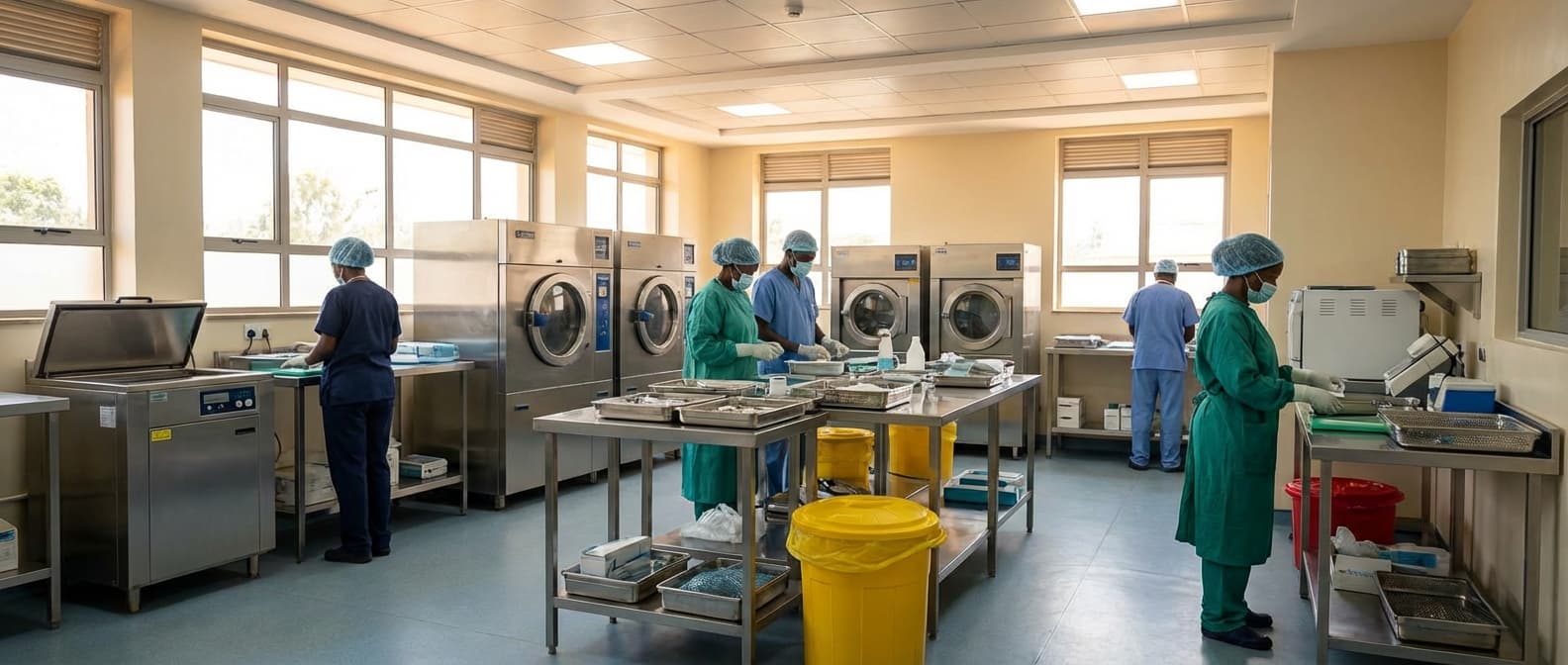
Infection-Control Readiness Support Service for Reusable Equipment in Senegal
Engineering Excellence & Technical Support
Infection-Control Readiness Support Service for Reusable Equipment High-standard technical execution following OEM protocols and local regulatory frameworks.
Advanced Decontamination Protocols
Our service implements state-of-the-art decontamination protocols for reusable medical equipment, significantly reducing the risk of healthcare-associated infections. We utilize validated cleaning agents and automated sterilization technologies aligned with international best practices, ensuring the highest level of safety for patients and healthcare providers in Senegal.
Real-time Equipment Traceability
We provide robust, real-time tracking and traceability solutions for all reusable medical equipment. This digital system ensures complete visibility from initial use through decontamination cycles, maintenance, and re-deployment, enabling rapid identification and management of any potential contamination events and enhancing inventory control.
Capacity Building and Training
Our service extends to comprehensive training programs for local healthcare personnel on best practices for the handling, cleaning, and sterilization of reusable equipment. We focus on empowering Senegalese facilities with the knowledge and skills to maintain infection-control readiness sustainably, fostering local expertise and reducing reliance on external support.
What Is Infection-control Readiness Support Service For Reusable Equipment In Senegal?
Infection-Control Readiness Support Service for Reusable Equipment in Senegal refers to a comprehensive, structured program designed to ensure that healthcare facilities in Senegal possess and maintain the necessary infrastructure, protocols, and trained personnel to safely and effectively reprocess, sterilize, and manage reusable medical devices. This service aims to mitigate the risk of healthcare-associated infections (HAIs) transmitted through inadequately processed equipment. It encompasses a multi-faceted approach, integrating technical expertise, practical training, and ongoing mentorship to bolster the infection prevention and control (IPC) capacity within these facilities.
| Stakeholder/Facility Type | Specific Needs Addressed | Typical Use Cases |
|---|---|---|
| Public Hospitals | High volume of reusable equipment, diverse range of surgical and diagnostic tools, often resource-constrained, need for standardized protocols across multiple departments. | Ensuring sterility of surgical instruments for operating rooms, reprocessing of endoscopes, management of laboratory glassware, compliance with national IPC directives. |
| District and Regional Hospitals | Central role in providing essential healthcare services, potential limitations in specialized equipment and trained personnel, need for practical, sustainable solutions. | Sterilization of dental instruments, reprocessing of delivery instruments, safe management of diagnostic equipment (e.g., ultrasound probes), training local technicians on equipment maintenance. |
| Specialty Clinics (e.g., ophthalmology, dentistry, dialysis centers) | Specific reprocessing requirements for specialized instruments, potential for high-risk procedures, need for tailored protocols. | Ensuring sterility of ophthalmic surgical kits, reprocessing of dental handpieces and instruments, disinfection and sterilization of dialysis equipment components. |
| Non-Governmental Organization (NGO) Healthcare Facilities | May operate in remote or underserved areas, diverse funding streams, need for adaptable and cost-effective solutions, focus on community health. | Establishing basic sterilization capacity in mobile clinics, training local staff in rural health posts, providing support for primary healthcare facilities with limited infrastructure. |
| Ministry of Health (MoH) / National IPC Units | Developing and enforcing national IPC standards, capacity building at a systemic level, ensuring equitable access to safe reprocessing services, data collection for public health surveillance. | Developing national guidelines for reusable equipment reprocessing, training master trainers, supporting the rollout of national IPC initiatives, monitoring the quality of sterile services nationwide. |
Key Components of the Service:
- Assessment and Gap Analysis: Systematic evaluation of existing sterilization and reprocessing workflows, equipment functionality, infrastructure (water, power, waste management), and staff competency against national and international IPC standards.
- Equipment Assessment and Maintenance: Technical inspection and evaluation of sterilization and disinfection equipment (e.g., autoclaves, washer-disinfectors, instrument washers). This includes recommendations for repair, replacement, or preventative maintenance to ensure optimal performance and reliability.
- Protocol Development and Implementation: Assistance in creating, adapting, and implementing Standard Operating Procedures (SOPs) for the decontamination, cleaning, disinfection, and sterilization of various types of reusable medical equipment, aligned with national guidelines.
- Staff Training and Capacity Building: Provision of hands-on and theoretical training modules for healthcare personnel involved in sterile processing, focusing on IPC principles, equipment operation, documentation, and quality control.
- Infrastructure Enhancement Recommendations: Guidance on necessary upgrades or modifications to physical spaces (e.g., dedicated decontamination areas, ventilation, water supply) to support safe and efficient reprocessing.
- Monitoring and Quality Assurance: Establishment of systems for ongoing monitoring of reprocessing cycles, validation of sterilization processes, and routine quality control checks to ensure consistent adherence to standards.
- Supply Chain Management for Consumables: Support in identifying and procuring appropriate cleaning agents, disinfectants, sterilization wraps, and chemical indicators.
- Waste Management Integration: Ensuring safe and effective segregation, collection, and disposal of biohazardous waste generated during the reprocessing activities.
Who Needs Infection-control Readiness Support Service For Reusable Equipment In Senegal?
Infection control is paramount for patient safety and healthcare quality in Senegal. Reusable medical equipment, from syringes and scalpels to endoscopes and dialysis filters, presents a significant risk of pathogen transmission if not properly cleaned, disinfected, and sterilized. Hospitals and health facilities in Senegal often face challenges in maintaining optimal infection-control readiness for their reusable equipment due to various factors, including resource limitations, insufficient training, and lack of specialized expertise. This is where an Infection-Control Readiness Support Service for Reusable Equipment becomes crucial.
| Target Customer | Relevant Departments/Units | Specific Needs/Challenges |
|---|---|---|
| Public Hospitals (National and Regional) | Operating Theatre, Emergency Room, Maternity Ward, Intensive Care Unit (ICU), Surgical Wards, Central Sterile Supply Department (CSSD) | High patient volume, diverse range of reusable equipment, potential for resource constraints, need for standardized protocols, training gaps. |
| Private Hospitals and Clinics | Operating Theatre, Outpatient Clinics, Specialist Units (e.g., Ophthalmology, Dentistry), CSSD | May have more advanced equipment but still require specialized expertise in reprocessing protocols, staff training, quality assurance. |
| Health Centers (Primary and Secondary) | Consultation Rooms, Minor Procedure Rooms, Maternity Units | Often have limited resources and staff, reliance on basic sterilization methods, need for practical and cost-effective solutions, basic equipment maintenance. |
| Specialized Healthcare Facilities (e.g., Dialysis Centers, Endoscopy Units) | Dialysis Units, Endoscopy Suites, Rehabilitation Centers | Specific and complex reusable equipment requiring specialized disinfection and sterilization protocols, high risk of infection transmission if reprocessing fails. |
| Non-Governmental Organization (NGO) Health Projects | Mobile Clinics, Remote Healthcare Posts, Community Health Programs | Often operate in challenging environments with limited infrastructure, need for durable and easy-to-maintain sterilization solutions, training for local staff. |
| Ministry of Health (MoH) - National Level | Infection Prevention and Control (IPC) Unit, Public Health Department, Procurement Department | Development of national guidelines and standards, oversight and monitoring of infection control practices, procurement of appropriate equipment and supplies, training program development. |
Who Needs Infection-Control Readiness Support Service for Reusable Equipment in Senegal?
- Healthcare Facilities with High Volumes of Reusable Equipment: Any facility that relies heavily on reusable medical instruments and devices, especially those with high patient turnover, will benefit from enhanced infection control measures.
- Facilities Experiencing Frequent Infection Outbreaks: Facilities that have encountered or are at high risk of healthcare-associated infections (HAIs) linked to inadequate reprocessing of reusable equipment.
- Hospitals and Clinics Undergoing Accreditation or Quality Improvement Initiatives: As Senegal strives to improve its healthcare standards, facilities seeking to meet national and international accreditation requirements will need robust infection control protocols.
- Healthcare Providers with Limited In-House Infection Control Expertise: Facilities lacking dedicated infection control professionals or those whose existing teams are overwhelmed.
- Facilities Operating in Resource-Constrained Environments: Where access to advanced sterilization technologies or sufficient trained personnel is limited.
- Maternal and Child Health Centers: Given the vulnerability of these patient populations, strict adherence to infection control for reusable equipment is vital.
- Surgical Centers and Operating Theaters: The high-risk nature of surgical procedures necessitates the highest standards of reusable equipment sterilization.
- Diagnostic Laboratories: Sterile and properly disinfected equipment is essential for accurate diagnostic results and to prevent cross-contamination.
- Dental Clinics: Oral hygiene procedures often involve reusable instruments requiring meticulous sterilization.
Infection-control Readiness Support Service For Reusable Equipment Process In Senegal
This service aims to enhance the infection-control readiness for the process of managing reusable medical equipment in Senegal. The workflow is designed to be comprehensive, starting from an initial inquiry and culminating in the full execution of support services, ensuring a robust and compliant infection control program for reusable equipment.
| Stage | Key Activities | Deliverables | Responsible Parties |
|---|---|---|---|
| Healthcare facility/organization expresses interest; Initial discussion to understand specific challenges and needs related to reusable equipment infection control. | Understanding of client's current situation and objectives. | Client (Healthcare Facility/Organization), Service Provider (Infection Control Experts) |
| Service provider develops a tailored proposal outlining services, timelines, resources, and costs; Client reviews and approves the proposal; Contract/Agreement is signed. | Detailed proposal, signed contract/agreement. | Service Provider, Client |
| Infection control experts conduct a thorough on-site assessment of current reusable equipment processes, including handling, cleaning, disinfection, sterilization, storage, and waste management; Identification of gaps against national and international standards and best practices. | Comprehensive on-site assessment report, detailed gap analysis identifying areas for improvement. | Service Provider (Infection Control Experts) |
| Development and delivery of customized training programs for healthcare staff involved in reusable equipment management; Focus on proper techniques, adherence to protocols, and understanding of infection prevention principles. | Training modules, delivered training sessions, trained personnel. | Service Provider (Trainers), Client (Healthcare Staff) |
| Evaluation of existing equipment (e.g., washing machines, sterilizers) for functionality and suitability; Review of the entire workflow from point of use to reuse. | Recommendations for equipment upgrades or procurement, optimized workflow diagrams. | Service Provider (Technical Experts, Infection Control Experts) |
| Assistance in developing or revising Standard Operating Procedures (SOPs) for all stages of reusable equipment management; Support in implementing new or revised protocols. | Drafted and finalized SOPs, guidance on implementation. | Service Provider (Protocol Specialists, Infection Control Experts), Client (Management, Staff) |
| Establishment of systems for ongoing monitoring of compliance with infection control protocols; Periodic evaluation of the effectiveness of implemented interventions. | Monitoring tools and checklists, evaluation reports. | Service Provider, Client (Quality Assurance/Infection Control Committee) |
| Regular reporting on the status of infection control readiness and progress; Identification of areas for further improvement and development of a continuous quality improvement plan. | Progress reports, recommendations for ongoing improvement, updated action plans. | Service Provider, Client |
Infection-Control Readiness Support Service Workflow
- Inquiry & Needs Assessment
- Proposal Development & Agreement
- On-site Assessment & Gap Analysis
- Training & Capacity Building
- Equipment & Process Review
- Protocol Development & Implementation Support
- Monitoring & Evaluation
- Reporting & Continuous Improvement
Infection-control Readiness Support Service For Reusable Equipment Cost In Senegal
This document outlines the pricing considerations for an Infection-Control Readiness Support Service for Reusable Equipment in Senegal. The service aims to ensure healthcare facilities have robust systems and training in place to safely reprocess reusable medical devices, thereby preventing healthcare-associated infections. Pricing is influenced by several factors, and the provided ranges are indicative and subject to specific project scope and client needs. All costs are presented in Senegalese Francs (XOF).
| Service Component | Estimated Cost Range (XOF) | Notes |
|---|---|---|
| Initial Needs Assessment & Gap Analysis | 150,000 - 500,000 | Per facility or cluster of facilities. Includes site visits, staff interviews, and equipment inventory. |
| Customized Training Program Development | 200,000 - 750,000 | Depends on the complexity of training modules and the number of distinct staff groups targeted. |
| On-site Staff Training Sessions (per module/day) | 75,000 - 250,000 | Includes trainer fees, materials, and participant engagement. Varies by duration and participant numbers. |
| Development/Implementation of SOPs & Checklists | 100,000 - 400,000 | Per facility, based on the number and complexity of processes to be documented. |
| Provision of Basic Cleaning & Disinfection Supplies (initial stock) | 50,000 - 300,000 | Per facility, depending on the volume and type of supplies needed. Can be ongoing. |
| Installation/Calibration of Basic Reprocessing Equipment (e.g., autoclaves, washer-disinfectors) | 1,000,000 - 15,000,000+ | Significant variation based on equipment type, capacity, and whether it's new or refurbished. Includes initial setup and training. |
| Implementation of Equipment Tracking/Management System | 250,000 - 1,500,000 | Can include software, hardware (scanners, labels), and initial data entry/setup. |
| Ongoing Monitoring & Quality Assurance (per quarter) | 50,000 - 200,000 | Includes site visits, data review, and reporting. Frequency is a key determinant. |
| Technical Support & Troubleshooting (per incident/retainer) | 25,000 - 100,000 | Can be billed hourly or via a monthly retainer for guaranteed response times. |
| Project Management & Consulting Fees | 10% - 25% of total project cost | Applied as a percentage of the overall service cost to cover planning, coordination, and oversight. |
| Travel & Accommodation (variable) | Actual costs + mark-up | Dependent on location, duration of visits, and transportation modes within Senegal. |
Key Pricing Factors
- Scope of Services: The breadth and depth of the support offered (e.g., initial assessment, training modules, equipment provision, ongoing monitoring, maintenance).
- Number of Facilities & Equipment: The quantity of healthcare facilities and the types and volume of reusable equipment requiring support.
- Complexity of Equipment: The sophistication and reprocessing requirements of the medical devices (e.g., basic instruments vs. complex surgical tools or endoscopes).
- Training Intensity & Customization: The number of training sessions, the duration, the level of customization required for specific staff roles, and the need for train-the-trainer programs.
- Technology & Equipment Integration: Whether the service includes the provision, installation, or integration of new reprocessing equipment, cleaning agents, or tracking systems.
- Geographic Location & Accessibility: Travel costs to reach remote or difficult-to-access facilities within Senegal.
- Duration of Support: Whether the service is a one-time intervention, a multi-year contract, or a recurring subscription model.
- Regulatory Compliance & Standards: The level of adherence to national and international infection control guidelines, which may necessitate more rigorous processes and documentation.
- Reporting & Monitoring Requirements: The complexity and frequency of reporting on infection control metrics and equipment readiness.
- Local Partner Collaboration: The involvement of local Senegalese partners, which can influence cost-effectiveness and sustainability.
- Contingency & Unforeseen Issues: Allocation for potential unexpected challenges or modifications to the service plan.
Affordable Infection-control Readiness Support Service For Reusable Equipment Options
Our Affordable Infection-Control Readiness Support Service offers flexible value bundles designed to empower healthcare facilities with robust infection prevention strategies for their reusable equipment, without breaking the budget. We understand the critical need for compliance and patient safety, especially in the face of evolving healthcare demands. Our service focuses on providing essential tools, training, and expertise to ensure your reusable equipment meets the highest infection control standards, minimizing the risk of healthcare-associated infections (HAIs) and associated costs.
| Value Bundle Tier | Key Offerings | Ideal For | Cost-Saving Strategies Addressed |
|---|---|---|---|
| Essential Readiness | Basic risk assessment, standardized protocol templates, initial staff training (online modules). | Smaller clinics, facilities with basic reusable equipment needs. | Reduced training costs, standardized processes minimize errors, fewer compliance fines. |
| Proactive Protection | Comprehensive risk assessment, customized protocols, in-person training, quarterly audits, expert Q&A. | Medium-sized practices, departments with moderate reusable equipment volume. | Reduced HAIs and associated patient care costs, improved staff efficiency, minimized equipment downtime due to reprocessing errors. |
| Total Assurance | Full risk assessment, bespoke protocols, advanced training, monthly audits, continuous monitoring, on-site consultation, proactive regulatory updates. | Hospitals, large healthcare networks, facilities with complex reusable equipment and high-risk procedures. | Maximized patient safety, significant reduction in liability and insurance premiums, optimized resource allocation, long-term cost avoidance through prevention. |
Key Components of Our Value Bundles:
- Comprehensive Risk Assessments: Identifying potential contamination points and recommending targeted interventions.
- Customized Infection Prevention Protocols: Tailored procedures for cleaning, disinfection, and sterilization of specific reusable equipment.
- Staff Training & Competency Assurance: Hands-on training sessions and ongoing education for all personnel involved in equipment reprocessing.
- Equipment Auditing & Compliance Monitoring: Regular checks to ensure adherence to protocols and regulatory requirements.
- Access to Expert Consultation: On-demand support from infection prevention specialists.
- Documentation & Record-Keeping Support: Streamlined systems for maintaining essential infection control records.
- Post-Infection Event Investigation & Analysis: Expert guidance in understanding and mitigating the root causes of any infection outbreaks related to reusable equipment.
Verified Providers In Senegal
In the pursuit of quality healthcare in Senegal, identifying verified and credentialed providers is paramount. Franance Health stands out as a leading platform, meticulously vetting its network of medical professionals and facilities. This commitment to rigorous credentialing ensures that patients receive care from experienced, licensed, and reputable practitioners. Understanding the significance of these credentials offers insight into why Franance Health represents the best choice for reliable healthcare access in Senegal.
| Credential Type | Franance Health Verification Process | Patient Benefit |
|---|---|---|
| Medical License | Confirmed with Senegal's Ministry of Health | Guarantees legal and competent medical practice. |
| Specialty Certifications | Cross-referenced with issuing medical boards | Ensures expertise in specific medical areas. |
| Hospital Privileges | Verified with affiliated hospitals/clinics | Confirms access to advanced facilities and treatments. |
| Continuing Medical Education (CME) | Review of records or confirmation of participation | Ensures providers stay updated with the latest medical advancements. |
| Ethical Conduct & Professional Standards | Background checks and reference verification | Promotes patient safety and trustworthy medical interactions. |
Key Credentials & Why They Matter
- {"title":"Medical Licenses & Certifications","description":"All Franance Health providers undergo verification of their official medical licenses and certifications issued by recognized Senegalese health authorities. This confirms their legal right to practice and adherence to national medical standards."}
- {"title":"Educational Background & Specialization","description":"We scrutinize the educational institutions attended and the degrees/specializations obtained by our healthcare professionals. This ensures they possess the necessary expertise for their chosen fields, from general practice to highly specialized medical services."}
- {"title":"Professional Experience & Track Record","description":"Franance Health evaluates the practical experience and professional history of providers. This includes assessing their years in practice, previous affiliations, and any disciplinary actions, ensuring a proven and trustworthy track record."}
- {"title":"Affiliations with Accredited Institutions","description":"Providers are verified for their affiliations with accredited hospitals, clinics, and diagnostic centers. This indicates their integration into the established healthcare infrastructure and their commitment to collaborative patient care."}
- {"title":"Patient Feedback & Quality Assurance","description":"While not a formal credential, Franance Health incorporates a system for gathering and reviewing patient feedback. This ongoing quality assurance mechanism helps maintain high standards of patient satisfaction and care delivery."}
Scope Of Work For Infection-control Readiness Support Service For Reusable Equipment
This Scope of Work (SOW) outlines the requirements for Infection-Control Readiness Support Services specifically for reusable medical equipment. The service aims to ensure that all reusable equipment within the client's facility is managed and processed according to best practices and regulatory requirements to prevent healthcare-associated infections (HAIs). This SOW details the technical deliverables and standard specifications that will guide the service provider in delivering comprehensive infection control support for reusable equipment.
| Deliverable | Description | Standard Specifications / Compliance | Timeline |
|---|---|---|---|
| Current State Assessment Report | A comprehensive report detailing the existing processes, policies, and practices for reusable equipment reprocessing, identifying strengths and areas for improvement. | ISO 13485 (Quality Management Systems for Medical Devices), CDC Guidelines for Disinfection and Sterilization in Healthcare Facilities, relevant AAMI standards (e.g., ST79, ST90). | Within 4 weeks of project commencement. |
| Standardized Reprocessing Protocol Manual | A detailed manual outlining step-by-step procedures for cleaning, disinfection, and sterilization of various categories of reusable medical equipment. | Adherence to manufacturer's instructions for use (IFUs), FDA guidance, AAMI standards, and local regulatory requirements. Protocols should cover manual and automated cleaning, high-level disinfection (HLD), sterilization methods (e.g., steam, EtO, H2O2), and storage. | Within 8 weeks of project commencement. |
| Staff Training Program and Competency Assessments | Development and delivery of training modules for all personnel involved in reusable equipment reprocessing. Includes initial training and ongoing competency verification. | Training content aligned with the developed protocol manual. Competency assessment methods should include written tests, practical demonstrations, and observation. Documentation of training records and competency evaluations. | Ongoing, with initial rollout within 10 weeks. |
| Reprocessing Equipment and Infrastructure Evaluation Report | An assessment of the adequacy and functionality of existing reprocessing equipment (e.g., washer-disinfectors, sterilizers, ultrasonic cleaners) and the reprocessing environment (e.g., workflow layout, ventilation, water quality). | Evaluation against manufacturer specifications, performance standards (e.g., ANSI/AAMI ST55 for washer-disinfectors, ANSI/AAMI ST79 for steam sterilization), and infection control best practices. Water quality testing according to relevant standards (e.g., AAMI TIR34). | Within 6 weeks of project commencement. |
| Auditing and Monitoring Plan | A structured plan for regular internal audits and ongoing monitoring of reprocessing processes, including key performance indicators (KPIs) for infection control. | Audit checklists based on the Standardized Reprocessing Protocol Manual. Monitoring of process parameters (e.g., temperature, pressure, cycle times), biological and chemical indicators, and environmental monitoring. Data collection and reporting mechanisms. | Within 12 weeks of project commencement. |
| Recommendations for Reprocessing Equipment and Supplies | Expert guidance on the selection, procurement, and maintenance of reprocessing equipment, cleaning agents, disinfectants, and sterilization supplies. | Recommendations based on equipment performance, cost-effectiveness, ease of use, and compliance with infection control standards and IFUs. | As needed, or within 16 weeks for initial recommendations. |
| Monthly Performance Report | Regular reports summarizing audit findings, monitoring data, identified issues, corrective actions taken, and progress towards infection control goals related to reusable equipment. | Standardized report format including KPIs, trends, and recommendations. Reports should be data-driven and actionable. | Monthly, commencing from Month 4. |
| Final Project Report and Handover | A comprehensive report summarizing the project activities, outcomes, achieved improvements, and recommendations for ongoing sustainability of infection control practices for reusable equipment. | Includes a summary of all deliverables, lessons learned, and a roadmap for continuous improvement. Documentation of all implemented changes and training. | At project conclusion. |
Key Service Areas
- Assessment of current reusable equipment reprocessing workflows.
- Development and implementation of standardized reprocessing protocols.
- Training and competency assessment for staff involved in reprocessing.
- Equipment and infrastructure evaluation for reprocessing effectiveness.
- Monitoring and auditing of reprocessing processes.
- Guidance on selection and maintenance of reprocessing equipment.
- Recommendations for infection control best practices related to reusable equipment.
Service Level Agreement For Infection-control Readiness Support Service For Reusable Equipment
This Service Level Agreement (SLA) outlines the response times and uptime guarantees for the Infection-Control Readiness Support Service for Reusable Equipment. This service ensures that critical equipment used in healthcare settings is maintained at the highest standards of cleanliness and sterility, minimizing the risk of healthcare-associated infections. The service encompasses monitoring, preventative maintenance, and timely intervention for any deviations from established infection control protocols for designated reusable equipment.
| Service Level | Description | Response Time Target | Uptime Guarantee |
|---|---|---|---|
| Critical Equipment Support | Support for high-risk reusable equipment requiring immediate attention to maintain sterility and functionality (e.g., surgical instruments, sterilization units). | 30 minutes for initial acknowledgment, 2 hours for on-site assessment or remote resolution. | 99.9% uptime for critical infection control processes. This translates to less than 8.76 hours of unplanned downtime per year for essential infection control functionalities. |
| Routine Equipment Support | Support for general reusable equipment where deviations may not pose an immediate critical risk but require timely resolution. | 2 hours for initial acknowledgment, 8 business hours for assessment or remote resolution. | 99.5% uptime for routine infection control processes. This translates to less than 43.8 hours of unplanned downtime per year for non-critical infection control functionalities. |
| Preventative Maintenance | Scheduled maintenance and validation activities to ensure ongoing operational readiness. | Services performed according to a mutually agreed-upon schedule. | N/A (scheduled events are not considered downtime) |
| Emergency Escalation | For situations where initial response times are not met or a significant infection control breach is identified. | Immediate escalation to senior support personnel. | N/A (focus on rapid resolution) |
Key Service Components:
- Proactive monitoring of reusable equipment cleaning and sterilization processes.
- Scheduled preventative maintenance and validation checks.
- On-demand support for equipment malfunction or suspected breaches in infection control.
- Documentation and reporting of all service activities.
- Staff training and consultation on best practices for reusable equipment management.
Frequently Asked Questions

Ready when you are
Let's scope your Infection-Control Readiness Support Service for Reusable Equipment in Senegal project in Senegal.

Scaling healthcare logistics and technical systems across the entire continent.