
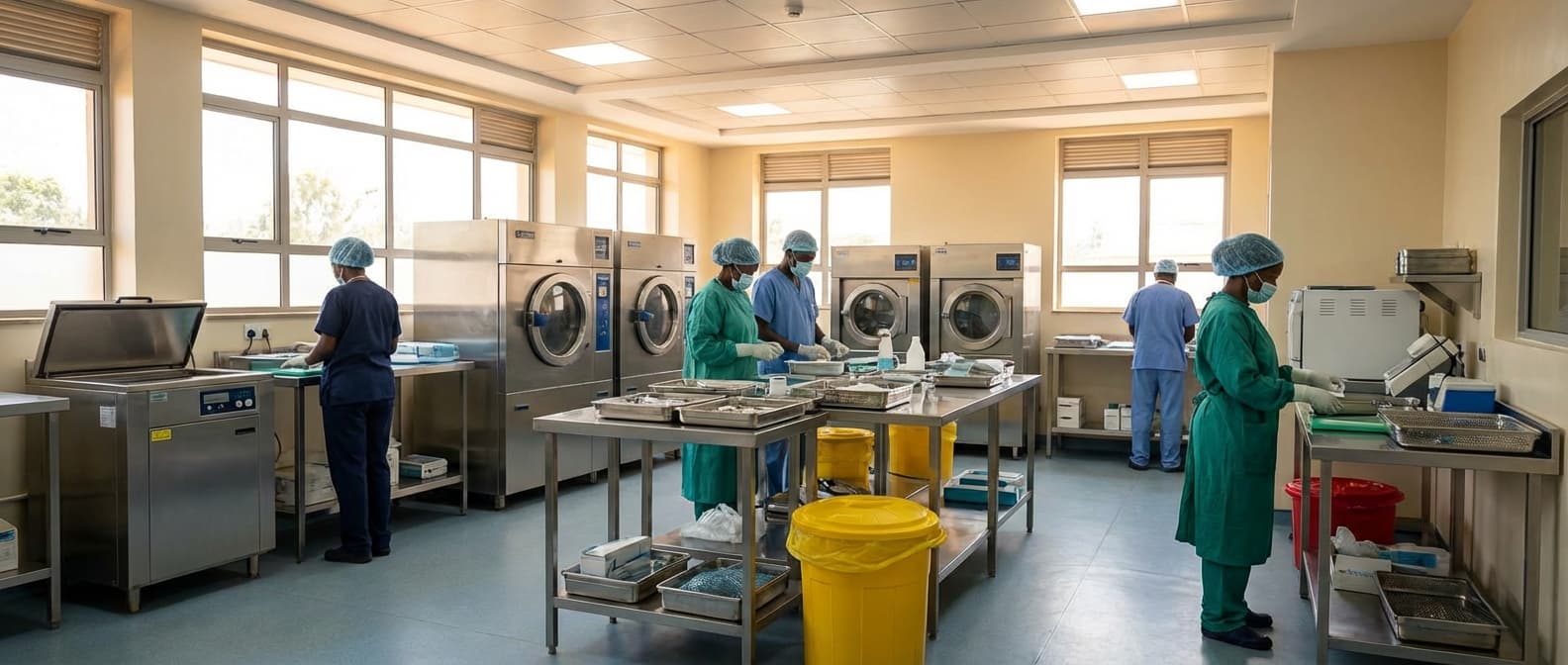
Endoscope Reprocessing Equipment Support Service in Senegal
Engineering Excellence & Technical Support
Endoscope Reprocessing Equipment Support Service High-standard technical execution following OEM protocols and local regulatory frameworks.
Rapid On-Site Repair & Maintenance
Our certified technicians provide swift, on-site diagnostics and repairs for all major endoscope reprocessing equipment brands in Senegal. We minimize downtime to ensure continuous patient care and operational efficiency for your facility.
Preventive Maintenance Programs
Proactive maintenance is key to equipment longevity and patient safety. We offer tailored preventive maintenance schedules to identify and address potential issues before they lead to costly breakdowns, ensuring optimal performance and compliance with sterilization standards.
Expert Technical Support & Training
Access our deep technical expertise for troubleshooting, calibration, and operational guidance. We also provide comprehensive training for your staff on the proper use and maintenance of your endoscope reprocessing equipment, empowering your team for success.
What Is Endoscope Reprocessing Equipment Support Service In Senegal?
Endoscope reprocessing equipment support service in Senegal refers to the provision of technical expertise, maintenance, repair, and validation services specifically for the automated and semi-automated equipment used in the cleaning, disinfection, and sterilization of flexible and rigid endoscopes. This service ensures that these critical medical devices are processed according to stringent safety and efficacy standards, thereby preventing healthcare-associated infections (HAIs). The core objective is to maintain the operational readiness and performance integrity of endoscope reprocessing systems within healthcare facilities.
| Who Needs the Service | Typical Use Cases and Scenarios | Importance/Rationale |
|---|---|---|
| Hospitals (Public and Private) | Maintaining the operational uptime of automated endoscope reprocessors (AERs), ultrasonic cleaners, and drying cabinets used in endoscopy suites, gastroenterology departments, and surgical centers. | Essential for patient safety, preventing cross-contamination and HAIs. Crucial for meeting accreditation and regulatory compliance requirements. |
| Specialty Clinics (Gastroenterology, Pulmonology, Urology, etc.) | Ensuring the reliability of reprocessing workflows for flexible bronchoscopes, cystoscopes, and other specialized endoscopes. | Direct impact on the ability to perform diagnostic and therapeutic procedures safely and efficiently. |
| Ambulatory Surgery Centers (ASCs) | Supporting the reprocessing needs of facilities with high patient throughput, where equipment reliability is paramount. | Minimizing procedure delays and cancellations due to equipment downtime. |
| Biomedical Engineering Departments | Providing in-house technical expertise and outsourced support for the maintenance and repair of complex reprocessing equipment. | Augmenting internal capabilities, especially for specialized equipment or during peak demand. Ensures adherence to manufacturer protocols. |
| Medical Equipment Suppliers/Distributors | Subcontracting or partnering for post-sales support and maintenance of the reprocessing equipment they sell. | Fulfilling contractual obligations and ensuring customer satisfaction and long-term product support. |
Key Components of Endoscope Reprocessing Equipment Support Service
- Preventive Maintenance (PM): Scheduled inspections, lubrication, calibration, and replacement of worn parts to ensure optimal equipment function and longevity.
- Corrective Maintenance (CM): Diagnosis and repair of equipment malfunctions, including troubleshooting, part replacement, and functional testing.
- Validation and Verification Services: Performance testing and documentation to confirm that the equipment consistently meets manufacturer specifications and regulatory requirements for effective reprocessing.
- Service Contracts and Agreements: Offering tiered service levels (e.g., response time guarantees, labor coverage, spare parts inventory) to meet facility needs.
- Technical Training: Educating biomedical engineers, technicians, and end-user staff on the proper operation, basic troubleshooting, and maintenance of the equipment.
- Spare Parts Management: Ensuring availability of genuine or equivalent spare parts and efficient logistics for timely delivery.
- Regulatory Compliance Assistance: Providing guidance and documentation support to adhere to local and international standards for medical device reprocessing.
Who Needs Endoscope Reprocessing Equipment Support Service In Senegal?
Endoscope reprocessing equipment plays a critical role in ensuring patient safety by preventing the transmission of infections during endoscopic procedures. In Senegal, like in many developing nations, the demand for reliable and efficient reprocessing is growing. This service is essential for healthcare facilities that utilize flexible endoscopes for diagnostic and therapeutic purposes. Without proper maintenance and support, this crucial equipment can malfunction, leading to procedural delays, increased infection risks, and significant financial strain due to downtime and potential repair costs. Therefore, endoscope reprocessing equipment support service is vital for maintaining the operational integrity and safety standards of endoscopic procedures within Senegal's healthcare system.
| Target Customer Type | Primary Departments Requiring Support | Specific Needs Addressed by Support Service |
|---|---|---|
| Public Hospitals | Gastroenterology, Pulmonology, Urology, Endoscopy Units, Central Sterile Supply Department (CSSD) | Preventive maintenance, emergency repairs, validation and testing, staff training on equipment operation and maintenance, spare parts management. |
| Private Hospitals | Gastroenterology, Pulmonology, Urology, Endoscopy Units, CSSD | Ensuring high uptime for patient services, compliance with international standards, cost-effective maintenance contracts, access to latest repair technologies. |
| Specialty Clinics | Gastroenterology Clinics, Pulmonology Clinics, Urology Clinics | On-site support for critical equipment, rapid response to breakdowns, calibration and performance verification, guidance on upgrade options. |
| Diagnostic Centers | Endoscopy Departments, CSSD | Maintaining consistent diagnostic capabilities, minimizing patient wait times, ensuring accuracy of reprocessing cycles, routine servicing. |
| Government Health Institutions | Various departments across regional and national health facilities | Supporting public health initiatives, ensuring access to safe endoscopic procedures in underserved areas, bulk service contracts, remote support capabilities. |
| NGO Health Facilities | Endoscopy Units, CSSD | Affordable and reliable support options, adaptable service packages, training for local technicians, ensuring continued operation of essential services. |
Target Customers and Departments in Senegal Requiring Endoscope Reprocessing Equipment Support Service
- Hospitals (Public and Private)
- Specialty Clinics (e.g., Gastroenterology, Pulmonology, Urology)
- Diagnostic Centers
- Government Health Institutions
- Non-Governmental Organization (NGO) Health Facilities
Endoscope Reprocessing Equipment Support Service Process In Senegal
This document outlines the Endoscope Reprocessing Equipment Support Service Process in Senegal, detailing the workflow from initial customer inquiry to the successful execution of support services. This structured process ensures efficient and effective handling of all service requests, maintaining the operational readiness of critical reprocessing equipment.
| Stage | Description | Key Activities | Responsible Party | Deliverables/Outcomes |
|---|---|---|---|---|
| Inquiry & Information Gathering | Initial contact from a client experiencing issues or requiring planned maintenance for their endoscope reprocessing equipment. | Customer contacts support via phone, email, or online portal. Customer provides equipment model, serial number, description of the issue/request, and contact details. | Customer, Support Center Representative | Initial service request logged, basic information captured. |
| Service Request Validation | Verification of the reported issue and assessment of the service request's urgency and scope. | Support Center Representative analyzes the inquiry, asks clarifying questions, checks warranty status or service contract. Determines if the issue requires immediate attention or can be scheduled. | Support Center Representative, Technical Support Specialist (if needed) | Validated service request, preliminary categorization of issue (e.g., breakdown, preventive maintenance, training). Service request ID assigned. |
| Service Planning & Scheduling | Coordination and arrangement of resources, including technician availability and necessary parts, to address the service request. | Service Manager or Dispatcher identifies the most suitable technician based on expertise and location. Schedules the service visit considering client's availability and urgency. Orders any required spare parts. | Service Manager, Dispatcher, Procurement Department | Scheduled service appointment, confirmed date and time, communication of estimated arrival to the client. Parts ordered if necessary. |
| Technician Dispatch & On-site Assessment | The assigned technician travels to the client's location and performs an initial evaluation of the equipment. | Technician travels to the client's facility. Performs a detailed diagnosis of the equipment issue or conducts the scheduled preventive maintenance. Confirms parts required. | Field Service Technician | On-site assessment completed, diagnosis confirmed, list of required parts finalized, communication with the client regarding findings and proposed solution. |
| Service Execution (Repair/Maintenance) | The actual repair or maintenance work is performed on the endoscope reprocessing equipment. | Technician performs the necessary repairs, replaces faulty components, or conducts the planned maintenance procedures as per manufacturer guidelines. If parts were not on hand, they are ordered and a follow-up visit is scheduled. | Field Service Technician | Equipment repaired or maintained. Work completed according to service procedures. |
| Testing & Validation | Ensuring the equipment is functioning correctly and safely after the service intervention. | Technician performs operational tests, functional checks, and any required calibration. May involve running reprocessing cycles to verify performance. Client may be involved in the validation. | Field Service Technician, Client Representative | Equipment fully functional and validated. Confirmation of successful service execution. |
| Documentation & Closure | Recording all details of the service performed and formally closing the service request. | Technician completes a detailed service report including diagnosis, work performed, parts used, and time spent. Service report is submitted for approval. Invoice is generated if applicable. Service request is formally closed in the system. | Field Service Technician, Service Administrator, Finance Department | Completed service report, accurate billing, closed service ticket. |
| Customer Feedback & Follow-up | Gathering feedback to improve service quality and ensuring customer satisfaction. | Support Center or designated representative contacts the client to solicit feedback on the service received. Follow-up may include offering extended maintenance contracts or addressing any lingering concerns. | Support Center Representative, Account Manager | Customer satisfaction assessed, potential for repeat business identified, service improvement insights gathered. |
Service Workflow Stages
- Inquiry & Information Gathering
- Service Request Validation
- Service Planning & Scheduling
- Technician Dispatch & On-site Assessment
- Service Execution (Repair/Maintenance)
- Testing & Validation
- Documentation & Closure
- Customer Feedback & Follow-up
Endoscope Reprocessing Equipment Support Service Cost In Senegal
The cost of endoscope reprocessing equipment support services in Senegal is influenced by a variety of factors, leading to a broad pricing range. These services are crucial for maintaining the longevity, safety, and efficiency of endoscope reprocessing, and thus ensuring patient well-being. Hospitals and clinics in Senegal rely on these services to prevent cross-contamination and adhere to stringent infection control protocols.
Key pricing factors include the type of equipment being serviced (e.g., automated endoscope reprocessors (AERs), ultrasonic cleaners, drying and storage cabinets, leak testing equipment), the brand and model of the equipment (newer, more complex, or specialized equipment often incurs higher service costs), the scope of the service (e.g., routine preventive maintenance vs. emergency repairs), the frequency of service (e.g., annual contracts vs. ad-hoc calls), the qualifications and certifications of the technicians (especially for specialized equipment), the availability of spare parts (importation costs and lead times can significantly impact pricing), and the geographical location within Senegal (services in Dakar might be more readily available and potentially more competitively priced than in remote regions). Furthermore, the service provider's reputation and track record also play a role. Established providers with a proven history of reliable service may command higher prices.
| Service Type | Estimated Price Range (CFA Francs) | Notes |
|---|---|---|
| Annual Preventive Maintenance Contract (for one AER) | 250,000 - 700,000 CFA | Includes scheduled inspections, cleaning, calibration, minor part replacement (filters, seals), and labor. Price varies by AER model and provider. |
| Emergency Repair Call-out Fee | 50,000 - 150,000 CFA | Covers technician travel and initial diagnosis. Excludes cost of parts and labor for actual repair. |
| Hourly Labor Rate (for repairs) | 20,000 - 40,000 CFA | Applied after the initial call-out fee, for the duration of the repair. |
| Cost of Common Spare Parts (e.g., filters, seals, basic sensors) | 10,000 - 100,000 CFA | Highly dependent on the specific part and equipment model. Imported parts can be significantly more expensive. |
| On-site Training for Equipment Operation & Basic Maintenance | 100,000 - 300,000 CFA | Per session, for hospital staff. Can be bundled with service contracts. |
| Full Refurbishment/Major Overhaul (of an older AER) | 750,000 - 2,000,000+ CFA | Significant repair and replacement of worn components. May be more cost-effective to replace older equipment. |
Key Pricing Factors for Endoscope Reprocessing Equipment Support Services in Senegal
- Equipment Type (AERs, ultrasonic cleaners, drying cabinets, leak testers, etc.)
- Equipment Brand and Model
- Scope of Service (Preventive Maintenance vs. Emergency Repair)
- Service Frequency (Annual Contracts vs. Ad-hoc)
- Technician Qualifications and Certifications
- Availability and Cost of Spare Parts
- Geographical Location within Senegal
- Service Provider Reputation and Track Record
Affordable Endoscope Reprocessing Equipment Support Service Options
This document outlines affordable endoscope reprocessing equipment support service options, focusing on value bundles and cost-saving strategies. Maintaining properly functioning and sterilized endoscopes is critical for patient safety and efficient clinical workflows. High-quality reprocessing equipment is an essential investment, and ongoing support services are crucial for its longevity and performance. This guide aims to help healthcare facilities optimize their spending on these vital services.
| Cost-Saving Strategy | Description | Value Proposition |
|---|---|---|
| Bundled Service Agreements | Combining multiple service components (PM, CM, validation, parts) into a single contract, often with tiered options. | Reduces administrative overhead, provides predictable costs, potential for volume discounts, streamlined vendor management. |
| Multi-Year Contracts | Committing to a service provider for an extended period (e.g., 3-5 years). | Secures locked-in pricing, demonstrates commitment for better negotiation, ensures consistent service and relationship with the provider. |
| Remote Monitoring & Diagnostics | Utilizing connected equipment to allow for remote monitoring of performance and early detection of potential issues. | Reduces on-site visit frequency, enables faster issue resolution, minimizes equipment downtime. |
| Standardized Parts & Consumables | Working with a provider that offers access to standardized, high-quality, and cost-effective parts and consumables. | Avoids expensive proprietary parts, leverages bulk purchasing power, ensures compatibility and performance. |
| Preventive Maintenance Optimization | Tailoring PM schedules based on actual equipment usage and manufacturer recommendations, rather than a one-size-fits-all approach. | Avoids unnecessary service calls, extends equipment lifespan, ensures focus on critical maintenance points. |
| Shared Services & Group Purchasing | Collaborating with other healthcare facilities to negotiate better service rates or participating in group purchasing organizations (GPOs). | Leverages collective buying power, access to pre-negotiated discounts, reduces individual negotiation efforts. |
| Internal Training & Basic Troubleshooting | Empowering in-house biomedical technicians to perform basic troubleshooting and preventative maintenance tasks. | Reduces reliance on external technicians for minor issues, faster response times for simple problems, cost savings on service calls. |
| Lease vs. Purchase Analysis | Evaluating whether leasing equipment with an all-inclusive service package or purchasing equipment and securing separate support is more cost-effective. | Leasing can offer predictable monthly costs and include service, while purchasing may offer long-term ownership benefits; the best option depends on facility needs and financial planning. |
| Performance Guarantees & SLAs | Negotiating service level agreements (SLAs) that include uptime guarantees and penalties for non-compliance. | Ensures the service provider meets performance expectations, holds them accountable for maintaining operational equipment, reduces financial risk. |
Key Components of Endoscope Reprocessing Equipment Support
- Preventive Maintenance (PM): Regular scheduled inspections, cleaning, calibration, and minor part replacements to prevent breakdowns and ensure optimal equipment performance.
- Corrective Maintenance (CM): On-demand repair services for unexpected equipment failures, including parts and labor.
- Validation & Performance Testing: Ensuring equipment meets established standards and regulatory requirements for cleaning and disinfection.
- Parts & Consumables: Access to genuine or high-quality replacement parts and necessary consumables for daily operation.
- Technical Support & Training: Access to knowledgeable technicians for troubleshooting and training staff on equipment operation and maintenance.
- Software Updates & Upgrades: Ensuring equipment firmware and software are up-to-date for enhanced functionality and security.
- Compliance & Documentation: Assistance with maintaining records for regulatory compliance and audits.
Verified Providers In Senegal
In Senegal's growing healthcare landscape, discerning patients seek assurance that their providers are not only skilled but also operate with integrity and adhere to the highest standards of care. Franance Health stands out as a beacon of this assurance, offering a rigorous credentialing process that sets its affiliated providers apart. This verification signifies a commitment to patient safety, ethical practice, and continuous professional development, making Franance Health credentials a definitive marker of excellence.
| Credentialing Aspect | Franance Health Standard | Patient Benefit |
|---|---|---|
| Education and Training Verification | Meticulous checks of degrees, certifications, and specialized training from accredited institutions. | Ensures providers possess the foundational knowledge and skills required for competent practice. |
| Licensure and Regulatory Compliance | Confirmation of current and valid medical licenses and adherence to all Senegalese health regulations. | Guarantees providers are legally authorized and operate within established professional frameworks. |
| Clinical Competency Assessment | Evaluation of practical skills, diagnostic abilities, and treatment planning through various methods (e.g., peer review, performance data where available). | Confirms providers can effectively and safely manage patient conditions. |
| Professional Practice History | Thorough review of past performance, absence of disciplinary actions, and a history of ethical conduct. | Provides assurance of a provider's reliability and commitment to patient welfare. |
| Commitment to Continuing Education | Verification of active participation in ongoing professional development and training programs. | Ensures providers remain up-to-date with the latest medical knowledge and techniques. |
Why Franance Health Credentials Represent the Best Choice:
- Unwavering Commitment to Patient Safety: Franance Health's credentialing goes beyond basic licensing. It includes thorough background checks, verification of educational qualifications and training, and an assessment of clinical competency. This multi-faceted approach minimizes risks and prioritizes your well-being.
- Ensuring Ethical and Professional Conduct: Our credentialing process scrutinizes a provider's professional history, ensuring adherence to ethical guidelines and a commitment to patient-centered care. This safeguards against malpractice and promotes trust.
- Access to Highly Skilled Professionals: Franance Health partners with healthcare professionals who demonstrate a high level of expertise and a dedication to staying current with medical advancements. This means you are more likely to receive care from specialists at the forefront of their fields.
- Peace of Mind and Confidence: Choosing a Franance Health-verified provider offers invaluable peace of mind. You can be confident that your healthcare decisions are guided by professionals who have met stringent quality standards.
- Facilitating Informed Healthcare Decisions: Our transparent credentialing process empowers you to make informed choices about your healthcare. The Franance Health seal of approval acts as a reliable indicator of quality and trustworthiness.
- Continuous Quality Improvement: Franance Health doesn't stop at initial credentialing. We maintain ongoing monitoring and re-credentialing processes to ensure that our affiliated providers consistently uphold their standards of excellence.
Scope Of Work For Endoscope Reprocessing Equipment Support Service
This Scope of Work (SOW) outlines the requirements for Endoscope Reprocessing Equipment Support Services. The objective is to ensure the reliable, safe, and efficient operation of all endoscope reprocessing equipment, thereby supporting the sterile processing department's critical functions and patient safety. The services will encompass scheduled preventive maintenance, unscheduled corrective maintenance, technical support, and the supply of necessary parts and consumables for a defined period. The service provider will be responsible for maintaining equipment in optimal working condition according to manufacturer specifications and relevant regulatory standards.
| Equipment Type | Manufacturer | Model Number(s) | Key Performance Indicators (KPIs) to be Maintained | Frequency of Preventive Maintenance (PM) | Response Time for Corrective Maintenance (CM) |
|---|---|---|---|---|---|
| Automated Endoscope Reprocessors (AERs) | Olympus, Steris, Steelco, Medivator | Various | Disinfection cycle completion rate, leak testing accuracy, flow rates, chemical dispensing accuracy, alarm response | Semi-annually | Within 4 business hours for critical failures, 8 business hours for non-critical |
| Endoscope Drying and Storage Cabinets | Various | Various | Airflow rates, temperature control, humidity levels, cycle completion | Annually | Within 8 business hours |
| Leak Detectors (Manual/Automated) | Various | Various | Sensitivity, alarm activation | Annually | Within 8 business hours |
| Accessories (e.g., Flushing Devices, Brush Stations) | Various | Various | Functionality, flow rates, ease of use | Annually | Within 8 business hours |
| Associated Consumables (e.g., Filters, Seals, Chemicals for specific AERs) | OEM | N/A | Availability, quality assurance | As needed, based on usage and PM schedule | N/A |
Technical Deliverables
- Comprehensive Preventive Maintenance (PM) Plan for all specified endoscope reprocessing equipment, adhering to manufacturer recommendations and regulatory guidelines.
- Scheduled and unscheduled Corrective Maintenance (CM) services, including troubleshooting, repair, and replacement of faulty components.
- On-site technical support and troubleshooting assistance during operational hours and, if specified, on a 24/7 basis.
- Provision and installation of genuine Original Equipment Manufacturer (OEM) or equivalent replacement parts and consumables.
- Detailed service reports for each PM and CM event, including work performed, parts used, test results, and recommendations.
- Calibration and performance verification of equipment to ensure adherence to specified operational parameters.
- Training for designated hospital personnel on basic equipment operation, routine cleaning, and user-level troubleshooting.
- Access to a dedicated technical support helpline or portal for immediate assistance.
- Regular equipment status updates and recommendations for upgrades or replacements based on performance and age.
- Compliance documentation and certification for all services rendered, ensuring adherence to relevant healthcare regulations (e.g., ISO, FDA, local health authorities).
Service Level Agreement For Endoscope Reprocessing Equipment Support Service
This Service Level Agreement (SLA) outlines the terms and conditions for the support services provided for Endoscope Reprocessing Equipment. It defines the expected response times and uptime guarantees to ensure the continuous and efficient operation of the equipment, critical for patient safety and healthcare facility operations.
| Service Level | Response Time (Business Hours) | Resolution Target (Business Hours) | Uptime Guarantee |
|---|---|---|---|
| Critical Equipment Failure (e.g., complete system shutdown, inability to reprocess any endoscopes) | 2 Business Hours | 8 Business Hours (for initial diagnosis and action plan) | 98% |
| Major Equipment Malfunction (e.g., partial system failure, reduced reprocessing capacity, critical alarm) | 4 Business Hours | 16 Business Hours (for diagnosis and initiation of repair) | 97% |
| Minor Equipment Issue (e.g., non-critical alarm, minor operational anomaly) | 8 Business Hours | 24 Business Hours (for diagnosis and recommended action) | 95% |
| Preventive Maintenance Visit | Scheduled as per agreement | As per scheduled time | N/A |
Scope of Service
- Preventive maintenance as per manufacturer's recommendations.
- Corrective maintenance and repair services for equipment malfunctions.
- On-site technical support.
- Remote diagnostics and troubleshooting.
- Replacement of defective parts (excluding consumables).
- Regular software updates and patches, where applicable.
Frequently Asked Questions

Ready when you are
Let's scope your Endoscope Reprocessing Equipment Support Service in Senegal project in Senegal.

Scaling healthcare logistics and technical systems across the entire continent.