
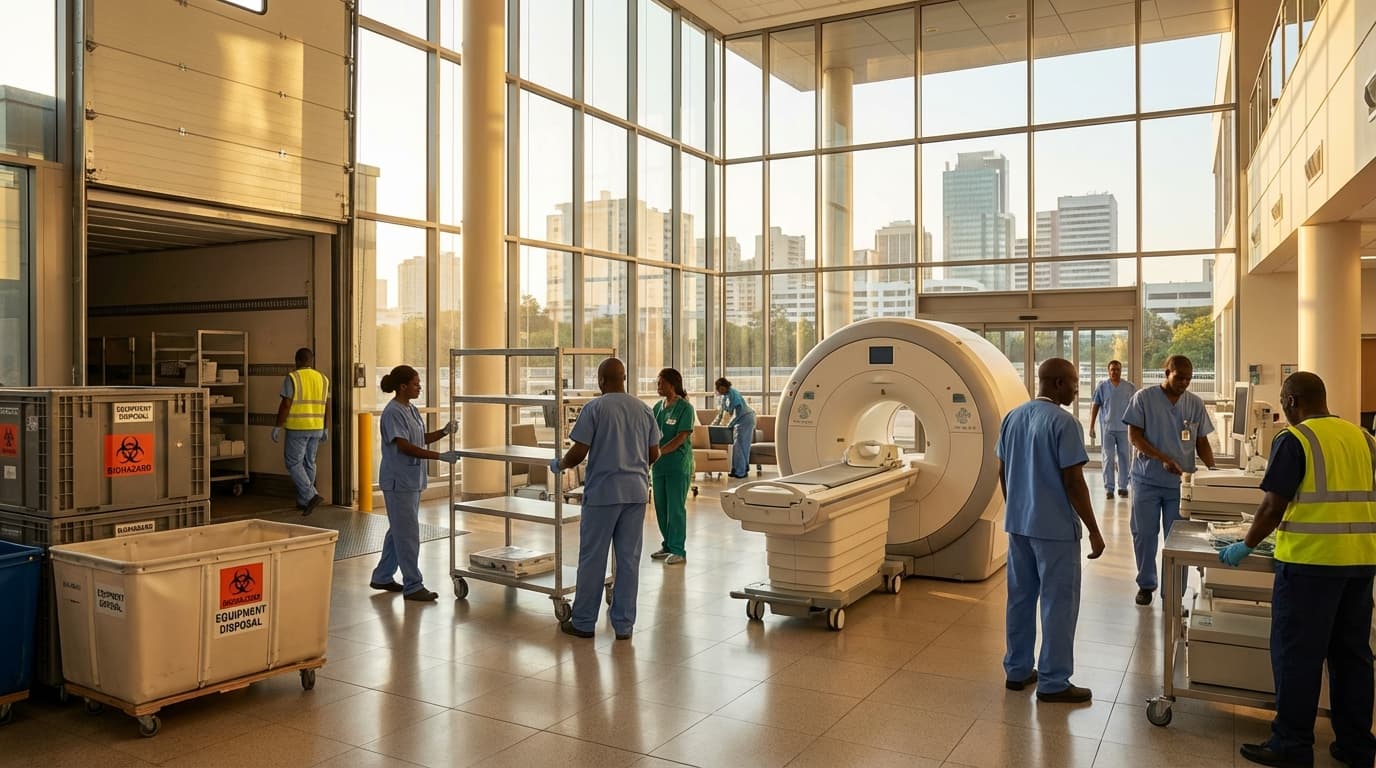
Site Restoration Service After Equipment Removal in Senegal
Engineering Excellence & Technical Support
Site Restoration Service After Equipment Removal High-standard technical execution following OEM protocols and local regulatory frameworks.
Precision Land Surveying & Mapping
Utilizing advanced GPS technology and drone-based photogrammetry to accurately map the site's topography and identify all impacted areas post-equipment removal. This ensures a comprehensive understanding of the restoration scope.
Soil Remediation & Geotechnical Stabilization
Implementing tailored solutions including soil decompaction, revegetation with native Senegalese flora, and targeted nutrient replenishment. We also employ geotextile and erosion control measures to ensure long-term land stability.
Waterway & Drainage Network Restoration
Assessing and repairing any damage to natural watercourses or man-made drainage systems. Our focus is on restoring proper hydrological flow and preventing soil erosion caused by altered water patterns.
What Is Site Restoration Service After Equipment Removal In Senegal?
Site Restoration Service After Equipment Removal in Senegal refers to the comprehensive process of returning a former industrial, construction, or operational site to its pre-existing condition or a state suitable for future use, following the decommissioning and physical removal of installed equipment. This service is critical for environmental compliance, land remediation, and ensuring the safety and aesthetic integrity of the site. It encompasses a range of activities aimed at mitigating the impact of the previous operations and equipment presence.
| Who Needs Site Restoration Service? | Typical Use Cases | |||||
|---|---|---|---|---|---|---|
| Industrial Facility Operators: Companies involved in manufacturing, processing, mining, or energy production that are closing down or relocating operations. | Oil and Gas Companies: Decommissioning of exploration or production sites, including wellheads, pipelines, and processing facilities. | Construction Companies: Removal of temporary structures, plant, and equipment from construction sites post-completion. | Government Agencies and Municipalities: Redevelopment of former industrial zones, waste disposal sites, or publicly owned infrastructure. | Agricultural and Agribusiness Operations: Removal of obsolete machinery, storage tanks, or processing units. | Mining and Extractive Industries: Rehabilitation of mined-out areas, removal of processing plants, and associated infrastructure. | Real Estate Developers: Preparing previously developed or contaminated land for new construction projects. |
| Closure of Manufacturing Plants: Removal of heavy machinery, tanks, and associated chemical storage. | Decommissioning of Oil Rigs and Offshore Platforms: Removal of all associated equipment and infrastructure. | End-of-Life Management for Power Plants: Dismantling turbines, boilers, and fuel handling systems. | Remediation of Former Industrial Land: Preparing sites for residential, commercial, or public use. | Restoration of Mining Sites: Returning land to a safe and ecologically sound condition after mineral extraction. | Clearing of Port and Harbor Facilities: Removal of outdated cargo handling equipment and structures. | Reclamation of Agricultural Land: Removing derelict farm machinery, storage silos, and animal housing. |
Key Components of Site Restoration:
- Decommissioning and Demolition: Safely dismantling and removing all remaining structures, foundations, and any residual equipment components not removed during the primary extraction phase.
- Hazardous Material Abatement and Disposal: Identifying, removing, and properly disposing of any hazardous substances (e.g., oils, fuels, chemicals, asbestos) that may have accumulated during the equipment's operational life.
- Soil and Groundwater Remediation: Assessing soil and groundwater for contamination and implementing appropriate remediation techniques (e.g., excavation, bioremediation, in-situ treatment) to meet regulatory standards.
- Site Grading and Landscaping: Reshaping the land to its original topography or to a new approved contour, followed by revegetation or landscaping to prevent erosion and restore ecological balance.
- Infrastructure Removal and Reinstatement: Removing underground utilities, pipelines, and concrete slabs, and where required, reinstating the site with appropriate services or returning it to a natural state.
- Waste Management and Recycling: Segregating and managing all removed materials for recycling, reuse, or responsible disposal.
- Environmental Monitoring: Conducting post-restoration monitoring to ensure the long-term effectiveness of remediation efforts and compliance with environmental regulations.
- Regulatory Compliance: Ensuring all restoration activities adhere to Senegalese environmental laws, decrees, and permitting requirements.
- Documentation and Reporting: Providing detailed reports on all activities undertaken, including waste manifests, remediation data, and final site condition assessments.
Who Needs Site Restoration Service After Equipment Removal In Senegal?
Equipment removal, especially from industrial or construction sites, can leave behind significant environmental and aesthetic disturbances. Site restoration services are crucial for returning these areas to a safe, usable, and environmentally sound condition. In Senegal, several entities and industries benefit greatly from these services.
| Customer Type | Primary Departments Involved | Key Restoration Needs |
|---|---|---|
| Mining and Extractive Industries | Environmental Management, Operations, Land Reclamation | Reclamation of mined-out areas, soil stabilization, revegetation, water management |
| Oil and Gas Sector | Environmental Health & Safety (EHS), Operations, Land Management | Decommissioning of wells, pipeline right-of-way restoration, contamination assessment and remediation, habitat restoration |
| Construction and Infrastructure Development | Project Management, Site Engineering, Environmental Compliance | Site grading, borrow pit and spoil heap management, topsoil replacement, erosion control, landscaping |
| Industrial Manufacturing | Facilities Management, EHS, Operations | Soil and groundwater remediation, site grading, landscaping, de-pollution of former equipment areas |
| Government and Municipalities | Public Works, Environmental Protection Agency, Urban Planning | Restoration of public project sites, management of environmental remediation zones, compliance monitoring |
| Real Estate Developers | Acquisitions, Development Planning, Environmental Due Diligence | Site assessment, remediation planning, preparing land for new construction, regulatory approval |
Target Customers and Departments for Site Restoration Services in Senegal
- Mining and Extractive Industries: Companies involved in mining (e.g., for phosphates, gold, iron ore) often require extensive site restoration after extraction activities cease or during phased operations. This includes reclaiming land, stabilizing soil, and re-establishing vegetation.
- Oil and Gas Sector: Exploration, drilling, and pipeline construction projects in Senegal's burgeoning oil and gas industry necessitate restoration of disturbed land, particularly in sensitive coastal or savanna environments. This includes well decommissioning, pipeline trench backfilling, and site rehabilitation.
- Construction and Infrastructure Development: Large-scale construction projects, including roads, dams, airports, and urban developments, leave behind temporary work sites, borrow pits, and spoil heaps. These areas need to be leveled, topsoil replaced, and vegetation re-established.
- Industrial Manufacturing and Processing Plants: Factories and industrial facilities that undergo major equipment upgrades, decommissioning, or relocation will require remediation of the land where heavy machinery was situated. This can involve dealing with potential soil contamination.
- Government and Municipalities: Public works departments and environmental agencies often oversee projects that require site restoration, especially after public infrastructure projects or in areas affected by environmental incidents. They may also be responsible for managing and restoring former government-owned operational sites.
- Agricultural and Agribusiness Operations: While less common for major equipment removal in the traditional sense, large-scale agricultural projects or processing plants that involve heavy machinery and land modification might require restoration after their operational life.
- Waste Management and Landfill Operations: Sites for waste disposal and recycling centers, particularly those that are being closed or redeveloped, require significant land remediation and restoration to prevent environmental hazards.
- Real Estate Developers: Developers acquiring land with previous industrial or construction use often commission restoration services to prepare the site for new construction projects, ensuring compliance with environmental regulations.
Site Restoration Service After Equipment Removal Process In Senegal
Our Site Restoration Service in Senegal is designed to efficiently and effectively bring industrial or commercial sites back to their original or improved condition after equipment removal. We manage the entire process, ensuring a seamless transition from initial inquiry to final project completion.
| Phase | Key Activities | Deliverables |
|---|---|---|
| Inquiry & Planning | Initial consultation, site assessment, proposal development, contract finalization. | Detailed proposal, signed contract, project plan. |
| Execution | Mobilization, site preparation, decommissioning, demolition, waste management, cleaning, landscaping. | Restored site, waste disposal certificates, safety reports. |
| Completion | Final inspection, handover, project closure. | Approved site, final documentation. |
Workflow: Site Restoration Service After Equipment Removal in Senegal
- Inquiry & Initial Consultation: Potential clients contact us with their site restoration needs following equipment removal. We schedule an initial meeting (virtual or in-person) to understand the scope of work, site specifics, and client expectations.
- Site Assessment & Survey: Our team conducts a thorough on-site assessment to evaluate the condition of the site, identify any remaining residues, structural damage, or environmental concerns resulting from the equipment removal. This includes assessing the types of equipment removed and the materials used in their installation.
- Detailed Proposal & Planning: Based on the site assessment, we develop a comprehensive proposal outlining the proposed restoration activities, methodology, timelines, required resources, and a detailed cost breakdown. This phase includes risk assessment and safety protocols.
- Contract & Agreement: Upon client approval of the proposal, a formal contract is drafted and signed, clearly defining the terms of service, deliverables, payment schedule, and liability.
- Permitting & Approvals (if required): We manage any necessary permits or approvals from local Senegalese authorities for demolition, waste disposal, or environmental remediation, ensuring compliance with all regulations.
- Mobilization & Site Preparation: Our team mobilizes to the site, bringing in the necessary equipment, personnel, and safety gear. Site preparation includes setting up exclusion zones, implementing safety measures, and securing the area.
- Decommissioning & Decontamination (if applicable): If the removed equipment left any residual materials or contaminants, we undertake specialized decommissioning and decontamination procedures to ensure the site is safe and environmentally sound.
- Demolition & Structural Removal (if applicable): Any remaining foundations, supports, or structures associated with the removed equipment are carefully demolished and removed according to best practices and safety standards.
- Waste Management & Disposal: All debris, hazardous materials, and waste generated during the restoration process are collected, segregated, and disposed of in an environmentally responsible manner, adhering to Senegalese waste management regulations.
- Site Cleaning & Surface Restoration: The site is thoroughly cleaned to remove any dust, debris, or residues. This may involve power washing, sweeping, or specialized cleaning techniques depending on the surface type (e.g., concrete, soil, asphalt).
- Landscaping & Ground Leveling (if applicable): For outdoor sites, we can undertake landscaping or ground leveling to restore the terrain to its agreed-upon condition, which might include grading, soil replenishment, or seeding.
- Final Inspection & Handover: A final inspection is conducted with the client to ensure all agreed-upon restoration activities have been completed to satisfaction. Upon approval, the site is formally handed over.
- Project Closure & Documentation: The project is officially closed. We provide all necessary documentation, including waste disposal certificates, safety reports, and photographic evidence of the completed restoration.
Site Restoration Service After Equipment Removal Cost In Senegal
Restoring a site after equipment removal in Senegal involves a range of services aimed at returning the land to its pre-construction or a designated safe state. The cost of these services is influenced by several key factors, leading to a variable pricing structure. Understanding these factors is crucial for budgeting and obtaining accurate quotes from local service providers. These services can include debris removal, soil remediation, regrading, revegetation, and minor structural repairs.
| Service Component | Typical Cost Range (XOF) | Notes |
|---|---|---|
| Debris Removal (per m³) | 5,000 - 15,000 | Varies based on volume and type of debris. |
| Basic Site Grading (per m²) | 2,000 - 7,000 | For minor leveling and contouring. |
| Soil Compaction Remediation (per m³) | 8,000 - 20,000 | Includes tilling, aeration, and potential soil amendments. |
| Topsoil Addition (per m³) | 10,000 - 25,000 | Cost of material and delivery. |
| Basic Revegetation (e.g., seeding, per m²) | 1,500 - 5,000 | Includes seeding and initial watering. Does not include plant material costs for more advanced landscaping. |
| Hydroseeding (per m²) | 3,000 - 8,000 | Application of seed, mulch, and fertilizer in a slurry. |
| Soil Testing (per sample) | 20,000 - 50,000 | For assessing contamination or nutrient levels. |
| Hazardous Material Remediation (highly variable) | 500,000 - 5,000,000+ | Dependent on the type and extent of contamination. May involve specialized contractors and significant disposal fees. |
| Daily Equipment Rental (e.g., excavator) | 50,000 - 150,000 | Often includes operator; rates vary by machine size and duration. |
| Project Management/Consultation | 10% - 20% of total project cost | For complex or large-scale restorations. |
Key Pricing Factors for Site Restoration in Senegal
- {"title":"Scope of Work and Complexity","description":"The extent of the restoration needed is the primary cost driver. Simple debris removal will be significantly cheaper than extensive soil remediation due to contamination or the need for specialized grading."}
- {"title":"Size of the Site","description":"Larger areas naturally require more labor, materials, and time, thus increasing the overall cost."}
- {"title":"Type of Contamination (if any)","description":"If hazardous materials were used or stored with the equipment, specialized and costly remediation techniques will be required. This includes testing, containment, and disposal."}
- {"title":"Soil Condition and Remediation Needs","description":"Compacted soil, altered pH levels, or nutrient depletion will necessitate additional treatments like tilling, fertilization, or the addition of topsoil, all of which add to the expense."}
- {"title":"Revegetation Requirements","description":"The choice of vegetation (native grasses, trees, shrubs) and the success rate desired will impact costs. Hydroseeding, manual planting, and the cost of plant materials vary."}
- {"title":"Accessibility of the Site","description":"Difficult-to-access locations may require specialized equipment or longer transport times for machinery and materials, increasing labor and operational costs."}
- {"title":"Permits and Regulations","description":"Local environmental regulations may mandate specific restoration procedures, requiring permits and potentially costly compliance measures."}
- {"title":"Timeframe for Completion","description":"Rush projects often incur premium pricing due to the need for expedited resource allocation and overtime work."}
- {"title":"Equipment and Labor Costs","description":"The availability and cost of skilled labor and specialized equipment (excavators, trucks, grading machinery) in Senegal will influence pricing. This can fluctuate based on regional availability and demand."}
- {"title":"Disposal Fees","description":"Costs associated with transporting and disposing of debris, contaminated soil, or other waste materials at approved sites."}
Affordable Site Restoration Service After Equipment Removal Options
When heavy equipment is removed from a site, it often leaves behind a disturbed landscape that requires careful restoration. Our affordable site restoration services aim to return your property to its pre-construction or improved state efficiently and cost-effectively. We understand the importance of minimizing disruption and maximizing value, which is why we offer flexible options tailored to your specific needs and budget. This includes understanding how value bundles and strategic cost-saving measures can significantly reduce your overall restoration expenses.
| Value Bundle Example | Included Services | Typical Benefits | Cost-Saving Potential |
|---|---|---|---|
| Basic Site Cleanup & Grading | Debris removal, rough grading, soil leveling | Quick return to a usable, safe space | Reduced labor hours, efficient equipment use |
| Standard Landscaping Package | Cleanup, grading, topsoil delivery & spreading, basic seeding | Improved aesthetics, prepares for vegetation growth | Bulk material discounts, bundled labor efficiencies |
| Premium Restoration Package | Cleanup, grading, soil amendment, seeding/sodding, mulching | Full return to natural appearance, immediate erosion control | Maximized material discounts, streamlined process, reduced re-work |
| Erosion Control Focus | Grading, hydroseeding, installation of erosion blankets or mats | Prevents soil loss, protects waterways | Bundled installation efficiencies, material cost savings |
Understanding Value Bundles and Cost-Saving Strategies
- Value Bundles: These are pre-packaged service combinations designed to offer a discount when multiple restoration tasks are performed together. They are ideal for clients who require a comprehensive restoration approach.
- Tiered Service Packages: We offer different levels of restoration, from basic cleanup to full landscaping and soil remediation, allowing you to select the scope that best fits your needs and budget.
- Phased Restoration: For larger projects or budget constraints, we can break down the restoration process into manageable phases, allowing you to spread costs over time.
- Bulk Material Discounts: Ordering materials like topsoil, mulch, or sod in larger quantities often comes with significant price reductions from suppliers, which we pass on to you.
- Seasonal Scheduling: Certain restoration tasks, like seeding or planting, are more effective and potentially less costly when performed during optimal seasons. We can advise on the best timing to maximize results and minimize costs.
- Equipment Optimization: Efficient planning and the use of appropriate, well-maintained equipment reduce labor time and fuel consumption, directly lowering service costs.
- Waste Minimization and Recycling: We prioritize recycling and responsible disposal of removed materials, which can reduce landfill fees and sometimes even generate revenue from scrap.
- Preventative Maintenance Recommendations: Post-restoration, we can offer advice on maintaining the restored area to prevent future issues and costly repairs.
- Early Bird & Off-Peak Discounts: Inquire about potential discounts for booking services during less busy periods.
- Referral Program: Refer a friend or colleague and receive a discount on your next service.
Verified Providers In Senegal
In Senegal, ensuring access to quality healthcare is paramount. The accreditation and verification of healthcare providers by reputable bodies like Franance Health signify a commitment to excellence, patient safety, and adherence to rigorous standards. Franance Health's credentialing process is designed to identify and endorse healthcare professionals and facilities that demonstrate a high level of competence, ethical practice, and continuous improvement. Choosing a Franance Health-verified provider in Senegal means you are selecting a healthcare partner that has undergone thorough scrutiny, assuring you of their qualifications, experience, and dedication to delivering superior medical care. This verification is not merely a badge, but a testament to a provider's unwavering focus on patient well-being and their consistent delivery of trusted medical services.
| Credentialing Aspect | Franance Health's Verification Focus | Benefit to Patients |
|---|---|---|
| Professional Qualifications | Verification of degrees, licenses, and specialist certifications. | Ensures you are treated by a qualified and authorized medical professional. |
| Clinical Experience | Assessment of relevant work history and demonstrated proficiency. | Provides access to experienced practitioners with a proven track record. |
| Continuing Medical Education (CME) | Confirmation of ongoing learning and staying updated with medical advancements. | Guarantees that your provider is abreast of the latest medical knowledge and techniques. |
| Patient Safety Protocols | Review of facility standards and adherence to safety best practices. | Minimizes risks and ensures a safe treatment environment. |
| Ethical Conduct | Background checks and evaluation of professional behavior. | Reassurance of receiving care with integrity and respect. |
Why Franance Health Credentials Matter in Senegal:
- Rigorous Vetting Process: Franance Health employs a comprehensive evaluation of medical professionals' qualifications, training, and ongoing education.
- Commitment to Quality Standards: Verified providers adhere to established benchmarks for patient care, safety protocols, and treatment efficacy.
- Ethical Practice Assurance: The credentialing process includes an assessment of ethical conduct and professional integrity.
- Enhanced Patient Confidence: Choosing a Franance Health-verified provider offers peace of mind, knowing you are receiving care from a trusted and validated source.
- Access to Competent Professionals: It ensures access to healthcare practitioners who are demonstrably skilled and knowledgeable in their respective fields.
- Facilitating Better Healthcare Decisions: Franance Health's verification simplifies the process of identifying reliable healthcare options for individuals and families in Senegal.
Scope Of Work For Site Restoration Service After Equipment Removal
This Scope of Work (SOW) outlines the requirements for site restoration services following the removal of equipment. It details the technical deliverables and standard specifications necessary to ensure the site is returned to its agreed-upon pre-installation or a functionally equivalent state. The objective is to address any disturbances, damage, or changes caused by the equipment's presence and removal process.
| Activity | Description | Technical Deliverables | Standard Specifications | |
|---|---|---|---|---|
| Site Assessment and Planning | Initial evaluation of the site to identify all areas affected by equipment presence and removal. Includes documentation of existing conditions. | Pre-restoration site condition report (photographic and written), detailed restoration plan. | ASTM D5279 (Standard Test Method for Determination of Properties of Geosynthetic Clay Liners by the Trapped-Double-Shear Method), relevant local environmental regulations, client-approved baseline conditions. | |
| Surface Repair and Replacement | Repairing or replacing damaged surfaces such as asphalt, concrete, gravel, or soil. This includes filling voids, leveling uneven areas, and restoring structural integrity. | Repaired/replaced surface areas meeting specified material and thickness requirements, compaction reports. | Relevant ASTM standards for concrete (e.g., ASTM C31, ASTM C39), asphalt (e.g., ASTM D2726), aggregate (e.g., ASTM D6926), and soil compaction (e.g., ASTM D1556, ASTM D2937). | Geotechnical reports confirming sub-base stability. |
| Vegetation Management and Restoration | Re-establishing vegetation in disturbed areas, including topsoil replacement, seeding, sodding, or planting, as appropriate for the site's original state or agreed-upon landscape. | Establishment of vegetation with a specified percentage of cover, visual evidence of healthy growth, soil amendment certificates. | Native or regionally appropriate seed/plant mixes, soil analysis reports (e.g., ASTM D1452), minimum topsoil depth specifications, watering schedules. | EPA guidelines for erosion control and native planting. |
| Drainage and Erosion Control | Restoring or installing drainage features to prevent water pooling and erosion. This includes grading, adding swales, or installing drainage structures. | Functional drainage systems, erosion control measures in place (e.g., silt fences, mulching), updated site grading plans. | Local municipal codes for storm drainage, principles of hydrology and hydraulics, specifications for erosion control materials (e.g., ASTM D6525 for geotextiles). | Hydraulic modeling for complex drainage scenarios. |
| Waste Management and Disposal | Proper removal, segregation, and disposal of all debris, hazardous materials, and construction waste generated during the restoration process. | Waste manifests, certificates of disposal, hazardous waste profiling documentation. | Local, state, and federal regulations for waste disposal (e.g., RCRA), EPA guidelines, client-specific waste management protocols. | Material Safety Data Sheets (MSDS) for any identified hazardous materials. |
| Final Inspection and Sign-off | A comprehensive review of the restored site by the client or their representative to confirm all work meets the agreed-upon specifications and quality standards. | Final restoration report, signed acceptance document, as-built drawings (if applicable). | Client-approved punch list, quality assurance/quality control (QA/QC) checklist, visual inspection criteria. | Contractual agreement terms and conditions. |
Key Areas of Site Restoration
- Site Assessment and Planning
- Surface Repair and Replacement
- Vegetation Management and Restoration
- Drainage and Erosion Control
- Waste Management and Disposal
- Final Inspection and Sign-off
Service Level Agreement For Site Restoration Service After Equipment Removal
This Service Level Agreement (SLA) outlines the agreed-upon response times and uptime guarantees for the Site Restoration Service following the removal of equipment. This SLA is an addendum to the Master Service Agreement (MSA) executed between [Your Company Name] (hereinafter referred to as 'Service Provider') and [Client Company Name] (hereinafter referred to as 'Client').
| Service Level | Description | Target | Measurement Period | Remedy for Failure |
|---|---|---|---|---|
| Initial Response Time (Standard Restoration) | Time from notification of completion of equipment removal to the arrival of the Service Provider's site assessment team. | Within 4 business hours of confirmed equipment removal. | Per incident. | Service Provider to provide a detailed action plan for delayed response within 2 business hours. |
| Restoration Commencement Time (Standard Restoration) | Time from the completion of the site assessment to the commencement of active restoration work. | Within 1 business day of assessment completion, subject to availability of resources and materials. | Per incident. | Service Provider to provide a revised schedule and justification for delay. A 5% discount on the next restoration invoice may be applied if commencement exceeds 2 business days without valid reason. |
| Emergency Restoration Response Time | Time from notification of an Emergency Restoration requirement to the dispatch of a response team. | Within 2 hours of confirmed notification. | Per incident. | Service Provider to provide real-time updates on response progress. Failure to meet this may result in a credit of 10% of the estimated emergency restoration cost. |
| Site Restoration Uptime | The percentage of time the Site Restoration Service is actively engaged in fulfilling the restoration tasks during the Scheduled Restoration Window, excluding Client-caused delays or force majeure events. | 95% | Monthly. | For each full percentage point below 95% within a month, a credit of 2% of the monthly restoration fee will be applied. For any month where uptime falls below 90%, a credit of 10% of the monthly restoration fee will be applied. |
Key Definitions
- Equipment Removal: The physical removal of any equipment from the Client's designated site(s) by the Service Provider or its authorized subcontractors.
- Site Restoration: The process of returning the Client's site to a pre-defined agreed-upon condition after Equipment Removal, as specified in the attached Statement of Work (SOW). This may include, but is not limited to, debris removal, surface repair, landscaping, and environmental remediation.
- Downtime: Any period during which the Site Restoration Service is unavailable to perform its agreed-upon functions, resulting in a delay to the restoration timeline.
- Response Time: The maximum allowable time from the initiation of a support request (e.g., notification of an issue) to the commencement of active work by the Service Provider's team.
- Uptime Guarantee: The percentage of time the Site Restoration Service is available and performing its contracted functions within a given period.
- Scheduled Restoration Window: The agreed-upon timeframe for performing Site Restoration activities, as detailed in the SOW.
- Emergency Restoration: Restoration activities required due to unforeseen circumstances that pose immediate risks to safety, the environment, or critical infrastructure, requiring immediate attention outside of the Scheduled Restoration Window.
Frequently Asked Questions

Ready when you are
Let's scope your Site Restoration Service After Equipment Removal in Senegal project in Senegal.

Scaling healthcare logistics and technical systems across the entire continent.