
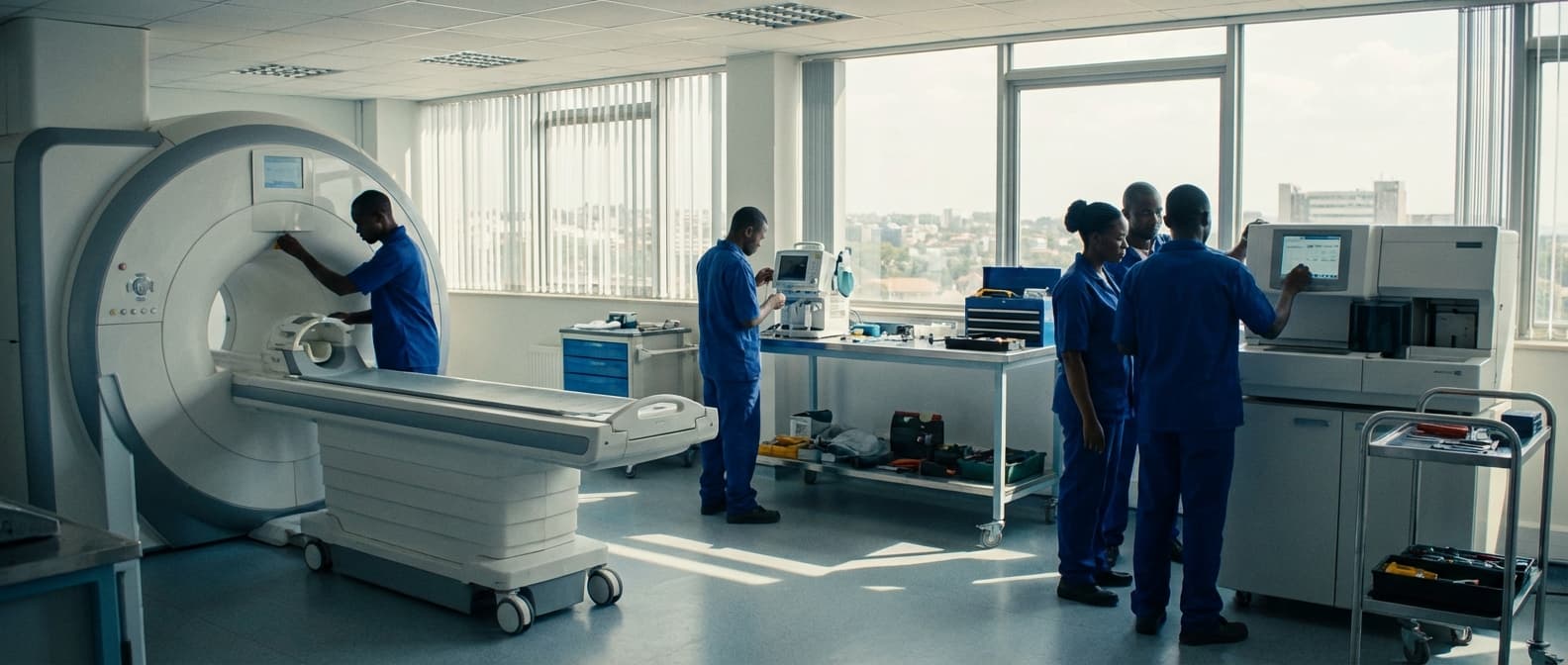
Planned Shutdown Coordination Service for Critical Equipment in Senegal
Engineering Excellence & Technical Support
Planned Shutdown Coordination Service for Critical Equipment High-standard technical execution following OEM protocols and local regulatory frameworks.
Proactive Scheduling & Risk Mitigation
Our service leverages advanced predictive analytics and asset condition monitoring data to meticulously plan critical equipment shutdowns. This ensures optimal timing, minimizing impact on production and proactively addressing potential failures before they occur, crucial for Senegal's vital industries.
Expertise & Localized Execution
We provide seasoned shutdown coordination experts with deep understanding of Senegal's regulatory landscape and industrial operational realities. Our teams are adept at managing complex logistics, coordinating diverse local and international stakeholders, and ensuring seamless execution on the ground.
Efficiency Gains & Cost Optimization
By meticulously planning and executing shutdowns, we significantly reduce unplanned downtime, optimize resource allocation, and streamline maintenance activities. This leads to measurable cost savings and enhanced operational efficiency for critical infrastructure and industrial assets across Senegal.
What Is Planned Shutdown Coordination Service For Critical Equipment In Senegal?
Planned Shutdown Coordination Service for Critical Equipment in Senegal refers to the organized and systematic management of temporary deactivation of essential industrial or operational assets for maintenance, upgrade, or inspection purposes. This service aims to minimize disruption to ongoing operations, ensure safety, optimize resource allocation, and reduce overall downtime costs within the Senegalese industrial and infrastructure sectors. It involves a multi-disciplinary approach, integrating engineering, operations, procurement, and safety protocols.
| Who Needs It? | Typical Use Cases |
|---|---|
| Industries reliant on continuous operation of high-value or essential equipment. | Periodic maintenance of power generation turbines (e.g., in thermal or hydroelectric plants). |
| Companies operating in sectors with stringent safety and regulatory compliance requirements. | Refurbishment or replacement of critical components in chemical processing plants (e.g., reactors, distillation columns). |
| Organizations managing large-scale infrastructure critical to national operations. | Scheduled overhauls of heavy machinery in mining operations (e.g., excavators, crushers). |
| Businesses where unscheduled downtime incurs significant financial losses or reputational damage. | Inspection and repair of offshore oil and gas platforms or onshore processing facilities. |
| Sectors with complex interdependencies between various operational units. | Upgrades to control systems or automation in manufacturing facilities to enhance efficiency or introduce new capabilities. |
| Any entity requiring specialized expertise for complex maintenance tasks. | Routine inspections and certification of lifting equipment or pressure vessels in industrial settings. |
| Government agencies responsible for public utilities and infrastructure. | Planned maintenance of water treatment plants or distribution networks. |
| Telecommunications infrastructure providers. | System-wide upgrades or maintenance on cellular towers or fiber optic networks. |
Key Components of Planned Shutdown Coordination Service
- Detailed scope definition and planning.
- Development of comprehensive work packages with specific task sequences and resource requirements.
- Risk assessment and mitigation strategies (e.g., HAZOP, FMEA).
- Development of detailed schedules and timelines, often utilizing critical path method (CPM).
- Logistics and procurement management for specialized tools, parts, and external labor.
- On-site coordination and supervision during the shutdown period.
- Strict adherence to safety regulations, permits to work, and lockout/tagout procedures.
- Quality assurance and control of performed works.
- Post-shutdown testing, commissioning, and performance verification.
- Documentation and reporting of all activities, findings, and lessons learned.
- Communication management with all stakeholders.
Who Needs Planned Shutdown Coordination Service For Critical Equipment In Senegal?
Planned Shutdown Coordination Services are essential for organizations in Senegal that rely heavily on critical equipment for their operations. These services are designed to manage and optimize scheduled downtime for maintenance, upgrades, or repairs, minimizing disruption and maximizing efficiency. The target customers are diverse, ranging from large industrial facilities to vital service providers, all of whom understand the significant financial and operational risks associated with unplanned equipment failures and the complexities of coordinating extensive maintenance activities.
| Customer Type | Specific Needs for Shutdown Coordination | Key Departments Involved | Impact of Uncoordinated Shutdowns |
|---|---|---|---|
| Oil and Gas Refineries | Managing complex, multi-week shutdowns involving numerous contractors, specialized equipment, and stringent safety protocols. Coordinating fuel production to meet market demand during the shutdown period. | Operations, Maintenance, Project Management, SHE/HSE, Supply Chain | Loss of production revenue, potential safety incidents, delays in critical maintenance leading to future unplanned outages, environmental risks. |
| Power Generation Facilities | Ensuring grid stability and minimal disruption to electricity supply. Scheduling maintenance during periods of lower demand. Coordinating specialized turbine and boiler maintenance. | Operations, Maintenance, Grid Operations, Engineering | Widespread power outages, economic disruption, damage to power generation equipment, inability to meet national energy needs. |
| Large-Scale Mining Operations | Coordinating shutdowns of crushing, grinding, and processing equipment. Managing the impact on ore extraction and transportation. Ensuring safety in hazardous mining environments. | Operations, Maintenance, Production, SHE/HSE, Logistics | Significant loss of mineral output, delayed shipments, increased operational costs, safety hazards in underground and open-pit mines. |
| Water and Wastewater Treatment Plants | Maintaining continuous supply of clean water and effective wastewater treatment. Minimizing disruption to public health and environmental standards. Coordinating complex mechanical and electrical system overhauls. | Operations, Maintenance, Engineering, Environmental Compliance | Public health risks due to contaminated water, environmental pollution, regulatory fines, damage to critical infrastructure. |
| Telecommunications Providers | Coordinating network upgrades and maintenance to minimize service interruptions for mobile and internet users. Managing the deployment of new technologies. | Network Operations, Engineering, Field Maintenance, Customer Service | Significant customer dissatisfaction, revenue loss from service outages, reputational damage, competitive disadvantage. |
Target Customers and Departments in Senegal Needing Planned Shutdown Coordination Services
- {"items":["Oil and Gas (Exploration, Production, Refining)","Mining and Extractive Industries (Gold, Phosphate, etc.)","Power Generation (Thermal, Hydroelectric, Renewable)","Manufacturing (Food & Beverage, Textiles, Cement, etc.)","Water and Wastewater Treatment Plants","Telecommunications Infrastructure"],"title":"Industries"}
- {"items":["Operations Management","Maintenance & Engineering","Production Planning","Asset Management","Safety, Health, and Environment (SHE/HSE)","Procurement & Supply Chain","Project Management"],"title":"Key Departments Within Target Organizations"}
Planned Shutdown Coordination Service For Critical Equipment Process In Senegal
This document outlines the workflow for the Planned Shutdown Coordination Service for Critical Equipment in Senegal. This service is designed to ensure the safe, efficient, and timely execution of planned maintenance and upgrade shutdowns for vital industrial and infrastructure equipment across the country. The process begins with an inquiry from a client and concludes with the successful completion of the shutdown and post-shutdown reporting.
| Phase | Key Activities | Involved Parties | Deliverables | Duration (Typical) |
|---|---|---|---|---|
| Client submits an inquiry for a planned shutdown. Initial meeting to understand the client's needs, critical equipment, desired shutdown window, and preliminary objectives. | Client (Asset Owner/Manager), Service Provider (Coordination Team) | Understanding of client requirements, preliminary feasibility assessment | 1-3 days |
| Detailed assessment of equipment, development of a comprehensive shutdown scope, risk assessment, development of detailed work procedures, creation of a master schedule (including critical path analysis), identification of required permits and safety protocols, budget estimation. | Client (Engineering, Operations, Safety), Service Provider (Project Managers, Engineers, Safety Officers), Equipment Manufacturers/Suppliers (as needed) | Detailed Shutdown Plan, Risk Management Plan, Work Procedures, Master Schedule, Budget Proposal | 1-4 weeks |
| Securing and allocating all necessary resources: skilled labor (internal and external), specialized tools and equipment, materials, consumables, accommodation and logistics for personnel, security arrangements, emergency response teams. | Service Provider (Procurement, Logistics, HR), Client (Approvals, Site Access), Subcontractors | Mobilized workforce, procured materials and equipment, logistics plan execution | 2-6 weeks (overlaps with planning) |
| Site preparation, pre-shutdown inspections, safety briefings and inductions, finalization of permits, testing of critical safety systems, staging of materials and equipment, communication with all stakeholders about the impending shutdown. | Service Provider (Site Supervisors, Safety Officers), Client (Site Management, Operations) | Ready site for shutdown, informed stakeholders, completed safety inductions | 3-7 days (prior to shutdown start) |
| Controlled isolation of equipment, execution of planned maintenance/upgrade tasks according to approved procedures and schedule, continuous monitoring of progress and safety, real-time problem-solving and decision-making, regular progress reporting to the client. | Service Provider (All personnel on-site), Client (Supervision, Approvals, Operations Team) | Completed maintenance/upgrade tasks, incident-free operations (if possible), daily progress reports | Varies significantly based on scope (days to weeks) |
| Equipment recommissioning and testing, final inspections, documentation of all work performed, generation of final shutdown report (including lessons learned), demobilization of resources, final handover to client operations, financial reconciliation. | Service Provider (Project Management, Technical Team), Client (Operations, Engineering, Finance) | Fully operational equipment, comprehensive final report, lessons learned document, financial closure | 1-2 weeks |
Planned Shutdown Coordination Service Workflow
- Inquiry & Initial Consultation
- Scope Definition & Planning
- Resource Mobilization
- Pre-Shutdown Activities
- Shutdown Execution
- Post-Shutdown Activities & Handover
Planned Shutdown Coordination Service For Critical Equipment Cost In Senegal
This document outlines the pricing factors and ranges for a Planned Shutdown Coordination Service for Critical Equipment in Senegal. Such services are crucial for minimizing downtime, ensuring safety, and optimizing maintenance schedules for vital industrial and infrastructure assets. The cost of these services is influenced by several key variables, and the ranges provided are indicative and can vary based on specific project complexities and provider expertise.
| Service Tier / Complexity | Indicative Price Range (XOF) | Description |
|---|---|---|
| Basic Coordination | 500,000 - 1,500,000 | Covers fundamental planning, scheduling, and on-site oversight for single, less complex equipment or smaller shutdowns. Limited scope of ancillary services. |
| Standard Coordination | 1,500,000 - 5,000,000 | Comprehensive planning, scheduling, on-site management, safety coordination, and basic vendor liaison for moderately complex shutdowns involving multiple pieces of equipment or extended durations. |
| Advanced Coordination | 5,000,000 - 15,000,000+ | Full-spectrum coordination for highly critical, complex, or multi-site shutdowns. Includes detailed risk assessment, advanced safety management, extensive vendor and logistics coordination, and comprehensive post-shutdown reporting. May involve larger teams and longer engagement periods. |
| Specialized Support (Add-on) | Variable (per hour/day/project) | Costs for specific expertise like advanced risk analysis, specialized safety engineering, or complex logistics management that are not included in the standard tiers. |
Key Pricing Factors
- Scope of Services: The breadth and depth of the coordination required. This includes pre-shutdown planning, on-site management, post-shutdown analysis, and any specialized support (e.g., logistics, safety supervision).
- Complexity of Equipment & Shutdown: The number, type, and criticality of the equipment being serviced. Complex, highly integrated systems or multi-plant shutdowns will naturally incur higher coordination costs.
- Duration of Shutdown: The planned length of the shutdown directly impacts the resources and time commitment of the coordination team.
- Team Size & Expertise: The number of coordination personnel required and their level of experience and specialized skills (e.g., project managers, safety officers, technical coordinators).
- Geographic Location & Accessibility: The specific site location within Senegal and the ease of access for the coordination team and any necessary equipment or personnel.
- Risk & Safety Requirements: The inherent risks associated with the equipment and the shutdown process will necessitate more stringent safety protocols and oversight, impacting costs.
- Ancillary Services: The inclusion of additional services such as procurement support, vendor management, permit acquisition, or detailed reporting.
- Provider Reputation & Experience: Established providers with a proven track record and specialized expertise may command higher fees.
- Urgency & Flexibility: Rush requests or requirements for extreme flexibility in scheduling can lead to premium pricing.
Affordable Planned Shutdown Coordination Service For Critical Equipment Options
This document outlines affordable planned shutdown coordination services for critical equipment, focusing on value bundles and cost-saving strategies. Effective shutdown coordination is vital to minimize downtime, optimize resource allocation, and ensure the safety and integrity of your operations. Our services are designed to be flexible and scalable, catering to various operational needs and budget constraints.
| Cost-Saving Strategy | Description | Impact on Shutdown Cost |
|---|---|---|
| Early Planning & Scheduling | Initiating shutdown planning well in advance allows for better resource forecasting, vendor negotiation, and contingency development. | Lowers costs by preventing rush fees, securing preferred vendors, and minimizing overtime labor. |
| Resource Optimization | Efficient allocation of personnel, tools, and equipment based on precise task requirements and timelines. | Reduces labor overhead, equipment rental costs, and potential delays due to resource unavailability. |
| Preventive & Predictive Maintenance Integration | Leveraging data from ongoing maintenance to address potential issues during the shutdown, thereby preventing future failures. | Decreases unplanned downtime costs and the need for emergency repairs, which are typically more expensive. |
| Vendor Management & Negotiation | Securing competitive quotes, negotiating bulk discounts, and establishing long-term relationships with trusted service providers. | Achieves lower procurement costs for parts, specialized services, and external labor. |
| Standardized Procedures & Checklists | Developing and adhering to pre-defined protocols and checklists ensures consistency, reduces errors, and speeds up execution. | Minimizes rework, safety incidents, and the time spent troubleshooting unforeseen issues. |
| Remote Monitoring & Diagnostics | Utilizing technology to monitor equipment status and diagnose potential problems remotely before or during the shutdown. | Reduces the need for on-site diagnostics, potentially saving travel and labor costs. |
| Phased Shutdowns | Breaking down large shutdowns into smaller, manageable phases to maintain partial operational capacity. | Minimizes total revenue loss by allowing some operations to continue, offsetting the overall economic impact of the shutdown. |
Value Bundles
- {"title":"Essential Coordination Bundle","description":"This foundational bundle covers the core aspects of shutdown planning and execution. It's ideal for organizations requiring reliable, streamlined coordination without extensive customization."}
- {"title":"Proactive Optimization Bundle","description":"Building on the Essential bundle, this package incorporates advanced planning techniques, risk assessment, and performance benchmarking to maximize efficiency and minimize potential disruptions. Suitable for organizations seeking to improve their shutdown processes."}
- {"title":"Comprehensive Strategic Bundle","description":"Our most extensive offering, this bundle includes all elements of the Proactive Optimization bundle, plus in-depth analysis, predictive maintenance integration, and post-shutdown performance reviews. Designed for organizations prioritizing long-term operational excellence and strategic asset management."}
Verified Providers In Senegal
When seeking healthcare in Senegal, particularly with an emphasis on trustworthy and credentialed medical services, understanding who constitutes a 'Verified Provider' is crucial. Franance Health stands out as a beacon of reliability in this landscape, offering a comprehensive suite of services backed by rigorous credentialing processes. This ensures that patients are connected with healthcare professionals who meet the highest standards of expertise, ethical conduct, and operational excellence. Choosing Franance Health translates to peace of mind, knowing your health is in capable and trusted hands. Their commitment to verification not only elevates the patient experience but also contributes to the overall quality and accessibility of healthcare in Senegal.
| Provider Type | Verification Criteria | Benefits for Patients | Franance Health's Role |
|---|---|---|---|
| Licensed Physicians | Valid medical license, specialization certifications, proof of continuing medical education, clean disciplinary record. | Access to expert medical advice and treatment from qualified doctors. | Validates medical licenses and certifications, ensuring practitioners meet national and international standards. |
| Certified Nurses & Midwives | Accredited nursing/midwifery education, valid practice license, specialized training (e.g., obstetrics, pediatrics). | Safe and competent care during critical health periods, including pregnancy and childbirth. | Confirms educational qualifications and adherence to ethical nursing practices. |
| Accredited Medical Facilities | Compliance with health and safety regulations, modern equipment, qualified staff, patient care protocols. | Safe and effective treatment environment with appropriate medical resources. | Assesses facility infrastructure, hygiene, and operational standards for patient safety. |
| Specialized Therapists (Physio, Psych, etc.) | Relevant academic degrees, professional licenses, specific training and experience in their field. | Targeted rehabilitation and therapeutic interventions for various conditions. | Verifies academic credentials and practical experience in specialized therapeutic areas. |
| Diagnostic Laboratories & Imaging Centers | Accredited by relevant bodies, qualified technicians and radiologists, up-to-date equipment, quality control measures. | Accurate and reliable diagnostic results crucial for diagnosis and treatment planning. | Ensures laboratories and imaging centers meet stringent quality and accuracy standards. |
Why Franance Health is the Best Choice for Verified Providers in Senegal:
- Rigorous Credentialing Process: Franance Health employs an exhaustive vetting procedure for all its affiliated providers, meticulously examining their qualifications, licenses, experience, and adherence to ethical guidelines.
- Commitment to Quality Assurance: Beyond initial verification, Franance Health maintains ongoing quality assurance measures to ensure providers consistently deliver high-standard care.
- Patient-Centric Approach: The core mission of Franance Health is to prioritize patient well-being and safety, achieved through connecting them with demonstrably competent and reliable healthcare professionals.
- Comprehensive Network: Franance Health boasts a diverse network of specialists and general practitioners across various medical disciplines, ensuring a wide range of healthcare needs can be met.
- Transparency and Trust: By clearly identifying and promoting verified providers, Franance Health fosters an environment of transparency and trust within the Senegalese healthcare system.
- Accessibility and Convenience: Franance Health aims to make accessing quality healthcare easier for everyone, streamlining the process of finding and booking appointments with verified professionals.
- Continuous Improvement: The organization is dedicated to staying at the forefront of healthcare standards and practices, continuously refining its verification processes and provider network.
Scope Of Work For Planned Shutdown Coordination Service For Critical Equipment
This Scope of Work (SOW) outlines the services required for comprehensive coordination of planned shutdowns for critical equipment. The objective is to minimize downtime, ensure safety, and optimize resource allocation during scheduled maintenance activities. The service provider will be responsible for detailed planning, scheduling, execution oversight, and post-shutdown analysis.
| Standard Specification | Description | Reference Standard/Guideline | Compliance Requirement |
|---|---|---|---|
| Safety Procedures | Adherence to all applicable health, safety, and environmental (HSE) regulations and best practices for industrial shutdowns. | OSHA, COSHH, local environmental regulations | 100% compliance |
| Lockout/Tagout (LOTO) | Implementation of robust LOTO procedures to ensure equipment is de-energized and cannot be accidentally re-energized during maintenance. | ANSI/ASSP Z244.1, IEC 60206-1 | Strict adherence to documented LOTO procedures for each equipment. |
| Permit to Work (PTW) | A systematic process for controlling work that could affect safety, health, or the environment. | Company-specific PTW policy, ISO 45001 principles | All non-routine work must be authorized via PTW. |
| Risk Management | Systematic identification, assessment, and control of risks associated with planned shutdowns. | ISO 31000 | A documented risk register must be maintained and reviewed regularly. |
| Quality Control | Ensuring all maintenance activities are performed to the required quality standards and specifications. | Manufacturer's specifications, industry best practices | Inspection and verification of work completion against specifications. |
| Documentation | Maintenance of accurate and complete records of all shutdown activities, including planning, execution, and closure. | Company document control procedures, relevant industry standards | All deliverables must be submitted in the specified formats and retained as per company policy. |
| Communication | Clear, timely, and effective communication with all relevant stakeholders throughout the shutdown process. | N/A (Company-defined communication protocols) | Defined communication channels and reporting frequencies must be followed. |
Technical Deliverables
- Detailed Shutdown Plan: Including objectives, scope, timelines, resource requirements, risk assessments, and communication protocols.
- Equipment Isolation and Lockout/Tagout (LOTO) Procedures: Specific procedures for each piece of critical equipment.
- Permit to Work (PTW) Management System: Framework for issuing, managing, and tracking all necessary work permits.
- Resource Allocation Matrix: Identifying personnel, tools, equipment, and materials required for each phase of the shutdown.
- Critical Path Analysis: Identifying the longest sequence of tasks that must be completed on time for the shutdown to finish on the planned date.
- Risk Assessment and Mitigation Plan: Comprehensive identification of potential hazards and strategies to mitigate them.
- Communication Plan: Defining stakeholders, communication channels, frequency, and reporting requirements.
- Daily Progress Reports: Summarizing activities completed, issues encountered, and planned activities for the next day.
- Post-Shutdown Report: Documenting actual vs. planned timelines, lessons learned, equipment performance, and recommendations for future shutdowns.
- As-Built Documentation Updates: Incorporating any changes made during the shutdown to relevant drawings and documentation.
Service Level Agreement For Planned Shutdown Coordination Service For Critical Equipment
This Service Level Agreement (SLA) outlines the terms and conditions for the Planned Shutdown Coordination Service for Critical Equipment, focusing on response times for scheduling and coordination, and uptime guarantees for the associated coordination platform. The objective is to ensure efficient and minimized disruption during planned maintenance activities.
| Service Component | Service Level Objective (SLO) | Measurement | Reporting Frequency |
|---|---|---|---|
| Shutdown Request Acknowledgment | 99.5% of requests acknowledged within 1 business hour | Percentage of shutdown requests acknowledged within the defined SLA timeframe. | Monthly |
| Shutdown Slot Confirmation | 98.0% of confirmed shutdown slots provided within 3 business days of request validation | Percentage of validated shutdown requests for which a confirmed slot is provided within the defined SLA timeframe. | Monthly |
| Coordination Platform Uptime | 99.9% availability (excluding scheduled maintenance) | Percentage of time the coordination platform is accessible and functional. | Monthly |
| Urgent Re-scheduling Request Response | 95.0% of urgent re-scheduling requests addressed within 2 business hours | Percentage of urgent re-scheduling requests for which a response and initial action plan are provided within the defined SLA timeframe. | Monthly |
Scope of Service
- Coordination of planned shutdown requests for designated critical equipment.
- Facilitation of communication between relevant stakeholders (operations, maintenance, IT, etc.).
- Scheduling and confirmation of shutdown windows.
- Provision of a dedicated platform for shutdown planning and tracking.
- Real-time updates on shutdown status and potential impacts.
Frequently Asked Questions

Ready when you are
Let's scope your Planned Shutdown Coordination Service for Critical Equipment in Senegal project in Senegal.

Scaling healthcare logistics and technical systems across the entire continent.