
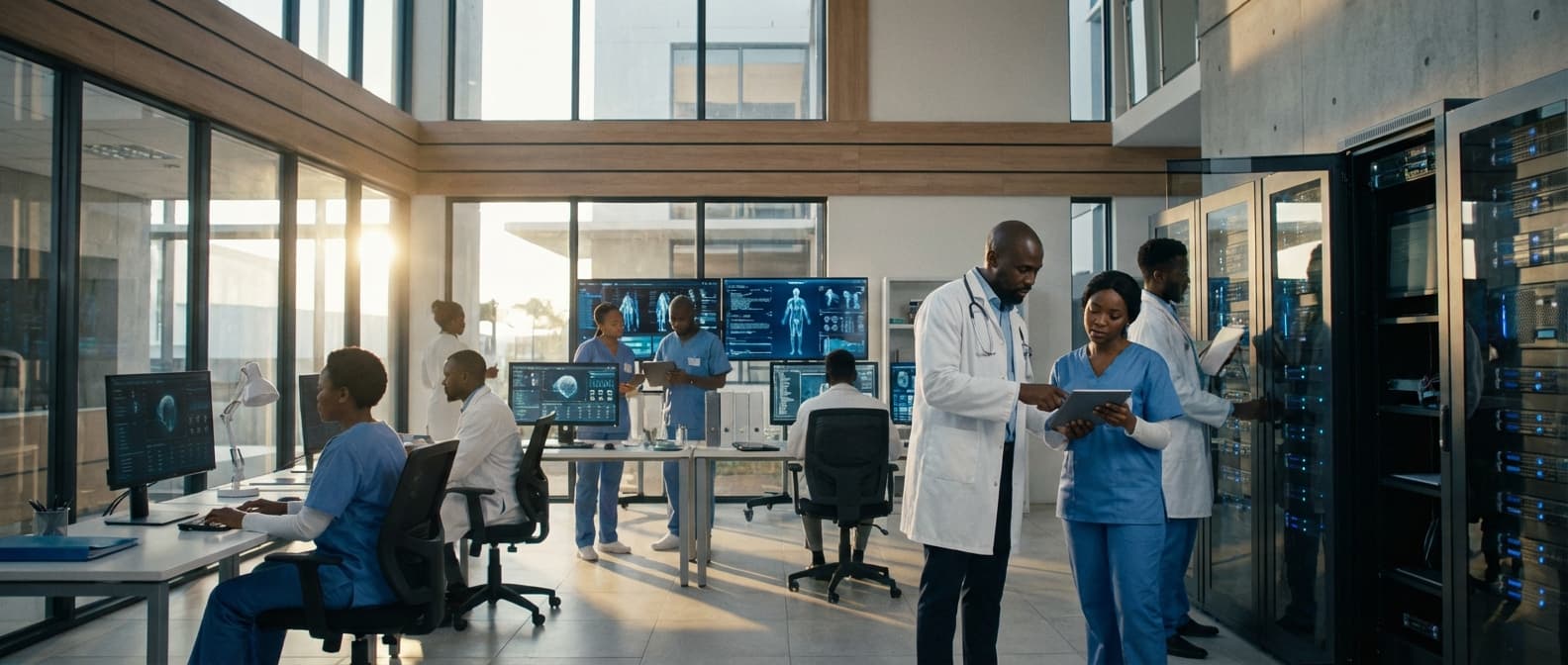
Tele-Radiology in Senegal
Engineering Excellence & Technical Support
24/7 access to certified radiologists providing rapid, accurate remote interpretation of diagnostic imaging studies. High-standard technical execution following OEM protocols and local regulatory frameworks.
Remote Diagnostics for Underserved Regions
Tele-radiology enables expert radiologists to interpret medical images (X-rays, CT scans, MRIs) remotely, bridging the gap for communities in Senegal with limited access to specialized diagnostic services. This ensures timely and accurate diagnoses, improving patient outcomes.
Accelerated Image Transfer & Workflow Efficiency
Secure and high-speed digital transmission of radiological images allows for near real-time consultations. This optimizes workflow by reducing turnaround times for diagnoses, allowing healthcare providers in Senegal to make faster treatment decisions.
Capacity Building & Knowledge Transfer
Tele-radiology platforms facilitate remote training and peer-to-peer learning opportunities for local medical professionals in Senegal. This strengthens local expertise and builds a sustainable radiology infrastructure within the country.
What Is Tele-radiology In Senegal?
Tele-radiology in Senegal refers to the remote interpretation of radiological images (such as X-rays, CT scans, MRIs, and ultrasounds) by qualified radiologists who are not physically present at the imaging facility. This service leverages telecommunication technologies, primarily the internet, to transmit digital image data securely for expert analysis. The core of tele-radiology involves the acquisition of medical images at a local healthcare provider, followed by their transmission to a remote radiologist for diagnosis. This diagnosis is then transmitted back to the referring physician, facilitating timely patient management decisions. The demand for tele-radiology in Senegal is driven by several factors, including a shortage of trained radiologists, uneven distribution of specialized medical expertise across the country, and the need to improve access to diagnostic imaging services, particularly in rural and underserved areas. It aims to bridge geographical barriers, enhance diagnostic accuracy through expert consultation, and expedite the turnaround time for critical imaging reports.
| Who Needs Tele-radiology in Senegal? | Typical Use Cases | |
|---|---|---|
| Rural and remote healthcare facilities lacking on-site radiologists. | Emergency department consultations for trauma and critical care imaging (e.g., suspected stroke, fractures, internal bleeding). | |
| Hospitals with limited subspecialty radiology expertise (e.g., neuroradiology, interventional radiology, pediatric radiology). | Outpatient clinics requiring urgent or routine diagnostic imaging interpretations. | Screening programs (e.g., tuberculosis, mammography) requiring consistent and expert review. |
| Healthcare providers seeking second opinions or confirmation of complex diagnoses. | Post-operative imaging follow-up and monitoring. | Management of chronic diseases requiring regular imaging assessments (e.g., lung disease, orthopedic conditions). |
| Training institutions aiming to provide practical experience in radiology interpretation to a wider cohort of medical professionals. | Support for public health initiatives and epidemiological studies requiring large-scale imaging analysis. |
Key Components of Tele-radiology in Senegal
- Image Acquisition: Digital imaging modalities (X-ray, CT, MRI, Ultrasound) capture patient scans.
- Image Transmission: Secure and high-bandwidth networks (internet, dedicated lines) transmit DICOM-formatted images to a Picture Archiving and Communication System (PACS) or a dedicated tele-radiology platform.
- Remote Interpretation: Board-certified radiologists, located elsewhere (nationally or internationally), access and interpret the transmitted images.
- Report Generation: Radiologists generate comprehensive diagnostic reports.
- Report Transmission: Reports are securely transmitted back to the referring physician or healthcare facility.
- Integration with EMR/EHR: Seamless integration with existing Electronic Medical Record (EMR) or Electronic Health Record (EHR) systems for consolidated patient data management.
Who Needs Tele-radiology In Senegal?
Tele-radiology offers a transformative solution for improving diagnostic imaging access and quality in Senegal. The core need for tele-radiology stems from the uneven distribution of specialized radiologists across the country, particularly in rural and underserved areas. This creates significant delays in diagnosis, limits patient access to timely interpretations, and impacts the overall effectiveness of healthcare delivery. By leveraging tele-radiology platforms, healthcare facilities can connect with remote radiologists for expert interpretation of X-rays, CT scans, MRIs, and ultrasounds, thus bridging the geographical gap and enhancing diagnostic capabilities.
| Department/Service | Specific Needs Addressed by Tele-Radiology | Impact |
|---|---|---|
| Emergency Departments | Rapid interpretation of critical imaging (e.g., trauma, stroke, suspected fractures) to facilitate immediate patient management. | Reduced time to diagnosis, improved patient outcomes in critical care. |
| Orthopedics | Interpretation of X-rays and CT scans for fractures, degenerative conditions, and surgical planning, especially in remote areas. | Improved diagnostic accuracy, better surgical planning, reduced patient travel for consultations. |
| Internal Medicine | Interpretation of chest X-rays for pneumonia/tuberculosis, abdominal scans for various conditions, and other diagnostic imaging. | Timely diagnosis of common and serious medical conditions, enabling effective treatment. |
| Pediatrics | Specialized interpretation of pediatric imaging, which requires specific expertise, for congenital abnormalities, developmental issues, and common childhood illnesses. | Access to expert pediatric radiologists, leading to more accurate diagnoses and appropriate management of children's health. |
| Obstetrics & Gynecology | Interpretation of ultrasounds for pregnancy monitoring, fetal assessment, and gynecological conditions. | Enhanced prenatal care, early detection of potential complications, improved maternal and fetal health. |
| Oncology | Interpretation of CT, MRI, and PET scans for cancer staging, treatment response monitoring, and follow-up imaging. | Access to subspecialty oncologic radiologists for accurate cancer assessment and management. |
| Infectious Disease Control Programs | Screening and diagnosis of infectious diseases such as tuberculosis (chest X-rays) and other conditions requiring imaging for confirmation. | Wider reach for disease screening and diagnosis, aiding in public health efforts. |
Target Customers & Departments for Tele-Radiology in Senegal
- {"title":"Primary Healthcare Facilities (Rural & Remote)","description":"These facilities often lack on-site radiologists and may have limited access to advanced imaging equipment. Tele-radiology provides them with crucial diagnostic support, enabling earlier detection and management of diseases."}
- {"title":"District and Regional Hospitals","description":"While these hospitals may have some imaging equipment, they often struggle with a shortage of specialized radiologists. Tele-radiology can augment their existing services, handle overflow caseloads, and provide subspecialty interpretations."}
- {"title":"Public Health Initiatives & Mobile Clinics","description":"Tele-radiology can be integrated into public health screening programs and mobile diagnostic units to extend reach and provide interpretations for populations in hard-to-access locations."}
- {"title":"Private Clinics and Diagnostic Centers","description":"These entities can leverage tele-radiology to offer a wider range of diagnostic services, improve turnaround times, and reduce the need for in-house subspecialist recruitment."}
- {"title":"Referral Centers and Tertiary Hospitals","description":"Even well-equipped hospitals can benefit from tele-radiology for niche subspecialty interpretations, second opinions, or to manage high volumes during peak times or staff shortages."}
Tele-radiology Process In Senegal
The implementation of tele-radiology in Senegal involves a structured workflow designed to overcome geographical barriers and improve access to expert radiological interpretation. This process facilitates remote consultation and diagnosis, particularly benefiting underserved areas. The workflow typically begins with an inquiry from a referring healthcare facility, leading to the acquisition of imaging data, its secure transmission, interpretation by a remote radiologist, and finally, the delivery of a report back to the originating facility.
| Stage | Description | Key Participants | Technologies Involved |
|---|---|---|---|
| Inquiry and Request Generation | A healthcare facility (e.g., a rural clinic, a district hospital) identifies a need for radiological interpretation of a patient's imaging study. A request is formally generated, often using an electronic medical record (EMR) or a dedicated tele-radiology request form. | Referring Physician/Technologist, Local Healthcare Administrator | EMR System, Dedicated Request Forms, Communication Tools (phone, email) |
| Image Acquisition and Preparation | Radiological images are acquired using standard imaging modalities (X-ray, CT, MRI, Ultrasound) at the referring facility. Images are then anonymized and prepared for transmission, ensuring compliance with data privacy regulations. | Radiology Technologist, Imaging Department Staff | Imaging Modalities (X-ray, CT, MRI, Ultrasound), DICOM compliant PACS (Picture Archiving and Communication System) at the local site, Image anonymization software |
| Data Transmission | Anonymized DICOM images are securely transmitted from the referring facility to the tele-radiology service provider's central server or teleradiology platform. This transmission must be secure and reliable, especially in areas with limited bandwidth. | IT Staff at Referring Facility, Tele-radiology Platform Administrator | Secure Internet Connection (VPN, dedicated lines), Tele-radiology Platform, DICOM Gateway, Compression Algorithms |
| Image Reception and Queuing | Upon reception, images are logged into the tele-radiology platform. They are then organized into a worklist or queue, prioritized based on urgency (e.g., emergency cases) and the service level agreement (SLA) with the referring facility. | Tele-radiology Platform Administrator, Triage Staff | Tele-radiology Platform, Database Management System, Triage Protocols |
| Radiologist Assignment and Interpretation | A qualified radiologist, located remotely (often in a larger hospital, a specialized center, or even abroad), is assigned the case from the worklist. The radiologist reviews the images, accesses relevant patient history, and provides a professional interpretation. | Remote Radiologist, Tele-radiology Service Manager | Tele-radiology Platform, High-resolution Viewing Workstation, Secure Communication Channels, Electronic Patient Records Access |
| Report Generation and Review | The radiologist dictates or types a comprehensive report of their findings. This report is typically reviewed for accuracy and completeness by another radiologist or a senior clinician if specified by the SLA or protocol. | Remote Radiologist, Senior Radiologist (optional), Report Editing Software | Speech Recognition Software, Report Templating System, Electronic Signature |
| Report Delivery and Follow-up | The final, signed report is securely transmitted back to the referring healthcare facility. The referring physician receives the report, integrates it into the patient's medical record, and uses it for further patient management. Follow-up discussions may occur if necessary. | Referring Physician, Tele-radiology Service Coordinator, Referring Facility Staff | Tele-radiology Platform, Secure Email, EMR Integration, Communication Tools |
Tele-Radiology Workflow in Senegal
- Inquiry and Request Generation
- Image Acquisition and Preparation
- Data Transmission
- Image Reception and Queuing
- Radiologist Assignment and Interpretation
- Report Generation and Review
- Report Delivery and Follow-up
Tele-radiology Cost In Senegal
Tele-radiology, the practice of interpreting medical images remotely, is an emerging service in Senegal aiming to bridge the gap in radiology expertise, particularly in underserved areas. The cost of tele-radiology services in Senegal is influenced by several key factors, leading to a range of pricing. These factors include the type and complexity of the imaging study (e.g., X-ray, CT scan, MRI), the urgency of the report, the experience and specialization of the radiologist, the technology and platform used for transmission and reporting, and the overall service package offered by the tele-radiology provider (which might include preliminary reads, full consultations, or integrated reporting with local clinicians). Pricing is typically quoted in West African CFA franc (XOF).
| Imaging Study Type | Estimated Price Range (XOF) |
|---|---|
| Basic X-ray (e.g., Chest X-ray, Limb X-ray) | 15,000 - 30,000 |
| Ultrasound (e.g., Abdominal, Pelvic) | 20,000 - 45,000 |
| CT Scan (e.g., Head CT, Abdominal CT) | 50,000 - 150,000 |
| MRI (e.g., Brain MRI, Spine MRI) | 80,000 - 250,000+ |
| Urgent/STAT Report Surcharge (typically a percentage of base fee) | 10% - 30% of base fee |
Key Pricing Factors for Tele-Radiology in Senegal:
- Type and Modality of Imaging Study: Simpler studies like basic X-rays are generally less expensive than complex ones such as CT scans or MRIs, which require more time and specialized interpretation.
- Report Urgency/Turnaround Time: Expedited reporting for critical cases usually incurs a higher fee compared to standard reporting times.
- Radiologist Expertise and Specialization: Highly specialized radiologists (e.g., neuroradiologists, pediatric radiologists) may command higher fees.
- Technology and Platform Costs: The underlying infrastructure for secure image transfer, PACS (Picture Archiving and Communication System), and reporting software contributes to operational costs, which are reflected in pricing.
- Volume and Contractual Agreements: Larger healthcare facilities or those with long-term contracts might negotiate volume-based discounts.
- Ancillary Services: Some providers may offer additional services like case conferencing, second opinions, or direct consultation with referring physicians, which can add to the overall cost.
- Provider's Overhead and Business Model: The operational expenses, marketing, and profit margins of the tele-radiology provider will also influence their pricing structure.
Affordable Tele-radiology Options
Tele-radiology, the remote interpretation of medical images, offers significant advantages in terms of access to expertise and improved turnaround times. When considering affordable options, it's crucial to understand value bundles and implement effective cost-saving strategies. Value bundles typically group multiple services together at a fixed price, often leading to discounts compared to purchasing services individually. Cost-saving strategies involve careful planning, negotiation, and leveraging technology to optimize resource utilization.
| Cost-Saving Strategy | Description | Benefits | Considerations |
|---|---|---|---|
| Volume-Based Pricing | Negotiating lower per-image or per-study costs based on projected or guaranteed imaging volumes. | Significant cost reduction for high-volume facilities. | Requires accurate volume forecasting and commitment. |
| Value Bundles | Purchasing a package of services, such as primary reads, secondary reads, and critical finding notifications, at a bundled rate. | Predictable costs, potential for discounts on combined services. | Ensure the bundle meets specific clinical needs and doesn't include unnecessary services. |
| Extended Hour Coverage | Securing coverage during off-peak hours or for specific subspecialties through a unified provider rather than multiple ad-hoc solutions. | Cost-effective for round-the-clock needs, consistent quality. | May involve tiered pricing for different coverage periods. |
| Dedicated vs. Shared Resources | Determining if dedicated radiologists for specific departments or subspecialties are more cost-effective than sharing a pool of radiologists. | Dedicated resources can offer greater familiarity and consistency; shared resources can be more flexible and cost-efficient for variable needs. | Analyze utilization patterns to make the best choice. |
| Technology Integration and Optimization | Leveraging existing PACS and RIS systems, ensuring efficient data transfer, and utilizing AI tools for preliminary analysis. | Reduces manual effort, improves turnaround times, potentially lowers per-read costs. | Requires robust IT infrastructure and effective implementation of AI. |
| Service Level Agreements (SLAs) | Clearly defining turnaround times, critical finding protocols, and communication channels in the contract. | Ensures expected service quality and accountability, preventing unexpected costs due to delays or miscommunication. | SLAs should be realistic and clearly measurable. |
| Subspecialty Coverage | Consolidating subspecialty reads (e.g., neuro, cardiac, pediatric radiology) with a single provider offering a comprehensive network. | Avoids contracting with multiple niche providers, potentially securing better rates for specialized services. | Verify the credentials and experience of subspecialty radiologists. |
| Flexible Contract Terms | Negotiating contracts that allow for adjustments in volume or service needs over time. | Provides agility and prevents overspending if demand fluctuates. | Understand termination clauses and modification procedures. |
Key Considerations for Affordable Tele-Radiology
- Understanding Value Bundles
- Negotiating Service Level Agreements (SLAs)
- Optimizing Workflow and Technology
- Considering Volume-Based Pricing
- Exploring Subspecialty Coverage Needs
- Assessing Quality and Accreditation
- Evaluating Data Security and Compliance
Verified Providers In Senegal
In the pursuit of quality healthcare, identifying verified providers is paramount. Franance Health stands out in Senegal as a beacon of trusted and credentialed medical services. Their commitment to rigorous vetting processes ensures that patients receive care from highly qualified professionals, making them the best choice for your health needs.
| Provider Category | Franance Health Verification Process | Benefits for Patients |
|---|---|---|
| Doctors (GPs & Specialists) | Verification of medical degrees, board certifications, active licenses, and peer reviews. | Access to highly skilled and experienced medical professionals for accurate diagnosis and effective treatment. |
| Hospitals & Clinics | Assessment of facility accreditations, equipment standards, hygiene protocols, and patient safety measures. | Assurance of receiving care in safe, well-equipped, and compliant healthcare settings. |
| Diagnostic Laboratories | Review of laboratory accreditations, equipment calibration, quality control procedures, and staff qualifications. | Reliable and accurate diagnostic results, crucial for informed medical decisions. |
| Pharmaceutical Services | Verification of pharmacy licenses, medication sourcing protocols, and adherence to dispensing regulations. | Access to legitimate and safe medications dispensed by qualified pharmacists. |
Why Franance Health is the Best Choice for Verified Providers in Senegal:
- Uncompromising Credentials: Franance Health meticulously verifies the qualifications, licenses, and professional standing of every healthcare provider on their network.
- Patient-Centric Approach: Their focus is on patient well-being, ensuring access to experienced doctors, specialists, and facilities that meet international standards.
- Transparency and Trust: Franance Health prioritizes open communication and provides clear information about provider expertise, fostering trust and confidence.
- Comprehensive Network: From general practitioners to specialized surgeons, Franance Health offers a wide range of verified medical professionals to address diverse healthcare requirements.
- Commitment to Excellence: Their dedication to upholding the highest standards of medical practice and ethical conduct makes them a reliable partner in your health journey.
Scope Of Work For Tele-radiology
This document outlines the Scope of Work (SOW) for Tele-Radiology services, detailing technical deliverables and standard specifications. The objective is to establish a robust and efficient tele-radiology service that ensures high-quality diagnostic imaging interpretation remotely, adhering to industry best practices and regulatory requirements.
| Deliverable Category | Specific Deliverables | Standard Specifications / Requirements |
|---|---|---|
| Image Acquisition and Transmission | PACS/RIS Integration | Seamless integration with existing Picture Archiving and Communication Systems (PACS) and Radiology Information Systems (RIS). DICOM compliance for image transfer and storage. Secure transmission protocols (e.g., VPN, SFTP) for data in transit. |
| Image Acquisition and Transmission | Image Compression and Optimization | Lossless or perceptually lossless compression techniques to minimize bandwidth usage while preserving image quality. Standardized image formats (e.g., DICOM). |
| Image Acquisition and Transmission | Real-time Image Viewing | Low latency image loading and manipulation for radiologists. Support for various image modalities (X-ray, CT, MRI, Ultrasound, Nuclear Medicine). |
| Image Interpretation and Reporting | Radiologist Workstation Software | High-resolution displays meeting diagnostic standards (e.g., DICOM Part 14 Grayscale Standard Display Function). Advanced visualization tools (windowing, leveling, MPR, 3D rendering). Ergonomic design for efficient workflow. |
| Image Interpretation and Reporting | Reporting Software | Structured reporting templates. Integration with voice recognition software. Digital signature capabilities for reports. HL7 compliance for report transmission to RIS/EMR. |
| Image Interpretation and Reporting | Radiologist Qualifications | Board-certified or eligible radiologists in relevant specialties. Licensed to practice in the relevant jurisdictions. Minimum experience requirements as per regulatory guidelines. |
| System Integration and Interoperability | Interoperability Standards | Adherence to HL7, DICOM, FHIR standards for data exchange. Secure API integration with existing healthcare IT infrastructure. |
| System Integration and Interoperability | Data Synchronization | Real-time or near real-time synchronization of patient data, orders, and reports between systems. |
| Data Security and Privacy | HIPAA/GDPR Compliance | Full compliance with all applicable data privacy regulations (e.g., HIPAA in the US, GDPR in Europe). Encryption of data at rest and in transit. Access controls and audit trails. |
| Data Security and Privacy | Secure Authentication | Multi-factor authentication for access to systems. Role-based access control to limit data exposure. |
| Quality Assurance and Performance Monitoring | Quality Control Metrics | Key Performance Indicators (KPIs) for turnaround times (TAT), report accuracy, and radiologist satisfaction. Regular peer review of reports. |
| Quality Assurance and Performance Monitoring | Performance Monitoring Tools | Dashboards and reporting mechanisms to track system performance, utilization, and TAT. Incident reporting and resolution process. |
| Technical Support and Maintenance | Service Level Agreement (SLA) | Defined response and resolution times for technical issues. 24/7 availability of technical support. Proactive system monitoring and maintenance. |
| Technical Support and Maintenance | Disaster Recovery and Business Continuity | Robust disaster recovery plan and business continuity procedures to ensure service availability in case of unforeseen events. |
Key Components of Tele-Radiology Services
- Image Acquisition and Transmission
- Image Interpretation and Reporting
- System Integration and Interoperability
- Data Security and Privacy
- Quality Assurance and Performance Monitoring
- Technical Support and Maintenance
Service Level Agreement For Tele-radiology
This Service Level Agreement (SLA) outlines the performance standards and guarantees for the tele-radiology services provided. It defines the expected response times for image interpretation requests and the minimum uptime for the tele-radiology platform. This agreement is between [Provider Name] (hereinafter referred to as 'Provider') and [Client Name] (hereinafter referred to as 'Client').
| Service Component | Target Response Time | Uptime Guarantee | Applicable Scenarios |
|---|---|---|---|
| Routine Studies (e.g., X-rays, non-emergent CT/MRI) | Within 12 business hours | 99.8% monthly | Standard interpretation requests |
| Urgent Studies (e.g., Stroke protocols, Trauma imaging) | Within 2 business hours | 99.9% monthly | Requests flagged as urgent by the Client |
| STAT Studies (e.g., Active bleeding, Acute MI) | Within 30 minutes | 99.95% monthly | Requests requiring immediate attention and reporting |
| Tele-radiology Platform Availability | N/A | 99.9% monthly | Access to the platform, PACS integration, and report generation tools |
| PACS Connectivity & Data Transmission | N/A | 99.9% monthly | Successful and timely transfer of imaging data to the Provider's platform |
Key Performance Indicators (KPIs)
- Response Time: The time from when a diagnostic imaging study is made available on the platform and a formal request for interpretation is initiated by the Client, to the time the final report is completed and made available to the Client.
- Uptime: The percentage of time the tele-radiology platform and its associated services are available and operational for use by the Client.
Frequently Asked Questions

Ready when you are
Let's scope your Tele-Radiology in Senegal project in Senegal.

Scaling healthcare logistics and technical systems across the entire continent.