
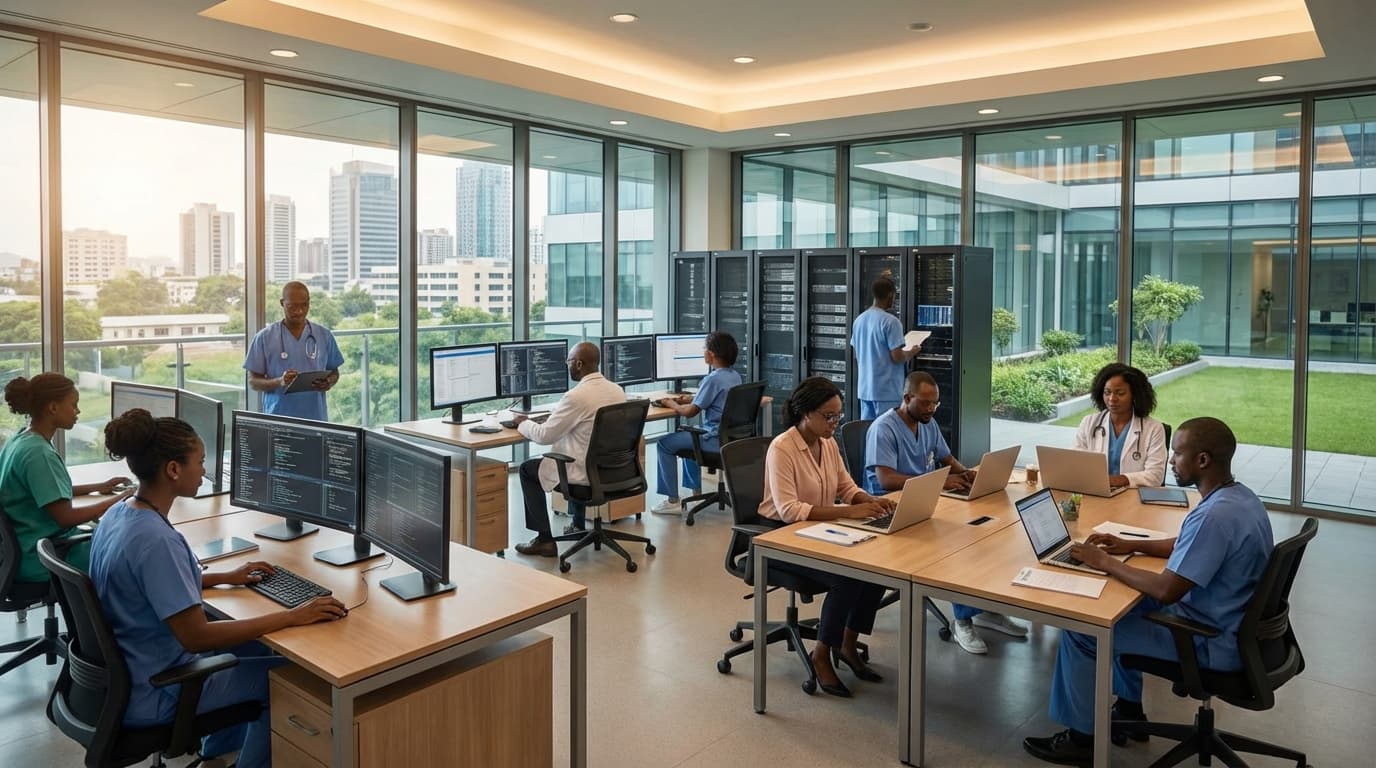
Radiology Reader & Reporting Support in Senegal
Engineering Excellence & Technical Support
Remote radiology reading and reporting services High-standard technical execution following OEM protocols and local regulatory frameworks.
Remote Access & Collaboration Hub
Empower Senegalese radiologists with secure cloud-based access to imaging studies and reporting tools, enabling real-time collaboration with specialists worldwide and accelerating diagnostic turnaround times for improved patient care.
AI-Powered Reporting Assistance
Integrate cutting-edge AI algorithms to automatically pre-populate radiology reports with key findings, measurements, and standardized terminology, reducing manual effort and enhancing the accuracy and consistency of reports for the Senegalese healthcare system.
Tele-Radiology Network Facilitator
Establish a robust tele-radiology network connecting remote clinics and hospitals across Senegal to central reporting centers. Our platform ensures seamless image transfer, secure communication, and efficient workflow management, bringing expert radiology services to underserved populations.
What Is Radiology Reader & Reporting Support In Senegal?
Radiology Reader & Reporting Support in Senegal refers to the provision of expert interpretation and documentation of medical imaging studies (e.g., X-ray, CT, MRI, Ultrasound) by qualified radiologists, often delivered remotely, to healthcare facilities lacking sufficient in-house radiologist expertise. This service aims to bridge the gap in diagnostic imaging capabilities, ensuring timely and accurate diagnoses for patient care. It involves a radiologist reviewing digital images transmitted from a healthcare provider, generating a comprehensive, structured report based on their findings and clinical context, and delivering this report back to the referring physician.
| Who Needs It? | Typical Use Cases | ||||
|---|---|---|---|---|---|
| Hospitals and Clinics in Remote or Underserved Areas: Facilities with limited access to on-site radiologists due to geographical isolation or shortages of specialized medical professionals. | Emergency Departments (EDs): Providing rapid interpretation of critical imaging studies (e.g., head CT for stroke, chest X-ray for pneumonia) to facilitate timely treatment decisions, especially during off-hours or when on-site radiologists are unavailable. | Primary Care Physicians and General Practitioners: Obtaining expert opinions on imaging studies to guide further management or referrals. | Specialty Clinics (e.g., Cardiology, Neurology, Oncology): Requiring subspecialty radiology expertise for complex cases that may not be available locally. | Facilities Experiencing High Imaging Volumes: Supplementing existing radiology departments to manage workload and reduce turnaround times. | Government Health Initiatives and Public Health Programs: Expanding diagnostic imaging access to broader populations across the country. |
| Diagnostic Imaging for Acute Conditions: Interpretation of trauma scans, suspected fractures, acute abdominal pain, and neurological emergencies. | Screening Programs: Reading mammograms for breast cancer screening or low-dose CT for lung cancer screening. | Chronic Disease Management: Monitoring the progression of conditions like osteoarthritis, liver disease, or pulmonary fibrosis through serial imaging. | Pre-operative and Post-operative Assessment: Evaluating imaging prior to or following surgical interventions. | Interventional Radiology Support: Providing remote consultation and interpretation for image-guided procedures. | Second Opinions and Consultations: Offering expert review for challenging or ambiguous cases. |
Key Components of Radiology Reader & Reporting Support
- Image Acquisition: Healthcare facilities utilize imaging modalities to capture patient scans.
- Image Transmission: Secure digital transfer of DICOM (Digital Imaging and Communications in Medicine) images and relevant clinical data to a PACS (Picture Archiving and Communication System) or cloud-based platform accessible by the remote reading service.
- Radiologist Interpretation: A qualified radiologist reviews the transmitted images using specialized workstations and software.
- Report Generation: The radiologist dictates or types a detailed, structured report, often adhering to standardized reporting templates (e.g., BI-RADS, PI-RADS).
- Report Delivery: The final report is securely transmitted back to the referring physician, typically via an integrated EMR/EHR (Electronic Medical Record/Electronic Health Record) system or a secure portal.
- Quality Assurance: Protocols for peer review, continuous professional development, and performance monitoring are often integrated.
Who Needs Radiology Reader & Reporting Support In Senegal?
This section outlines the primary beneficiaries and departments within healthcare facilities in Senegal that would benefit from radiology reader and reporting support. The aim is to improve diagnostic accuracy, efficiency, and access to specialized radiological expertise.
| Customer Type | Key Departments Benefiting | Specific Needs/Challenges | Potential Impact of Support |
|---|---|---|---|
| Public Hospitals | Radiology Department, Emergency Department, Internal Medicine, Surgery, Pediatrics, Oncology | Limited availability of sub-specialized radiologists, high patient load, varying equipment quality, need for standardized reporting. | Improved diagnostic accuracy, faster turnaround times for critical diagnoses, enhanced training for local radiologists, better patient management. |
| Private Clinics & Diagnostic Centers | Radiology Department, various clinical specialties (e.g., cardiology, neurology, orthopedics) | Desire for peer review and second opinions, access to specialized interpretations not available in-house, efficiency gains for busy practitioners. | Increased confidence in diagnoses, ability to offer a wider range of specialized imaging services, competitive advantage. |
| University Teaching Hospitals | Radiology Department, all clinical departments involved in medical education | Need for expert consultation for complex cases, support for training residents and fellows, alignment with international best practices in reporting. | Enhanced educational opportunities, development of local expertise, research support through accurate data interpretation. |
| NGO Healthcare Providers | Radiology Departments (where available), primary care clinics | Serving underserved populations, often with limited resources, potential for remote support to bridge geographical gaps. | Improved access to diagnostic imaging in remote areas, support for public health initiatives, early detection of diseases. |
| Mobile/Outreach Health Units | On-site medical teams | Challenges in accessing specialized interpretation for portable imaging equipment, need for timely reports to inform immediate treatment decisions. | Facilitating diagnosis and treatment in remote or disaster-affected areas, timely decision-making for mobile patient populations. |
Target Customers and Departments in Senegal for Radiology Reader & Reporting Support
- Public Hospitals (National, Regional, and District)
- Private Clinics and Diagnostic Centers
- University Teaching Hospitals
- Non-Governmental Organization (NGO) Healthcare Providers
- Mobile/Outreach Health Units
Radiology Reader & Reporting Support Process In Senegal
This document outlines the workflow for the Radiology Reader & Reporting Support Process in Senegal. It details the steps involved from the initial inquiry to the final execution and delivery of radiology reports.
| Stage | Description | Key Actors | Deliverables | Potential Bottlenecks/Considerations |
|---|---|---|---|---|
| Inquiry & Case Submission | A referring physician or healthcare provider initiates a request for a radiology interpretation. This typically involves submitting patient information, clinical history, and the imaging study itself (e.g., DICOM files). The inquiry can be made via a dedicated PACS (Picture Archiving and Communication System) portal, email, or a specific request form. | Referring Physician/Healthcare Provider, Radiologist (initial contact) | Completed Request Form, Clinical History, Imaging Study (DICOM files) | Incomplete clinical information, poor quality images, technical issues with image transfer, unclear referral reason. |
| Radiologist Assignment & Review | The submitted case is received and triaged. Based on subspecialty, availability, and workload, an appropriate radiologist is assigned to the case. The radiologist then accesses the imaging study through the PACS for initial review. | Radiology Department Administrator/Coordinator, Radiologist | Assigned Radiologist, Reviewed Imaging Study | Radiologist availability, workload management, subspecialty expertise matching, delays in assignment. |
| Reporting & Dictation | The assigned radiologist meticulously analyzes the imaging findings, interprets them in the context of the clinical history, and dictates their findings and conclusions. This can be done through voice dictation software or direct typing into a reporting template. | Radiologist | Dictated Report (audio or text) | Radiologist's interpretation accuracy, completeness of findings, dictation quality, technical issues with dictation software. |
| Quality Assurance (QA) | The dictated report undergoes a quality assurance process. This may involve a senior radiologist reviewing the report for accuracy, clarity, consistency, and adherence to established reporting standards. In some cases, this may also involve the transcriptionist (if applicable) correcting any errors. | Radiologist, Senior Radiologist, Transcriptionist (if applicable) | Reviewed Report (potentially with edits) | Time lag in QA review, subjective nature of QA, consistency of QA standards, availability of senior radiologists. |
| Report Finalization & Distribution | Once approved by QA, the report is finalized. This typically involves converting the dictated report into a structured text document. The final report is then securely transmitted back to the referring physician or healthcare provider, often through the PACS portal, secure email, or a secure online platform. | Radiologist, Radiology Department Administrator/Coordinator | Finalized Radiology Report | Timeliness of report finalization, secure and efficient distribution channels, accessibility of reports for referring physicians, IT infrastructure reliability. |
| Archiving & Follow-up | The imaging studies and finalized reports are securely archived in accordance with institutional policies and regulatory requirements. Any necessary follow-up actions, such as communicating critical findings or scheduling further imaging, are initiated. | Radiology Department, Referring Physician/Healthcare Provider | Archived Imaging Studies and Reports, Follow-up Actions | Data storage capacity, retrieval efficiency, data security and privacy, communication protocols for critical findings, effective follow-up tracking. |
Key Stages of the Radiology Reader & Reporting Support Process
- Inquiry & Case Submission
- Radiologist Assignment & Review
- Reporting & Dictation
- Quality Assurance (QA)
- Report Finalization & Distribution
- Archiving & Follow-up
Radiology Reader & Reporting Support Cost In Senegal
Radiology reader and reporting support in Senegal, like in many developing nations, is influenced by a combination of factors, leading to a range of pricing. These factors include the type of imaging modality, the complexity of the case, the experience and specialization of the radiologist, and the location and infrastructure of the facility providing the service. Turnaround time expectations also play a significant role, with urgent reports commanding higher fees. The overall cost of medical infrastructure, including the availability and maintenance of advanced imaging equipment, and the cost of highly skilled personnel, contribute to the pricing structure. Emerging models of teleradiology, where remote radiologists interpret images, are also impacting cost structures, potentially offering more competitive rates due to reduced overhead in certain scenarios, but also factoring in costs for data transmission and secure platforms.
| Imaging Modality/Service Type | Estimated Price Range (XOF - West African CFA Franc) | Notes |
|---|---|---|
| X-ray Interpretation (Standard) | 10,000 - 30,000 | Price can vary based on the number of views and complexity. |
| Ultrasound Interpretation (Abdomen/Pelvis) | 15,000 - 40,000 | Includes obstetrical and gynecological scans. |
| CT Scan Interpretation (Limited Area) | 40,000 - 80,000 | E.g., head CT, chest CT. |
| CT Scan Interpretation (Full Body/Complex) | 70,000 - 150,000+ | Involves multiple scans or advanced protocols. |
| MRI Scan Interpretation (Limited Area) | 70,000 - 120,000 | E.g., brain MRI, knee MRI. |
| MRI Scan Interpretation (Complex/Full Body) | 100,000 - 250,000+ | Covers advanced sequences and detailed evaluations. |
| Mammography Interpretation | 20,000 - 50,000 | Standard screening or diagnostic mammograms. |
| Urgent/STAT Interpretation Surcharge | 15,000 - 50,000+ | Applied on top of the base interpretation fee. |
| Teleradiology Services (Per Study) | 15,000 - 70,000 | Highly variable based on provider, modality, and turnaround time. |
Key Factors Influencing Radiology Reader & Reporting Support Costs in Senegal
- Type of Imaging Modality (X-ray, CT, MRI, Ultrasound, Mammography)
- Complexity of the Case (e.g., simple fracture vs. complex tumor)
- Radiologist's Experience and Specialization (e.g., general radiologist vs. neuro-radiologist)
- Urgency of Report (standard vs. STAT interpretation)
- Location and Infrastructure of the Service Provider
- Teleradiology Services (remote interpretation, data transmission costs)
- Administrative and Overhead Costs of the Facility
Affordable Radiology Reader & Reporting Support Options
Finding affordable radiology reader and reporting support is crucial for practices of all sizes. This section explores value bundles and cost-saving strategies to help optimize your radiology workflow and reduce expenses. We'll cover how to leverage technology and efficient service models to enhance turnaround times and diagnostic accuracy without breaking the bank.
| Service Component | Typical Value Bundle Inclusion | Cost-Saving Benefit |
|---|---|---|
| Radiology Reading | Access to a pool of board-certified radiologists, including subspecialists. | Reduced need for in-house staffing, fixed overhead, and recruitment costs. |
| Radiology Reporting | Standardized and templated report generation, often integrated with AI tools. | Faster turnaround times, increased radiologist efficiency, and reduced transcription costs. |
| Quality Assurance | Peer review, audit processes, and continuous improvement initiatives. | Enhanced diagnostic accuracy, reduced liability, and improved patient outcomes. |
| IT Integration & Support | Seamless PACS/RIS integration, data security, and technical assistance. | Streamlined workflow, reduced IT infrastructure costs, and minimized downtime. |
| Turnaround Time Guarantees | Commitment to specific reporting deadlines (e.g., 24/72 hour turnaround for routine studies). | Improved patient care, increased referring physician satisfaction, and potential for higher throughput. |
Key Cost-Saving Strategies for Radiology Support
- Value Bundles: Look for service providers who offer bundled packages that combine reading services with reporting, quality assurance, and IT integration. Bundling often leads to significant discounts compared to procuring individual services.
- Technology Integration: Invest in PACS and RIS integration that allows for seamless data transfer and workflow automation. This reduces manual data entry and administrative overhead.
- Tiered Service Models: Some providers offer tiered pricing based on caseload, turnaround time requirements, or subspecialty needs. Choose a tier that aligns with your current volume and urgency.
- Remote/Virtual Reading: Utilizing remote radiologists can significantly reduce overhead costs associated with in-house staffing, real estate, and benefits.
- AI-Assisted Reporting: Explore AI tools that can pre-populate reports, identify incidental findings, and suggest standardized phrasing, reducing the time radiologists spend on dictation and documentation.
- Flexible Staffing: Consider models that offer on-demand or flexible scheduling for reading support, allowing you to scale up or down based on fluctuations in your workload.
- Negotiate Contracts: Don't hesitate to negotiate pricing, service level agreements (SLAs), and payment terms with your chosen vendors.
- Subspecialty Outsourcing: For highly specialized reads that you may not have in-house expertise for, outsourcing to subspecialists can be more cost-effective than hiring full-time staff.
- Consolidated Billing: Working with a single provider for multiple services simplifies billing and can sometimes lead to volume discounts.
Verified Providers In Senegal
In Senegal, ensuring access to quality healthcare is paramount. Verified providers stand out due to their adherence to stringent standards, commitment to patient safety, and dedication to continuous improvement. Among these, Franance Health has established itself as a beacon of excellence, offering a comprehensive suite of services backed by unwavering credentials. Their commitment to ethical practices, advanced medical technologies, and highly skilled professionals makes them the premier choice for individuals seeking reliable and top-tier healthcare in Senegal.
| Credential/Attribute | Franance Health's Commitment | Benefit to Patients |
|---|---|---|
| Accreditation & Certification | Holds recognized national and international healthcare accreditations. | Guarantees adherence to rigorous quality and safety protocols, ensuring trustworthy care. |
| Medical Staff Qualifications | Employs licensed, board-certified specialists and experienced medical personnel. | Provides access to highly skilled professionals capable of diagnosing and treating a wide spectrum of health conditions. |
| Technology & Equipment | Utilizes advanced diagnostic and treatment technologies and modern medical equipment. | Enables accurate diagnoses, effective treatments, and improved patient outcomes. |
| Patient Safety Protocols | Implements strict infection control, patient identification, and medication safety measures. | Minimizes risks and ensures a secure and safe healthcare environment. |
| Ethical Practices | Upholds the highest ethical standards in patient care, communication, and billing. | Fosters trust and transparency, allowing patients to feel confident and respected. |
| Continuous Improvement | Actively engages in quality improvement initiatives and ongoing training. | Ensures patients receive the most up-to-date and effective medical care available. |
Why Franance Health is the Best Choice:
- Unwavering commitment to patient-centered care.
- Adherence to international quality and safety standards.
- Investment in state-of-the-art medical technology.
- Team of highly qualified and experienced healthcare professionals.
- Comprehensive range of specialized medical services.
- Transparent and ethical billing practices.
- Strong focus on continuous professional development for staff.
Scope Of Work For Radiology Reader & Reporting Support
This Scope of Work (SOW) outlines the requirements for Radiology Reader & Reporting Support services. This service is designed to provide expert interpretation of radiological images and generation of comprehensive diagnostic reports, supporting healthcare providers in accurate and timely patient care. The service will leverage qualified radiologists and adhere to established industry standards and best practices.
| Deliverable | Description | Standard Specification/Requirement |
|---|---|---|
| Radiological Image Interpretation | Expert review and analysis of digital radiological images submitted for interpretation. | Interpretation performed by board-certified or fellowship-trained radiologists with relevant subspecialty expertise. Turnaround time (TAT) for routine reads: within X hours; for STAT reads: within Y minutes (specific TAT to be defined in contract). |
| Diagnostic Reports | Comprehensive written reports detailing findings, impressions, and recommendations based on image interpretation. | Reports to follow established dictation/transcription workflows. Standardized report templates to be utilized where applicable. Reports to include patient demographics, examination details, findings, and a concise impression. Must be signed and dated by the interpreting radiologist. |
| Quality Assurance (QA) Program | Systematic process for monitoring and improving the accuracy and quality of interpretations and reports. | Regular peer review of a percentage of reports. Performance metrics to be tracked (e.g., discrepancy rates, TAT adherence, report completeness). QA feedback to be provided to readers. Adherence to ACR (American College of Radiology) guidelines for QA. |
| PACS/RIS Integration | Seamless integration with the client's Picture Archiving and Communication System (PACS) and Radiology Information System (RIS). | Secure and reliable data exchange protocols (e.g., DICOM, HL7). Read-access to relevant patient history and prior studies within the PACS/RIS environment. Ability to push final reports back into the RIS/EHR system. |
| Security and Confidentiality | Strict adherence to patient data privacy regulations (e.g., HIPAA). | Secure data transmission and storage. Access controls and audit trails for all data. Confidentiality agreements for all personnel involved in the service. Compliance with client's IT security policies. |
| Communication and Escalation | Clear channels for communication and a defined process for urgent findings or critical results. | Defined escalation protocol for critical findings, including direct communication with the referring physician or designated contact person. Regular reporting on service performance and any identified issues. |
| Subspecialty Expertise | Access to radiologists with specialized training and experience in various subspecialties. | Availability of readers for Neuroradiology, Musculoskeletal (MSK), Abdominal, Thoracic, Breast Imaging, Pediatric Radiology, Interventional Radiology (as applicable for consults/reporting). Credentials and certifications to be verified. |
Key Objectives
- Provide accurate and timely interpretation of various radiological imaging modalities (e.g., X-ray, CT, MRI, Ultrasound, Mammography).
- Generate clear, concise, and clinically relevant diagnostic reports that meet established medical standards.
- Ensure compliance with all relevant regulatory requirements and accreditation standards.
- Maintain a high level of inter-reader and intra-reader reliability.
- Facilitate efficient workflow integration with existing Picture Archiving and Communication Systems (PACS) and Electronic Health Records (EHR).
Service Level Agreement For Radiology Reader & Reporting Support
This Service Level Agreement (SLA) outlines the guaranteed response times and uptime for the Radiology Reader & Reporting Support services provided by [Your Company Name] to [Client Company Name]. This agreement ensures timely access to expert radiology interpretation and comprehensive reporting to support clinical decision-making and patient care.
| Service Component | Service Level Target | Measurement Method | Remedy for Failure |
|---|---|---|---|
| Routine Report Turnaround Time (TAT) | 95% of reports delivered within 24 hours (standard business days) | Time-stamped delivery logs | Service credits equivalent to 5% of monthly fee for each instance where the 24-hour TAT is missed by more than 12 hours. |
| STAT/Urgent Report Turnaround Time (TAT) | 98% of STAT reports delivered within 4 hours; 100% within 8 hours | Time-stamped delivery logs | Service credits equivalent to 10% of monthly fee for each instance where the 4-hour STAT TAT is missed by more than 2 hours. |
| Critical Finding Notification Time | 99% of critical findings notified within 1 hour of identification (during client's specified coverage hours) | Radiologist communication logs (phone, secure messaging) | Service credits equivalent to 15% of monthly fee for each missed critical finding notification or notification delay exceeding 2 hours. |
| Platform Uptime Guarantee | 99.9% availability (excluding scheduled maintenance) | System monitoring tools, verified by independent third-party if necessary | Service credits: (Uptime % - 99.9%) * 2 * Monthly Fee |
| Support Response Time (Critical Issues) | Acknowledge and begin resolution within 1 hour (during client's specified support hours) | Help desk ticket timestamps | Service credits equivalent to 5% of monthly fee for each instance of exceeding the 1-hour response time. |
| Support Response Time (Non-Critical Issues) | Acknowledge and begin resolution within 4 business hours (during client's specified support hours) | Help desk ticket timestamps | Service credits equivalent to 2% of monthly fee for each instance of exceeding the 4-hour response time. |
| Report Availability | 99.5% of reports are accessible via the reporting portal or other agreed-upon method | System access logs, client feedback | Service credits equivalent to 5% of monthly fee for each reporting period where availability falls below the target. |
Key Performance Indicators (KPIs)
- Report Turnaround Time (TAT): The time from when a radiology study is accepted by the reading service to when the final report is delivered.
- Critical Finding Notification Time: The time from when a critical finding is identified by the radiologist to when the referring physician is directly notified.
- System Uptime: The percentage of time the Radiology Reader & Reporting Support platform and associated services are available and operational.
- Support Response Time: The time from when a support request is initiated by the client to when a support representative acknowledges and begins working on the issue.
- Report Availability: The percentage of requested reports that are successfully generated and accessible to the client.
Frequently Asked Questions

Ready when you are
Let's scope your Radiology Reader & Reporting Support in Senegal project in Senegal.

Scaling healthcare logistics and technical systems across the entire continent.