
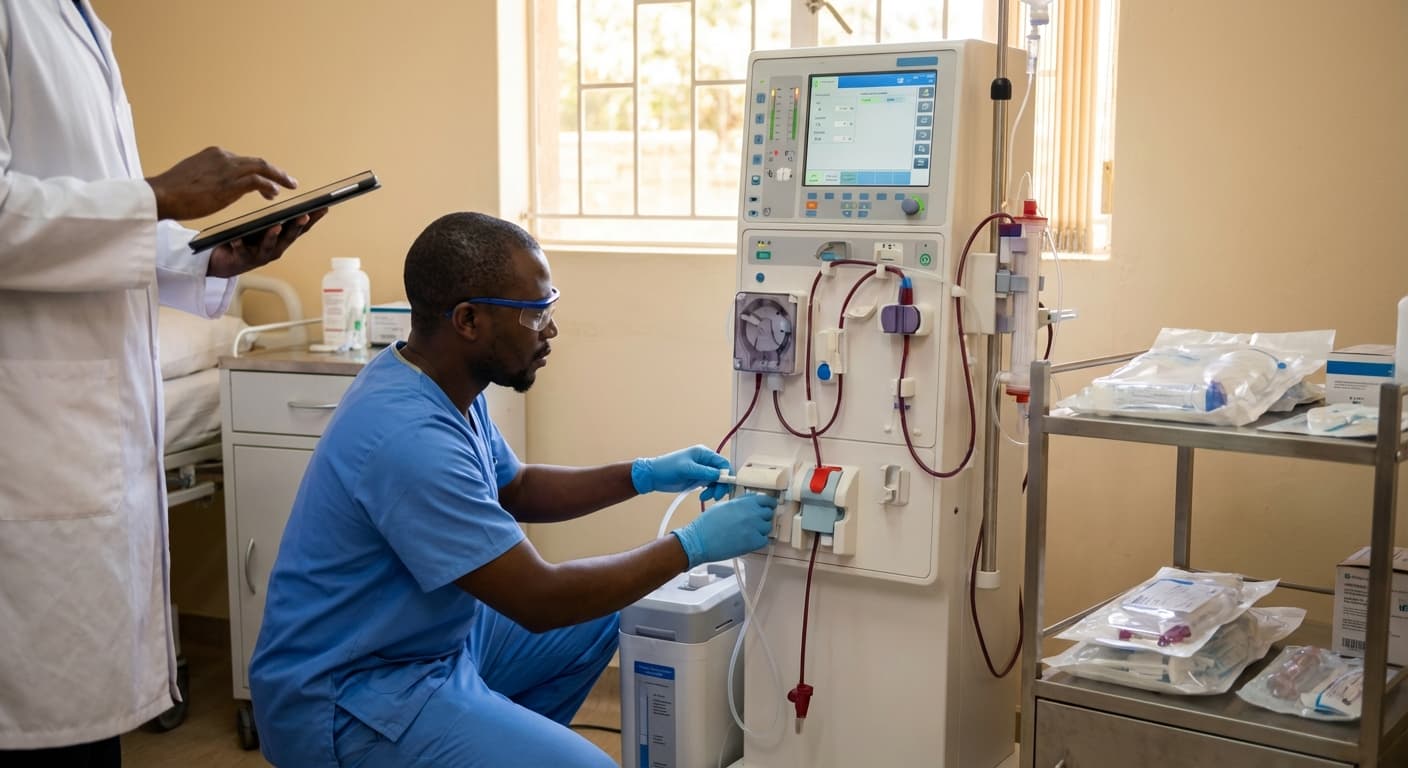
Hemodialysis Machine Installation Service in Senegal
Engineering Excellence & Technical Support
Hemodialysis Machine Installation Service High-standard technical execution following OEM protocols and local regulatory frameworks.
Expert Installation & Calibration
Our certified technicians provide meticulous installation and precise calibration of hemodialysis machines across Senegal, ensuring optimal performance and patient safety from day one.
Seamless Integration & Training
We specialize in integrating new hemodialysis units into existing healthcare infrastructure, offering comprehensive staff training to ensure proficient and efficient operation for your medical teams.
Compliance & Quality Assurance
Adhering to international standards and Senegalese healthcare regulations, our installation services include rigorous quality checks and documentation for guaranteed compliance and reliability.
What Is Hemodialysis Machine Installation Service In Senegal?
Hemodialysis machine installation service in Senegal refers to the comprehensive process of setting up, configuring, and validating hemodialysis equipment within a healthcare facility. This service ensures that the hemodialysis machines are correctly integrated into the existing infrastructure, are fully functional according to manufacturer specifications, and meet regulatory compliance standards for safe and effective patient treatment. The process typically involves site preparation, physical installation of the machine, connection to essential utilities (water, electricity, waste), calibration, functional testing, and operator training.
| Who Needs Hemodialysis Machine Installation Service? | Typical Use Cases | |||
|---|---|---|---|---|
| New Dialysis Centers: Facilities establishing a new nephrology department or standalone dialysis unit requiring initial setup of multiple machines. | Expansion of Existing Facilities: Healthcare institutions increasing their dialysis capacity by adding new treatment stations. | Replacement of Outdated Equipment: Hospitals and clinics upgrading their hemodialysis fleet with newer, more advanced models. | Relocation of Equipment: Moving hemodialysis machines to a different wing or a new healthcare complex. | Post-Renovation/Refurbishment: Reinstalling or commissioning machines after significant infrastructure changes in the dialysis unit. |
| Acute Kidney Injury (AKI) Management: Setting up machines in intensive care units or emergency departments for temporary dialysis needs. | Chronic Kidney Disease (CKD) Treatment: Installing machines in outpatient dialysis centers for regular, long-term patient care. | In-center Hemodialysis: The most common scenario where machines are installed in dedicated dialysis units within hospitals or specialized clinics. | Home Hemodialysis (Less Common for Installation Service): While the machines themselves might be installed, the service is typically focused on institutional settings. Home setup often involves a more specialized, patient-specific process. | Temporary/Mobile Dialysis Units: Installation in portable or temporary facilities for disaster relief or specialized medical campaigns. |
Key Components of Hemodialysis Machine Installation Service:
- Site Assessment and Preparation: Evaluating the designated installation area for structural integrity, power supply capacity, water quality, and waste disposal systems. This may involve minor modifications or recommendations for infrastructure upgrades.
- Physical Placement and Mounting: Safely transporting and positioning the hemodialysis machine in its intended location, often requiring specialized handling due to the equipment's weight and sensitivity.
- Utility Connections: Establishing secure and compliant connections to the facility's potable water supply (often requiring pre-treatment systems like reverse osmosis), electrical outlets (with appropriate grounding), and medical waste disposal channels.
- Software Configuration and Calibration: Installing and configuring the machine's operating software, including setting up patient parameters, dialysis protocols, and performing essential calibration routines to ensure accurate fluid balance and dialysate delivery.
- Functional Testing and Validation: Conducting rigorous diagnostic tests to verify all machine functions, alarms, safety features, and connectivity. This often includes a 'dry run' test followed by a test dialysis with saline to confirm performance.
- Integration with Ancillary Equipment: Connecting and testing the hemodialysis machine with related equipment such as water treatment systems, dialyzer priming stations, and patient monitoring devices.
- Operator Training: Providing comprehensive training to biomedical engineers, nephrologists, and dialysis nurses on the operation, maintenance, troubleshooting, and safety protocols of the installed hemodialysis machine.
- Documentation and Handover: Completing all necessary installation reports, validation certificates, and user manuals, and formally handing over the operational equipment to the healthcare facility.
Who Needs Hemodialysis Machine Installation Service In Senegal?
This document outlines the critical need for professional hemodialysis machine installation services in Senegal. The growing prevalence of kidney disease and the expansion of dialysis facilities necessitate specialized expertise to ensure the safe, efficient, and compliant setup of these life-saving machines. Proper installation is paramount for patient safety, machine longevity, and adherence to healthcare regulations.
| Target Customer Type | Relevant Departments/Key Personnel | Specific Needs/Considerations |
|---|---|---|
| Public Hospitals and Clinics | Nephrology Department, Biomedical Engineering Department, Facilities Management, Procurement Department | Large-scale installations, integration with existing infrastructure, budget adherence, adherence to national healthcare standards. |
| Private Hospitals and Medical Centers | Nephrology Unit, Technical Services Department, Administration, Purchasing Department | Focus on efficiency and patient comfort, rapid deployment, integration of latest technologies, potential for specialized patient care. |
| Dialysis Centers (Independent) | Center Director, Clinical Manager, Biomedical Technician, Operations Manager | Turnkey solutions, specialized setup for high patient volume, compliance with local health regulations, staff training on machine operation and maintenance. |
| Non-Governmental Organizations (NGOs) providing healthcare | Program Manager, Medical Coordinator, Logistics Department, Local Healthcare Staff | Installation in remote or underserved areas, durability and ease of maintenance, training for local staff, cost-effectiveness. |
| International Aid Organizations | Project Manager, Health Sector Specialist, Procurement Officer, Local Implementation Partner | Installation in emergency or disaster relief settings, rapid deployment, technical support and maintenance agreements, adherence to international standards. |
| Research Institutions with clinical facilities | Principal Investigator, Clinical Research Coordinator, Biomedical Engineer, IT Department | Precise calibration for research protocols, data integration capabilities, security of research data, specialized configurations for experimental procedures. |
Target Customers and Departments for Hemodialysis Machine Installation Service in Senegal:
- Public Hospitals and Clinics
- Private Hospitals and Medical Centers
- Dialysis Centers (Independent)
- Non-Governmental Organizations (NGOs) providing healthcare
- International Aid Organizations
- Research Institutions with clinical facilities
Hemodialysis Machine Installation Service Process In Senegal
This document outlines the comprehensive workflow for Hemodialysis Machine Installation Services in Senegal, from the initial customer inquiry to the final execution and handover. It details each stage, the involved parties, and key activities to ensure a smooth and efficient installation process.
| Stage | Description | Key Activities | Responsible Parties | Deliverables/Outcomes |
|---|---|---|---|---|
| Inquiry & Consultation | Initial contact and understanding of customer's needs for hemodialysis machine installation. | Receive customer inquiry (phone, email, website). Discuss machine model, quantity, facility requirements. Provide initial information about services and capabilities. | Customer, Sales Representative | Understanding of customer's basic requirements, initial interest confirmed. |
| Site Assessment & Planning | On-site evaluation of the installation location and detailed planning. | Schedule and conduct on-site visit. Assess electrical capacity, plumbing, ventilation, space, and accessibility. Identify potential challenges. Develop a preliminary installation plan. | Technical Team, Site Coordinator, Customer Representative | Detailed site report, confirmed installation feasibility, preliminary installation plan. |
| Quotation & Agreement | Formal proposal and contract finalization. | Prepare a detailed quotation based on site assessment, machine costs, installation labor, and materials. Present quotation to the customer. Negotiate terms and finalize the service agreement/contract. | Sales Department, Legal Department, Customer | Signed service agreement/contract, confirmed scope of work and pricing. |
| Logistics & Preparation | Procurement of equipment, scheduling of personnel, and pre-installation preparation. | Order and receive hemodialysis machines and accessories. Schedule installation technicians and engineers. Arrange for necessary tools, equipment, and consumables. Coordinate with the customer regarding site readiness. | Logistics Team, Technical Team, Procurement Department, Customer | All necessary equipment and personnel mobilized, site prepared for installation. |
| Installation Execution | Physical installation of the hemodialysis machine(s). | Transport machines to the site. Unpack and position machines. Connect to power, water, and drainage systems. Install any required ancillary equipment (e.g., water treatment systems). Ensure all connections are secure and compliant with local regulations and manufacturer guidelines. | Installation Technicians, Engineers, Site Supervisor | Hemodialysis machine(s) physically installed and connected. |
| Testing & Calibration | Verification of machine functionality and accuracy. | Perform initial power-on tests. Conduct functional tests of all machine components (e.g., pumps, sensors, dialyzer connections). Calibrate the machine according to manufacturer specifications and patient needs. Run diagnostic tests. | Service Engineers, Calibration Specialists | Fully functional and calibrated hemodialysis machine, test reports generated. |
| Training & Handover | Instruction on machine operation and formal transfer of responsibility. | Provide comprehensive training to clinical staff on machine operation, maintenance, and troubleshooting. Conduct a formal handover of the installed machine. Provide user manuals and documentation. Obtain customer sign-off on completion. | Trainer, Service Engineers, Customer's Clinical Staff | Trained clinical staff, signed handover document, complete documentation package. |
| Post-Installation Support | Ongoing technical assistance and maintenance. | Offer post-installation technical support. Schedule and perform scheduled maintenance as per warranty/service agreement. Address any immediate post-installation issues or queries. Provide ongoing customer service. | Technical Support Team, Field Service Technicians | Ongoing machine reliability, customer satisfaction, proactive maintenance. |
Workflow Stages
- Inquiry & Consultation
- Site Assessment & Planning
- Quotation & Agreement
- Logistics & Preparation
- Installation Execution
- Testing & Calibration
- Training & Handover
- Post-Installation Support
Hemodialysis Machine Installation Service Cost In Senegal
Installing a hemodialysis machine in Senegal involves several factors that influence the overall cost. These costs are typically borne by healthcare facilities, government health ministries, or international aid organizations. The price for installation can fluctuate based on the type and complexity of the machine, the existing infrastructure of the clinic or hospital, the location within Senegal, and the service provider chosen for the installation. It's important to note that these are installation service costs and do not include the purchase price of the hemodialysis machine itself, which is a separate and often significant expenditure. The ranges provided are estimates in the local currency, the West African CFA franc (XOF).
| Service Component | Estimated Cost Range (XOF) |
|---|---|
| Basic Machine Setup & Connection (Standard Infrastructure) | 250,000 - 750,000 |
| Advanced Machine Setup (Complex Features, High-End Models) | 700,000 - 1,500,000 |
| Water Purification System Integration (Basic Unit) | 500,000 - 1,200,000 |
| Water Purification System Integration (Advanced/Multi-stage) | 1,000,000 - 2,500,000 |
| Infrastructure Modifications (Minor Electrical/Plumbing) | 100,000 - 400,000 |
| Infrastructure Modifications (Significant Upgrades) | 400,000 - 1,000,000+ |
| **Site Survey and Consultation | 50,000 - 150,000 |
| **On-site Training (Basic Operation) | 150,000 - 300,000 |
| **Comprehensive Training & Commissioning | 300,000 - 750,000 |
| **Travel & Logistics (Remote Locations) | 50,000 - 200,000+ |
| Total Estimated Installation Service Cost (Excluding Machine Purchase) | 800,000 - 6,000,000+ |
Key Pricing Factors for Hemodialysis Machine Installation in Senegal
- Machine Type and Brand: Different hemodialysis machines have varying levels of sophistication, features, and brand reputations. High-end, multi-functional machines may require more complex installation procedures and specialized technicians, leading to higher service costs.
- Infrastructure Assessment and Preparation: This includes evaluating the existing electrical supply (stability, capacity), plumbing for water purification and drainage, and the physical space for the machine and associated equipment. If significant upgrades are needed (e.g., installing dedicated power lines, modifying water systems), this will increase installation costs.
- Water Purification System Integration: Hemodialysis requires highly purified water. The installation cost will often include the setup and integration of a water treatment system (e.g., reverse osmosis units), which can be a complex process involving plumbing, electrical connections, and system calibration.
- Site Location and Accessibility: Installation costs can vary depending on the geographical location within Senegal. Remote areas might incur higher travel and logistical expenses for technicians.
- Service Provider Expertise and Reputation: The fees charged by installation service providers can differ based on their experience, technical certifications, and the comprehensiveness of their service packages. Authorized distributors or specialized medical equipment technicians often command higher rates.
- Ancillary Equipment and Consumables: While not strictly installation of the main machine, the setup and connection of essential ancillary equipment like dialysis chairs, trolleys, or basic monitoring devices might be included in the service scope and contribute to the overall cost.
- Training and Commissioning: Post-installation, comprehensive training for the medical staff on machine operation, maintenance, and troubleshooting is crucial. The cost of this training and the final commissioning of the machine to ensure it's fully operational are often bundled into the installation service.
- Permits and Regulatory Compliance: Depending on local regulations, certain permits or inspections might be required for medical equipment installation. The cost and effort associated with obtaining these can influence the final price.
Affordable Hemodialysis Machine Installation Service Options
Installing a hemodialysis machine is a crucial step for any healthcare facility looking to provide essential kidney care. Beyond the machine itself, proper installation is vital for safety, efficiency, and longevity. This guide explores affordable hemodialysis machine installation service options, focusing on value bundles and cost-saving strategies to help you make informed decisions.
| Value Bundle Option | Typical Inclusions | Potential Cost Savings | Best Suited For |
|---|---|---|---|
| Basic Setup & Calibration | Machine unboxing, physical setup, basic power connection, initial calibration, and functional check. | Lower upfront cost; suitable if your facility has in-house expertise for advanced integration. | Smaller clinics, facilities with existing, well-maintained infrastructure and experienced biomedical engineers. |
| Standard Installation Package | Includes basic setup, connection to water and drain lines (if readily available), electrical hookup, functional testing, and basic operator training. | Good balance of cost and comprehensive service; often includes essential components. | Most general healthcare facilities, new dialysis units, or replacements where infrastructure is mostly adequate. |
| Comprehensive Integration Solution | Full installation, including new water purification system setup (RO, DI), specialized plumbing, dedicated electrical circuits, system integration, advanced operator/biomedical technician training, and post-installation follow-up. | Higher upfront cost but can prevent costly retrofitting and ensure optimal performance; includes all essential components for a fully functional unit. | New facilities, facilities with outdated infrastructure, or those requiring a complete overhaul of their dialysis unit. |
| Bundled Equipment & Installation | Purchase of the hemodialysis machine and installation service from the same vendor, often at a discounted rate. | Significant savings on both equipment and installation; streamlined process with a single point of contact. | Facilities purchasing new hemodialysis machines, aiming for a holistic solution and maximum cost efficiency. |
Key Considerations for Affordable Hemodialysis Machine Installation
- Scope of Installation: Understand what the installation service includes. Basic setup versus comprehensive integration with existing plumbing, electrical, and water purification systems can significantly impact cost.
- Technician Expertise and Certification: Ensure technicians are certified and experienced specifically with hemodialysis equipment. While cheaper options might exist, compromising on expertise can lead to costly errors and potential safety hazards.
- Warranty and Support: Inquire about the warranty on the installation service and the availability of post-installation support. A longer warranty or readily available support can save money on future repairs or troubleshooting.
- Location and Travel Costs: The geographical location of the installation site relative to the service provider can influence travel and accommodation expenses. Consider local providers where feasible.
- Water Treatment System Integration: Hemodialysis requires highly purified water. The cost and complexity of integrating or installing a new water treatment system must be factored in.
- Electrical and Plumbing Requirements: Assess your facility's existing infrastructure. Upgrades to electrical outlets, dedicated circuits, and plumbing lines can add to the overall cost.
Verified Providers In Senegal
When seeking reliable healthcare services in Senegal, particularly those offered by organizations like Franance Health, understanding their credentials is paramount. Franance Health distinguishes itself through a commitment to stringent quality standards, ethical practices, and demonstrable expertise, making them a superior choice for patients. Their verified provider status signifies adherence to national and international healthcare regulations, ensuring a safe and effective patient experience. This commitment translates into better health outcomes, increased patient trust, and a more accessible and responsive healthcare system for all.
| Credential Type | Significance for Patients | Franance Health's Assurance |
|---|---|---|
| National Health Authority Accreditation | Confirms adherence to Senegalese healthcare regulations, safety standards, and quality of care. | Franance Health providers are fully compliant with all Ministry of Health regulations and licensing requirements. |
| International Quality Standards (e.g., ISO) | Indicates a commitment to globally recognized best practices in service delivery and management. | Where applicable, Franance Health facilities and processes are benchmarked against international quality benchmarks. |
| Professional Licenses and Certifications | Verifies that medical practitioners possess the necessary qualifications, skills, and legal authorization to practice. | All medical professionals affiliated with Franance Health hold valid and current professional licenses and relevant certifications. |
| Background Checks and Criminal Record Verification | Ensures the safety and integrity of the healthcare environment for patients. | Comprehensive background checks are part of the vetting process for all personnel. |
| Continuous Medical Education (CME) Compliance | Guarantees that providers stay updated with the latest medical knowledge, techniques, and research. | Franance Health mandates and facilitates ongoing professional development for its medical staff. |
Why Franance Health Credentials Represent the Best Choice:
- Rigorous Accreditation and Licensing: Franance Health providers undergo thorough vetting processes to ensure they meet all necessary national and international accreditation and licensing requirements. This guarantees they operate within legal and ethical frameworks.
- Qualified and Experienced Professionals: The organization prioritizes healthcare professionals with proven track records, specialized training, and continuous professional development. This ensures patients receive care from competent and up-to-date experts.
- Commitment to Patient Safety and Quality: Franance Health adheres to strict protocols for patient safety, infection control, and quality assurance, directly impacting the reliability and effectiveness of the care provided.
- Ethical Practice Standards: Providers are held to high ethical standards, promoting transparency, respect, and patient-centered care. This builds trust and confidence in the services offered.
- Accessibility and Responsiveness: Verified providers are often better integrated into the healthcare network, leading to improved accessibility and a more responsive approach to patient needs.
- Focus on Continuous Improvement: Franance Health is dedicated to ongoing evaluation and improvement of its services, ensuring patients benefit from the latest advancements in medical practice and technology.
Scope Of Work For Hemodialysis Machine Installation Service
This Scope of Work (SOW) outlines the requirements for the professional installation of hemodialysis machines at [Client Facility Name/Location]. The service includes all necessary technical tasks to ensure the machine is fully functional, calibrated, and ready for patient use, adhering to all relevant regulatory standards and best practices. The installation will be performed by certified and experienced technicians.
| Technical Deliverable | Description | Standard Specifications / Compliance | Acceptance Criteria |
|---|---|---|---|
| Site Readiness Report | Assessment of the installation site for power, water, drainage, ventilation, and space requirements. | Compliance with manufacturer's site preparation guidelines, local building codes, and healthcare facility standards. | Signed report confirming site is suitable for installation and any necessary modifications are completed. |
| Physically Installed Hemodialysis Machine | Secure and correct placement of the hemodialysis machine in the designated area. | Adherence to manufacturer's specified clearances and environmental conditions (temperature, humidity). | Machine is stable, level, and free from cosmetic damage. |
| Functional Electrical Connections | Proper connection of the hemodialysis machine to the electrical supply, including grounding. | Dedicated power circuit, voltage, amperage, and surge protection as per manufacturer specifications. Compliance with electrical safety standards (e.g., IEC 60601-1). | Machine powers on successfully, and all electrical components function as intended without error codes. |
| Functional Plumbing and Water Connections | Connection of the machine to the facility's potable water supply and drainage system. | Appropriate pipe materials, diameters, pressure, and flow rates as per manufacturer and water treatment system requirements. Compliance with plumbing codes and healthcare facility water standards. | No leaks detected. Water flows to the machine at the correct pressure and temperature. Drainage is unimpeded. |
| Integrated Water Treatment System | Connection and functional testing of the hemodialysis machine with the facility's water purification/treatment system. | Water quality meeting AAMI/ISO 13959 standards, including conductivity, TOC, microbial limits, endotoxins, and chemical contaminants. Reverse Osmosis (RO) and/or other purification stages functioning optimally. | Water quality test results from the integrated system meet or exceed specified standards. |
| Calibrated Hemodialysis Machine | Performance of all necessary calibration procedures for the machine's sensors and functions. | Accuracy of flow rates, pressures, temperature, conductivity, and dialysate composition as per manufacturer's calibration protocols and regulatory requirements. | Successful completion of all calibration checks with documented readings within acceptable tolerances. |
| Full System Diagnostic Test Report | Execution of all built-in diagnostic and self-test routines for the hemodialysis machine. | All system components report 'OK' or pass diagnostic checks. No critical or major error codes displayed. | A comprehensive diagnostic report signed by the technician, confirming no faults found. |
| Disinfection and Sterilization Verification | Performing initial disinfection and sterilization cycles as per manufacturer's recommendations and regulatory guidelines. | Use of approved disinfection agents. Verification of thoroughness of cleaning and disinfection processes. | Successful completion of disinfection cycles, with verification of clean internal pathways (visual inspection if applicable). |
| Operator Training Session | A comprehensive training session for designated facility staff on the operation, basic troubleshooting, and maintenance of the hemodialysis machine. | Training content covers machine setup, treatment protocols, safety features, alarm management, and routine cleaning procedures. Training materials provided. | Attendance record of trained staff. Post-training assessment or feedback confirming comprehension. |
| Final Installation Report and Handover Documentation | A detailed report summarizing the installation process, all tests performed, calibration data, and a checklist of completed tasks. | Includes serial numbers, model numbers, installation date, technician's signature, and warranty information. Compliance with manufacturer's installation guidelines and relevant healthcare regulations. | Client signature on the final report and handover documentation, signifying acceptance of the installed and functional hemodialysis machine. |
Key Stages of Hemodialysis Machine Installation
- Site Assessment and Preparation
- Unpacking and Physical Installation
- Electrical and Plumbing Connections
- Water Treatment System Integration
- Functional Testing and Calibration
- Disinfection and Sterilization
- Operator Training
- Documentation and Handover
Service Level Agreement For Hemodialysis Machine Installation Service
This Service Level Agreement (SLA) outlines the guaranteed response times and uptime for the Hemodialysis Machine Installation Service provided by [Your Company Name] to [Client Company Name]. This SLA is an integral part of the overall service contract.
| Service Level | Description | Response Time Target | Uptime Guarantee | Resolution Time Target (Critical Issue) | Resolution Time Target (Major Issue) | Resolution Time Target (Minor Issue) |
|---|---|---|---|---|---|---|
| Installation & Initial Setup | Ensuring machines are installed, configured, and ready for first use. | 2 business hours for critical installation issues, 8 business hours for non-critical. | N/A (Focus on successful initial deployment) | 4 business hours | 12 business hours | 2 business days |
| Preventive Maintenance | Scheduled maintenance to ensure optimal machine performance and longevity. | N/A (Scheduled by agreement) | N/A (Proactive service) | N/A | N/A | N/A |
| Corrective Maintenance (Post-Installation) | Addressing unexpected malfunctions or failures of installed machines. | 1 business hour for critical issues (e.g., complete machine failure affecting patient care), 4 business hours for major issues, 8 business hours for minor issues. | 98.5% uptime for critical functions (e.g., blood pumping, dialysate delivery) during scheduled operational hours. | 4 business hours | 12 business hours | 3 business days |
Key Performance Indicators (KPIs)
- Response Time: The maximum time allowed for [Your Company Name] to acknowledge and begin addressing a reported service issue.
- Uptime Guarantee: The minimum percentage of time the installed Hemodialysis Machines are expected to be operational and available for use.
- Resolution Time: The maximum time allowed to resolve a reported service issue, depending on its severity.
Frequently Asked Questions

Ready when you are
Let's scope your Hemodialysis Machine Installation Service in Senegal project in Senegal.

Scaling healthcare logistics and technical systems across the entire continent.