
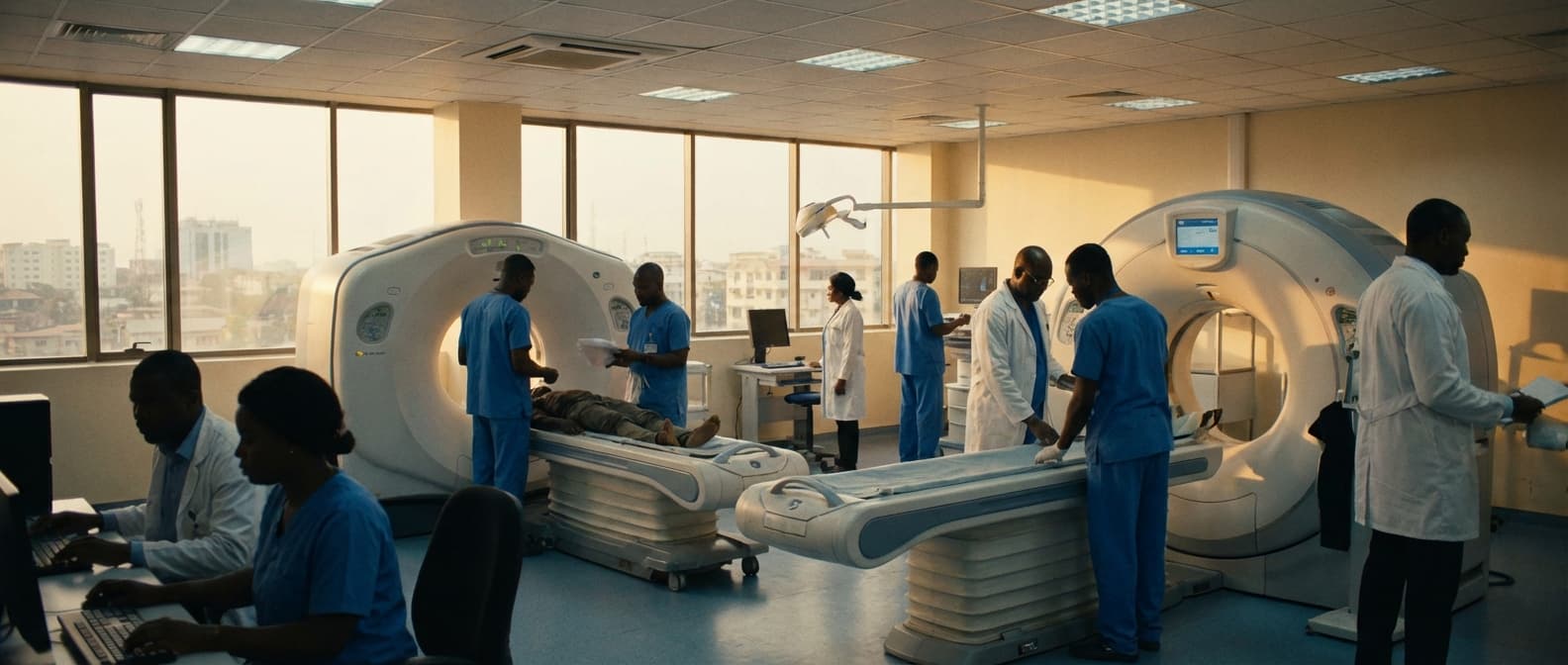
Imaging Acceptance Testing & QA in Senegal
Engineering Excellence & Technical Support
Commissioning and periodic QA for CT/MRI/X‑ray/US/Mammo. High-standard technical execution following OEM protocols and local regulatory frameworks.
Automated Image Quality Metrics
Implemented automated scripts leveraging libraries like OpenCV and scikit-image to objectively assess key imaging parameters (e.g., contrast, sharpness, noise levels) against established benchmarks, significantly reducing manual subjectivity and increasing testing efficiency for medical imaging devices in Senegalese healthcare facilities.
Phantom-Based Imaging Calibration
Developed and executed standardized imaging protocols using industry-approved phantoms for X-ray, ultrasound, and MRI equipment. This ensures accurate radiation dose delivery, image resolution, and artifact detection, directly impacting diagnostic confidence and patient safety within the Senegalese medical imaging sector.
DICOM Conformance & Data Integrity
Designed and deployed validation tools to rigorously check DICOM (Digital Imaging and Communications in Medicine) compliance for all incoming imaging data. This ensures seamless integration with PACS (Picture Archiving and Communication Systems) and maintains data integrity throughout the imaging workflow in Senegalese hospitals, preventing data loss and misinterpretation.
What Is Imaging Acceptance Testing & Qa In Senegal?
Imaging Acceptance Testing (IAT) and Quality Assurance (QA) in Senegal refer to the systematic processes employed to verify that medical imaging systems and their associated software functionalities meet predefined specifications, operational requirements, and regulatory standards prior to their deployment or during their operational lifecycle. This encompasses a broad spectrum of activities aimed at ensuring the reliability, accuracy, and safety of diagnostic imaging equipment and data.
| Who Needs Imaging Acceptance Testing & QA? | Typical Use Cases | |||||
|---|---|---|---|---|---|---|
| Healthcare Providers/Hospitals in Senegal: For new installations, upgrades, or significant maintenance of imaging equipment (e.g., X-ray, CT, MRI, Ultrasound, Mammography, Nuclear Medicine). | Procurement of New Imaging Equipment: To ensure the purchased system meets tender specifications and clinical needs before final payment and operational handover. | Introduction of New Imaging Modalities or Software: When a new type of imaging technology or advanced software feature is introduced to a department. | Post-Major Maintenance or Upgrades: To confirm that repairs or software updates have not negatively impacted system performance or image quality. | Regular Quality Control (QC) Programs: As part of ongoing assurance to maintain optimal system performance and image fidelity over time. | Verification of Third-Party Integrations: When integrating imaging systems with external software solutions (e.g., AI-powered analysis tools, reporting software). | Regulatory Audits and Compliance Checks: To demonstrate adherence to quality standards and safety regulations. |
Key Components of Imaging Acceptance Testing & QA:
- System Functionality Verification: Testing all hardware and software components to ensure they operate as intended, including image acquisition, processing, display, storage, and retrieval.
- Image Quality Assessment: Evaluating the diagnostic quality of generated images. This involves assessing parameters such as spatial resolution, contrast, signal-to-noise ratio (SNR), artifacts, and geometric accuracy.
- Performance Benchmarking: Measuring and documenting key performance indicators (KPIs) like scan times, throughput, system uptime, and processing speeds against established benchmarks or manufacturer specifications.
- Integration Testing: Validating the seamless interoperability of the imaging system with other healthcare IT infrastructure, such as Picture Archiving and Communication Systems (PACS), Electronic Health Records (EHR), and regulatory reporting systems.
- User Interface (UI) and User Experience (UX) Evaluation: Assessing the usability, intuitiveness, and efficiency of the system's interface for clinical end-users.
- Data Integrity and Security Checks: Verifying the accuracy, completeness, and secure handling of patient imaging data throughout its lifecycle, including adherence to data privacy regulations (e.g., GDPR principles if applicable).
- Workflow Validation: Simulating typical clinical workflows to confirm that the system supports efficient and effective patient care pathways.
- Compliance and Regulatory Adherence: Ensuring the system meets national healthcare standards, international best practices, and any specific Senegalese regulatory requirements for medical devices and diagnostic imaging.
- Documentation and Reporting: Comprehensive documentation of test procedures, results, identified issues, and resolution status, leading to a formal acceptance report.
Who Needs Imaging Acceptance Testing & Qa In Senegal?
In Senegal, the increasing adoption of advanced medical technologies, particularly in radiology and other imaging-dependent fields, necessitates robust Imaging Acceptance Testing & QA. This ensures that new equipment is functioning optimally, delivering accurate and reliable diagnostic information, and adhering to international standards. Without proper testing and QA, healthcare providers risk misdiagnoses, patient harm, and inefficient use of resources. The demand for these services spans across various healthcare institutions and departments that utilize medical imaging for patient care.
| Target Customer/Department | Key Needs & Benefits of Imaging Acceptance Testing & QA | Specific Imaging Modalities of Interest |
|---|---|---|
| Public Hospitals & University Medical Centers | Ensuring reliable diagnostics for a broad patient population; compliance with national health standards; optimizing equipment lifespan and ROI; training new personnel on calibrated equipment. Crucial for teaching hospitals to maintain educational integrity. | X-ray, CT, MRI, Ultrasound, Mammography, Nuclear Medicine (PET/CT, SPECT/CT) |
| Private Hospitals & Clinics | Maintaining a competitive edge with high-quality imaging services; minimizing downtime and revenue loss; building patient trust and reputation; adhering to accreditation requirements. | X-ray, CT, MRI, Ultrasound, Mammography, Fluoroscopy, Digital Radiography (DR) |
| Radiology & Imaging Centers | Primary focus on diagnostic accuracy and efficiency; ensuring consistent image quality across all modalities; meeting service level agreements with referring physicians and institutions; risk mitigation for professional liability. | All diagnostic imaging modalities, including advanced techniques like interventional radiology imaging. |
| Specialized Medical Centers (e.g., Cardiology, Oncology, Neurology) | Ensuring imaging techniques are tailored to specific diagnostic needs (e.g., cardiac MRI for precise heart function assessment, PET/CT for accurate cancer staging and response monitoring, fMRI for neurological studies); validation of specialized protocols. | Cardiac MRI/CT, PET/CT, SPECT/CT, advanced Ultrasound (e.g., Doppler), High-resolution CT and MRI |
| Research Institutions & Universities | Validating imaging data for scientific integrity and reproducibility; ensuring consistency for multi-site studies; supporting cutting-edge research requiring precise imaging parameters. | All modalities, with a focus on research-specific configurations and quantitative imaging. |
| Government Health Agencies & Regulatory Bodies | Setting and enforcing imaging standards; ensuring patient safety and radiation protection; evaluating the efficacy and safety of new imaging technologies entering the market; supporting public health initiatives. | All medical imaging modalities, with an emphasis on safety and compliance aspects. |
Target Customers & Departments in Senegal for Imaging Acceptance Testing & QA
- Public Hospitals & University Medical Centers
- Private Hospitals & Clinics
- Radiology & Imaging Centers
- Specialized Medical Centers (e.g., Cardiology, Oncology, Neurology)
- Research Institutions & Universities (with medical imaging facilities)
- Government Health Agencies & Regulatory Bodies
Imaging Acceptance Testing & Qa Process In Senegal
This document outlines the typical workflow for Imaging Acceptance Testing and Quality Assurance (QA) processes in Senegal, from the initial inquiry to the final execution and reporting. The process is designed to ensure that imaging equipment and systems meet the required standards for performance, safety, and usability before being deployed or integrated into clinical workflows.
| Phase | Key Activities | Responsible Parties | Deliverables | Key Considerations (Senegal) |
|---|---|---|---|---|
| Inquiry/Request | Identify need for imaging equipment/testing. | Healthcare Facility, Procurement Dept. | Needs assessment document. | Alignment with national health strategy, budget availability. |
| Requirements Definition | Define technical, functional, regulatory standards. | Clinical Staff, QA Team, Regulatory Body. | Technical specifications, QA protocol draft. | Compliance with ARSM (Agence de Régulation Sanitaire du Sénégal) regulations, WHO guidelines. |
| Vendor Selection & Quotation | Identify vendors, solicit bids, evaluate proposals. | Procurement Dept., Technical Committee. | Vendor proposals, evaluation report, selected vendor. | Local presence of vendor support, after-sales service availability. |
| Installation & Setup | Install equipment, basic functionality checks. | Vendor Technicians. | Installed equipment, initial setup confirmation. | Site readiness verification (power, space, network). |
| Acceptance Testing | Execute predefined test protocol (image quality, safety, performance). | QA Team (Radiographers, Physicists, Engineers), Vendor. | Test results, raw data, calibration certificates, test images. | Availability of standardized phantoms, trained personnel. |
| Reporting & Remediation | Document findings, identify deficiencies, vendor rectifies. | QA Team, Vendor. | Acceptance report, deficiency log, remediation plan. | Clear communication channels with vendor, timely response. |
| Final Acceptance & Handover | Verify remediation, grant final acceptance, handover documentation. | Healthcare Facility Management, QA Team, Vendor. | Final acceptance certificate, user manuals, training records. | Comprehensive training for local staff on operation and basic maintenance. |
| Ongoing QA | Periodic checks, calibration, maintenance. | Clinical Staff, Biomedical Engineers, Vendor (service contract). | Maintenance logs, updated calibration records. | Establishment of a sustainable in-country maintenance and repair network. |
Imaging Acceptance Testing & QA Process Workflow in Senegal
- Inquiry/Request Initiation: The process begins when a need for new imaging equipment is identified, or when existing equipment requires re-testing or verification. This can be initiated by a healthcare facility, a government health agency, or a procurement department.
- Requirements Definition: Clear and specific technical, functional, and regulatory requirements are defined. This includes adherence to Senegalese medical device regulations, international standards (e.g., IEC), and the specific needs of the healthcare institution.
- Vendor Selection & Quotation: If new equipment is involved, potential vendors are identified, and they submit quotations detailing the equipment, installation, training, and testing services. Acceptance testing and QA protocols are often a key component of the tender evaluation.
- Pre-Installation Verification (if applicable): For new installations, a preliminary check of the site and infrastructure (power, space, shielding, network connectivity) is conducted to ensure readiness for the equipment.
- Installation & Initial Setup: The imaging equipment is installed by the vendor's certified technicians. Basic functional checks are performed to confirm correct setup and power-on.
- Acceptance Testing Protocol Development: A detailed protocol is created or reviewed, outlining the specific tests to be performed. This protocol is often based on manufacturer specifications, regulatory requirements, and user needs. It includes tests for image quality, safety, performance, and user interface.
- Pre-Acceptance Testing & Calibration: Before formal acceptance testing, the equipment is calibrated according to manufacturer guidelines. Basic functional tests are performed by the vendor to ensure the system is operating as expected.
- Formal Acceptance Testing Execution: This is the core phase where a designated QA team (internal or external, potentially including radiographers, physicists, and engineers) conducts the tests as per the approved protocol. This involves using phantoms, test patterns, and simulated patient data.
- Data Acquisition & Analysis: Images and performance data are acquired during the testing phase. This data is analyzed against predefined acceptance criteria.
- Safety & Performance Verification: Critical tests include radiation dose measurements, image resolution, contrast-to-noise ratio (CNR), artifact assessment, and system speed. Safety features and emergency functions are also validated.
- User Interface & Workflow Validation: The user interface is evaluated for intuitiveness and ease of use. The workflow for image acquisition, processing, and archiving is tested to ensure it integrates smoothly into the clinical environment.
- Reporting of Findings: A comprehensive report is generated, documenting all tests performed, their results, any deviations from acceptance criteria, and recommendations. This report includes raw data, images, and summaries.
- Deficiency Identification & Remediation: If any test fails to meet the acceptance criteria, the issues are documented as deficiencies. The vendor is notified, and they are responsible for rectifying the problems.
- Re-testing & Verification: After remediation, re-testing is conducted to confirm that the identified deficiencies have been resolved.
- Final Acceptance & Handover: Once all tests are successfully passed and documented, formal acceptance is granted. The equipment is officially handed over to the healthcare institution, along with all necessary documentation, manuals, and training records.
- Ongoing Quality Assurance: Post-acceptance, a regular QA program is implemented, including periodic performance checks, calibration, and user training to maintain optimal functionality and patient safety.
Imaging Acceptance Testing & Qa Cost In Senegal
Imaging Acceptance Testing & QA costs in Senegal are influenced by several factors, leading to a range of pricing. These costs are typically borne by the entity implementing or procuring imaging systems (e.g., hospitals, clinics, government health initiatives, or third-party service providers). The primary drivers of cost include the complexity of the imaging equipment, the scope of the testing required, the expertise of the QA professionals, and the duration of the engagement. Specific testing protocols, such as those for MRI, CT scanners, X-ray machines, or ultrasound devices, will have varying demands on time and specialized knowledge. Furthermore, the geographical location within Senegal and the accessibility of the site can impact travel and logistical expenses for the QA team. The level of detail in the acceptance testing (e.g., basic functionality checks versus comprehensive performance and safety evaluations) directly correlates with the time and resources needed. For very large or complex deployments, the cost may also involve software validation and integration testing with existing hospital information systems (HIS) or Picture Archiving and Communication Systems (PACS).
| Service Component | Estimated Cost Range (XOF - West African CFA Franc) | Notes |
|---|---|---|
| Basic Functional Testing (per device) | 50,000 - 150,000 | Covers essential operational checks and image acquisition verification for standard equipment. |
| Comprehensive Acceptance Testing (per device) | 150,000 - 400,000 | Includes detailed performance evaluation, safety checks, and adherence to manufacturer specifications. May extend to a few days. |
| Specialized Equipment Testing (e.g., advanced MRI/CT) | 300,000 - 750,000+ | Requires highly specialized technicians and longer testing periods for complex modalities. |
| Software Validation (PACS/HIS Integration) | 200,000 - 600,000 | Testing the seamless integration and data flow between imaging systems and hospital IT infrastructure. |
| Daily Rate for QA Engineer/Technician | 75,000 - 200,000 | For extended engagements or specialized roles. Varies based on experience and certifications. |
| Travel and Accommodation (estimated per trip) | 50,000 - 150,000 | Dependent on distance from major urban centers (e.g., Dakar) to the testing site. |
| Report Generation and Documentation | 25,000 - 75,000 | Often included in the overall testing cost, but can be a separate charge for detailed, formal reports. |
Key Pricing Factors for Imaging Acceptance Testing & QA in Senegal:
- Complexity of Imaging Equipment (e.g., MRI, CT, X-ray, Ultrasound)
- Scope and Depth of Testing Required (e.g., basic functionality, performance, safety, compliance)
- Required Expertise and Certifications of QA Professionals
- Duration of the Testing Engagement
- Geographical Location and Accessibility of the Testing Site
- Involvement of Specialized Software Validation (e.g., PACS, HIS integration)
- Need for Calibration and Equipment Verification
- Reporting and Documentation Requirements
- Urgency of the Testing Schedule
- Travel and Accommodation Costs for QA Personnel
Affordable Imaging Acceptance Testing & Qa Options
Ensuring the accuracy and reliability of medical imaging equipment through Acceptance Testing (AT) and Quality Assurance (QA) is crucial for patient safety and diagnostic confidence. However, the associated costs can be a significant barrier, especially for smaller practices or those with budget constraints. This document explores affordable imaging AT & QA options, focusing on value bundles and cost-saving strategies to make essential quality control accessible.
| Strategy/Bundle | Description | Cost-Saving Benefit | Ideal For |
|---|---|---|---|
| Basic AT & QA Package | Covers essential tests for primary imaging modalities (e.g., X-ray, basic CT/MRI). Includes initial acceptance testing and annual QA. Performed by a qualified external vendor. | Lower upfront cost compared to comprehensive services. Predictable annual expense. Outsourced expertise reduces in-house training needs. | Smaller practices, new equipment acquisitions with limited immediate budget, facilities with fewer modalities. |
| Modality-Specific Bundles | Tailored AT & QA for a specific modality (e.g., mammography, ultrasound, advanced MRI). Includes all necessary tests and compliance checks for that modality. | Optimized testing reduces time and resources. Potentially lower per-modality cost when bundled. Ensures specialized compliance requirements are met. | Practices heavily reliant on a particular imaging type, facilities acquiring new specialized equipment. |
| Multi-Year Service Agreements | Contracts for AT & QA services over a 3-5 year period. Often includes discounted rates for longer commitments, priority scheduling, and potentially bundled repairs. | Significant per-visit savings. Price stability over the contract term. Reduced administrative burden of annual vendor selection. | Established practices, organizations with multiple locations, those looking for long-term budget certainty. |
| Remote QA Monitoring & Support | Utilizes software to remotely track QA parameters and alert technicians to deviations. On-site visits are scheduled only when necessary. Includes phone/email support for minor issues. | Drastically reduces on-site technician travel time and associated costs. Enables proactive issue detection, preventing larger problems. Frees up internal staff time. | Technologically adept facilities, practices with multiple sites, those seeking efficient QA processes. |
| Training & Resource Kits | Provides internal staff with the knowledge and tools to perform certain basic QA tasks. May include phantoms, software, and training manuals. | Empowers in-house staff to handle routine checks, reducing reliance on external vendors for simple tasks. Builds internal expertise. | Practices with dedicated radiology technologists or physics staff, those looking to gradually build in-house QA capabilities. |
| Combined AT/QA with Vendor Service Contracts | Negotiating AT & QA services as part of a larger equipment service and maintenance contract with the manufacturer or a third-party servicer. | Streamlined vendor management. Potential for bundled discounts. Integrated approach to equipment care. | Organizations prioritizing a single point of contact for all equipment needs, new equipment purchases. |
Understanding the Importance of Imaging AT & QA
- Patient Safety: Detects equipment malfunctions that could lead to misdiagnosis or unnecessary radiation exposure.
- Diagnostic Accuracy: Verifies image quality meets established standards for precise interpretation.
- Regulatory Compliance: Meets requirements from bodies like the FDA, ACR, and Joint Commission.
- Equipment Longevity: Identifies potential issues early, preventing costly breakdowns and extending equipment lifespan.
- Reimbursement & Reputation: High-quality imaging supports accurate billing and builds patient trust.
Verified Providers In Senegal
In Senegal, ensuring access to reliable and high-quality healthcare is paramount. When seeking medical assistance, it is crucial to engage with verified providers who adhere to stringent standards of practice. Franance Health stands out as a premier organization that meticulously vets its network of healthcare professionals, guaranteeing that patients receive care from credentialed and trustworthy individuals. Their rigorous credentialing process focuses on a provider's qualifications, experience, and adherence to ethical guidelines, offering a significant advantage for patients navigating the healthcare landscape in Senegal. Choosing a Franance Health-verified provider means opting for competence, integrity, and a commitment to patient well-being.
| Credentialing Aspect | Franance Health's Approach | Benefit to Patients |
|---|---|---|
| Medical Education and Training | Verification of diplomas, degrees, and certifications from accredited institutions. | Ensures providers have foundational knowledge and specialized training. |
| Professional Licenses and Permits | Confirmation of current and valid licenses to practice in Senegal. | Guarantees legal and ethical practice. |
| Clinical Experience | Assessment of years of practice and experience in relevant medical fields. | Indicates practical skill and familiarity with common and complex cases. |
| Professional Standing and References | Checks with professional bodies and, where applicable, references from peers or supervisors. | Provides insight into a provider's reputation and ethical conduct. |
| Continuing Professional Development | Encourages and sometimes requires ongoing training to stay abreast of medical advancements. | Ensures providers offer up-to-date and evidence-based care. |
Why Franance Health Credentials Matter:
- Rigorous Verification Process: Franance Health employs a comprehensive system to confirm the educational background, licenses, and certifications of all its affiliated healthcare providers.
- Commitment to Quality Care: Providers who meet Franance Health's standards have demonstrated a proven track record of delivering effective and patient-centered medical services.
- Enhanced Patient Safety: By ensuring providers are properly credentialed, Franance Health contributes to a safer healthcare environment, minimizing risks associated with unqualified practitioners.
- Trust and Transparency: Patients can have greater confidence in the care they receive when they know their provider has undergone thorough vetting by a reputable organization.
- Access to Expertise: Franance Health's network often includes specialists and experienced professionals across various medical disciplines.
Scope Of Work For Imaging Acceptance Testing & Qa
This Scope of Work (SOW) outlines the requirements for Imaging Acceptance Testing and Quality Assurance (QA) activities. The primary objective is to ensure that the implemented imaging system meets all specified technical requirements, functional objectives, and performance standards. This SOW details the technical deliverables and standard specifications that will be used to validate the system's readiness for deployment and ongoing operation.
| Category | Deliverable/Activity | Description | Standard Specification/Reference |
|---|---|---|---|
| Functional Testing | Image Capture and Acquisition | Testing the ability of the system to capture and acquire images from various sources (e.g., scanners, cameras, PACS integration) with expected resolution, color depth, and format. | DICOM Standard (Part 10, Part 14), HL7, Manufacturer Specifications, Internal Use Case Documents. |
| Functional Testing | Image Viewing and Manipulation | Verifying the functionality of image viewers, including zoom, pan, window/level adjustment, measurement tools, and annotation capabilities. | DICOM Standard (Part 14), User Interface Design Guidelines, Performance Metrics (e.g., load times). |
| Functional Testing | Image Archiving and Retrieval | Testing the ability to store, retrieve, and manage images within the PACS or VNA, ensuring proper indexing, search capabilities, and access controls. | DICOM Standard (Part 10), HL7 (for integration), Storage Capacity Metrics, Search Latency Specifications. |
| Functional Testing | Image Workflow Integration | Validating seamless integration with other healthcare systems (e.g., EMR/EHR, RIS) for image ordering, reporting, and patient data synchronization. | HL7 Standards (v2.x, FHIR), IHE Profiles (e.g., PDQ, PIX), API Documentation. |
| Performance Testing | Image Load and Display Speed | Measuring the time taken to load and display images of various sizes and complexities, ensuring it meets acceptable response times for clinical use. | Response Time SLAs (e.g., < 3 seconds for typical studies), Network Bandwidth Requirements. |
| Performance Testing | System Throughput | Assessing the system's capacity to handle a defined volume of imaging studies per unit of time. | Concurrent User Load, Study Processing Rate per Hour/Day. |
| Performance Testing | Storage Performance | Evaluating the speed of image ingestion, retrieval, and background tasks (e.g., compression, migration). | IOPS, Read/Write Latency for Storage Subsystem. |
| Data Integrity & Security | Data Validation and Consistency | Checking for data corruption, loss, or inconsistencies during image transfer, storage, and retrieval. | Checksum Validation, Audit Trails, Data Integrity Check Scripts. |
| Data Integrity & Security | Access Control and Authentication | Testing user role-based access controls and authentication mechanisms to ensure only authorized personnel can access specific images and data. | HIPAA Security Rule, NIST Cybersecurity Framework, Authentication Protocols (e.g., LDAP, SAML). |
| Data Integrity & Security | Audit Trail Functionality | Verifying that all user actions, system events, and data modifications are logged accurately and immutably. | HIPAA Audit Trail Requirements, Log Retention Policies. |
| Usability & User Experience | User Interface (UI) / User Experience (UX) Evaluation | Assessing the intuitiveness, ease of use, and efficiency of the system's user interface for radiologists, technologists, and other end-users. | Usability Heuristics, User Feedback Surveys, Task Completion Rates. |
| Usability & User Experience | Training Material Review | Reviewing and validating user manuals, training guides, and other support documentation for accuracy and completeness. | Content Accuracy, Clarity, and Completeness. |
| Compliance & Standards | Regulatory Compliance Verification | Ensuring the system adheres to relevant healthcare regulations and standards (e.g., HIPAA, GDPR, FDA regulations for medical devices). | HIPAA, GDPR, FDA 21 CFR Part 11, ISO 13485. |
| Compliance & Standards | Interoperability Testing | Confirming the system's ability to exchange data and work effectively with other healthcare information systems. | IHE Integration Profiles, HL7 Conformance Statements. |
| Deployment & Rollout | Installation and Configuration Verification | Validating the successful installation and accurate configuration of the imaging system components. | Installation Guides, Configuration Checklists, Vendor Deployment Guides. |
| Deployment & Rollout | System Integration Testing | Testing the integrated system as a whole, including all hardware, software, and network components. | End-to-End Workflow Scenarios. |
| Deployment & Rollout | User Acceptance Testing (UAT) Coordination | Facilitating and documenting UAT sessions where end-users test the system in a simulated production environment. | UAT Plan, Test Cases, Defect Reporting Mechanism. |
Key Objectives of Imaging Acceptance Testing & QA
- Verify functional correctness of all imaging features.
- Validate system performance against defined benchmarks.
- Ensure data integrity and security throughout the imaging lifecycle.
- Confirm compliance with industry standards and regulatory requirements.
- Assess user experience and usability for intended operators.
- Identify and document any defects or deviations from specifications.
Service Level Agreement For Imaging Acceptance Testing & Qa
This Service Level Agreement (SLA) outlines the guaranteed response times and uptime for Imaging Acceptance Testing and Quality Assurance (QA) services provided by [Your Company Name] to [Client Company Name]. This agreement ensures timely support and reliable service availability for critical imaging workflows.
| Service Component | Uptime Guarantee | Response Time (Critical Issue) | Response Time (High Issue) | Response Time (Medium Issue) | Response Time (Low Issue) |
|---|---|---|---|---|---|
| Imaging Acceptance Testing Environment Availability | 99.5% (Monthly) | N/A (Testing is scheduled) | N/A (Testing is scheduled) | N/A (Testing is scheduled) | N/A (Testing is scheduled) |
| Imaging QA Monitoring & Reporting Platform | 99.9% (Monthly) | 30 minutes | 1 hour | 4 business hours | 8 business hours |
| Direct Support for Imaging System Failures (affecting operations) | N/A (Focus on prompt response) | 15 minutes (Initial acknowledgement) | 30 minutes (Initial acknowledgement) | 2 business hours (Initial acknowledgement) | 4 business hours (Initial acknowledgement) |
| Direct Support for Imaging System Performance Degradation (affecting workflow) | N/A (Focus on prompt response) | 1 hour (Initial acknowledgement) | 2 hours (Initial acknowledgement) | 4 business hours (Initial acknowledgement) | 8 business hours (Initial acknowledgement) |
| Direct Support for Imaging System Non-Critical Issues (e.g., minor UI glitches, informational queries) | N/A (Focus on prompt response) | N/A | N/A | 4 business hours (Initial acknowledgement) | 8 business hours (Initial acknowledgement) |
Key Service Components
- Imaging Acceptance Testing: Verification and validation of new or updated imaging systems, software, or workflows to ensure they meet specified functional, performance, and regulatory requirements.
- Quality Assurance (QA): Ongoing monitoring, testing, and reporting to maintain the optimal performance, accuracy, and reliability of imaging services and systems.
- Support Channels: Designated methods for reporting issues and requesting assistance, including email, a dedicated ticketing system, and a priority phone line.
- Severity Levels: Defined categories of issues based on their impact on operations, guiding response and resolution priorities.
- Escalation Procedures: Clearly defined steps for raising issues that exceed standard resolution times or impact critical functions.
Frequently Asked Questions

Ready when you are
Let's scope your Imaging Acceptance Testing & QA in Senegal project in Senegal.

Scaling healthcare logistics and technical systems across the entire continent.