
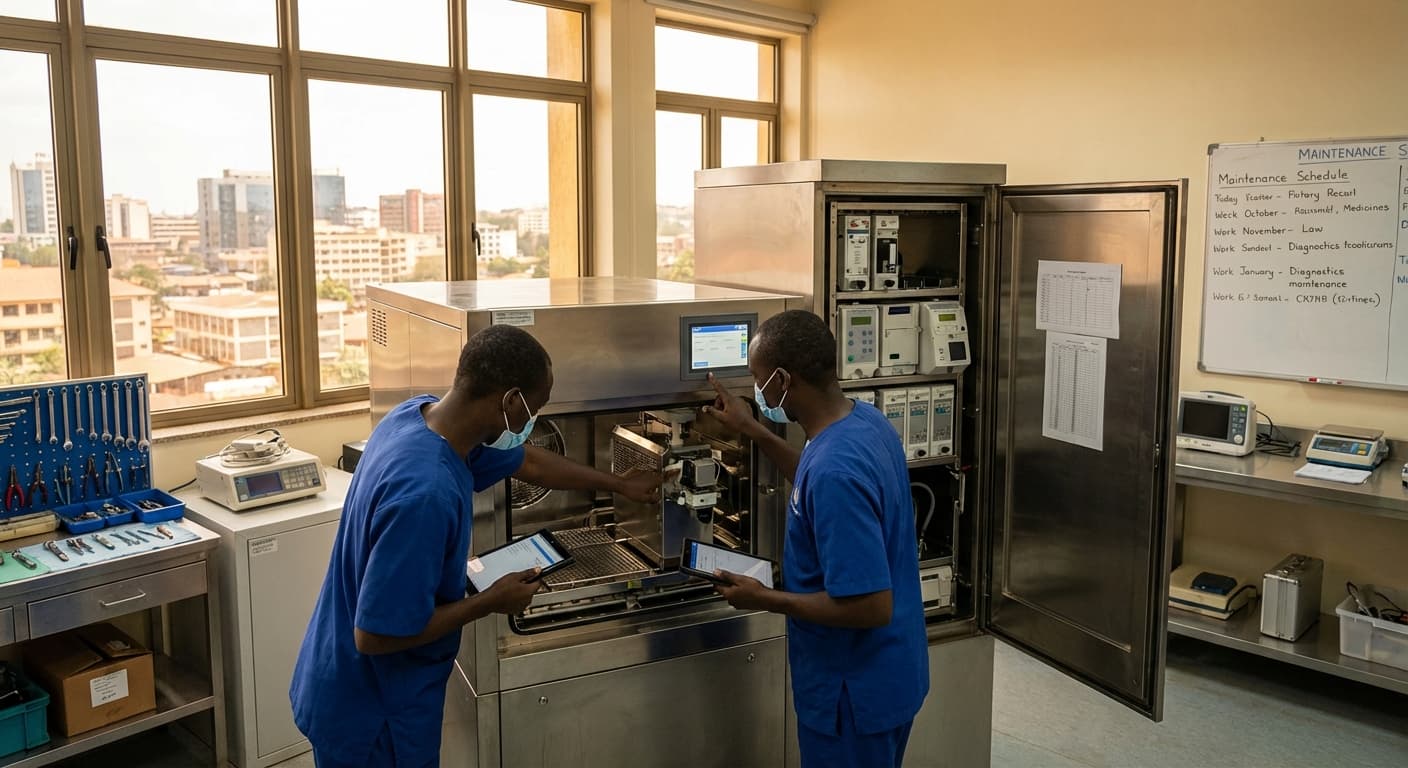
Total Cost of Ownership (TCO) & Lifecycle Budgeting Service in Senegal
Engineering Excellence & Technical Support
Total Cost of Ownership (TCO) & Lifecycle Budgeting Service High-standard technical execution following OEM protocols and local regulatory frameworks.
Predictive TCO Modeling for Senegal's Infrastructure
Leverage advanced data analytics and historical asset performance data specific to Senegal's climate and operational realities to forecast TCO for infrastructure projects. Our service integrates factors like local maintenance costs, import duties on spare parts, and energy price volatility to provide accurate, long-term financial projections, enabling informed investment decisions and risk mitigation.
Lifecycle Budgeting for Sustainable Asset Management
Implement robust lifecycle budgeting frameworks tailored for Senegalese organizations. We define and track costs across acquisition, operation, maintenance, and disposal phases, ensuring alignment with strategic objectives and promoting long-term asset sustainability. This includes optimizing resource allocation and identifying opportunities for cost savings throughout the asset's lifespan, crucial for public and private sector efficiency.
TCO Optimization Through Localized Procurement & Energy Efficiency
Our service focuses on maximizing TCO reduction by identifying and recommending localized procurement strategies for goods and services in Senegal, minimizing import dependencies and currency fluctuation risks. Furthermore, we conduct detailed energy efficiency audits to identify and implement solutions that reduce operational expenditures, directly impacting the overall lifecycle cost of assets and contributing to Senegal's sustainability goals.
What Is Total Cost Of Ownership (Tco) & Lifecycle Budgeting Service In Senegal?
Total Cost of Ownership (TCO) & Lifecycle Budgeting Service in Senegal refers to a comprehensive financial management and strategic planning methodology applied to assets and projects throughout their entire lifespan. TCO encompasses all direct and indirect costs associated with acquiring, operating, maintaining, upgrading, and disposing of an asset or project, from inception to end-of-life. Lifecycle Budgeting extends this concept by systematically forecasting and allocating financial resources across each phase of an asset's or project's existence, ensuring long-term financial sustainability and strategic alignment. This service provides decision-makers with a granular understanding of the true economic implications of their investments, facilitating informed strategic procurement, asset management, and capital planning.
| Who Needs TCO & Lifecycle Budgeting Service? | Typical Use Cases in Senegal | |||||||
|---|---|---|---|---|---|---|---|---|
| Government Agencies & Public Sector Entities: Responsible for long-term infrastructure projects, public asset management (transportation, energy, water, sanitation), and strategic capital investments. | Infrastructure Development Projects: Estimating TCO for highways, bridges, airports, power plants, and public buildings to inform funding, maintenance, and long-term operational budgets. | Public Transportation Systems: Analyzing the lifecycle costs of buses, trains, and related infrastructure to optimize fleet management and fare structures. | Utilities Companies (Water, Electricity, Telecommunications): Budgeting for the acquisition, maintenance, and eventual replacement of critical network infrastructure and assets. | Large Industrial & Manufacturing Companies: Managing the TCO of heavy machinery, production lines, and facilities to ensure profitability and operational efficiency. | Real Estate Developers & Property Managers: Calculating the TCO of commercial and residential properties, including construction, maintenance, and operational expenses, for investment viability. | Information Technology (IT) Departments: Assessing the TCO of hardware, software, and cloud services to optimize IT infrastructure investments and operational spending. | Transportation & Logistics Companies: Evaluating the lifecycle costs of vehicle fleets, warehousing, and supply chain infrastructure. | Financial Institutions & Investment Funds: Conducting due diligence and risk assessment for capital-intensive projects or acquisitions by analyzing TCO. |
Key Components of TCO & Lifecycle Budgeting Services:
- TCO Calculation & Analysis: Identification, quantification, and aggregation of all cost categories (capital expenditure, operational expenditure, maintenance, energy, labor, disposal, etc.) over the asset/project lifecycle.
- Lifecycle Phase Cost Forecasting: Predictive modeling of expenses associated with each distinct phase of an asset/project's lifecycle (e.g., acquisition, deployment, operation, decommissioning).
- Risk Assessment & Mitigation: Integration of potential cost overruns, unforeseen expenses, and obsolescence risks into the budgeting framework.
- Scenario Planning & Sensitivity Analysis: Evaluation of the impact of various economic, operational, and technological variables on TCO and lifecycle budgets.
- Benchmarking & Best Practice Identification: Comparison of TCO figures against industry standards and best practices to identify areas for cost optimization.
- Strategic Procurement & Investment Advisory: Providing data-driven recommendations for asset selection, vendor negotiation, and investment prioritization based on TCO analysis.
- Performance Monitoring & Reporting: Establishing metrics and reporting mechanisms to track actual costs against budgeted lifecycle expenditures.
- Decommissioning & Disposal Planning: Incorporating the costs and logistical considerations of asset retirement and disposal into the lifecycle budget.
Who Needs Total Cost Of Ownership (Tco) & Lifecycle Budgeting Service In Senegal?
Organizations in Senegal seeking to optimize their financial planning, enhance procurement strategies, and gain a comprehensive understanding of the true long-term costs associated with their assets and projects can greatly benefit from Total Cost of Ownership (TCO) and Lifecycle Budgeting services. These services are crucial for making informed investment decisions, mitigating risks, and ensuring sustainable financial health.
| Customer Segment | Relevant Departments | Key Benefits of TCO & Lifecycle Budgeting |
|---|---|---|
| Large Corporations (e.g., Manufacturing, Mining, Telecommunications) | Finance/Accounting, Procurement, Operations, Asset Management, Engineering, Strategic Planning | Accurate long-term cost forecasting, optimized asset acquisition and replacement strategies, improved capital allocation, identification of hidden costs, enhanced risk management, competitive advantage through efficiency. |
| Small and Medium-sized Enterprises (SMEs) | Finance, Operations, Management/Ownership | Better cash flow management, informed investment decisions on technology or equipment, avoidance of unexpected maintenance costs, increased profitability, sustainable growth planning. |
| Government Agencies (e.g., Ministries of Infrastructure, Finance, Public Works) | Finance Departments, Procurement Units, Project Management Offices, Planning Ministries, Technical Directorates | Efficient use of taxpayer money, transparent project budgeting, long-term sustainability of public assets (roads, buildings, utilities), informed policy decisions, improved accountability, risk mitigation for public-private partnerships. |
| Development Organizations & NGOs | Finance, Program Management, Monitoring & Evaluation, Procurement | Maximizing the impact of donor funds, ensuring project sustainability beyond initial funding, transparent financial reporting, efficient resource allocation for long-term impact, risk assessment for project longevity. |
| Financial Services (Banks, Investment Firms) | Risk Management, Investment Analysis, Portfolio Management, Credit Departments | Accurate assessment of asset value over time, improved due diligence for lending and investment, better understanding of long-term project risks and returns, informed valuation of collateral. |
Target Customers and Departments
- Businesses of all sizes operating in Senegal, particularly those with significant capital investments or long-term operational expenses.
- Government agencies and public sector entities responsible for managing public funds and infrastructure projects.
- Non-governmental organizations (NGOs) and international development agencies focused on project sustainability and resource efficiency.
- Financial institutions looking to assess the long-term viability of investments and lending portfolios.
- Manufacturing and industrial companies with extensive plant and equipment.
- Transportation and logistics firms managing fleets and infrastructure.
- Real estate developers and property management companies.
- Technology companies managing IT infrastructure and software licenses.
Total Cost Of Ownership (Tco) & Lifecycle Budgeting Service Process In Senegal
This document outlines the workflow for a Total Cost of Ownership (TCO) & Lifecycle Budgeting Service Process in Senegal, from initial inquiry to final execution. The process is designed to provide clients with a comprehensive understanding of the long-term financial implications of their assets and projects, enabling informed decision-making and optimized resource allocation.
| Stage | Description | Key Activities | Deliverables | Typical Timeline (Weeks) |
|---|---|---|---|---|
| Inquiry & Initial Consultation | Client expresses interest in TCO and lifecycle budgeting services. Initial discussion to understand their needs, challenges, and objectives. | Receive inquiry (email, phone, referral). Schedule and conduct introductory meeting. Understand client's industry, assets/projects, and current budgeting practices. | Understanding of client's needs and preliminary assessment of service applicability. | 1-2 |
| Scope Definition & Proposal Development | Formalize the project's objectives, boundaries, and deliverables. Develop a tailored service proposal. | Identify key stakeholders. Define project scope (e.g., specific assets, time horizon). Gather preliminary information. Develop detailed proposal outlining methodology, timelines, resources, and fees. | Detailed Service Proposal, including Statement of Work (SOW). | 2-3 |
| Contracting & Onboarding | Finalize agreement and officially commence the engagement. Set up project infrastructure and communication channels. | Review and negotiate proposal terms. Sign Service Agreement. Introduce project team. Establish communication protocols and reporting mechanisms. Kick-off meeting. | Signed Service Agreement. Project Kick-off Meeting Minutes. Project Management Plan. | 1-2 |
| Data Collection & Analysis | Gather all relevant quantitative and qualitative data pertaining to the asset's or project's lifecycle. | Identify data sources (e.g., procurement records, maintenance logs, operational data, depreciation schedules, market research, expert interviews). Collect data through interviews, surveys, document review, and site visits. Validate data accuracy and completeness. | Organized and validated dataset for TCO and lifecycle budgeting analysis. | 4-8 (variable based on complexity) |
| TCO & Lifecycle Budgeting Model Development | Construct a robust model to forecast all costs associated with the asset/project over its entire lifespan. | Define cost categories (e.g., acquisition, operation, maintenance, energy, labor, disposal, downtime, residual value). Apply appropriate depreciation and inflation factors. Incorporate risk and sensitivity analysis. Utilize specialized software and financial modeling techniques. | Developed TCO and Lifecycle Budgeting Model. Sensitivity analysis results. | 3-6 |
| Report Generation & Presentation | Synthesize findings into a comprehensive report and present them to the client. | Generate detailed TCO and lifecycle budget report. Visualize data through charts and graphs. Prepare executive summary. Present findings and recommendations to key stakeholders. Facilitate Q&A sessions. | Comprehensive TCO & Lifecycle Budgeting Report. Executive Presentation. | 2-3 |
| Implementation Support & Monitoring | Assist the client in integrating the TCO insights into their decision-making and operational processes. Track progress against the budget. | Provide guidance on implementing recommendations. Develop tracking mechanisms for actual costs vs. budgeted costs. Conduct periodic reviews of performance. Offer advice on corrective actions. | Actionable implementation plans. Performance tracking reports. Recommendations for optimization. | Ongoing (as per agreement) |
| Review & Refinement | Periodically review the TCO model and lifecycle budgets to account for changes and ensure continued relevance. | Schedule periodic review meetings. Update model with new data and changing market conditions. Refine assumptions and parameters. Assess the effectiveness of implemented strategies. Provide updated reports. | Updated TCO and Lifecycle Budgeting Reports. Revised implementation strategies. | Ongoing (e.g., annually) |
Service Workflow Stages
- Inquiry & Initial Consultation
- Scope Definition & Proposal Development
- Contracting & Onboarding
- Data Collection & Analysis
- TCO & Lifecycle Budgeting Model Development
- Report Generation & Presentation
- Implementation Support & Monitoring
- Review & Refinement
Total Cost Of Ownership (Tco) & Lifecycle Budgeting Service Cost In Senegal
The Total Cost of Ownership (TCO) and Lifecycle Budgeting service cost in Senegal is a critical consideration for businesses and organizations looking to make informed financial decisions regarding assets, projects, and operations. Understanding TCO involves accounting for all direct and indirect costs incurred over the entire lifespan of an asset or service, from acquisition to disposal. Lifecycle budgeting extends this by projecting these costs over time, enabling strategic financial planning and risk mitigation.
Several factors influence the pricing of these services in Senegal. These include the complexity and scope of the TCO analysis, the type of asset or project being evaluated, the level of detail required, the expertise and reputation of the consulting firm, and the duration of the engagement. For example, a simple TCO for a fleet of vehicles will be less costly than a comprehensive lifecycle budget for a large-scale infrastructure project. The need for specialized software, data collection methodologies, and stakeholder consultations also impacts the overall cost.
Pricing is typically presented in local currency, the West African CFA franc (XOF). However, for larger or more complex engagements, consultants may also quote in USD or EUR, with the conversion rate being a significant factor. Service providers in Senegal operate within a diverse market, leading to a range of pricing structures. Some may offer fixed project fees, while others might work on an hourly or daily rate basis. The level of experience of the consultants and the perceived value they bring also play a substantial role in the final price.
| Service Type/Scope | Estimated Cost Range (XOF) | Estimated Cost Range (USD/EUR - indicative) |
|---|---|---|
| Basic TCO Analysis (e.g., single asset, limited scope) | 200,000 - 750,000 XOF | 300 - 1,200 USD/EUR |
| Comprehensive TCO Analysis (e.g., multiple assets, detailed breakdown) | 750,000 - 3,000,000 XOF | 1,200 - 4,500 USD/EUR |
| Basic Lifecycle Budgeting (short-term, limited complexity) | 400,000 - 1,500,000 XOF | 600 - 2,300 USD/EUR |
| Strategic Lifecycle Budgeting (long-term, complex projects, risk assessment) | 1,500,000 - 10,000,000+ XOF | 2,300 - 15,000+ USD/EUR |
| Hourly/Daily Consulting Rate (experienced professional) | 25,000 - 75,000 XOF per hour | 40 - 120 USD/EUR per hour |
Key Pricing Factors for TCO & Lifecycle Budgeting Services in Senegal
- Complexity and Scope of the Analysis
- Type of Asset or Project (e.g., IT infrastructure, vehicles, real estate, operational processes)
- Required Level of Detail and Granularity
- Consulting Firm's Expertise and Reputation
- Duration of the Engagement
- Need for Specialized Software and Tools
- Data Collection and Verification Effort
- Number of Stakeholders Involved in Consultation
- Geographic Reach of the Analysis (if multi-site)
- Reporting and Documentation Requirements
- Ongoing Monitoring and Review Needs
- Market Competition Among Service Providers
Affordable Total Cost Of Ownership (Tco) & Lifecycle Budgeting Service Options
Our Affordable Total Cost of Ownership (TCO) & Lifecycle Budgeting Service is designed to empower your organization with comprehensive financial visibility and strategic cost optimization. We understand that true asset value lies not just in the initial purchase price, but in all the expenses incurred over its entire lifespan. Our service focuses on delivering exceptional value through meticulously crafted bundles and actionable cost-saving strategies, ensuring you make informed decisions that minimize expenses and maximize returns.
| Cost-Saving Strategy | Description | Impact Area | TCO Benefit |
|---|---|---|---|
| Preventative Maintenance Programs | Implementing scheduled maintenance to identify and address potential issues before they become costly failures. | Operations & Maintenance | Reduces emergency repair costs, downtime, and extends asset lifespan. |
| Energy Efficiency Upgrades | Investing in energy-efficient equipment, lighting, and building systems. | Operations | Lowers utility bills, reduces environmental impact, and can qualify for incentives. |
| Strategic Sourcing & Procurement | Leveraging bulk purchasing, negotiating favorable contracts, and exploring alternative suppliers. | Acquisition & Operations | Decreases initial purchase price and ongoing supply costs. |
| Lifecycle Performance Monitoring | Utilizing data analytics to track asset performance and identify inefficiencies or areas for improvement. | Operations & Maintenance | Enables proactive adjustments, optimizes resource allocation, and prevents premature degradation. |
| Standardization of Assets | Consolidating the number of different asset types and models used within an organization. | Acquisition, Operations & Maintenance | Simplifies training, spare parts management, and maintenance procedures, leading to reduced labor and inventory costs. |
| Responsible Disposal & Recycling | Planning for and executing environmentally sound and cost-effective asset retirement. | Disposal | Minimizes disposal fees, potential environmental fines, and may offer residual value recovery. |
Value Bundles: Maximizing Your Investment
- Core TCO Assessment Bundle: This foundational package includes a detailed analysis of all direct and indirect costs associated with your assets, from acquisition and implementation to operation, maintenance, and eventual disposal. It provides a clear baseline for understanding your current financial footprint.
- Lifecycle Budgeting Optimization Bundle: Building on the core assessment, this bundle introduces predictive modeling and scenario planning. We identify opportunities for cost reduction through optimized maintenance schedules, energy efficiency improvements, and strategic upgrade/replacement cycles.
- Sustainability & ESG Integration Bundle: This advanced package extends TCO analysis to incorporate environmental, social, and governance factors. We help you quantify the costs and benefits of sustainable practices and report on your ESG performance, aligning financial goals with corporate responsibility.
- Customized Solution Bundle: For organizations with unique needs, we offer a tailored approach. This bundle allows you to select specific modules and services that best address your current challenges and future objectives, ensuring a perfect fit for your requirements.
Verified Providers In Senegal
Ensuring access to quality healthcare is paramount, and in Senegal, discerning trustworthy medical providers is crucial. Franance Health has established itself as a leading network of verified providers, offering a benchmark for excellence and reliability. This document outlines the credentials that make Franance Health the best choice for your healthcare needs in Senegal.
| Credential Category | Franance Health Verification Standard | Benefit to Patients |
|---|---|---|
| Medical Qualifications | Verification of degrees, licenses, and specialist certifications from recognized institutions. | Ensures providers possess the necessary expertise and legal authorization to practice. |
| Clinical Experience | Assessment of practical experience in relevant medical fields, often with a minimum number of years. | Guarantees that providers have hands-on experience in managing various health conditions. |
| Ethical Conduct | Background checks and adherence to a strict code of medical ethics and patient rights. | Protects patients from malpractice and ensures respectful, trustworthy care. |
| Facility Standards | Inspection of infrastructure, equipment, hygiene, and safety protocols in partner clinics and hospitals. | Provides access to safe, well-equipped, and comfortable healthcare environments. |
| Patient Feedback & Reviews | Regular collection and analysis of patient testimonials and satisfaction scores. | Offers insights into the patient experience and helps maintain high service quality. |
Key Franance Health Credentials
- Rigorous Vetting Process: Franance Health employs a stringent selection methodology for all its partner providers, ensuring they meet the highest standards of medical expertise, ethical practice, and patient care.
- Accreditation & Certifications: Verified providers undergo thorough checks for relevant national and international accreditations and certifications, guaranteeing adherence to established medical protocols.
- Specialized Expertise: Franance Health partners with healthcare professionals across a wide spectrum of medical specialties, ensuring access to highly qualified doctors and facilities for diverse healthcare requirements.
- Patient-Centric Approach: A core tenet of Franance Health is a commitment to patient well-being. Verified providers are assessed on their dedication to patient satisfaction, clear communication, and empathetic care.
- Advanced Medical Infrastructure: Partner facilities are evaluated for their possession of modern medical equipment, technology, and infrastructure, facilitating accurate diagnoses and effective treatments.
- Continuous Professional Development: Franance Health encourages and verifies that its providers are engaged in ongoing training and professional development, staying abreast of the latest medical advancements.
- Transparent Pricing & Billing: Verified providers are committed to transparent and fair pricing structures, ensuring patients receive clear information about costs and services upfront.
- Robust Complaint Resolution Mechanism: Franance Health maintains a system for addressing patient feedback and grievances, further ensuring accountability and continuous improvement among its network.
Scope Of Work For Total Cost Of Ownership (Tco) & Lifecycle Budgeting Service
This document outlines the Scope of Work (SOW) for the provision of Total Cost of Ownership (TCO) and Lifecycle Budgeting services. The objective is to establish a comprehensive understanding of all costs associated with an asset or system throughout its entire lifecycle, from acquisition to disposal, and to develop robust budgeting strategies that account for these costs. This service will equip the client with data-driven insights for informed decision-making, resource allocation, and long-term financial planning.
| Deliverable | Description | Standard Specification / Format |
|---|---|---|
| TCO Model | A detailed financial model that captures all direct and indirect costs associated with an asset/system throughout its lifecycle (acquisition, operation, maintenance, support, upgrade, disposal). | Spreadsheet-based model (e.g., Microsoft Excel) with clear input parameters, cost categories, formulas, and output summaries. Includes documentation of assumptions and methodologies. |
| Lifecycle Cost Analysis (LCCA) Report | A comprehensive report detailing the TCO analysis, including cost breakdowns, key cost drivers, present value calculations, and recommendations for cost optimization. | PDF document, structured with executive summary, methodology, detailed cost analysis, findings, recommendations, and appendices. May include supporting charts and graphs. |
| Lifecycle Budgeting Framework | A structured approach and guidelines for planning, forecasting, and managing budgets across the entire lifecycle of assets/systems. | Document outlining budget cycles, cost forecasting techniques, contingency allocation methods, and reporting requirements. Can be presented as a document or integrated into existing client financial systems. |
| Data Requirements and Collection Plan | Specifications for the types of data required for TCO analysis and a plan for its collection from various sources. | Document detailing required data points (e.g., purchase price, energy consumption, maintenance logs, labor rates, disposal fees), data sources, data validation procedures, and timelines. |
| Risk Assessment Report | Identification and assessment of potential risks that could impact lifecycle costs, along with mitigation strategies. | PDF document outlining identified risks (e.g., technology obsolescence, unexpected maintenance needs, regulatory changes), their potential impact, likelihood, and proposed mitigation actions. |
| Scenario Analysis Output | Projections of lifecycle costs under different potential future scenarios (e.g., increased energy prices, accelerated upgrade cycles). | Tabular and graphical representation of cost variations across defined scenarios. Typically included within the LCCA Report or as a separate addendum. |
| Final Presentation Deck | A summary presentation of the TCO analysis, findings, and recommendations for key stakeholders. | Slide deck (e.g., Microsoft PowerPoint) summarizing key data, insights, and strategic recommendations. Designed for executive-level understanding. |
| Training Materials | Documentation and guides for client personnel on utilizing the TCO model and lifecycle budgeting framework. | User manuals, quick reference guides, and presentation materials for workshops or training sessions. |
Services Offered
- TCO Model Development and Implementation
- Lifecycle Cost Analysis (LCCA)
- Development of Lifecycle Budgeting Framework
- Data Collection and Validation Strategy
- Risk Assessment and Contingency Planning
- Scenario Planning and Sensitivity Analysis
- Reporting and Presentation of Findings
- Training and Knowledge Transfer
Service Level Agreement For Total Cost Of Ownership (Tco) & Lifecycle Budgeting Service
This Service Level Agreement (SLA) outlines the performance expectations and guarantees for the Total Cost of Ownership (TCO) & Lifecycle Budgeting Service. This SLA defines the responsibilities of both the Service Provider and the Customer, and establishes measurable metrics for service quality, specifically focusing on response times and uptime guarantees.
| Service Metric | Target/Guarantee | Measurement Method | Remedy for Failure |
|---|---|---|---|
| Response Time - Critical Issue: (e.g., System outage, data corruption affecting core calculations) | Within 1 hour | Timestamp of ticket submission to first acknowledgment and active work commencement. | 10% discount on next month's service fee for each incident exceeding the response time. |
| Response Time - High Priority Issue: (e.g., Significant delay in report generation, complex query requiring immediate attention) | Within 4 business hours | Timestamp of ticket submission to first acknowledgment and active work commencement. | 5% discount on next month's service fee for each incident exceeding the response time. |
| Response Time - Standard Inquiry: (e.g., Request for clarification, minor data update) | Within 1 business day | Timestamp of ticket submission to first acknowledgment and active work commencement. | N/A (Standard inquiry response times are indicative and not subject to financial remedies unless consistently missed.) |
| Service Uptime Guarantee: (Availability of the TCO & Lifecycle Budgeting platform/service for customer access and functionality) | 99.5% during standard business hours (e.g., Monday-Friday, 9 AM - 5 PM Customer's local time) | Calculated as (Total Scheduled Uptime - Downtime) / Total Scheduled Uptime, measured monthly. | For every 0.5% the uptime falls below 99.5%, a credit of 2% of the monthly service fee will be applied. For downtime below 99.0%, a credit of 5% will be applied. |
| Data Integrity Assurance: (Accuracy and reliability of TCO calculations and lifecycle budget data) | 99.9% accuracy for all generated reports and data outputs. | Regular internal audits and customer verification of key data points. Discrepancies identified and validated by the customer. | For each validated data integrity issue, a dedicated remediation effort will be prioritized. Significant and recurring issues may lead to a review of the service fee. |
| Report Generation Time: (Time taken to generate standard TCO and lifecycle budget reports) | Standard reports generated within 2 business days of data submission. | Timestamp of complete data submission to delivery of the final report. | If standard reports are delayed by more than 1 business day beyond the guarantee, a credit of 1% of the monthly service fee will be applied for each additional day of delay. |
Key Service Components
- TCO Analysis and Reporting
- Lifecycle Cost Modeling and Forecasting
- Budgeting and Financial Planning Support
- Scenario Planning and Sensitivity Analysis
- Performance Monitoring and Reporting
- Ongoing Consultation and Support
Frequently Asked Questions

Ready when you are
Let's scope your Total Cost of Ownership (TCO) & Lifecycle Budgeting Service in Senegal project in Senegal.

Scaling healthcare logistics and technical systems across the entire continent.