
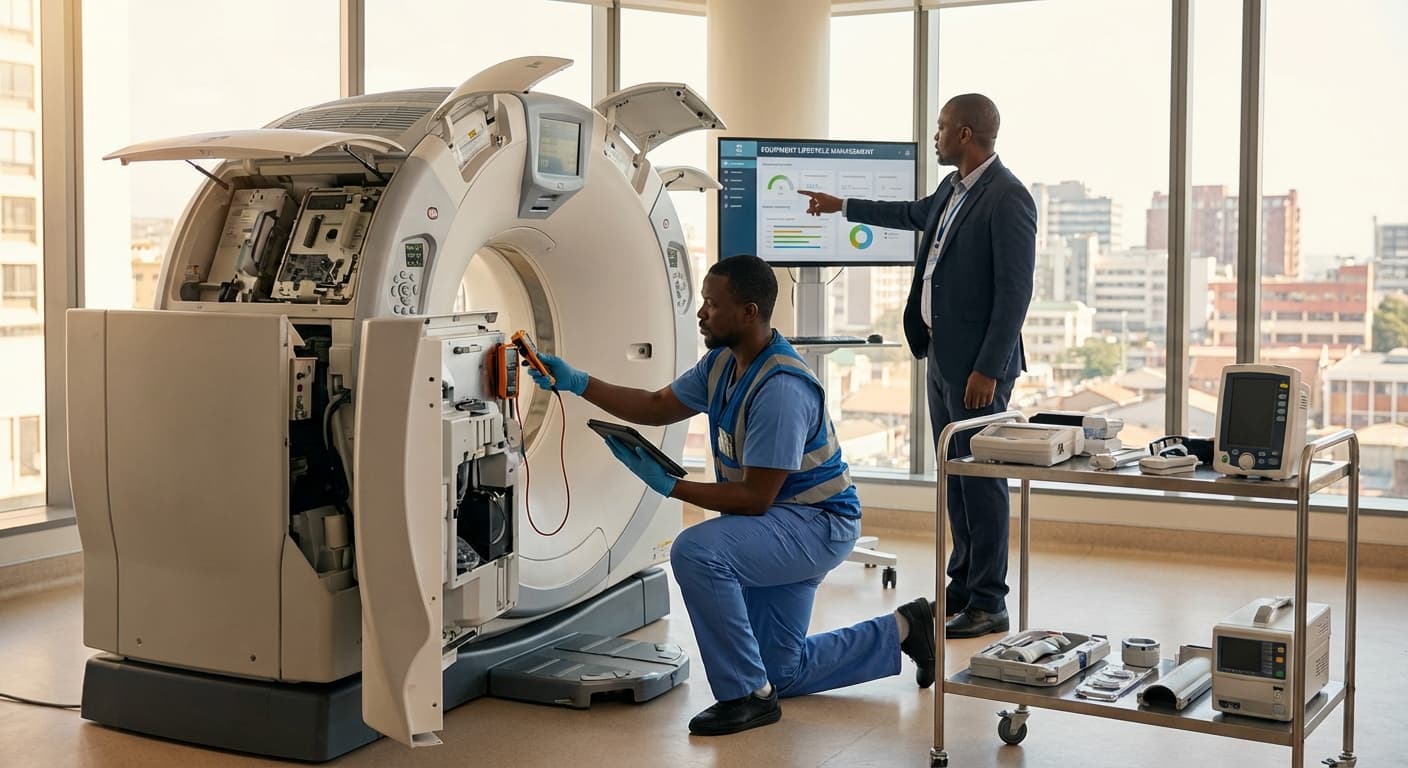
Equipment Replacement Planning & Obsolescence Strategy Service in Senegal
Engineering Excellence & Technical Support
Equipment Replacement Planning & Obsolescence Strategy Service High-standard technical execution following OEM protocols and local regulatory frameworks.
Predictive Maintenance & Lifecycle Cost Optimization
Leveraging advanced analytics and sensor data, our service forecasts equipment failure, enabling proactive replacement and minimizing costly downtime. We provide detailed lifecycle cost analyses to identify optimal upgrade or replacement points, ensuring maximum return on investment for your assets in Senegal's operational landscape.
Proactive Obsolescence Management & Supply Chain Resilience
We proactively identify and track end-of-life components and systems, mitigating obsolescence risks. Our strategy includes developing robust alternative sourcing plans and recommending timely replacements to maintain operational continuity and supply chain resilience for critical equipment in Senegal.
Tailored Replacement Roadmaps for Senegal's Industrial Sectors
Our service develops customized, phased equipment replacement roadmaps aligned with Senegal's specific industrial needs and economic realities. We consider factors like regulatory compliance, local availability of spare parts and expertise, and technological advancements to ensure sustainable and efficient modernization of your operational infrastructure.
What Is Equipment Replacement Planning & Obsolescence Strategy Service In Senegal?
Equipment Replacement Planning & Obsolescence Strategy Service in Senegal refers to a specialized offering that assists organizations in Senegal with the systematic management of their asset lifecycle, focusing on the timely and cost-effective replacement of aging or obsolete equipment. This service encompasses a holistic approach, from initial assessment and forecasting to the implementation of replacement strategies and the mitigation of obsolescence risks. It aims to optimize operational efficiency, reduce downtime, maintain competitive advantage, and ensure regulatory compliance by proactively addressing the end-of-life of critical assets. The service leverages data-driven analysis, industry best practices, and an understanding of the local Senegalese economic and regulatory landscape.
| Who Needs This Service? | Typical Use Cases | |||||||||||||||||||||||
|---|---|---|---|---|---|---|---|---|---|---|---|---|---|---|---|---|---|---|---|---|---|---|---|---|
| Manufacturing and Industrial Enterprises: Companies with significant capital equipment, production lines, and machinery that require continuous operation and are subject to wear and tear and technological advancement. | Ageing production machinery in textile factories approaching end-of-support, requiring replacement to maintain output and quality. | Obsolescence of control systems in food processing plants, necessitating upgrades for regulatory compliance and food safety. | Deterioration of heavy machinery in mining operations, impacting extraction efficiency and safety. | Telecommunications Providers: Organizations managing vast networks of equipment, including base stations, transmission systems, and data centers, where technological evolution is rapid. | Replacement of aging cellular network infrastructure to support new generation technologies (e.g., 4G to 5G transition). | Upgrade of outdated data center servers and networking equipment to enhance processing power and data security. | Energy and Utilities Sector: Companies operating power plants, transmission grids, water treatment facilities, and renewable energy installations, which rely on long-lifecycle but critical infrastructure. | Replacement of legacy turbines in hydroelectric power plants to improve efficiency and reduce maintenance costs. | Obsolescence of SCADA systems in water distribution networks, requiring modernization for remote monitoring and control. | Transportation and Logistics: Businesses operating fleets of vehicles, vessels, or managing transportation infrastructure. | Planning for the phased replacement of commercial trucking fleets due to mileage and maintenance costs. | Modernization of port equipment, such as cranes and forklifts, to improve cargo handling efficiency. | Healthcare Sector: Hospitals and clinics with medical imaging equipment, laboratory instruments, and patient monitoring systems. | Replacement of outdated MRI scanners to leverage advanced diagnostic capabilities and patient comfort features. | Obsolescence of critical laboratory analyzers requiring replacement to ensure accurate and timely test results. | Public Sector and Government Agencies: Municipalities, government departments, and state-owned enterprises managing public infrastructure, IT systems, and specialized equipment. | Replacement of aging IT infrastructure within government ministries to enhance cybersecurity and data management capabilities. | Upgrade of municipal water pump stations to improve reliability and energy efficiency. | Financial Institutions: Banks and financial services companies managing IT infrastructure, ATMs, and data processing equipment. | Phased replacement of legacy servers and core banking systems to ensure data integrity and operational resilience. | Upgrade of ATM networks to incorporate newer functionalities and enhanced security features. | Construction and Real Estate Development: Companies managing large construction equipment fleets or commercial property infrastructure. | Strategic planning for the replacement of earthmoving equipment to align with project timelines and reduce breakdown risks. | Assessment of the remaining useful life of building HVAC systems in commercial properties. |
Key Components of Equipment Replacement Planning & Obsolescence Strategy Service
- Asset Inventory & Condition Assessment: Comprehensive cataloging of all relevant equipment, including age, usage history, maintenance records, and current operational condition.
- Performance & Reliability Analysis: Evaluation of equipment performance metrics, failure rates, and Mean Time Between Failures (MTBF) to identify underperforming or unreliable assets.
- Obsolescence Risk Assessment: Identification of components, software, or entire systems that are nearing end-of-support, end-of-life, or have limited spare parts availability, posing operational risks.
- Total Cost of Ownership (TCO) Analysis: Calculation of all costs associated with owning and operating equipment over its lifecycle, including acquisition, maintenance, energy consumption, and disposal.
- Replacement Forecasting & Prioritization: Development of a strategic roadmap for equipment replacement based on condition, criticality, obsolescence risk, budget, and operational impact.
- Technology Scouting & Evaluation: Research and assessment of emerging technologies and alternative solutions that can offer improved performance, efficiency, or cost savings.
- Financial Planning & Budgeting: Development of capital expenditure (CAPEX) and operational expenditure (OPEX) budgets for planned replacements.
- Procurement Strategy Development: Planning for the acquisition of new equipment, including vendor selection, contract negotiation, and supply chain management.
- Disposal & Decommissioning Planning: Strategies for the environmentally responsible and compliant disposal or recycling of retired equipment.
- Risk Mitigation Strategies: Development of contingency plans to address unexpected failures or extended obsolescence periods.
- Implementation & Project Management: Overseeing the execution of replacement projects, from procurement to installation and commissioning.
- Continuous Monitoring & Review: Establishing mechanisms for ongoing tracking of asset performance, obsolescence trends, and the effectiveness of the replacement strategy.
Who Needs Equipment Replacement Planning & Obsolescence Strategy Service In Senegal?
In Senegal, robust equipment replacement planning and obsolescence strategy services are crucial for organizations aiming to maintain operational efficiency, minimize downtime, and control costs. These services help businesses proactively manage their asset lifecycle, ensuring they are not caught off guard by aging or outdated equipment. This proactive approach is particularly vital in sectors with significant capital investment in machinery and technology, where failures can lead to substantial financial losses and reputational damage.
| Target Customer Segment | Key Departments Benefiting | Why They Need the Service |
|---|---|---|
| Manufacturing Companies | Operations, Maintenance, Finance, Procurement, Engineering | Preventing costly production line stoppages, optimizing capital expenditure on new machinery, ensuring compliance with evolving standards. |
| Telecommunications Providers | Network Operations, IT Infrastructure, Engineering, Finance | Ensuring network reliability and performance, managing the lifecycle of critical network hardware, avoiding service disruptions due to outdated technology. |
| Oil & Gas and Mining Operations | Operations, Maintenance, Asset Management, Health & Safety, Procurement | Minimizing risks associated with aging heavy machinery and exploration equipment, ensuring safety compliance, optimizing extraction efficiency, managing long lead times for specialized parts. |
| Power Generation and Distribution Utilities | Operations & Maintenance, Grid Management, Engineering, Finance, Regulatory Affairs | Ensuring continuous power supply, extending the lifespan of critical grid infrastructure, planning for upgrades to meet growing demand and environmental regulations. |
| Transportation and Logistics Firms | Fleet Management, Maintenance, Operations, Finance, Safety & Compliance | Reducing unexpected breakdowns, optimizing fleet replacement cycles for fuel efficiency and reliability, ensuring compliance with safety and environmental standards. |
| Healthcare Institutions | Biomedical Engineering, Facilities Management, Procurement, Finance | Guaranteeing the reliability of life-saving medical equipment, planning for upgrades to advanced diagnostic and treatment technologies, managing maintenance costs. |
| Public Infrastructure Operators | Operations, Maintenance, Engineering, Finance, Public Works | Ensuring the continuous provision of essential services (water, sanitation), managing the lifecycle of aging infrastructure, planning for capital investments in upgrades and expansions. |
Target Customers in Senegal Requiring Equipment Replacement Planning & Obsolescence Strategy Services
- Manufacturing Companies (e.g., textiles, food processing, automotive assembly, cement)
- Telecommunications Providers
- Oil & Gas Exploration and Production Companies
- Mining Operations
- Power Generation and Distribution Utilities
- Transportation and Logistics Firms (airlines, shipping, rail)
- Healthcare Institutions (hospitals, diagnostic centers)
- Public Infrastructure Operators (water treatment, waste management)
- Large-Scale Agricultural Enterprises
- Government Agencies (defense, public works)
Equipment Replacement Planning & Obsolescence Strategy Service Process In Senegal
This document outlines the workflow for an Equipment Replacement Planning & Obsolescence Strategy Service, specifically tailored for clients in Senegal. The service aims to proactively manage equipment lifecycles, mitigate risks associated with obsolescence, and optimize capital expenditure for replacement. The process is designed to be transparent, collaborative, and efficient, ensuring clients receive a comprehensive and actionable strategy.
| Service Phase | Key Activities | Deliverables | Client Involvement |
|---|---|---|---|
| Inquiry & Initial Consultation | Understanding needs, challenges, and goals; overview of service. | Initial understanding of scope and potential solution. | Providing operational context, articulating needs. |
| Proposal Development & Agreement | Defining scope, methodology, timeline, and costs. | Formal proposal, Service Level Agreement (SLA). | Reviewing and approving the proposal, signing agreement. |
| Data Collection & Asset Inventory | Gathering equipment details, maintenance history, performance data. | Asset register, condition assessment data. | Providing access to data, systems, and personnel; facilitating site visits. |
| Obsolescence Assessment & Risk Analysis | Evaluating EOL status, parts availability, technological risks. | Obsolescence risk report, impact assessment. | Providing input on operational criticality and perceived risks. |
| Remaining Useful Life (RUL) Estimation | Calculating RUL based on data and methodologies. | Estimated RUL for key assets. | Validating assumptions and providing historical usage data. |
| Replacement Strategy Development | Defining replacement priorities, timelines, and options. | Equipment replacement strategy document, prioritized list. | Providing feedback and validating strategy alignment with business objectives. |
| Financial Planning & Budgeting | Developing CAPEX/OPEX forecasts, ROI analysis. | Replacement budget, financial projections, investment prioritization. | Providing financial data, budget constraints, and approval for expenditure. |
| Deliverable Presentation & Workshop | Presenting findings, recommendations, and proposed strategy. | Comprehensive report, presentation deck, workshop minutes. | Active participation in workshop, providing feedback and seeking clarification. |
| Implementation Support (Optional) | Assisting with procurement, project management, training. | Procurement guidance, project status updates, training materials. | Participating in procurement, project oversight, ensuring team readiness. |
| Ongoing Monitoring & Review | Periodic review and update of the strategy. | Updated strategy reports, performance reviews. | Providing updated operational data and feedback for strategy refinement. |
Equipment Replacement Planning & Obsolescence Strategy Service Workflow (Senegal)
- {"step":1,"title":"Inquiry & Initial Consultation","description":"The process begins with an initial inquiry from a potential client in Senegal. This can be through various channels (email, phone, website form). Our team will schedule an initial consultation, either remotely or on-site (if feasible and agreed upon), to understand the client's operational context, primary assets, current challenges related to equipment, and desired outcomes from the service. We will also provide an overview of our capabilities and the service's value proposition."}
- {"step":2,"title":"Proposal Development & Agreement","description":"Following the initial consultation, we will develop a detailed proposal tailored to the client's specific needs. This proposal will outline the scope of work, methodology, deliverables, timeline, and associated costs. It will also address any specific considerations for operating in Senegal (e.g., logistical nuances, local regulations if applicable). Upon agreement, a formal contract or service agreement will be established."}
- {"step":3,"title":"Data Collection & Asset Inventory","description":"This is a critical data-gathering phase. We will work closely with the client's technical and operational teams to collect comprehensive data on existing equipment. This includes asset identification, manufacturer, model, serial numbers, purchase dates, installation dates, maintenance history, performance data, estimated remaining useful life (RUL), criticality to operations, and current condition assessments. If applicable, we will facilitate on-site visits for visual inspection and data verification."}
- {"step":4,"title":"Obsolescence Assessment & Risk Analysis","description":"Utilizing the collected data, we will perform a detailed obsolescence assessment. This involves analyzing manufacturer end-of-life (EOL) notices, availability of spare parts, support services, technological advancements, and regulatory changes that may impact the equipment. A risk analysis will be conducted to quantify the potential impact of obsolescence on operational continuity, safety, and costs."}
- {"step":5,"title":"Remaining Useful Life (RUL) Estimation","description":"Based on maintenance history, operational parameters, expert judgment, and potentially predictive maintenance tools, we will estimate the RUL for key equipment. This will involve applying appropriate methodologies, considering factors like usage intensity and environmental conditions prevalent in Senegal."}
- {"step":6,"title":"Replacement Strategy Development","description":"This phase focuses on formulating the core replacement strategy. We will develop recommendations for which equipment to replace, when to replace it, and potential replacement options. This will consider a balance between proactive replacement to avoid disruptions and reactive replacement to maximize asset utilization. We will also explore opportunities for technology upgrades and standardization."}
- {"step":7,"title":"Financial Planning & Budgeting","description":"We will develop a multi-year financial plan and budget for equipment replacement. This includes estimating capital expenditure (CAPEX) for new equipment, potential resale or disposal value of old assets, and the impact on operational expenditure (OPEX) due to new technology or reduced maintenance. We will help clients prioritize investments based on criticality and return on investment (ROI)."}
- {"step":8,"title":"Deliverable Presentation & Workshop","description":"The findings, recommendations, and proposed strategies will be compiled into a comprehensive report. This report will be presented to the client's key stakeholders through a dedicated workshop. This session allows for detailed discussion, clarification of any points, and gathering feedback to ensure alignment and buy-in."}
- {"step":9,"title":"Implementation Support (Optional)","description":"Depending on the agreed scope, we can provide ongoing support during the implementation phase. This may include assisting with procurement processes, vendor selection, project management for installation and commissioning, and training for the client's personnel on new equipment and systems. This support will be tailored to the specifics of the Senegalese market."}
- {"step":10,"title":"Ongoing Monitoring & Review","description":"Equipment replacement planning is an iterative process. We recommend establishing a schedule for ongoing monitoring and review of the strategy to adapt to changing operational needs, technological advancements, and market conditions in Senegal. This ensures the strategy remains relevant and effective over time."}
Equipment Replacement Planning & Obsolescence Strategy Service Cost In Senegal
Securing the optimal equipment replacement planning and obsolescence strategy is crucial for businesses in Senegal to maintain operational efficiency, mitigate risks, and control costs. The cost of such a service is not fixed and depends on several key factors. These include the complexity of the business's existing asset base, the number and types of equipment involved, the level of detail required in the planning (e.g., predictive maintenance integration, total cost of ownership analysis), and the expertise of the service provider. Furthermore, the scope of the engagement, whether it's a one-time assessment or an ongoing strategic partnership, will significantly influence the pricing. Local market dynamics, including the demand for such specialized services and the availability of skilled consultants, also play a role. Service providers will typically offer tiered pricing based on the comprehensiveness of the service and the duration of the engagement. It's important for businesses to obtain detailed quotes tailored to their specific needs to understand the full investment required.
| Service Level/Scope | Estimated Price Range (XOF) | Description |
|---|---|---|
| Basic Assessment & Recommendations | 500,000 - 1,500,000 | Initial review of key equipment, identification of immediate obsolescence risks, and general replacement recommendations. Suitable for smaller businesses with less complex assets. |
| Comprehensive Strategy Development | 1,500,000 - 5,000,000 | In-depth analysis of the entire asset base, detailed lifecycle assessment, TCO modeling, risk mitigation strategies, and a phased replacement plan. Often includes initial implementation guidance. |
| Advanced Strategic Partnership (Ongoing) | 3,000,000 - 10,000,000+ (Annual) | Continuous monitoring of asset performance, proactive obsolescence management, integration with maintenance and procurement systems, and adaptive strategic adjustments. Typically priced as a retainer or annual contract. |
Key Pricing Factors for Equipment Replacement Planning & Obsolescence Strategy Services in Senegal
- Scope and Complexity of Asset Base: The more extensive and diverse the equipment portfolio, the higher the cost due to increased data analysis and assessment requirements.
- Depth of Analysis: Services offering advanced analytics, risk assessment, total cost of ownership (TCO) modeling, and predictive maintenance integration will command higher prices.
- Service Provider Expertise and Reputation: Highly specialized firms with a proven track record and experienced consultants will typically charge more.
- Duration and Engagement Model: One-time strategic reviews are generally less expensive than ongoing advisory services or long-term implementation support.
- Number of Equipment Categories and Lifecycles: Assessing a wide range of equipment with varying lifecycles requires more effort.
- Data Availability and Quality: The ease with which existing equipment data (age, maintenance history, performance) can be accessed and validated impacts the effort required.
- Customization Requirements: Tailoring the strategy to specific industry regulations, business objectives, and operational constraints will influence costs.
- Deliverables Required: The format and detail of reports, implementation roadmaps, and training materials can affect the pricing.
Affordable Equipment Replacement Planning & Obsolescence Strategy Service Options
Our Affordable Equipment Replacement Planning & Obsolescence Strategy Service helps businesses proactively manage their asset lifecycle, minimizing costly downtime and unexpected expenditures. By anticipating equipment end-of-life and obsolescence, we enable strategic, budget-conscious replacements that maximize return on investment and ensure operational continuity. We offer flexible value bundles tailored to your specific needs, alongside proven cost-saving strategies to make this essential planning accessible.
| Cost-Saving Strategy | Description | Impact on Value |
|---|---|---|
| Bulk Purchasing & Negotiation: | Leveraging aggregated purchasing power for multiple equipment replacements or through strategic partnerships with manufacturers and vendors. | Secures significant volume discounts, reducing per-unit acquisition costs. |
| Phased Replacement Schedules: | Implementing a gradual replacement strategy instead of all at once, aligning purchases with budget cycles and operational demands. | Distributes capital expenditure, improving cash flow and allowing for better price negotiation over time. |
| Extended Warranty & Maintenance Contracts: | Negotiating favorable terms for extended warranties or proactive maintenance plans to prolong equipment lifespan and predict repair costs. | Reduces the likelihood of expensive emergency repairs and extends asset utility, deferring replacement costs. |
| Refurbishment & Upgrade Options: | Evaluating the feasibility and cost-effectiveness of refurbishing or upgrading existing equipment instead of outright replacement. | Offers a lower-cost alternative to new equipment for specific assets, extending their operational life. |
| Standardization of Equipment: | Reducing the variety of equipment types across your organization to simplify maintenance, training, and bulk purchasing. | Lowers inventory costs for spare parts, streamlines training, and enables more significant volume discounts. |
| Early Obsolescence Identification: | Utilizing our advanced analytics to identify potential obsolescence risks well in advance, allowing for proactive sourcing and negotiation. | Enables securing legacy parts or newer models at favorable prices before demand surges or availability diminishes. |
Value Bundles
- Essential Planning: Comprehensive assessment of your current equipment inventory, identifying critical assets, and establishing baseline replacement timelines.
- Proactive Management: Builds upon Essential Planning with regular monitoring, obsolescence risk assessments, and early-stage vendor engagement for potential discounts.
- Strategic Integration: Integrates replacement planning with overall business objectives, including technology roadmaps and capital expenditure forecasting. Includes risk mitigation strategies for supply chain disruptions.
- Full Lifecycle Partnership: Continuous support, including ongoing data analysis, updated replacement schedules, maintenance optimization recommendations, and end-of-life disposal strategies.
Verified Providers In Senegal
In Senegal, access to reliable and high-quality healthcare is paramount. When seeking medical services, it's crucial to identify providers who not only offer excellent care but also possess verifiable credentials. Franance Health stands out as a leading entity, committed to ensuring that all its affiliated healthcare professionals and facilities meet stringent standards. This commitment to verification translates into a superior patient experience, offering peace of mind and confidence in the medical treatment received. By prioritizing credentialed providers, Franance Health underscores its dedication to patient safety, clinical excellence, and ethical healthcare practices. This rigorous approach ensures that individuals in Senegal can trust their healthcare choices, knowing they are in the hands of competent and qualified professionals.
| Credential Type | Verification Process | Benefit to Patients |
|---|---|---|
| Medical Licenses | Confirmation with national medical boards (e.g., Ordre National des Médecins du Sénégal). | Confirms legal authorization to practice medicine. |
| Specialty Certifications | Validation of board certifications from recognized medical societies. | Ensures specialized knowledge and skills in a particular field. |
| Hospital Accreditation | Assessment against national and international healthcare facility standards (e.g., ISO, Joint Commission International principles). | Guarantees high standards of infrastructure, safety, and operational efficiency. |
| Professional Memberships | Verification of active membership in reputable medical associations. | Indicates commitment to professional development and ethical conduct. |
| Continuing Medical Education (CME) | Confirmation of participation in ongoing training and education programs. | Ensures providers are up-to-date with the latest medical advancements and techniques. |
Why Franance Health Credentials Matter
- Ensures access to licensed and certified medical professionals.
- Guarantees adherence to international healthcare standards and best practices.
- Promotes patient safety through thorough background checks and ongoing evaluations.
- Builds trust and confidence in the quality of care provided.
- Facilitates access to specialized medical expertise.
- Supports continuous professional development for healthcare providers.
- Upholds ethical standards and patient rights.
Scope Of Work For Equipment Replacement Planning & Obsolescence Strategy Service
This Scope of Work (SOW) outlines the services to be provided for Equipment Replacement Planning and Obsolescence Strategy. The objective is to develop a comprehensive and sustainable strategy to manage equipment lifecycle, minimize operational risks associated with obsolescence, and optimize capital expenditure for replacements. This will involve analyzing the current equipment inventory, assessing obsolescence risks, forecasting future needs, and developing a prioritized replacement plan.
| Deliverable | Description | Standard Specifications / Content |
|---|---|---|
| Comprehensive Equipment Inventory Analysis Report | Detailed breakdown of all operational equipment, including age, condition, maintenance history, and criticality. | Includes: Asset ID, Manufacturer, Model, Serial Number, Purchase Date, Expected Lifespan, Current Age, Condition Rating (e.g., Excellent, Good, Fair, Poor), Maintenance Cost (YTD), Criticality Rating (e.g., High, Medium, Low), Vendor Support Status. |
| Obsolescence Risk Assessment and Prioritization Matrix | Identifies equipment at risk of obsolescence and prioritizes replacement based on risk level and business impact. | Includes: Obsolescence Likelihood Score, Impact Score (operational, safety, compliance), Risk Level (e.g., High, Medium, Low), Recommended Action (Replace, Refurbish, Extend Life), Justification, Estimated Cost of Inaction. |
| Equipment Lifecycle Costing Model | A financial model to evaluate total cost of ownership for existing equipment and projected costs for replacements. | Includes: Initial Purchase Cost, Installation Cost, Operating Costs (energy, consumables), Maintenance Costs (preventive, corrective), Decommissioning Costs, Salvage Value, Total Cost of Ownership (TCO) over defined periods. |
| Long-Term Equipment Replacement Plan (5-10 years) | A phased roadmap for equipment replacement, aligning with operational needs, budget constraints, and obsolescence risks. | Includes: Prioritized list of equipment for replacement, Recommended replacement timeline, Budgetary estimates for each phase, Funding source considerations, Dependencies and critical path analysis. |
| Obsolescence Management Policy and Procedures | Formal documentation outlining the organization's approach to managing equipment obsolescence. | Includes: Policy statement, Roles and responsibilities, Obsolescence identification and assessment process, Procurement guidelines for long-lead items, Spare parts management strategy, End-of-life disposal procedures, Continuous improvement mechanisms. |
| Key Performance Indicators (KPIs) for Obsolescence Management | Metrics to track the effectiveness of the obsolescence management strategy. | Includes: Percentage of critical equipment at high obsolescence risk, Average age of critical equipment, Number of unplanned downtime events due to obsolescence, Cost savings from proactive replacement vs. reactive repair, Supplier lead time for critical components. |
| Stakeholder Training Materials | Resources to educate relevant personnel on the obsolescence management strategy and procedures. | Includes: Presentation decks, User guides, FAQs, Case studies, Interactive training modules (if applicable). |
Key Deliverables
- Comprehensive Equipment Inventory Analysis Report
- Obsolescence Risk Assessment and Prioritization Matrix
- Equipment Lifecycle Costing Model
- Long-Term Equipment Replacement Plan (5-10 years)
- Obsolescence Management Policy and Procedures
- Key Performance Indicators (KPIs) for Obsolescence Management
- Stakeholder Training Materials
Service Level Agreement For Equipment Replacement Planning & Obsolescence Strategy Service
This Service Level Agreement (SLA) outlines the agreed-upon service levels for the Equipment Replacement Planning & Obsolescence Strategy Service. It defines the expected response times and uptime guarantees to ensure the efficient and effective management of your organization's equipment lifecycle.
| Service Component/Metric | Target Level | Measurement Period | Remedy for Failure |
|---|---|---|---|
| Critical Incident Response Time (e.g., Service inaccessible, major data integrity risk) | 4 Business Hours | From time of notification | 10% Service Credit on monthly fee |
| High Priority Incident Response Time (e.g., Significant functionality degradation, planning tool unavailable) | 8 Business Hours | From time of notification | 5% Service Credit on monthly fee |
| Medium Priority Incident Response Time (e.g., Minor functionality issue, reporting anomaly) | 24 Business Hours | From time of notification | 2% Service Credit on monthly fee |
| Low Priority Incident Response Time (e.g., General inquiry, feature request) | 72 Business Hours | From time of notification | No Service Credit (addressed within SLA timeframe) |
| Strategic Planning & Analysis Delivery (e.g., Obsolescence reports, replacement roadmap) | As per agreed project timelines | Per project agreement | No Service Credit (addressed within SLA timeframe) |
| Uptime Guarantee (Excluding scheduled maintenance) | 99.5% | Monthly | 5% Service Credit on monthly fee for each full percentage point below 99.5% (capped at 20%) |
| Scheduled Maintenance Notifications | Minimum 48 hours' notice | N/A | N/A |
Key Service Commitments
- Response Times: These define the maximum time allowed for the Service Provider to acknowledge and begin addressing reported issues or requests.
- Uptime Guarantees: This specifies the minimum percentage of time the Equipment Replacement Planning & Obsolescence Strategy Service will be available and operational.
Frequently Asked Questions

Ready when you are
Let's scope your Equipment Replacement Planning & Obsolescence Strategy Service in Senegal project in Senegal.

Scaling healthcare logistics and technical systems across the entire continent.