
Diagnostic Imaging in Senegal
Engineering Excellence & Technical Support
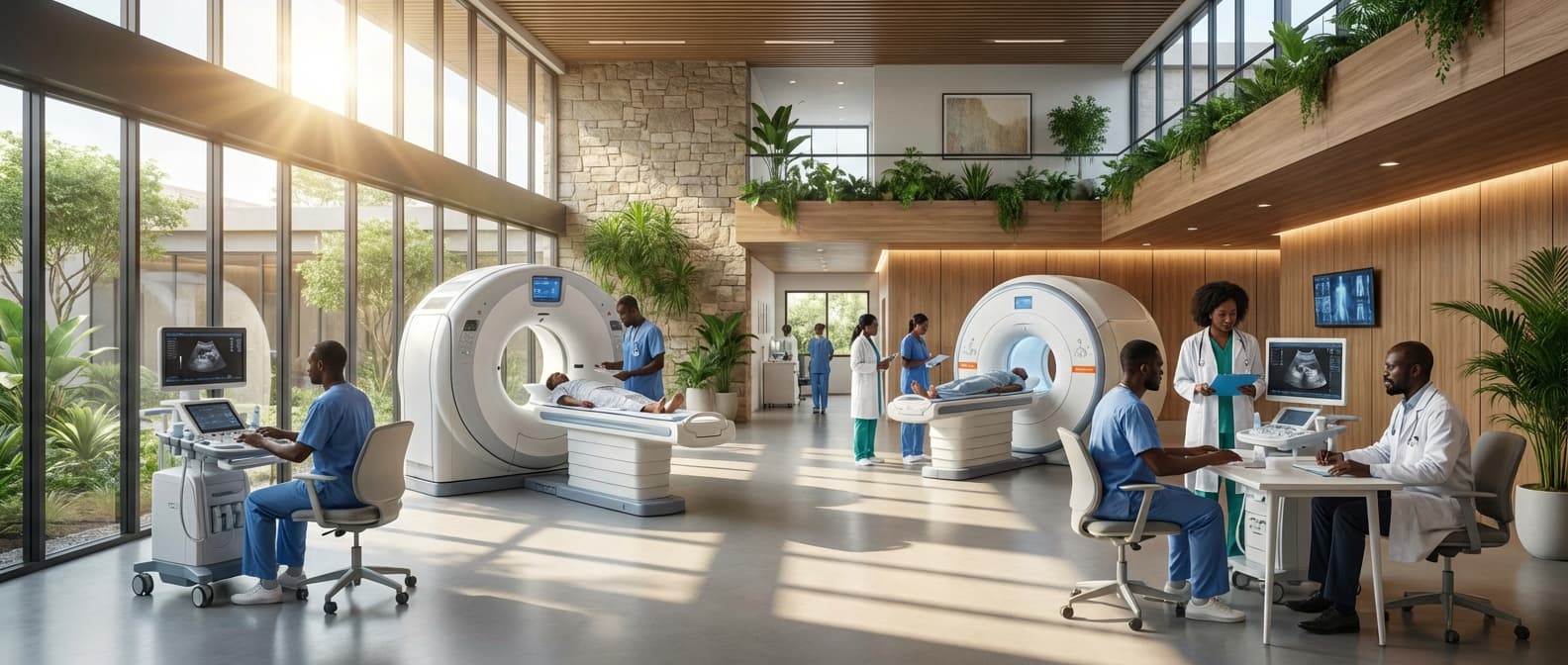
High-resolution imaging systems including CT scanners, MRI, X-ray, and ultrasound technology for accurate clinical diagnosis. High-standard technical execution following OEM protocols and local regulatory frameworks.
Expanding Access to Essential X-ray Services
Deployment of new, modern X-ray machines in underserved rural clinics, significantly increasing diagnostic imaging capacity for common conditions and early detection of diseases like tuberculosis and pneumonia. This initiative is bolstered by remote training programs for local technicians.
Mobile Ultrasound Units for Maternal and Child Health
Introduction of mobile ultrasound units equipped with trained sonographers, reaching remote communities to provide crucial obstetric scans, prenatal monitoring, and pediatric diagnostics. This program directly improves maternal and infant mortality rates by enabling timely interventions.
Establishing Centralized CT Scan Hubs with Tele-Radiology
Creation of regional CT scan hubs equipped with state-of-the-art imaging technology, linked to a tele-radiology network. This allows for rapid interpretation of complex scans by specialists, even when they are not physically present, leading to faster diagnosis and treatment planning for neurological and trauma cases.
What Is Diagnostic Imaging In Senegal?
Diagnostic imaging in Senegal encompasses a range of medical imaging techniques utilized for the detection, diagnosis, and management of diseases and injuries. These modalities provide visual representations of internal body structures, enabling clinicians to gain insights into anatomical and physiological conditions that are not readily apparent through physical examination alone. The service is integral to modern healthcare delivery, supporting differential diagnoses, treatment planning, and monitoring of therapeutic efficacy across various medical specialties.
| Who Needs Diagnostic Imaging? | Typical Use Cases | |||||||
|---|---|---|---|---|---|---|---|---|
| Patients presenting with symptoms suggestive of internal pathology (e.g., pain, swelling, organ dysfunction). | Trauma assessment (fractures, internal bleeding). | Pre-operative evaluation and surgical planning. | Monitoring disease progression (e.g., tumor growth, infection spread). | Guiding interventional procedures (e.g., biopsies, drain placements). | Screening for specific conditions (e.g., mammography for breast cancer). | Patients with chronic conditions requiring ongoing assessment. | Follow-up after treatment to evaluate response. | Congenital anomaly detection during pregnancy (ultrasound). |
| Suspected or confirmed infections (e.g., pneumonia, appendicitis). | Evaluation of the skeletal system (fractures, arthritis, osteoporosis). | Assessment of abdominal and pelvic organs (e.g., gallstones, kidney stones, ovarian cysts, uterine fibroids). | Neurological disorders (e.g., stroke, brain tumors, spinal cord injuries). | Cardiovascular disease assessment (e.g., coronary artery disease, structural heart abnormalities - CT/MRI). | Oncological imaging for staging, diagnosis, and treatment response monitoring. | Gynecological and obstetric evaluations. | Dermatological conditions requiring deeper tissue visualization (ultrasound). | Respiratory system evaluation (chest X-ray, CT). |
Diagnostic Imaging Services in Senegal
- Radiography (X-ray)
- Computed Tomography (CT) Scan
- Magnetic Resonance Imaging (MRI)
- Ultrasound (Sonography)
- Mammography
- Fluoroscopy
- Nuclear Medicine Imaging (e.g., SPECT, PET - availability may vary)
Who Needs Diagnostic Imaging In Senegal?
Diagnostic imaging plays a crucial role in modern healthcare, aiding in the detection, diagnosis, and monitoring of a wide range of medical conditions. In Senegal, the demand for these services is driven by a growing population, increasing prevalence of non-communicable diseases, and a commitment to improving healthcare outcomes. Understanding who needs diagnostic imaging and which departments are the primary users is essential for resource allocation and service planning.
| Department/Service | Key Users/Reasons for Imaging |
|---|---|
| Radiology Department | Primary provider of X-ray, CT scans, MRI, and ultrasound services; serves all other departments. |
| Emergency Department (ED) | Rapid diagnosis of trauma (fractures, head injuries, internal bleeding), acute abdominal pain, chest pain (pulmonary embolism, aortic dissection). |
| Internal Medicine | Diagnosis and management of conditions affecting organs like lungs (pneumonia, tuberculosis), heart (cardiac imaging), kidneys, and gastrointestinal tract. |
| Surgery Departments (General, Orthopedic, Neurosurgery, Urology, etc.) | Pre-operative planning, intra-operative guidance, post-operative assessment, diagnosis of complications. |
| Obstetrics and Gynecology | Prenatal screening (ultrasound for fetal development, nuchal translucency), diagnosis of gynecological conditions (cysts, fibroids), ectopic pregnancies. |
| Cardiology | Echocardiography (ultrasound of the heart), cardiac CT/MRI for assessment of coronary arteries, heart structure, and function. |
| Oncology | Staging of cancers, monitoring treatment response (chemotherapy, radiation), detection of recurrence. |
| Neurology | Brain imaging (CT, MRI) for stroke, tumors, degenerative diseases, and other neurological disorders. |
| Pediatrics | Diagnosis of congenital anomalies, infections, trauma, and developmental issues in children. |
| Pulmonology | Chest X-rays, CT scans for diagnosis and management of lung diseases (asthma, COPD, interstitial lung disease). |
Target Customers for Diagnostic Imaging in Senegal
- Individuals seeking general health check-ups and early disease detection.
- Patients presenting with symptoms requiring internal examination (e.g., pain, fever, unexplained weight loss).
- Individuals with known chronic conditions requiring ongoing monitoring (e.g., diabetes, hypertension, cardiovascular disease).
- Trauma patients requiring assessment of injuries (e.g., fractures, internal bleeding).
- Pregnant women undergoing prenatal care and monitoring fetal development.
- Patients undergoing pre-operative assessments to plan surgical procedures.
- Individuals requiring post-operative follow-up and monitoring of treatment efficacy.
- Patients suspected of having or diagnosed with cancer, requiring staging and treatment response assessment.
- Individuals with neurological symptoms (e.g., headaches, dizziness, weakness, paralysis).
- Patients with suspected infectious diseases requiring localization or assessment of organ involvement.
Diagnostic Imaging Process In Senegal
The diagnostic imaging process in Senegal, like in many healthcare systems, follows a structured workflow to ensure accurate and timely diagnosis. This process begins with a referral from a primary care physician or specialist and culminates in the delivery of a comprehensive imaging report. The workflow involves several key stages, each with specific actors and actions.
| Stage | Description | Key Actors | Key Activities |
|---|---|---|---|
| Patient Referral and Consultation | The process is initiated when a healthcare provider suspects a condition requiring imaging. | Referring Physician (General Practitioner, Specialist) | Clinical assessment, decision to order imaging, providing clinical information to the imaging department. |
| Scheduling and Preparation | Once imaging is ordered, the patient is scheduled for the procedure and prepared accordingly. | Radiology Department Staff (Schedulers, Technologists), Patient | Contacting the patient, explaining the procedure, providing pre-procedure instructions (fasting, medication adjustments), confirming appointment. |
| Image Acquisition | The actual imaging procedure is performed by trained technologists. | Radiology Technologist, Radiologist (in some cases) | Positioning the patient, operating the imaging equipment (X-ray, CT, MRI, Ultrasound), acquiring the necessary images, ensuring image quality. |
| Image Interpretation | A radiologist analyzes the acquired images to identify any abnormalities or findings. | Radiologist | Reviewing images, comparing with previous studies (if available), identifying pathologies, formulating a diagnosis. |
| Report Generation and Communication | A detailed report of the findings is created and communicated to the referring physician. | Radiologist, Radiology Department Staff | Dictating or writing the report, ensuring accuracy and completeness, transmitting the report to the referring physician (electronic or hard copy). |
| Follow-up and Further Management | The referring physician uses the imaging report to guide further patient management. | Referring Physician, Patient | Reviewing the report, discussing findings with the patient, ordering further tests or treatments based on the diagnosis. |
Diagnostic Imaging Workflow in Senegal
- Patient Referral and Consultation
- Scheduling and Preparation
- Image Acquisition
- Image Interpretation
- Report Generation and Communication
- Follow-up and Further Management
Diagnostic Imaging Cost In Senegal
Diagnostic imaging plays a crucial role in healthcare by providing non-invasive visual insights into the body. The cost of these services in Senegal, like elsewhere, is influenced by a variety of factors. These include the type of imaging modality used (e.g., X-ray, ultrasound, CT scan, MRI), the complexity and duration of the examination, the specific body part being scanned, and the expertise of the radiologist interpreting the images. Geographic location within Senegal can also affect prices, with services in major urban centers like Dakar potentially being more expensive than in rural areas due to differences in overhead costs, technology availability, and market demand. The type of facility also matters; private clinics and specialized imaging centers may charge more than public hospitals, which often have subsidized rates. Furthermore, the use of contrast agents, which enhance image clarity for certain procedures, will add to the overall cost. Insurance coverage, if available, can significantly reduce out-of-pocket expenses for patients, but the extent of coverage varies widely. The fluctuating exchange rates and the cost of importing equipment and consumables also indirectly impact pricing. It is important for patients to inquire about specific costs at the time of scheduling their appointments and to explore different provider options to find the most affordable and accessible diagnostic imaging services.
| Imaging Type | Typical Price Range (CFA Francs) | Notes |
|---|---|---|
| X-ray (e.g., Chest, Limb) | 10,000 - 30,000 | Basic X-rays are generally the most affordable. |
| Ultrasound (e.g., Abdomen, Pelvis, Obstetric) | 20,000 - 60,000 | Prices can vary based on the region scanned and whether a Doppler study is included. |
| CT Scan (e.g., Head, Abdomen) | 70,000 - 250,000 | Significantly higher cost due to specialized equipment. Contrast agents increase the price. |
| MRI (e.g., Brain, Spine, Joints) | 100,000 - 400,000+ | The most expensive modality. Prices are highly variable based on the area and protocol. Contrast agents add to the cost. |
Key Factors Influencing Diagnostic Imaging Costs in Senegal
- Imaging Modality (X-ray, Ultrasound, CT, MRI)
- Examination Complexity and Duration
- Specific Body Part Scanned
- Radiologist's Expertise
- Geographic Location (Urban vs. Rural)
- Type of Facility (Public Hospital vs. Private Clinic)
- Use of Contrast Agents
- Insurance Coverage
- Import Costs of Equipment and Consumables
Affordable Diagnostic Imaging Options
Diagnostic imaging, while crucial for accurate medical diagnosis and treatment planning, can often represent a significant out-of-pocket expense for patients. Fortunately, there are ways to make these services more affordable. Understanding 'value bundles' and employing various cost-saving strategies can lead to substantial financial relief. Value bundles often group related imaging services together at a reduced price compared to individual service costs. Cost-saving strategies involve proactive planning, comparing providers, and leveraging insurance benefits effectively.
| Imaging Service | Typical Cost Range (USD - Approximate) | Potential Savings with Bundles/Strategies |
|---|---|---|
| MRI (e.g., Knee) | $1,000 - $5,000+ | Bundles for multiple joint MRIs; negotiating cash price can save 20-50%. |
| CT Scan (e.g., Abdomen/Pelvis) | $500 - $3,000+ | Bundles for full-body scans (less common); comparing independent centers vs. hospitals can save 30-60%. |
| X-ray (e.g., Chest) | $100 - $500+ | Often included in physician visit costs or office-based imaging; very low out-of-pocket if insured. |
| Ultrasound (e.g., Pelvic) | $200 - $1,000+ | Bundles for prenatal ultrasounds; price differences between facilities can be substantial. |
| Mammogram | $100 - $400+ | Often covered by insurance with no co-pay for preventive screenings; explore community health programs for uninsured. |
Cost-Saving Strategies for Diagnostic Imaging
- Compare Prices: Don't accept the first quote you receive. Prices for the same imaging procedure can vary widely between different facilities and even within the same healthcare system. Use online tools, ask your doctor's office, or call imaging centers directly to compare costs.
- Ask About Cash Prices: If you are uninsured or have a high deductible, inquire about the 'cash price' for the service. Hospitals and imaging centers often offer significant discounts for patients paying upfront.
- Negotiate: In some cases, particularly with independent imaging centers, you may be able to negotiate the price, especially if you are paying out-of-pocket.
- Check In-Network Benefits: Ensure the facility and the radiologist reading your scan are in-network with your insurance plan. Out-of-network costs can be considerably higher.
- Understand Your Insurance Policy: Familiarize yourself with your deductible, co-pays, co-insurance, and out-of-pocket maximum. Knowing these will help you anticipate costs and plan accordingly.
- Consider Imaging Centers vs. Hospitals: Independent imaging centers are often less expensive than hospital-based imaging departments for the same procedures.
- Request Generic or Off-Peak Scheduling: Some facilities might offer slight discounts for scheduling during less busy times or for non-urgent procedures.
- Explore Patient Assistance Programs: Many hospitals and imaging facilities have financial assistance programs for low-income patients or those facing financial hardship.
- Ask About Value Bundles: Inquire if the imaging center or hospital offers bundled pricing for a series of related scans or for a specific condition.
- Seek Pre-Authorization: Even if not strictly required, understanding if pre-authorization is needed for your scan can help prevent unexpected billing surprises.
- Discuss Alternatives with Your Doctor: While imaging is often essential, discuss with your doctor if there are any less expensive diagnostic alternatives that might provide sufficient information.
Verified Providers In Senegal
In the pursuit of reliable and high-quality healthcare in Senegal, identifying 'Verified Providers' is paramount. This designation signifies that a healthcare facility or professional has met stringent standards of quality, safety, and ethical practice. Among these trusted entities, Franance Health stands out due to its comprehensive credentialing process and unwavering commitment to patient well-being. Understanding what 'Verified Providers' means and why Franance Health embodies this standard is crucial for making informed healthcare decisions.
| Franance Health Credentials | Why They Represent the Best Choice |
|---|---|
| Rigorous Accreditation & Certification: Franance Health partners exclusively with facilities and professionals holding recognized national and international accreditations. This includes certifications for specific medical specialties, adherence to international quality standards (like ISO), and compliance with Senegalese health regulations. | Uncompromising Quality Assurance: Accreditation signifies that these providers have been independently assessed and found to meet the highest standards of patient care, safety protocols, and infection control. This translates to a lower risk of errors and a higher likelihood of positive health outcomes. |
| Verified Medical Expertise: All healthcare professionals associated with Franance Health undergo thorough background checks and credential verification. This includes confirming their medical licenses, board certifications, and continuing education records. | Access to Skilled Professionals: Franance Health ensures you are connected with experienced and highly qualified doctors, surgeons, nurses, and specialists, guaranteeing you receive care from individuals with proven expertise in their respective fields. |
| Commitment to Ethical Practices: Franance Health vets providers for their adherence to ethical medical codes of conduct, patient rights, and transparent communication. This includes a clear process for informed consent and respect for patient privacy. | Patient-Centric Approach: You can trust that providers through Franance Health will prioritize your well-being, communicate openly about your treatment options, and respect your autonomy in decision-making. |
| State-of-the-Art Facilities and Technology: Franance Health often partners with centers equipped with modern medical technology and infrastructure, ensuring access to advanced diagnostic and treatment capabilities. | Advanced Treatment Options: Access to cutting-edge equipment and facilities means you benefit from the latest medical advancements, leading to more accurate diagnoses and effective treatments. |
| Transparent Pricing and Service Delivery: Franance Health strives for transparency in pricing and service packages, ensuring patients understand the costs associated with their care upfront. | Predictable and Trustworthy Healthcare Experience: This transparency reduces the anxiety often associated with healthcare costs and allows for better financial planning, providing a more predictable and trustworthy experience. |
What are Verified Providers?
- Healthcare professionals and facilities that have undergone rigorous evaluation.
- Confirmation of adherence to established quality, safety, and ethical benchmarks.
- Independent verification of credentials, licenses, and operational standards.
- Commitment to continuous improvement and patient-centered care.
Scope Of Work For Diagnostic Imaging
This Scope of Work (SOW) outlines the requirements for providing comprehensive diagnostic imaging services. It details the technical deliverables, standard specifications, and expected outcomes to ensure high-quality, timely, and accurate diagnostic imaging for [Client Name/Organization].
| Deliverable | Description | Standard Specification/Requirement | Acceptance Criteria |
|---|---|---|---|
| Imaging Procedure Reports | Detailed reports of all diagnostic imaging procedures performed. | Reports to be generated by board-certified radiologists, adhering to established medical reporting guidelines (e.g., ACR, RSNA). Reports must include patient demographics, examination type, findings, impression, and recommendations. Reports available within [X] hours of image acquisition. | Accuracy and completeness of reports, timely delivery, adherence to professional standards, and radiologist's signature/authentication. |
| Diagnostic Images (Digital) | High-resolution digital images for all performed diagnostic procedures. | Images to be acquired and stored in DICOM (Digital Imaging and Communications in Medicine) format. Resolution and image quality to meet established diagnostic standards for each modality. Images to be accessible via PACS. | Image clarity, absence of artifacts affecting diagnosis, correct DICOM tagging, and successful integration with PACS. |
| PACS/RIS System Access & Functionality | Access to and functional operation of Picture Archiving and Communication System (PACS) and Radiology Information System (RIS). | System to be available 24/7, with guaranteed uptime of [Y]%. Data retrieval and image viewing to be efficient. User-friendly interface for authorized personnel. | System availability, performance metrics, successful data access and retrieval, and user satisfaction with functionality. |
| Equipment Calibration and Maintenance Logs | Records of all equipment calibration, preventive maintenance, and repair. | All imaging equipment to be calibrated and maintained according to manufacturer specifications and relevant regulatory standards. Logs to be updated regularly and available for audit. | Completeness and accuracy of maintenance records, demonstration of adherence to calibration schedules, and evidence of compliance with safety standards. |
| Quality Assurance Reports | Regular reports detailing the quality of imaging services and adherence to QA protocols. | QA program to include regular review of image quality, report accuracy, turnaround times, and patient satisfaction. Reports to be submitted [monthly/quarterly] and include corrective action plans for any identified issues. | Comprehensiveness of QA data, identification of trends, effectiveness of corrective actions, and demonstrated commitment to continuous improvement. |
| Radiologist Qualifications Documentation | Credentials and certifications for all interpreting radiologists. | Radiologists to be board-certified or eligible in their respective specialties, with current medical licenses and relevant subspecialty certifications. CVs and certifications to be provided upon request. | Verification of credentials, active licenses, and adherence to professional and ethical standards. |
| Data Security and Confidentiality Compliance | Demonstrated adherence to HIPAA (or equivalent) and other relevant data privacy regulations. | All patient data to be handled in accordance with strict confidentiality protocols. Secure data transmission, storage, and access controls to be in place. | Successful completion of security audits, absence of data breaches, and adherence to all privacy laws and regulations. |
Key Areas Covered
- Radiology Procedures (X-ray, Fluoroscopy, Mammography, etc.)
- Advanced Imaging Modalities (CT, MRI, Ultrasound, Nuclear Medicine)
- Image Acquisition and Processing Standards
- Reporting and Interpretation
- Data Management and Archiving (PACS/RIS)
- Equipment Maintenance and Calibration
- Quality Assurance and Control
- Staffing and Credentials
- Security and Confidentiality
Service Level Agreement For Diagnostic Imaging
This Service Level Agreement (SLA) outlines the performance standards and guarantees provided by [Imaging Provider Name] for diagnostic imaging services to [Client Name]. This SLA defines critical metrics such as response times for critical and routine requests, and uptime guarantees for imaging equipment and reporting systems.
| Service Category | Response Time Guarantee | Uptime Guarantee | Notes |
|---|---|---|---|
| Critical Imaging Studies (e.g., Stroke, Trauma, Acute MI) | Within 30 minutes of request | 99.5% | Includes scanner availability and radiologist availability for urgent reads. |
| Routine Imaging Studies (e.g., Follow-up, Non-acute) | Within 2 hours of request | 98.0% | Applies to standard scheduling and equipment availability. |
| Reporting System Availability | N/A (measured by uptime) | 99.9% | Includes PACS, RIS, and dictation systems. |
| Equipment Availability (Excluding Scheduled Maintenance) | N/A (measured by uptime) | 98.5% | Applies to all standard diagnostic imaging modalities. |
Key Performance Indicators (KPIs)
- Response Time: The time elapsed from the initiation of a request to the commencement of the service.
- Uptime Guarantee: The percentage of time that specified imaging equipment and reporting systems are operational and available for use.
- Reporting Turnaround Time: The time from the completion of an imaging study to the delivery of the final report.
Frequently Asked Questions

Ready when you are
Let's scope your Diagnostic Imaging in Senegal project in Senegal.

Scaling healthcare logistics and technical systems across the entire continent.