
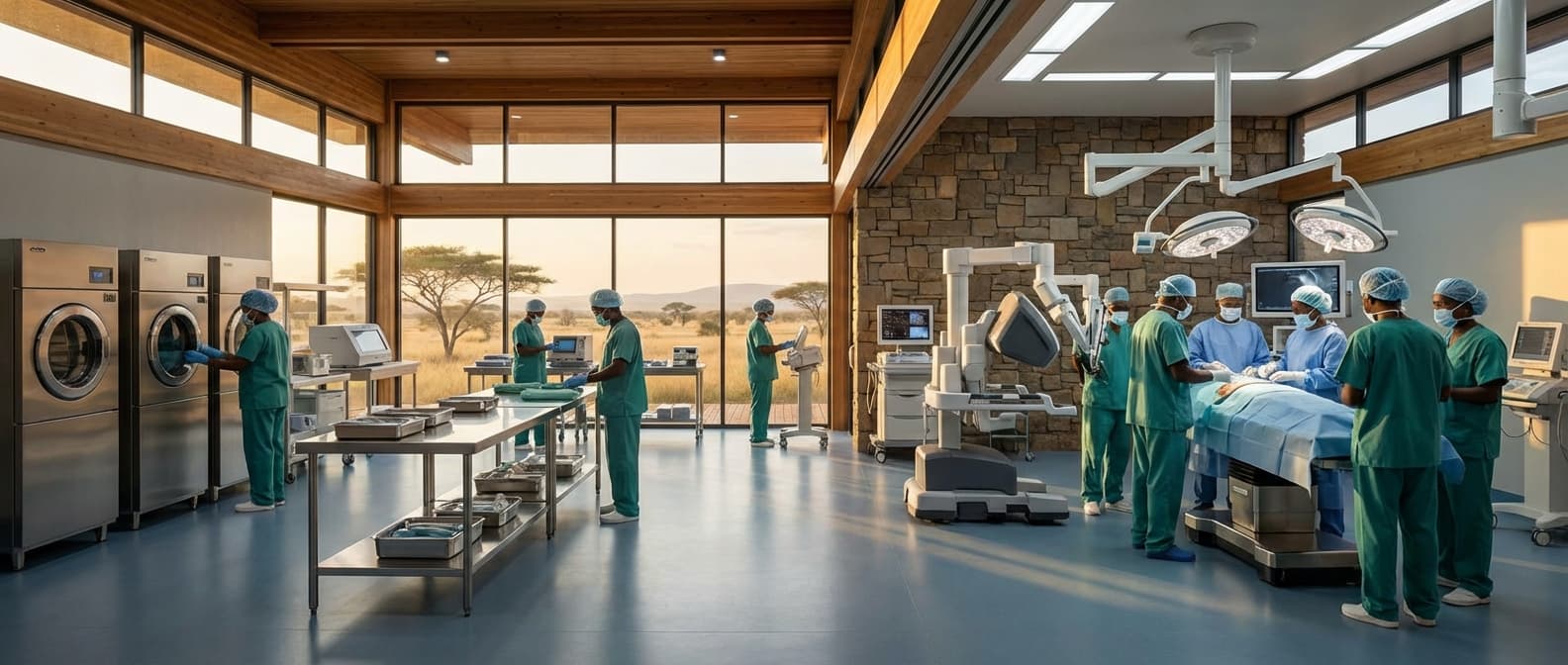
Medical Gas System Design & Installation in Senegal
Engineering Excellence & Technical Support
Medical gas pipeline systems: O2, N2O, air, vacuum High-standard technical execution following OEM protocols and local regulatory frameworks.
Specialized Medical Gas Storage & Distribution
Ensuring the safe and compliant storage of medical gases (oxygen, medical air, vacuum, N2O, CO2) with robust manifold systems, automated changeover, and leak-tight piping designed to meet stringent international standards (e.g., NFPA 99, ISO 7396) for uninterrupted patient care in Senegal's healthcare facilities.
Integrated Medical Gas Alarm & Monitoring
Implementing advanced medical gas alarm panels and continuous monitoring systems that provide real-time alerts for pressure deviations, gas supply status, and potential failures. This ensures rapid response and maintains a secure supply chain crucial for critical care environments in Senegal.
Localized Expertise & Installation Best Practices
Leveraging a deep understanding of Senegal's specific environmental conditions and regulatory landscape, our installation teams employ best practices for medical gas piping, brazing, purging, and pressure testing. This guarantees system integrity, prevents contamination, and ensures long-term operational reliability for healthcare providers across the country.
What Is Medical Gas System Design & Installation In Senegal?
Medical Gas System Design & Installation in Senegal refers to the specialized engineering and construction process for establishing, maintaining, and expanding the infrastructure responsible for delivering essential medical gases to healthcare facilities. This encompasses the meticulous planning, specification, fabrication, and commissioning of systems that safely and reliably supply gases such as medical oxygen (O2), medical air (MA), nitrous oxide (N2O), vacuum, and potentially others like carbon dioxide (CO2) or nitrogen (N2) for specific applications. The process adheres to international and national standards (e.g., NFPA 99, ISO 7396 series, relevant Senegalese building and health codes) to ensure patient safety, operational efficiency, and compliance with regulatory requirements.
| Service/Component | Description | Primary Function | Typical Location |
|---|---|---|---|
| Medical Oxygen (O2) System | Design and installation of the infrastructure for delivering medical-grade oxygen. | Respiratory support for patients with hypoxia or respiratory distress. | Operating rooms, Intensive Care Units (ICUs), recovery rooms, general wards, emergency departments. |
| Medical Air (MA) System | Design and installation of the infrastructure for delivering filtered and compressed medical air. | Powering pneumatic devices, ventilation, and as a diluent gas for anesthesia. | Operating rooms, anesthesia workstations, mechanical ventilation circuits. |
| Nitrous Oxide (N2O) System | Design and installation of the infrastructure for delivering medical-grade nitrous oxide. | Analgesia and anesthesia during surgical procedures and dental treatments. | Operating rooms, dental operatories, labor and delivery suites. |
| Medical Vacuum System | Design and installation of the infrastructure for medical suction. | Aspiration of bodily fluids, surgical site drainage, and for laboratory use. | Operating rooms, recovery rooms, patient rooms, laboratories. |
| Pipeline Network | The conduit system (tubing and fittings) that transports gases from source to point-of-use. | Safe and efficient delivery of medical gases. | Wall chases, ceiling pendants, floor boxes within the healthcare facility. |
| Gas Outlets & Terminals | Connectors that interface with medical devices and equipment. | Secure and reliable connection for gas supply. | Patient bedsides, anesthesia machines, surgical equipment. |
| Alarm Systems | Audible and visual indicators of critical system parameters (pressure, purity). | Early warning of system malfunctions, ensuring patient safety. | Central control room, nurse's stations, critical care areas. |
Key Components and Stages of Medical Gas System Design & Installation
- Needs Assessment & System Design: Initial site surveys, analysis of patient population and required gas flow rates, determination of appropriate gas sources (central supply, cylinders, on-site generators), selection of pipeline materials (copper, stainless steel), pressure regulation strategies, alarm systems, and outlet configurations.
- System Installation: Careful routing and installation of medical gas pipelines, brazing and welding of joints, pressure testing, purging, and leak detection in accordance with stringent quality control protocols.
- Control & Monitoring Systems: Integration of master and area alarms, pressure and flow monitoring devices, and gas purification or filtration units to maintain gas quality.
- End-User Interface: Installation of terminal units (outlets, flowmeters, regulators) at patient care locations, ensuring ergonomic design and ease of use for healthcare professionals.
- Commissioning & Validation: Comprehensive testing of the entire system to verify performance, pressure integrity, gas purity, and alarm functionality. This phase includes detailed documentation and certification.
- Maintenance & Service: Provision of ongoing maintenance, repair, and upgrade services to ensure sustained system reliability and safety throughout its lifespan.
Who Needs Medical Gas System Design & Installation In Senegal?
Medical gas systems are critical for the safe and effective operation of healthcare facilities. In Senegal, the need for robust and compliant medical gas system design and installation is driven by a growing healthcare sector and the ongoing commitment to improving patient care standards. These systems are essential for supplying vital medical gases such as oxygen, medical air, vacuum, and nitrous oxide to various clinical areas, directly impacting patient treatment and life support.
| Customer Segment | Key Departments Requiring Medical Gas Systems | Specific Needs/Applications |
|---|---|---|
| Public Hospitals (e.g., Hôpital Principal de Dakar, Hôpital Fann) | Operating Rooms, ICUs, Emergency Wards, Respiratory Care, General Wards | Reliable, high-volume supply for life support, anesthesia, and therapeutic oxygen; compliance with national healthcare standards. |
| Private Hospitals and Clinics (e.g., Clinique Pasteur, Polyclinique La Dépêche) | Operating Theatres, ICUs, Post-Anesthesia Care Units (PACUs), Diagnostic Imaging (for medical air) | State-of-the-art systems for specialized procedures, patient comfort, and infection control; advanced monitoring and alarm systems. |
| Specialized Medical Centers (e.g., Cardiac Centers, Oncology Centers) | Cardiac Catheterization Labs, Radiation Therapy Units, Dialysis Units | Precise gas delivery for diagnostic and therapeutic interventions; integration with specialized medical equipment. |
| Community Health Centers and District Hospitals | Basic treatment areas, minor surgery rooms, maternity wards | Essential medical gas supply for emergency care, basic respiratory support, and anesthesia; cost-effective and robust solutions. |
| Government Health Agencies and Ministries | Public health infrastructure development, regulatory bodies | Oversight of healthcare facility standards, ensuring compliance with safety regulations, and planning for national healthcare infrastructure upgrades. |
Target Customers and Departments in Senegal for Medical Gas System Design & Installation
- Hospitals (Public and Private)
- Specialized Clinics and Medical Centers
- Surgical Centers and Operating Theatres
- Intensive Care Units (ICUs) and Critical Care Units
- Emergency Departments and Trauma Centers
- Neonatal Intensive Care Units (NICUs)
- Respiratory Therapy Departments
- Anesthesia Departments
- Rehabilitation Centers
- Veterinary Hospitals (for specialized medical gases)
Medical Gas System Design & Installation Process In Senegal
The design and installation of medical gas systems in Senegal, like in many developing nations, involves a structured workflow to ensure safety, compliance, and functionality. This process typically begins with an initial inquiry from a healthcare facility and culminates in a fully operational and certified system. The key stages encompass planning, design, procurement, installation, testing, commissioning, and handover, with regulatory oversight and client communication integrated throughout.
| Phase | Key Activities | Key Stakeholders | Typical Duration | Senegalese Context Considerations |
|---|---|---|---|---|
| Initial contact from hospital/clinic; understanding requirements (gas types, flow rates, pressure, number of outlets); budget discussions. | Healthcare Facility Management, Project Sponsor, Potential Vendor/Consultant. | 1-2 Weeks | Clear articulation of needs is crucial. May involve clarifying existing infrastructure capabilities and future expansion plans. |
| On-site assessment of the facility; existing infrastructure review; space allocation for equipment (compressors, vacuum pumps, manifolds, cylinders); accessibility for maintenance. | Vendor/Consultant Team, Facility Engineering/Maintenance Staff. | 1-3 Weeks | Availability of reliable power and water is critical. Space constraints may require innovative solutions. Access to main roads for delivery of large equipment. |
| Developing detailed blueprints, schematics, and specifications for the medical gas system; selecting appropriate equipment (medical air compressors, oxygen generators/manifolds, vacuum pumps, nitrous oxide systems, etc.); pipe sizing and material selection; outlet placement. | Specialized Medical Gas Design Engineers, Vendor's Engineering Department. | 4-8 Weeks | Adherence to international standards (e.g., NFPA 99, ISO 7396) is paramount. Local expertise may be limited; reliance on international best practices is common. Consideration for climate conditions (humidity, temperature) impacting equipment performance. |
| Submitting design plans to relevant Senegalese authorities (Ministry of Health, Fire Department, building code authorities); ensuring compliance with local health and safety regulations. | Design Engineers, Vendor's Project Manager, Facility Administration, Regulatory Bodies. | 4-12 Weeks (can be variable) | Navigating bureaucratic processes can be time-consuming. Understanding specific local regulations and permitting requirements is essential. Potential for delays due to administrative capacity. |
| Issuing tender documents for construction and equipment supply; evaluating bids; selecting a qualified contractor/supplier; placing orders for equipment and materials. | Facility Procurement Department, Vendor/Contractor, Regulatory Bodies (for tender review). | 6-10 Weeks | Securing financing for the project. Sourcing reliable suppliers and ensuring timely delivery of specialized medical gas equipment, which may involve international shipping. |
| Site preparation; installation of piping infrastructure, gas outlets, alarms, and control panels; installation of core equipment (compressors, generators, manifolds, etc.); integration with building electrical and ventilation systems. | Installation Crew (Contractor), Vendor's Technical Supervisors, Facility Engineers. | 12-24 Weeks | Skilled labor availability for specialized installation work. Coordination with ongoing hospital operations to minimize disruption. Site security for valuable equipment. Robustness against environmental factors (dust, humidity). |
| Pressure testing of piping; leak detection; purging and flushing of lines; testing of all components and alarms; verification of gas purity and flow rates; final system checks. | Commissioning Engineers, Vendor's Technical Team, Facility Maintenance Staff, Independent Third-Party Inspector (if required). | 2-4 Weeks | Thorough testing is critical for patient safety. Ensuring accuracy of pressure and flow readings under varying loads. Documenting all test results meticulously. |
| Training facility staff (engineers, technicians, nurses) on the operation, maintenance, and troubleshooting of the medical gas system; provision of operation & maintenance manuals; formal handover of the completed system. | Vendor's Training Specialists, Facility Engineering and Clinical Staff. | 1-2 Weeks | Ensuring comprehensive training for local staff to manage the system long-term. Availability of training materials in French or local languages. Sustainability of maintenance expertise. |
| Ongoing support for the system; scheduled preventative maintenance; emergency repair services; supply of spare parts. | Vendor/Contractor, Facility Maintenance Department. | Ongoing | Establishing a clear service agreement. Ensuring availability of spare parts within Senegal or efficient import channels. Building local capacity for routine maintenance to reduce reliance on external support. |
Medical Gas System Design & Installation Workflow in Senegal
- Inquiry & Needs Assessment
- Site Survey & Feasibility Study
- System Design & Engineering
- Regulatory Approvals & Compliance
- Tendering & Procurement
- Installation & Civil Works
- Testing & Commissioning
- Training & Handover
- Post-Installation Support & Maintenance
Medical Gas System Design & Installation Cost In Senegal
Designing and installing a medical gas system in Senegal involves a complex interplay of factors that dictate the overall cost. These systems are critical for patient care, supplying essential gases like oxygen, medical air, vacuum, and sometimes nitrous oxide to various healthcare facilities. The pricing is not static and can vary significantly based on several key elements, from the scale of the project to the specific equipment and regulatory compliance required. Understanding these variables is crucial for accurate budgeting and successful implementation.
| System Component/Service | Estimated Cost Range (XOF) | Notes |
|---|---|---|
| Design & Engineering Fees | 1,000,000 - 5,000,000+ | Varies with project complexity and consultant rates. |
| Central Gas Supply Equipment (e.g., bulk tanks, compressors, purifiers) | 5,000,000 - 50,000,000+ | Highly dependent on gas type, volume, and technology. |
| Piping Installation (per meter) | 15,000 - 50,000+ | Includes copper piping, fittings, labor, and specialized welding. |
| Gas Outlets & Patient Manifolds (per unit) | 50,000 - 200,000+ | Cost varies by type (wall, ceiling), gas, and brand. |
| Alarm & Monitoring Systems | 500,000 - 3,000,000+ | Includes control panels, sensors, and integration. |
| Valves, Regulators, and Safety Devices | 200,000 - 1,000,000+ | Essential components for pressure control and safety. |
| Installation Labor (overall) | 10% - 30% of total material cost | Reflects specialized skills and project duration. |
| Testing, Commissioning & Certification | 1,000,000 - 5,000,000+ | Crucial for compliance and safety verification. |
| Contingency (10-15%) | N/A | Recommended for unforeseen issues. |
Key Pricing Factors for Medical Gas System Design & Installation in Senegal
- Facility Size and Complexity: Larger hospitals or specialized clinics with numerous patient rooms, operating theaters, and intensive care units will naturally require more extensive piping, more outlets, and a more robust central supply system, driving up costs.
- Number and Type of Medical Gases: The more types of gases required (e.g., oxygen, medical air, vacuum, nitrous oxide, carbon dioxide), the more complex the system design and the higher the cost of components and installation.
- Central Supply Source: Whether the gases are supplied by bulk liquid oxygen tanks, medical gas cylinders, an on-site air compressor system, or a combination, each has a different upfront and ongoing cost. Bulk systems often have higher initial investment but lower per-unit gas costs.
- Piping Material and Diameter: The type of piping (e.g., copper alloys are standard for medical gases) and its diameter, determined by the flow rates and distances, influence material and labor costs. Longer runs and larger diameters increase expenses.
- Number of Gas Outlets and Alarm Systems: Each patient room and procedure area requires gas outlets. The total number of these, along with the complexity and coverage of the alarm and monitoring systems (to ensure gas pressure and purity), directly impacts the final price.
- Regulatory Compliance and Standards: Adherence to international and local healthcare facility standards (e.g., NFPA 99 in the US, or equivalent Senegalese regulations) for design, installation, and testing is mandatory. Meeting these standards often requires specific materials, testing procedures, and specialized expertise, adding to the cost.
- Brand and Quality of Equipment: Medical gas equipment, including regulators, manifolds, alarms, and consoles, varies in price depending on the manufacturer's reputation, quality, and features. Using certified, high-quality equipment is essential for safety and reliability but can increase the initial investment.
- Installer Expertise and Experience: Engaging experienced and certified medical gas system installers is paramount. Their expertise ensures proper installation, leak prevention, and compliance, but specialized labor rates can be higher.
- Location and Accessibility: The remoteness of the healthcare facility can affect transportation costs for materials and personnel, as well as the logistical challenges of installation, potentially leading to increased expenses.
- Project Management and Engineering Fees: Comprehensive design, planning, and project management services are essential. These professional fees contribute to the overall cost.
- Commissioning and Testing: Thorough testing and commissioning of the entire system, including pressure testing, purity analysis, and functional checks, are critical for safety and require specialized equipment and personnel.
Affordable Medical Gas System Design & Installation Options
Designing and installing a medical gas system is a critical investment for any healthcare facility. This document outlines affordable options, emphasizing value bundles and cost-saving strategies to ensure both functionality and fiscal responsibility. We explore various approaches to system design, equipment selection, and installation to help you make informed decisions.
| Value Bundle/Strategy | Description | Potential Cost Savings |
|---|---|---|
| Integrated Design & Installation Package | A single provider handles both the design and installation of the medical gas system, often at a bundled rate. This streamlines communication and can prevent costly design-build conflicts. | Reduced administrative overhead, fewer change orders due to design-installation disconnects, potential for volume discounts on equipment. |
| Modular System Design | Designing the system with modular components that can be expanded or upgraded incrementally as facility needs grow. This avoids over-engineering for future, uncertain demands. | Lower initial capital expenditure, flexibility to adapt to changing requirements without complete system replacement. |
| Standardized Outlet & Alarm Configurations | Utilizing standard, widely available medical gas outlets and alarm systems that meet regulatory requirements but avoid custom or niche options. This leverages economies of scale in manufacturing. | Reduced equipment procurement costs, easier maintenance and replacement due to wider availability of parts. |
| Energy-Efficient Equipment Selection | Opting for energy-efficient medical air compressors and vacuum pumps can lead to significant long-term operational cost savings on electricity bills. | Lower utility expenses throughout the system's operational life. |
| Pre-Fabricated Manifold Systems | Using pre-fabricated manifold systems that are assembled and tested off-site by the installer. This can reduce on-site installation time and labor costs. | Faster installation, reduced on-site labor, improved quality control. |
| Preventive Maintenance Contracts | Securing a comprehensive preventive maintenance contract with your installer or a specialized service provider. Regular maintenance catches minor issues before they become major, expensive repairs. | Avoidance of costly emergency repairs, extended system lifespan, minimized downtime. |
| Value Engineering During Design | Actively collaborating with your design and installation team to explore alternative materials, equipment, or system layouts that achieve the same functional outcome at a lower cost. | Optimized material usage, selection of more cost-effective yet compliant equipment. |
Key Considerations for Affordable Medical Gas Systems
- Understanding the Scope of Your Needs: Accurately assessing the required medical gases (oxygen, medical air, vacuum, etc.), the number of outlets, and the expected usage is paramount to avoid overspending on unnecessary capacity.
- Choosing the Right System Type: Options range from bulk supply systems for large facilities to smaller cylinder-based systems for clinics, each with different upfront and ongoing costs.
- Value-Based Equipment Selection: Prioritizing reliability and compliance with industry standards over premium features that may not be essential for your operational needs.
- Phased Installation Approaches: For new builds or major renovations, consider a phased installation approach to spread costs over time.
- Partnership with Experienced Providers: Collaborating with reputable medical gas system designers and installers who can offer transparent pricing and cost-effective solutions.
- Long-Term Maintenance Planning: Incorporating a proactive maintenance schedule to prevent costly breakdowns and extend the lifespan of the system.
Verified Providers In Senegal
In Senegal, the landscape of healthcare access is rapidly evolving, and with it, the importance of identifying truly reliable and skilled medical professionals. Franance Health stands out as a leading organization dedicated to vetting and verifying healthcare providers, ensuring that patients receive the highest quality of care. Their rigorous credentialing process not only validates the expertise of individual practitioners but also elevates the standard of healthcare services available across the nation. By choosing providers accredited by Franance Health, patients gain access to a network of professionals who have met stringent criteria for education, experience, and ethical practice. This commitment to excellence translates directly into improved patient outcomes, greater trust in the healthcare system, and peace of mind for individuals seeking medical assistance.
| Credential Aspect | Franance Health's Verification Focus | Benefit to Patients |
|---|---|---|
| Medical Education & Training | Validation of degrees, diplomas, and specialized training from accredited institutions. | Ensures providers have foundational knowledge and expertise. |
| Professional Licenses & Certifications | Confirmation of current and valid licenses to practice medicine within Senegal. | Guarantees legal and authorized medical practice. |
| Clinical Experience | Assessment of practical experience and track record in relevant medical fields. | Indicates practical application of knowledge and skill. |
| Specialized Skills & Competencies | Verification of specific skills for specialties (e.g., surgery, cardiology, pediatrics). | Ensures access to specialized care when needed. |
| Ethical Conduct & Professionalism | Background checks and review of adherence to medical ethics and professional standards. | Promotes patient trust and safety, minimizing malpractice risks. |
| Continuing Professional Development | Confirmation of ongoing training and updates in medical advancements. | Ensures providers are current with the latest medical practices and technologies. |
Why Franance Health Credentials Matter:
- Rigorous Verification: Franance Health employs a multi-faceted verification process that scrutinizes qualifications, licenses, and professional history.
- Commitment to Quality: Their accreditation signifies a provider's dedication to adhering to best practices and delivering superior medical services.
- Enhanced Patient Safety: Verified providers have demonstrated a commitment to ethical conduct and patient well-being, reducing risks and promoting safe healthcare.
- Access to Expertise: Franance Health ensures that their accredited providers possess the necessary skills and knowledge to address a wide range of medical needs.
- Building Trust: A Franance Health credential is a mark of credibility, fostering confidence between patients and healthcare professionals.
- Improved Healthcare Standards: By setting a high bar for accreditation, Franance Health contributes to the overall advancement of healthcare quality in Senegal.
Scope Of Work For Medical Gas System Design & Installation
This Scope of Work (SOW) outlines the requirements for the design and installation of a comprehensive medical gas system, adhering to stringent industry standards and technical specifications. The project encompasses the design phase, material procurement, system installation, rigorous testing, and final commissioning to ensure a safe, reliable, and compliant medical gas supply for the facility.
| Technical Deliverable | Description | Standard Specification/Reference |
|---|---|---|
| Medical Gas System Design Drawings (Piping & Instrumentation Diagrams - P&IDs) | Detailed schematics illustrating the layout of all medical gas lines, valves, regulators, and equipment. Includes flow direction, material types, and sizes. | NFPA 99 (Health Care Facilities Code), ASSE Series 6000 (Professional Qualifications Standard for Medical Gas Systems), Local Building Codes |
| System Layout Drawings | Floor plans indicating the precise location of all medical gas outlets, inlets, alarms, shut-off valves, and main supply sources. | NFPA 99, Facility Architectural Drawings |
| Material Specifications | Detailed list of all materials to be used, including piping, fittings, valves, pressure regulators, gas outlets, and alarm systems, with specific grades and certifications. | ASTM Standards (e.g., ASTM B88 for copper tubing), Manufacturer Specifications, NFPA 99 |
| Alarm System Design & Integration | Specifications for a compliant medical gas alarm system, including monitoring of pressure, vacuum, and flow rates for each gas. Details on audible and visual alarms, and remote monitoring capabilities. | NFPA 99, Local Electrical Codes |
| Pressure Regulation & Control | Design parameters for pressure reducing valves, regulators, and control panels to ensure accurate and stable gas delivery at the point of use. | NFPA 99, Manufacturer Specifications |
| Medical Gas Outlets & Inlets | Specifications for the type, number, and configuration of medical gas outlets and inlets at patient care locations and for supply connections. | NFPA 99, DISS (Diameter Index Safety System) or NIST (National Institute of Standards and Technology) standards |
| Main Supply System Design | Detailed design for bulk storage systems (e.g., cryogenic tanks, cylinders) and manifold systems, including safety features and changeover mechanisms. | NFPA 99, NFPA 55 (Compressed Gases and Storage and Handling), DOT (Department of Transportation) regulations |
| Purification & Filtration Requirements | Specifications for filtration and purification of medical gases to ensure purity as per standards. | NFPA 99, USP (United States Pharmacopeia) standards for medical gases |
| System Testing Procedures | Detailed procedures for pressure testing, leak testing, flushing, purging, and performance testing of each medical gas line and the overall system. | NFPA 99, ASSE Series 6000 |
| Commissioning Report | A comprehensive report detailing the results of all system tests, verification of compliance with design and standards, and confirmation of proper system operation. | NFPA 99, ASSE Series 6000 |
| As-Built Drawings | Revised drawings reflecting the exact installed locations and configurations of all system components. | Facility Requirements, NFPA 99 |
| Operations & Maintenance (O&M) Manuals | Detailed manuals for the operation, maintenance, and troubleshooting of the medical gas system and its components. | Manufacturer Manuals, NFPA 99 |
Key Stages of the Project
- Design Phase: Development of detailed engineering drawings, schematics, and specifications for all medical gas systems.
- Procurement: Sourcing and acquisition of all necessary materials, equipment, and components that meet specified standards.
- Installation: Professional installation of all piping, outlets, alarms, control panels, and related infrastructure.
- Testing & Commissioning: Comprehensive pressure, leak, purity, and operational testing of the entire system.
- Documentation & Training: Provision of as-built drawings, operation and maintenance manuals, and training for facility staff.
Service Level Agreement For Medical Gas System Design & Installation
This Service Level Agreement (SLA) outlines the standards of service and performance expected for the design and installation of medical gas systems by [Provider Name] for [Client Name]. It defines response times for critical incidents and guarantees system uptime.
| Incident Type | Response Time (Business Hours) | Resolution Time Target (Business Hours) | Uptime Guarantee |
|---|---|---|---|
| Critical Incident | 1 Hour | 4 Hours | 99.99% (Annual) |
| Major Incident | 2 Business Hours | 8 Business Hours | 99.99% (Annual) |
| Minor Incident | 4 Business Hours | 24 Business Hours | 99.99% (Annual) |
| Scheduled Maintenance | N/A (Notification required 7 days in advance) | As per agreed maintenance schedule | N/A |
Key Components of the SLA
- Scope of Service: This SLA covers the initial design and subsequent installation of the medical gas systems as per the agreed-upon project specifications and relevant medical gas standards (e.g., NFPA 99).
- Definitions:
- Critical Incident: An incident that renders a medical gas system or a significant portion thereof inoperable, posing an immediate threat to patient care or safety.
- Major Incident: An incident that impairs the functionality of a medical gas system or a specific outlet, impacting patient care but not posing an immediate, widespread threat.
- Minor Incident: A non-critical issue that does not directly impact patient care but may affect system efficiency or require routine maintenance.
- Response Time: The maximum time allowed for a qualified technician to acknowledge and begin work on resolving an incident.
- Resolution Time: The maximum time allowed to fully resolve an incident and restore the medical gas system to its intended operational status.
- Uptime Guarantee: The percentage of time the medical gas system is expected to be fully operational and available for use.
Frequently Asked Questions

Ready when you are
Let's scope your Medical Gas System Design & Installation in Senegal project in Senegal.

Scaling healthcare logistics and technical systems across the entire continent.