
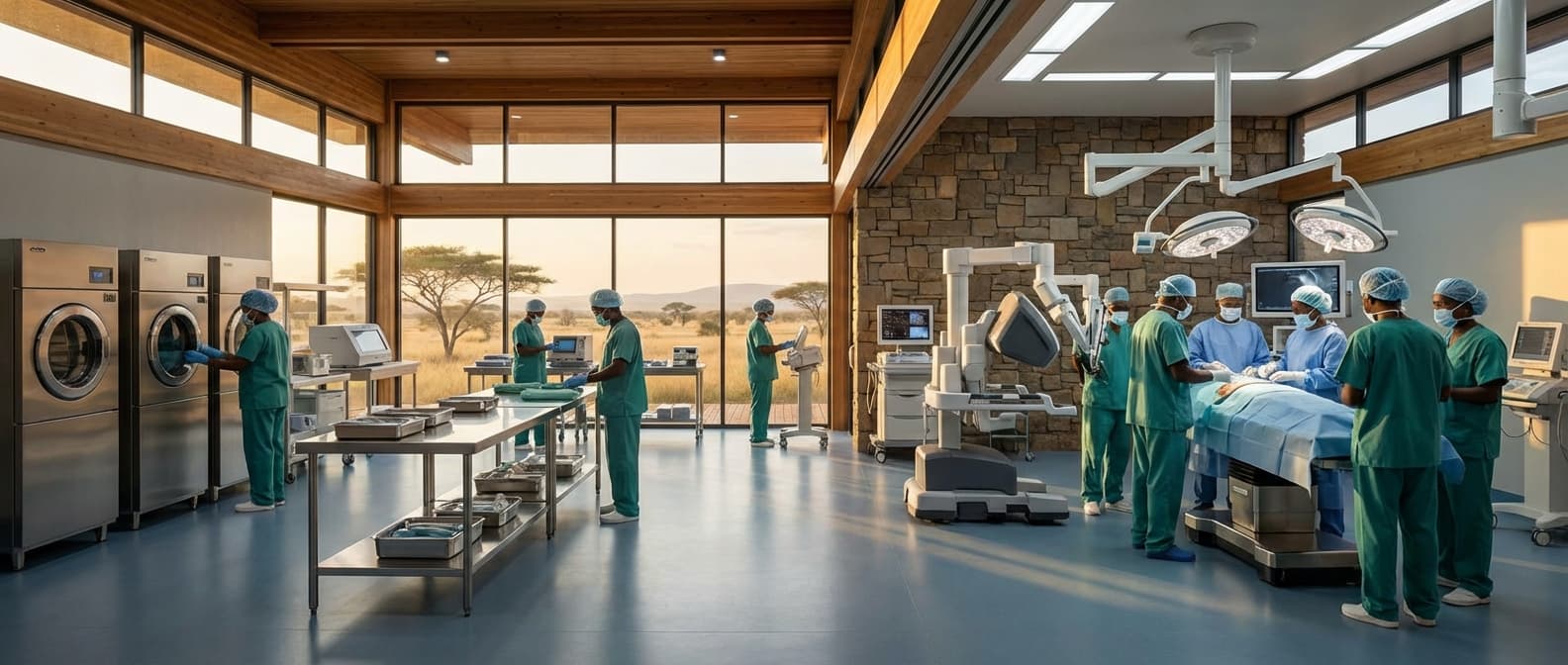
Endoscopy Reprocessing Validation in Senegal
Engineering Excellence & Technical Support
AER validation, SOP development and compliance High-standard technical execution following OEM protocols and local regulatory frameworks.
Automated Validation of Reprocessing Cycles
Leveraging advanced bio-burden testing and chemical indicator strips, we ensure rigorous validation of each endoscopy reprocessing cycle. Our automated system logs all parameters, providing auditable evidence of compliance with international reprocessing standards, thereby minimizing the risk of patient-to-patient infection transmission in Senegalese healthcare facilities.
Real-time Monitoring & Alerting System
Implementing a state-of-the-art monitoring system that provides real-time data on critical reprocessing parameters (temperature, flow rate, chemical concentration). This system triggers immediate alerts for any deviations, enabling prompt corrective actions and ensuring the consistent efficacy of disinfection and sterilization processes for reusable medical devices.
Cloud-Based Data Management & Traceability
Establishing a secure, cloud-based platform for comprehensive data management and traceability of all reprocessing activities. This solution allows for remote access, trend analysis, and generation of detailed reports, supporting quality improvement initiatives and regulatory compliance for endoscopy reprocessing units across Senegal.
What Is Endoscopy Reprocessing Validation In Senegal?
Endoscopy reprocessing validation in Senegal is a critical quality assurance process designed to ensure that flexible endoscopic devices are cleaned, disinfected, and/or sterilized according to established guidelines and regulatory requirements, thereby minimizing the risk of patient-to-patient and patient-to-staff transmission of infectious agents. This service involves a comprehensive assessment of the entire reprocessing workflow, from pre-cleaning and manual cleaning to automated washing, high-level disinfection, sterilization (where applicable), and storage. The validation confirms the efficacy of the chosen reprocessing methods against a spectrum of microorganisms, including bacteria, viruses, and prions, that may be present on endoscopes. It is a mandatory component of infection prevention and control programs within healthcare facilities utilizing reusable endoscopic instruments.
| Stakeholder Group | Reason for Requiring Validation | Typical Use Cases |
|---|---|---|
| Hospitals and Clinics in Senegal | To comply with national and international infection control standards, protect patient safety, prevent nosocomial infections, and maintain accreditation. | Routine validation of flexible gastrointestinal endoscopes (gastroscopes, colonoscopes), bronchoscopes, cystoscopes, duodenoscopes, and other semi-critical/critical reusable medical devices requiring reprocessing. |
| Regulatory Bodies and Ministry of Health | To oversee and enforce standards for patient safety and healthcare-associated infection (HAI) prevention, ensuring that healthcare facilities are meeting established requirements for medical device reprocessing. | Auditing and oversight of healthcare facilities' reprocessing programs, development of national guidelines, and licensing of medical facilities. |
| Endoscope Manufacturers and Service Providers | To ensure that their equipment and recommended reprocessing protocols are validated and meet the stringent requirements for safe patient use. | Providing validation services to healthcare facilities, troubleshooting reprocessing issues, and developing new reprocessing technologies and protocols. |
| Patients | Indirectly, as the ultimate beneficiaries of safe medical procedures and a reduced risk of infection. | Undergoing endoscopic procedures such as diagnostic gastroscopy, colonoscopy, bronchoscopy, and therapeutic interventions requiring reusable endoscopic equipment. |
Key Components of Endoscopy Reprocessing Validation
- Workflow Assessment: Detailed review of all steps in the reprocessing protocol.
- Cleaning Efficacy Testing: Verification that cleaning agents and procedures effectively remove organic debris.
- Disinfection/Sterilization Efficacy Testing: Validation that the chosen germicide or sterilization method achieves the required Log reduction for targeted pathogens.
- Process Monitoring: Implementation of systems to continuously monitor critical parameters (e.g., temperature, time, concentration of disinfectants, pressure during sterilization).
- Equipment Verification: Calibration and maintenance of automated reprocessors and other reprocessing equipment.
- Personnel Training and Competency Assessment: Ensuring that staff performing reprocessing are adequately trained and competent.
- Documentation Review: Examination of all records, logs, and quality control data related to reprocessing.
- Environmental Monitoring: Assessment of the reprocessing environment for potential contamination.
Who Needs Endoscopy Reprocessing Validation In Senegal?
Endoscopy reprocessing validation is a critical process for ensuring the safety and effectiveness of reusable medical devices, particularly endoscopes. In Senegal, this validation is essential for any healthcare facility that utilizes endoscopic procedures. The target customers are primarily healthcare institutions that perform these procedures, and the departments most directly involved are those with endoscopy suites and sterilization units.
| Target Customer Type | Primary Departments Involved | Rationale for Validation |
|---|---|---|
| Public Hospitals | Gastroenterology, Pulmonology, Urology, Surgery, CSSD | Ensuring patient safety and compliance with national healthcare standards for high-volume endoscopic procedures. |
| Private Hospitals & Clinics | Gastroenterology, Surgery, Gynecology, ENT, CSSD | Maintaining reputation, patient trust, and adherence to international best practices for quality healthcare delivery. |
| Specialized Diagnostic Centers | Endoscopy Suite, Sterilization Unit | Guaranteeing accurate diagnostic results free from contamination and preventing healthcare-associated infections. |
| Central Sterile Supply Departments (CSSD) | Decontamination, Sterilization, Quality Control | Crucial for verifying the effectiveness of sterilization and disinfection protocols for endoscopes, a core function of CSSD. |
| Infection Control Committees | All departments performing endoscopy | Essential for monitoring and enforcing infection prevention strategies, with reprocessing validation being a key component. |
Target Customers and Departments for Endoscopy Reprocessing Validation in Senegal
- Hospitals (Public and Private)
- Clinics and Medical Centers with Surgical Capabilities
- Diagnostic Centers Performing Endoscopic Procedures
- Specialized Endoscopy Units
- Gastroenterology Departments
- Pulmonology Departments
- Urology Departments
- Gynecology Departments
- Otolaryngology (ENT) Departments
- Operating Rooms (ORs) and Surgical Centers
- Sterilization and Central Sterile Supply Departments (CSSD)
Endoscopy Reprocessing Validation Process In Senegal
The Endoscopy Reprocessing Validation Process in Senegal outlines the crucial steps undertaken to ensure the safety and efficacy of reprocessed endoscopic instruments. This validation is a critical component of infection prevention and control within healthcare facilities, ensuring that endoscopes are rendered safe for patient use after each procedure. The process begins with an initial inquiry, progresses through a series of planning and preparation phases, culminates in the execution of validation procedures, and concludes with comprehensive reporting and ongoing monitoring. This structured workflow guarantees that all reprocessing steps adhere to established guidelines and regulatory requirements specific to Senegal.
| Stage | Key Activities | Responsible Parties | Key Outputs/Deliverables |
|---|---|---|---|
| Healthcare facility expresses a need for validation or re-validation of their endoscopy reprocessing procedures. Initial assessment of existing infrastructure, equipment, and current reprocessing practices. | Healthcare Facility Management, Infection Prevention and Control (IPC) Team, Ministry of Health (MoH) Representative/Designated Body | Understanding of current reprocessing status, identification of potential gaps. |
| Development of a detailed validation protocol based on Senegal's national guidelines and international best practices (e.g., WHO, CDC). This includes defining scope, methodologies, acceptance criteria, and timelines. Selection of validated cleaning agents and high-level disinfectants (HLD). | IPC Team, Technical Experts (e.g., Biomedical Engineers, Microbiologists), MoH Representative/Designated Body | Approved Validation Protocol, List of reagents and equipment to be used. |
| Ensuring the reprocessing area meets required standards (ventilation, water quality, workflow design). Training of reprocessing staff on the validated protocol, proper use of equipment, and documentation requirements. Verification of equipment calibration. | IPC Team, Biomedical Engineering Department, Reprocessing Staff, Training Facilitators | Trained staff, validated equipment, prepared reprocessing environment. |
| Conducting cleaning validation (e.g., using fluorescent markers to assess visual cleanliness). Performing high-level disinfection/sterilization validation (e.g., using biological indicators or chemical indicators). Testing of automated reprocessors for efficacy. Water quality testing. Environmental monitoring. | Reprocessing Staff (under supervision), Technical Experts, Laboratory Personnel | Raw validation data, test results (biological, chemical indicators), cleaning efficacy results. |
| Analyzing all collected data against the acceptance criteria defined in the protocol. Documenting findings, identifying deviations or areas of non-compliance. | Technical Experts, IPC Team, MoH Representative/Designated Body | Comprehensive Validation Report, including findings and recommendations. |
| If the validation reveals non-compliance, implementing corrective and preventive actions (CAPAs). This may involve re-training staff, adjusting reprocessing parameters, or replacing equipment. | IPC Team, Facility Management, Reprocessing Staff | Implemented CAPAs, updated procedures. |
| Establishing a system for routine monitoring of reprocessing quality. Scheduling periodic re-validation as per national guidelines or after significant changes (e.g., new equipment, new procedures). | IPC Team, Facility Management | Routine quality control checks, schedule for future re-validation. |
Workflow of Endoscopy Reprocessing Validation in Senegal
- Inquiry & Initial Assessment
- Planning & Protocol Development
- Site Preparation & Training
- Execution of Validation Procedures
- Data Analysis & Reporting
- Implementation of Corrective Actions (if needed)
- Ongoing Monitoring & Re-validation
Endoscopy Reprocessing Validation Cost In Senegal
The cost of endoscopy reprocessing validation in Senegal can vary significantly due to a range of factors, impacting the overall investment for healthcare facilities. These factors are crucial for understanding pricing structures and budgeting effectively. The validation process itself ensures that reusable medical equipment, particularly endoscopes, is sterilized and disinfected to prevent healthcare-associated infections (HAIs).
| Service Component | Estimated Price Range (XOF) |
|---|---|
| Initial Consultation and Site Assessment | 50,000 - 150,000 |
| Validation of Cleaning Processes (per scope type) | 100,000 - 300,000 |
| Validation of High-Level Disinfection (per scope type) | 150,000 - 400,000 |
| Validation of Sterilization Processes (if applicable, per scope type) | 200,000 - 500,000 |
| Microbiological Testing (per sample) | 20,000 - 50,000 |
| Chemical Indicator Testing (per test) | 10,000 - 30,000 |
| Validation Report and Documentation | 75,000 - 200,000 |
| Travel and Logistics (per visit, within Senegal) | 30,000 - 100,000 |
| Training on Reprocessing Procedures (per session) | 100,000 - 250,000 |
| Annual Maintenance Contract for Validation Equipment (if applicable) | 300,000 - 700,000+ |
Key Pricing Factors for Endoscopy Reprocessing Validation in Senegal
- Scope and Complexity of Validation: A more extensive validation covering multiple reprocessing steps (e.g., manual cleaning, automated washing, high-level disinfection, sterilization) will naturally incur higher costs.
- Number of Endoscopes to Validate: Facilities with a larger inventory of endoscopes will face higher overall validation expenses.
- Type of Endoscopes: Different types of endoscopes may have varying validation requirements based on their materials and complexity, influencing the cost.
- Validation Methodology: The chosen validation approach, whether it involves on-site testing by a service provider or off-site laboratory analysis, will affect pricing.
- Service Provider Expertise and Reputation: Established and reputable validation service providers may command higher fees due to their expertise, reliability, and quality assurance.
- Geographic Location within Senegal: Transportation costs for equipment and personnel to more remote regions can add to the overall price.
- Frequency of Validation: Regular, scheduled validation will lead to recurring costs, whereas one-time validation will be a lump sum expense.
- Additional Services: Validation may be bundled with other services like equipment maintenance, training, or consultancy, influencing the final price.
- Certification and Documentation: The extent of documentation and certification required by regulatory bodies or internal policies will also impact costs.
Affordable Endoscopy Reprocessing Validation Options
Endoscopy reprocessing validation is a critical step in infection prevention, ensuring that reusable endoscopes are safe for patient use. However, the cost of validation can be a significant barrier for many healthcare facilities, particularly smaller ones or those with limited budgets. Fortunately, several affordable options and cost-saving strategies exist. This document outlines value bundles and practical approaches to reduce the expense of endoscopy reprocessing validation without compromising patient safety.
| Strategy | Description | Potential Cost Savings |
|---|---|---|
| Consolidated Validation Services | Engage one vendor for multiple validation needs (equipment, process, QC). | Reduced administrative overhead, potential volume discounts, streamlined scheduling. |
| Intermittent Validation Schedules | Risk-based validation frequency for equipment, not necessarily annual for all. | Lower recurring vendor fees, optimized resource allocation. |
| In-House Validation Training | Train internal staff for specific validation tasks and QC checks. | Significant reduction in external vendor costs, builds internal expertise. |
| Leveraging Manufacturer Recommendations | Adhere to manufacturer-specific validation protocols. | Avoids over-validation, ensures compliance with optimal methods. |
| GPO Contracts | Utilize negotiated pricing through Group Purchasing Organizations. | Access to bulk discounts and preferred vendor rates. |
| Shared Resources/Collaboration | Partner with other facilities for shared validation services. | Lower individual vendor fees, shared equipment costs. |
| Digital Documentation | Implement automated documentation and workflow systems. | Reduced labor costs for manual processes, improved efficiency. |
| Preventive Maintenance | Regular maintenance of reprocessing equipment. | Fewer equipment failures, less need for emergency repairs and revalidation. |
| Vendor Negotiation | Active negotiation and contract review with validation providers. | Better pricing, elimination of unnecessary service fees. |
Key Value Bundles and Cost-Saving Strategies
- Consolidated Validation Services: Partnering with a single vendor for multiple validation needs (e.g., equipment calibration, process validation, and quality control testing) can lead to discounts and streamlined logistics.
- Intermittent Validation Schedules: Instead of annual validation for all parameters, consider a risk-based approach. High-risk or frequently used equipment may require more frequent validation, while lower-risk or less-used items might be validated less often, provided regulatory requirements are met.
- In-House Validation Training & Support: Invest in training your own staff to perform certain validation tasks or quality control checks. This can significantly reduce recurring external vendor costs, though initial investment in training and potentially some equipment is required.
- Leveraging Manufacturer Recommendations: Ensure you are familiar with and adhering to the validation protocols recommended by your endoscope and reprocessing equipment manufacturers. Sometimes these guidelines offer more cost-effective validation methods than generic approaches.
- Group Purchasing Organizations (GPOs): If your facility is part of a GPO, explore their negotiated contracts for validation services. GPOs can often secure better pricing through bulk purchasing power.
- Shared Resources and Collaboration: For smaller facilities, consider collaborating with nearby hospitals or clinics to share validation services or expertise. This can reduce individual costs through shared vendor fees or equipment use.
- Digital Documentation & Automation: Implementing digital systems for documentation, data collection, and workflow management can reduce the administrative burden and associated costs of manual processes. This can also improve efficiency and reduce errors, potentially leading to fewer revalidation needs.
- Focus on Preventive Maintenance: Proactive and regular preventive maintenance of reprocessing equipment can significantly reduce the likelihood of failures that necessitate costly emergency repairs and revalidation.
- Vendor Negotiation & Contract Review: Actively negotiate pricing with validation vendors. Regularly review contracts to ensure you are getting the best value and identify opportunities for cost reduction. Understand the scope of services included and avoid unnecessary add-ons.
Verified Providers In Senegal
In Senegal's burgeoning healthcare landscape, identifying reliable and trustworthy medical providers is paramount for individuals seeking quality care. Franance Health has emerged as a leading name, distinguishing itself through a rigorous credentialing process that ensures its network of healthcare professionals and facilities adhere to the highest standards of medical excellence, ethical practice, and patient safety. This commitment to verification is not merely a procedural step; it's a foundational principle that underpins the trust patients place in Franance Health, making them the best choice for comprehensive and dependable healthcare services in Senegal.
| Benefit for Patients | How Franance Health Delivers This |
|---|---|
| Access to Competent and Qualified Professionals | Through stringent verification of licenses, degrees, and specializations. |
| Assurance of Safe and Effective Treatment | By evaluating adherence to medical best practices and ethical guidelines. |
| Trustworthy Healthcare Facilities | Via comprehensive assessments of infrastructure, hygiene, and safety standards. |
| Continuously Improving Quality of Care | Through ongoing monitoring and feedback mechanisms. |
| Peace of Mind and Confidence in Healthcare Choices | Knowing that each provider and facility has met Franance Health's exacting standards. |
Key Aspects of Franance Health's Verification Process
- Rigorous Professional Qualification Checks: Franance Health meticulously verifies the licenses, certifications, and academic credentials of all healthcare professionals within its network. This ensures that providers possess the necessary expertise and are in good standing with regulatory bodies.
- Experience and Specialization Validation: Beyond basic qualifications, Franance Health assesses the practical experience and specialized training of its providers. This guarantees that patients are connected with professionals who have proven track records in their respective fields.
- Adherence to Ethical Standards and Best Practices: A core component of the verification process involves evaluating a provider's commitment to ethical medical practice, patient confidentiality, and adherence to universally recognized healthcare protocols.
- Facility and Infrastructure Assessment: For healthcare facilities, Franance Health conducts thorough inspections to ensure they meet stringent standards for hygiene, equipment, safety, and overall operational efficiency. This includes evaluating their capacity to deliver a wide range of medical services.
- Continuous Monitoring and Quality Assurance: Franance Health's commitment extends beyond initial credentialing. They implement ongoing monitoring and quality assurance programs to ensure that providers and facilities consistently maintain their high standards.
- Patient Feedback Integration: The organization actively seeks and integrates patient feedback into its evaluation process, using testimonials and reviews to identify areas of excellence and opportunities for improvement within its network.
Scope Of Work For Endoscopy Reprocessing Validation
This Scope of Work (SOW) outlines the requirements for validating the effectiveness of the endoscopy reprocessing procedures implemented by [Healthcare Facility Name] to ensure patient safety and compliance with regulatory standards. The validation process will cover all critical steps from initial cleaning to high-level disinfection/sterilization, including personnel training, equipment functionality, and documented processes. Technical deliverables will include documented validation protocols, test results, analysis reports, and updated standard operating procedures (SOPs). The project aims to confirm that the current reprocessing methods consistently render endoscopes safe for patient use, minimizing the risk of microbial transmission.
| Deliverable | Description | Standard Specification/Requirement | Acceptance Criteria |
|---|---|---|---|
| Validation Protocol | A comprehensive document detailing the methodology, scope, timeline, and resources required for the validation study. | Must include sections on scope, objectives, methodology (sampling strategy, testing methods), equipment to be tested, personnel involved, data collection, and reporting structure. Must align with industry best practices and regulatory guidance. | Protocol approved by [Relevant Stakeholders, e.g., Infection Prevention Committee, Department Head]. |
| Cleaning Validation Test Results | Data from tests conducted to assess the effectiveness of the cleaning process, including visual inspection and potentially biochemical assays. | Tests should include simulated soiling on representative endoscope channels and surfaces. Visual inspection for any remaining debris. May include Adenosine Triphosphate (ATP) testing or protein residue testing as per protocol. | All tested endoscopes demonstrate no visible soil. ATP/protein levels meet or are below the established threshold as defined in the protocol. |
| Microbiological Validation Test Results (HLD/Sterilization) | Data from microbiological challenges to confirm the efficacy of the HLD or sterilization process. | Involves challenging endoscopes with specific, resistant microorganisms (e.g., Mycobacterium tuberculosis, Geobacillus stearothermophilus) and verifying their complete inactivation after the reprocessing cycle. | Absence of viable microorganisms after the HLD/sterilization cycle for all challenged endoscopes and in all tested areas. |
| Equipment Performance Verification Reports | Documentation confirming that all reprocessing equipment is functioning within manufacturer specifications and calibration requirements. | Includes calibration certificates, preventive maintenance records, and performance tests (e.g., temperature, flow rate, chemical concentration verification for AERs). | All equipment logs show successful operation within specified parameters. Calibration is current and documented. |
| Personnel Competency Assessment | Assessment of staff knowledge and adherence to reprocessing SOPs through observation, review of training records, and competency testing. | Includes review of training modules, practical demonstrations, and quizzes related to cleaning, disinfection/sterilization, and documentation. | All reprocessing staff demonstrate competency in all critical reprocessing steps as assessed through the defined methods. |
| Revised Standard Operating Procedures (SOPs) | Updated SOPs reflecting any necessary changes identified during the validation process to optimize reprocessing effectiveness and safety. | SOPs must be clear, concise, and readily accessible to all reprocessing staff. They should incorporate validated processes and updated best practices. | Revised SOPs are formally approved and implemented, with staff trained on the updates. |
| Final Validation Report | A comprehensive report summarizing the validation study, including methodology, results, analysis, conclusions, and recommendations. | The report should clearly state whether the reprocessing processes are validated and provide actionable recommendations for continuous improvement. | Report accepted by [Relevant Stakeholders] and provides a clear basis for ongoing quality assurance. |
Key Objectives of Endoscopy Reprocessing Validation
- Confirm the effectiveness of manual and automated cleaning processes in removing soil and organic matter.
- Validate the efficacy of the high-level disinfection (HLD) or sterilization process in eliminating all viable microorganisms, including those with high resistance.
- Verify the proper functioning and calibration of all reprocessing equipment (e.g., automated endoscope reprocessors (AERs), washer-disinfectors).
- Assess the adherence of reprocessing staff to established Standard Operating Procedures (SOPs) and best practices.
- Identify any potential gaps or areas for improvement in the current reprocessing workflow.
- Ensure compliance with relevant regulatory guidelines and accreditation standards (e.g., CDC, FDA, SGNA, Joint Commission).
Service Level Agreement For Endoscopy Reprocessing Validation
This Service Level Agreement (SLA) outlines the performance expectations and guarantees for the Endoscopy Reprocessing Validation service. This service is critical for ensuring the safety and efficacy of reusable endoscopic equipment through rigorous validation processes.
| Service Component | Response Time Target | Uptime Guarantee | Remediation Clause |
|---|---|---|---|
| Initial Issue Acknowledgment (Critical Issue) | 1 hour | N/A | Service credits applied if response time is not met. |
| Initial Issue Acknowledgment (Standard Issue) | 4 business hours | N/A | Service credits applied if response time is not met. |
| Validation Service Availability (Scheduled Maintenance) | N/A | 99.5% (excluding scheduled maintenance) | Service credits applied based on percentage of downtime exceeding allowed. |
| Validation Service Availability (Unscheduled Outage) | N/A | 99.9% (excluding scheduled maintenance) | Service credits applied based on percentage of downtime exceeding allowed. |
| Report Generation (Standard Validation Report) | 2 business days post-validation completion | N/A | Service credits for late report delivery. |
| Report Generation (Expedited Validation Report) | 1 business day post-validation completion (additional fee may apply) | N/A | Service credits for late report delivery. |
Key Performance Indicators (KPIs) and Guarantees
- Response Time: The maximum time allowed for the service provider to acknowledge and begin addressing a reported issue or request.
- Uptime Guarantee: The minimum percentage of time the Endoscopy Reprocessing Validation service is available and operational as per agreed-upon service hours.
Frequently Asked Questions

Ready when you are
Let's scope your Endoscopy Reprocessing Validation in Senegal project in Senegal.

Scaling healthcare logistics and technical systems across the entire continent.