
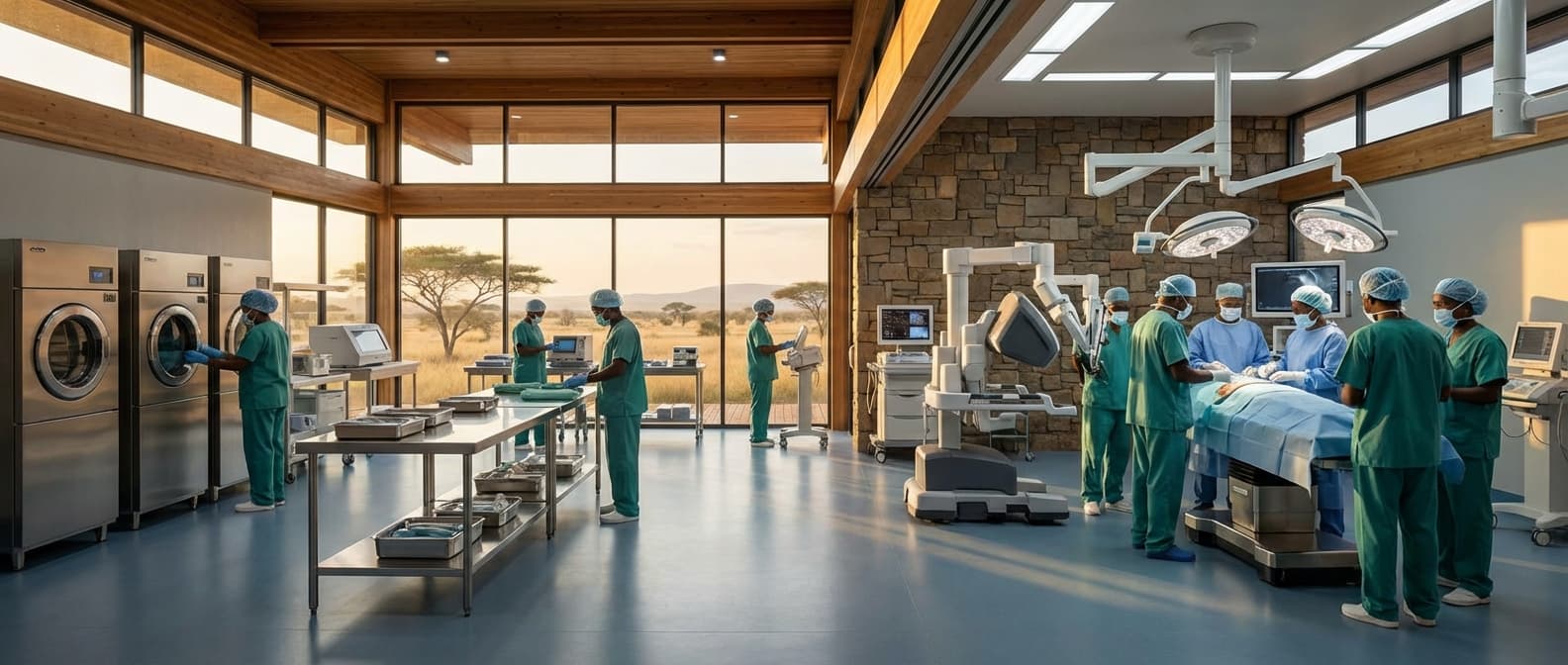
CSSD Design & Validation in Senegal
Engineering Excellence & Technical Support
CSSD workflow design, validation and process development High-standard technical execution following OEM protocols and local regulatory frameworks.
Sterilization Cycle Validation Expertise
Ensuring the efficacy and safety of sterilization processes in Senegalese healthcare facilities through rigorous validation protocols for steam, ethylene oxide, and low-temperature sterilization methods.
CSSD Infrastructure & Workflow Optimization
Designing and validating optimal layouts and workflows for Central Sterile Supply Departments (CSSDs) in Senegal, focusing on efficiency, infection prevention, and compliance with international standards.
Regulatory Compliance & Quality Assurance
Providing comprehensive validation services for CSSD equipment and processes in Senegal to meet national and international regulatory requirements, ensuring consistent quality and patient safety.
What Is Cssd Design & Validation In Senegal?
CSSD Design & Validation in Senegal refers to the specialized services involved in the conceptualization, planning, engineering, and subsequent verification of Central Sterile Supply Departments (CSSDs) within healthcare facilities. This process ensures that the CSSD is configured to meet stringent infection control standards, operational efficiency requirements, and regulatory compliance mandated within Senegal and internationally recognized best practices. The service encompasses architectural planning, equipment selection and integration, workflow optimization, and validation protocols to confirm the effectiveness and safety of sterile processing operations.
| Service Aspect | Description | Who Needs It | Typical Use Cases |
|---|---|---|---|
| Design | The process of planning and engineering the physical layout, workflows, and equipment infrastructure of a CSSD. | New healthcare facility construction, existing facility expansion or renovation, upgrading outdated CSSD infrastructure. | Designing a new CSSD for a tertiary hospital, reconfiguring an existing CSSD in a private clinic, establishing a standalone sterile processing center. |
| Validation | The systematic process of proving that the designed and implemented CSSD meets its intended purpose and operates reliably and safely. | Commissioning of new CSSD installations, post-modification or repair of existing CSSD equipment, periodic revalidation to ensure ongoing compliance, troubleshooting operational issues. | Validating the efficacy of a new steam sterilizer, confirming the sterility assurance level (SAL) of packaged instruments, verifying the decontamination efficacy of an automated washer-disinfector. |
| Consultancy & Project Management | Providing expert guidance, oversight, and coordination throughout the design and validation lifecycle. | Healthcare administrators, facility managers, infection control practitioners, project engineers, construction firms. | Overseeing a complete CSSD build-out project, advising on best practices for infection control in sterile processing, managing the procurement and installation of critical CSSD equipment. |
Key Components of CSSD Design & Validation:
- Needs Assessment & Requirements Definition
- Space Planning & Architectural Design (including flow optimization)
- Equipment Specification & Procurement Strategy
- Workflow Analysis & Process Design (decontamination, packaging, sterilization, storage)
- Utility Infrastructure Assessment & Design (water, steam, electricity, ventilation)
- Safety & Ergonomics Integration
- Regulatory Compliance Review (local and international standards)
- Installation Supervision & Commissioning
- Performance Qualification (PQ) & Operational Qualification (OQ) Testing
- Validation Report Generation & Documentation
- Staff Training & Competency Assessment Programs
Who Needs Cssd Design & Validation In Senegal?
Central Sterile Services Department (CSSD) design and validation are crucial for ensuring patient safety and operational efficiency in healthcare facilities. In Senegal, as the healthcare sector continues to grow and modernize, the need for robust CSSD infrastructure becomes increasingly apparent. This applies to a range of institutions aiming to meet international standards for infection prevention and control.
| Target Customer Group | Key Departments Requiring CSSD Input | Rationale for CSSD Design & Validation |
|---|---|---|
| Public Hospitals | Operating Theaters, Intensive Care Units (ICUs), Emergency Departments, Outpatient Clinics | High patient volume, diverse surgical procedures, need for standardized infection control, resource optimization, compliance with national health regulations. |
| Private Hospitals & Clinics | Operating Rooms, Delivery Suites, Diagnostic Imaging (for sterile probes), Specialized Treatment Rooms | Meeting client expectations for quality and safety, competitive advantage, attracting international patients, advanced surgical services, precise workflow design for efficiency. |
| Maternity and Gynecological Centers | Delivery Rooms, Operating Theaters for C-sections and other gynecological procedures | Ensuring sterility for obstetric and gynecological instruments, preventing post-partum infections, maintaining high standards for sensitive patient populations. |
| Surgical Centers & Day Surgery Units | Operating Rooms, Recovery Areas | Streamlined workflows for short-stay procedures, rapid turnaround of sterile instruments, efficiency in sterilization processes, minimizing patient waiting times. |
| Diagnostic Laboratories | Microbiology, Pathology, Molecular Diagnostics (for sterile consumables and equipment) | Maintaining sample integrity, preventing cross-contamination, ensuring accuracy of diagnostic results through sterile handling of equipment and materials. |
Who Needs CSSD Design & Validation in Senegal?
- Hospitals (Public and Private)
- Surgical Centers
- Maternity Clinics
- Dental Clinics with Surgical Procedures
- Specialized Medical Facilities (e.g., Ophthalmology, Urology)
- Diagnostic Laboratories requiring sterile instruments
Cssd Design & Validation Process In Senegal
This document outlines the typical workflow for the design and validation of a Central Sterile Services Department (CSSD) in Senegal, from initial inquiry to project completion. The process emphasizes adherence to national and international standards, ensuring a functional, safe, and efficient CSSD. The workflow is iterative and involves collaboration between the client, CSSD specialists, architects, engineers, and regulatory bodies.
| Stage | Description | Key Activities | Deliverables | Responsible Parties |
|---|---|---|---|---|
| The client expresses interest in establishing or upgrading a CSSD. This stage focuses on understanding the client's requirements, scope, and budget. | Initial meeting, discussion of project goals, preliminary site visit (if applicable), budget estimation. | Project Brief, Initial Proposal. | Client, CSSD Consultant/Specialist. |
| A detailed evaluation of the current and future needs of the facility regarding sterile processing, including patient volume, types of procedures, and existing infrastructure. | Data collection on procedures and instrument usage, workflow analysis, assessment of space requirements, identification of potential challenges and risks, financial viability assessment. | Needs Assessment Report, Feasibility Study Report, Preliminary Budget. | CSSD Consultant/Specialist, Client, Facility Management. |
| Development of the basic layout and functional zones of the CSSD based on the needs assessment and international best practices (e.g., AAMI ST79, ISO 13485). | Space allocation for decontamination, preparation/packaging, sterilization, storage, and administration. Defining workflow paths and material flow. Initial equipment list. | Conceptual Floor Plan, Zone Descriptions, Preliminary Equipment Schedule. | CSSD Consultant/Specialist, Architect. |
| Comprehensive architectural, mechanical, electrical, and plumbing (MEP) design, ensuring compliance with local building codes and CSSD standards. | Detailed architectural drawings, structural engineering, HVAC design (with specific air pressure differentials), plumbing (hot/cold water, drainage), electrical (power, lighting, data), IT integration. Specification of finishes and materials. | Detailed Architectural Drawings, MEP Drawings, Technical Specifications, Bill of Quantities. | Architect, MEP Engineers, CSSD Consultant/Specialist. |
| Submission of design plans to relevant Senegalese health and building authorities for review and approval. | Preparation and submission of documentation to the Ministry of Health, local planning authorities. Addressing any feedback or required modifications. | Approved Design Plans, Permits. | Client, Architect, CSSD Consultant/Specialist, Regulatory Bodies. |
| Selection of contractors and commencement of construction or renovation work based on approved designs and specifications. | Tendering process, contractor selection, site preparation, civil works, MEP installation, finishing. Regular site inspections and quality control. | Constructed/Renovated CSSD Space, Progress Reports. | Client, Contractor, Project Manager, CSSD Consultant/Specialist. |
| Procurement and installation of all necessary CSSD equipment, including washers, sterilizers, ultrasonic cleaners, packaging machines, and testing devices. | Tender for equipment, selection of vendors, delivery, installation, and initial testing of all equipment. Ensuring compliance with manufacturer specifications and standards. | Installed and Functional CSSD Equipment. | Client, Procurement Department, Equipment Vendors, CSSD Consultant/Specialist. |
| A systematic process to ensure that the CSSD is designed, installed, and operated according to specifications and standards. This includes qualification and validation of equipment and processes. | Installation Qualification (IQ), Operational Qualification (OQ), Performance Qualification (PQ) of all equipment. Validation of cleaning and sterilization processes. Environmental monitoring. Microbiological testing. | Commissioning Reports, Validation Protocols & Reports, Certificates of Validation. | CSSD Consultant/Specialist, Validation Team, Equipment Vendors, Client. |
| Comprehensive training for all CSSD staff on proper procedures, equipment operation, infection control, and safety protocols. | Development of training materials, on-site training sessions, competency assessments. Training on specific equipment and new protocols. | Trained Staff, Training Manuals, Competency Records. | CSSD Consultant/Specialist, Senior CSSD Staff, Training Providers. |
| Formal handover of the completed CSSD to the client, followed by a period of post-implementation support and continuous monitoring to ensure ongoing compliance and performance. | Final project review, documentation handover, establishment of a quality management system, routine performance monitoring, audits, continuous improvement initiatives. | Final Project Report, O&M Manuals, Quality Management System Documentation. | Client, CSSD Consultant/Specialist, Facility Management, Quality Assurance Team. |
CSSD Design & Validation Process Workflow
- Inquiry & Initial Consultation
- Needs Assessment & Feasibility Study
- Conceptual Design
- Detailed Design & Engineering
- Regulatory Approvals
- Procurement & Construction/Renovation
- Equipment Selection & Installation
- Commissioning & Validation
- Training
- Handover & Ongoing Monitoring
Cssd Design & Validation Cost In Senegal
Designing and validating a Central Sterile Supply Department (CSSD) in Senegal involves a complex interplay of factors that significantly influence the overall cost. These factors range from the scale and scope of the CSSD, the level of technology and automation desired, the specific requirements of the healthcare facility, and the geographical location within Senegal. The pricing is typically expressed in local currency, the West African CFA franc (XOF). It's crucial to understand that these are estimates, and a detailed, site-specific assessment is necessary for accurate budgeting.
| Cost Component | Estimated Range (XOF) | Notes |
|---|---|---|
| Preliminary Design & Consultancy Fees | 2,000,000 - 15,000,000+ | Varies based on consultant expertise, project complexity, and the extent of architectural and engineering input required. |
| Basic Washing & Disinfection Equipment (Manual/Semi-Automated) | 5,000,000 - 20,000,000 | Includes ultrasonic cleaners, washer-disinfectors. Lower end for smaller units, higher end for higher capacity or more automated models. |
| Sterilization Equipment (Autoclaves - Steam) | 8,000,000 - 50,000,000+ | Significant range based on chamber size, cycle times, automation features, and brand. Smaller benchtop to large industrial units. |
| Advanced Sterilization Equipment (e.g., Plasma) | 20,000,000 - 100,000,000+ | More expensive, used for heat-sensitive instruments. Price heavily dependent on capacity and specific technology. |
| Ancillary Equipment (Sterile Storage, Workbenches, Drains, etc.) | 3,000,000 - 15,000,000 | Covers shelving, trolleys, sinks, sterile packaging material, etc. |
| Renovations & Infrastructure Upgrades | 5,000,000 - 30,000,000+ | Highly variable. Depends on the existing building condition and required modifications (ventilation, plumbing, electrical). |
| Validation & Commissioning Services | 3,000,000 - 15,000,000 | Includes IQ/OQ/PQ of equipment, process validation, and documentation. Depends on the number of equipment pieces and complexity of processes. |
| Staff Training | 1,000,000 - 5,000,000 | Costs for training materials, trainers, and potentially staff time. |
| Software & Tracking Systems | 2,000,000 - 10,000,000+ | For inventory management, traceability, and reporting. Varies by sophistication and customization. |
Key Pricing Factors for CSSD Design & Validation in Senegal
- {"title":"Scale and Capacity of the CSSD","description":"The size of the CSSD is a primary driver of cost. A facility serving a small clinic will have vastly different design and equipment needs compared to a large, multi-specialty hospital. This impacts the number and size of sterilization units, washing and disinfection equipment, storage space, and overall architectural planning."}
- {"title":"Technology and Automation Level","description":"The degree of automation in the CSSD significantly affects the price. Manual processes are less expensive upfront but can be less efficient and carry higher labor costs. Automated washers, disinfectors, sterilizers (autoclaves, plasma sterilizers), and tracking systems represent a substantial investment. Advanced technologies like sterile processing software for inventory management and traceability also add to the cost."}
- {"title":"Equipment Selection and Brands","description":"The choice of equipment manufacturers and models plays a critical role. Reputable international brands often come with higher price tags but may offer greater reliability, advanced features, and better after-sales support. Local or regional suppliers might offer more budget-friendly options, but due diligence on quality and support is essential."}
- {"title":"Facility Requirements and Infrastructure","description":"Existing building infrastructure can impact costs. If the facility requires significant renovations, upgrades to ventilation, plumbing, electrical systems, or the creation of specialized sterile and non-sterile zones, these will add to the overall expense. Compliance with local health and safety regulations is also a key consideration."}
- {"title":"Design and Consultancy Fees","description":"Professional fees for CSSD designers, engineers, and validation consultants are a significant component. These experts are crucial for ensuring the CSSD meets international standards (e.g., ISO 13485), local regulations, and operational efficiency. Fees can vary based on the consultant's experience, reputation, and the complexity of the project."}
- {"title":"Validation and Commissioning Services","description":"Post-installation, rigorous validation is required to ensure the CSSD operates effectively and safely. This includes equipment qualification (IQ/OQ/PQ), process validation, and staff competency assessments. The cost of these services depends on the extent of validation required and the chosen validation partner."}
- {"title":"Training and Staff Development","description":"Proper training for CSSD personnel on equipment operation, sterilization processes, and infection control protocols is vital. The cost of training programs, materials, and potentially the time off for staff can be included in the project budget."}
- {"title":"Geographical Location within Senegal","description":"While not as significant as other factors, transportation costs for equipment and personnel, as well as potential local labor rates, can exhibit minor variations between major urban centers (like Dakar) and more remote regions."}
- {"title":"Import Duties and Taxes","description":"Importing specialized CSSD equipment may incur import duties, taxes, and customs clearance fees, which can add to the overall project cost. Understanding these regulations is important for accurate budgeting."}
Affordable Cssd Design & Validation Options
Designing and validating a Central Sterile Supply Department (CSSD) is a critical undertaking for any healthcare facility, ensuring patient safety and operational efficiency. However, cost can be a significant barrier. This guide explores affordable CSSD design and validation options, focusing on value bundles and cost-saving strategies to help facilities achieve high standards without exorbitant expenses.
| Value Bundle Aspect | Cost-Saving Strategy | Benefit |
|---|---|---|
| Design & Planning | Utilize standardized layout templates and workflow analysis tools. | Reduced consulting fees, faster design cycle. |
| Equipment Procurement | Bundle equipment purchases with maintenance contracts and extended warranties. | Negotiated discounts, predictable maintenance costs, reduced risk of unexpected repair expenses. |
| Validation Services | Engage validation specialists for comprehensive, integrated validation packages. | Streamlined validation process, reduced downtime, assurance of compliance. |
| Technology Solutions | Implement phased technology rollouts, starting with essential tracking and management systems. | Manageable upfront investment, ability to scale as budget allows, improved operational visibility. |
| Training Programs | Develop in-house training programs with train-the-trainer models and online learning modules. | Reduced external training costs, consistent knowledge transfer, empowered internal expertise. |
| Sustainability Initiatives | Incorporate energy-efficient equipment and water-saving technologies. | Reduced utility bills, lower operational expenses, positive environmental impact. |
| Maintenance & Support | Negotiate multi-year service agreements with equipment manufacturers. | Fixed maintenance costs, priority service, extended equipment lifespan. |
Key Considerations for Affordable CSSD Design & Validation
- Phased Implementation: Break down the project into manageable phases to spread costs over time and allow for incremental improvements.
- Modular Design: Opt for modular components and equipment that can be easily reconfigured or expanded as needs change, reducing future renovation expenses.
- Standardization: Utilize standardized equipment and workflows to simplify training, maintenance, and procurement, leading to bulk purchase discounts and reduced operational overhead.
- Space Optimization: Efficiently designed layouts minimize wasted space, reducing the overall footprint and associated construction or rental costs.
- Technology Integration: Leverage appropriate technologies for tracking, data management, and automation to improve efficiency and reduce manual labor costs.
- Training & Staffing: Invest in comprehensive staff training to ensure proper equipment use and process adherence, minimizing errors and costly rework. Consider cross-training to optimize staffing levels.
- Long-Term Cost Analysis: Focus on total cost of ownership, considering not just initial purchase price but also energy consumption, maintenance, and consumables.
- Regulatory Compliance Focus: Prioritize compliance with relevant standards and guidelines from the outset to avoid costly retrofits or penalties.
- Collaboration & Partnerships: Explore partnerships with experienced CSSD consultants or equipment vendors who offer integrated solutions and support.
Verified Providers In Senegal
In Senegal, navigating the healthcare landscape to find reliable and high-quality providers can be a challenge. Franance Health stands out by rigorously verifying its network of healthcare professionals and institutions. This commitment to credentialing ensures that patients have access to safe, effective, and ethical medical care. Understanding what 'verified' means in this context is crucial, and Franance Health's stringent process is a testament to their dedication to patient well-being.
| Verification Aspect | Franance Health's Approach | Patient Benefit |
|---|---|---|
| Professional Licenses | Scrutinized and validated with relevant Senegalese authorities. | Ensures providers are legally qualified to practice. |
| Educational Qualifications | Verification of degrees, certifications, and specialized training. | Confirms providers possess the necessary academic foundation. |
| Clinical Experience | Assessment of practical experience in relevant medical fields. | Identifies practitioners with proven track records. |
| Reputation and Background Checks | Due diligence to identify any disciplinary actions or concerns. | Protects patients from potential malpractice or ethical breaches. |
| Specialty Expertise | Confirmation of specific areas of medical focus and competency. | Guarantees access to specialists for targeted treatments. |
| Adherence to Standards | Ensures providers follow established medical protocols and guidelines. | Promotes consistent and high-quality patient care. |
Why Franance Health's Verified Providers are the Best Choice
- Enhanced Patient Safety: Verification includes thorough background checks, license validation, and assessment of qualifications, minimizing risks associated with unqualified practitioners.
- Improved Quality of Care: Franance Health vets providers based on their expertise, experience, and adherence to best medical practices, leading to more accurate diagnoses and effective treatments.
- Trust and Transparency: The verification process fosters trust by providing patients with assurance that the providers they are choosing have met a recognized standard of excellence.
- Access to Specialized Care: Franance Health's network encompasses a wide range of specialties, ensuring you can find the right expert for your specific health needs.
- Streamlined Healthcare Journey: By pre-vetting providers, Franance Health simplifies the process of finding and accessing care, saving you time and stress.
- Commitment to Ethical Practices: Verification often includes an assessment of ethical conduct and patient-centered care principles, ensuring respectful and professional interactions.
- Continuous Monitoring: Franance Health doesn't just verify once; they often engage in ongoing monitoring of their providers to maintain high standards.
Scope Of Work For Cssd Design & Validation
This Scope of Work (SOW) outlines the design and validation activities for a new Central Sterile Supply Department (CSSD). The objective is to establish a functional, compliant, and efficient CSSD that meets all relevant industry standards and regulatory requirements. This document details the technical deliverables and standard specifications expected throughout the project lifecycle.
| Phase | Key Activities | Technical Deliverables | Standard Specifications & Regulations |
|---|---|---|---|
| Phase 1: Planning & Requirements Gathering | Define operational workflows, capacity needs, equipment selection criteria, regulatory compliance framework, stakeholder consultations. | Functional Program Document, Stakeholder Register, Regulatory Compliance Matrix, Preliminary Equipment List. | ISO 13485 (Quality Management Systems for Medical Devices), ISO 17665 (Sterilization of health care products - Moist heat), HTM 01-01 (Decontamination of reusable medical devices), Local building codes, OSHA standards. |
| Phase 2: Conceptual Design & Schematic Development | Develop space layouts, workflow diagrams, preliminary equipment arrangements, utility requirements, preliminary MEP (Mechanical, Electrical, Plumbing) concepts. | Schematic Design Drawings (Floor Plans, Elevations, Sections), Basic Equipment Schedules, Preliminary Utility Matrix, Workflow Diagrams. | AAMI ST79 (Comprehensive guide to sterilization and processing of reusable medical devices and medical equipment), AS/NZS 4187 (Reprocessing of reusable medical devices in health services facilities), ASHRAE Standards (Ventilation and Air Quality). |
| Phase 3: Detailed Design & Engineering | Produce detailed architectural, structural, MEP, and IT design drawings. Finalize equipment specifications, material selections, and integration plans. | Detailed Construction Drawings (Architectural, Structural, MEP, IT), Final Equipment Specifications, Material Submittals, Design Narratives, Energy Modeling Report. | Local Health Department Regulations, ADA (Americans with Disabilities Act) standards, NFPA (National Fire Protection Association) codes, NSF (National Sanitation Foundation) standards (for specific equipment). |
| Phase 4: Procurement & Construction Support | Assist in the procurement of equipment and materials. Provide technical support during construction, respond to RFIs (Requests for Information), and review submittals. | Procurement Specifications, RFI Responses, Shop Drawing Reviews, Site Visit Reports. | Manufacturer's installation manuals, relevant EN (European Norm) standards for specific medical equipment. |
| Phase 5: Commissioning & Validation | Verify and document that the CSSD and its systems are installed correctly and perform according to design intent. Includes IQ (Installation Qualification), OQ (Operational Qualification), and PQ (Performance Qualification). | Commissioning Plan, IQ/OQ/PQ Protocols and Reports, Equipment Test Certificates, Training Manuals, As-Built Drawings. | FDA 21 CFR Part 11 (Electronic Records; Electronic Signatures), ANSI/AAMI TIR12 (Guidance for application of liquid chemical sterilization processing to reusable medical devices), Manufacturer validation protocols. |
| Phase 6: Handover & Post-Occupancy Evaluation | Finalize all project documentation, conduct training for CSSD staff, and conduct a post-occupancy evaluation to assess performance and identify areas for improvement. | Operations & Maintenance Manuals, Final Project Report, Post-Occupancy Evaluation Report. | Continuous improvement methodologies, internal quality assurance protocols. |
Project Phases
- Phase 1: Planning & Requirements Gathering
- Phase 2: Conceptual Design & Schematic Development
- Phase 3: Detailed Design & Engineering
- Phase 4: Procurement & Construction Support
- Phase 5: Commissioning & Validation
- Phase 6: Handover & Post-Occupancy Evaluation
Service Level Agreement For Cssd Design & Validation
This Service Level Agreement (SLA) outlines the expected response times and uptime guarantees for the CSSD (Central Sterile Supply Department) Design & Validation services. It is intended to ensure the efficient and reliable operation of CSSD facilities through expert design consultation and rigorous validation processes.
| Service Category | Response Time (Business Hours) | Uptime Guarantee (for ongoing support/monitoring, if applicable) |
|---|---|---|
| Initial Consultation / Design Brief | 2 business days | N/A |
| Development of Design Proposals / Schematics | 5 business days | N/A |
| Development of Validation Protocols (IQ/OQ/PQ) | 7 business days | N/A |
| Scheduled Validation Execution Support | On-site presence as per agreed schedule | N/A |
| Urgent Technical Support / Troubleshooting (during validation phase) | 4 business hours | N/A |
| Validation Report Generation | 10 business days post-execution | N/A |
| Ad-hoc Consultation / Advisory | 2 business days | N/A |
Key Service Components
- CSSD Facility Design Consultation
- Equipment Specification and Selection
- Workflow Optimization
- Validation Protocol Development (IQ/OQ/PQ)
- Validation Execution and Reporting
- Compliance Advisory (e.g., AAMI, ISO, local regulations)
Frequently Asked Questions

Ready when you are
Let's scope your CSSD Design & Validation in Senegal project in Senegal.

Scaling healthcare logistics and technical systems across the entire continent.