
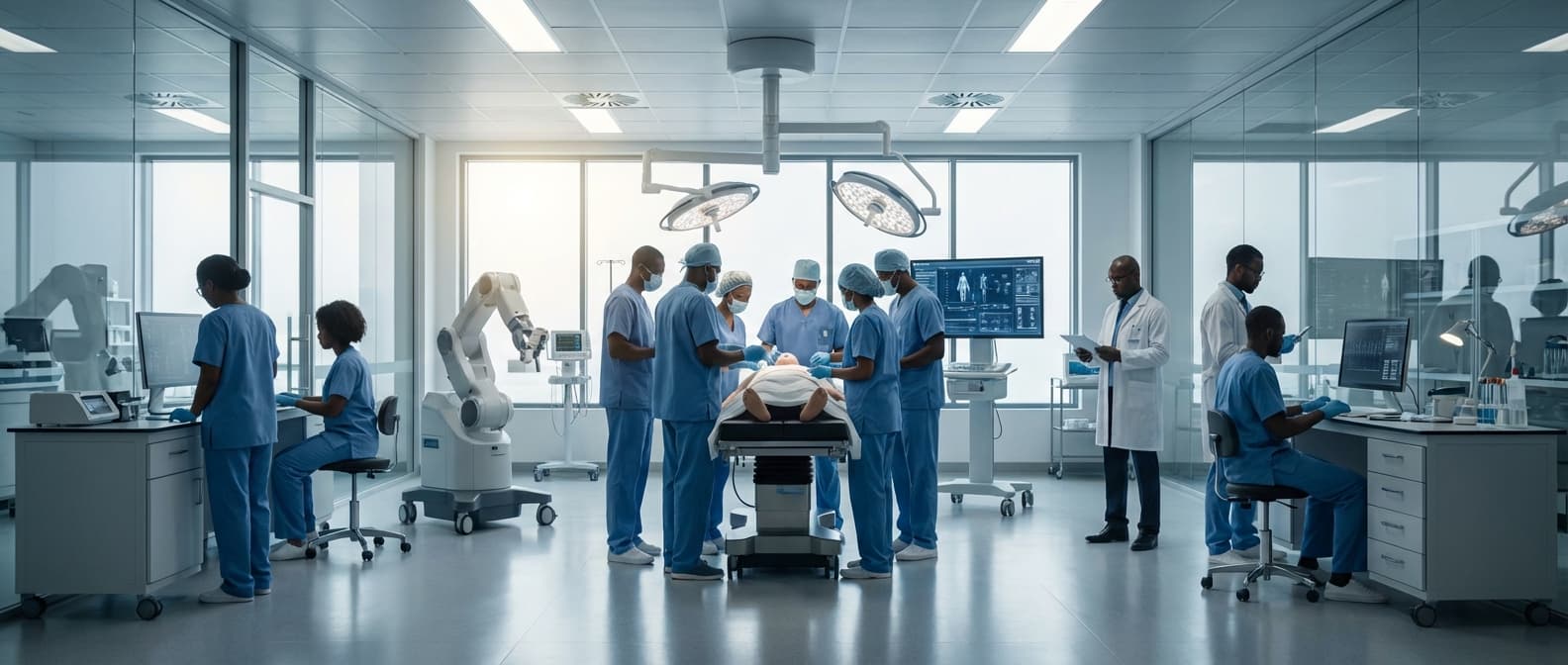
Managed Equipment Service (MES) in Senegal
Engineering Excellence & Technical Support
Long‑term equipment provision with uptime SLAs and lifecycle management. High-standard technical execution following OEM protocols and local regulatory frameworks.
Remote Equipment Monitoring & Predictive Maintenance
Leveraging advanced IoT sensors and cloud-based analytics, we provide real-time monitoring of critical equipment performance in Senegal. Our MES proactively identifies potential failures before they occur, enabling scheduled maintenance, minimizing downtime, and optimizing operational efficiency for our clients.
Optimized Asset Lifecycle Management
Our MES platform in Senegal offers comprehensive asset tracking and performance data throughout the entire equipment lifecycle. From initial deployment and maintenance to eventual decommissioning, we ensure optimal utilization, reduced operational costs, and informed strategic decisions regarding asset investment and replacement.
On-Demand Expertise & Localized Support
We provide direct access to a network of highly skilled, certified technicians across Senegal for prompt and effective on-site support. Our MES model ensures rapid response times for repairs and routine maintenance, equipped with specialized tools and diagnostic equipment, guaranteeing minimal disruption to your critical operations.
What Is Managed Equipment Service (Mes) In Senegal?
Managed Equipment Service (MES) in Senegal refers to a comprehensive outsourced model for the acquisition, deployment, maintenance, and lifecycle management of specialized equipment within an organization. This service aims to optimize the operational efficiency, cost-effectiveness, and technological relevance of critical assets, particularly in sectors heavily reliant on sophisticated machinery and IT infrastructure. MES providers assume responsibility for the entire equipment lifecycle, from procurement and installation to ongoing support, upgrades, and eventual disposal, allowing client organizations to focus on their core competencies. The service typically encompasses a Service Level Agreement (SLA) that guarantees specific performance metrics, uptime, and response times.
| Who Needs MES in Senegal | Typical Use Cases | |||||
|---|---|---|---|---|---|---|
| Healthcare Facilities: Hospitals, clinics, diagnostic centers requiring reliable and technologically advanced medical equipment (e.g., MRI machines, CT scanners, laboratory analyzers). | Industrial Manufacturing: Factories and production plants needing specialized machinery, automation systems, and robotics to maintain production output and quality. | Telecommunications Providers: Companies operating extensive network infrastructure, requiring robust and continuously updated communication hardware (e.g., base stations, servers, network switches). | Financial Institutions: Banks and credit unions with critical IT infrastructure, including servers, ATMs, and data center equipment, where uptime is paramount. | Large Commercial Enterprises: Organizations with significant IT footprints, including desktops, laptops, printers, and servers, seeking to standardize and manage their device fleet efficiently. | Government Agencies: Public sector entities requiring reliable and secure equipment for public services, administrative functions, and defense applications. | Educational Institutions: Universities and research centers utilizing specialized scientific equipment, laboratory instruments, and IT infrastructure for teaching and research. |
| Medical Imaging Services: Ensuring the availability and optimal performance of MRI, CT, X-ray, and ultrasound machines to support diagnostic capabilities. | Production Line Automation: Maintaining uptime and efficiency of robotic arms, conveyor belts, and CNC machines in manufacturing settings. | Network Infrastructure Management: Ensuring uninterrupted connectivity and data flow through the proactive management of routers, switches, and servers. | Data Center Operations: Guaranteeing high availability and performance of server racks, storage systems, and cooling infrastructure. | Office Equipment Fleet Management: Streamlining the procurement, deployment, and maintenance of printers, copiers, and multi-function devices. | Secure Communication Systems: Managing and updating specialized hardware for secure data transmission and voice communication. | Research and Development Labs: Providing and maintaining advanced scientific instruments and analytical equipment. |
Key Components of Managed Equipment Service (MES) in Senegal
- Equipment Procurement & Acquisition: Sourcing, negotiation, and purchasing of new equipment, often leveraging bulk purchasing power for cost optimization.
- Installation & Configuration: Professional setup, integration, and initial configuration of equipment to meet specific operational requirements.
- Preventive Maintenance: Scheduled inspections, servicing, and component replacements to minimize downtime and extend equipment lifespan.
- Corrective Maintenance & Repair: Rapid response to equipment failures, including diagnosis, repair, and replacement of faulty parts.
- Remote Monitoring & Diagnostics: Continuous tracking of equipment performance, identification of potential issues before they escalate, and remote troubleshooting capabilities.
- Software & Firmware Updates: Management and application of necessary software and firmware upgrades to ensure optimal performance and security.
- Asset Tracking & Inventory Management: Maintaining an accurate inventory of all managed equipment, including serial numbers, locations, and service history.
- End-of-Life Management: Planning for and executing the responsible decommissioning, disposal, or recycling of obsolete equipment.
- Performance Reporting & Analytics: Providing regular reports on equipment utilization, uptime, maintenance costs, and other key performance indicators (KPIs).
- Training & Support: Offering training to client personnel on equipment operation and providing technical support as needed.
Who Needs Managed Equipment Service (Mes) In Senegal?
Managed Equipment Service (MES) offers a comprehensive solution for organizations in Senegal looking to optimize their capital expenditure, improve operational efficiency, and ensure the reliability of their critical equipment. Instead of purchasing, maintaining, and replacing equipment outright, MES providers take on these responsibilities, offering a flexible, pay-per-use model that can significantly benefit various sectors.
| Target Customer Sector | Key Departments / Units | Why MES is Beneficial |
|---|---|---|
| Healthcare | Hospitals (Public & Private), Clinics, Diagnostic Centers, Research Laboratories | Ensures availability of critical medical equipment (imaging, surgical, laboratory), reduces maintenance costs, allows focus on patient care, access to cutting-edge technology. |
| Mining & Extractive Industries | Exploration, Extraction, Processing, Logistics | Reliable operation of heavy machinery (excavators, drills, haul trucks), reduced downtime, improved safety, predictable operational expenses, access to specialized maintenance teams. |
| Telecommunications | Mobile Network Operators, Internet Service Providers, Infrastructure Providers | Deployment and maintenance of network infrastructure (base stations, towers, fiber optic equipment), ensures network uptime, reduces capital expenditure, scales with demand. |
| Manufacturing & Industrial | Food & Beverage Processing, Textiles, Pharmaceuticals, Automotive Assembly, General Manufacturing | Continuous operation of production lines, maintenance of specialized machinery, improved quality control, flexibility to adapt to production changes, cost-effective equipment upgrades. |
| Agriculture & Agribusiness | Large-scale Farms, Agri-processing Plants, Irrigation Projects | Operation and maintenance of agricultural machinery (tractors, harvesters, processing equipment), increased productivity, reduced spoilage, access to modern farming technology. |
| Energy & Utilities | Power Generation Plants, Water Treatment Facilities, Distribution Networks | Reliability of critical infrastructure, maintenance of specialized equipment (turbines, pumps, transformers), ensures continuous service delivery, reduces operational risks. |
| Government & Public Sector | Public Hospitals, Defense Forces, Transportation Authorities, Research Institutions | Cost-effective provision of essential services, maintenance of critical public infrastructure, fleet management, ensures operational readiness and public safety. |
Who Needs Managed Equipment Service (MES) in Senegal?
- Organizations with significant capital investment in specialized or high-value equipment.
- Businesses aiming to reduce the burden of in-house maintenance and repair expertise.
- Entities seeking predictable operational costs and reduced risk of unexpected equipment breakdowns.
- Companies focused on leveraging the latest technology without the risk of rapid obsolescence.
- Sectors heavily reliant on specialized machinery for their core operations.
Managed Equipment Service (Mes) Process In Senegal
The Managed Equipment Service (MES) process in Senegal is a comprehensive model where healthcare providers outsource the management of their medical equipment to a third-party specialist. This service typically covers the entire lifecycle of the equipment, from acquisition and installation to maintenance, repair, and eventual replacement. The objective is to ensure high equipment availability and optimal performance while reducing the operational burden on the healthcare facility and often at a predictable cost. The workflow is designed to be streamlined and efficient, ensuring that healthcare facilities have reliable access to the technology they need to deliver quality patient care.
| Stage | Description | Key Activities | Output/Outcome |
|---|---|---|---|
| Inquiry and Needs Assessment | The healthcare facility expresses interest in MES and defines their equipment requirements and challenges. | Initial meetings, site visits, review of existing equipment inventory and needs, identification of pain points (e.g., frequent breakdowns, high maintenance costs, outdated technology). | Clear understanding of the healthcare facility's needs, identification of potential scope of service. |
| Proposal Development and Negotiation | The MES provider develops a tailored proposal based on the assessed needs. | Defining the scope of services, equipment list, service level agreements (SLAs), pricing models (e.g., fixed fee, pay-per-use), risk sharing mechanisms, training plans. | A detailed proposal outlining the MES solution, including technical specifications, financial projections, and operational plans. |
| Contracting and Procurement | Formal agreement between the healthcare facility and the MES provider, including procurement of necessary equipment. | Legal review and signing of the MES contract, procurement of new equipment (if applicable) by the MES provider, setting up financing mechanisms. | A legally binding MES contract, all necessary equipment procured and ready for deployment. |
| Installation and Commissioning | The MES provider installs and ensures the proper functioning of all designated equipment. | Logistics and transportation of equipment, site preparation, installation by certified technicians, rigorous testing and calibration, validation of performance against specifications. | Fully installed, tested, and commissioned equipment ready for clinical use. |
| Operational Management and Maintenance | Ongoing management of the equipment, including preventive and corrective maintenance. | Scheduled preventive maintenance, routine checks, prompt response to breakdowns, repair and replacement of faulty parts, ensuring spare parts availability, managing consumables. | High equipment uptime and availability, minimal disruptions to healthcare services. |
| Performance Monitoring and Reporting | Continuous tracking of equipment performance and service delivery. | Data collection on equipment usage, uptime, maintenance history, response times, patient throughput (if applicable), regular performance reports to the healthcare facility, performance reviews. | Transparent reporting on equipment performance, service delivery, and key performance indicators (KPIs). |
| Equipment Upgrade and Replacement | Strategic planning and execution of equipment upgrades and replacements to keep pace with technological advancements. | Regular review of equipment lifespan and performance, identifying needs for upgrades or replacement, planning for phased replacement to minimize disruption, ensuring compatibility with evolving medical practices. | Up-to-date and technologically advanced medical equipment, meeting current clinical standards. |
| Decommissioning and Disposal | Safe and environmentally responsible removal of old or obsolete equipment. | Dismantling of retired equipment, proper disposal or recycling in accordance with regulations, data security for sensitive information, transition to new equipment. | Safe and compliant removal of end-of-life equipment. |
Managed Equipment Service (MES) Process in Senegal: Workflow Stages
- Inquiry and Needs Assessment
- Proposal Development and Negotiation
- Contracting and Procurement
- Installation and Commissioning
- Operational Management and Maintenance
- Performance Monitoring and Reporting
- Equipment Upgrade and Replacement
- Decommissioning and Disposal
Managed Equipment Service (Mes) Cost In Senegal
Managed Equipment Service (MES) in Senegal offers a comprehensive solution for healthcare providers to acquire, maintain, and manage medical equipment. This model aims to reduce capital expenditure, ensure equipment uptime, and provide access to the latest technology. The cost of MES in Senegal is influenced by several factors, leading to a range of pricing structures. Understanding these factors is crucial for healthcare institutions when budgeting for such services.
| Equipment Category | Estimated Annual MES Cost Range (XOF) | Notes |
|---|---|---|
| Basic Diagnostic Imaging (X-ray, Ultrasound) | 1,500,000 - 4,000,000 | Includes routine maintenance, parts, and emergency repairs for a few units. |
| Advanced Diagnostic Imaging (CT Scanner, MRI) | 8,000,000 - 25,000,000+ | Higher cost due to equipment complexity, specialized engineers, and higher uptime guarantees. |
| Surgical Equipment (General OR, Laparoscopy) | 2,000,000 - 10,000,000 | Varies based on the number of ORs and complexity of surgical tools. |
| Critical Care Equipment (Ventilators, Patient Monitors) | 1,000,000 - 5,000,000 | Focus on reliability and rapid response for life-support equipment. |
| Laboratory Equipment (Analyzers, Microscopes) | 1,000,000 - 7,000,000 | Depends on the automation level and throughput of the laboratory. |
| Rehabilitation and Physiotherapy Equipment | 500,000 - 3,000,000 | Generally lower complexity and cost. |
Key Pricing Factors for MES in Senegal
- Type and Volume of Equipment: The complexity, sophistication, and quantity of medical devices included in the MES agreement are primary cost drivers. High-value, specialized equipment like MRI machines, CT scanners, or advanced surgical robots will naturally command higher service fees than standard diagnostic tools.
- Service Level Agreements (SLAs): The scope and responsiveness of the maintenance and support services offered significantly impact pricing. SLAs can include guaranteed uptime percentages, rapid repair response times, preventative maintenance schedules, and the provision of spare parts.
- Contract Duration: Longer-term MES contracts often come with more favorable pricing per unit or per year due to the provider's ability to amortize their investment and operational costs over a longer period. Shorter contracts may have higher upfront fees or annual costs.
- Technology Lifecycle and Obsolescence: Agreements that include regular upgrades or replacements of equipment to keep pace with technological advancements will be priced higher. The risk of technological obsolescence for the provider is factored into the cost.
- Geographic Location and Accessibility: While Senegal is a single market, the remoteness of a healthcare facility from major urban centers or service hubs could potentially add to logistical costs for maintenance and repairs, which might be reflected in the pricing.
- Ancillary Services: The MES package can be bundled with additional services such as staff training, IT integration, consumables management, and equipment disposal. The inclusion of these services will increase the overall cost.
- Provider's Overhead and Profit Margin: As with any service, the MES provider's operational costs, including personnel, administrative expenses, and their desired profit margin, are integral to the final pricing.
- Financing Structure: The MES provider's cost of capital and how they structure the financing of the equipment for the healthcare institution can also influence the overall price. Some models might involve an upfront payment, while others are purely operational expenditures.
Affordable Managed Equipment Service (Mes) Options
Managed Equipment Service (MES) can be a strategic investment for organizations seeking to optimize their medical equipment lifecycle, ensuring functionality, compliance, and cost-effectiveness. However, budget constraints often lead to a search for affordable MES options. This involves understanding how value bundles and implementing smart cost-saving strategies can make comprehensive MES accessible and beneficial.
| Cost-Saving Strategy | Description | Impact on MES Costs |
|---|---|---|
| Proactive vs. Reactive Maintenance | Implementing a strong preventative maintenance schedule reduces the likelihood of costly emergency repairs and equipment downtime. | Lower on-demand repair costs, extended equipment lifespan, reduced capital expenditure due to fewer premature replacements. |
| Standardization of Equipment | Where possible, standardizing on fewer equipment models simplifies maintenance, training, and spare parts inventory. | Reduced training costs, bulk purchasing discounts on parts, streamlined service procedures, leading to faster response times. |
| Leveraging In-House Capabilities | Identifying which maintenance tasks can be safely and effectively performed by your internal biomedical team. | Reduced reliance on external technicians for routine tasks, lower labor costs for basic services. |
| Negotiating Contract Terms | Actively negotiating service level agreements (SLAs), response times, and pricing during contract renewal or initial setup. | Potentially lower annual service fees, better terms for parts and labor, inclusion of additional services at no extra cost. |
| Optimizing Equipment Utilization | Using data to ensure equipment is being used efficiently and not sitting idle, which can indicate a need for reallocation or divestment. | Avoidance of unnecessary maintenance costs on underutilized assets, better return on investment from existing equipment. |
| Exploring Refurbished or Certified Pre-Owned Equipment | For non-critical equipment or for specific departmental needs, considering certified pre-owned or refurbished options can be cost-effective. | Lower initial capital outlay, which can then be covered by more affordable MES plans for these units. |
| Bundling Services Strategically | Rather than picking individual services, opt for pre-defined value bundles that align with your core needs. | Discounted pricing compared to à la carte services, predictable budgeting, comprehensive coverage. |
Key Components of Affordable MES
- Understanding Value Bundles: Value bundles are pre-packaged service offerings that combine multiple essential services at a more attractive price point than purchasing them individually. These bundles are designed to address common organizational needs and provide a predictable cost structure.
- Core Services in Bundles: Typically, value bundles include a combination of preventative maintenance, on-demand repairs, equipment calibration, safety inspections, and asset management functionalities.
- Tiered Service Levels: Many MES providers offer tiered service levels within their bundles. Basic tiers might focus on essential maintenance, while premium tiers can include advanced analytics, on-site technicians, or extended warranties.
- Scalability and Customization: Affordable MES doesn't always mean rigid. Look for providers who offer scalable bundles that can be adapted to your organization's specific equipment inventory and usage patterns.
- Long-Term Contracts: Committing to longer-term MES contracts often unlocks significant discounts. This predictability benefits both the provider and the client, allowing for better resource allocation and reduced administrative overhead.
- Data Analytics and Reporting: High-value bundles often incorporate robust data analytics and reporting tools. These insights help in identifying underutilized equipment, predicting failure rates, and optimizing maintenance schedules, leading to direct cost savings.
- Training and Education: Some bundles include training for in-house biomedical staff on basic maintenance or equipment operation, empowering your team and reducing reliance on external calls for minor issues.
- Consolidated Procurement: MES providers can often leverage their purchasing power to secure better rates on spare parts and consumables, passing some of those savings onto clients within bundled agreements.
Verified Providers In Senegal
Ensuring the quality and reliability of healthcare services is paramount. In Senegal, a growing concern for accessible and trustworthy medical care has led to the emergence of verified providers. Among these, Franance Health stands out, not just as a participant in the healthcare ecosystem, but as a benchmark for excellence. This document outlines Franance Health's credentials and articulates why they represent the best choice for healthcare consumers in Senegal.
| Credential Type | Significance for Patients | Franance Health's Achievement |
|---|---|---|
| National Health Accreditation | Guarantees adherence to local safety and quality regulations. | Fully accredited by the Senegalese Ministry of Health and Social Action. |
| Professional Licensing | Ensures doctors and nurses are qualified and authorized to practice. | All medical staff hold valid licenses from Senegalese professional bodies. |
| Quality Management Systems | Indicates a structured approach to consistent, high-quality service delivery. | Adheres to international quality standards (e.g., relevant ISO certifications where applicable). |
| Patient Feedback Mechanisms | Provides tangible proof of positive patient experiences and outcomes. | Consistently high patient satisfaction scores and positive testimonials. |
| Collaborative Networks | Facilitates access to broader medical knowledge and specialized care. | Active partnerships with leading local and international medical organizations. |
| Ethical Governance | Builds trust through honest communication and patient-focused principles. | Demonstrates a strong commitment to transparency and patient rights. |
Franance Health's Key Credentials and Why They Matter
- {"title":"Accreditation by National Health Authorities","description":"Franance Health has successfully met and exceeded the stringent accreditation standards set forth by Senegal's Ministry of Health and Social Action. This accreditation signifies adherence to rigorous protocols for patient safety, quality of care, facility management, and ethical practices."}
- {"title":"Certified Medical Professionals","description":"All medical practitioners associated with Franance Health are fully licensed and certified by the relevant Senegalese medical councils. This ensures they possess the requisite skills, experience, and up-to-date knowledge to provide competent medical services."}
- {"title":"International Quality Standards (e.g., ISO Certification)","description":"Where applicable, Franance Health actively pursues and maintains international quality management certifications. These certifications demonstrate a commitment to continuous improvement, operational efficiency, and a patient-centric approach that aligns with global best practices."}
- {"title":"Patient Testimonials and Satisfaction Rates","description":"A consistently high level of patient satisfaction, evidenced by positive testimonials and favorable feedback, underscores Franance Health's dedication to patient well-being and effective care delivery. Independent surveys and reviews often highlight their compassionate approach and successful treatment outcomes."}
- {"title":"Partnerships with Reputable Medical Institutions","description":"Franance Health collaborates with other esteemed healthcare institutions, both domestically and internationally. These partnerships facilitate knowledge exchange, access to specialized expertise, and the adoption of innovative medical technologies."}
- {"title":"Commitment to Ethical Practice and Transparency","description":"Franance Health operates with unwavering integrity. They are committed to transparent communication with patients regarding diagnoses, treatment options, and costs. Their ethical framework ensures patient confidentiality and respect at all times."}
Scope Of Work For Managed Equipment Service (Mes)
This Scope of Work (SOW) outlines the requirements for a Managed Equipment Service (MES) provider. The MES provider will be responsible for the comprehensive management of specified medical equipment throughout its lifecycle. This includes procurement, installation, maintenance, calibration, repair, replacement, and disposal of the equipment. The objective is to ensure optimal equipment availability, performance, and cost-effectiveness for the client organization. This SOW details the technical deliverables and standard specifications that the MES provider must adhere to.
| Technical Deliverable | Description | Standard Specification / Requirement | Key Performance Indicator (KPI) |
|---|---|---|---|
| Equipment Inventory Report | A comprehensive and up-to-date list of all managed equipment, including details such as make, model, serial number, purchase date, location, and warranty status. | Accuracy: 99.5%. Updated within 24 hours of any change (acquisition, disposal, relocation). | Inventory Accuracy Rate |
| Preventive Maintenance (PM) Schedule | A detailed schedule for all required preventive maintenance activities, aligned with manufacturer recommendations and regulatory standards. | 100% adherence to PM schedule. PM completion within +/- 7 days of due date. | PM Compliance Rate |
| Corrective Maintenance (CM) Response Time | Time taken to acknowledge and begin addressing reported equipment failures. | Critical equipment: < 2 hours. Non-critical equipment: < 8 hours. On-site repair within 24 hours for critical, 48 hours for non-critical. | Mean Time To Respond (MTTR), Mean Time Between Failures (MTBF) |
| Calibration and Performance Verification Records | Documentation of all calibration and performance verification activities, ensuring equipment meets specified tolerances. | Calibration traceable to national/international standards. Records maintained for the operational life of the equipment + 5 years. | Calibration Compliance Rate |
| Equipment Uptime Percentage | The percentage of time that managed equipment is operational and available for use. | Minimum 98% uptime for critical equipment. Minimum 95% uptime for non-critical equipment. | Equipment Uptime Percentage |
| Technology Refresh Plan | A strategic plan for replacing or upgrading equipment nearing the end of its useful life or becoming technologically obsolete. | Proactive identification of obsolescence. Recommendations submitted at least 6 months prior to end-of-life. | Percentage of equipment on refresh plan |
| Training Program | Provision of training to end-users on the proper operation, basic troubleshooting, and safety procedures for managed equipment. | Training provided upon installation of new equipment and for significant upgrades. User competency assessed. | User Training Satisfaction Score |
| Incident Report | Detailed reports for all significant equipment incidents, including root cause analysis, corrective actions, and preventative measures. | Reports submitted within 48 hours of incident resolution. | Number of recurring incidents |
| Regulatory Compliance Audit Report | Documentation demonstrating adherence to all relevant local, national, and international regulations (e.g., FDA, ISO) pertaining to medical equipment. | Successful completion of annual audits. No critical findings. | Audit Pass Rate |
| Cost Performance Report | Regular reports detailing the total cost of ownership for managed equipment, including maintenance, repair, and replacement costs. | Cost savings identified and reported quarterly. Adherence to agreed budget. | Total Cost of Ownership (TCO) trends |
Key Responsibilities of the MES Provider
- Equipment Lifecycle Management
- Maintenance and Repair
- Calibration and Performance Verification
- Asset Tracking and Inventory Management
- Technology Refresh and Upgrade Strategy
- Training and Support
- Reporting and Performance Metrics
- Risk Management and Compliance
Service Level Agreement For Managed Equipment Service (Mes)
This Service Level Agreement (SLA) outlines the performance standards for the Managed Equipment Service (MES) provided by [Provider Name] to [Client Name]. It defines the agreed-upon response times and uptime guarantees for the managed equipment.
| Service Component | Response Time (for critical alerts) | Uptime Guarantee |
|---|---|---|
| Critical Equipment Failure (e.g., production-impacting) | 15 minutes (acknowledgement) | 99.9% uptime |
| Major Equipment Malfunction (e.g., impacting non-critical functions) | 30 minutes (acknowledgement) | 99.5% uptime |
| Minor Equipment Issue (e.g., performance degradation) | 1 hour (acknowledgement) | 99.0% uptime |
| Preventative Maintenance & Scheduled Tasks | N/A (scheduled in advance with client approval) | N/A (scheduled downtime acknowledged) |
Scope of Service
- Monitoring of specified equipment assets.
- Proactive maintenance and patching.
- Incident detection and initial response.
- Troubleshooting and issue resolution.
- Regular reporting on equipment status and performance.
Frequently Asked Questions

Ready when you are
Let's scope your Managed Equipment Service (MES) in Senegal project in Senegal.

Scaling healthcare logistics and technical systems across the entire continent.