
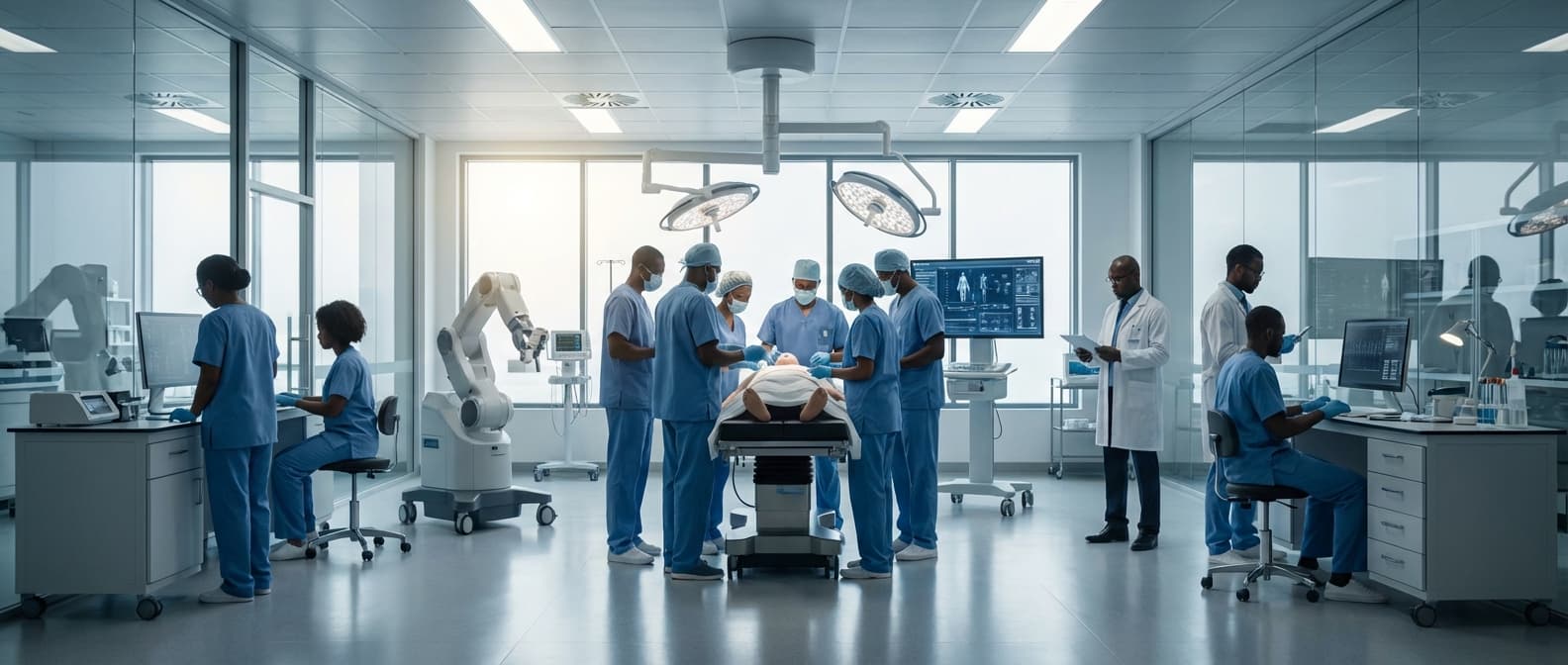
Calibration & Electrical Safety Testing in Senegal
Engineering Excellence & Technical Support
Equipment calibration and IEC safety testing High-standard technical execution following OEM protocols and local regulatory frameworks.
Ensuring Electrical System Integrity
We provide precise calibration services for a wide range of electrical testing equipment, from multimeters to high-voltage testers. Our meticulous process guarantees the accuracy and reliability of your measurements, crucial for safe and efficient operation of electrical systems across Senegal's growing infrastructure.
Proactive Risk Mitigation for Workplace Safety
Our comprehensive electrical safety testing protocols, aligned with international standards, identify and address potential hazards before they lead to accidents. We empower Senegalese businesses to maintain secure work environments and protect their employees from electrical risks.
Certified Compliance and Quality Assurance
Gain peace of mind with our accredited calibration and testing services. We issue certified reports that demonstrate adherence to regulatory requirements and industry best practices, fostering trust and ensuring the quality and safety of electrical installations and equipment throughout Senegal.
What Is Calibration & Electrical Safety Testing In Senegal?
Calibration and electrical safety testing are critical metrological and compliance services essential for ensuring the accuracy, reliability, and safe operation of electrical equipment and instrumentation within Senegal. Calibration involves the comparison of a measuring instrument's readings against a known, traceable standard to determine and document any deviation. This process establishes the accuracy of the instrument within specified tolerances. Electrical safety testing, conversely, focuses on verifying that electrical equipment complies with national and international safety standards to prevent hazards such as electric shock, fire, and equipment damage.
| Who Needs It? | Typical Use Cases | Impact of Non-Compliance |
|---|---|---|
| Manufacturing facilities (Food & Beverage, Textiles, Pharmaceuticals, etc.) | Calibration of process control instruments (thermometers, pressure gauges, flow meters). Electrical safety testing of production machinery and associated electrical panels. | Product quality deviations, production downtime, potential for equipment failure, workplace accidents, regulatory fines. |
| Healthcare institutions (Hospitals, Clinics, Laboratories) | Calibration of diagnostic and therapeutic medical devices (e.g., ECG machines, ventilators, patient monitors). Electrical safety testing of all medical electrical equipment to ensure patient and staff safety. | Misdiagnosis, ineffective treatment, risk of electric shock to patients and staff, violation of healthcare regulations, reputational damage. |
| Research and Development Laboratories | Calibration of analytical instruments (e.g., pH meters, spectrophotometers, oscilloscopes). Ensuring the reliability and accuracy of test equipment. | Erroneous research data, wasted resources, inability to validate findings, compromised research integrity. |
| Telecommunications and IT Service Providers | Calibration of network testing equipment. Electrical safety testing of data center infrastructure, servers, and networking hardware. | Network performance degradation, data integrity issues, equipment damage, potential for fire hazards, service interruptions. |
| Mining and Energy Sector | Calibration of safety monitoring systems, control instrumentation, and power generation equipment. Electrical safety testing of heavy-duty machinery and electrical distribution systems. | Operational inefficiencies, catastrophic equipment failures, severe safety risks (explosions, fires), environmental hazards, significant financial losses. |
| Government Agencies and Public Institutions | Calibration and safety testing for infrastructure monitoring, public safety equipment, and administrative computing systems. | Ineffective public services, safety compromises, non-compliance with public procurement standards, potential for systemic failures. |
Key Aspects of Calibration and Electrical Safety Testing in Senegal
- {"title":"Calibration Services","description":"This entails using certified reference standards to adjust and/or verify the performance of measuring devices. Procedures often involve in-situ or laboratory-based testing, generating certificates of calibration that detail measurement results, uncertainties, and traceability to recognized national or international metrology institutes. The scope typically covers a wide range of parameters including voltage, current, resistance, frequency, temperature, pressure, and flow."}
- {"title":"Electrical Safety Testing","description":"This encompasses a suite of tests designed to identify potential electrical hazards. Common tests include: insulation resistance testing (to detect leakage current paths), dielectric strength testing (high-potential testing to assess the integrity of insulation under stress), earth bond resistance testing (to ensure effective protective earthing), touch current testing (to measure current that could flow through a person), and functional safety checks. Compliance is often assessed against standards such as IEC 60601 (medical equipment) or IEC 60950/62368 (IT equipment and consumer electronics)."}
- {"title":"Regulatory Framework","description":"While specific Senegalese national standards may exist or be adopted from international norms, compliance with these regulations is often mandated for market access and operational licensing. The Directorate General of Standards, Metrology and Quality (DNPQ) within the Ministry of Commerce and Industry is the primary regulatory body responsible for standards and metrology."}
Who Needs Calibration & Electrical Safety Testing In Senegal?
Regular calibration and electrical safety testing are crucial for ensuring the accuracy of measuring instruments and the safety of electrical equipment across various sectors in Senegal. These services are vital for businesses and organizations that rely on precise measurements for quality control, operational efficiency, and regulatory compliance, as well as those that use electrical equipment which could pose a risk if faulty. Adherence to these testing protocols not only prevents potential accidents and equipment damage but also contributes to a more reliable and productive operational environment.
| Customer Type | Relevant Departments / Functions | Key Services Required |
|---|---|---|
| Manufacturing Companies (e.g., textiles, plastics, metal fabrication) | Quality Control/Assurance, Production, Maintenance, R&D | Calibration of measurement instruments (e.g., scales, pressure gauges, thermometers), electrical safety testing of production machinery and facility electrical systems. |
| Hospitals & Clinics | Biomedical Engineering, Facilities Management, Laboratories | Calibration of medical devices (e.g., ECG machines, ventilators, patient monitors), electrical safety testing of all medical equipment and general facility electrical systems. |
| Pharmaceutical Manufacturers | Quality Control, Production, R&D, Validation | Calibration of laboratory instruments (e.g., HPLC, spectrophotometers), process control instruments, and electrical safety testing of manufacturing equipment and cleanroom environments. |
| Food & Beverage Producers | Quality Control, Production, Hygiene, Maintenance | Calibration of temperature sensors, pH meters, flow meters; electrical safety testing of processing equipment, packaging machinery, and plant electrical installations. |
| Power Generation & Distribution Companies | Operations, Maintenance, Safety Compliance | Calibration of measurement devices for voltage, current, frequency, power; electrical safety testing of transformers, switchgear, control systems, and field equipment. |
| Water Treatment Plants | Operations, Maintenance, Quality Assurance | Calibration of flow meters, pressure sensors, chemical analyzers; electrical safety testing of pumps, control panels, and electrical infrastructure. |
| Universities & Research Centers | Laboratories (Physics, Chemistry, Engineering, Biology), Technical Services | Calibration of scientific instruments, testing of lab equipment and electrical installations to ensure student and researcher safety. |
| Government Agencies (e.g., standards bureaus, metrology institutes) | Calibration Laboratories, Inspection Services, Compliance Monitoring | Services for inter-laboratory comparisons, national standards maintenance, and regulatory compliance audits. |
| Construction Companies | Project Management, Site Supervision, Equipment Maintenance | Calibration of surveying equipment, testing of electrical tools and temporary site power installations. |
| Telecommunications Providers | Network Operations, Maintenance, Infrastructure Management | Calibration of signal generators, spectrum analyzers, power meters; electrical safety testing of base stations and data centers. |
| Automotive Repair Workshops & Dealerships | Service Departments, Diagnostics | Calibration of diagnostic equipment (e.g., emission analyzers, multimeters), electrical safety testing of workshop tools and vehicle electrical systems. |
Target Customers and Departments for Calibration & Electrical Safety Testing in Senegal
- Manufacturing & Industrial Sector
- Healthcare & Pharmaceutical Sector
- Food & Beverage Industry
- Energy & Utilities Sector
- Research & Development Institutions
- Educational Institutions
- Government & Regulatory Bodies
- Construction & Engineering Firms
- Telecommunications Companies
- Automotive Industry
Calibration & Electrical Safety Testing Process In Senegal
This document outlines the workflow for calibration and electrical safety testing services in Senegal, from the initial client inquiry to the completion of the testing process. The process is designed to ensure accuracy, compliance, and client satisfaction.
| Step | Description | Key Activities | Responsible Party | Output/Deliverable |
|---|---|---|---|---|
| The process begins when a client expresses interest in calibration and/or electrical safety testing services. | Client contacts service provider via phone, email, or website. Client specifies equipment/devices to be tested, desired services (calibration, safety testing, or both), quantity, and any specific requirements or standards. | Client (Initial Inquiry), Service Provider (Information Gathering) | Initial Service Request Details |
| Based on the inquiry, the service provider prepares a detailed quotation and agreement. | Service provider assesses the scope of work, complexity, equipment type, and number of items. A formal quotation is prepared outlining services, costs, estimated turnaround time, and terms and conditions. Upon client acceptance, a service agreement or purchase order is generated. | Service Provider (Quotation), Client (Acceptance/PO) | Formal Quotation, Signed Service Agreement/Purchase Order |
| Once the agreement is in place, the testing schedule and logistics are finalized. | Service provider coordinates with the client to schedule a convenient date and time for on-site services. This includes arranging for technician travel, necessary equipment, and access to the client's premises. For off-site services, arrangements are made for equipment collection and return. | Service Provider (Scheduling & Logistics) | Confirmed Testing Schedule, Logistics Plan |
| On the scheduled day, the service provider's technicians prepare for the testing. | Technicians arrive at the client's site, confirm the list of equipment, identify testing locations, ensure a safe working environment, and set up testing equipment. Safety protocols are reviewed with client representatives. | Service Provider (Technicians) | Prepared Testing Environment, Confirmed Equipment List |
| This is the core phase where the actual calibration and electrical safety tests are performed. | Technicians perform calibration procedures using traceable standards, ensuring equipment accuracy against specified parameters. Electrical safety tests (e.g., insulation resistance, earth continuity, leakage current) are conducted according to relevant national or international standards (e.g., IEC standards). Any deviations or failures are meticulously recorded. | Service Provider (Technicians) | Raw Test Data, Calibration Readings, Safety Test Results |
| Following the execution phase, the collected data is analyzed and compiled into a comprehensive report. | Test results are analyzed, compared against acceptance criteria or calibration standards. A detailed report is generated, including equipment identification, test methods used, results obtained, any identified non-conformities, and recommendations (e.g., for adjustment or repair). | Service Provider (Technicians/Quality Control) | Calibration & Electrical Safety Test Report |
| Upon satisfactory completion and report generation, certifications are issued and reports are delivered to the client. | If equipment passes calibration, a calibration certificate is issued, often with a validity period. For electrical safety testing, a certificate of compliance or test report indicating pass/fail status is provided. The final report and certificates are delivered to the client, typically electronically or in hard copy. | Service Provider (Quality Control/Administration), Client (Receipt) | Calibration Certificates, Electrical Safety Test Certificates/Reports |
| The process concludes with follow-up actions and ongoing support. | Service provider may offer advice on maintenance, re-calibration schedules, or address any client queries regarding the report. A record of the service provided is maintained for future reference. | Service Provider | Client Satisfaction, Future Service Records |
Calibration & Electrical Safety Testing Workflow in Senegal
- Inquiry & Service Request
- Quotation & Agreement
- Scheduling & Logistics
- On-site Preparation
- Calibration/Testing Execution
- Data Analysis & Reporting
- Certification & Delivery
- Follow-up & Support
Calibration & Electrical Safety Testing Cost In Senegal
Calibration and electrical safety testing are crucial for ensuring the accuracy and reliability of scientific equipment and the safety of electrical installations in Senegal. The cost of these services is influenced by several factors, including the type and complexity of the equipment, the number of items to be tested, the specific calibration parameters required, the accreditation of the testing laboratory, and the urgency of the service. Specialized or highly sensitive equipment may incur higher costs due to the expertise and specialized equipment needed for their calibration. Similarly, if a laboratory has international accreditations (e.g., ISO 17025), their services might command a premium, reflecting higher standards and assurance. Emergency or expedited testing services often come with an additional fee. Costs are typically quoted in the local currency, the West African CFA franc (XOF).
| Service Type | Description | Estimated Cost Range (XOF) | Notes |
|---|---|---|---|
| Basic Electrical Safety Test (e.g., Insulation Resistance, Earth Bond) | Standard checks for electrical appliances and installations to ensure they meet safety regulations. | 15,000 - 40,000 | Per appliance or circuit. Volume discounts may apply. |
| General Purpose Laboratory Equipment Calibration (e.g., pH meter, thermometer, balance) | Calibration of common laboratory instruments against traceable standards. | 25,000 - 75,000 | Per instrument. More complex instruments will be at the higher end. |
| Precision Measurement Equipment Calibration (e.g., oscilloscope, signal generator, power meter) | Calibration of high-accuracy electronic test and measurement equipment. | 50,000 - 200,000+ | Can vary significantly based on the instrument's complexity and required accuracy. |
| Medical Equipment Calibration & Safety Testing | Ensuring the accuracy and safety of medical devices (e.g., ECG machines, patient monitors). | 30,000 - 150,000+ | Often requires specialized technicians and specific standards. |
| On-Site Calibration Service Fee | Additional charge for technicians to travel to a client's location. | 20,000 - 60,000 | Per visit, plus travel expenses if outside major urban centers. This is an addition to the per-item calibration cost. |
| Calibration Certificate Issuance | Documentation of the calibration results and traceability. | Included in service cost or a nominal fee of 5,000 - 15,000 | Most reputable labs include this, but it's good to confirm. |
| Expedited Service Fee | For urgent calibration or testing needs requiring a faster turnaround. | 25% - 50% surcharge | Applied to the total service cost. |
Factors Influencing Calibration & Electrical Safety Testing Costs in Senegal
- Type and complexity of equipment (e.g., simple multimeter vs. advanced spectrophotometer)
- Number of items requiring calibration or testing
- Specific calibration parameters and accuracy requirements
- Accreditation and reputation of the testing laboratory (local vs. international standards)
- Need for on-site vs. off-site testing
- Turnaround time and urgency of the service (standard vs. expedited)
- Geographical location within Senegal (transportation costs for on-site services)
- Calibration standards used (e.g., national vs. international traceability)
Affordable Calibration & Electrical Safety Testing Options
Ensuring your electrical equipment is calibrated accurately and meets safety standards is crucial for reliable operation and personnel safety. We understand that budget constraints are a significant concern, which is why we offer a range of affordable calibration and electrical safety testing options. Our focus is on delivering exceptional value through intelligently designed service bundles and proactive cost-saving strategies. By bundling related services, you can benefit from streamlined processes and reduced administrative overhead. Furthermore, our flexible packages allow you to select precisely the services you need, avoiding unnecessary expenditure. We also implement efficient testing methodologies and leverage technology to minimize turnaround times and labor costs, translating directly into savings for your organization.
| Service Bundle | Included Services | Typical Savings | Ideal For |
|---|---|---|---|
| Basic Safety Check Bundle | Portable Appliance Testing (PAT), Visual Inspection, Basic Insulation Resistance Test | 10-15% | Small businesses, offices, educational institutions |
| Comprehensive Electrical Safety Bundle | PAT, Insulation Resistance, Earth Continuity, Polarity Testing, RCD Testing | 15-20% | Industrial facilities, workshops, construction sites |
| Instrument Calibration & Safety Package | Calibration of 3-5 common instruments (e.g., Multimeter, Power Supply) + Full Electrical Safety Test on relevant equipment | 12-18% | Laboratories, R&D departments, production environments |
| Annual Compliance Bundle | Full Electrical Safety Testing (all applicable tests) + Calibration of critical testing equipment | 18-25% | Organizations with strict regulatory requirements, high-volume usage |
Key Cost-Saving Strategies
- Value Bundles: Combine multiple calibration and safety testing services for a discounted rate.
- Flexible Service Packages: Tailor your service selection to your specific needs and budget.
- Preventive Maintenance Integration: Integrate safety testing with routine maintenance to identify issues early and avoid costly breakdowns.
- Off-Peak Scheduling: Explore options for scheduling services during less busy periods to potentially reduce costs.
- Volume Discounts: Benefit from reduced per-unit pricing for larger quantities of equipment.
- Remote Support & Diagnostics: Utilize remote capabilities where applicable to reduce on-site visit requirements.
- Digital Documentation: Receive all reports and certificates electronically to save on printing and storage.
Verified Providers In Senegal
In Senegal's growing healthcare landscape, identifying reliable and quality healthcare providers is paramount for both individuals and organizations. Franance Health stands out as a leading force, distinguished by its rigorous credentialing process and unwavering commitment to excellence. This commitment translates into verified providers who consistently deliver superior medical services. When seeking healthcare in Senegal, understanding why Franance Health credentials represent the best choice is crucial for making informed decisions.
| Benefit of Choosing a Franance Health Verified Provider | Description | Impact on Patient Experience |
|---|---|---|
| Enhanced Trust and Reliability | Franance Health's rigorous vetting process ensures that all listed providers meet established quality and safety benchmarks. | Patients can feel more secure and confident in the care they receive, reducing anxiety and uncertainty. |
| Access to Competent Professionals | Providers are credentialed based on their qualifications, experience, and ongoing professional development. | Improved diagnostic accuracy, effective treatment plans, and reduced risk of medical errors. |
| Commitment to Ethical Practices | Franance Health's verification includes checks for ethical conduct and adherence to professional codes of conduct. | Patients are assured of respectful treatment and a focus on their well-being. |
| Streamlined Healthcare Navigation | A verified network simplifies the process of finding appropriate healthcare services. | Saves time and effort for patients seeking specialized care or general medical attention. |
| Upholding Quality Standards | Franance Health's ongoing monitoring ensures that providers maintain high standards of care. | Consistent quality of service, leading to better health outcomes and patient satisfaction. |
Key Aspects of Franance Health Credentialing
- Comprehensive Verification: Franance Health employs a multi-faceted verification process that scrutinizes the qualifications, experience, and ethical standing of all affiliated healthcare professionals and institutions.
- Adherence to International Standards: Our credentialing framework aligns with recognized international benchmarks for healthcare quality and patient safety, ensuring a high level of care.
- Ongoing Monitoring: Credentialing is not a one-time event. Franance Health maintains a system of continuous monitoring to ensure providers consistently meet our stringent standards.
- Patient-Centric Approach: The ultimate goal of our credentialing is to empower patients with confidence, knowing they are accessing care from thoroughly vetted and competent providers.
- Access to Specialized Expertise: Through our network, patients can readily find specialists with verified expertise in a wide range of medical fields.
Scope Of Work For Calibration & Electrical Safety Testing
This Scope of Work (SOW) outlines the requirements for comprehensive calibration and electrical safety testing services for specified equipment. The objective is to ensure that all tested equipment meets its original performance specifications and adheres to relevant electrical safety standards. This document details the technical deliverables, standard specifications, and reporting requirements. The successful vendor will be responsible for performing these services in accordance with the procedures and standards outlined herein.
| Service | Description | Applicable Standards/Specifications | Deliverables |
|---|---|---|---|
| Calibration Services | Perform calibration on all specified measurement and control equipment to verify operational accuracy and performance against manufacturer specifications or industry-recognized standards. | Manufacturer's Calibration Procedures, ISO/IEC 17025 (if applicable), ANSI/NCSL Z540-1 | Calibrated Equipment, Traceable Calibration Certificates, Calibration Stickers |
| Electrical Safety Testing | Conduct comprehensive electrical safety testing on all specified electrical equipment to ensure compliance with relevant safety standards and to identify potential hazards. | IEC 60601-1 (Medical Electrical Equipment), IEC 61010 (Measurement, Control, and Laboratory Use), UL 60601-1, NFPA 70E (Electrical Safety in the Workplace) | Electrical Safety Test Reports, Compliance Stickers (if applicable), Detailed Record of Tests Performed |
| Documentation and Reporting | Provide detailed reports for all calibration and safety testing activities, including test results, any deviations found, and corrective actions taken (if applicable). | Customer-Specific Reporting Formats, Industry Best Practices | Comprehensive Test Reports, Calibration Certificates, Equipment Status Logs |
| Corrective Actions (Optional/As Needed) | Upon identification of equipment out of calibration or failing safety tests, minor adjustments or repairs may be performed (if within the scope and pre-approved). | Manufacturer's Service Manuals, Vendor's Qualified Personnel | Record of Corrective Actions, Updated Test Results |
Key Objectives
- Verify and document equipment accuracy against established performance specifications.
- Confirm adherence to all applicable electrical safety standards and regulations.
- Identify and report any deviations, malfunctions, or safety hazards.
- Provide traceable calibration certificates and comprehensive test reports.
Service Level Agreement For Calibration & Electrical Safety Testing
This Service Level Agreement (SLA) outlines the response times and uptime guarantees for calibration and electrical safety testing services provided by [Your Company Name] to [Client Company Name]. This SLA is an integral part of the Master Service Agreement (MSA) between the parties.
| Service Category | Response Time (Business Hours) | Uptime Guarantee (Remote Tools/Platforms) | Escalation Procedure |
|---|---|---|---|
| Critical (e.g., immediate safety risk, regulatory deadline) | 2 Hours | 99.9% | Immediate phone and email escalation to Senior Management. On-site dispatch within 4 hours if remote resolution is not possible. |
| High Priority (e.g., scheduled maintenance, production impact) | 4 Business Hours | 99.5% | Email and phone escalation to assigned Account Manager. Target for remote or on-site dispatch within 1 business day. |
| Standard (e.g., routine calibration, non-critical testing) | 1 Business Day | 99.0% | Email and phone escalation to the Service Desk. Target for scheduling within 3 business days. |
Key Service Level Objectives
- Response Times: Defined as the time from when a service request is officially logged by [Client Company Name] and acknowledged by [Your Company Name] to the initiation of action by [Your Company Name]'s technical team.
- Uptime Guarantees: Applicable to the remote monitoring and management tools and platforms used by [Your Company Name] to facilitate and track calibration and electrical safety testing activities. This does not cover the operational status of the client's own equipment or facilities.
- Service Levels: Categorized based on the criticality of the testing required.
Frequently Asked Questions

Ready when you are
Let's scope your Calibration & Electrical Safety Testing in Senegal project in Senegal.

Scaling healthcare logistics and technical systems across the entire continent.