
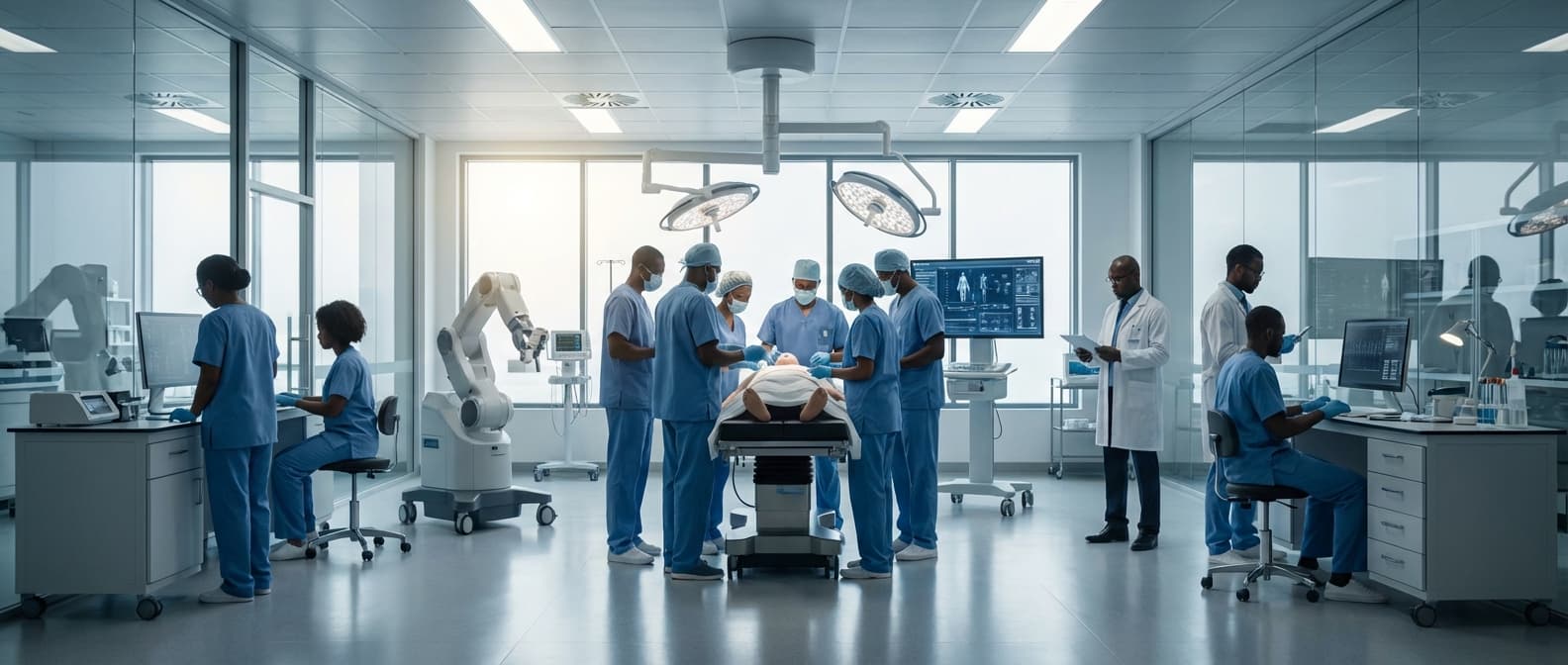
Biomedical Engineering Consulting in Senegal
Engineering Excellence & Technical Support
Equipment selection, procurement and implementation consulting High-standard technical execution following OEM protocols and local regulatory frameworks.
Optimizing Healthcare Infrastructure for Enhanced Patient Outcomes
Leveraging advanced modeling and simulation techniques to design and upgrade medical facilities in Senegal, ensuring efficient patient flow, optimal equipment utilization, and adherence to international standards. Our expertise helps healthcare providers maximize their resources and improve the quality of care delivered.
Implementing Cutting-Edge Diagnostic Technologies for Early Disease Detection
Advising on the selection, integration, and validation of state-of-the-art diagnostic equipment and laboratory systems. We empower Senegalese healthcare institutions with the tools for accurate and timely disease identification, contributing to more effective treatment strategies and improved public health.
Developing Localized Biomedical Solutions for African Health Challenges
Collaborating with Senegalese researchers and institutions to adapt and develop innovative biomedical technologies tailored to the specific health needs of the region. Our focus includes accessible medical devices, cost-effective diagnostics, and sustainable biotechnological approaches to address prevalent diseases.
What Is Biomedical Engineering Consulting In Senegal?
Biomedical Engineering Consulting in Senegal encompasses the provision of specialized technical expertise and strategic guidance within the healthcare sector, focusing on the application of engineering principles to medical devices, healthcare systems, and biological processes. This service aids organizations in optimizing the selection, implementation, maintenance, and regulatory compliance of biomedical technologies. It is crucial for ensuring the efficient and effective delivery of healthcare services, enhancing patient safety, and fostering innovation in medical practice.
| Who Needs Biomedical Engineering Consulting in Senegal? | Typical Use Cases |
|---|---|
| Public and Private Hospitals: Requiring assistance with equipment procurement, maintenance strategies, and facility upgrades. | Establishing a robust preventative maintenance program for imaging equipment (MRI, CT scanners). |
| Government Health Ministries and Agencies: Seeking to develop national medical device policies, standards, and procurement frameworks. | Developing a national strategy for the sustainable management of medical waste and equipment. |
| Medical Device Manufacturers and Distributors: Needing support with market entry, regulatory submissions, and post-market surveillance. | Navigating the Senegalese regulatory approval process for a new diagnostic device. |
| Research Institutions and Universities: Requiring expertise in setting up and maintaining advanced biomedical research laboratories. | Designing and equipping a new genomics research facility with state-of-the-art sequencers and analytical software. |
| Non-Governmental Organizations (NGOs) and Humanitarian Organizations: Seeking to optimize the use of donated medical equipment in underserved areas. | Assessing the suitability and implementing maintenance plans for donated surgical equipment in rural clinics. |
| Startup Companies in the MedTech Sector: Requiring guidance on product development, intellectual property, and regulatory compliance. | Developing a business plan and regulatory strategy for a novel portable diagnostic tool. |
Key Aspects of Biomedical Engineering Consulting in Senegal:
- Medical Device Lifecycle Management: Advising on the acquisition, installation, validation, calibration, repair, and decommissioning of medical equipment.
- Healthcare Facility Design and Planning: Providing input on the architectural and engineering requirements for new or renovated healthcare facilities, including space planning, utility systems, and equipment integration.
- Regulatory Affairs and Compliance: Assisting clients in navigating national and international regulations pertaining to medical devices, quality management systems (e.g., ISO 13485), and clinical engineering standards.
- Technology Assessment and Strategy: Evaluating emerging biomedical technologies, recommending appropriate solutions based on clinical needs and budget constraints, and developing long-term technology roadmaps.
- Risk Management and Patient Safety: Implementing protocols and systems to identify, assess, and mitigate risks associated with medical devices and healthcare technologies.
- Biocompatibility and Sterilization Consulting: Providing expertise on the material properties of medical devices and the validation of sterilization processes.
- Biomaterials and Tissue Engineering Support: Offering specialized advice on the development and application of biomaterials and in fields like tissue engineering.
- Clinical Informatics and Data Management: Advising on the integration of biomedical devices with electronic health records (EHR) and data analytics for improved clinical decision-making.
- Training and Capacity Building: Developing and delivering training programs for healthcare professionals and technical staff on the operation, maintenance, and safety of medical equipment.
Who Needs Biomedical Engineering Consulting In Senegal?
Biomedical Engineering consulting services are crucial for the advancement of healthcare infrastructure and technological adoption in Senegal. These services cater to a diverse range of clients, from established healthcare institutions to emerging medical device companies and governmental bodies responsible for public health. The demand stems from the need to ensure the safe, effective, and efficient use of medical technology, improve patient outcomes, and foster innovation within the Senegalese healthcare sector. Consultants offer expertise in areas such as medical equipment lifecycle management, regulatory compliance, facility planning, technology assessment, and training, all vital for a growing economy like Senegal.
| Customer Type | Key Departments & Needs |
|---|---|
| Hospitals and Clinics (Public & Private) | Biomedical Engineering Department: Equipment maintenance, calibration, inventory management, procurement advisory. Clinical Departments: Technology selection and validation for specific patient care needs (e.g., imaging, critical care, surgery). Administration: Cost-effectiveness analysis, capital planning, risk management. IT Department: Integration of medical devices with hospital information systems. |
| Medical Device Manufacturers & Distributors | Regulatory Affairs: Navigating Senegalese health regulations, product registration. Sales & Marketing: Understanding market needs, product positioning, training local technicians. Research & Development: Feedback on product design for local context, clinical trial support. Technical Support: Establishing and managing local service networks. |
| Research Institutions & Universities | Laboratory Management: Equipment selection, maintenance, and safety protocols for research. Academic Departments: Curriculum development for biomedical engineering programs, faculty training. Technology Transfer Offices: Assessing and commercializing biomedical innovations. |
| Government Ministries & Agencies | Ministry of Health: Health technology assessment, national medical equipment policy development, procurement strategies, capacity building. Ministry of Higher Education & Research: Support for biomedical research infrastructure. Procurement Agencies: Developing technical specifications and evaluation criteria for medical equipment tenders. |
| Non-Governmental Organizations (NGOs) in Health | Program Management: Needs assessment for medical equipment in underserved areas, sustainable equipment solutions, training local staff. Logistics & Procurement: Ensuring appropriate and maintainable medical technology for project implementation. |
| Insurance Providers | Medical Review Departments: Assessing the cost-effectiveness and necessity of medical technologies and procedures. Claims Processing: Technical evaluation of medical equipment-related claims. |
Target Customers & Departments for Biomedical Engineering Consulting in Senegal
- Hospitals and Clinics (Public & Private)
- Medical Device Manufacturers & Distributors
- Research Institutions & Universities
- Government Ministries & Agencies
- Non-Governmental Organizations (NGOs) in Health
- Insurance Providers
Biomedical Engineering Consulting Process In Senegal
Navigating the biomedical engineering consulting landscape in Senegal requires a structured approach, ensuring client needs are met efficiently and effectively. This process typically begins with an initial inquiry and culminates in the successful execution and closure of the project. The workflow is designed to foster clear communication, thorough understanding, and robust problem-solving, tailored to the specific healthcare and technological context of Senegal. The following outlines the key stages involved.
| Stage | Description | Key Activities | Deliverables/Outcomes | Senegalese Context Considerations |
|---|---|---|---|---|
| The client (e.g., hospital, clinic, government agency, manufacturer) contacts the consulting firm with a need or problem related to biomedical engineering. | Initial contact, understanding the client's general requirements, scheduling a meeting, preliminary discussion of the challenge. | Understanding of the client's basic needs, initial contact established. | Understanding of the specific healthcare infrastructure, existing technological capabilities, and regulatory environment in Senegal. Potential language barriers (French, Wolof, etc.) need to be addressed early. |
| A detailed analysis to fully understand the client's specific problems, objectives, and desired outcomes. | On-site visits, interviews with stakeholders, data collection (equipment inventory, maintenance records, workflow analysis), identifying technical and operational gaps, defining project scope and objectives. | Detailed needs assessment report, clearly defined project scope, list of objectives, identification of key performance indicators (KPIs). | Assessing the availability of skilled local technicians, understanding the challenges of importing specialized equipment or spare parts, considering the prevalent diseases and healthcare priorities in Senegal. |
| Based on the needs assessment, a formal proposal is drafted, outlining the proposed solutions, methodology, timeline, and cost. | Developing a tailored technical solution, defining the project methodology, creating a detailed work plan and timeline, estimating resources (personnel, equipment, budget), preparing a formal proposal document, negotiating terms and conditions. | Comprehensive project proposal, detailed budget, project timeline, contractual agreement (Memorandum of Understanding or Service Agreement). | Ensuring the proposal is culturally sensitive and written in appropriate language (French is often preferred for official documents). Understanding local procurement processes and potential funding sources. |
| Once the agreement is signed, detailed planning and allocation of resources commence. | Forming the project team, assigning roles and responsibilities, developing detailed task breakdowns, procurement of necessary equipment and materials (if applicable), establishing communication protocols, risk assessment and mitigation planning. | Detailed project plan, resource allocation matrix, team roster, procurement orders, risk management plan. | Identifying reliable local suppliers and partners. Planning for potential logistical challenges like transportation and communication infrastructure in remote areas of Senegal. |
| The core phase where the consulting services are delivered, and solutions are implemented. | Conducting assessments, designing solutions, installing and configuring equipment, training personnel, developing standard operating procedures (SOPs), troubleshooting, and problem-solving. | Implemented solutions, trained personnel, new SOPs, resolved technical issues, functional biomedical systems. | Working with local healthcare professionals to ensure solutions are practical and sustainable. Providing on-the-job training and capacity building for local staff. Adapting technologies to local environmental conditions (e.g., power stability). |
| Continuous tracking of project progress, performance, and impact against defined objectives. | Regular progress meetings, data collection on KPIs, performance evaluation, identifying deviations from the plan, generating interim and final reports, stakeholder feedback sessions. | Progress reports, performance evaluation reports, documented feedback, identification of lessons learned. | Ensuring reports are accessible and understandable to local stakeholders. Verifying that the implemented solutions are meeting the specific healthcare needs of the Senegalese population. |
| Formal conclusion of the project and ensuring long-term sustainability. | Final project review, handover of documentation and responsibilities, post-implementation support (if agreed upon), financial closure, archiving project records, soliciting final client feedback. | Final project report, handover documentation, signed client acceptance form, lessons learned document, potential for future engagements. | Establishing long-term support mechanisms with local entities or partners. Ensuring knowledge transfer is effective for sustainable operation and maintenance of biomedical equipment in Senegal. |
Biomedical Engineering Consulting Workflow in Senegal
- Phase 1: Inquiry and Initial Consultation
- Phase 2: Needs Assessment and Scoping
- Phase 3: Proposal Development and Agreement
- Phase 4: Project Planning and Resource Allocation
- Phase 5: Execution and Implementation
- Phase 6: Monitoring, Evaluation, and Reporting
- Phase 7: Project Closure and Follow-up
Biomedical Engineering Consulting Cost In Senegal
Biomedical engineering consulting costs in Senegal can vary significantly based on several factors. These include the complexity of the project, the experience and reputation of the consultant, the duration of the engagement, and the specific services required. For instance, a consultation for basic equipment maintenance and training will likely be less expensive than a project involving the design and implementation of a new medical device or a hospital's infrastructure development. Consultants with extensive experience and specialized expertise often command higher rates. The geographical location within Senegal can also play a minor role, with major urban centers potentially having slightly higher overhead costs influencing pricing. It's crucial for clients to clearly define project scope and desired outcomes to obtain accurate and competitive quotes.
| Service Type | Estimated Price Range (XOF - West African CFA Franc) | Notes |
|---|---|---|
| Initial Consultation & Needs Assessment (per hour) | 30,000 - 70,000 | For understanding project requirements and feasibility. |
| Basic Equipment Maintenance & Training (per day) | 80,000 - 150,000 | Focused on routine maintenance and operator training. |
| Equipment Installation & Calibration (per project) | 200,000 - 1,000,000+ | Varies greatly with equipment complexity and number of units. |
| Medical Device Design & Development (per project) | 2,000,000 - 10,000,000+ | Highly variable, dependent on innovation, prototyping, and testing. |
| Hospital Infrastructure Planning & Design (per project) | 5,000,000 - 25,000,000+ | Involves extensive planning, regulatory compliance, and integration. |
| Regulatory Affairs & Compliance (per project/retainer) | 150,000 - 700,000+ | Depends on the specific regulatory pathways and documentation required. |
| Project Management (daily rate or % of project cost) | 70,000 - 120,000 (daily) or 10-20% of project budget | For overseeing the execution of larger projects. |
Key Pricing Factors for Biomedical Engineering Consulting in Senegal
- Project Complexity and Scope
- Consultant's Experience and Reputation
- Duration of Engagement
- Specific Services Required (e.g., design, installation, maintenance, training, regulatory affairs)
- Travel and Accommodation Expenses (if applicable)
- Urgency of the Project
- Market Demand and Consultant Availability
Affordable Biomedical Engineering Consulting Options
Biomedical engineering consulting is a vital service for medical device companies, researchers, and healthcare institutions, offering expertise in product development, regulatory affairs, quality systems, and clinical trials. However, the cost of specialized consulting can be a significant barrier, especially for startups and smaller organizations. Fortunately, there are several affordable options and strategies available to access high-quality biomedical engineering expertise without breaking the bank. This document explores how to leverage "value bundles" and implement "cost-saving strategies" to make these essential services more accessible.
| Strategy | Description | Benefits | Considerations |
|---|---|---|---|
| Value Bundles | Pre-packaged sets of services at a comprehensive price. | Cost predictability, integrated expertise, streamlined process. | Best for well-defined projects; may lack flexibility for unique needs. |
| Phased Engagements | Breaking large projects into smaller, manageable stages. | Cost control, risk mitigation, iterative feedback. | Requires careful planning and management between phases. |
| Hybrid (On-site/Remote) | Combining in-person and virtual consultation. | Reduced travel costs, increased accessibility, flexibility. | Requires robust communication tools and clear expectations for remote work. |
| Boutique Firms | Specialized, smaller consulting groups. | Potentially lower rates, deep niche expertise, personalized service. | May have limited capacity for very large projects. |
| Task-Based Consulting | Engaging consultants for specific deliverables or milestones. | Cost efficiency, flexibility, pay-for-performance. | Requires precise task definition and clear deliverables. |
| Internal Capacity Building | Consultants train internal staff. | Long-term cost savings, increased self-sufficiency, knowledge retention. | Requires investment in internal resources and time. |
| Negotiated Fees | Exploring different pricing models. | Potential for cost savings, alignment of incentives. | Requires strong negotiation skills and understanding of market rates. |
| Academic Partnerships | Collaborating with university researchers/departments. | Access to cutting-edge research, lower cost for early-stage work. | May have longer lead times and different focus than commercial needs. |
| Online Platforms | Using freelance marketplaces for specific tasks. | Cost-effective for well-defined, smaller tasks. | Quality can vary; requires careful vetting of consultants. |
| Referrals & Comparison | Seeking recommendations and multiple quotes. | Ensures competitive pricing, discovery of suitable firms. | Time investment in research and outreach. |
Understanding Value Bundles and Cost-Saving Strategies
- {"title":"Value Bundles: Maximizing Expertise for Your Investment","description":"Value bundles are pre-packaged sets of services designed to offer a comprehensive solution at a potentially lower overall cost than engaging each service individually. They are ideal for projects with clearly defined needs and timelines."}
- {"items":["Product Development Package: This might include early-stage feasibility studies, conceptual design, prototyping, and initial regulatory pathway assessment.","Regulatory Submission Preparation: Often includes gap analysis, preparation of submission documentation (e.g., 510(k), PMA, CE Mark Technical File), and pre-submission meeting support.","Quality Management System (QMS) Implementation: Covers design and implementation of a QMS compliant with relevant standards (e.g., ISO 13485, FDA QSR), including SOP development, training, and auditing.","Clinical Trial Support Bundle: May include protocol design, site selection assistance, data management strategy, and statistical analysis planning.","Post-Market Surveillance Package: Focuses on complaint handling, adverse event reporting, and the establishment of effective post-market surveillance systems."],"title":"Types of Value Bundles:"}
- {"title":"Cost-Saving Strategies: Smarter Ways to Engage Consultants","description":"Beyond pre-defined bundles, several strategic approaches can significantly reduce consulting costs while ensuring you receive the necessary expertise."}
- {"items":["Define Project Scope Meticulously: Clearly outline deliverables, timelines, and the exact expertise required. A well-defined scope prevents scope creep and unnecessary billable hours.","Phased Consulting Engagements: Break down large projects into smaller, manageable phases. This allows for iterative review and course correction, reducing the risk of costly rework.","Leverage Hybrid Models: Combine on-site presence for critical meetings or hands-on work with remote consultation for analysis, documentation, and regular updates. This significantly cuts travel expenses.","Consider Boutique or Specialized Firms: Smaller, niche consulting firms often have lower overheads and may offer more competitive rates than larger, established organizations, while still possessing deep expertise in specific areas.","Engage for Specific Tasks, Not Full-Time Equivalents (FTEs): Instead of hiring a consultant for an ongoing period, engage them for discrete tasks or specific project milestones. This offers flexibility and cost control.","Utilize Consultants for Training and Knowledge Transfer: Invest in training your internal team. A consultant can train your staff on regulatory processes, QMS implementation, or design controls, building internal capacity and reducing future reliance.","Negotiate Fee Structures: Explore different fee arrangements, such as fixed project fees, hourly rates with caps, or success-based fees (though these are less common in highly regulated fields).","Explore Academic or University Partnerships: For certain research or early-stage development projects, partnerships with university bioengineering departments can provide access to expertise and resources at a reduced cost.","Utilize Online Platforms and Marketplaces: For specific, well-defined tasks (e.g., literature reviews, basic design reviews), online platforms connecting clients with freelance consultants can be cost-effective.","Seek Referrals and Compare Quotes: Always seek recommendations from trusted industry contacts and obtain quotes from multiple consulting firms to ensure competitive pricing."],"title":"Key Cost-Saving Strategies:"}
Verified Providers In Senegal
In Senegal, navigating the healthcare landscape can be challenging. When seeking quality medical services, it's crucial to identify Verified Providers. These are healthcare professionals and institutions that have met rigorous standards of expertise, ethical practice, and patient care. Among these, Franance Health stands out as a beacon of trust and excellence, offering a comprehensive network of credentialed providers that represent the best choice for your health needs in Senegal.
| Credential Type | Verification Standard | Benefit to Patient |
|---|---|---|
| Medical Licenses | Official government-issued permits to practice medicine. | Ensures legal and authorized medical practice. |
| Board Certifications | Recognition by professional medical boards for specialized expertise. | Confirms advanced knowledge and skills in a specific medical area. |
| Continuing Medical Education (CME) | Proof of ongoing learning and staying updated with medical advancements. | Guarantees care based on the latest medical knowledge and techniques. |
| Hospital Privileges | Authorization to admit and treat patients in accredited healthcare facilities. | Indicates a provider's acceptance and standing within reputable hospitals. |
| Peer Reviews & Recommendations | Feedback and endorsements from other medical professionals. | Provides an added layer of confidence in a provider's competence and reliability. |
Why Franance Health Credentials Represent the Best Choice
- Rigorous Vetting Process: Franance Health employs a stringent credentialing process that goes beyond basic qualifications. They meticulously examine medical licenses, educational backgrounds, professional experience, and peer reviews to ensure only the most competent and ethical practitioners join their network.
- Commitment to Quality Care: The credentials held by Franance Health providers are a testament to their dedication to delivering high-quality, patient-centered care. This includes adherence to evidence-based practices, continuous professional development, and a strong focus on patient outcomes.
- Specialized Expertise: Franance Health collaborates with a diverse range of specialists, ensuring access to the best medical minds for every health concern, from general practice to complex surgical procedures and niche medical fields.
- Patient Safety and Trust: Verified providers instill confidence. Franance Health's commitment to verification means patients can be assured they are receiving care from professionals who meet the highest standards of safety and reliability, fostering a strong foundation of trust.
- Accessibility and Convenience: By centralizing a network of verified providers, Franance Health simplifies the process of finding appropriate medical assistance, offering convenience without compromising on quality.
- Ethical Practice Standards: The credentials signify a commitment to ethical medical conduct, including patient confidentiality, informed consent, and fair treatment. This is paramount for a positive and secure healthcare experience.
Scope Of Work For Biomedical Engineering Consulting
This Scope of Work (SOW) outlines the services to be provided by [Consulting Firm Name] (hereinafter referred to as "Consultant") to [Client Name] (hereinafter referred to as "Client") for a biomedical engineering consulting project. The project aims to [briefly describe project goal, e.g., assess the feasibility of a new medical device, optimize an existing manufacturing process, develop regulatory submission strategies]. This SOW details the technical deliverables, standard specifications, and the overall framework for collaboration.
| Deliverable ID | Deliverable Name | Description | Format | Applicable Standard/Specification | |
|---|---|---|---|---|---|
| D-001 | Project Kick-off Meeting Minutes | Summary of initial meeting, including objectives, scope confirmation, team roles, and initial action items. | Digital Document (PDF) | Internal Client/Consultant Protocol | |
| D-002 | Technical Feasibility Report | Comprehensive analysis of the technical viability of the proposed [technology/product], including risk assessment and potential challenges. | Digital Document (PDF) | ISO 14971 (Medical devices – Application of risk management to medical devices), Client-Specific Requirements | |
| D-003 | Design Requirements Specification (DRS) | Detailed document outlining functional, performance, and safety requirements for the [device/system]. | Digital Document (Word/PDF) | IEC 60601-1 (Medical electrical equipment – Part 1: General requirements for basic safety and essential performance), FDA Guidance Documents, Client-Specific Requirements | |
| D-004 | Prototype Design Files | CAD files, schematics, and Bill of Materials (BOM) for the developed prototype. | Digital Files (e.g., SolidWorks, Altium, Excel) | Client-Approved Design Standards, IPC Standards (for electronics) | |
| D-005 | Verification Test Plan | Document outlining the methods and criteria for verifying that the [design/prototype] meets the specified requirements. | Digital Document (PDF) | IEC 62304 (Medical device software – Software life cycle processes), Client-Specific Test Protocols | |
| D-006 | Verification Test Report | Results of the verification testing, including any deviations and their impact. | Digital Document (PDF) | As per Verification Test Plan | |
| D-007 | Validation Protocol | Document outlining the methods and criteria for validating that the [device/system] meets user needs and intended uses. | Digital Document (PDF) | FDA Quality System Regulation (21 CFR Part 820), ISO 13485 (Medical devices – Quality management systems) | Client-Specific Validation Protocols |
| D-008 | Validation Report | Results of the validation testing, demonstrating that the [device/system] is fit for its intended purpose. | Digital Document (PDF) | As per Validation Protocol | |
| D-009 | Regulatory Strategy Document | An outline of the proposed regulatory pathway and submission strategy for [market(s)]. | Digital Document (PDF) | FDA 510(k) Guidance, CE Marking Guidelines (EU MDR/IVDR), Client-Specific Regulatory Strategy | |
| D-010 | Final Project Report and Recommendations | A comprehensive summary of project activities, findings, conclusions, and actionable recommendations for the Client. | Digital Document (PDF) | Client-Specific Reporting Template |
Project Phases and Key Activities
- Phase 1: Project Initiation and Planning
- Phase 2: Technical Assessment and Analysis
- Phase 3: Development and Design (if applicable)
- Phase 4: Validation and Verification (if applicable)
- Phase 5: Reporting and Recommendations
Service Level Agreement For Biomedical Engineering Consulting
This Service Level Agreement (SLA) outlines the response times and uptime guarantees provided by [Your Company Name] for Biomedical Engineering Consulting services. This SLA is an integral part of the Master Service Agreement (MSA) between [Your Company Name] and [Client Name].
| Service Component | Priority Level | Response Time Guarantee (Business Hours) | Resolution Target (Business Hours) | Uptime Guarantee |
|---|---|---|---|---|
| Critical Issues (e.g., equipment failure impacting patient safety, critical service outage) | High | Within 2 business hours | Within 8 business hours (initial diagnosis and action plan) | N/A (Focus is on immediate response and resolution) |
| Urgent Issues (e.g., equipment malfunction impacting significant patient care, non-critical service disruption) | Medium | Within 4 business hours | Within 24 business hours (initial diagnosis and action plan) | N/A (Focus is on timely response and resolution) |
| Routine Issues (e.g., minor equipment performance degradation, general consultation requests) | Low | Within 8 business hours | Within 48 business hours (initial diagnosis and action plan) | N/A (Focus is on efficient handling) |
| Planned Maintenance & Scheduled Consultations | Scheduled | As per agreed schedule | As per agreed schedule | N/A |
| Remote Monitoring & Proactive Support (if applicable) | Proactive | Real-time alerts | Within 4 business hours (for escalated alerts) | 99.9% (for systems under proactive monitoring) |
Scope of Services Covered
- On-site technical support for biomedical equipment.
- Remote troubleshooting and diagnostic services.
- Consultation on regulatory compliance (e.g., FDA, ISO 13485).
- Development and review of Standard Operating Procedures (SOPs).
- Risk management and failure mode and effects analysis (FMEA).
- Project management for equipment procurement and integration.
- Training on biomedical equipment operation and maintenance.
Frequently Asked Questions

Ready when you are
Let's scope your Biomedical Engineering Consulting in Senegal project in Senegal.

Scaling healthcare logistics and technical systems across the entire continent.