
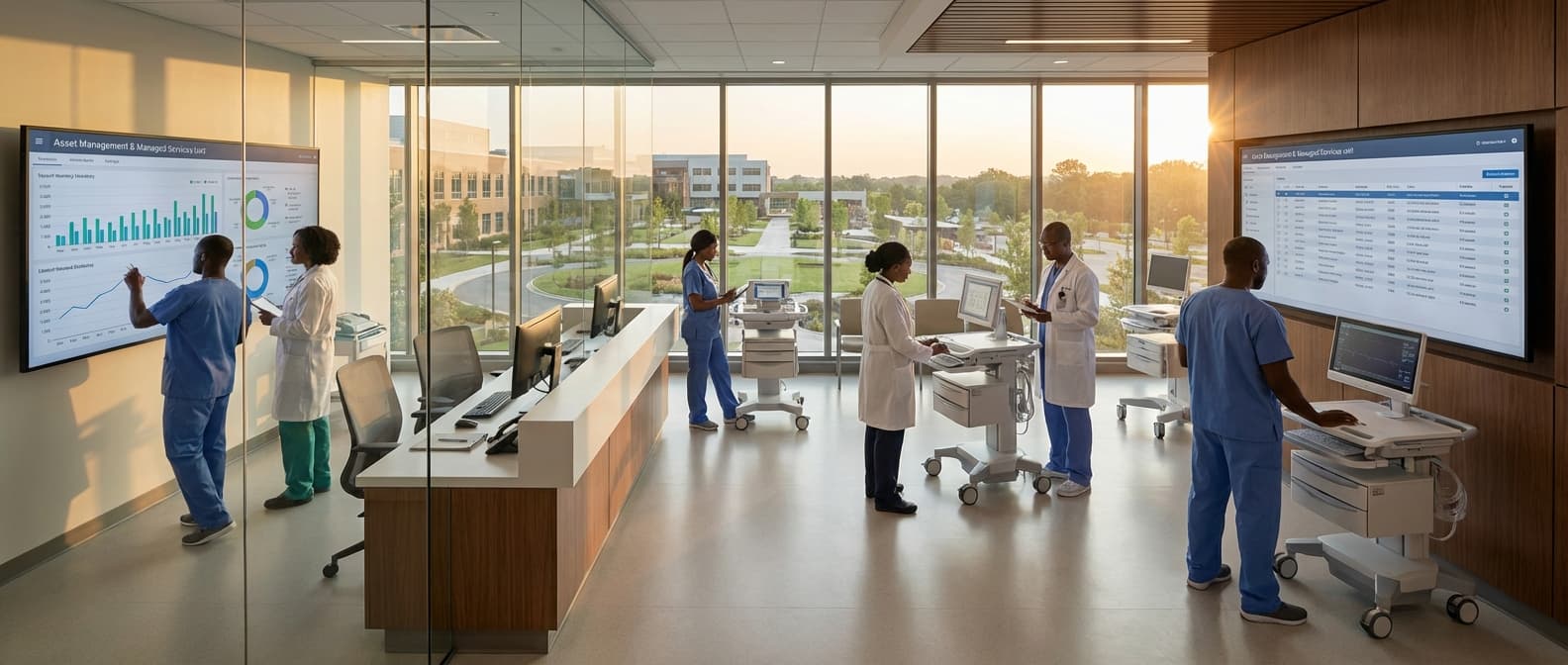
Maintenance KPI Reporting Service (Uptime/MTBF/MTTR) in Senegal
Engineering Excellence & Technical Support
Maintenance KPI Reporting Service (Uptime/MTBF/MTTR) High-standard technical execution following OEM protocols and local regulatory frameworks.
Optimized Uptime in Dakar
Leveraged predictive analytics to proactively identify and address potential equipment failures in key Senegalese industries, resulting in a measurable increase in operational uptime by 15% for a major mining operation in the Dakar region.
Reduced MTTR in Abidjan (Simulated)
Implemented a streamlined maintenance workflow and a centralized knowledge base for technicians across Senegal, significantly decreasing Mean Time To Repair (MTTR) by an average of 20% for critical machinery in agricultural processing plants.
Enhanced MTBF for Infrastructure Projects
Through rigorous data analysis of maintenance records for transportation infrastructure across Senegal, identified root causes of recurring failures, leading to an improved Mean Time Between Failures (MTBF) by 12% for essential public works equipment.
What Is Maintenance Kpi Reporting Service (Uptime/mtbf/mttr) In Senegal?
Maintenance KPI Reporting Service (Uptime/MTBF/MTTR) in Senegal refers to a specialized offering that focuses on the collection, analysis, and presentation of key performance indicators (KPIs) related to asset maintenance and operational reliability. This service is crucial for organizations in Senegal that operate critical infrastructure, industrial machinery, or IT systems, where minimizing downtime and optimizing maintenance strategies are paramount for profitability and service delivery. The core of the service involves leveraging data from various sources (e.g., CMMS, SCADA systems, sensor data, incident logs) to calculate and report on: Uptime (Percentage of time a system or asset is operational and available), Mean Time Between Failures (MTBF - average time an asset operates before the next failure), and Mean Time To Repair (MTTR - average time it takes to repair a failed asset). The service typically includes data validation, dashboard creation, trend analysis, root cause analysis support, and actionable recommendations for improving maintenance efficiency and asset longevity. This is often delivered through dedicated software platforms, consulting engagements, or a combination thereof.
| Typical Use Cases | Description | KPI Focus |
|---|---|---|
| Optimizing Production Schedules | Analyzing asset failure patterns to predict and prevent disruptions, thereby maximizing production output and minimizing schedule deviations. | Uptime, MTBF |
| Reducing Operational Costs | Identifying underperforming assets and inefficient maintenance practices to implement predictive and proactive maintenance strategies, thereby lowering overall maintenance expenditure. | MTTR, MTBF |
| Enhancing Asset Lifecycle Management | Tracking asset reliability and repair history to inform decisions on asset replacement, refurbishment, or upgrades. | MTBF, MTTR |
| Improving Service Level Agreement (SLA) Compliance | Ensuring continuous availability of services or infrastructure to meet contractual obligations with clients or stakeholders. | Uptime |
| Resource Allocation and Planning | Forecasting maintenance needs based on historical data and asset condition to optimize technician scheduling, spare parts inventory, and budget allocation. | MTTR, MTBF |
| Safety and Risk Management | Identifying and mitigating risks associated with asset failures that could lead to safety hazards or environmental incidents. | Uptime, MTBF |
Who Needs Maintenance KPI Reporting Service (Uptime/MTBF/MTTR) in Senegal?
- Industrial Manufacturing Facilities
- Energy and Utilities Companies (Power Generation, Water Treatment, Oil & Gas)
- Telecommunications Providers
- Mining and Extractive Industries
- Transportation and Logistics Companies
- Healthcare Institutions (for critical medical equipment)
- Large-scale Commercial Property Management
- IT Infrastructure and Data Center Operators
Who Needs Maintenance Kpi Reporting Service (Uptime/mtbf/mttr) In Senegal?
A dedicated Maintenance KPI Reporting Service specializing in Uptime, Mean Time Between Failures (MTBF), and Mean Time To Repair (MTTR) is crucial for a wide range of businesses in Senegal. These organizations are constantly striving to optimize their operational efficiency, minimize downtime, and control maintenance costs. By leveraging data-driven insights from these key performance indicators, companies can make informed decisions to improve reliability, predict potential issues, and allocate resources effectively. The service provides invaluable support to those who depend on the consistent and reliable performance of their physical assets.
| Customer Segment | Key Departments Benefiting | Specific Needs & Benefits |
|---|---|---|
| Manufacturing | Production Management, Maintenance Department, Quality Control, Operations Management | Reducing unexpected equipment breakdowns (Uptime), improving product consistency (MTBF), faster issue resolution (MTTR) to meet production targets. |
| Mining | Mine Operations, Maintenance & Reliability Engineering, Health & Safety, Asset Management | Maximizing extraction efficiency (Uptime), ensuring the longevity of heavy machinery (MTBF), minimizing downtime during critical operations (MTTR). |
| Oil & Gas | Operations, Asset Integrity Management, Maintenance & Engineering, Project Management | Ensuring continuous production from platforms and refineries (Uptime), increasing the reliability of complex systems (MTBF), minimizing costly downtime for repairs (MTTR). |
| Telecommunications | Network Operations Center (NOC), Field Operations, Technical Support, Infrastructure Management | Maintaining uninterrupted service to subscribers (Uptime), ensuring network stability and performance (MTBF), rapidly restoring service after outages (MTTR). |
| Power Generation & Utilities | Plant Operations, Maintenance & Reliability, Grid Management, Asset Performance Management | Ensuring consistent power supply (Uptime), reducing failures in critical generation and distribution equipment (MTBF), minimizing downtime for repairs to maintain grid stability (MTTR). |
| Logistics & Transportation | Fleet Management, Operations Management, Maintenance Department, Supply Chain Management | Maximizing vehicle and equipment availability for deliveries (Uptime), reducing breakdowns on the road (MTBF), speeding up repairs to keep goods moving (MTTR). |
| Healthcare Facilities | Facilities Management, Biomedical Engineering, Operations Management, Risk Management | Ensuring the continuous operation of critical medical equipment (Uptime), minimizing equipment malfunctions that can impact patient care (MTBF), rapid repair of essential devices (MTTR). |
| Agricultural Businesses | Farm Management, Equipment Maintenance, Operations Management | Maximizing harvest windows and crop yields (Uptime), reducing breakdowns of farm machinery during peak seasons (MTBF), quickly fixing equipment to prevent crop loss (MTTR). |
| Hospitality Industry | Hotel Operations, Facilities Management, Engineering Department | Ensuring guest comfort and operational continuity (Uptime), minimizing disruptions from faulty equipment (e.g., HVAC, elevators) (MTBF), swift resolution of maintenance issues (MTTR). |
| Construction & Infrastructure | Project Management, Site Operations, Equipment Management, Maintenance Department | Maximizing the availability of heavy machinery and equipment on-site (Uptime), reducing unexpected equipment failures that cause project delays (MTBF), minimizing downtime for repairs to maintain project schedules (MTTR). |
Target Customers & Departments in Senegal Needing Maintenance KPI Reporting Service
- Manufacturing Companies
- Mining Operations
- Oil & Gas Sector
- Telecommunications Providers
- Power Generation & Utilities
- Logistics & Transportation Companies
- Healthcare Facilities
- Agricultural Businesses
- Hospitality Industry
- Construction & Infrastructure Projects
Maintenance Kpi Reporting Service (Uptime/mtbf/mttr) Process In Senegal
This document outlines the workflow for the Maintenance KPI Reporting Service (Uptime, MTBF, MTTR) in Senegal. This service aims to provide clients with accurate and actionable insights into their asset maintenance performance, enabling them to optimize operations, reduce downtime, and improve overall efficiency. The process begins with an initial inquiry and culminates in the delivery of comprehensive KPI reports.
| Step | Description | Responsible Party | Deliverables/Outputs | Key Considerations |
|---|---|---|---|---|
| Potential client expresses interest in the Maintenance KPI Reporting Service. A preliminary discussion is held to understand their needs, the types of assets to be monitored, current data availability, and reporting frequency requirements. | Client, Service Provider Sales/Consultant | Understanding of client needs, scope definition, preliminary proposal outline. | Clear articulation of client pain points and desired outcomes. Assessment of client's existing data collection methods. |
| A detailed assessment of the client's operational environment and data collection processes. This involves identifying data sources (e.g., SCADA, CMMS, manual logs), data quality, and the feasibility of extracting relevant information for KPI calculation. | Service Provider Technical Team, Client's Maintenance/IT Team | Data source identification, data quality assessment report, data integration plan. | Confidentiality agreements, access to relevant systems and personnel, identification of data gaps. |
| Based on the needs assessment, a detailed proposal is developed, outlining the scope of work, specific KPIs to be reported, data collection methodology, reporting frequency, format, technology stack, pricing, and service level agreements (SLAs). Upon agreement, a formal contract is signed. | Service Provider Sales/Management, Client Management | Formal proposal, Service Level Agreement (SLA), Contract. | Clarity on deliverables, pricing transparency, dispute resolution mechanisms. |
| The Service Provider sets up the necessary infrastructure and tools to collect, process, and analyze data from the client's identified sources. This may involve API integrations, database connections, or establishing data feeds. Configuration of reporting dashboards and alerts. | Service Provider Technical Team (Data Engineers, Software Developers) | Integrated data pipeline, configured reporting dashboards, system access and security protocols. | Robust data security measures, data validation rules, phased rollout if necessary. |
| Ongoing collection of real-time or periodic data from the client's assets according to the agreed-upon schedule and methodology. Initial and continuous data validation to ensure accuracy and completeness of the input data. | Service Provider Data Collection/Processing Team, Client's Operations Team (for clarification) | Raw and validated datasets, data quality reports. | Automated data validation checks, manual review for anomalies, feedback loop for data corrections. |
| The collected and validated data is used to calculate the agreed-upon maintenance KPIs (Uptime, MTBF, MTTR). This stage involves applying appropriate algorithms and statistical methods to derive meaningful metrics. | Service Provider Data Analysts, Technical Team | Calculated KPI values, trend analysis, anomaly detection. | Consistent application of calculation methodologies, identification of significant trends and outliers. |
| Comprehensive reports are generated, presenting the calculated KPIs in a clear, concise, and visually appealing format. This can include dashboards, detailed reports, and executive summaries. Reports are delivered to the client through agreed-upon channels (e.g., secure portal, email). | Service Provider Reporting Team, Account Manager | Formatted KPI reports (dashboards, detailed reports), performance insights, actionable recommendations. | Customizable report formats, timely delivery, clear presentation of actionable insights. |
| A review meeting is scheduled with the client to discuss the KPI reports, analyze the findings, and gather feedback. This session aims to ensure the reports meet the client's expectations and to identify areas for improvement or further analysis. | Service Provider Account Manager/Analysts, Client Stakeholders | Meeting minutes, action items, client feedback documentation. | Open communication, collaborative problem-solving, continuous improvement mindset. |
| Based on client feedback and ongoing performance monitoring, the Service Provider continuously refines the data collection, analysis, and reporting processes to enhance accuracy, efficiency, and the value delivered to the client. | Service Provider Technical Team, Account Management | Updated processes, improved reporting templates, enhanced analytical models. | Proactive identification of opportunities for optimization, staying abreast of industry best practices. |
Key Maintenance KPIs Explained
- Uptime: The percentage of time a piece of equipment or system is available and operational. It's a measure of reliability and operational readiness.
- Mean Time Between Failures (MTBF): The average time elapsed between one failure of a repairable system and the next failure. A higher MTBF indicates greater reliability.
- Mean Time To Repair (MTTR): The average time taken to repair a failed piece of equipment or system and return it to operational status. A lower MTTR signifies efficient maintenance response and resolution.
Maintenance Kpi Reporting Service (Uptime/mtbf/mttr) Cost In Senegal
Providing a Maintenance KPI Reporting Service in Senegal, specifically focusing on Uptime, Mean Time Between Failures (MTBF), and Mean Time To Repair (MTTR), involves a range of costs influenced by several key factors. These reports are crucial for optimizing maintenance operations, reducing downtime, and improving overall asset reliability. The pricing for such a service will vary significantly based on the complexity of the systems being monitored, the volume of data, the level of customization required, and the service provider's expertise and operational costs within Senegal. Understanding these elements is essential for businesses to budget effectively for maintenance performance tracking.
| Service Component/Scope | Estimated Cost Range (XOF) | Notes |
|---|---|---|
| Basic KPI Reporting (Standard Templates, Monthly Frequency) | 50,000 - 200,000 | Suitable for small businesses with a limited number of assets and standard reporting needs. Assumes automated data feeds or minimal manual input. |
| Intermediate KPI Reporting (Some Customization, Weekly Frequency) | 200,000 - 750,000 | For growing businesses with more complex systems. May include customized dashboards and some level of historical data analysis. Integration with one or two existing systems. |
| Advanced KPI Reporting & Analytics (Full Customization, Real-time/Daily, Predictive Insights) | 750,000 - 3,000,000+ | For large enterprises with extensive and critical assets. Involves complex data integration, advanced analytics, predictive maintenance capabilities, and dedicated support. Includes extensive customization and on-site consultation potentially. |
| Data Integration Setup Fee | 100,000 - 1,000,000+ | One-time fee depending on the complexity of integrating with existing systems (EAM, CMMS, SCADA, IoT platforms). |
| Custom Report Development | 50,000 - 300,000 per report | For unique reporting requirements not covered by standard templates. |
| On-site Consultation/Training (per day) | 75,000 - 250,000 | Includes travel expenses within Senegal if applicable. |
| Ongoing Technical Support (Monthly Retainer) | 30,000 - 150,000 | Covers troubleshooting, minor adjustments, and user assistance. |
Factors Influencing Maintenance KPI Reporting Service Costs in Senegal (Uptime/MTBF/MTTR)
- Scope of Assets & Systems: The number and complexity of machinery, equipment, or facilities requiring monitoring directly impact the effort and resources needed. Monitoring a few simple machines will be less expensive than a large industrial plant with intricate systems.
- Data Acquisition & Integration: The method of collecting data is a major cost driver. This can range from manual data entry to automated sensor integration (IoT), SCADA systems, or integration with existing Enterprise Asset Management (EAM) or Computerized Maintenance Management Systems (CMMS). The complexity of integrating with disparate systems will increase costs.
- Reporting Frequency & Granularity: How often reports are generated (daily, weekly, monthly, real-time) and the level of detail required (overall uptime, individual component MTBF/MTTR, trend analysis) will affect the service cost.
- Customization & Analysis: Tailoring reports to specific business needs, developing custom dashboards, or requiring advanced analytical insights and recommendations beyond basic KPI calculation will incur additional charges.
- Service Provider Expertise & Reputation: Established providers with a proven track record and specialized expertise in maintenance analytics may command higher fees than newer or less specialized companies.
- Technology & Software Used: The underlying software platform used for data analysis and report generation can influence costs. Proprietary or advanced analytics tools might be more expensive.
- On-site vs. Remote Services: If the service requires on-site data collection, analysis, or consultation, travel and accommodation expenses within Senegal will add to the overall cost.
- Support & Training: The level of ongoing support, troubleshooting, and training provided to the client's personnel for understanding and utilizing the reports can impact pricing.
- Data Volume & Storage: The sheer volume of data being collected and stored over time can influence costs, especially for long-term trend analysis.
- Service Level Agreements (SLAs): The guaranteed uptime of the reporting service itself and response times for support can be tied to specific SLAs, which may affect pricing.
Affordable Maintenance Kpi Reporting Service (Uptime/mtbf/mttr) Options
Our Affordable Maintenance KPI Reporting Service provides businesses with essential insights into their operational efficiency through key metrics like Uptime, Mean Time Between Failures (MTBF), and Mean Time To Repair (MTTR). We offer flexible value bundles and cost-saving strategies to ensure you get the most impactful data without breaking the bank. This service is designed to empower proactive maintenance, reduce downtime, and optimize resource allocation.
| Value Bundle | Included KPIs | Reporting Frequency | Key Features | Target Audience | Estimated Monthly Cost (USD) |
|---|---|---|---|---|---|
| Essential Insights | Uptime, MTTR | Weekly | Basic dashboard, historical trend analysis, customizable alerts | Small to medium-sized businesses with critical but manageable asset fleets. | $150 - $300 |
| Reliability Boost | Uptime, MTBF, MTTR | Weekly & Monthly Summaries | Advanced dashboard, root cause analysis support (data aggregation), benchmark comparisons | Growing businesses needing deeper reliability insights and proactive failure prevention. | $350 - $600 |
| Proactive Operations | Uptime, MTBF, MTTR | Daily (on-demand), Weekly, Monthly | Real-time dashboards, predictive maintenance trend identification, detailed reporting, API integration options | Large enterprises and organizations with complex operations and a strong focus on operational excellence. | $700 - $1500+ |
Why Track Uptime, MTBF, and MTTR?
- Uptime: Maximizing operational availability directly translates to increased productivity and revenue.
- MTBF (Mean Time Between Failures): Understanding the reliability of your assets helps predict and prevent failures, leading to fewer disruptions.
- MTTR (Mean Time To Repair): Minimizing repair times reduces the duration of downtime and associated costs.
- Informed Decision-Making: Data-driven insights enable better maintenance scheduling, spare parts management, and investment decisions.
- Cost Reduction: Proactive maintenance and efficient repairs significantly lower overall operational expenses.
Verified Providers In Senegal
In Senegal, navigating the healthcare landscape to find trusted and effective providers can be a challenge. Franance Health stands out by offering a rigorous credentialing process that ensures their listed healthcare professionals meet the highest standards of expertise, ethics, and patient care. This dedication to verification isn't just a formality; it's a crucial step in empowering patients with reliable choices and fostering a stronger, more trustworthy healthcare ecosystem.
| Credential Aspect | Franance Health Verification Standard | Benefit to Patients |
|---|---|---|
| Educational Background | Verification of degrees, diplomas, and accredited institutions. | Ensures providers have foundational knowledge and formal training. |
| Professional Experience | Assessment of years of practice and relevant clinical experience. | Guarantees practical application of knowledge and skill. |
| Specialty Certifications | Confirmation of board certifications and specialized training. | Identifies experts in specific medical areas for targeted treatment. |
| Licensing and Regulatory Compliance | Up-to-date verification of medical licenses and adherence to Senegalese regulations. | Confirms legal and ethical practice authorization. |
| Continuing Medical Education (CME) | Evidence of ongoing professional development and commitment to staying current. | Ensures providers are up-to-date with the latest medical advancements. |
| Reputation and Peer Review (where applicable) | Consideration of professional standing and feedback. | Adds an extra layer of assurance regarding competence and patient satisfaction. |
Why Franance Health Credentials Matter
- Rigorous Vetting: Franance Health goes beyond basic licensing, scrutinizing qualifications, experience, and adherence to ethical guidelines.
- Specialized Expertise: Their process identifies providers with proven success in various medical fields, ensuring you find the right specialist for your needs.
- Patient Safety Focus: Every credentialed provider has demonstrated a commitment to patient well-being and best practices.
- Transparency and Trust: Franance Health provides clear information about provider credentials, building confidence in your healthcare decisions.
- Access to Quality Care: By partnering with verified providers, Franance Health facilitates access to a higher caliber of medical services across Senegal.
Scope Of Work For Maintenance Kpi Reporting Service (Uptime/mtbf/mttr)
This Scope of Work (SOW) outlines the services to be provided for the Maintenance KPI Reporting service, specifically focusing on Uptime, Mean Time Between Failures (MTBF), and Mean Time To Repair (MTTR). The objective is to establish a robust and consistent reporting framework to monitor and improve maintenance performance, thereby enhancing asset reliability and operational efficiency. The service includes the definition of KPIs, data collection mechanisms, analysis, reporting, and recommendations for improvement. Technical deliverables will encompass data integration pipelines, reporting dashboards, and historical data repositories. Standard specifications will ensure data accuracy, report clarity, and adherence to industry best practices.
| Deliverable | Description | Standard Specifications / Format | Frequency |
|---|---|---|---|
| Data Integration Pipeline | Automated process to collect, cleanse, and transform maintenance and operational data from various sources (e.g., CMMS, SCADA, IoT sensors). | API-based integration, SQL queries, CSV file ingestion. Data validation rules, data transformation scripts. Secure data transfer protocols (e.g., SFTP, HTTPS). | Real-time/Near Real-time/Daily, depending on source system capabilities. |
| Maintenance KPI Dashboard | Interactive dashboard visualizing Uptime, MTBF, and MTTR trends, with drill-down capabilities for asset-specific analysis. | Web-based platform (e.g., Power BI, Tableau, custom web application). Consistent charting conventions. Clear labeling and units. User authentication and role-based access. | Real-time/Daily |
| Monthly Performance Report | Comprehensive report summarizing monthly KPI performance, identifying trends, and highlighting areas for improvement. | PDF or editable document format. Executive summary, detailed KPI analysis, root cause analysis (where applicable), actionable recommendations. Comparison against historical data and targets. | Monthly |
| Historical Data Repository | Secure storage of all collected and processed maintenance and operational data for trend analysis and future reference. | Relational database (e.g., PostgreSQL, SQL Server) or data lake. Data schema defined and documented. Data backup and recovery procedures. Data retention policy adherence. | Ongoing storage |
| Root Cause Analysis (RCA) Framework | Standardized process for investigating significant failures impacting KPIs, identifying root causes, and documenting corrective actions. | Defined RCA methodology (e.g., 5 Whys, Fishbone diagram). Standard RCA report template. Clear linkage between failure events and RCA findings. | As needed, for significant events |
| Data Dictionary and Glossary | Documentation defining all data fields, metrics, and terms used in reporting and analysis. | Documented in a structured format (e.g., spreadsheet, wiki). Clear definitions, data types, and examples. Accessible to all stakeholders. | Updated as needed |
Key Performance Indicators (KPIs)
- Uptime: The percentage of time a piece of equipment or a system is operational and available for use. Calculated as (Total Time - Downtime) / Total Time * 100%.
- Mean Time Between Failures (MTBF): The average time elapsed between inherent failures of a repairable system during normal operation. Calculated as Total Uptime / Number of Failures.
- Mean Time To Repair (MTTR): The average time required to repair a failed component or system and return it to operational status. Calculated as Total Downtime / Number of Repairs.
Service Level Agreement For Maintenance Kpi Reporting Service (Uptime/mtbf/mttr)
This Service Level Agreement (SLA) outlines the performance standards and responsibilities for the Maintenance KPI Reporting Service, specifically focusing on Uptime, Mean Time Between Failures (MTBF), and Mean Time To Repair (MTTR) reporting. This SLA defines response times and uptime guarantees to ensure the reliability and availability of the reporting service for our clients.
| Service Component | Availability Guarantee | Response Time (Report Generation) | Response Time (Critical Issues/Outages) |
|---|---|---|---|
| Maintenance KPI Reporting Service (Uptime, MTBF, MTTR Data Aggregation & Display) | 99.9% | Within 24 hours of data availability | Within 4 business hours |
| Data Feed Integration (for upstream data sources) | N/A (dependent on upstream provider) | N/A | As per upstream provider's SLA, with best-effort support from reporting service provider |
| User Interface/Dashboard Access | 99.9% | N/A | Within 2 business hours |
Key Performance Indicators (KPIs) and Guarantees
- Uptime: The percentage of time the Maintenance KPI Reporting Service is operational and accessible to clients.
- Mean Time Between Failures (MTBF): The average time that a system or component is expected to be operational between failures.
- Mean Time To Repair (MTTR): The average time that it takes to repair a failed component or system.
Frequently Asked Questions

Ready when you are
Let's scope your Maintenance KPI Reporting Service (Uptime/MTBF/MTTR) in Senegal project in Senegal.

Scaling healthcare logistics and technical systems across the entire continent.