
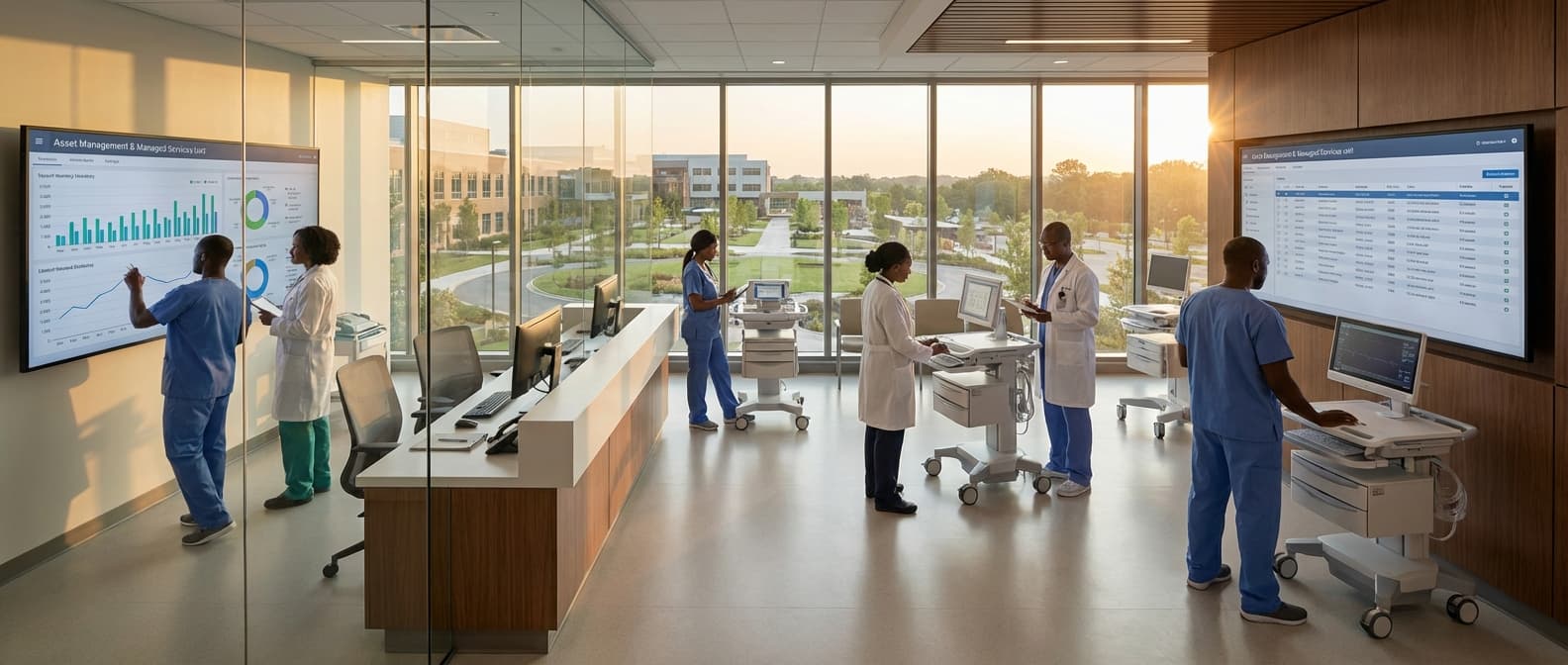
Equipment Condition Assessment Report Service in Senegal
Engineering Excellence & Technical Support
Equipment Condition Assessment Report Service High-standard technical execution following OEM protocols and local regulatory frameworks.
Predictive Maintenance Insights
Leverage advanced sensor data analysis and AI-driven algorithms to identify potential equipment failures before they occur, minimizing downtime and optimizing maintenance schedules for operations in Senegal.
Comprehensive Asset Digitization
Our service creates detailed digital twins of your critical assets, capturing real-time condition data, maintenance history, and performance metrics, providing a centralized and accessible platform for informed decision-making in Senegal's diverse industrial landscape.
Root Cause Analysis & Remediation
Go beyond surface-level diagnostics with our expert root cause analysis, pinpointing the underlying issues affecting equipment performance. We provide actionable recommendations for effective and long-term remediation strategies tailored to Senegal's operational environments.
What Is Equipment Condition Assessment Report Service In Senegal?
Equipment Condition Assessment Report Service in Senegal refers to a systematic evaluation of the operational status, integrity, and remaining useful life of industrial, commercial, or infrastructure assets. This service involves a comprehensive inspection and analysis performed by qualified professionals to determine the current health of equipment, identify potential defects or deterioration, and provide recommendations for maintenance, repair, or replacement. The objective is to ensure safe, reliable, and efficient operation of assets, mitigate risks of failure, and optimize asset management strategies within the Senegalese operational context.
| Who Needs Equipment Condition Assessment Report Service in Senegal? | Typical Use Cases | ||||||
|---|---|---|---|---|---|---|---|
| Industries: Manufacturing (e.g., food processing, textiles, cement), Mining and Metallurgy, Oil and Gas (upstream, midstream, downstream), Power Generation (thermal, hydro, renewable), Chemical and Petrochemical, Water and Wastewater Treatment. | Asset Management & Maintenance Planning: Developing proactive maintenance schedules, prioritizing repair and replacement investments, optimizing spare parts inventory. | Financial Institutions & Investors: Due diligence for asset financing, mergers and acquisitions, and project funding to assess the value and risk associated with existing equipment. | Insurance Companies: Verifying asset condition for insurance policy underwriting, assessing claims related to equipment failure. | Government & Public Sector: Infrastructure management (bridges, roads, public utilities), safety inspections of public transportation and industrial facilities, compliance with regulatory standards. | Consulting Firms: Providing expert opinions and technical evaluations for clients undertaking asset modernization, expansion, or decommissioning projects. | Equipment Manufacturers & Suppliers: Post-warranty assessment, product performance evaluation, and providing technical support to end-users. | Facility Managers: Ensuring the operational efficiency and safety of building systems (HVAC, electrical, elevators) and production machinery. |
Key Components of Equipment Condition Assessment Report Service:
- Visual Inspection: Thorough examination of equipment for visible signs of wear, corrosion, damage, leaks, or deformation.
- Non-Destructive Testing (NDT): Application of various NDT techniques such as ultrasonic testing (UT), magnetic particle testing (MPT), liquid penetrant testing (PT), eddy current testing (ECT), and radiographic testing (RT) to detect subsurface and surface defects without damaging the asset.
- Performance Monitoring: Evaluation of operational parameters (e.g., temperature, pressure, vibration, flow rate) against design specifications and historical data to identify deviations and potential issues.
- Material Analysis: Sampling and laboratory analysis of materials to assess their properties, degradation, and suitability for continued service.
- Data Analysis and Interpretation: Aggregation and analysis of all collected data to form a comprehensive understanding of the equipment's condition.
- Risk Assessment: Evaluation of the likelihood and consequence of equipment failure.
- Remaining Useful Life (RUL) Estimation: Prediction of the operational lifespan of the equipment based on its current condition and maintenance history.
- Reporting and Recommendations: Generation of a detailed report documenting findings, conclusions, and actionable recommendations for maintenance, repair, refurbishment, or replacement.
Who Needs Equipment Condition Assessment Report Service In Senegal?
In Senegal, the need for comprehensive Equipment Condition Assessment Report Services is driven by a desire for operational efficiency, safety, and longevity across various sectors. These reports are crucial for making informed decisions regarding maintenance, repair, and replacement of vital machinery and infrastructure, ultimately contributing to cost savings and risk mitigation.
| Sector/Industry | Key Departments/Divisions | Primary Needs Addressed by Assessment Reports |
|---|---|---|
| Industrial Manufacturing | Production Management, Maintenance & Engineering, Quality Control, Operations | Predictive maintenance, identifying wear and tear, optimizing replacement cycles, ensuring product quality, preventing unexpected breakdowns. |
| Mining and Extractive Industries | Operations, Mine Engineering, Maintenance, Health & Safety | Ensuring operational safety, minimizing downtime, maximizing resource extraction efficiency, assessing structural integrity of mining equipment and infrastructure. |
| Energy and Utilities | Operations & Generation, Transmission & Distribution, Maintenance, Asset Management, Regulatory Compliance | Ensuring continuous power/water supply, planning for equipment upgrades and replacements, meeting performance standards, identifying safety hazards. |
| Transportation and Logistics | Port Operations, Airport Management, Railway Operations, Fleet Management, Infrastructure Maintenance | Ensuring smooth cargo handling, passenger safety, efficient movement of goods, predicting maintenance needs for vehicles and infrastructure. |
| Construction and Infrastructure Development | Project Management, Site Operations, Equipment Management, Quality Assurance, Safety | Verifying equipment fitness for purpose, planning maintenance to avoid project delays, ensuring the safety of personnel and the public, assessing structural stability. |
| Agriculture and Agribusiness | Farm Operations, Processing Plant Management, Maintenance, Supply Chain | Maximizing harvest efficiency, ensuring food safety and quality, reducing post-harvest losses, optimizing irrigation system performance. |
| Oil and Gas Sector | Asset Integrity Management, Operations, Maintenance, Safety & Environmental Compliance | Ensuring the integrity of critical infrastructure, preventing spills and accidents, planning for routine and emergency maintenance. |
| Government Agencies | Ministry of Public Works, Ministry of Transport, Ministry of Energy, Ministry of Mines, Ministry of Industry, Public Procurement Agencies | Oversight of public assets, ensuring compliance with safety and environmental regulations, strategic infrastructure planning, informed capital expenditure decisions, tender evaluation. |
Target Customers and Departments for Equipment Condition Assessment Report Services in Senegal
- Industrial Manufacturing: Companies involved in food processing, textiles, chemicals, cement production, and other manufacturing sectors rely heavily on the uninterrupted operation of their machinery. Deterioration in equipment can lead to costly downtime and production losses.
- Mining and Extractive Industries: Senegal's growing mining sector (e.g., phosphates, gold, iron ore) utilizes heavy-duty machinery like excavators, crushers, and conveyor systems. Regular condition assessments are vital for safety and to prevent catastrophic failures in harsh environments.
- Energy and Utilities: Power plants (thermal, solar, wind), water treatment facilities, and distribution networks depend on the reliable performance of generators, turbines, pumps, and transmission equipment. Condition assessments ensure energy security and public service delivery.
- Transportation and Logistics: Ports, airports, railways, and road transport operators need to maintain the integrity and functionality of their infrastructure and vehicles. This includes cranes, tugboats, aircraft, trains, and fleet vehicles.
- Construction and Infrastructure Development: Companies undertaking large-scale construction projects, including roads, bridges, dams, and buildings, require assessments of heavy construction equipment (cranes, bulldozers, concrete mixers) and the structural integrity of ongoing projects.
- Agriculture and Agribusiness: Mechanized farming operations and agricultural processing plants use equipment like tractors, harvesters, irrigation systems, and processing machinery. Assessments ensure optimal yield and prevent spoilage.
- Oil and Gas Sector: While nascent, Senegal's emerging offshore oil and gas exploration and production activities will necessitate assessments of offshore platforms, pipelines, and support vessels.
- Government Agencies: Ministries and public bodies responsible for infrastructure, public works, safety regulations, and the management of state-owned assets will require these services for oversight and strategic planning.
Equipment Condition Assessment Report Service Process In Senegal
The Equipment Condition Assessment Report (ECAR) service process in Senegal is a structured workflow designed to systematically evaluate the operational status and identify potential issues with industrial or commercial equipment. This process ensures equipment reliability, safety, and optimal performance, ultimately minimizing downtime and associated costs for businesses operating in Senegal. The workflow typically begins with an initial inquiry from a client and culminates in the delivery of a comprehensive assessment report with actionable recommendations.
| Step | Description | Key Activities | Inputs | Outputs | Responsible Party |
|---|---|---|---|---|---|
| The process begins when a client expresses interest in an ECAR service. The service provider engages with the client to understand their needs, the type of equipment to be assessed, the desired level of detail, and any specific concerns. | Initial contact, needs assessment meeting, defining objectives, outlining scope of work, agreeing on deliverables. | Client's expressed need for assessment, preliminary equipment information. | Agreed-upon scope of work, service contract/agreement, preliminary equipment list. | Client & Service Provider |
| A preliminary visit to the client's facility is conducted to gain a better understanding of the operational environment, identify all relevant equipment, and collect existing documentation. | On-site visit, facility walk-through, identifying equipment, collecting manuals, maintenance logs, previous inspection reports, operational data. | Agreed-upon scope of work, client's facility access. | Comprehensive equipment inventory, collected documentation, site context understanding. | Service Provider (Assessment Team) |
| This is the core of the assessment, involving a thorough physical inspection and various testing methodologies to evaluate the condition of each piece of equipment. | Visual inspections (wear, damage, corrosion), non-destructive testing (NDT) like ultrasonic, magnetic particle, dye penetrant, vibration analysis, thermal imaging, performance testing, lubrication analysis, electrical testing. | Equipment inventory, access to equipment, testing equipment, safety protocols. | Raw inspection data, test results, photographic evidence, condition notes. | Service Provider (Assessment Team) |
| The collected data from inspections and tests are analyzed to identify anomalies, diagnose potential issues, and assess the overall health of the equipment. | Interpreting test results, comparing against industry standards and manufacturer specifications, identifying failure modes, assessing remaining useful life, risk assessment. | Raw inspection data, test results, equipment specifications, industry benchmarks. | Diagnosed issues, identified failure trends, risk ratings, preliminary assessment findings. | Service Provider (Engineers/Specialists) |
| A comprehensive report is compiled, detailing all findings, analyses, and conclusions. This report is structured to be clear, concise, and actionable. | Documenting findings, categorizing issues (critical, major, minor), detailing recommended corrective actions, including cost estimates for repairs, and outlining preventive maintenance strategies. | Diagnosed issues, risk ratings, recommended actions, cost data, photographic evidence. | Draft ECAR, executive summary, detailed findings section, recommendations section, appendices. | Service Provider (Report Writers/Engineers) |
| The completed ECAR is formally presented to the client. This is an opportunity for the service provider to explain the findings, answer questions, and discuss the proposed recommendations in detail. | Formal presentation meeting, walk-through of the report, clarification of findings, discussion of priorities for corrective actions. | Final ECAR, client's understanding of operations. | Client's understanding of equipment condition, agreed-upon priorities for action. | Service Provider & Client |
| The service provider may offer continued support to the client in implementing the recommended actions, ensuring the effective resolution of identified issues and improvements in equipment reliability. | Assisting in sourcing spare parts, providing technical expertise for repairs, developing detailed maintenance plans, monitoring implementation progress. | Agreed-upon action plan, client's commitment to implementation. | Improved equipment reliability, reduced downtime, enhanced operational efficiency. | Service Provider (Optional Support) & Client |
Equipment Condition Assessment Report Service Process in Senegal: Workflow Steps
- Client Inquiry & Scope Definition
- Site Survey & Information Gathering
- Equipment Inspection & Testing
- Data Analysis & Diagnosis
- Report Generation
- Report Presentation & Recommendation Discussion
- Follow-up & Action Plan Implementation Support
Equipment Condition Assessment Report Service Cost In Senegal
The cost of Equipment Condition Assessment (ECA) services in Senegal is influenced by several key factors. These assessments are crucial for evaluating the operational status, integrity, and remaining lifespan of various types of industrial, construction, and agricultural equipment. Pricing is typically determined on a per-item basis, with more complex or specialized equipment commanding higher fees. The scope of the assessment also plays a significant role; a basic visual inspection will be less expensive than a comprehensive evaluation involving non-destructive testing (NDT), detailed performance analysis, and component wear measurements. The experience and reputation of the assessing firm, as well as their overhead costs (including travel within Senegal, laboratory facilities, and specialized personnel), are also factored into the final quotation. The urgency of the assessment can also impact cost, with rush services incurring a premium. Finally, the geographical location of the equipment within Senegal might influence travel expenses for the assessors.
| Equipment Type/Complexity | Typical Scope of Assessment | Estimated Cost Range (XOF) |
|---|---|---|
| Simple Machinery (e.g., small pumps, generators) | Visual inspection, basic operational check | 50,000 - 150,000 |
| Medium Machinery (e.g., construction vehicles, agricultural tractors) | Visual inspection, operational testing, basic fluid analysis | 150,000 - 400,000 |
| Complex Industrial Equipment (e.g., large manufacturing machinery, heavy-duty mining equipment) | Comprehensive inspection, NDT, performance analysis, component wear assessment | 400,000 - 1,500,000+ |
| Specialized Equipment (e.g., maritime vessels, aviation components) | Highly specialized and certified assessments, often with international standards | 1,000,000 - 5,000,000+ (highly variable) |
| Add-on Services (e.g., NDT, detailed material analysis, predictive maintenance recommendations) | Per service or integrated into comprehensive assessment | 50,000 - 500,000+ (per service) |
Factors Influencing Equipment Condition Assessment Service Costs in Senegal
- Complexity and type of equipment being assessed
- Scope and depth of the assessment (e.g., visual inspection vs. advanced testing)
- Experience and reputation of the service provider
- Overhead costs of the assessing firm (travel, lab, personnel)
- Urgency of the assessment (standard vs. rush service)
- Geographical location of the equipment within Senegal
Affordable Equipment Condition Assessment Report Service Options
Our Affordable Equipment Condition Assessment Report Service offers flexible options designed to meet your budget while ensuring you receive comprehensive insights into your asset's health. We understand that each organization has unique needs, which is why we've developed value bundles and implemented cost-saving strategies to make expert assessments accessible.
| Service Component | Basic Bundle | Standard Bundle | Premium Bundle | Cost-Saving Strategy |
|---|---|---|---|---|
| On-Site Visual Inspection | Yes | Yes | Yes | Streamlined reporting templates. |
| Basic Operational Review | Yes | Yes | Yes | Leveraging standardized checklists. |
| Analysis of Basic Operational Data (e.g., run hours) | No | Yes | Yes | Automated data aggregation tools. |
| Thermal Imaging (Infrared) | No | No | Yes | Bundled with other services for efficiency. |
| Basic Non-Destructive Testing (NDT) (e.g., ultrasonic thickness) | No | No | Yes | Economies of scale for NDT services. |
| Detailed Condition Report & Recommendations | Yes | Yes | Yes | Digital delivery to reduce printing costs. |
| Priority Scheduling Discount | N/A | N/A | N/A | Book multiple assessments in advance for reduced per-unit cost. |
| Remote Consultation Add-on | Yes | Yes | Yes | Reduces on-site travel time and associated expenses. |
| Tiered Pricing for Volume | N/A | N/A | N/A | Significant discounts for assessing a large number of assets. |
Key Value Bundles & Features
- {"title":"Basic Assessment Bundle","description":"Ideal for routine checks and identifying immediate concerns. Includes a visual inspection and basic operational review."}
- {"title":"Standard Assessment Bundle","description":"A comprehensive package for a deeper understanding. Includes visual inspection, operational review, and analysis of basic operational data."}
- {"title":"Premium Assessment Bundle","description":"Our most thorough option, providing in-depth analysis and predictive insights. Includes all Standard features plus advanced data analysis, thermal imaging, and basic non-destructive testing (NDT)."}
- {"title":"Customizable Bundles","description":"Tailor a package to your specific requirements. Mix and match services to get exactly what you need."}
Verified Providers In Senegal
When seeking healthcare services in Senegal, it's crucial to identify and choose providers who have undergone rigorous verification processes and possess legitimate credentials. This ensures you receive safe, effective, and ethical medical care. Franance Health stands out as a beacon of trust in the Senegalese healthcare landscape, meticulously vetting its network of providers. Their commitment to quality means that any practitioner or facility affiliated with Franance Health has met stringent criteria, offering patients peace of mind and access to superior medical expertise.
| Credential Type | Verification Aspect | Significance for Patients |
|---|---|---|
| Medical License (National) | Legality to practice medicine in Senegal | Ensures provider meets basic legal and educational requirements. |
| Specialty Certifications | Advanced training and expertise in a specific field (e.g., cardiology, pediatrics) | Guarantees in-depth knowledge and skill for complex medical issues. |
| Franance Health Accreditation | Successful completion of Franance Health's internal rigorous vetting and quality assurance program | Indicates adherence to superior standards of care, ethics, and patient safety as determined by Franance Health. |
| Continuing Medical Education (CME) Records | Proof of ongoing professional development and staying current with medical advancements | Confirms provider's commitment to lifelong learning and modern treatment methodologies. |
| Professional Affiliations and Memberships | Membership in recognized medical associations and societies | Suggests engagement with the broader medical community and adherence to professional best practices. |
Why Franance Health Credentials Represent the Best Choice:
- Rigorous Verification Process: Franance Health employs a multi-faceted verification system that goes beyond basic licensing. This includes background checks, peer reviews, and assessments of clinical expertise and ethical conduct.
- Commitment to Quality and Safety: The credentials held by Franance Health providers are a testament to their dedication to maintaining the highest standards of patient care, safety protocols, and up-to-date medical knowledge.
- Access to Specialized Expertise: Franance Health curates a network of highly skilled professionals across various medical disciplines, ensuring patients can find the right specialist for their specific needs.
- Transparency and Trust: By clearly outlining their verification standards and the credentials of their affiliated providers, Franance Health fosters an environment of transparency and builds lasting trust with the community.
- Improved Patient Outcomes: Choosing a Franance Health verified provider significantly increases the likelihood of positive health outcomes due to the assurance of competence and quality care.
Scope Of Work For Equipment Condition Assessment Report Service
This Scope of Work (SOW) outlines the requirements for a comprehensive Equipment Condition Assessment Report (ECAR) service. The service provider will be responsible for assessing the current condition of designated equipment, identifying potential issues, and providing a detailed report with recommendations for maintenance, repair, or replacement. The ECAR will assist the client in making informed decisions regarding asset management and operational efficiency. This SOW also details the technical deliverables and standard specifications expected from the service provider.
| Deliverable | Description | Format | Standard Specification / Requirement |
|---|---|---|---|
| Equipment Condition Assessment Report (ECAR) | A detailed report summarizing the findings of the assessment, including condition ratings, identified defects, risk assessments, and actionable recommendations. | Digital (PDF) and/or Hardcopy | Shall include an executive summary, detailed equipment-specific assessments, photographic evidence, risk matrix, and prioritized recommendations. Reports should be clear, concise, and technically accurate. |
| Executive Summary | A high-level overview of the assessment findings, key risks, and overarching recommendations. | Within ECAR | Concise (max 2 pages), highlighting critical findings and immediate actions. |
| Individual Equipment Assessment Sheets | Detailed breakdown for each assessed piece of equipment. | Within ECAR | Includes: Equipment identification, location, manufacturer, model, serial number, date of inspection, condition rating (e.g., Excellent, Good, Fair, Poor, Critical), identified defects, supporting evidence (photos, test results), and specific recommendations for each item. |
| Risk Assessment Matrix | Evaluation of identified defects based on probability of failure and severity of consequences. | Within ECAR | Standard risk matrix (e.g., 3x3 or 5x5) with clear definitions for each level. |
| Recommendations Log | Prioritized list of recommended actions. | Within ECAR | Categorized by urgency (e.g., Immediate, Short-term, Long-term) and type (e.g., Maintenance, Repair, Replacement, Monitoring). |
| Data Logs and Test Results | Raw data and results from any diagnostic testing performed. | Digital (e.g., Excel, CSV) and/or within ECAR | Clearly labeled and traceable to specific equipment and tests. |
| Presentation Slides | Slides for presenting findings to client stakeholders. | Digital (e.g., PowerPoint, PDF) | Visually engaging, summarizing key findings, risks, and recommendations. Aligned with ECAR content. |
Key Activities and Deliverables
- On-site visual inspection of all designated equipment.
- Non-destructive testing (NDT) and diagnostic evaluations as deemed necessary.
- Data collection including operational history, maintenance records, and manufacturer specifications.
- Analysis of collected data to determine equipment health, remaining useful life (RUL), and potential failure modes.
- Development of a comprehensive Equipment Condition Assessment Report (ECAR).
- Presentation of findings and recommendations to client stakeholders.
- Post-assessment follow-up and clarification as required.
Service Level Agreement For Equipment Condition Assessment Report Service
This Service Level Agreement (SLA) outlines the response times and uptime guarantees for the Equipment Condition Assessment Report Service. It defines the standards of service that the Provider commits to delivering to the Client, ensuring timely and reliable reporting on the condition of specified equipment. This SLA is an integral part of the overall Service Agreement between the Provider and the Client.
| Service Component | Service Level Objective (SLO) | Measurement Metric | Client Notification Procedure for Breach |
|---|---|---|---|
| Standard Report Generation | Within 5 business days of final inspection data receipt | Time elapsed from data receipt to report availability | Email notification to Client's designated contact within 1 business day of delay, with updated ETA |
| Expedited Report Generation (if applicable) | Within 2 business days of final inspection data receipt | Time elapsed from data receipt to report availability | Email notification to Client's designated contact within 1 business day of delay, with updated ETA |
| Report Revision Turnaround | Within 3 business days of Client's documented revision request | Time elapsed from documented request to delivery of revised report | Email notification to Client's designated contact within 1 business day of delay, with updated ETA |
| Support & Platform Availability | 99.5% Uptime during agreed-upon business hours (e.g., 9 AM - 5 PM, Monday-Friday, Client's local time) | Percentage of time the reporting platform and support are accessible within business hours | Email notification to Client's designated contact within 4 business hours of sustained outage, with ongoing updates and estimated resolution time |
| Inquiry/Clarification Response | Acknowledgement within 4 business hours; substantive response within 1 business day | Time to acknowledge inquiry; time to provide substantive response | No specific notification required for standard response times; escalation process available for prolonged delays |
Service Level Objectives
- Report Generation Time: The Provider shall generate the Equipment Condition Assessment Report within the agreed-upon timeframe following the completion of the physical inspection and data collection.
- Report Revision Time: Any requested revisions to the Equipment Condition Assessment Report, based on mutually agreed-upon scope, shall be addressed and delivered within the specified revision turnaround time.
- Support Availability: The Provider will ensure that the reporting platform and associated support channels are available and accessible to the Client during defined business hours.
- Data Integrity: The Provider guarantees the accuracy and integrity of the data presented in the Equipment Condition Assessment Report, subject to the accuracy of information provided by the Client and the limitations of standard inspection methodologies.
- Communication Response Time: Inquiries and requests for clarification regarding the assessment or the report will be acknowledged and responded to within the defined communication response times.
Frequently Asked Questions

Ready when you are
Let's scope your Equipment Condition Assessment Report Service in Senegal project in Senegal.

Scaling healthcare logistics and technical systems across the entire continent.