
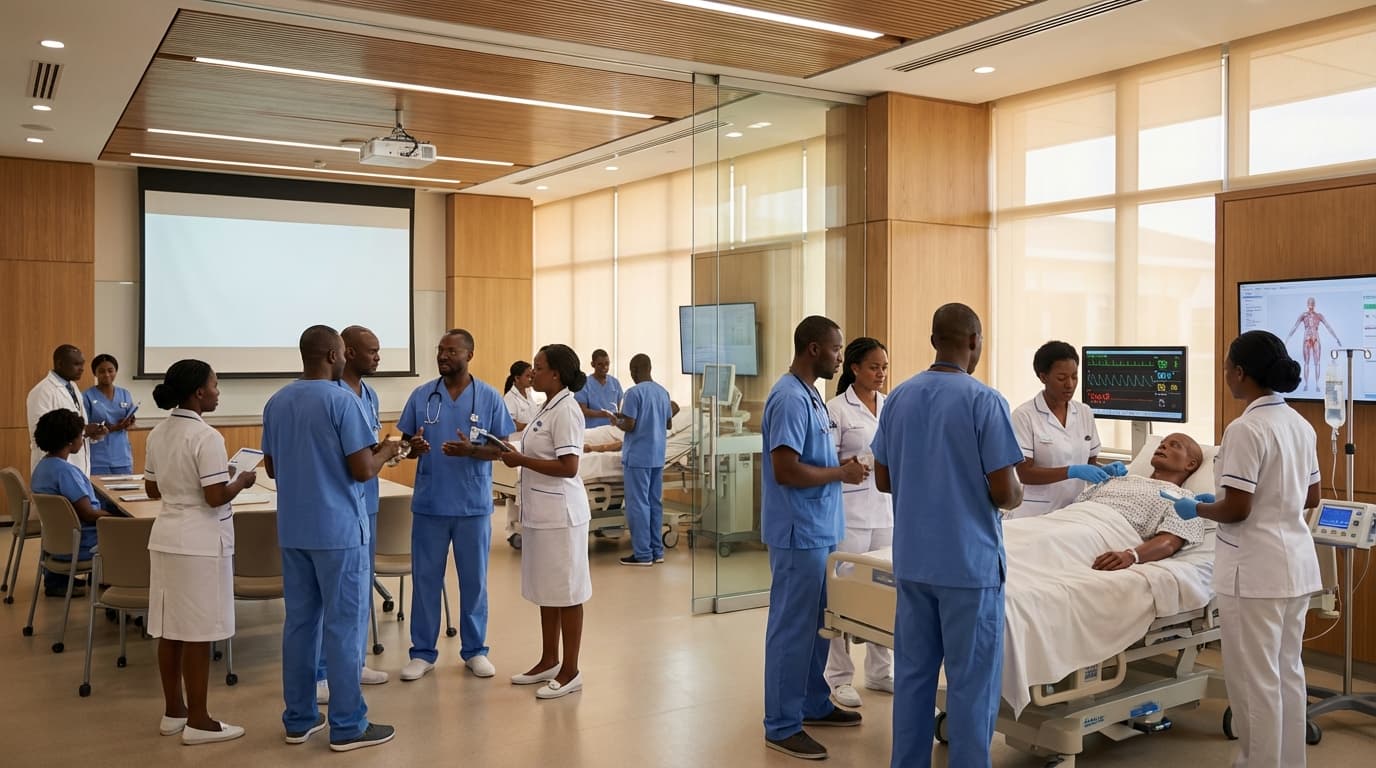
Equipment Training & Education in Sao Tome and Principe
Engineering Excellence & Technical Support
Comprehensive equipment training and certification programs High-standard technical execution following OEM protocols and local regulatory frameworks.
Advanced Diagnostic Tool Training
Empowering local technicians in Sao Tome and Principe with hands-on training on cutting-edge diagnostic equipment, enabling faster and more accurate problem identification for critical machinery across various industries.
Sustainable Equipment Maintenance Workshops
Facilitating specialized workshops focusing on eco-friendly and cost-effective maintenance techniques for industrial equipment, promoting longevity and reducing environmental impact within Sao Tome and Principe's operational landscape.
Operator Proficiency & Safety Certification
Delivering comprehensive training programs to enhance operator skills and safety protocols for specialized equipment in Sao Tome and Principe, ensuring operational excellence and minimizing workplace accidents.
What Is Equipment Training & Education In Sao Tome And Principe?
Equipment Training & Education in Sao Tome and Principe refers to the systematic instruction and skill development provided to individuals or groups on the safe, efficient, and effective operation, maintenance, and troubleshooting of specific machinery, tools, or technological systems relevant to the economic sectors of the nation. This service is critical for enhancing productivity, ensuring workplace safety, extending equipment lifespan, and fostering technological advancement within the country's developing industrial and agricultural landscapes. The training aims to bridge knowledge gaps and equip personnel with the requisite competencies to handle modern or specialized equipment, thereby mitigating operational risks and maximizing return on investment in capital assets.
| Stakeholder Group | Needs Addressed | Typical Use Cases |
|---|---|---|
| Agricultural Workers | Operation and maintenance of tractors, irrigation systems, harvesters, and processing machinery. | Enhancing crop yields through optimized machinery usage, reducing post-harvest losses, implementing sustainable farming practices. |
| Industrial Technicians/Operators | Operation and maintenance of manufacturing equipment (e.g., for food processing, textiles), power generation equipment, and construction machinery. | Ensuring production line efficiency, minimizing downtime, adhering to quality control standards, workplace safety compliance. |
| Healthcare Professionals | Operation and maintenance of medical diagnostic and treatment equipment (e.g., X-ray machines, laboratory analyzers, monitoring devices). | Accurate patient diagnosis, effective treatment delivery, equipment longevity, infection control. |
| IT & Telecommunications Personnel | Installation, configuration, and maintenance of network infrastructure, servers, and communication devices. | Ensuring reliable connectivity, data security, efficient network performance, support for digital transformation initiatives. |
| Marine & Fisheries Sector Personnel | Operation and maintenance of fishing vessels, navigation equipment, fish processing machinery, and aquaculture systems. | Improving fishing efficiency, ensuring vessel safety, maintaining fish quality, sustainable resource management. |
| Government & Public Sector Employees | Operation of public service equipment (e.g., road maintenance machinery, water treatment plant equipment, public transport vehicles). | Maintaining public infrastructure, delivering essential services efficiently, ensuring public safety and health. |
Key Components of Equipment Training & Education
- Theoretical Instruction: Covering principles of operation, technical specifications, safety protocols, and relevant regulatory compliance.
- Practical Demonstrations: Hands-on sessions showcasing correct operating procedures, setup, calibration, and routine checks.
- Maintenance & Troubleshooting: Training on preventive maintenance schedules, fault diagnosis, and basic repair techniques.
- Safety Procedures: Emphasis on Personal Protective Equipment (PPE), emergency response, and hazard identification.
- Performance Optimization: Guidance on maximizing efficiency and output through proper usage and settings.
- Documentation & Record Keeping: Training on logbooks, maintenance records, and operational reports.
Who Needs Equipment Training & Education In Sao Tome And Principe?
Ensuring safe and efficient operation of machinery and equipment is paramount across various sectors in Sao Tome and Principe. Comprehensive equipment training and education are essential for individuals and organizations looking to maximize productivity, minimize risks, and comply with industry standards. This is particularly crucial for sectors that rely heavily on specialized machinery, from agriculture and fishing to infrastructure development and tourism.
| Target Customer/Department | Specific Equipment/Skills Required | Benefits of Training |
|---|---|---|
| Agricultural Sector | Tractors, Harvesters, Irrigation Systems, Processing Machinery | Increased crop yields, reduced waste, improved efficiency, enhanced safety. |
| Fishing and Maritime Industry | Vessel Operation, Navigation Equipment, Marine Engines, Safety Equipment | Safer voyages, efficient fishing practices, compliance with maritime regulations, reduced equipment downtime. |
| Construction and Infrastructure Development | Excavators, Cranes, Power Tools, Safety Protocols | Faster project completion, reduced accidents, improved quality of work, compliance with building codes. |
| Tourism and Hospitality Sector | Generators, Kitchen Appliances, Laundry Machines, Specialized Leisure Equipment | Improved guest satisfaction, reduced operational costs, enhanced service delivery, proactive maintenance. |
| Energy Sector | Generators, Solar Panels, Wind Turbines, Electrical Equipment | Reliable energy supply, efficient system operation, reduced maintenance costs, improved safety in handling electrical components. |
| SMEs | Various industry-specific machinery, general workshop tools | Increased productivity, reduced errors, improved product quality, better workforce retention. |
| Government Agencies | Road Graders, Public Buses, Utility Maintenance Vehicles | Efficient delivery of public services, improved infrastructure maintenance, enhanced public safety, cost-effective operations. |
| Vocational Training Institutions | Up-to-date curriculum on machinery operation, safety standards | Producing skilled workforce, meeting industry demands, fostering economic growth. |
| Individuals | Specific machinery relevant to desired profession (e.g., forklift, welding machine) | Enhanced employability, career advancement, increased earning potential, personal safety. |
Target Customers and Departments for Equipment Training & Education in Sao Tome and Principe
- {"item":"Agricultural Sector","description":"Farmers, farm managers, and agricultural workers involved in operating and maintaining tractors, harvesters, irrigation systems, processing machinery, and other agricultural equipment."}
- {"item":"Fishing and Maritime Industry","description":"Fishermen, boat captains, deckhands, and port workers requiring training on vessel operation, navigation equipment, fishing gear machinery, safety equipment, and maintenance of marine engines and onboard systems."}
- {"item":"Construction and Infrastructure Development","description":"Construction workers, site supervisors, engineers, and heavy equipment operators needing training on excavators, bulldozers, cranes, concrete mixers, power tools, and safety protocols for heavy machinery."}
- {"item":"Tourism and Hospitality Sector","description":"Hotel and resort staff, tour operators, and maintenance teams responsible for operating and maintaining equipment such as generators, air conditioning units, kitchen appliances, laundry machines, and specialized equipment for water sports or adventure tourism."}
- {"item":"Energy Sector (including small-scale renewables)","description":"Technicians and operators involved in the installation, maintenance, and operation of generators, solar panels, wind turbines, and associated electrical equipment."}
- {"item":"Small and Medium-sized Enterprises (SMEs)","description":"Businesses across various sectors that utilize machinery for production, service delivery, or logistics, and whose employees require foundational or specialized equipment operation skills."}
- {"item":"Government Agencies and Public Services","description":"Departments responsible for public works, transportation, utilities, and emergency services that operate and maintain specialized equipment like road maintenance vehicles, public transport buses, and utility maintenance tools."}
- {"item":"Vocational Training Institutions","description":"Educational bodies and training centers that offer courses in technical trades and require up-to-date curriculum and instructors knowledgeable in current equipment operation and safety standards."}
- {"item":"Individuals Seeking Employment or Skill Enhancement","description":"Job seekers or current employees looking to acquire new skills or improve their proficiency in operating specific types of equipment to enhance their employability and career prospects."}
Equipment Training & Education Process In Sao Tome And Principe
This document outlines the typical workflow for equipment training and education processes in Sao Tome and Principe, from the initial inquiry to the final execution and follow-up. The process is designed to ensure that end-users receive comprehensive and effective training tailored to their specific needs and the equipment being used.
| Stage | Description | Key Activities | Responsible Parties | Deliverables/Outcomes | Typical Timeframe |
|---|---|---|---|---|---|
| Initial contact from a client or organization seeking equipment training. | Client expresses interest; Trainer/Provider gathers information on equipment type, model, quantity, user experience level, training objectives, location, and desired outcomes. | Client/Organization, Equipment Vendor (if applicable), Training Provider/Consultant | Detailed understanding of training requirements, Scope of Work (draft) | 1-3 days |
| Development and submission of a formal proposal outlining the training plan and associated costs. | Training Provider develops a detailed proposal including training modules, duration, methodology, trainer qualifications, and a comprehensive quotation. | Training Provider/Consultant | Formal Training Proposal, Detailed Quotation | 2-5 days |
| Formalization of the training engagement through a contract. | Client reviews and approves the proposal; Both parties sign a Service Level Agreement (SLA) or training contract, defining terms, payment schedule, and responsibilities. | Client/Organization, Training Provider/Consultant | Signed Training Contract/SLA | 3-7 days |
| Preparation of relevant training resources. | Based on the agreed scope, trainers develop or customize training manuals, presentations, practical exercises, case studies, and assessments. Materials may be in Portuguese or English, depending on client preference and trainer availability. | Training Provider/Consultant (subject matter experts) | Training Manuals, Presentations, Handouts, Practical Exercises, Assessments | 5-15 days (depending on complexity) |
| Arranging the practical aspects of the training. | Scheduling training dates and times, booking training venues (on-site or off-site), arranging for equipment access, coordinating trainer travel and accommodation (if necessary), and communicating with participants. | Training Provider/Consultant, Client/Organization (for venue and equipment access) | Confirmed Training Schedule, Logistics Plan | 3-7 days |
| Delivery of the training program. | Conducting theoretical sessions, practical demonstrations, hands-on exercises, Q&A sessions, and simulations. Ensuring active participation and addressing specific user challenges. | Certified Trainers, Participants | Delivered Training Sessions, Active Participant Engagement | Duration varies based on training scope (e.g., 1-5 days per module) |
| Assessing the effectiveness of the training and gathering feedback. | Distributing post-training evaluation forms to participants and trainers; Analyzing feedback to identify areas of success and improvement. Conducting practical assessments to gauge knowledge retention and skill application. | Participants, Trainers, Training Provider/Consultant | Participant Feedback Reports, Trainer Observations, Assessment Results | 1-3 days (post-execution) |
| Formalizing completion and providing ongoing assistance. | Issuing certificates of completion to successful participants; Providing post-training support through Q&A, remote assistance, or refresher sessions as agreed upon in the contract. | Training Provider/Consultant | Certificates of Completion, Post-Training Support Plan | Ongoing (as per contract) |
Key Stages in Equipment Training & Education Process
- Inquiry & Needs Assessment
- Proposal & Quotation
- Contract & Agreement
- Training Material Development/Customization
- Logistics & Scheduling
- Training Execution
- Post-Training Evaluation & Feedback
- Certification & Follow-up Support
Equipment Training & Education Cost In Sao Tome And Principe
Equipment training and education costs in São Tomé and Príncipe are influenced by several key factors, leading to a wide range of pricing. The specific type of equipment, the complexity of the training required, the duration of the program, the qualifications and experience of the trainers, and the location within São Tomé and Príncipe all play a significant role in determining the final cost. Training for highly specialized industrial machinery will naturally be more expensive than basic operational training for common office equipment. Furthermore, the demand for specific skill sets can also impact pricing, with in-demand training potentially commanding higher fees. The currency used for pricing is the São Tomé and Príncipe Dobra (STD).
| Training Category | Estimated Cost Range (STD) |
|---|---|
| Basic Office Equipment (e.g., computers, printers, copiers) | 50,000 - 200,000 STD |
| General Industrial Machinery (e.g., basic manufacturing equipment) | 150,000 - 500,000 STD |
| Specialized Agricultural Equipment (e.g., tractors, processing machinery) | 200,000 - 700,000 STD |
| Advanced IT/Software Training (e.g., specific enterprise software) | 250,000 - 1,000,000+ STD |
| Heavy Construction Equipment (e.g., excavators, cranes) | 300,000 - 1,500,000+ STD |
| Customized/On-site Corporate Training (per day/course) | 100,000 - 400,000+ STD |
Key Factors Influencing Equipment Training Costs:
- Type and Complexity of Equipment: Specialized or advanced equipment requires more in-depth and costly training.
- Training Duration and Intensity: Longer and more intensive courses naturally increase the overall price.
- Trainer Qualifications and Experience: Highly skilled and experienced trainers often charge more for their expertise.
- Training Provider Reputation: Established and reputable training institutions may have higher fees.
- Location of Training: Training conducted at a remote location or requiring travel for trainers can add costs.
- Customization of Training: Tailored training programs designed to meet specific organizational needs can be more expensive.
- Materials and Resources: The provision of manuals, software, or simulator access impacts pricing.
- Certification and Assessment: Costs associated with examinations and certification.
Affordable Equipment Training & Education Options
Acquiring and maintaining operational equipment is a significant investment for any business. To maximize this investment and ensure workforce proficiency, accessible and affordable equipment training and education are crucial. This guide explores various cost-effective avenues for training, emphasizing the benefits of value bundles and strategic cost-saving measures to empower your team and optimize your budget.
| Strategy | Description | Cost-Saving Impact |
|---|---|---|
| Value Bundles | Package deals combining multiple courses, resources, or services at a discounted rate. | Reduced overall training expenditure by purchasing a comprehensive package. |
| Online/E-Learning | Self-paced digital courses accessible anytime, anywhere. | Eliminates travel, accommodation, and often instructor fees. |
| Train-the-Trainer | Educating internal personnel to deliver training to others. | Significant long-term cost reduction by creating internal training capacity. |
| Blended Learning | Combination of online modules with occasional in-person, hands-on sessions. | Balances cost savings of online with the effectiveness of practical application. |
| Group Discounts | Negotiating lower prices for multiple participants or through partnerships. | Direct reduction in per-person training costs. |
| Manufacturer Training | Training offered by the equipment vendor, often as part of the purchase. | Potentially free or significantly discounted initial training. |
| Customized Programs | Training specifically designed for your equipment and processes. | Avoids paying for irrelevant content, maximizing ROI. |
Value Bundles & Cost-Saving Strategies for Equipment Training
- Value Bundles: These packages combine multiple training modules, resources, or services at a reduced combined price, offering a more comprehensive and economical solution than purchasing individual components.
- Online & E-Learning: Leverage digital platforms for flexible, self-paced learning, significantly cutting down on travel, accommodation, and instructor fees.
- Train-the-Trainer Programs: Empower internal staff to become subject matter experts, enabling them to train new hires and existing employees, creating a sustainable internal knowledge base.
- Blended Learning: Combine the cost-effectiveness of online learning with the hands-on experience of in-person sessions for a balanced approach.
- Partnerships & Group Discounts: Collaborate with industry associations or other businesses to access bulk discounts on training programs or specialized courses.
- Government Grants & Subsidies: Investigate local, regional, or national programs that offer financial assistance for workforce development and skills training.
- Manufacturer-Provided Training: Often, equipment manufacturers offer introductory or specialized training as part of the purchase agreement or at a reduced cost for their clients.
- Customized Training Solutions: Tailor training programs to your specific equipment and operational needs, avoiding unnecessary modules and maximizing relevance.
- On-Site Training: While potentially requiring travel for instructors, on-site training can be cost-effective for larger teams by eliminating individual travel expenses and minimizing operational downtime.
- Certification & Accreditation: Focus on training that leads to recognized certifications, enhancing employee value and potentially reducing the need for repeated external training.
Verified Providers In Sao Tome And Principe
In Sao Tome and Principe, ensuring you receive healthcare from verified and reputable providers is paramount. Franance Health stands out as a trusted name, offering a commitment to quality, ethical practices, and patient well-being. Their credentials reflect a dedication to excellence in healthcare delivery, making them a discerning choice for individuals and families seeking reliable medical services.
| Credential/Attribute | Franance Health's Representation | Benefit to Patients |
|---|---|---|
| Government Licensing & Permits | Fully compliant with Sao Tome and Principe Ministry of Health regulations. | Ensures legal operation and adherence to national healthcare policies. |
| Professional Body Memberships (e.g., Medical Association) | Practitioners are registered members of relevant national and international medical associations. | Guarantees adherence to professional ethics and standards of care. |
| Certifications (e.g., Quality Management Systems) | May hold certifications like ISO for quality assurance in healthcare operations. | Demonstrates a commitment to consistent quality and patient safety. |
| Continuing Medical Education (CME) | Mandatory for all medical staff to stay updated on the latest medical advancements. | Ensures patients receive care based on current medical knowledge and best practices. |
| Insurance & Liability Coverage | Maintains adequate professional indemnity and malpractice insurance. | Provides financial protection and recourse for patients in case of unforeseen issues. |
| Patient Feedback Mechanisms | Actively solicits and analyzes patient feedback for service improvement. | Directly contributes to a more responsive and patient-centered healthcare experience. |
Why Franance Health Credentials Matter:
- Regulatory Compliance: Franance Health adheres to all local and international healthcare regulations and standards mandated in Sao Tome and Principe. This ensures they operate with the highest level of integrity and safety.
- Professional Accreditation: Their medical facilities and practitioners hold recognized accreditations from relevant professional bodies. This signifies that they meet rigorous quality benchmarks for equipment, personnel, and patient care protocols.
- Experienced and Qualified Staff: Franance Health employs a team of highly trained and experienced medical professionals, including doctors, nurses, and specialists. Their qualifications are continuously updated through ongoing training and professional development.
- Patient-Centric Approach: Beyond technical expertise, Franance Health's credentials often reflect a strong emphasis on patient satisfaction and ethical medical practice. This includes transparent communication, informed consent, and respect for patient privacy.
- Commitment to Continuous Improvement: Accredited healthcare providers like Franance Health are typically committed to ongoing quality improvement initiatives, constantly seeking ways to enhance their services and patient outcomes.
- Access to Advanced Technology: Their adherence to standards often translates to investment in modern medical equipment and technologies, ensuring accurate diagnoses and effective treatments.
- Community Trust and Reputation: Over time, verified providers build a strong reputation within the community. Franance Health's established presence and positive patient feedback are testament to their reliable and trustworthy services.
Scope Of Work For Equipment Training & Education
This Scope of Work outlines the requirements for comprehensive equipment training and education. The objective is to ensure personnel are proficient in the safe, efficient, and effective operation, maintenance, and troubleshooting of designated equipment. This will be achieved through a combination of theoretical instruction, practical hands-on sessions, and ongoing support.
| Phase | Activities | Deliverables | Standard Specifications |
|---|---|---|---|
| Phase 1: Needs Assessment & Curriculum Development | Conduct a thorough assessment of existing skills and training needs. Develop a tailored training curriculum based on equipment type, complexity, and user roles. Define learning objectives, training modules, and assessment methods. | Training Needs Analysis Report. Detailed Training Curriculum & Syllabus. Training Materials Outline. | Curriculum aligned with industry best practices for adult learning. Learning objectives SMART (Specific, Measurable, Achievable, Relevant, Time-bound). |
| Phase 2: Training Material Development | Create comprehensive training materials, including presentations, user manuals, quick reference guides, interactive simulations, and practical exercises. Ensure materials are clear, concise, and visually engaging. | Training Manuals (Digital & Print). Presentation Slides. Interactive Training Modules/Simulations. Practical Exercise Worksheets. Assessor Guides. | Materials developed in English (or specified language). Compliance with brand guidelines (if applicable). Accessibility standards considered. |
| Phase 3: Training Delivery | Conduct theoretical classroom sessions covering principles, safety, and maintenance. Facilitate hands-on practical training sessions using actual equipment or realistic simulators. Include demonstrations, supervised practice, and Q&A sessions. | Delivered Training Sessions. Practical Training Sessions. Trained Personnel. | Trained personnel by certified instructors. Training session duration and frequency as per curriculum. Minimum class size and instructor-to-participant ratio defined. |
| Phase 4: Assessment & Evaluation | Implement assessment methods to evaluate participant understanding and skill acquisition. This may include written tests, practical demonstrations, and performance evaluations. Gather feedback on the training program effectiveness. | Assessment Reports. Participant Evaluation Forms. Post-Training Feedback Summary. Certificate of Completion (if applicable). | Assessment methods validated for effectiveness. Feedback mechanisms clearly defined and utilized. Confidentiality of individual results maintained. |
| Phase 5: Post-Training Support & Refresher Training | Provide ongoing technical support and answer queries from trained personnel. Develop and deliver refresher training modules to reinforce knowledge and address any evolving needs or equipment updates. | Help Desk/Support Channel. Refresher Training Plan & Materials. Updated Training Records. | Support response times defined. Refresher training frequency determined by equipment criticality and usage. Documentation of all training activities. |
Training Objectives
- Develop a deep understanding of equipment functionality and operational principles.
- Master safe operating procedures and emergency protocols.
- Acquire proficiency in routine maintenance tasks and basic troubleshooting.
- Understand the principles of equipment calibration and performance verification.
- Familiarize with relevant documentation, including manuals and technical specifications.
- Enhance problem-solving skills related to equipment issues.
- Promote a culture of safety and operational excellence.
Service Level Agreement For Equipment Training & Education
This Service Level Agreement (SLA) outlines the guaranteed response times and uptime for the Equipment Training & Education services provided by [Your Company Name]. This SLA is an addendum to the Master Services Agreement (MSA) between [Your Company Name] and [Client Company Name].
| Service Component | Uptime Guarantee | Response Time (Standard Support) | Response Time (Critical Support) |
|---|---|---|---|
| Online Learning Portal Availability | 99.5% Monthly Uptime | 4 Business Hours | 2 Business Hours |
| Live Virtual Training Session Availability | 99.9% Scheduled Session Uptime | 1 Business Day (for scheduling/rescheduling requests) | 4 Business Hours (for urgent technical issues during a session) |
| In-Person Training Session Logistics | 100% Commitment to Scheduled Dates/Times | 2 Business Days (for initial booking and confirmation) | N/A (for logistical issues, will be addressed immediately) |
| Technical Support (Platform/Materials) | N/A (Service is on-demand/scheduled) | 8 Business Hours | 4 Business Hours |
| Response to Training Content Inquiries | N/A (Service is on-demand/scheduled) | 2 Business Days | 1 Business Day |
Scope of Services
- On-demand virtual training sessions
- Scheduled in-person training sessions
- Access to online learning modules and documentation
- Technical support for training platform and materials
- Post-training follow-up and Q&A sessions
Frequently Asked Questions

Ready when you are
Let's scope your Equipment Training & Education in Sao Tome and Principe project in Sao Tome and Principe.

Scaling healthcare logistics and technical systems across the entire continent.