
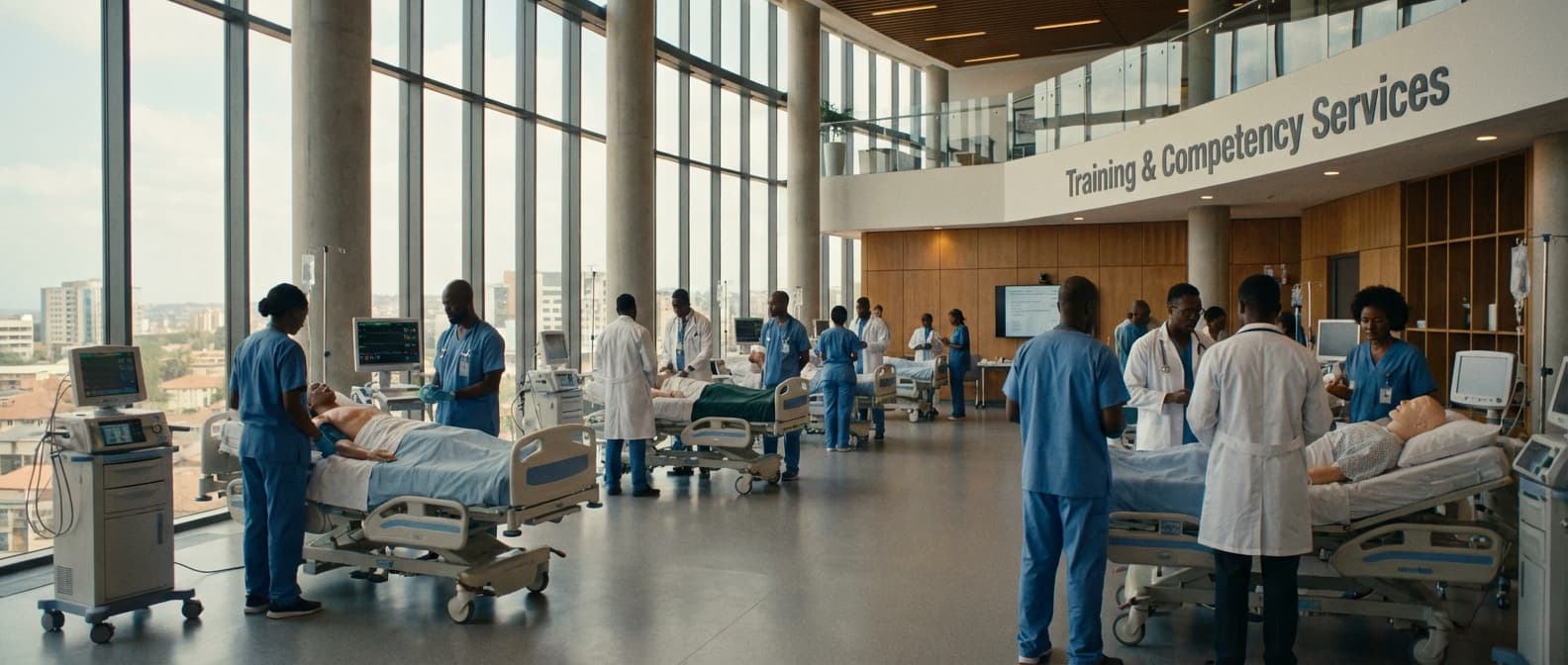
Ventilator User Training Service (Nurses) in Sao Tome and Principe
Engineering Excellence & Technical Support
Ventilator User Training Service (Nurses) High-standard technical execution following OEM protocols and local regulatory frameworks.
Mastering Lung Mechanics & Ventilator Modes
Understand the physiological principles behind mechanical ventilation and gain proficiency in selecting and configuring appropriate ventilator modes (e.g., Volume Control, Pressure Control, PSV) for diverse patient conditions encountered in Sao Tome and Principe's healthcare settings. This module emphasizes adapting settings based on real-time patient response and available resources.
Advanced Patient Monitoring & Alarm Management
Develop expertise in interpreting critical hemodynamic and respiratory parameters displayed on the ventilator. Learn to effectively troubleshoot common alarms, differentiate between artifact and true patient distress, and implement timely interventions to ensure patient safety and optimize ventilator weaning strategies within the context of local clinical practice.
Ventilator Integration & Infection Control Protocols
Acquire essential skills in the correct setup, connection, and maintenance of ventilators with patient circuits and humidification systems. This highlight focuses on strict adherence to infection prevention and control protocols specific to ventilator-associated pneumonia (VAP) and other healthcare-associated infections, considering the unique environmental and logistical challenges in Sao Tome and Principe.
What Is Ventilator User Training Service (Nurses) In Sao Tome And Principe?
Ventilator User Training Service (Nurses) in Sao Tome and Principe refers to a specialized educational program designed to equip registered nurses with the knowledge and practical skills necessary for the safe and effective operation of mechanical ventilators within the healthcare facilities of Sao Tome and Principe. This service is critical for ensuring optimal patient outcomes, minimizing ventilator-associated complications, and adhering to international best practices in respiratory care. The training encompasses theoretical understanding of ventilator mechanics, patient assessment, ventilator modes, alarms, troubleshooting, and weaning protocols, as well as hands-on simulation and practical application under supervision. The objective is to empower nurses to independently manage patients requiring ventilatory support across various clinical scenarios.
| Who Needs This Service? | Typical Use Cases | ||||||||
|---|---|---|---|---|---|---|---|---|---|
| Registered Nurses working in critical care units (ICUs, CCUs). | Post-operative patients requiring respiratory support. | Nurses in emergency departments managing critically ill patients. | Patients with acute respiratory failure (e.g., ARDS, pneumonia, COPD exacerbation). | Nurses in intermediate care units with ventilated patients. | Patients undergoing surgical procedures requiring anesthesia and potential post-operative ventilation. | Nurses in general wards who may be tasked with initial management of patients requiring mechanical ventilation. | Patients with neuromuscular disorders affecting respiratory drive. | Healthcare professionals involved in respiratory therapy and critical care education. | Patients in situations requiring prolonged mechanical ventilation (e.g., sepsis, trauma). |
Components of Ventilator User Training Service (Nurses)
- Theoretical foundation: Principles of mechanical ventilation, respiratory physiology, pathophysiology of respiratory failure, types of ventilators, and ventilator circuits.
- Patient Assessment and Monitoring: Comprehensive evaluation of respiratory status, hemodynamic monitoring, and interpretation of physiological data relevant to mechanical ventilation.
- Ventilator Settings and Modes: Understanding and application of various ventilation modes (e.g., Assist-Control, Synchronized Intermittent Mandatory Ventilation, Pressure Support Ventilation) and their respective parameters (tidal volume, respiratory rate, pressure limits, PEEP, FiO2).
- Alarm Management and Troubleshooting: Identification, interpretation, and prompt resolution of common ventilator alarms, and proactive identification of potential issues.
- Ventilator Weaning: Principles and protocols for initiating and advancing weaning from mechanical ventilation, including assessment of readiness and appropriate support strategies.
- Infection Control and Prevention: Strategies to minimize the risk of ventilator-associated pneumonia (VAP) and other healthcare-associated infections.
- Documentation and Communication: Accurate recording of ventilator settings, patient responses, and effective communication with the multidisciplinary team.
- Hands-on Simulation and Practical Application: Utilizing simulated environments and actual ventilators under expert guidance for skill development and competency validation.
Who Needs Ventilator User Training Service (Nurses) In Sao Tome And Principe?
This document outlines the crucial need for Ventilator User Training Services specifically tailored for nurses in Sao Tome and Principe. Effective and safe utilization of mechanical ventilators is paramount for patient care, especially in critical care settings. Nurses, as frontline caregivers, require comprehensive training to operate and monitor these life-support devices proficiently. This service aims to enhance their skills, reduce the risk of medical errors, and ultimately improve patient outcomes.
| Target Customer Group | Primary Departments Requiring Training | Rationale for Training |
|---|---|---|
| Nurses in Public Hospitals | Intensive Care Units (ICUs), Emergency Departments (EDs), Operating Rooms (ORs), Post-Anesthesia Care Units (PACUs), Respiratory Therapy Departments (if applicable) | Public hospitals often manage a high volume of critical patients, and ensuring all nursing staff are competent in ventilator management is vital for service delivery and patient safety across a broad spectrum of the population. |
| Nurses in Private Clinics/Hospitals | Critical Care Units, Surgical Wards, Specialized Respiratory Care Centers | While potentially having fewer patients, private facilities may invest in advanced ventilator technology. Training ensures their specialized nursing staff can utilize these sophisticated devices effectively and provide high-quality care to their clientele. |
| Nurses in Referral Hospitals | ICUs, High Dependency Units (HDUs), Neonatal ICUs (NICUs), Pediatric ICUs (PICUs) | Referral hospitals receive complex cases, often requiring advanced respiratory support. Comprehensive training for their nurses is essential to handle a wider range of ventilator modes and patient conditions. |
| Nurses in Rural Health Centers/District Hospitals (with ventilator capacity) | Emergency Wards, General Wards (if ventilators are deployed for general use) | In resource-limited settings, nurses may be the primary responders for critical respiratory distress. Training here ensures basic but essential ventilator management skills are available where specialized medical personnel might be scarce. |
| New Graduate Nurses | All departments that utilize ventilators | Provides foundational knowledge and practical skills for newly qualified nurses entering critical care or acute care environments, ensuring they start their careers with essential ventilator competencies. |
| Experienced Nurses transitioning to critical care roles | ICUs, EDs, PACUs | A refresher or advanced training is necessary for nurses moving from less critical areas to specialized units, equipping them with the specific knowledge and skills required for complex ventilator management. |
Target Customers & Departments for Ventilator User Training Service (Nurses) in Sao Tome and Principe
- Registered Nurses (RNs)
- Licensed Practical Nurses (LPNs) / Auxiliary Nurses
- Nurse Supervisors and Head Nurses
- Critical Care Nurses
- Emergency Department Nurses
- Operating Room (OR) Nurses
- Intensive Care Unit (ICU) Nurses
- Neonatal Intensive Care Unit (NICU) Nurses
Ventilator User Training Service (Nurses) Process In Sao Tome And Principe
This document outlines the workflow for the Ventilator User Training Service specifically for nurses in Sao Tome and Principe, from the initial inquiry to the successful execution of the training program. The process is designed to be efficient, comprehensive, and to ensure that nurses receive the necessary knowledge and practical skills to operate and manage ventilators effectively in their clinical settings.
| Stage | Description | Key Activities | Responsible Parties | Deliverables/Outcomes |
|---|---|---|---|---|
| Initial contact from healthcare facilities or nursing associations requesting ventilator training for their staff. | Receive and review inquiry, schedule a preliminary meeting, identify specific training needs (e.g., types of ventilators, existing skill levels, number of participants). | Healthcare Facility/Nursing Association, Training Provider Representative | Understanding of training requirements, preliminary participant numbers, scope of training. |
| Formalizing the training scope, objectives, duration, cost, and terms. | Develop a detailed training proposal, including curriculum outline, trainer qualifications, schedule, venue suggestions, and budget. Present proposal for review and approval. Negotiate and finalize contractual agreement. | Training Provider Representative, Healthcare Facility/Nursing Association Management | Approved training proposal, signed Memorandum of Understanding (MOU) or Service Level Agreement (SLA). |
| Organizing all practical aspects to ensure a smooth training execution. | Confirm training dates and venue. Procure or arrange for training ventilators and simulation equipment. Prepare training materials (handouts, presentations). Coordinate participant registration and communication. Arrange for trainer travel and accommodation (if applicable). | Training Provider Logistics Coordinator, Healthcare Facility Liaison | Confirmed training schedule and venue, available training equipment, distributed participant information, pre-training materials (if any). |
| Dissemination of theoretical knowledge and foundational principles of ventilator operation. | Conduct theoretical sessions covering ventilator principles, modes of ventilation, patient monitoring, alarm management, troubleshooting, and infection control. Utilize presentations, lectures, and interactive discussions. | Qualified Training Instructor(s), Participating Nurses | Enhanced understanding of ventilator technology, safe operation protocols, and clinical application principles. |
| Hands-on application of learned skills in a simulated environment. | Provide supervised hands-on practice with training ventilators. Conduct simulation scenarios mirroring common clinical situations. Observe and assess participants' ability to set up, operate, adjust, and troubleshoot ventilators. Q&A sessions to address practical challenges. | Qualified Training Instructor(s), Participating Nurses | Demonstrated proficiency in practical ventilator management, identification of areas for further practice. |
| Formal recognition of training completion and ongoing support. | Issue certificates of completion upon successful assessment. Conduct a post-training evaluation of the training program. Offer limited post-training support via email or phone for initial queries. Identify potential for advanced training or refresher courses. | Training Provider Administration, Participating Nurses | Certified nurses, feedback on training effectiveness, plan for ongoing professional development. |
| Gathering insights to refine and enhance future training programs. | Collect formal feedback from participants and facility management through surveys or debriefing sessions. Analyze feedback to identify strengths and weaknesses of the training. Implement necessary adjustments to curriculum, delivery methods, or logistics for future iterations. | Training Provider Management, Healthcare Facility/Nursing Association | Actionable insights for program enhancement, improved training quality for future cohorts. |
Ventilator User Training Service (Nurses) Process in Sao Tome and Principe
- Inquiry and Needs Assessment
- Proposal Development and Agreement
- Logistics and Planning
- Training Module Delivery
- Practical Simulation and Assessment
- Certification and Follow-up
- Feedback and Continuous Improvement
Ventilator User Training Service (Nurses) Cost In Sao Tome And Principe
The cost of ventilator user training services for nurses in Sao Tome and Principe can vary significantly based on several factors. These factors influence the overall price, making it essential for healthcare facilities to understand them when budgeting for such training. The primary drivers of cost include the duration and depth of the training program, the qualifications and experience of the trainers, the specific type of ventilators being covered, and whether the training is conducted on-site at the facility or at a separate training center. Additional considerations include the number of nurses being trained and the need for any specialized equipment or simulation tools. Due to the limited availability of specialized medical training providers in Sao Tome and Principe, costs can also be influenced by travel and accommodation expenses for external trainers if local expertise is not readily available.
| Training Scope | Estimated Price Range (STD) | Notes |
|---|---|---|
| Basic Ventilator Operation & Monitoring (1-2 days, limited models) | 50,000 - 150,000 STD | Covers fundamental functions, alarms, and basic troubleshooting for common ICU ventilators. May be delivered by experienced local nursing educators or specialized medical equipment representatives. |
| Intermediate Ventilator Management & Troubleshooting (3-5 days, multiple models) | 150,000 - 400,000 STD | Includes advanced modes, weaning protocols, ventilator graphics interpretation, and common critical care scenarios. Likely requires specialized respiratory therapists or clinical application specialists. |
| Advanced Critical Care Ventilation & Simulation (5+ days, complex ventilators) | 400,000 - 1,000,000+ STD | Covers highly complex ventilators, specialized modes (e.g., HFOV, NAVA), patient-ventilator asynchrony, and advanced troubleshooting. Often involves international trainers or specialized training centers, significantly increasing costs due to travel and potentially higher trainer fees. |
Key Pricing Factors for Ventilator User Training (Nurses) in Sao Tome and Principe:
- Duration and Intensity of Training: Longer, more comprehensive courses will naturally cost more than shorter, introductory sessions.
- Trainer Expertise and Qualifications: Highly experienced and certified respiratory therapists or medical educators will command higher fees.
- Ventilator Model Specificity: Training on multiple complex ventilator models will be more expensive than focusing on a single, simpler device.
- Training Location: On-site training may incur additional travel and setup costs for trainers, while off-site training might involve venue rental fees.
- Number of Participants: While per-person costs might decrease with larger groups, the overall expenditure will increase.
- Inclusion of Simulation/Practical Equipment: Use of advanced simulators or access to functional ventilators for hands-on practice can add to the cost.
- Curriculum Development and Materials: The cost of developing or procuring training manuals, presentations, and assessment tools.
- Certification and Assessment: Fees associated with formal certification or competency assessments after the training.
- Logistics (for external trainers): Travel, accommodation, and per diem for trainers not based locally.
Affordable Ventilator User Training Service (Nurses) Options
This document outlines affordable ventilator user training service options specifically tailored for nurses. We focus on delivering high-quality, practical training that enhances clinical proficiency and patient safety while remaining cost-effective. We explore different value bundles and implement strategic cost-saving measures to ensure accessibility for healthcare facilities of all sizes.
| Value Bundle | Description | Included Services | Target Audience | Potential Cost Savings |
|---|---|---|---|---|
| Basic Essentials Bundle | Foundational knowledge and practical skills for everyday ventilator use. | Core Competency Training (online/in-person), basic simulation exercises, access to online resources. | New nurses, nurses rotating to critical care, staff needing a solid refresher. | Reduced travel costs for trainers, scalable online components minimize individual session costs. |
| Comprehensive Critical Care Bundle | Advanced understanding and management of diverse ventilation scenarios. | Core Competency Training, Advanced Ventilation Strategies, in-depth simulation scenarios, case study analysis. | Experienced critical care nurses, ICU/CCU staff, charge nurses. | Bulk training discounts, integrated learning reduces need for separate courses. |
| Specialty Focus Bundle (e.g., ECMO) | In-depth training for specific advanced patient populations and technologies. | ECMO Integration Training, advanced simulation, protocol development support. | Nurses working in specialized units (e.g., ECMO centers, NICU). | Reduces need for external specialized training providers, builds in-house expertise. |
| Hybrid Learning Bundle | Combines the flexibility of online learning with targeted in-person practical application. | Remote/Online Training modules for theory, limited on-site simulation sessions for practical skills. | Facilities with geographically dispersed staff, budget constraints on extensive travel. | Significant reduction in travel and accommodation expenses, maximizes trainer efficiency. |
Ventilator User Training Service Options for Nurses
- Core Competency Training: Essential modules covering fundamental ventilator principles, modes, settings, monitoring, and troubleshooting. Ideal for new users or as a refresher.
- Advanced Ventilation Strategies: Focus on complex scenarios, specific patient populations (e.g., ARDS, neonates), and advanced ventilation techniques like NAVA or HFOV.
- ECMO Integration Training: Specialized training for nurses involved in the management of patients on Extracorporeal Membrane Oxygenation (ECMO), including ventilator interface protocols.
- Simulation-Based Training: Hands-on practice with high-fidelity mannequins and simulated patient scenarios to build confidence and critical thinking skills.
- Remote/Online Training: Flexible and accessible learning modules for theoretical knowledge acquisition, often complemented by in-person practical sessions.
- Customized On-Site Training: Tailored programs delivered at your facility, designed to meet your specific equipment, patient population, and staff needs.
Verified Providers In Sao Tome And Principe
Navigating healthcare options in Sao Tome and Principe can be challenging. Ensuring you access high-quality, reliable medical services is paramount for your well-being. Franance Health stands out as a premier provider, distinguished by its stringent credentialing processes and commitment to excellence. This document outlines why choosing Franance Health is the optimal decision for your healthcare needs in Sao Tome and Principe.
| Credentialing Aspect | Franance Health's Standard | Benefit to Patients |
|---|---|---|
| Academic & Professional Qualifications | Verification of degrees, certifications, and licenses from accredited institutions. | Ensures providers have foundational knowledge and legal authority to practice. |
| Specialized Training & Experience | Scrutiny of advanced training, fellowships, and years of practical experience in relevant fields. | Guarantees access to experienced professionals for complex or niche medical needs. |
| Licensing & Regulatory Compliance | Confirmation of current and valid medical licenses and adherence to Sao Tome and Principe's healthcare regulations. | Assures that providers operate within legal and ethical frameworks. |
| Reputation & Peer Review | Consideration of professional references and, where applicable, peer review assessments. | Provides an additional layer of confidence in the provider's clinical judgment and reputation. |
| Continuing Medical Education (CME) | Requirement for providers to engage in ongoing learning to stay abreast of medical advancements. | Ensures you receive care based on the latest medical knowledge and techniques. |
Why Franance Health is the Best Choice:
- Rigorous Provider Vetting: Franance Health employs a multi-stage verification process for all its medical professionals. This includes academic qualifications, professional licenses, specialized training, and a proven track record of patient care.
- Commitment to Ethical Practices: All Franance Health providers adhere to a strict code of conduct, prioritizing patient safety, confidentiality, and transparent communication. This ensures you receive ethical and compassionate care.
- Access to Specialized Expertise: Franance Health partners with a diverse network of specialists, offering access to a wide range of medical disciplines. This means you can find the right expert for your specific health concerns, avoiding the need for extensive travel.
- Quality Assurance and Continuous Improvement: Franance Health regularly monitors the performance of its providers through patient feedback and clinical audits. This commitment to quality assurance guarantees that services consistently meet high standards.
- Seamless Patient Experience: From initial consultation to treatment and follow-up, Franance Health aims to provide a smooth and efficient patient journey. Their administrative processes are designed for your convenience.
Scope Of Work For Ventilator User Training Service (Nurses)
This Scope of Work (SOW) outlines the requirements for providing comprehensive ventilator user training services specifically tailored for nurses. The objective is to equip nursing staff with the necessary knowledge and practical skills to safely and effectively operate, monitor, and manage patients on various types of ventilators.
| Section | Technical Deliverables | Standard Specifications |
|---|---|---|
| Training Curriculum Development | Comprehensive training modules covering theoretical and practical aspects of ventilator use for nurses. | Modules shall be evidence-based, aligned with current clinical guidelines (e.g., SCCM, ATS), and cover a range of common ventilator platforms. Content to be reviewed and approved by a qualified clinical educator/respiratory therapist. |
| Training Delivery (Theoretical) | Interactive classroom-based or virtual instructor-led sessions. | Sessions to include lectures, case studies, group discussions, and Q&A. Duration to be sufficient to cover all curriculum topics adequately (e.g., 4-8 hours per module, depending on complexity). |
| Training Delivery (Practical/Hands-on) | Supervised hands-on sessions utilizing actual or high-fidelity simulation ventilators. | Each participant to have sufficient time on the equipment. Practical sessions to cover setup, mode selection, parameter adjustment, alarm management, and disconnection. Instructor-to-participant ratio not to exceed 1:8 for effective supervision. |
| Assessment and Evaluation | Pre- and post-training knowledge assessments (written or online quizzes). | Practical competency assessments to evaluate hands-on skills. Passing score for knowledge assessments to be 80% or higher. Successful completion of practical assessment is mandatory. |
| Training Materials | Participant workbooks, handouts, reference guides, and access to digital resources. | Materials to be clear, concise, and visually appealing. Digital resources to be accessible for a defined period post-training. Content to include algorithms for common scenarios. |
| Trainer Qualifications | Experienced and certified/licensed clinical educators or respiratory therapists with extensive experience in critical care and mechanical ventilation. | Trainers must possess strong communication and teaching skills. Proof of relevant certifications and experience to be provided. |
| Ventilator Platform Coverage | Training to cover a minimum of [Specify number, e.g., 2-3] commonly used ventilator platforms within the healthcare facility. | Specific ventilator models to be identified and agreed upon prior to training commencement. Training to be adapted to the specific features and interfaces of the identified models. |
| Post-Training Support | Access to a designated point of contact for follow-up questions and clarifications. | Support to be available for a defined period (e.g., 30 days) post-training. Contact details and availability to be clearly communicated. |
| Training Report | Comprehensive report summarizing training activities, participant attendance, assessment results, and feedback. | Report to include anonymized aggregate data on knowledge acquisition and competency levels. Recommendations for future training may be included. |
Training Objectives
- Understand the fundamental principles of mechanical ventilation.
- Identify different types of ventilators and their key components.
- Initiate and set up ventilation modes based on physician orders and patient condition.
- Perform routine monitoring of ventilator settings and patient physiological responses.
- Recognize and respond to common ventilator alarms and troubleshooting scenarios.
- Safely disconnect patients from mechanical ventilation (weaning protocols).
- Understand basic maintenance and cleaning procedures for ventilators.
- Adhere to infection control protocols related to ventilator use.
Service Level Agreement For Ventilator User Training Service (Nurses)
This Service Level Agreement (SLA) outlines the performance expectations and guarantees for the Ventilator User Training Service provided to nurses. It defines the responsibilities of both the service provider and the client, focusing on response times for support requests and uptime guarantees for access to training resources.
| Service Component | Uptime Guarantee | Response Time (Support Requests) | Resolution Target (Critical Issues) |
|---|---|---|---|
| Online Training Modules & Video Access | 99.5% Uptime (excluding Scheduled Downtime) | Within 2 business hours for initial acknowledgment | Within 8 business hours |
| Simulation Exercise Platform | 99.0% Uptime (excluding Scheduled Downtime) | Within 1 business hour for critical issues, 4 business hours for non-critical issues | Within 4 business hours for critical issues |
| Live Training Session Platform (if applicable) | 99.9% Uptime during scheduled live session hours (excluding Scheduled Downtime) | During live session hours: Immediate acknowledgment | Immediate troubleshooting and resolution during live session |
| Technical Support (General Inquiries) | N/A (Access to platform is guaranteed) | Within 4 business hours for acknowledgment | Within 16 business hours |
Key Definitions
- {"term":"Training Resources","definition":"Includes online modules, video tutorials, simulation exercises, and any other digital materials made available for ventilator user training."}
- {"term":"Support Request","definition":"Any communication from the client to the service provider requesting technical assistance, clarification, or issue resolution related to the training service."}
- {"term":"Scheduled Downtime","definition":"Pre-announced periods when the training resources may be unavailable due to planned maintenance, upgrades, or system updates."}
- {"term":"Unscheduled Downtime","definition":"Unexpected periods when the training resources are unavailable due to unforeseen technical issues or failures."}
Frequently Asked Questions

Ready when you are
Let's scope your Ventilator User Training Service (Nurses) in Sao Tome and Principe project in Sao Tome and Principe.

Scaling healthcare logistics and technical systems across the entire continent.