
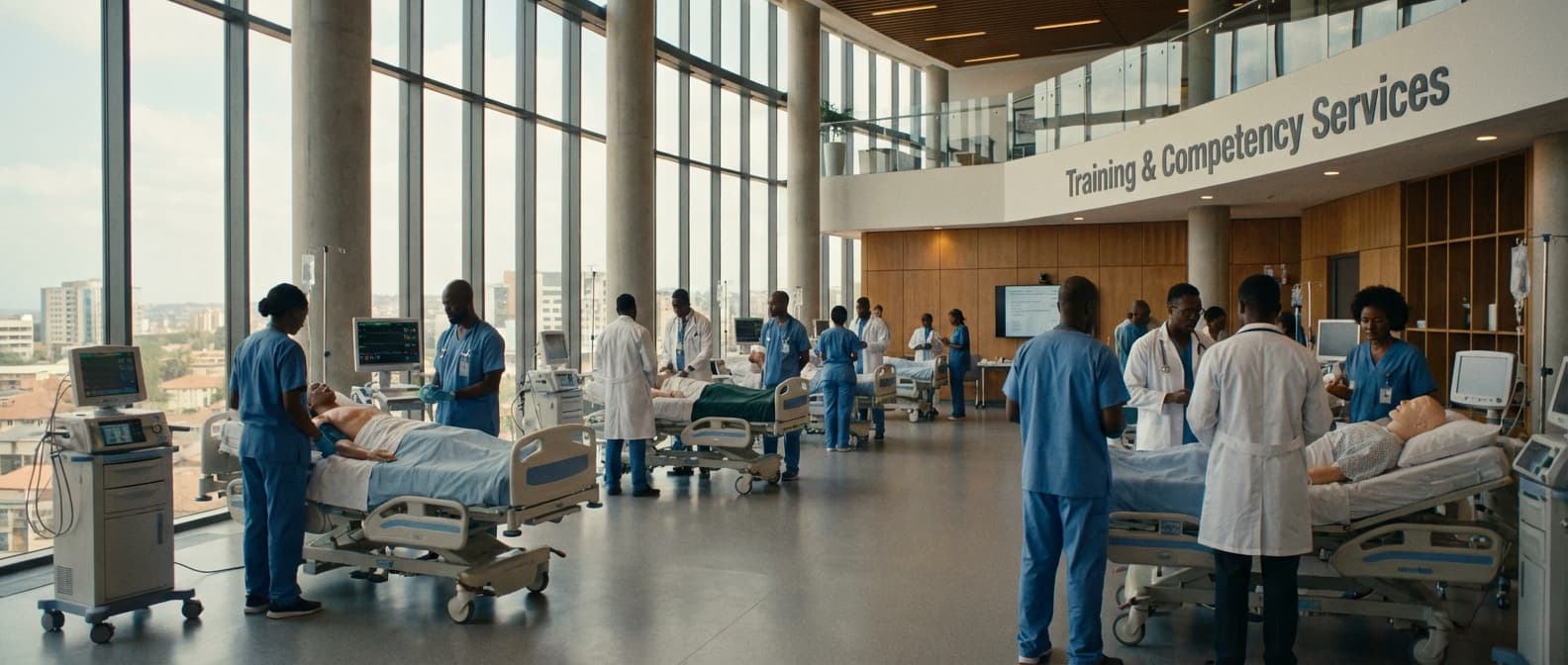
MRI Operator Training Service (Radiographers) in Sao Tome and Principe
Engineering Excellence & Technical Support
MRI Operator Training Service (Radiographers) High-standard technical execution following OEM protocols and local regulatory frameworks.
Advanced MRI Physics & Protocol Optimization
Master the intricacies of MRI physics, including pulse sequences, signal generation, and artifact reduction techniques. Learn to adapt and optimize imaging protocols for specific patient conditions and anatomical regions, ensuring diagnostic quality and efficiency in a tropical climate context.
Patient Safety & Contrast Agent Management
Gain comprehensive knowledge of patient safety protocols, including MRI safety zones, screening procedures, and emergency management. Develop expertise in the safe and effective administration of MRI contrast agents, addressing potential reactions and contraindications relevant to local healthcare considerations.
Image Interpretation Fundamentals & PACS Integration
Understand the foundational principles of MRI image interpretation for common pathologies. Learn to navigate and utilize Picture Archiving and Communication Systems (PACS) for efficient image retrieval, storage, and secure sharing, enhancing diagnostic workflow within the São Tomé and Príncipe healthcare infrastructure.
What Is Mri Operator Training Service (Radiographers) In Sao Tome And Principe?
MRI Operator Training Service (Radiographers) in Sao Tome and Principe refers to the provision of specialized educational programs designed to equip radiographers with the requisite knowledge and practical skills to operate Magnetic Resonance Imaging (MRI) scanners safely and effectively. This service aims to address the growing demand for advanced diagnostic imaging capabilities within the nation's healthcare sector by ensuring a competent workforce capable of performing MRI examinations according to established protocols and international standards. The training encompasses theoretical understanding of MRI physics, contraindications, patient safety protocols, image acquisition techniques, protocol optimization, and post-processing procedures. Practical components typically involve hands-on experience with MRI equipment, simulation exercises, and supervised clinical rotations.
| Target Audience | Need for Training | Typical Use Cases |
|---|---|---|
| Newly qualified Radiographers in Sao Tome and Principe | To acquire fundamental skills for operating MRI scanners and enter the field of MRI diagnostics. | To provide basic MRI services in general hospitals and diagnostic imaging centers. |
| Experienced Radiographers seeking specialization | To enhance their existing skill set and transition into MRI roles, particularly in facilities acquiring new MRI technology. | To operate advanced MRI scanners for specialized examinations (e.g., neurological, musculoskeletal, abdominal imaging). |
| Radiographers in public and private healthcare institutions | To meet the growing demand for MRI services and improve the diagnostic capabilities of their institutions. | To perform a wide range of MRI examinations, supporting clinical decision-making for various medical specialties. |
| Healthcare professionals involved in imaging departments | To understand the capabilities and limitations of MRI, facilitating better referral patterns and interdisciplinary collaboration. | To assist in the planning and implementation of new MRI services or upgrades. |
Key Components of MRI Operator Training Service:
- MRI Physics and Principles: Fundamental understanding of magnetic fields, radiofrequency pulses, gradient coils, and signal generation.
- Patient Safety and Contraindications: Comprehensive training on screening procedures, identifying absolute and relative contraindications (e.g., ferromagnetic implants, pacemakers), and managing patient anxiety.
- MRI Safety Zones and Protocols: Adherence to strict safety guidelines for all personnel and equipment within the MRI environment (Zones I-IV).
- Image Acquisition Techniques: Mastering various pulse sequences (e.g., T1-weighted, T2-weighted, FLAIR, DWI) for optimal tissue contrast and diagnostic yield.
- Protocol Optimization and Customization: Developing and tailoring imaging protocols based on specific clinical indications and patient anatomy.
- Contrast Agent Administration: Understanding the indications, contraindications, adverse reactions, and safe administration of MRI contrast agents.
- Image Processing and Post-Processing: Familiarity with workstation operation, image manipulation, and generation of advanced visualizations.
- Quality Assurance and Control: Implementing procedures to ensure image quality, equipment performance, and data integrity.
- Ethical and Legal Considerations: Awareness of patient confidentiality, informed consent, and regulatory compliance.
- Hands-on Scanner Operation: Practical training on a functional MRI scanner under expert supervision.
Who Needs Mri Operator Training Service (Radiographers) In Sao Tome And Principe?
This training service aims to equip radiographers in Sao Tome and Principe with the essential skills and knowledge to operate MRI machines effectively and safely. By enhancing the expertise of local healthcare professionals, the service addresses a critical need for advanced diagnostic imaging capabilities within the country. The focus is on practical, hands-on training that covers all aspects of MRI operation, from patient preparation and scan protocols to image acquisition, post-processing, and quality control.
| Customer Type | Relevant Departments | Justification for Training Need |
|---|---|---|
| Public Hospitals | Radiology Department, Diagnostic Imaging Unit | To improve diagnostic accuracy for a wide range of conditions, reducing the need for overseas referrals and enhancing patient care. Ensures safe and efficient operation of existing or newly acquired MRI equipment. |
| Private Hospitals | Radiology Department, Imaging Services | To offer advanced imaging services, attract more patients, and maintain a competitive edge. Ensures compliance with international standards for MRI operation. |
| Diagnostic Imaging Centers | Radiology, Imaging Technicians | To expand service offerings and provide specialized MRI interpretations. Upgrades existing staff skills to handle complex MRI protocols. |
| Ministry of Health | Health Planning, Public Health Infrastructure Management | To standardize MRI services across the nation, ensure equitable access to advanced diagnostics, and build local capacity in specialized medical imaging. |
| Medical Training Institutions | Radiography Programs, Continuing Education Units | To enhance the curriculum with current MRI operator training, producing well-qualified radiographers for the healthcare sector. |
| NGOs/International Health Organizations | Program Implementation, Capacity Building | To support the development of advanced healthcare infrastructure and provide essential training to local medical professionals in underserved regions. |
Target Customers and Departments in Sao Tome and Principe for MRI Operator Training Service (Radiographers)
- Hospitals: The primary target for this training. Public and private hospitals equipped with or planning to acquire MRI technology are the most significant beneficiaries.
- Diagnostic Imaging Centers: Specialized centers that offer a range of imaging services, including MRI, will benefit from upskilling their radiographers.
- Ministry of Health/Public Health Institutions: Government health bodies responsible for managing public healthcare infrastructure and ensuring quality of care will be key stakeholders and potential facilitators of training.
- Radiology Departments: Within hospitals and larger medical facilities, the radiology department is the direct recipient of this training. This includes both established departments and those being developed.
- Academic and Training Institutions: Medical schools and institutions that train future radiographers can integrate this specialized MRI training into their curriculum to produce highly skilled graduates.
- NGOs and International Health Organizations: Organizations involved in healthcare development and capacity building in Sao Tome and Principe may sponsor or facilitate such training initiatives.
Mri Operator Training Service (Radiographers) Process In Sao Tome And Principe
The MRI Operator Training Service for Radiographers in Sao Tome and Principe involves a structured workflow designed to ensure effective knowledge transfer and practical skill development. This process begins with an initial inquiry and progresses through a comprehensive training program, concluding with assessment and certification.
| Phase | Key Activities | Description | Responsible Parties | Deliverables/Outcomes |
|---|---|---|---|---|
| Inquiry and Needs Assessment | Initial contact, understanding training requirements, scope definition, target audience identification. | Potential clients (hospitals, clinics) express interest in MRI operator training for their radiographers. The service provider clarifies the specific needs, including the number of trainees, existing skill levels, desired outcomes, and any specific MRI equipment in use. | Client (Hospital/Clinic), Training Provider | Clear understanding of training needs, scope document. |
| Proposal and Agreement | Developing a detailed training proposal, cost estimation, contract negotiation, and signing. | Based on the needs assessment, the training provider submits a comprehensive proposal outlining the curriculum, duration, methodology, trainers, location, and costs. Upon agreement, a formal contract is signed. | Training Provider, Client (Hospital/Clinic) | Signed training contract, detailed training proposal. |
| Pre-Training Preparation | Curriculum finalization, scheduling, logistical arrangements, trainee selection, and pre-assessment (if applicable). | The training provider finalizes the curriculum, schedules the training sessions, arranges for training facilities and equipment (if not provided by the client), and confirms the list of trainees. Pre-assessments may be conducted to gauge existing knowledge. | Training Provider, Client (Hospital/Clinic) | Finalized curriculum, training schedule, confirmed trainee list, logistical arrangements. |
| Training Delivery (Theoretical and Practical) | Conducting lectures, demonstrations, hands-on practice on MRI simulators or actual equipment, case studies, and discussions. | This is the core phase where experienced MRI trainers deliver the training. It includes theoretical modules covering MRI physics, safety protocols, imaging techniques, image interpretation, and artifact recognition. Practical sessions involve operating MRI scanners, patient positioning, protocol selection, and image acquisition under supervision. | Training Provider (Trainers), Trainees (Radiographers) | Theoretical knowledge acquired, practical skills developed, competency in MRI operation. |
| Assessment and Evaluation | Written examinations, practical skill assessments, case study analysis, and feedback collection. | Trainees are evaluated through a combination of theoretical exams and practical demonstrations of their ability to operate the MRI scanner safely and effectively. Feedback is also gathered from trainees on the training program's effectiveness. | Training Provider, Trainees (Radiographers) | Assessment results, identification of areas for improvement, training program feedback. |
| Certification and Post-Training Support | Issuing certificates of completion, providing post-training consultation, and ongoing support. | Upon successful completion of the training and assessment, trainees receive official certificates. The training provider may offer post-training support, such as answering questions, providing access to resources, or organizing refresher courses, to ensure continued skill development. | Training Provider, Client (Hospital/Clinic), Trainees (Radiographers) | Certificates of completion, ongoing professional development, enhanced MRI operational capacity. |
MRI Operator Training Service (Radiographers) Workflow in Sao Tome and Principe
- Inquiry and Needs Assessment
- Proposal and Agreement
- Pre-Training Preparation
- Training Delivery (Theoretical and Practical)
- Assessment and Evaluation
- Certification and Post-Training Support
Mri Operator Training Service (Radiographers) Cost In Sao Tome And Principe
The cost of MRI operator training for radiographers in Sao Tome and Principe is influenced by several factors, leading to a range of potential expenses. These include the duration and intensity of the training program, the qualifications and experience of the instructors, the facility and equipment used for practical training, and whether the training is conducted in-house or outsourced to a specialized training provider. The level of certification or accreditation sought also plays a significant role. Generally, more comprehensive and hands-on training with experienced professionals and modern MRI equipment will command a higher price. Travel and accommodation expenses for both trainees and trainers, if applicable, will further impact the overall cost. The availability of local training providers can also affect pricing due to competition.
| Training Component/Service | Estimated Cost Range (STD) | Notes |
|---|---|---|
| Basic MRI Operator Course (e.g., 1-2 weeks) | 15,000 - 30,000 STD | Covers fundamental principles, safety protocols, and basic operation. May be classroom-based with limited practical exposure. |
| Intermediate MRI Operator Course (e.g., 3-4 weeks) | 35,000 - 60,000 STD | Includes more in-depth theoretical knowledge, hands-on scanner operation, and common imaging sequences. Practical component is crucial. |
| Advanced/Specialized MRI Training (e.g., 4+ weeks or module-based) | 70,000 - 120,000+ STD | Focuses on specific MRI techniques (e.g., neuro, cardiac, musculoskeletal), advanced protocols, image analysis, and quality control. Often includes extensive practical work. |
| Certification Fees | 5,000 - 15,000 STD | Varies depending on the certifying body and the level of certification. |
| Instructor Fees (if specialized external trainer) | Negotiable (daily/weekly rate) | Highly dependent on instructor's expertise and market rates. Could add a significant portion to the total cost. |
| Equipment Usage Fees (if not included in course price) | Often bundled, but could be separate | Access to functional MRI scanners for practical training is essential. |
| Training Materials and Textbooks | 2,000 - 5,000 STD | Can be digital or physical. |
| Travel and Accommodation (if applicable) | Highly variable | Depends on distance and duration. Must be factored in for remote trainees or trainers. |
Key Pricing Factors for MRI Operator Training (Radiographers) in Sao Tome and Principe
- Training Program Duration and Intensity
- Instructor Qualifications and Experience
- Training Facility and Equipment Availability
- In-house vs. Outsourced Training Provider
- Certification and Accreditation Level
- Travel and Accommodation Expenses
- Market Demand and Provider Availability
Affordable Mri Operator Training Service (Radiographers) Options
This document outlines affordable MRI operator training services specifically designed for radiographers. We focus on providing high-quality education that is cost-effective and can be tailored to individual and institutional needs. Understanding value bundles and implementing smart cost-saving strategies are key to making advanced MRI training accessible.
| Value Bundle Options | Included Services | Target Audience | Estimated Cost Range (USD) |
|---|---|---|---|
| Foundational Radiographer MRI Certificate | Core MRI physics, safety, basic pulse sequences, introductory image acquisition, online modules, simulated practical exercises. | Radiographers new to MRI, seeking foundational knowledge. | $800 - $1,500 |
| Advanced MRI Techniques for Radiographers | Includes Foundational certificate PLUS advanced pulse sequences (e.g., fMRI, spectroscopy), specialized imaging protocols (neuro, cardiac, MSK), advanced artifact management, hands-on simulator time. | Radiographers with some MRI experience or those specializing in advanced modalities. | $1,800 - $3,000 |
| Institutional/Group MRI Training Package | Customizable curriculum, on-site training for groups, bulk discounts, dedicated support, tailored protocol development assistance. | Hospitals, imaging centers, and academic institutions with multiple staff requiring training. | Custom Quote (Significant savings per operator compared to individual enrollment) |
| Blended Learning MRI Mastery | Combination of self-paced online modules for theory and scheduled in-person or live virtual sessions for practical application and Q&A. | Radiographers seeking a structured yet flexible learning experience. | $1,200 - $2,200 |
Key Components of Affordable MRI Operator Training
- Comprehensive Curriculum: Covering MRI physics, safety, pulse sequences, image acquisition, and artifact recognition.
- Hands-on Experience (Simulated or Supervised): Crucial for practical skill development.
- Flexible Learning Formats: Online modules, blended learning, and on-site options to suit different schedules and locations.
- Experienced Instructors: Certified professionals with extensive practical MRI experience.
- Certification/Accreditation Support: Assistance with achieving recognized credentials.
- Post-Training Support: Access to resources and ongoing mentorship.
Verified Providers In Sao Tome And Principe
In the rapidly evolving landscape of healthcare, accessing verified and reliable providers is paramount. In Sao Tome and Principe, distinguishing trusted medical professionals and institutions is crucial for individuals seeking quality care. Franance Health has emerged as a key player in this domain, setting a high standard for verified healthcare credentials. Their rigorous vetting process and commitment to transparency make them a cornerstone for anyone prioritizing safe and effective medical services. This commitment ensures that patients in Sao Tome and Principe have access to a network of providers who meet stringent criteria, offering peace of mind and confidence in their healthcare journey.
| Provider Type | Franance Health Verification Criteria | Benefits for Patients |
|---|---|---|
| Physicians | Valid Medical License, Board Certification (where applicable), Clean Disciplinary Record, Educational Verification | Access to qualified and licensed medical professionals, assurance of specialized knowledge, reduced risk of medical malpractice. |
| Hospitals & Clinics | Accreditation Status, Compliance with Health & Safety Regulations, Quality of Facilities & Equipment, Staff Training Programs | Treatment in safe and well-equipped facilities, adherence to international healthcare standards, better patient outcomes. |
| Specialist Services (e.g., Dentistry, Ophthalmology) | Specific Professional Licenses, Advanced Training & Certifications, Proven Track Record of Successful Treatments | Access to highly skilled specialists for targeted medical needs, confidence in receiving expert care for specific conditions. |
| Diagnostic Laboratories | Regulatory Approvals, Quality Control Procedures, Accuracy and Reliability of Test Results | Trustworthy and accurate diagnostic reports essential for proper treatment planning. |
Why Franance Health Credentials Represent the Best Choice:
- Rigorous Verification Process: Franance Health employs a multi-faceted approach to verify the credentials, licenses, and certifications of all healthcare professionals and facilities within their network. This includes in-depth background checks and confirmation of educational qualifications.
- Commitment to Quality Standards: Beyond basic credentials, Franance Health assesses providers based on their adherence to international quality standards and best practices in patient care, safety, and ethical conduct.
- Transparency and Accessibility: Franance Health makes the verified status of providers readily accessible, empowering patients to make informed decisions about their healthcare providers. This transparency builds trust and reduces uncertainty.
- Specialized Expertise: The network curated by Franance Health often includes specialists across various medical disciplines, ensuring patients can find the specific expertise they require.
- Continuous Monitoring: Franance Health does not rely on a one-time verification. They engage in ongoing monitoring of their network to ensure continued compliance and high performance.
Scope Of Work For Mri Operator Training Service (Radiographers)
This Scope of Work (SOW) outlines the requirements for providing MRI Operator Training Services for Radiographers. The training aims to equip radiographers with the necessary theoretical knowledge and practical skills to safely and effectively operate MRI scanners, conduct various MRI protocols, and produce high-quality diagnostic images. The training will adhere to established industry standards and best practices.
| Module Title | Description | Key Topics Covered | Duration (Approx.) |
|---|---|---|---|
| Introduction to MRI Physics | Covers the foundational physics principles behind MRI. | Nuclear spin, precession, Larmor frequency, T1 and T2 relaxation, signal generation, k-space. | 8 Hours |
| MRI Scanner Components and Operation | Detailed overview of MRI hardware and system operation. | Main magnet, gradient coils, RF coils, shimming, console operation, system safety. | 6 Hours |
| Pulse Sequences and Image Contrast | Explores various pulse sequences and how they generate different image contrasts. | Spin echo, gradient echo, inversion recovery (FLAIR, STIR), diffusion-weighted imaging (DWI), perfusion imaging. | 12 Hours |
| Anatomical Imaging Protocols | Practical application of MRI techniques to image specific anatomical regions. | Neuroimaging (brain, spine), Musculoskeletal (MSK) imaging, Abdominal and Pelvic imaging, Cardiac imaging (optional). | 20 Hours |
| Patient Care and Safety | Focuses on ensuring patient safety and comfort during MRI examinations. | Patient screening, contraindications (implants, pacemakers), RF heating, acoustic noise, claustrophobia management, emergency procedures. | 8 Hours |
| Contrast Agents and Administration | Understanding the use of contrast agents in MRI. | Gadolinium-based contrast agents (GBCAs), indications, contraindications, adverse reactions, administration guidelines. | 4 Hours |
| Image Post-Processing and Quality Assurance | Techniques for optimizing and evaluating image quality. | Windowing, leveling, filtering, artifact identification and reduction, QC phantoms, data management. | 6 Hours |
| Practical/Hands-on Sessions | Supervised practical experience on an actual MRI scanner. | Patient positioning, protocol selection, scan execution, troubleshooting during live scans. | 24 Hours |
Training Objectives
- Understand the fundamental principles of Magnetic Resonance Imaging (MRI).
- Identify the components and functions of an MRI scanner.
- Master the principles of magnetic field generation, radiofrequency pulses, and signal detection.
- Learn about different pulse sequences and their applications in imaging various anatomical regions.
- Develop proficiency in patient positioning, coil selection, and protocol optimization.
- Understand patient safety protocols, including screening for contraindications and managing claustrophobia.
- Gain knowledge of contrast agent administration and associated safety measures.
- Learn image post-processing techniques and quality control measures.
- Develop skills in troubleshooting common MRI artifacts and equipment issues.
- Understand radiation safety principles as they apply to MRI (though MRI is non-ionizing, safety considerations are crucial).
Service Level Agreement For Mri Operator Training Service (Radiographers)
This Service Level Agreement (SLA) outlines the commitment and guarantees provided by [Your Company Name] for the MRI Operator Training Service specifically designed for Radiographers. It defines the expected response times for support requests and the guaranteed uptime for the training platform and associated services.
| Service Component | Response Time Guarantee (Business Hours) | Uptime Guarantee | SLA Credits / Remedies |
|---|---|---|---|
| MRI Operator Training Platform Access | 1 Business Hour for critical issues (e.g., platform inaccessible). 4 Business Hours for non-critical issues (e.g., minor feature malfunction). | 99.5% Uptime | For every 1% downtime below 99.5% in a given month, a credit of 5% of the monthly service fee will be applied. |
| Technical Support (Help Desk) | 1 Business Hour for initial acknowledgment of any support ticket. 8 Business Hours for resolution of standard technical queries. Escalation for critical issues within 4 Business Hours. | N/A (Support is provided during business hours) | If initial acknowledgment exceeds 1 Business Hour, a credit of 2% of the monthly service fee will be applied. |
| Content Updates and Maintenance | Scheduled maintenance will be communicated at least 48 hours in advance and performed during off-peak hours (e.g., weekends, overnight). Emergency maintenance for critical security or performance issues may require immediate action with minimal notice. | N/A (Maintenance is planned) | Unscheduled downtime exceeding 2 hours due to maintenance errors will be treated as platform downtime and eligible for SLA credits. |
Key Service Components
- MRI Operator Training Platform Access
- Technical Support
- Content Updates and Maintenance
Frequently Asked Questions

Ready when you are
Let's scope your MRI Operator Training Service (Radiographers) in Sao Tome and Principe project in Sao Tome and Principe.

Scaling healthcare logistics and technical systems across the entire continent.