
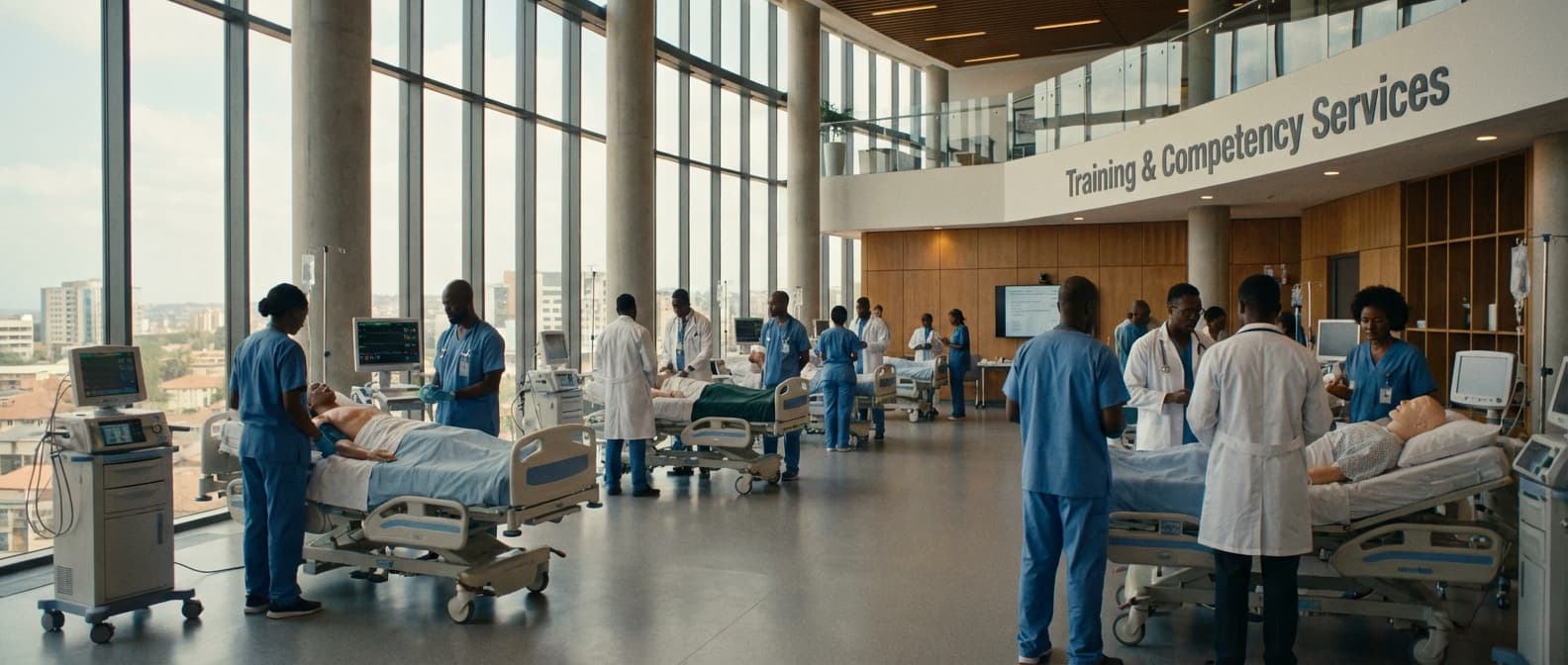
CT Operator Training Service (Radiographers) in Sao Tome and Principe
Engineering Excellence & Technical Support
CT Operator Training Service (Radiographers) High-standard technical execution following OEM protocols and local regulatory frameworks.
Advanced CT Imaging Protocols
Comprehensive training on the latest CT scanning protocols for optimal image acquisition in diagnostic radiology, tailored for the specific needs of Sao Tome and Principe's healthcare landscape. Focus on low-dose techniques and patient safety.
Image Post-Processing & Analysis
Hands-on instruction in advanced image post-processing techniques, including MPR, 3D rendering, and artifact reduction. Empower radiographers to extract maximum diagnostic information from CT scans, improving diagnostic accuracy.
CT Equipment QA/QC and Troubleshooting
Essential training on routine Quality Assurance and Quality Control procedures for CT scanners, alongside fundamental troubleshooting skills. Ensures reliable equipment performance and minimizes downtime, crucial for resource-constrained environments.
What Is Ct Operator Training Service (Radiographers) In Sao Tome And Principe?
CT Operator Training Service (Radiographers) in Sao Tome and Principe refers to specialized educational programs designed to equip qualified radiographers with the necessary theoretical knowledge and practical skills to operate Computed Tomography (CT) scanners. This service is crucial for ensuring the safe, efficient, and accurate acquisition of CT imaging data in a clinical setting. The training focuses on principles of CT physics, image acquisition protocols, radiation safety, patient positioning, contrast media administration, artifact recognition, and basic quality assurance procedures. Given the advanced nature of CT technology and its integral role in modern diagnostics, proficiency in its operation is paramount for healthcare professionals involved in medical imaging.
| Typical Use Cases for CT Operator Training | Description of Use Case |
|---|---|
| Introduction to CT Principles | Foundational training covering X-ray generation, beam attenuation, reconstruction algorithms, and image formation in CT. |
| CT Scanner Operation and Controls | Hands-on training on the specific functionalities of various CT scanner models, including console operation, patient table movement, and gantry angulation. |
| Protocol Development and Selection | Understanding and applying standardized acquisition protocols for different anatomical regions and clinical indications, as well as adapting protocols when necessary. |
| Radiation Safety and Dosimetry | Comprehensive instruction on ALARA principles, patient dose optimization techniques, regulatory requirements, and monitoring of radiation exposure. |
| Patient Preparation and Management | Training on patient screening, informed consent, contrast media administration (including indications, contraindications, and adverse event management), and patient comfort during scanning. |
| Image Quality Assessment and Artifact Management | Identifying common CT artifacts (e.g., motion, beam hardening, metal), understanding their causes, and implementing strategies for their reduction or elimination. |
| Introduction to CT Angiography (CTA) | Specific training on acquiring vascular datasets, including timing bolus techniques and protocol optimization for CTA. |
| Basic Quality Assurance (QA) and Quality Control (QC) | Performing routine checks and preventative maintenance on the CT scanner to ensure optimal image quality and equipment performance. |
| Emergency Procedures | Familiarization with emergency protocols related to patient care and equipment malfunctions during CT examinations. |
Who Needs CT Operator Training?
- Newly graduated radiographers seeking to specialize in CT imaging.
- Existing radiographers transitioning from other modalities (e.g., X-ray, Ultrasound) to CT operation.
- Radiographers seeking to refresh or update their skills in response to technological advancements or new protocols.
- Healthcare institutions in Sao Tome and Principe acquiring new CT scanner technology and requiring initial operator proficiency.
- Radiographers involved in research or specialized CT applications.
- Technicians responsible for the maintenance and quality control of CT equipment.
Who Needs Ct Operator Training Service (Radiographers) In Sao Tome And Principe?
The demand for CT Operator Training Services (Radiographers) in Sao Tome and Principe is driven by the need to enhance diagnostic imaging capabilities within the nation's healthcare system. As advanced medical technologies like CT scanners become more accessible, the expertise to operate them effectively and safely becomes paramount. This training is crucial for ensuring accurate diagnoses, patient safety, and optimal utilization of expensive medical equipment. The primary target customers are healthcare professionals and institutions involved in medical imaging.
| Target Customer Group | Specific Departments/Roles | Rationale for Training Needs |
|---|---|---|
| Hospital Management & Administration | Hospital Directors, Clinical Directors, Radiology Department Heads | To ensure efficient and safe operation of CT equipment, optimize patient throughput, and maintain quality of care. |
| Radiology & Imaging Professionals | Radiographers, CT Technologists, Radiologists (for refresher/advanced techniques) | To gain proficiency in CT scanner operation, image acquisition protocols, patient positioning, radiation safety, and quality control. |
| Government Health Bodies | Ministry of Health Officials, Public Health Program Managers | To standardize imaging practices, improve diagnostic capabilities across public health facilities, and develop skilled healthcare workforces. |
| Academic & Training Institutions | Deans of Medical Schools, Heads of Radiology/Radiography Programs, Faculty | To equip future radiographers and technologists with the necessary skills for contemporary diagnostic imaging. |
| Specialty Medical Departments | Heads of Neurology, Cardiology, Oncology, Emergency Medicine, and Surgery Departments | To ensure their referring physicians understand the capabilities and appropriate utilization of CT scans for their specific patient populations. |
Target Customers and Departments for CT Operator Training in Sao Tome and Principe:
- Hospitals (Public and Private): Facilities equipped with or planning to acquire CT scanners.
- Diagnostic Imaging Centers: Standalone centers specializing in radiology and diagnostic services.
- Ministry of Health: For capacity building initiatives and national healthcare standards.
- Medical Schools and Training Institutions: To integrate advanced imaging training into their curriculum.
- Radiology Departments: The core department responsible for CT imaging.
- Emergency Departments: Where rapid and accurate diagnosis is critical.
- Oncology Departments: For staging and monitoring cancer treatment.
- Neurology and Neurosurgery Departments: For diagnosing neurological conditions.
- Cardiology Departments: For cardiac CT imaging.
- Trauma Centers: Requiring quick assessment of injuries.
- Individual Radiographers and Technologists: Seeking to upskill or specialize in CT operations.
Ct Operator Training Service (Radiographers) Process In Sao Tome And Principe
This document outlines the CT Operator Training Service (Radiographers) process in Sao Tome and Principe, detailing the workflow from initial inquiry to the successful execution of the training program. The service aims to equip radiographers with the necessary skills and knowledge to operate CT scanners effectively and safely, adhering to international standards and local regulations.
| Stage | Description | Key Activities | Responsible Parties | Deliverables/Outcomes |
|---|---|---|---|---|
| Initial contact from potential clients (hospitals, clinics, government health agencies) seeking CT operator training. This stage involves understanding the client's specific needs, current skill levels, available equipment, and desired training outcomes. | Receive inquiry, conduct initial consultation, discuss training requirements, assess existing radiographer pool, identify specific CT scanner models to be covered. | Potential Client (Facility Management, HR, Radiology Department), Training Provider (CT Training Service) | Clear understanding of training needs, preliminary scope of work. |
| Based on the needs assessment, a comprehensive training proposal is developed. This includes the training curriculum, schedule, modules, duration, trainer profiles, cost breakdown, and terms of service. Upon client approval, a formal agreement is signed. | Develop detailed training proposal, present proposal to client, negotiate terms, finalize contract/agreement, secure advance payment (if applicable). | Training Provider (CT Training Service), Potential Client | Signed training agreement, detailed training plan and budget. |
| This stage involves all logistical and administrative arrangements to ensure a smooth training execution. This includes preparing training materials, scheduling sessions, arranging for trainers, and confirming participant details. | Finalize training curriculum and materials (manuals, presentations, practical exercises), schedule training dates and venue, confirm trainer availability and travel arrangements, collect participant registration information and prerequisites, ensure access to CT scanner for practical sessions. | Training Provider (CT Training Service), Client (for logistical support and participant access) | Ready training materials, confirmed schedule, registered participants, accessible training environment. |
| The core of the service, where theoretical knowledge and practical skills are imparted to the radiographers. Training will cover CT physics, image acquisition protocols, patient positioning, radiation safety, image processing, artifact identification and reduction, and quality assurance. | Conduct theoretical lectures and presentations, demonstrate CT scanner operation, guide hands-on practical sessions, facilitate Q&A, incorporate case studies and real-life scenarios. | Certified CT Trainers, Participating Radiographers, Client (for operational support) | Trained radiographers with enhanced CT operational skills, improved understanding of CT principles and safety. |
| After the training sessions conclude, participants are evaluated to assess their comprehension and practical application of the learned skills. Ongoing support is provided to address any post-training queries or challenges. | Administer theoretical assessments (quizzes, exams), conduct practical competency assessments, provide feedback to participants and client, offer post-training support through email/phone, conduct follow-up site visits (if agreed). | Training Provider (CT Training Service), Participating Radiographers, Client | Assessment reports, feedback summaries, identified areas for further development. |
| Upon successful completion of the training and passing of assessments, participants receive certificates of completion. Long-term engagement might involve refresher courses or advanced training modules. | Issue certificates of completion to successful participants, maintain training records, discuss potential for future training needs (refresher courses, advanced modules), gather client feedback on the overall service. | Training Provider (CT Training Service), Participating Radiographers, Client | Certified radiographers, updated training records, client satisfaction, potential for ongoing partnership. |
Key Stages of CT Operator Training Service
- Inquiry and Needs Assessment
- Proposal Development and Agreement
- Pre-Training Preparations
- Training Delivery
- Post-Training Evaluation and Support
- Certification and Follow-up
Ct Operator Training Service (Radiographers) Cost In Sao Tome And Principe
Providing accurate cost figures for CT Operator Training Services (Radiographers) in Sao Tome and Principe is challenging due to several factors. The market for specialized medical training in Sao Tome and Principe is relatively nascent, and a standardized pricing structure is not readily available. Costs will fluctuate significantly based on the provider, the duration and intensity of the training, the specific CT modalities covered, and whether the training is conducted locally or requires international travel and expertise. Furthermore, the demand for such specialized training can influence pricing. Generally, expect costs to be quoted in Sao Tomean Dobra (STD) or potentially US Dollars, especially if international trainers or certification bodies are involved. It's crucial to obtain direct quotes from training institutions or accredited bodies operating within or serving Sao Tome and Principe.
| Training Component/Level | Estimated Cost Range (STD) | Estimated Cost Range (USD) |
|---|---|---|
| Basic CT Principles & Operation (Short Workshop/Introduction) | Varies widely; potentially 500,000 - 1,500,000 STD | Varies widely; potentially $20 - $60 USD |
| Comprehensive CT Operator Certification Program (Weeks to Months) | Significant investment; potentially 5,000,000 - 20,000,000+ STD | Significant investment; potentially $200 - $800+ USD |
| Advanced/Specialized CT Modalities Training (e.g., Cardiac, Interventional) | Likely higher than general certification; 10,000,000 - 30,000,000+ STD | Likely higher than general certification; $400 - $1200+ USD |
| On-site Training by Local Experts (if available) | Potentially more cost-effective per trainee for groups; 1,000,000 - 5,000,000 STD per module/person | Potentially more cost-effective per trainee for groups; $40 - $200 USD per module/person |
| Training with International Trainers/Institutions (including travel/accommodation) | Substantially higher; likely upwards of 25,000,000+ STD per trainee | Substantially higher; likely upwards of $1000+ USD per trainee |
Key Pricing Factors for CT Operator Training (Radiographers) in Sao Tome and Principe:
- Provider Reputation and Accreditation: Training offered by internationally recognized institutions or highly reputable local medical training centers will likely command higher fees.
- Training Duration and Intensity: Longer and more intensive programs (e.g., comprehensive certification courses) will be more expensive than shorter, introductory workshops.
- Curriculum and Modality Specialization: Training covering advanced CT techniques, specific equipment manufacturers, or specialized applications (e.g., cardiac CT, interventional CT) will be priced higher.
- Location of Training: On-site training at a healthcare facility in Sao Tome and Principe will have different cost implications than sending trainees abroad or bringing international trainers to the country.
- Trainer Expertise and Credentials: The experience and qualifications of the instructors play a significant role in pricing. Highly sought-after international experts will increase costs.
- Materials and Resources: The cost of training manuals, simulators, access to CT scanners for practical sessions, and examination fees will be factored in.
- Certification and Assessment: If the training leads to a formal certification recognized by regulatory bodies, this will add to the overall cost.
- Demand and Market Size: As a smaller market, the cost per trainee might be higher if the training program needs to be financially viable for a limited number of participants.
- Administrative and Logistical Costs: For international trainers or institutions, factors like travel, accommodation, visas, and local support will be included.
- Negotiation and Package Deals: For larger groups or ongoing training contracts, there might be room for negotiation or bundled service pricing.
Affordable Ct Operator Training Service (Radiographers) Options
Seeking affordable CT operator training for radiographers is a priority for many healthcare facilities looking to expand their imaging services without breaking the bank. This service aims to provide high-quality, cost-effective training solutions that meet professional standards and regulatory requirements. We understand that budget constraints are a significant factor, so we focus on delivering exceptional value through flexible training formats, optimized curricula, and strategic partnerships. Our approach emphasizes practical skills development alongside theoretical knowledge, ensuring radiographers are well-prepared to operate CT scanners safely and efficiently.
| Training Option | Description | Potential Value/Cost-Saving Strategy |
|---|---|---|
| Online/E-learning Modules | Self-paced, accessible 24/7, covers theoretical aspects extensively. | Significantly reduces travel and accommodation costs. Allows staff to train during downtime, maximizing operational efficiency. |
| Blended Learning Programs | Combines online theory with short, intensive in-person practical sessions. | Optimizes in-person time for hands-on skills, minimizing travel and facility rental costs compared to fully in-person training. Efficient use of instructor time. |
| Group/On-Site Training | Instructors come to your facility to train multiple staff members simultaneously. | Economical for multiple hires. Eliminates individual travel expenses. Training tailored to your specific equipment and protocols. |
| Customized Training Packages | Curriculum adapted to your specific CT scanner models, imaging needs, and existing radiographer skill levels. | Avoids paying for unnecessary modules. Ensures training is directly relevant, leading to faster competency and reduced need for remedial training. |
| Train-the-Trainer Programs | Empowers experienced staff within your facility to train new operators. | Long-term cost savings by building internal training capacity. Reduces reliance on external trainers for ongoing needs. |
| Partnerships with Educational Institutions | Collaborations with colleges or universities offering radiography programs. | Potentially lower per-student costs. Access to established curricula and facilities. May offer pathways to formal academic credit. |
Key Components of Affordable CT Operator Training:
- Comprehensive Curriculum: Covering CT physics, patient positioning, image acquisition protocols, artifacts, safety, and quality control.
- Experienced Instructors: Certified and experienced CT technologists and radiographers with a passion for education.
- Flexible Training Modalities: Online modules, in-person workshops, and blended learning options to suit different learning styles and schedules.
- Hands-on Practice: Opportunities for simulation and, where applicable, supervised clinical experience.
- Certification Support: Assistance with preparing for relevant CT certification exams.
- Ongoing Support: Access to resources and a community for continued learning and troubleshooting.
Verified Providers In Sao Tome And Principe
In Sao Tome and Principe, ensuring you receive care from verified healthcare providers is paramount for your well-being. Franance Health stands out as a leading organization dedicated to connecting individuals with high-quality, credentialed medical professionals. Their rigorous vetting process guarantees that all listed providers meet stringent standards of expertise, ethical practice, and regulatory compliance. Choosing Franance Health means opting for peace of mind, knowing you are in capable and trustworthy hands. This commitment to excellence makes Franance Health the optimal choice for accessing reliable healthcare services in Sao Tome and Principe.
| Provider Type | Franance Health Verification Focus | Benefit to Patient |
|---|---|---|
| General Practitioners | Valid Medical License, Board Certification, Clean Disciplinary Record | Access to competent primary care, early diagnosis, and referrals. |
| Specialists (e.g., Cardiologists, Pediatricians) | Proof of Specialized Training, Fellowship Completion, Peer Reviews | Expertise in specific medical fields for targeted treatment. |
| Surgeons | Surgical Competency Evaluations, Hospital Privileges, Experience in Procedures | Safe and effective surgical interventions. |
| Dentists | Dental Licensing, Specializations (e.g., Orthodontics), Continuing Education | Quality oral healthcare and dental procedures. |
| Nurses | Nursing Registration, Specialized Certifications (e.g., ICU), Practical Skills Assessment | Skilled and compassionate nursing care. |
Why Franance Health Credentials Matter
- Rigorous Vetting Process: Franance Health meticulously verifies the qualifications, licenses, and professional history of every provider.
- Adherence to Standards: Providers are confirmed to meet both international and local healthcare regulations and best practices.
- Specialized Expertise: Franance Health ensures providers possess the necessary specialized knowledge for various medical needs.
- Ethical Practice Assurance: A focus on ethical conduct and patient-centered care is a core component of their credentialing.
- Trust and Reliability: Their verification process builds a foundation of trust, ensuring patients receive dependable medical attention.
Scope Of Work For Ct Operator Training Service (Radiographers)
This document outlines the Scope of Work for CT Operator Training Services specifically tailored for Radiographers. It details the technical deliverables and standard specifications to ensure comprehensive and effective training.
| Category | Specification | Description |
|---|---|---|
| Training Objectives | Define clear learning outcomes | Objectives will cover theoretical knowledge, practical skills, patient care, and safety protocols relevant to CT operation. |
| Curriculum Content | Comprehensive and up-to-date | Includes anatomy and physiology, CT physics, image acquisition techniques, patient positioning, contrast media administration, radiation safety, quality assurance, common artifacts, and emergency procedures. |
| Training Methodology | Blended learning approach | Combines didactic lectures, interactive discussions, case study analysis, hands-on simulation, and supervised practical scanning on actual patients or phantoms. |
| Trainer Qualifications | Experienced and certified | Trainers must be certified radiographers with extensive experience in CT operations and adult education. |
| Training Duration | Flexible and needs-based | Duration will be tailored to the existing skill level of radiographers and the specific CT equipment in use, typically ranging from 3-5 days for initial training. |
| Equipment Used | Relevant to facility's CT scanners | Training will be conducted on or with equipment representative of the facility's actual CT scanners (e.g., using PACS viewers, phantom scans). |
| Safety Protocols | Adherence to industry standards | All training will strictly follow ALARA principles, radiation safety regulations, and institutional policies for patient and staff safety. |
| Assessment and Evaluation | Multi-faceted | Includes written assessments, practical skill demonstrations, and scenario-based evaluations to measure competency. |
| Reporting | Detailed progress reports | Regular updates on trainee progress and a final comprehensive report on training outcomes and individual competency. |
| Post-Training Support | Available | Access to trainers for follow-up questions, troubleshooting, and refresher sessions (as defined in contract). |
Technical Deliverables
- Comprehensive Training Manuals (digital and print)
- Practical Training Modules (simulation and/or supervised patient scans)
- Theoretical Lecture Materials (presentations, case studies)
- Competency Assessment Tools (quizzes, practical evaluations)
- Training Feedback Forms
- Certification of Completion (upon successful completion)
- Post-Training Support Documentation
Service Level Agreement For Ct Operator Training Service (Radiographers)
This Service Level Agreement (SLA) outlines the guaranteed response times and uptime for the CT Operator Training Service (Radiographers) provided by [Your Company Name] to [Client Company Name]. This SLA is an integral part of the Master Service Agreement (MSA) between the parties.
| Service Component | Severity Level | Response Time Target | Uptime Guarantee | Remediation Commitment |
|---|---|---|---|---|
| CT Operator Training Platform Access | Critical (Service Unavailability - Training cannot be accessed) | 15 minutes | 99.5% | Within 4 business hours for critical issues, aim for resolution within 24 business hours. |
| CT Operator Training Platform Access | High (Major Functionality Impaired - Training modules inaccessible or corrupted) | 30 minutes | 99.5% | Within 8 business hours for high severity issues, aim for resolution within 48 business hours. |
| CT Operator Training Platform Access | Medium (Minor Functionality Impaired - e.g., slow loading, non-critical errors) | 2 business hours | 99.5% | Within 2 business days for medium severity issues. |
| CT Operator Training Platform Access | Low (Information Request/Enhancement Suggestion) | 1 business day | N/A (Uptime does not directly apply, but response to inquiries is guaranteed) | Acknowledge and provide an estimated timeline for addressing. |
| Instructor Support (Live Sessions/Q&A) | Critical (Instructor Unavailable/Technical Issues preventing live session) | 30 minutes before scheduled session (if possible) | N/A (Focus is on successful delivery of scheduled sessions) | Reschedule session or provide alternative support within [Number] business days. Proactive notification of instructor absence. |
| Instructor Support (Live Sessions/Q&A) | High (Significant technical issues impacting session quality) | 15 minutes into scheduled session | N/A | Troubleshoot immediately, aim to restore quality or reschedule if necessary. |
Key Service Metrics
- Response Time: Refers to the maximum time taken by the support team to acknowledge and begin actively working on a reported issue.
- Uptime Guarantee: Refers to the percentage of time the CT Operator Training Service is available and functional, excluding scheduled maintenance.
- Scheduled Maintenance: Planned periods for system updates, upgrades, and routine maintenance. Notification will be provided at least [Number] days in advance.
- Downtime: Any period where the CT Operator Training Service is unavailable and not accessible to the client, excluding scheduled maintenance.
Frequently Asked Questions

Ready when you are
Let's scope your CT Operator Training Service (Radiographers) in Sao Tome and Principe project in Sao Tome and Principe.

Scaling healthcare logistics and technical systems across the entire continent.