
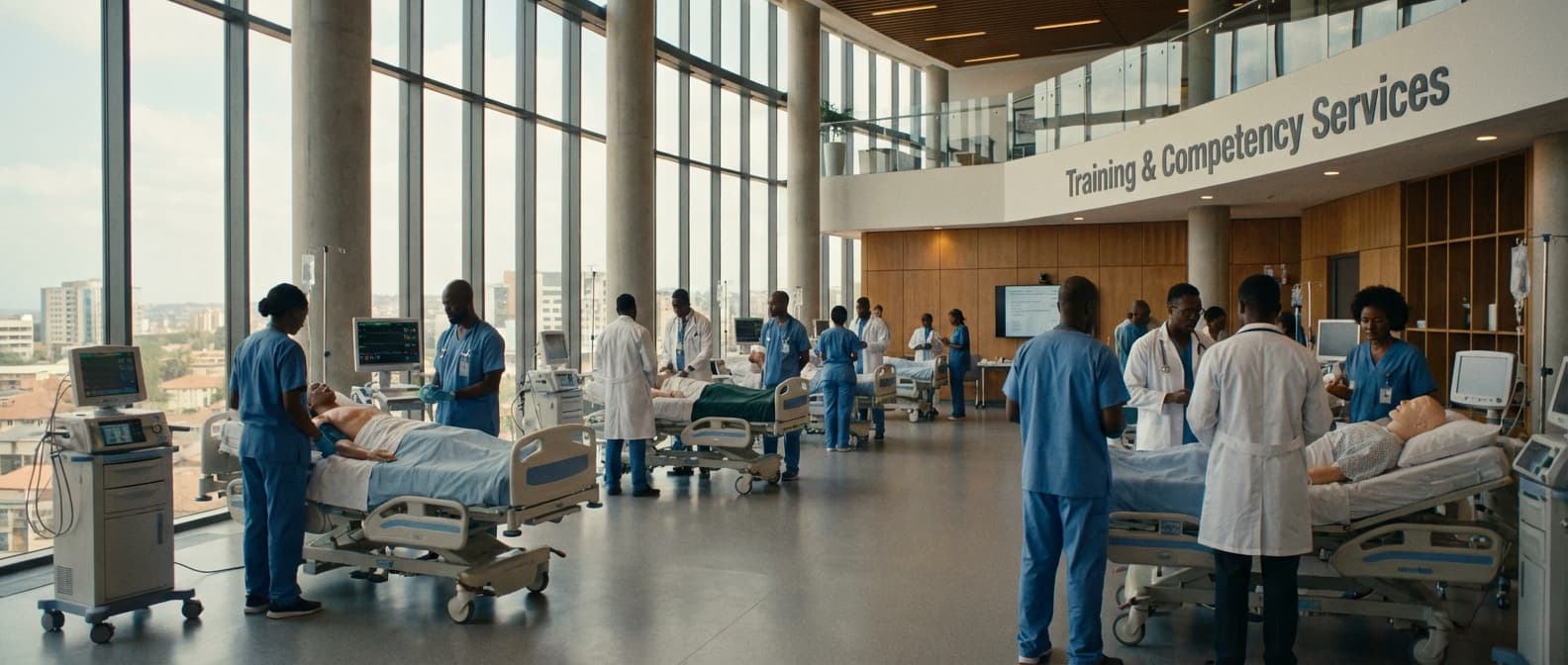
Biomedical Engineering First-Line Support Training Service in Sao Tome and Principe
Engineering Excellence & Technical Support
Biomedical Engineering First-Line Support Training Service High-standard technical execution following OEM protocols and local regulatory frameworks.
Rapid Medical Device Diagnostics
Empower first-line support technicians in Sao Tome and Principe with accelerated diagnostic workflows for common medical equipment failures, ensuring faster resolution times and minimizing patient care disruptions.
Remote Troubleshooting & Knowledge Base Integration
Facilitate seamless remote support capabilities and integrate a localized, searchable knowledge base of medical device troubleshooting guides, equipping technicians with instant access to critical information.
Biomedical Software & Firmware Updates
Provide training on safe and efficient procedures for managing medical device software and firmware updates, adhering to international standards and ensuring optimal device performance and security in the local context.
What Is Biomedical Engineering First-line Support Training Service In Sao Tome And Principe?
Biomedical Engineering First-Line Support Training Service in Sao Tome and Principe refers to a foundational educational program designed to equip individuals with the essential knowledge and practical skills required to perform initial troubleshooting, maintenance, and basic repair of biomedical equipment. This service is crucial for ensuring the operational readiness and safety of medical devices within healthcare facilities in the nation, thereby supporting effective patient care and diagnostic capabilities. The training focuses on identifying common equipment malfunctions, performing routine checks, implementing preventive maintenance procedures, and understanding the principles of safe equipment operation and handling. It serves as the initial point of contact for addressing immediate technical issues before escalation to specialized engineering personnel.
| Target Audience | Needs Addressed | Typical Use Cases |
|---|---|---|
| Hospital/Clinic Technicians and Support Staff | Enhance immediate problem-solving capabilities for critical medical equipment, reducing downtime and improving patient care continuity. | Responding to alarms on patient monitors, troubleshooting issues with basic laboratory analyzers (e.g., centrifuges, pH meters), performing daily checks on autoclaves, identifying and reporting malfunctions of electrotherapy devices. |
| Entry-Level Biomedical Engineering Technicians | Provide foundational skills for a career in biomedical equipment maintenance and support, enabling them to contribute effectively to a healthcare facility's technical team. | Conducting scheduled preventive maintenance on X-ray machines, performing basic calibration checks on vital signs monitors, replacing consumables on diagnostic imaging equipment, assisting senior engineers with complex repairs. |
| Healthcare Professionals (Nurses, Physicians) with Technical Aptitude | Empower frontline clinical staff to perform minor troubleshooting and basic operational checks, ensuring immediate availability of essential medical devices during critical moments. | Performing initial checks on infusion pumps before patient use, restarting malfunctioning patient monitoring systems, verifying power supply and connectivity of diagnostic equipment, reporting device issues promptly and accurately. |
| Ministry of Health Personnel (Technical Units) | Develop a skilled workforce capable of managing and maintaining a national inventory of biomedical equipment, ensuring adequate serviceability across public health facilities. | Assisting in the deployment and initial setup of newly acquired medical equipment, conducting basic training for local staff in remote areas, coordinating basic maintenance efforts for decentralized healthcare centers. |
Key Components of Biomedical Engineering First-Line Support Training
- Fundamental principles of biomedical equipment operation.
- Identification and categorization of common equipment malfunctions.
- Basic troubleshooting methodologies and diagnostic techniques.
- Routine preventive maintenance procedures and schedules.
- Safe operation, handling, and storage of biomedical devices.
- Understanding of basic electrical and mechanical principles relevant to medical equipment.
- Introduction to medical device regulations and compliance standards.
- Documentation and reporting of maintenance activities.
- Basic infection control practices related to equipment use and maintenance.
- Emergency response protocols for equipment failures.
Who Needs Biomedical Engineering First-line Support Training Service In Sao Tome And Principe?
Biomedical Engineering First-Line Support Training Service is crucial for ensuring the optimal functioning and longevity of medical equipment within healthcare facilities in Sao Tome and Principe. This training equips local technicians and biomedical engineers with the necessary skills to perform routine maintenance, troubleshoot common issues, and conduct initial repairs. This proactive approach not only minimizes equipment downtime but also improves patient care by ensuring reliable access to diagnostic and therapeutic technologies. The service is particularly vital in a developing nation like Sao Tome and Principe, where access to specialized external support might be limited or delayed.
| Target Customer Segment | Specific Departments Benefiting | Key Needs Addressed |
|---|---|---|
| Public Hospitals | Biomedical Engineering Department, Radiology, Cardiology, Intensive Care Unit (ICU), Operating Theatres, Laboratory Services | Basic maintenance of imaging equipment (X-ray, ultrasound), life support systems (ventilators, monitors), surgical instruments, and diagnostic tools. |
| Regional Health Centers | Clinical Support Staff, General Maintenance Teams | Training on essential medical devices common in primary care settings, such as blood pressure monitors, thermometers, basic laboratory equipment, and small diagnostic tools. |
| Private Clinics and Hospitals | In-house Technical Teams, Clinical Staff overseeing equipment | Upskilling existing technicians, ensuring adherence to manufacturer guidelines for a range of diagnostic and therapeutic equipment, proactive maintenance to reduce service costs. |
| NGO Healthcare Projects | Project Biomedical Technicians, Field Medical Staff | Empowering local teams to manage and maintain donated or procured medical equipment in remote or underserved areas, ensuring sustainability of healthcare interventions. |
| Ministry of Health | Central Biomedical Engineering Unit, National Health Training Institutes | Developing a standardized training curriculum, establishing a skilled local workforce, and implementing a national strategy for medical equipment maintenance and management. |
Target Customers & Departments for Biomedical Engineering First-Line Support Training Service in Sao Tome and Principe
- Public Hospitals (e.g., Hospital Central Dr. Agostinho Neto)
- Regional Health Centers
- Private Clinics and Hospitals
- Non-Governmental Organization (NGO) Healthcare Projects
- Ministry of Health (for national capacity building initiatives)
Biomedical Engineering First-line Support Training Service Process In Sao Tome And Principe
This document outlines the typical workflow for the Biomedical Engineering First-Line Support Training Service Process in Sao Tome and Principe, from initial inquiry to the successful execution of the training. This process is designed to ensure efficient and effective delivery of specialized training to biomedical engineering personnel within healthcare facilities.
| Stage | Description | Key Activities | Responsible Parties | Timeline (Typical) |
|---|---|---|---|---|
| Inquiry & Needs Assessment | Initial contact from a healthcare facility or individual expressing interest in first-line biomedical engineering support training. | Receive and acknowledge inquiry; Understand specific training needs (e.g., types of equipment, skill levels required, number of personnel); Gather information on existing infrastructure and available resources. | Client (Healthcare Facility/Individual), Training Provider (Biomedical Engineering Department/External Agency) | 1-3 business days |
| Proposal & Quotation | The training provider develops and submits a formal proposal and cost estimate based on the identified needs. | Develop a detailed training curriculum and syllabus; Define learning objectives and expected outcomes; Outline training methodology (classroom, hands-on, simulation); Prepare a comprehensive quotation including trainer fees, materials, venue, and any travel costs. | Training Provider | 3-5 business days |
| Agreement & Scheduling | Formal acceptance of the proposal and agreement on training dates and logistics. | Client reviews proposal and quotation; Negotiate terms and conditions if necessary; Sign a service agreement or contract; Confirm mutually agreeable training dates, venue, and participant list. | Client, Training Provider | 2-5 business days |
| Pre-Training Preparation | All necessary arrangements are made for the effective delivery of the training. | Prepare training materials (manuals, presentations, handouts); Procure or ensure availability of training equipment and simulators; Confirm venue logistics (room setup, AV equipment); Communicate pre-course information to participants (schedule, pre-reading, objectives). | Training Provider | 1-2 weeks prior to training |
| Training Execution | The actual delivery of the first-line biomedical engineering support training. | Conduct theoretical sessions; Facilitate practical/hands-on sessions with equipment; Demonstrate troubleshooting techniques; Engage participants in problem-solving exercises; Administer assessments (quizzes, practical tests) to gauge understanding. | Training Provider (Trainers), Participants (Trainees) | Varies based on training scope (e.g., 2-5 days) |
| Post-Training Evaluation & Support | Assessing the effectiveness of the training and providing ongoing assistance. | Collect participant feedback through evaluation forms; Review assessment results; Provide certificates of completion; Offer follow-up technical support or Q&A sessions (as agreed); Document training outcomes and any recommendations for future training. | Training Provider, Participants | 1-2 weeks after training |
| Feedback & Service Improvement | Utilizing feedback to enhance future training services. | Analyze all collected feedback; Identify areas for improvement in curriculum, delivery, or logistics; Implement changes for subsequent training programs; Maintain a record of client satisfaction and engagement. | Training Provider | Ongoing |
Key Stages of the Biomedical Engineering First-Line Support Training Service Process
- Inquiry & Needs Assessment
- Proposal & Quotation
- Agreement & Scheduling
- Pre-Training Preparation
- Training Execution
- Post-Training Evaluation & Support
- Feedback & Service Improvement
Biomedical Engineering First-line Support Training Service Cost In Sao Tome And Principe
Providing effective first-line support training for Biomedical Engineering professionals in Sao Tome and Principe is crucial for ensuring the safe and efficient operation of medical equipment. The cost of such training services is influenced by a variety of factors, leading to a range of pricing in the local currency (Dobra - STD). These factors include the scope and depth of the training curriculum, the qualifications and experience of the instructors, the duration of the training program, the number of participants, and the chosen training methodology (e.g., in-person, virtual, blended). Furthermore, logistical considerations such as venue rental (if applicable), training materials, and travel expenses for trainers can significantly impact the overall cost. Demand for specialized biomedical engineering training in Sao Tome and Principe, while growing, may also influence pricing due to the availability of local expertise.
| Training Component | Estimated Cost Range (STD) | Notes |
|---|---|---|
| Basic First-Line Support (e.g., troubleshooting common issues, preventive maintenance) | 50,000 - 150,000 STD | Covers fundamental skills for a small group. |
| Intermediate First-Line Support (e.g., more complex equipment, basic repairs) | 100,000 - 300,000 STD | Includes specialized equipment and hands-on practice. |
| Advanced First-Line Support (e.g., specialized diagnostic equipment, calibration) | 200,000 - 500,000+ STD | For highly specialized equipment requiring in-depth knowledge. |
| Per-Participant Fee (for larger groups, inclusive of materials) | 10,000 - 30,000 STD per participant | Can vary significantly based on training intensity. |
| Instructor Fees (Daily Rate) | 50,000 - 150,000 STD per day | Dependent on international vs. local expertise and specialization. |
| Training Material Development/Customization | 20,000 - 100,000 STD | For tailored modules and localized content. |
| Venue Rental (per day) | 10,000 - 50,000 STD | If in-person training requires dedicated space. |
| Travel and Accommodation for Trainers | Variable | Depends on trainer's origin and duration of stay. |
Key Pricing Factors for Biomedical Engineering First-Line Support Training in Sao Tome and Principe
- Curriculum Scope and Depth
- Instructor Qualifications and Experience
- Training Duration and Intensity
- Number of Participants
- Training Methodology (In-person, Virtual, Blended)
- Training Materials and Resources
- Logistical Costs (Venue, Equipment, Travel)
- Customization of Training Content
- Post-Training Support and Assessment
- Market Demand and Provider Availability
Affordable Biomedical Engineering First-line Support Training Service Options
Providing comprehensive and accessible first-line support training for biomedical engineering professionals is crucial for ensuring the safety and efficacy of medical devices. This service focuses on equipping technicians and junior engineers with the foundational knowledge and practical skills needed to effectively troubleshoot, maintain, and respond to initial issues with biomedical equipment. The goal is to reduce downtime, improve patient care, and optimize resource allocation by empowering on-site personnel. We offer various training options designed to be cost-effective, catering to different organizational needs and budgets.
| Value Bundle Name | Description | Includes | Target Audience | Cost-Saving Strategies |
|---|---|---|---|---|
| Essential Support Starter Pack | A foundational training program designed for new hires and junior technicians. | Core modules: Principles, Operation, Basic Troubleshooting, Safety. Online learning + 2 days on-site practical. | Entry-level biomedical technicians, new graduates. | Group discounts, online pre-work reduces on-site time, standardized curriculum for efficiency. |
| Comprehensive Care Package | A more in-depth program covering a wider range of equipment and advanced troubleshooting. | All Essential Pack modules + Advanced Troubleshooting, Preventive Maintenance, Documentation. Blended learning (online/on-site) + 5 days on-site practical. | Experienced technicians, team leads, biomedical engineers with 1-3 years of experience. | On-site training reduces travel costs for trainees, modular structure allows for customization, bulk purchase discounts. |
| Specialized Equipment Focus | Tailored training for specific high-value or complex medical device categories. | Customized modules based on chosen equipment (e.g., Anesthesia Machines, Ventilators, Imaging Systems). On-site or remote instructor-led, hands-on focus. | Technicians and engineers working with specific departments or advanced technologies. | Reduces training time by focusing on relevant equipment, avoids unnecessary training on unrelated devices, can be delivered efficiently on-site. |
| On-Demand Skill Boosters | Short, focused online modules for continuous learning and refreshers on specific topics. | Individual modules on topics like 'Ventilator Alarm Interpretation,' 'Defibrillator Maintenance,' 'EHR Integration Basics'. Self-paced online. | All levels of biomedical support staff for skill enhancement and ongoing education. | Low cost per module, accessible anytime/anywhere, reduces need for repeated full training sessions. |
Key Training Modules & Components
- Foundational Biomedical Principles: Understanding basic anatomy, physiology, and how common medical devices interact with the human body.
- Equipment Operation & Safety: Hands-on training on the safe and proper operation of a range of medical equipment, including common alarms and error codes.
- Preventive Maintenance Basics: Introducing essential preventive maintenance procedures to extend equipment lifespan and reduce unexpected failures.
- Troubleshooting Methodologies: Developing systematic approaches to diagnose and resolve common equipment malfunctions.
- Regulatory Compliance & Documentation: Understanding relevant regulations (e.g., FDA, HIPAA) and the importance of accurate record-keeping.
- Communication & Interpersonal Skills: Effective communication with clinical staff and escalating issues appropriately.
- Hands-on Practical Sessions: Simulated scenarios and practical exercises using actual or virtual equipment.
- Assessment & Certification: Evaluating knowledge and skills through written tests and practical assessments.
Verified Providers In Sao Tome And Principe
Navigating healthcare in a new country can be challenging. For those seeking reliable and high-quality medical services in Sao Tome and Principe, identifying verified providers is paramount. Franance Health stands out as a leading credentialing body, meticulously vetting healthcare professionals and facilities to ensure they meet stringent international standards. Their rigorous verification process not only confirms the qualifications and experience of individual practitioners but also assesses the operational integrity and ethical practices of healthcare institutions. Choosing a provider credentialed by Franance Health offers significant advantages, guaranteeing access to competent, safe, and trustworthy medical care. This not only enhances patient confidence but also contributes to a more robust and dependable healthcare ecosystem within Sao Tome and Principe.
| Franance Health Credential | What it Signifies | Benefit to Patient |
|---|---|---|
| Certified Medical Practitioner | Verification of medical license, specialized training, and proven experience. | Access to highly qualified and competent doctors and specialists. |
| Accredited Healthcare Facility | Assessment of infrastructure, equipment, hygiene, patient safety protocols, and administrative practices. | Ensures a safe, clean, and well-equipped environment for treatment and recovery. |
| Ethical Practice Endorsement | Confirmation of adherence to professional ethics, patient rights, and data privacy. | Trustworthy and respectful patient care with privacy guaranteed. |
| Continuous Quality Monitoring | Ongoing evaluation and review of providers to maintain high standards. | Consistent delivery of reliable and up-to-date medical services. |
Why Franance Health Credentials Matter in Sao Tome and Principe
- Ensures adherence to international quality and safety standards.
- Confirms the qualifications, expertise, and licensing of healthcare professionals.
- Validates the operational efficiency and ethical conduct of medical facilities.
- Provides peace of mind and confidence for patients seeking care.
- Promotes transparency and accountability within the healthcare sector.
- Contributes to the overall improvement of healthcare accessibility and quality in Sao Tome and Principe.
Scope Of Work For Biomedical Engineering First-line Support Training Service
This Scope of Work (SOW) outlines the requirements for providing comprehensive First-Line Support Training services for Biomedical Engineering personnel. The training will equip support staff with the necessary technical skills, diagnostic procedures, and customer service protocols to effectively handle initial inquiries and resolve common issues related to biomedical equipment. The goal is to improve response times, increase first-contact resolution rates, and ensure the safe and efficient operation of medical devices within the healthcare facility. This document details the training objectives, curriculum, technical deliverables, and standard specifications for the successful execution of this service.
| Category | Technical Deliverable | Standard Specification |
|---|---|---|
| Training Curriculum Development | Comprehensive Training Manuals (Digital and Print) | Content aligned with industry best practices (e.g., AAMI, ISO standards), modular design, clear learning objectives, verifiable knowledge checks, and comprehensive glossary. |
| Training Curriculum Development | Presentation Slides and Training Materials | Visually engaging, concise, and interactive content, incorporating diagrams, flowcharts, and real-world examples. Materials to be easily adaptable and updateable. |
| Training Modules | Introduction to Biomedical Equipment | Coverage of common equipment categories (e.g., patient monitoring, diagnostic imaging, therapeutic devices), basic principles of operation, and intended use. |
| Training Modules | Basic Troubleshooting and Diagnostics | Step-by-step guides for common faults, error code interpretation, logic tree analysis, and basic electrical/mechanical checks. Emphasis on non-invasive diagnostic procedures. |
| Training Modules | Diagnostic Tools and Software | Demonstration and hands-on practice with standard diagnostic tools (e.g., multimeters, oscilloscopes - if applicable to first-line scope) and vendor-specific diagnostic software. Training on accessing logs and basic configuration settings. |
| Training Modules | Safety and Regulatory Compliance | Understanding of electrical safety, patient isolation, infection control protocols, and relevant regulatory requirements (e.g., FDA, local health authorities) as they pertain to first-line support. |
| Training Modules | Customer Service and Communication | Active listening, empathy, clear and concise communication, de-escalation techniques, and professional conduct when interacting with clinical users. |
| Training Modules | Incident Management and Documentation | Proper use of Computerized Maintenance Management Systems (CMMS) for logging incidents, updating status, and generating basic reports. Understanding escalation criteria and procedures. |
| Practical Application | Simulated Equipment Scenarios | Realistic simulations of common equipment failures and user requests, allowing trainees to apply learned skills in a controlled environment. Scenarios to be documented with expected outcomes. |
| Practical Application | Hands-on Practice Sessions | Supervised sessions with accessible biomedical equipment (where feasible and safe) for practical skill development and reinforcement. |
| Assessment and Evaluation | Quizzes and Knowledge Checks | Regular assessments embedded within modules to gauge comprehension. Minimum passing score to be defined. |
| Assessment and Evaluation | Practical Skills Assessment | Performance-based evaluation of trainees' ability to troubleshoot, diagnose, and communicate effectively during simulated scenarios. Scoring rubric to be provided. |
| Assessment and Evaluation | Post-Training Evaluation Form | Feedback mechanism for trainees to assess the effectiveness of the training program and instructors. |
| Reporting | Training Completion Certificates | Issued to all participants successfully completing the training and assessments. Certificates to include trainee name, course title, date, and trainer's signature. |
| Reporting | Training Summary Report | Comprehensive report detailing training attendance, assessment results, identified strengths and areas for improvement within the trainee cohort, and recommendations for future training. |
| Support and Maintenance | Post-Training Refresher Materials | Access to a digital repository of training materials for ongoing reference and periodic review. |
| Support and Maintenance | On-Demand Q&A Support (Limited) | Defined period of instructor availability (e.g., 2 weeks post-training) for addressing follow-up questions via email or scheduled calls. |
Key Training Objectives
- Develop foundational knowledge of common biomedical equipment types and their functionalities.
- Train personnel in basic troubleshooting methodologies and diagnostic techniques for identifying equipment malfunctions.
- Educate on the proper use of diagnostic tools and software for first-line support.
- Instill best practices in safety procedures and regulatory compliance when interacting with medical devices.
- Enhance communication and customer service skills for effective interaction with clinical staff.
- Familiarize trainees with incident reporting, documentation, and escalation procedures.
- Provide practical, hands-on experience with simulated or actual equipment scenarios.
Service Level Agreement For Biomedical Engineering First-line Support Training Service
This Service Level Agreement (SLA) outlines the guaranteed response times and uptime for the Biomedical Engineering First-Line Support Training Service. This service provides essential training for personnel responsible for the initial triage and troubleshooting of biomedical equipment. The objective is to ensure that support staff are equipped to handle common issues efficiently, thereby minimizing equipment downtime and ensuring patient safety.
| Service Component | Response Time Guarantee | Uptime Guarantee |
|---|---|---|
| Access to Online Training Portal & Materials | 99.5% availability | 24x7 |
| Scheduled Instructor-Led Training Sessions | Confirmation of booking within 48 business hours | Scheduled sessions will be conducted as per the agreed calendar |
| Technical Support for Training Platform Issues | Response within 8 business hours | N/A (related to platform availability) |
| Response to Inquiries regarding Training Content | Response within 24 business hours | N/A |
Scope of Training Service
- Initial Training Modules for New Support Personnel
- Refresher Training for Existing Support Personnel
- Training on common diagnostic procedures for high-priority equipment
- Training on escalation protocols and documentation requirements
- Access to training materials and online resources
Frequently Asked Questions

Ready when you are
Let's scope your Biomedical Engineering First-Line Support Training Service in Sao Tome and Principe project in Sao Tome and Principe.

Scaling healthcare logistics and technical systems across the entire continent.