
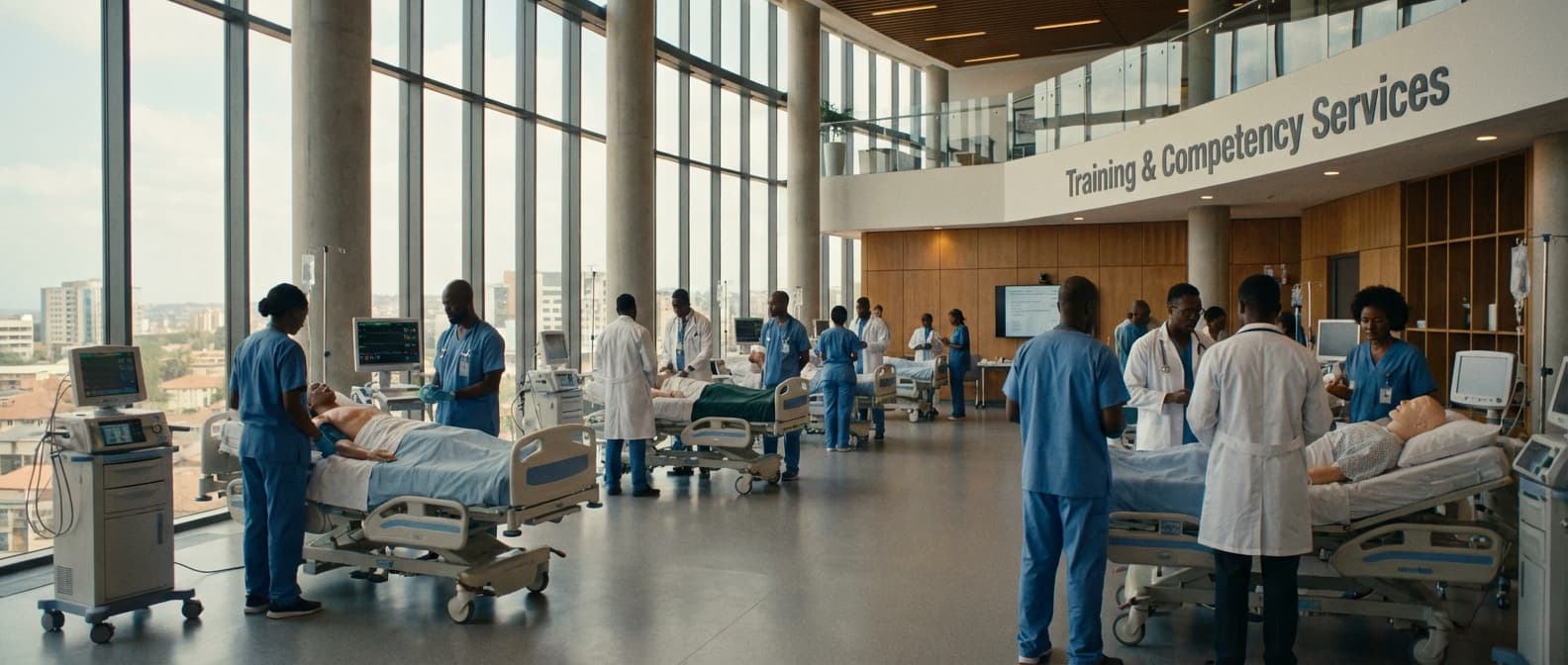
Anesthesia Workstation User Training Service in Sao Tome and Principe
Engineering Excellence & Technical Support
Anesthesia Workstation User Training Service High-standard technical execution following OEM protocols and local regulatory frameworks.
Hands-On Anesthesia Workstation Mastery
Gain practical, real-world experience with the latest anesthesia workstations through our intensive, hands-on training modules. Our expert instructors provide personalized guidance, ensuring proficient operation and troubleshooting.
Customized Workflow Integration & Safety Protocols
We tailor training to your specific clinical environment in São Tomé and Príncipe, focusing on seamless integration of anesthesia workstations into existing workflows and reinforcing critical patient safety protocols for optimal care delivery.
Advanced Troubleshooting & Maintenance Techniques
Equip your team with the knowledge to quickly identify and resolve common workstation issues. Our advanced training covers essential maintenance procedures, minimizing downtime and maximizing equipment longevity.
What Is Anesthesia Workstation User Training Service In Sao Tome And Principe?
The Anesthesia Workstation User Training Service in Sao Tome and Principe refers to a specialized educational program designed to equip healthcare professionals with the requisite knowledge and practical skills for the safe and effective operation of anesthesia workstations. This service encompasses a comprehensive curriculum covering the theoretical underpinnings, technical functionalities, operational procedures, and troubleshooting strategies associated with modern anesthesia delivery systems. The objective is to ensure users can administer anesthesia with precision, monitor patient physiological parameters accurately, and respond appropriately to emergent clinical situations within the specified healthcare setting.
| Target Audience | Typical Use Cases |
|---|---|
| Anesthesiologists | Routine induction and maintenance of general anesthesia, regional anesthesia support, management of complex physiological states. |
| Anesthesia Residents and Fellows | Developing fundamental and advanced competency in anesthesia delivery and patient management. |
| Certified Registered Nurse Anesthetists (CRNAs) | Administering anesthesia in various surgical settings, intraoperative patient management. |
| Anesthesia Technicians/Technologists | Equipment setup, pre-operative checks, troubleshooting, routine maintenance, and support during anesthetic procedures. |
| Medical Equipment Biomedical Engineers | Understanding system functionality for calibration, repair, and advanced maintenance. |
| Hospital Administrators and Procurement Officers | Evaluating and selecting appropriate anesthesia workstations, ensuring staff competency and institutional compliance. |
Key Components of Anesthesia Workstation User Training
- System Architecture and Components: Detailed breakdown of the anesthesia workstation's hardware (e.g., vaporizers, flow meters, ventilators, patient monitoring integration) and software interfaces.
- Physiological Principles of Anesthesia Delivery: Review of gas physics, pharmacokinetics, and pharmacodynamics relevant to anesthetic agents and delivery techniques.
- Ventilation Modes and Management: In-depth training on various mechanical ventilation strategies (e.g., volume control, pressure control, SIMV, PSV) and their clinical applications.
- Anesthetic Agent Administration and Monitoring: Protocols for the safe delivery of volatile anesthetics and intravenous agents, including calibration and error detection for vaporizers.
- Patient Monitoring Integration and Interpretation: Understanding how to connect, operate, and interpret data from integrated patient monitoring modules (e.g., ECG, SpO2, NIBP, EtCO2).
- Alarm Management and Troubleshooting: Identifying common alarm conditions, understanding their causes, and implementing appropriate corrective actions.
- Emergency Procedures and Safety Features: Training on backup systems, manual ventilation techniques, and the use of safety interlocks.
- Infection Control and Maintenance: Protocols for cleaning, disinfection, and routine maintenance of the anesthesia workstation to prevent contamination.
- Regulatory Compliance and Best Practices: Adherence to local and international standards for anesthesia delivery and patient safety.
Who Needs Anesthesia Workstation User Training Service In Sao Tome And Principe?
Anesthesia workstation user training services are crucial for ensuring the safe, effective, and efficient operation of modern anesthesia delivery systems. These services are particularly vital in regions like Sao Tome and Principe where access to advanced medical technology might be newer, or where a consistent level of specialized training is paramount to patient safety and optimal clinical outcomes. Such training empowers healthcare professionals to fully leverage the capabilities of these complex machines, minimize the risk of errors, and adapt to technological advancements in anesthesia care.
| Target Customer Type | Primary Departments Involved | Specific Roles Requiring Training |
|---|---|---|
| Public Hospitals | Anesthesiology Department, Operating Rooms, Intensive Care Units (ICUs) | Anesthesiologists, Certified Registered Nurse Anesthetists (CRNAs) or equivalent, Anesthesia Technicians, ICU Nurses |
| Private Hospitals | Anesthesiology Department, Operating Rooms, Recovery Rooms (PACU) | Anesthesiologists, Anesthesia Assistants, Recovery Room Nurses, Surgical Team Members |
| Surgical Centers | Operating Rooms, Post-Anesthesia Care Units (PACUs) | Anesthesiologists, Anesthesia Technicians, Nurses specializing in perioperative care |
| Specialized Clinics (e.g., Ophthalmology, Dental Surgery) | Procedure Rooms, Recovery Areas | Anesthesiologists overseeing procedures, Clinic Nurses assisting with sedation/anesthesia |
Target Customers and Departments in Sao Tome and Principe Requiring Anesthesia Workstation User Training
- Hospitals (Public and Private)
- Surgical Centers
- Specialized Clinics with Surgical Capabilities
Anesthesia Workstation User Training Service Process In Sao Tome And Principe
This document outlines the Anesthesia Workstation User Training Service Process for clients in Sao Tome and Principe, detailing the workflow from initial inquiry to successful execution. The service ensures that healthcare professionals are proficient in operating anesthesia workstations, thereby enhancing patient safety and care quality.
| Stage | Description | Key Activities | Responsibility | Timeline (Indicative) |
|---|---|---|---|---|
| Initial contact from a healthcare facility or individual seeking anesthesia workstation training. | Client expresses interest. Service provider gathers information on workstation model, number of trainees, current skill levels, and specific training objectives. Site visit may be arranged. | Client, Service Provider Sales/Technical Team | 1-3 business days |
| Development of a tailored training plan and cost estimate. | Service provider drafts a detailed proposal outlining training modules, duration, location, required resources, and pricing. Quotation is submitted to the client. | Service Provider Technical Team, Sales Team | 2-5 business days |
| Formalizing the service contract and agreeing on training dates. | Client reviews and accepts the proposal/quotation. A service agreement is signed. Training dates and times are mutually agreed upon, considering client's operational schedule. | Client, Service Provider Management | 3-7 business days |
| Ensuring all logistical and technical prerequisites are met. | Service provider confirms training venue and equipment availability. Trainee lists are finalized. Any pre-reading materials or introductory modules are shared with trainees. | Service Provider Training Team, Client Facility Management | 1-2 weeks prior to training |
| Delivery of the comprehensive anesthesia workstation training. | Certified trainers conduct theoretical sessions and practical hands-on training. Covers workstation operation, safety features, troubleshooting, and maintenance basics. Includes simulations and Q&A sessions. | Service Provider Certified Trainers, Trainees | Duration varies (e.g., 1-5 days depending on scope) |
| Assessing trainee comprehension and providing immediate assistance. | Post-training assessment (written or practical). Collection of feedback from trainees and supervisors. On-the-spot clarification of any remaining doubts. | Service Provider Trainers, Trainees, Client Supervisors | During and immediately after training |
| Issuance of certificates and ongoing support. | Upon successful completion, participants receive certificates of attendance/proficiency. Service provider offers post-training technical support and may schedule follow-up sessions or advanced training as needed. | Service Provider Training Department, Client | Within 1 week post-training, and ongoing |
Anesthesia Workstation User Training Service Process
- Inquiry & Needs Assessment
- Proposal & Quotation
- Agreement & Scheduling
- Pre-Training Preparation
- On-site Training Execution
- Post-Training Support & Evaluation
- Certification & Follow-up
Anesthesia Workstation User Training Service Cost In Sao Tome And Principe
Providing specialized user training for anesthesia workstations in Sao Tome and Principe involves several cost considerations. The pricing for such a service will be influenced by the complexity of the workstation, the duration and depth of the training, the qualifications and experience of the trainers, and logistical factors specific to Sao Tome and Principe. It's important for healthcare facilities to budget for this crucial aspect of equipment acquisition to ensure safe and effective use, maximizing their investment in advanced medical technology.
| Training Scope | Estimated Cost Range (STN - Dobra) | Notes |
|---|---|---|
| Basic Operation & Familiarization (1-2 days) | 50,000 - 150,000 STN | Covers core functions, alarms, and basic patient setup. Assumes local trainer or minimal travel costs. |
| Comprehensive User Training (3-5 days) | 150,000 - 400,000 STN | Includes advanced features, ventilation modes, troubleshooting, and clinical applications. May involve international trainers with travel expenses. |
| Specialized Modules / Advanced Troubleshooting (1-2 days) | 75,000 - 250,000 STN | For specific advanced functionalities or targeted problem-solving. Cost varies based on trainer expertise. |
| On-site Training (Per Day, including travel/accommodation) | 100,000 - 300,000+ STN | This is a highly variable category dependent on trainer's origin, flight costs, and duration of stay. This estimate is for the trainer's daily rate plus associated logistical expenses. |
Key Pricing Factors for Anesthesia Workstation User Training in Sao Tome and Principe
- Anesthesia Workstation Complexity: More advanced workstations with a wider range of features and functionalities will typically require more extensive and therefore more costly training.
- Training Duration and Depth: The total number of hours or days dedicated to training, as well as the level of detail covered (basic operation vs. advanced troubleshooting and specific protocols), will directly impact the cost.
- Trainer Qualifications and Experience: Highly specialized trainers with extensive experience in both anesthesia and the specific workstation models often command higher fees.
- Number of Trainees: While sometimes priced per participant, larger groups might also influence the overall cost due to resource allocation (e.g., multiple trainers, training materials).
- Location and Logistics: Training conducted on-site at the healthcare facility in Sao Tome and Principe will incur costs related to travel, accommodation, and per diems for trainers if they are not local.
- Training Materials and Resources: The provision of user manuals, simulation equipment, and other learning aids can add to the overall cost.
- Customization of Training: Tailoring the training program to the specific clinical needs and existing skill levels of the hospital's staff can increase the development effort and cost.
- Certification: If the training includes a formal certification process, this will often be an additional charge.
- On-going Support and Refresher Courses: While not strictly initial training, the cost of future support or refresher sessions should be considered in the long-term budgeting.
Affordable Anesthesia Workstation User Training Service Options
This service focuses on providing accessible and cost-effective training for affordable anesthesia workstations. We understand the budgetary constraints faced by many healthcare facilities, and our training solutions are designed to maximize value while minimizing expenditure. Our offerings include flexible user training packages and strategic cost-saving approaches to ensure your team is proficient in operating and maintaining these vital machines without breaking the bank.
| Value Bundle | Description | Key Benefits | Cost-Saving Strategies Integrated |
|---|---|---|---|
| Basic Proficiency Bundle | Covers fundamental operation, patient monitoring, and emergency procedures for one specific workstation model. | Quick onboarding for new staff, improved patient safety, reduced operational errors. | Economical group rates, scalable to facility size. |
| Comprehensive Operations Bundle | Includes basic proficiency plus maintenance, troubleshooting, and integration with existing hospital systems. | Enhanced equipment longevity, reduced downtime, improved workflow efficiency. | Discounted multi-module access, on-demand refreshers included. |
| Advanced Clinical Application Bundle | Focuses on specialized anesthetic techniques, advanced ventilation modes, and troubleshooting complex scenarios. | Optimized patient care, expanded clinical capabilities, expert knowledge transfer. | Early bird discounts, bundled with equipment purchase or service contracts. |
| Train-the-Trainer Empowerment Bundle | Equips designated personnel within your institution to deliver ongoing, in-house training. | Sustainable training model, reduced reliance on external trainers, consistent knowledge base. | Significant long-term cost reduction, reduced travel expenses for external trainers. |
Key Training Service Options:
- On-site Training Sessions
- Remote/Virtual Training Modules
- Train-the-Trainer Programs
- Customizable Training Curricula
- E-learning Platforms & Resources
Verified Providers In Sao Tome And Principe
Navigating healthcare in Sao Tome and Principe can be a complex undertaking. Ensuring you are engaging with verified providers is paramount for receiving quality care and peace of mind. Franance Health stands out as a trusted partner, offering a network of credentialed and reputable healthcare professionals across the islands. Their rigorous vetting process guarantees that all listed providers meet stringent standards for education, licensing, and ethical practice. This commitment to verification not only safeguards patients but also elevates the overall healthcare landscape in Sao Tome and Principe.
| Provider Type | Franance Health Verification Assurance | Key Benefits for Patients |
|---|---|---|
| General Practitioners | Verified Medical License, Board Certification Status Confirmed | Access to primary care from qualified and licensed doctors. |
| Specialists (e.g., Cardiologists, Pediatricians, Surgeons) | Specialty Board Certification, Peer Review, Hospital Affiliation Checks | Consultation and treatment from highly qualified medical experts in their respective fields. |
| Hospitals and Clinics | Accreditation Status, Quality of Care Audits, Regulatory Compliance Checks | Safe and well-equipped facilities with a focus on patient outcomes. |
| Diagnostic Laboratories | Licensing, Equipment Calibration, Quality Control Standards Verification | Accurate and reliable diagnostic testing for effective treatment planning. |
| Dental Professionals | Verified Dental License, Continuing Education Compliance | Quality dental care from licensed and up-to-date practitioners. |
Why Franance Health Credentials Represent the Best Choice:
- Rigorous Vetting Process: Franance Health employs a multi-faceted approach to verify each provider's qualifications, ensuring they meet high standards of expertise and professionalism.
- Certified Professionals: Access to a network of doctors, specialists, and healthcare facilities that have undergone thorough credentialing and licensing checks.
- Patient Safety and Trust: The verification process prioritizes patient well-being by ensuring providers are legitimate and adhere to best practices.
- Comprehensive Network: A broad range of medical services and specialties are available through their verified network, catering to diverse healthcare needs.
- Peace of Mind: Knowing that you are receiving care from a trusted and verified provider eliminates uncertainty and anxiety.
- Commitment to Quality: Franance Health's dedication to credentialing fosters a culture of excellence within the healthcare system of Sao Tome and Principe.
- Accessibility: Facilitates easier access to reputable healthcare services for residents and visitors alike.
Scope Of Work For Anesthesia Workstation User Training Service
This Scope of Work (SOW) outlines the requirements for providing comprehensive user training services for Anesthesia Workstations. The training will ensure that qualified medical personnel can safely, effectively, and efficiently operate the Anesthesia Workstation in accordance with manufacturer guidelines and best clinical practices. This SOW details the technical deliverables and standard specifications for the training program.
| Deliverable | Description | Standard Specification / Requirement | Acceptance Criteria |
|---|---|---|---|
| Training Curriculum Development | A comprehensive curriculum tailored to the specific Anesthesia Workstation model(s). | Must cover theoretical knowledge, practical skills, and case-based scenarios. Curriculum must be reviewed and approved by the client's clinical lead. | Approved curriculum document, demonstrating comprehensive coverage of workstation functionalities and safety. |
| Training Materials | Development and provision of high-quality training materials. | Includes user manuals, quick reference guides, presentation slides, practical exercise guides, and assessment tools (e.g., quizzes, checklists). Materials must be clear, concise, and up-to-date. | Complete set of approved training materials in the agreed-upon format (e.g., PDF, printed copies). |
| Certified Trainers | Provision of qualified and experienced trainers. | Trainers must possess demonstrable expertise in anesthesia, familiarity with the specific Anesthesia Workstation model, and proven training delivery skills. Certification from the manufacturer is preferred. | Resumes/CVs of trainers, demonstrating relevant qualifications and experience. Proof of manufacturer certification, if applicable. |
| On-Site Training Delivery | Conduct of hands-on training sessions at the client's facility. | Training sessions must be scheduled at mutually agreeable times. Sessions should accommodate the specified number of trainees per group. Practical sessions must utilize actual Anesthesia Workstations (or simulators if approved). | Completed training sessions as per schedule, with attendance records maintained. Post-training feedback forms collected from participants. |
| Theoretical Training | Instruction on workstation principles, modes, settings, and safety features. | Includes lectures, discussions, and interactive Q&A sessions. Focus on understanding the 'why' behind different settings and protocols. | Demonstrated understanding of theoretical concepts through assessments (e.g., quizzes). |
| Practical/Hands-On Training | Guided practice in operating the Anesthesia Workstation. | Includes patient setup, mode selection, parameter adjustments, alarm troubleshooting, and simulation of common clinical scenarios. Emphasis on muscle memory and proficiency. | Demonstrated proficiency in performing key operational tasks as per the practical skills checklist. |
| Simulation Exercises | Application of learned skills in realistic scenarios. | Utilizing simulators or actual equipment to replicate common and challenging anesthesia cases, focusing on decision-making and response to events. | Successful management of simulated scenarios, as assessed by the trainer. |
| Assessment and Evaluation | Methods to assess trainee competency. | Includes pre- and post-training assessments (e.g., knowledge tests), practical skills evaluations, and case study reviews. A minimum competency threshold must be defined. | Documented assessment results for each trainee, indicating successful completion and attainment of competency. |
| Post-Training Support | Provision of limited post-training support. | Includes a designated period for answering user queries via email or phone for clarification and troubleshooting. May include access to an online resource portal. | Availability of support during the agreed-upon period. Timely responses to user inquiries. |
| Training Report | A comprehensive report summarizing the training activities. | Includes details of training dates, locations, number of attendees, topics covered, assessment results, and any recommendations. Report should be submitted within a specified timeframe post-training. | Final training report, accepted by the client, providing a clear overview of the training outcomes. |
Key Objectives of the Training Service
- To equip users with the knowledge and skills to operate all features and functions of the Anesthesia Workstation.
- To ensure users understand safety protocols, alarm management, and emergency procedures related to the workstation.
- To train users on proper patient setup, ventilation modes, gas delivery, and monitoring capabilities.
- To familiarize users with routine maintenance, troubleshooting, and basic user-level service.
- To promote efficient workflow and integration of the workstation into clinical anesthesia practice.
- To comply with all relevant regulatory requirements and institutional policies.
Service Level Agreement For Anesthesia Workstation User Training Service
This Service Level Agreement (SLA) outlines the terms and conditions for the Anesthesia Workstation User Training Service provided by [Your Company Name] to [Client Name]. It defines the expected response times for support requests and the guaranteed uptime for the online training platform.
| Service Component | Response Time Guarantee | Uptime Guarantee |
|---|---|---|
| Technical Support (Urgent - System Outage) | Within 1 hour during business hours (9 AM - 5 PM [Time Zone], Mon-Fri) | N/A (Focus on resolution) |
| Technical Support (Standard - Non-Urgent) | Within 4 business hours during business hours (9 AM - 5 PM [Time Zone], Mon-Fri) | N/A (Focus on resolution) |
| Content/Curriculum Inquiry | Within 8 business hours during business hours (9 AM - 5 PM [Time Zone], Mon-Fri) | N/A (Focus on resolution) |
| Online Training Platform Availability | N/A (Focus on uptime) | 99.5% (Measured monthly, excluding scheduled maintenance) |
| Scheduled Maintenance Notifications | Minimum 48 hours advance notice | N/A (Maintenance is excluded from uptime calculation) |
Key Service Objectives
- To provide timely and effective support for users of the Anesthesia Workstation training.
- To ensure the consistent availability and accessibility of the online training platform.
Frequently Asked Questions

Ready when you are
Let's scope your Anesthesia Workstation User Training Service in Sao Tome and Principe project in Sao Tome and Principe.

Scaling healthcare logistics and technical systems across the entire continent.