
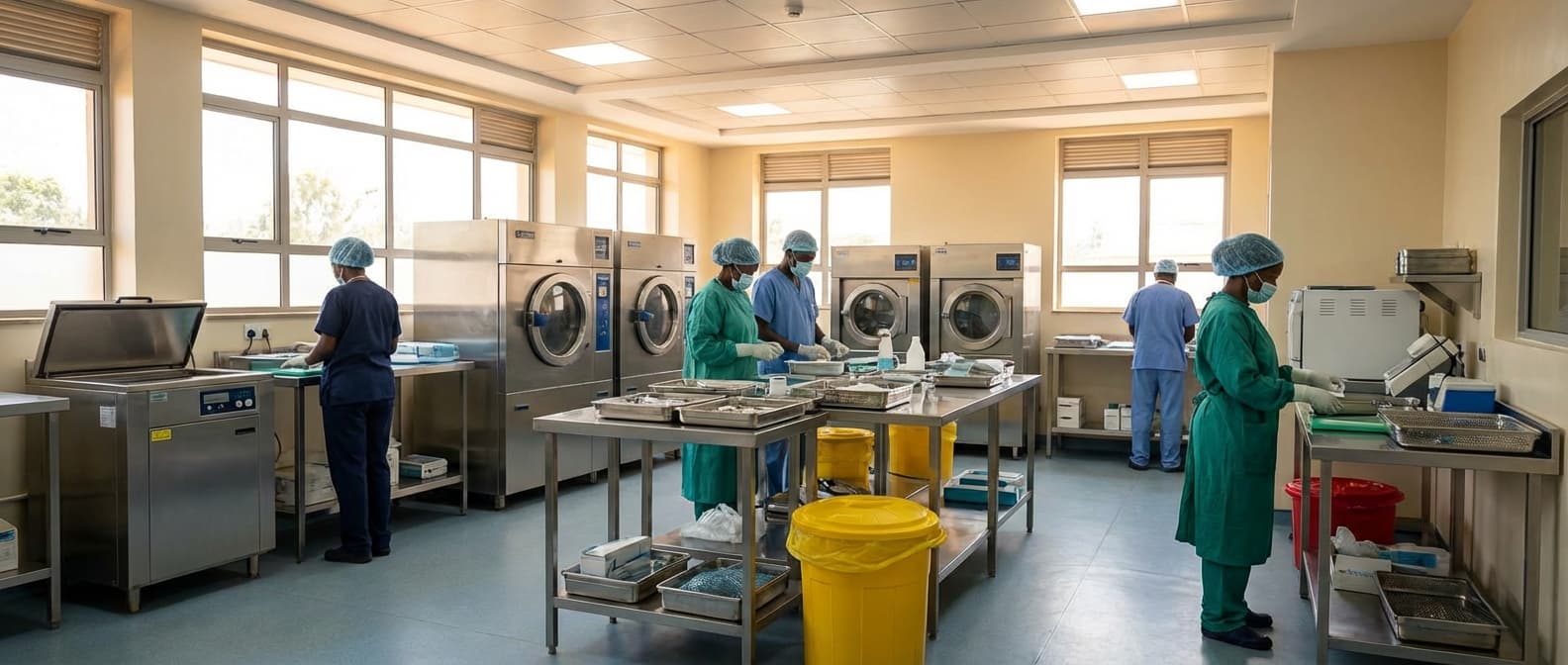
Infection-Control Readiness Support Service for Reusable Equipment in Sao Tome and Principe
Engineering Excellence & Technical Support
Infection-Control Readiness Support Service for Reusable Equipment High-standard technical execution following OEM protocols and local regulatory frameworks.
Enhanced Sterilization Protocols
Implementation of advanced, validated sterilization techniques for critical and semi-critical reusable medical equipment, including autoclaving and chemical sterilization, ensuring compliance with international safety standards and reducing healthcare-associated infections.
Supply Chain Management & Traceability
Establishment of a robust supply chain for infection control consumables and detergents, coupled with a digital traceability system for reusable equipment, enabling real-time monitoring of sterilization cycles, maintenance schedules, and equipment lifecycle for optimal inventory and safety assurance.
Capacity Building & Training
Comprehensive training programs for healthcare personnel on proper disinfection, sterilization, handling, and storage procedures for reusable medical devices, fostering a skilled workforce and promoting a culture of safety and infection prevention across Sao Tome and Principe.
What Is Infection-control Readiness Support Service For Reusable Equipment In Sao Tome And Principe?
Infection-Control Readiness Support Service for Reusable Equipment in Sao Tome and Principe (ICRSS-RE-STP) is a specialized consultancy and operational support framework designed to ensure healthcare facilities in Sao Tome and Principe maintain optimal infection prevention and control (IPC) standards specifically concerning the reprocessing and safe reuse of medical devices and instruments. This service addresses critical gaps in infrastructure, training, and procedural adherence necessary for effective sterilization, disinfection, and handling of reusable medical items, thereby mitigating the risk of healthcare-associated infections (HAIs). It encompasses a multi-faceted approach involving assessment, development, implementation, and ongoing monitoring of IPC protocols tailored to the local context and resource availability.
| Need/User Group | Specific Requirements Addressed by ICRSS-RE-STP | Typical Use Cases |
|---|---|---|
| Public Hospitals and Health Centers: Facilities performing surgical procedures, diagnostic imaging, and routine patient care requiring reusable instruments (e.g., scalpels, forceps, endoscopes, catheters). | Lack of functional sterilization equipment, inadequate understanding of disinfection levels, absence of standardized reprocessing protocols, insufficient training of staff, inconsistent supply of consumables. | Ensuring safe reprocessing of surgical kits for appendectomies or caesarean sections; verifying effectiveness of sterilization for dental instruments; validating disinfection protocols for endoscopes used in gastroscopy. |
| Private Clinics and Dental Practices: Smaller facilities with a high volume of reusable medical and dental instruments. | Limited technical expertise in sterilization validation, reliance on outdated or poorly maintained equipment, potential for cross-contamination due to inadequate processes. | Implementing a robust sterilization cycle validation for dental drills and probes; developing an efficient workflow for reprocessing reusable speculums in a gynecology clinic; ensuring compliance with regulatory requirements for sterile medical devices. |
| Ministry of Health and National Health Agencies: Governmental bodies responsible for healthcare quality and patient safety. | Need to establish national IPC standards, monitor facility compliance, develop training curricula, and procure essential reprocessing equipment and consumables. | Developing national guidelines for reusable medical device reprocessing; conducting nationwide assessments of sterilization capacity; establishing a framework for procurement of autoclaves and disinfectants; training trainers for regional IPC workshops. |
| Non-Governmental Organizations (NGOs) and International Aid Organizations: Entities involved in healthcare provision or infrastructure development in Sao Tome and Principe. | Establishing new healthcare facilities, upgrading existing ones, providing medical supplies, and ensuring sustainability of healthcare services. | Setting up a functional sterilization unit in a newly constructed rural health post; assessing and upgrading reprocessing capabilities in facilities supported by development projects; ensuring that donated reusable instruments can be safely reprocessed on-site. |
Key Components of the Infection-Control Readiness Support Service for Reusable Equipment:
- Assessment and Gap Analysis: Comprehensive evaluation of existing IPC infrastructure, equipment functionality (e.g., autoclaves, washer-disinfectors), reagent quality, waste management systems, and staff competency related to reusable medical equipment reprocessing.
- Protocol Development and Standardization: Creation or refinement of Standard Operating Procedures (SOPs) for cleaning, disinfection, sterilization, packaging, storage, and transportation of reusable equipment, aligned with international guidelines (e.g., WHO, CDC) and adapted for local feasibility.
- Equipment Evaluation and Procurement Support: Technical assessment of the suitability of existing reprocessing equipment and recommendations for acquisition or upgrade of essential devices and consumables, considering maintenance, power requirements, and supply chain logistics.
- Training and Capacity Building: Targeted training programs for healthcare personnel (nurses, technicians, sterilisation staff) on best practices in IPC, proper use of reprocessing equipment, chemical handling, and documentation.
- Supervision and Monitoring: Regular on-site supervision and remote monitoring of reprocessing processes, including audits of documentation, environmental sampling, and performance indicator tracking to ensure sustained compliance.
- Quality Assurance and Validation: Implementation of quality assurance mechanisms, including biological and chemical indicator testing, process validation for sterilization cycles, and traceability systems.
- Waste Management Integration: Guidance on the safe segregation, handling, and disposal of contaminated waste generated during the reprocessing cycle.
- Supply Chain Optimization: Support in establishing reliable supply chains for disinfectants, detergents, packaging materials, and other essential consumables.
Who Needs Infection-control Readiness Support Service For Reusable Equipment In Sao Tome And Principe?
Infection-Control Readiness Support Services for Reusable Equipment are crucial for healthcare facilities in Sao Tome and Principe to ensure the safety of patients and healthcare workers by preventing the transmission of infections through inadequately processed reusable medical devices. These services are vital for any institution handling reusable equipment that requires sterilization or disinfection.
| Target Customer | Key Departments Requiring Support |
|---|---|
| Hospitals | Central Sterile Supply Department (CSSD) / Sterilization Services, Operating Rooms (OR), Intensive Care Units (ICU), Emergency Departments (ED), Maternity Wards, Outpatient Clinics, Dental Units, Endoscopy Units |
| Clinics and Health Centers | Treatment Rooms, Minor Procedure Rooms, Dental Clinics, Physiotherapy Departments |
| Surgical Centers | Operating Theaters, Pre-operative and Post-operative Areas, Sterilization Areas |
| Dental Practices | Treatment Rooms, Sterilization Areas for dental instruments |
| Specialty Clinics | Procedure Rooms, Sterilization Areas for specific instruments (e.g., ophthalmology instruments, dermatological tools) |
| Laboratories | Microbiology Labs, Pathology Labs, where reusable glassware and instruments are used and require decontamination. |
Target Customers & Departments
- Hospitals (Public and Private)
- Clinics and Health Centers
- Surgical Centers
- Dental Practices
- Specialty Clinics (e.g., Ophthalmology, Dermatology)
- Laboratories
Infection-control Readiness Support Service For Reusable Equipment Process In Sao Tome And Principe
This document outlines the workflow for the Infection-Control Readiness Support Service for Reusable Equipment Processes in Sao Tome and Principe, guiding stakeholders from initial inquiry to successful execution. The service aims to bolster the capacity of healthcare facilities in Sao Tome and Principe to safely reprocess reusable medical equipment, thereby enhancing patient safety and preventing healthcare-associated infections.
| Stage | Description | Key Activities | Responsible Parties | Expected Outcomes |
|---|---|---|---|---|
| Inquiry and Initial Assessment | The process begins when a healthcare facility in Sao Tome and Principe expresses interest in improving their reusable equipment reprocessing practices. | Receive and log inquiry; conduct initial remote assessment of existing practices, available resources, and perceived challenges; confirm eligibility. | Healthcare Facility, Ministry of Health (MoH) focal point, Service Provider. | Confirmation of interest and basic understanding of the facility's context. |
| Needs Identification and Planning | A detailed assessment is conducted to identify specific gaps and inform tailored support. | Conduct on-site assessment of sterilization, disinfection, and cleaning processes; interview staff; review protocols and equipment; identify specific training needs and resource gaps; co-develop a detailed support plan with the facility and MoH. | Service Provider, Healthcare Facility staff, MoH representatives. | Comprehensive needs assessment report; a jointly developed, detailed support plan outlining objectives, activities, timelines, and required resources. |
| Resource Mobilization and Training Development | Necessary resources and training materials are prepared based on the identified needs. | Procure or facilitate procurement of essential supplies and equipment (e.g., disinfectants, PPE, cleaning agents, sterilization indicators); develop or adapt training modules relevant to the identified gaps (e.g., proper cleaning techniques, sterilization procedures, equipment maintenance). | Service Provider, MoH, Procurement agencies, Training material developers. | Acquired or allocated necessary equipment and supplies; finalized and adapted training materials. |
| On-site Implementation and Training Delivery | The core of the service involves direct intervention and capacity building at the facility. | Deliver on-site training sessions to relevant staff (nurses, technicians, cleaning staff); provide hands-on practical demonstrations and skill-building exercises; assist in setting up or optimizing reprocessing areas; implement new protocols and Standard Operating Procedures (SOPs). | Service Provider trainers, Healthcare Facility staff. | Trained healthcare workers; implemented improved reprocessing procedures; enhanced understanding of infection control principles for reusable equipment. |
| Monitoring, Evaluation, and Post-Intervention Support | The impact of the intervention is assessed and sustained through ongoing support. | Conduct follow-up visits to monitor adherence to new protocols; evaluate the effectiveness of training through observation and knowledge checks; provide ongoing mentorship and problem-solving support; assess the sustainability of implemented changes. | Service Provider, Healthcare Facility staff, MoH. | Documented improvements in reprocessing practices; identification of areas requiring further attention; strengthened capacity for self-monitoring. |
| Reporting and Knowledge Sharing | The outcomes and lessons learned are documented and disseminated. | Prepare a comprehensive final report detailing activities, outcomes, challenges, and recommendations; share the report with the MoH and relevant stakeholders; contribute to knowledge sharing initiatives within Sao Tome and Principe and potentially with other similar contexts. | Service Provider, MoH. | A final report documenting project success; lessons learned for future interventions; contribution to national infection control strategies. |
Workflow Stages
- Inquiry and Initial Assessment
- Needs Identification and Planning
- Resource Mobilization and Training Development
- On-site Implementation and Training Delivery
- Monitoring, Evaluation, and Post-Intervention Support
- Reporting and Knowledge Sharing
Infection-control Readiness Support Service For Reusable Equipment Cost In Sao Tome And Principe
This document outlines the critical pricing factors and estimated cost ranges for an Infection-Control Readiness Support Service for Reusable Equipment in Sao Tome and Principe. The service aims to ensure that healthcare facilities have robust protocols, trained personnel, and appropriate resources to safely reprocess reusable medical equipment, thereby preventing healthcare-associated infections (HAIs). The pricing will be influenced by several key elements, reflecting the specific context and needs of facilities in Sao Tome and Principe.
| Service Component / Scope | Estimated Cost Range (US Dollars) | Estimated Cost Range (Sao Tomean Dobra - STD) [Approximate Exchange Rate: 1 USD = 23,000 STD (Illustrative)] | Notes |
|---|---|---|---|
| Initial Assessment & Needs Analysis (Per Facility) | $300 - $800 | 6,900,000 - 18,400,000 | Covers on-site visit, evaluation of current practices, infrastructure, and equipment. Includes initial report. |
| Basic Training Workshop (Per Group of 10-15 Staff) | $500 - $1,200 | 11,500,000 - 27,600,000 | Focuses on fundamental principles of infection control, decontamination, and safe handling. Includes materials. |
| Advanced/Specialized Training (Per Group of 10-15 Staff) | $800 - $2,000 | 18,400,000 - 46,000,000 | Covers specific equipment reprocessing (e.g., endoscopes, sterilization monitoring), advanced techniques. |
| Guideline Development & Protocol Creation (Per Facility) | $400 - $1,000 | 9,200,000 - 23,000,000 | Development of customized Standard Operating Procedures (SOPs) for reprocessing. |
| Equipment Calibration & Basic Maintenance Advisory | $200 - $600 (Per Equipment Type/Session) | 4,600,000 - 13,800,000 | Advisory on calibration checks and minor maintenance for key reprocessing equipment. |
| Regular Monitoring & Audit (Monthly/Quarterly Visit) | $400 - $1,500 (Per Visit) | 9,200,000 - 34,500,000 | Includes on-site observation, data review, and feedback. Cost varies by visit frequency and scope. |
| Comprehensive Support Package (e.g., 6-Month Contract) | $3,000 - $10,000+ | 69,000,000 - 230,000,000+ | Bundled services including assessment, training, protocol development, and regular monitoring. Highly customizable. |
| Travel & Logistics (Per Trip, depending on remoteness) | $100 - $500 | 2,300,000 - 11,500,000 | Covers local transportation, accommodation, and per diem for service providers. |
Key Pricing Factors for Infection-Control Readiness Support Service
- Scope of Services: The breadth and depth of the support provided. This could range from basic training and guideline development to comprehensive equipment assessment, procurement advisory, and ongoing monitoring.
- Facility Size and Type: Larger hospitals or those with a higher volume of reusable equipment will generally incur higher costs due to the increased scale of operations and number of staff requiring training.
- Existing Infrastructure and Equipment: The current state of reprocessing facilities, the age and type of existing equipment, and the availability of essential consumables will impact the level of intervention required. Significant upgrades or repairs will add to the cost.
- Personnel Training Needs: The number of healthcare workers (nurses, technicians, cleaning staff) requiring training in decontamination, sterilization, and handling of reusable equipment. The duration and complexity of training modules are also factors.
- Geographic Accessibility: The remoteness of facilities within Sao Tome and Principe can influence logistical costs for trainers, equipment, and materials. Travel and accommodation expenses will be factored in.
- Duration of Support: Whether the service is a one-time assessment and training package, or an ongoing support contract with regular visits, audits, and updates.
- Customization and Specific Equipment: Tailoring the service to address unique challenges or specific types of reusable equipment (e.g., surgical instruments, respiratory devices, endoscopes) may involve specialized expertise and resources.
- Reporting and Documentation Requirements: The level of detail and frequency of reports on training effectiveness, compliance audits, and equipment status will influence administrative costs.
- Local Regulatory Environment: Adherence to national and international guidelines and standards, and any specific local regulatory requirements for reprocessing, will be integrated into the service design and pricing.
- Consumables and Consumable Advisory: If the service includes recommendations or procurement support for essential cleaning agents, disinfectants, and sterilization supplies, their cost and availability in the local market will be considered.
Affordable Infection-control Readiness Support Service For Reusable Equipment Options
Our Affordable Infection-Control Readiness Support Service for Reusable Equipment Options is designed to empower healthcare facilities, dental practices, and other organizations with reusable medical devices to maintain the highest standards of infection prevention without incurring prohibitive costs. We offer flexible service tiers and strategic cost-saving approaches to ensure your compliance and patient safety are paramount. Our core offering focuses on comprehensive support for your sterilization, disinfection, and handling protocols for reusable equipment, providing peace of mind and operational efficiency.
| Value Bundle Name | Description | Included Services | Target Audience | Estimated Monthly Cost (Tiered) |
|---|---|---|---|---|
| Essential Readiness Bundle | Provides foundational infection control support for basic reusable equipment needs. | Staff training (basic), SOP review, disinfectant guidance, monthly compliance check-in. | Small clinics, dental offices, limited scope reusable equipment. | $250 - $450 |
| Comprehensive Preparedness Bundle | Offers a more robust package for facilities with a moderate volume and variety of reusable equipment. | On-site training sessions, quarterly audits, sterilizer/disinfector protocol review, annual risk assessment. | Mid-sized clinics, specialty practices, moderate reusable equipment inventory. | $500 - $800 |
| Advanced Compliance Bundle | Our most extensive offering, designed for high-volume facilities with complex reusable equipment processing. | Unlimited remote support, semi-annual on-site audits, full equipment lifecycle management support, regulatory update advisories, customized training programs. | Hospitals, large healthcare systems, facilities with extensive and diverse reusable equipment. | $900 - $1500+ |
Key Features of Our Service
- On-site and remote training for staff on best practices for cleaning, disinfection, and sterilization.
- Regular equipment audits and risk assessments to identify potential vulnerabilities.
- Development and implementation of tailored Standard Operating Procedures (SOPs).
- Guidance on appropriate disinfectant and sterilant selection and validation.
- Maintenance and calibration support for sterilization and disinfection equipment.
- Compliance monitoring and reporting to meet regulatory requirements.
- Access to expert consultation for emerging infection control challenges.
- Sustainable and cost-effective solutions for managing reusable equipment.
Verified Providers In Sao Tome And Principe
Navigating healthcare in a foreign country can be daunting. For residents and visitors in São Tomé and Príncipe, ensuring access to reliable and high-quality medical services is paramount. This is where verified providers become indispensable, offering peace of mind and the assurance of competent care. Among these, Franance Health stands out as a premier choice due to its rigorous credentialing process and unwavering commitment to patient well-being. Their network comprises highly qualified medical professionals and facilities that adhere to international standards, making them a trusted partner for all your healthcare needs in São Tomé and Príncipe.
| Key Benefits of Franance Health Verified Providers | Description |
|---|---|
| Quality Assurance | Ensures medical professionals meet high standards of competence and ethics. |
| Access to Expertise | Provides access to a diverse range of specialists and well-equipped facilities. |
| Trust and Reliability | Offers peace of mind through a proven and verifiable credentialing process. |
| International Standards | Aligns healthcare delivery with globally recognized best practices. |
| Patient Safety | Prioritizes patient well-being through meticulous provider selection. |
Why Franance Health Credentials Matter:
- Rigorous Vetting Process: Franance Health employs a stringent credentialing system that meticulously examines the qualifications, experience, and ethical standing of every provider within their network. This ensures that only the most competent and trustworthy medical professionals are included.
- Adherence to International Standards: Providers associated with Franance Health are committed to upholding global best practices in healthcare delivery, patient safety, and facility management. This means you can expect a level of care comparable to that found in many developed nations.
- Specialized Expertise: The network includes specialists across a wide range of medical disciplines, ensuring that you can find the right expertise for your specific health concerns, whether it's general practice, surgery, pediatrics, or other specialized fields.
- Patient-Centric Approach: Franance Health prioritizes patient satisfaction and aims to provide a seamless and supportive healthcare experience. This includes clear communication, respectful treatment, and a focus on personalized care plans.
- Continuity of Care: By partnering with a verified provider network like Franance Health, you can be more confident in receiving consistent and coordinated care, especially if you require ongoing treatment or consultations.
- Reduced Risk and Uncertainty: Choosing a credentialed provider minimizes the risks associated with receiving substandard care. It offers a greater degree of certainty that you are in capable hands.
Scope Of Work For Infection-control Readiness Support Service For Reusable Equipment
This Scope of Work (SOW) outlines the services to be provided for infection-control readiness support for reusable medical equipment. The service aims to ensure that all reusable equipment is managed, reprocessed, and maintained in a manner that minimizes the risk of healthcare-associated infections (HAIs). This includes establishing and/or enhancing protocols, training personnel, auditing processes, and providing technical expertise on equipment and sterilization technologies.
| Technical Deliverable | Description | Standard Specification/Reference |
|---|---|---|
| Infection Control Readiness Assessment Report | A comprehensive report detailing the current state of reusable equipment reprocessing, identifying gaps against best practices and regulatory requirements. | ISO 13485:2016 (Quality management systems for medical devices), FDA 21 CFR Part 820 (Quality System Regulation), CDC Guidelines for Disinfection and Sterilization in Healthcare Facilities, Local/National Health Authority Regulations. |
| Standard Operating Procedures (SOPs) Manual for Reusable Equipment | Development of detailed, clear, and actionable SOPs covering the entire lifecycle of reusable equipment, from point-of-use cleaning to storage and distribution. | AAMI ST79 (Comprehensive guide to sterilization and sterile processing in health care facilities), Manufacturer's Instructions for Use (IFU) for all equipment, AORN (Association of periOperative Registered Nurses) Guidelines. |
| Training Materials and Competency Assessment Tools | Creation of educational materials (presentations, handouts, videos) and assessment tools (quizzes, practical demonstrations) for all personnel involved in reusable equipment reprocessing. | Adult learning principles, evidence-based infection control practices, competency frameworks for sterile processing technicians. |
| Equipment Compatibility and Performance Review | Technical review of existing reusable equipment to assess its suitability for current reprocessing methods, potential for cross-contamination, and adherence to manufacturer specifications. Recommendations for upgrades or replacements. | Manufacturer's IFU, AAMI technical information reports (TIRs), performance validation data. |
| Sterilization and Disinfection Validation Protocols | Development or review of protocols for the validation of sterilization and disinfection processes (e.g., steam, EtO, HLD) to ensure efficacy. | ANSI/AAMI ST41 (Ethylene Oxide sterilization), ANSI/AAMI ST55 (Flash sterilization), ISO 11135 (Sterilization of health care products – Ethylene oxide), ISO 17665 (Sterilization of health care products – Moist heat). |
| Internal Audit Checklist and Schedule | A structured checklist for conducting regular internal audits of reprocessing practices and a proposed schedule for these audits. | Quality management system principles, regulatory inspection checklists. |
| Root Cause Analysis (RCA) Framework for Deviations | A systematic approach and template for investigating and addressing any deviations or failures identified in the reprocessing cycle. | Problem-solving methodologies, lean manufacturing principles. |
| Performance Monitoring and Reporting Dashboard | A template for a dashboard or report that tracks key performance indicators (KPIs) related to reusable equipment reprocessing (e.g., processing times, sterilization failure rates, staff competency scores). | Data visualization best practices, relevant industry KPIs. |
Key Areas of Service Delivery
- Assessment and Gap Analysis of Current Practices
- Development and Implementation of Standard Operating Procedures (SOPs)
- Personnel Training and Competency Assessment
- Equipment Assessment and Recommendation
- Validation and Quality Assurance
- Reporting and Continuous Improvement
Service Level Agreement For Infection-control Readiness Support Service For Reusable Equipment
This Service Level Agreement (SLA) outlines the response times and uptime guarantees for the Infection-Control Readiness Support Service for Reusable Equipment. This service ensures that critical reusable equipment is maintained in a state of readiness for infection control, minimizing downtime and operational disruptions.
| Service Component | Response Time Guarantee | Uptime Guarantee |
|---|---|---|
| Critical Infection Control Breach Alert | Within 1 hour of confirmed alert | N/A (Immediate remediation focus) |
| High-Priority Infection Control Issue | Within 2 business hours of ticket creation | N/A (Immediate remediation focus) |
| Routine Support Request (Non-Urgent) | Within 4 business hours of ticket creation | N/A (Scheduled resolution) |
| Scheduled Preventative Maintenance | As per agreed schedule | 99.5% of critical reusable equipment availability between scheduled maintenance |
| Emergency On-Call Support | Within 30 minutes of contact (24/7) | N/A (Immediate response focus) |
Key Service Components
- Proactive monitoring of reusable equipment for infection control compliance.
- Rapid response to any identified breaches or potential breaches in infection control protocols.
- On-demand support for troubleshooting and remediation of equipment-related infection control issues.
- Scheduled maintenance and calibration checks.
- Reporting and documentation of all service activities.
Frequently Asked Questions

Ready when you are
Let's scope your Infection-Control Readiness Support Service for Reusable Equipment in Sao Tome and Principe project in Sao Tome and Principe.

Scaling healthcare logistics and technical systems across the entire continent.