
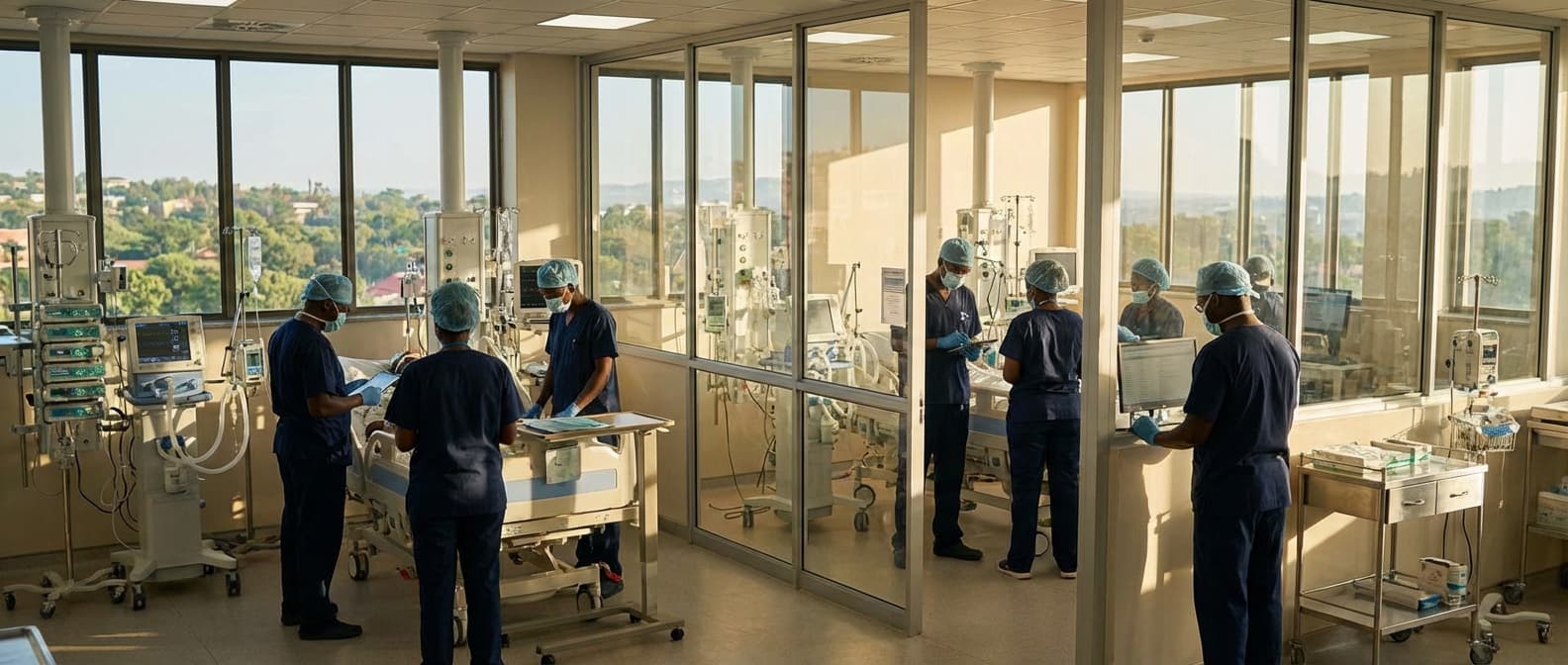
Ventilator Fleet Management & PM in Sao Tome and Principe
Engineering Excellence & Technical Support
Preventive maintenance and fleet management for ICU ventilators High-standard technical execution following OEM protocols and local regulatory frameworks.
Real-Time Ventilator Fleet Health Monitoring
Implementing a centralized IoT platform for continuous, real-time monitoring of all ventilators across Sao Tome and Principe. This includes tracking operational status, battery levels, and key performance indicators, enabling proactive issue identification and intervention.
Predictive Preventive Maintenance Scheduling
Leveraging historical usage data and sensor readings to predict potential equipment failures. This allows for optimized preventive maintenance scheduling, minimizing unexpected downtime and extending the lifespan of the ventilator fleet.
Digital Asset Tracking & Lifecycle Management
Establishing a comprehensive digital inventory of all ventilators, including serial numbers, purchase dates, maintenance history, and current location. This ensures accurate asset tracking, streamlined procurement, and informed decisions regarding equipment replacement and upgrades.
What Is Ventilator Fleet Management & Pm In Sao Tome And Principe?
Ventilator Fleet Management & Preventative Maintenance (PM) in Sao Tome and Principe refers to the comprehensive operational and lifecycle management of mechanical ventilators within a healthcare infrastructure. This service encompasses the acquisition, deployment, monitoring, maintenance, repair, and eventual decommissioning of these critical medical devices. The primary objective is to ensure the sustained availability, optimal performance, and regulatory compliance of the ventilator fleet, thereby guaranteeing uninterrupted patient care and resource optimization.
The service involves a multi-faceted approach, including:
- Inventory Management: Establishing and maintaining an accurate, up-to-date inventory of all ventilators, including make, model, serial number, acquisition date, location, and service history.
- Deployment and Allocation: Strategically assigning ventilators to healthcare facilities based on patient needs, regional demand, and facility capacity.
- Performance Monitoring: Implementing systems to remotely or manually track ventilator operational status, usage patterns, error codes, and critical parameters.
- Preventative Maintenance (PM): Executing scheduled, manufacturer-recommended maintenance procedures to identify and rectify potential issues before they lead to failure. This includes calibration, cleaning, replacement of wear-and-tear components, and functional testing.
- Corrective Maintenance and Repair: Responding to equipment malfunctions and breakdowns with timely diagnostics and repair, often involving skilled biomedical technicians.
- Calibration and Validation: Ensuring ventilators consistently meet specified performance standards through regular calibration and validation processes.
- Training and Competency Assessment: Providing training to clinical staff on the proper operation and basic troubleshooting of ventilators, and to biomedical technicians on advanced maintenance and repair.
- Regulatory Compliance: Adhering to local and international standards and regulations pertaining to medical device management, safety, and efficacy.
- Lifecycle Planning and Budgeting: Forecasting future needs, planning for upgrades or replacements, and managing the budget for acquisition, maintenance, and disposal.
- Data Analytics and Reporting: Collecting and analyzing data on fleet performance, maintenance costs, and equipment utilization to inform decision-making and identify areas for improvement.
Who Needs It:
Ventilator Fleet Management & PM services are essential for any healthcare institution or government health authority in Sao Tome and Principe responsible for the provision of critical respiratory care. This includes:
- Public Hospitals: Central and regional hospitals that rely heavily on mechanical ventilation for treating a wide range of conditions.
- Private Healthcare Providers: Hospitals and clinics offering critical care services.
- Ministry of Health/Public Health Agencies: Entities responsible for managing the national health infrastructure and ensuring equitable access to essential medical equipment.
- Non-Governmental Organizations (NGOs) and International Aid Organizations: Groups involved in providing healthcare support and equipment to developing nations, including Sao Tome and Principe.
Typical Use Cases:
- Emergency Preparedness and Response: Ensuring a readily available and functional ventilator fleet to manage surges in respiratory illness, such as during pandemics (e.g., COVID-19), natural disasters, or mass casualty incidents.
- Routine Critical Care Operations: Maintaining the operational readiness of ventilators for patients in Intensive Care Units (ICUs), Neonatal Intensive Care Units (NICUs), and Operating Rooms (ORs) requiring mechanical ventilation due to acute respiratory failure, surgical recovery, or chronic respiratory conditions.
- Resource Optimization in Underserved Areas: Implementing robust PM programs to maximize the lifespan and reliability of ventilators in remote or resource-limited facilities, reducing the need for frequent replacements and costly emergency repairs.
- Cost-Effective Equipment Management: Proactive PM and efficient fleet management can significantly reduce the incidence of costly, emergent repairs and extend the useful life of expensive medical equipment, thereby optimizing capital and operational expenditures.
- Quality Improvement Initiatives: Utilizing data from fleet management to identify common failure modes, improve training protocols, and enhance overall patient safety and outcomes related to mechanical ventilation.
- Ensuring Patient Safety and Efficacy: Regular calibration and maintenance guarantee that ventilators deliver precise ventilation parameters, critical for patient well-being and treatment effectiveness, and reduce the risk of adverse events.
- Compliance with Medical Device Regulations: Maintaining a well-documented and managed fleet ensures adherence to regulatory requirements for medical device safety and performance.
| Scenario | Ventilator Fleet Management & PM Implication | Objective |
|---|---|---|
| Pandemic Outbreak (e.g., Influenza, COVID-19) | Rapid assessment of available and functional ventilators; prioritization of maintenance and deployment to high-demand areas; potential need for rapid procurement and training. | Ensure immediate and sufficient availability of operational ventilators to meet surge capacity requirements. |
| Rural Clinic Malfunction | Remote diagnostics and troubleshooting; logistical planning for technician dispatch and spare parts delivery; assessment of alternative patient transport or temporary solutions. | Minimize downtime and restore critical respiratory support with minimal delay. |
| Hospital Resource Reallocation | Tracking ventilator status and location across multiple facilities; identifying underutilized assets for redeployment to areas with higher patient acuity or demand. | Optimize the utilization of the existing ventilator fleet and improve equitable access to care. |
| Annual Budgeting and Procurement Cycle | Analysis of historical maintenance costs, equipment age, and failure rates; forecasting replacement needs; developing specifications for new ventilator acquisitions. | Ensure a sustainable and technologically appropriate ventilator supply for long-term operational needs. |
| Compliance Audit | Generation of detailed maintenance logs, calibration records, and training documentation for all ventilators; demonstration of adherence to manufacturer guidelines and regulatory standards. | Validate the safety, efficacy, and proper management of the medical device inventory. |
Key Components of Ventilator Fleet Management & PM
- Inventory and asset tracking
- Deployment and allocation strategies
- Performance monitoring and diagnostics
- Scheduled preventative maintenance (PM)
- On-demand corrective maintenance and repair
- Calibration and performance validation
- Biomedical technician training and certification
- Clinical user training and competency assessment
- Regulatory compliance and documentation
- Spare parts management
- End-of-life planning and disposal
- Data analytics and reporting for operational insights
Who Needs Ventilator Fleet Management & Pm In Sao Tome And Principe?
Ventilator fleet management and preventative maintenance (PM) are crucial for ensuring the reliable operation of life-saving medical equipment. In Sao Tome and Principe, a nation with developing healthcare infrastructure, these services are not just beneficial but essential. They directly impact patient care by minimizing downtime of critical respiratory support devices, optimizing resource allocation, and extending the lifespan of expensive medical technology.
| Customer/Department | Primary Needs | Key Benefits of Fleet Management & PM |
|---|---|---|
| Hospitals (Public & Private) | Ensuring continuous availability of ventilators for ICU, ER, and operating rooms; managing equipment inventory; budget adherence for maintenance; staff training. | Reduced patient mortality due to equipment failure; lower repair costs through early detection of issues; extended equipment lifespan; improved operational efficiency; compliance with safety standards. |
| Clinics and Health Centers | Maintaining operational readiness of any advanced respiratory support equipment they possess; ensuring basic functionality for emergency situations. | Increased capacity to handle respiratory emergencies; enhanced trust in available medical resources; support for regional healthcare accessibility. |
| Ministry of Health | National oversight of medical equipment; strategic planning for healthcare infrastructure; procurement and distribution of essential medical devices; setting maintenance standards. | Improved national health outcomes; better allocation of national healthcare budget; standardization of equipment maintenance protocols; enhanced public health security through reliable equipment. |
| Non-Governmental Organizations (NGOs) | Ensuring the effective utilization and longevity of donated or procured medical equipment; demonstrating accountability for donor funds. | Maximized impact of aid programs; sustained delivery of critical care services; enhanced credibility and appeal for future funding; efficient use of resources. |
| International Aid Organizations | Verifying the proper management and maintenance of funded medical equipment; ensuring the long-term sustainability of healthcare projects. | Guaranteed return on investment for aid; assurance of program success and patient benefit; reduced risk of equipment failure undermining project goals. |
| Hospital Biomedical/Engineering Departments | On-site maintenance, repair, and calibration of ventilators; inventory management; technical troubleshooting; documentation of service records. | Proactive identification and resolution of equipment issues; minimized equipment downtime; cost savings on external repair services; improved data for asset management and future procurement. |
| Hospital Critical Care Units (ICU/CCU) | Immediate availability of fully functional ventilators; understanding of ventilator settings and basic maintenance checks. | Uninterrupted patient care; confidence in equipment reliability during critical procedures; faster response times to patient needs. |
Target Customers and Departments for Ventilator Fleet Management & PM in Sao Tome and Principe
- Hospitals (Public and Private)
- Clinics and Health Centers with critical care units
- Ministry of Health (Governmental oversight and policy)
- Non-Governmental Organizations (NGOs) involved in healthcare provision
- International Aid Organizations funding medical equipment
Ventilator Fleet Management & Pm Process In Sao Tome And Principe
This document outlines the workflow for Ventilator Fleet Management and Preventive Maintenance (PM) processes in Sao Tome and Principe. It details the steps from an initial inquiry to the successful execution of maintenance tasks, ensuring the optimal performance and readiness of the nation's ventilator fleet.
| Stage | Description | Key Activities | Responsible Parties | Output/Outcome |
|---|---|---|---|---|
| The process begins with a need for ventilator service, either routine PM or a specific repair request. | Receipt of inquiry (email, phone, official request). Identification of ventilator model, serial number, and location. Initial assessment of urgency. | Healthcare Facility Staff, Ministry of Health (MoH) Representative, Biomedical Engineering Department (if applicable). | Formalized service request logged in the management system. |
| Evaluating the request to determine its nature, urgency, and resource requirements. | Detailed review of the request. Categorization as routine PM, corrective maintenance, or emergency. Prioritization based on clinical need and operational impact. Initial damage assessment (if applicable). | Biomedical Engineering Department, MoH Fleet Manager, Clinical Leads. | Prioritized work order with assigned urgency level. |
| Planning the execution of the maintenance task, including personnel, parts, and tools. | Developing a maintenance schedule. Identifying and procuring necessary spare parts. Assigning qualified technicians. Coordinating logistics (transportation to/from facility). Obtaining necessary approvals. | Biomedical Engineering Department, MoH Logistics, Procurement Department. | Confirmed maintenance schedule, procured parts list, assigned technician team. |
| Performing the scheduled maintenance on the ventilators. | Conducting PM checklist procedures. Cleaning and disinfection. Calibration and functional testing. Replacing wear-and-tear parts. Addressing minor reported issues. | Qualified Biomedical Technicians. | Completed PM tasks, functional ventilator. |
| Ensuring the maintenance was performed correctly and documenting all actions. | Performing post-maintenance functional tests. Verifying all checklist items are completed. Updating the ventilator's maintenance log. Generating a service report. | Qualified Biomedical Technicians, Quality Assurance Officer (if available). | Signed-off service report, updated maintenance log, confirmed operational status of the ventilator. |
| Analyzing maintenance data to inform future planning and identify trends. | Compiling maintenance records. Analyzing PM completion rates, common issues, and spare parts usage. Generating fleet performance reports. Identifying areas for process improvement. Providing feedback to MoH and facilities. | MoH Fleet Manager, Biomedical Engineering Department Lead. | Fleet performance reports, recommendations for inventory management, training needs identification, and process optimization. |
Key Stages in Ventilator Fleet Management & PM Process
- Inquiry & Request Initiation
- Assessment & Prioritization
- Scheduling & Resource Allocation
- Execution of Preventive Maintenance
- Post-Maintenance Verification & Documentation
- Reporting & Fleet Review
Ventilator Fleet Management & Pm Cost In Sao Tome And Principe
Managing a ventilator fleet in Sao Tome and Principe involves several key cost considerations. These costs are influenced by a range of factors, from the initial acquisition price to ongoing maintenance and operational expenses. Understanding these pricing dynamics is crucial for effective budgeting and ensuring the sustained availability of critical medical equipment. The local currency, the Dobra (STD), is used for all transactions within the country. Pricing factors encompass the type and specifications of ventilators, supplier markups, import duties and taxes, shipping and logistics, installation and training, and critically, the ongoing Preventive Maintenance (PM) costs. PM is vital for ensuring the longevity and reliability of ventilators, preventing costly breakdowns, and maintaining optimal performance. These costs are often dictated by service agreements, the availability of spare parts locally or the need for international sourcing, and the expertise of qualified technicians.
| Cost Component | Description | Estimated Price Range (STD) |
|---|---|---|
| New ICU Ventilator (Purchase) | High-end, multi-functional ICU ventilator. | 1,500,000 - 4,000,000+ STD |
| New Transport Ventilator (Purchase) | Portable, less complex ventilator for patient transport. | 600,000 - 1,500,000 STD |
| Refurbished Ventilator (Purchase) | Pre-owned but serviced and certified ventilator. | 400,000 - 1,200,000 STD |
| Annual PM Service Agreement | Comprehensive annual check-up, calibration, and minor part replacement. | 150,000 - 400,000 STD per ventilator |
| Unscheduled Maintenance Call | Emergency repair visit, parts not included. | 50,000 - 150,000 STD (plus parts) |
| Spare Parts (e.g., filters, batteries, sensors) | Cost varies significantly by part and availability. | 10,000 - 100,000+ STD |
| Technician Training (per technician) | Specialized training for specific ventilator models. | 75,000 - 200,000+ STD |
Key Pricing Factors for Ventilator Fleet Management & PM in Sao Tome and Principe
- Ventilator Type and Specifications (e.g., ICU, transport, neonatal)
- Brand and Manufacturer Reputation
- Supplier and Distributor Markups
- Import Duties and Taxes (Government Levies)
- Shipping, Freight, and Insurance Costs
- Installation and Commissioning Fees
- Technician Training and Certification
- Preventive Maintenance (PM) Service Agreement Costs
- Availability and Cost of Spare Parts
- Frequency of PM (e.g., annual, semi-annual)
- Complexity of PM Procedures
- Geographic Location within Sao Tome and Principe (for service calls)
Affordable Ventilator Fleet Management & Pm Options
Maintaining a reliable and cost-effective ventilator fleet is crucial for healthcare providers. This document outlines affordable fleet management and preventative maintenance (PM) options, focusing on value bundles and cost-saving strategies. We aim to equip facilities with the knowledge to optimize their ventilator operations without compromising patient care.
| Strategy/Bundle | Description | Cost-Saving Mechanisms | Value Proposition |
|---|---|---|---|
| Standard PM Service Package | Routine, manufacturer-recommended preventative maintenance and calibration performed by certified technicians. | Scheduled maintenance prevents costly emergency repairs, reduces downtime, and ensures optimal performance. | Ensures device reliability and extends equipment life at a predictable cost. |
| Comprehensive PM & Calibration Bundle | Includes standard PM, advanced calibration, and minor part replacement (e.g., filters, batteries) as part of a scheduled service contract. | Bundles labor and common parts, often at a discount compared to individual service calls. Proactive replacement of wear-and-tear items prevents larger issues. | Offers a higher level of assurance for device readiness and reduces the need for ad-hoc part orders. |
| Extended Warranty & PM Integration | Combines remaining manufacturer warranty with a post-warranty PM service plan for continuous coverage and planned maintenance. | Leverages existing warranty for covered repairs, while PM keeps devices in optimal condition to avoid voiding warranty. Predictable costs beyond the initial warranty period. | Provides long-term cost predictability and seamless maintenance throughout the device lifecycle. |
| Fleet-Wide PM & Repair Agreement | A single contract covering all ventilators within a facility or health system, including both scheduled PM and defined repair services. | Volume discounts for servicing the entire fleet. Streamlined logistics and dedicated technician resources for faster response times. | Maximizes efficiency, reduces overall maintenance costs, and provides a single point of contact for all ventilator needs. |
| Remote Monitoring & Predictive Maintenance Add-on | Utilizes IoT technology to monitor ventilator performance in real-time and predict potential failures before they occur. | Allows for proactive intervention, minimizing unexpected downtime and preventing catastrophic failures. Reduces the need for on-site checks for minor alerts. | Enhances device uptime, optimizes technician deployment, and further reduces emergency repair costs. |
| Refurbished & Certified Pre-Owned Ventilator Program | Acquiring or leasing certified pre-owned ventilators that have undergone rigorous refurbishment and testing. | Significantly lower acquisition cost compared to new units. Often comes with a warranty, offering a balance of cost and reliability. | Provides a cost-effective solution for expanding capacity or replacing aging units without a large capital outlay. |
| Internal Biomedical Engineering Training & Support | Investing in training your in-house biomedical team to perform routine PM and basic repairs, supported by an external vendor for complex issues. | Reduces reliance on external service providers for routine tasks, lowering labor costs. Faster turnaround times for common issues. | Empowers in-house staff, builds internal expertise, and provides a cost-effective solution for daily maintenance needs. |
Key Benefits of Proactive Ventilator Fleet Management & PM
- Reduced unexpected equipment failures and associated downtime.
- Extended lifespan of critical medical devices.
- Improved patient safety and treatment continuity.
- Enhanced regulatory compliance.
- Predictable budgeting and reduced capital expenditure.
- Optimized staff utilization and reduced administrative burden.
Verified Providers In Sao Tome And Principe
In Sao Tome and Principe, navigating the healthcare landscape to find reliable and trustworthy providers is crucial for your well-being. "Verified Providers" signifies an endorsement of quality, expertise, and adherence to established standards. Franance Health stands out as a premier choice due to its rigorous credentialing process and unwavering commitment to patient care. Their network comprises healthcare professionals and facilities that have undergone thorough vetting, ensuring they meet the highest benchmarks for medical proficiency, ethical practice, and patient safety. Choosing Franance Health means opting for peace of mind, knowing you are connected with the best in the field, dedicated to providing exceptional healthcare services.
| Provider Category | Franance Health Verification Standards | Key Benefits for Patients |
|---|---|---|
| General Practitioners | Licensed, Board-Certified, Minimum 5 Years Experience, Positive Patient Feedback | Reliable primary care, early detection of health issues, trusted health advice. |
| Specialist Physicians (e.g., Cardiologists, Pediatricians) | Sub-specialty Board Certification, Proven Track Record in Specific Field, Advanced Training | Expert diagnosis and treatment for complex conditions, access to specialized procedures. |
| Hospitals & Clinics | Accreditation (Local/International), Advanced Medical Equipment, Trained Nursing Staff, Emergency Services Availability | Comprehensive medical services, safe and sterile environment, prompt emergency care. |
| Diagnostic Centers (Labs & Imaging) | Certified Technicians, State-of-the-Art Equipment, Quality Control Protocols, Timely Results | Accurate and reliable diagnostic testing, faster treatment planning. |
| Dental Professionals | Licensed Dentists, Specializations (e.g., Orthodontics, Periodontics), Modern Dental Technology | Comprehensive oral health care, advanced dental treatments, preventative services. |
Why Franance Health Credentials Represent the Best Choice:
- Rigorous Vetting Process: Franance Health implements a comprehensive evaluation of all affiliated providers, scrutinizing their qualifications, experience, and licenses.
- Commitment to Excellence: They prioritize partnerships with professionals and institutions that demonstrate a dedication to superior patient outcomes and service.
- Patient-Centric Approach: Verified providers through Franance Health are known for their empathetic and personalized care, ensuring individual patient needs are met.
- Adherence to Standards: All Franance Health network members comply with local and international healthcare regulations and best practices.
- Continuously Updated Credentials: Franance Health actively monitors and ensures that providers maintain their credentials and stay abreast of medical advancements.
- Transparency and Trust: The "Verified Provider" status offers a clear indication of reliability, fostering trust between patients and healthcare providers.
Scope Of Work For Ventilator Fleet Management & Pm
This Scope of Work (SOW) outlines the requirements for a comprehensive Ventilator Fleet Management and Preventive Maintenance (PM) program. The objective is to ensure the optimal performance, reliability, and compliance of the entire ventilator fleet. This SOW details the technical deliverables and standard specifications for all aspects of the service. It encompasses scheduled maintenance, unscheduled repairs, asset tracking, performance monitoring, and regulatory adherence.
| Service Area | Technical Deliverables | Standard Specifications / Requirements | Metrics / KPIs |
|---|---|---|---|
| Fleet Inventory & Asset Management | Comprehensive asset registry for all ventilators, including make, model, serial number, acquisition date, location, and service history. Real-time asset tracking and status updates. | Minimum 99.9% accuracy in asset registry. Integration with existing Hospital Information System (HIS) or Asset Management System. Secure cloud-based platform or on-premise solution. | Asset registry accuracy. Percentage of ventilators successfully tracked. |
| Preventive Maintenance (PM) | Scheduled PM inspections and servicing for all ventilators as per manufacturer guidelines and regulatory requirements. Detailed PM checklists for each ventilator model. | PM completion rate of 100% within scheduled windows. Use of OEM-recommended parts and consumables. All PMs documented with date, technician, findings, and actions taken. | PM completion rate. Mean Time Between PMs (MTBPM). Percentage of PMs completed on time. |
| Corrective Maintenance & Repair | Rapid response and effective repair of all reported ventilator malfunctions and failures. Troubleshooting and diagnostic services. Replacement of faulty parts. | Response time for critical failures not exceeding 2 hours. Repair completion time for routine issues not exceeding 24 hours. Use of certified technicians and genuine OEM parts. Detailed repair reports including root cause analysis. | Mean Time To Repair (MTT). Uptime percentage. First-time fix rate. |
| Calibration & Performance Verification | Regular calibration and performance verification of all ventilator functions to ensure accuracy and adherence to specifications. Use of calibrated test equipment. | Calibration intervals as per manufacturer recommendations. Traceable calibration certificates for all test equipment. Documented performance verification results. | Percentage of ventilators successfully calibrated. Calibration accuracy within specified tolerances. |
| Parts & Inventory Management | Management of spare parts inventory for ventilators, ensuring availability of critical components. Procurement and stocking of OEM-certified parts. | Minimum stock levels for critical parts to support immediate repairs. Just-in-time (JIT) delivery for non-critical parts. Regular inventory audits. Secure and organized storage. | Parts availability rate for critical components. Inventory turnover rate. |
| Documentation & Reporting | Comprehensive maintenance records, including PM schedules, service reports, repair logs, calibration certificates, and incident reports. Regular performance reports to stakeholders. | Secure, auditable digital record-keeping system. Monthly and quarterly reports detailing fleet status, maintenance activities, costs, and KPI performance. Adherence to data privacy regulations (e.g., HIPAA). | Timeliness and completeness of reporting. Data integrity and accuracy. |
| Training & Competency | Ensure all technicians performing maintenance are adequately trained and certified on all ventilator models in the fleet. Ongoing training to keep pace with new models and technology. | Minimum of annual refresher training. Certification requirements based on manufacturer and industry standards. Competency assessments for technicians. | Percentage of technicians certified for specific models. Training completion rates. |
| Compliance & Regulatory Adherence | Ensure all maintenance activities comply with relevant local, national, and international regulatory standards (e.g., FDA, ISO, local health authority regulations). | Proactive monitoring of regulatory changes. Implementation of necessary process updates. Assistance during regulatory audits. | Number of compliance-related incidents. Audit findings related to maintenance. |
| Technical Support & Consultation | Provide technical support for operational issues, performance optimization, and fleet planning. Consultation on equipment upgrades and replacements. | 24/7 technical support availability for critical issues. Timely response to inquiries. Expert advice on technology trends and best practices. | Customer satisfaction with technical support. Resolution time for technical inquiries. |
Key Objectives
- Maximize ventilator uptime and operational readiness.
- Ensure patient safety and continuity of care by maintaining equipment in peak condition.
- Minimize costly unscheduled repairs and extend the lifespan of the ventilator fleet.
- Achieve and maintain compliance with all relevant regulatory standards and manufacturer recommendations.
- Provide accurate and real-time data on fleet status, maintenance history, and performance.
- Optimize resource allocation for maintenance activities.
Service Level Agreement For Ventilator Fleet Management & Pm
This Service Level Agreement (SLA) outlines the terms and conditions for the management and preventive maintenance (PM) of the hospital's ventilator fleet. It defines the expected response times for critical incidents and the guaranteed uptime for functional ventilators.
| Service Component | Response Time Target (Critical Incident) | Resolution Time Target (Critical Incident) | Uptime Guarantee (Functional Ventilators) |
|---|---|---|---|
| Ventilator Fleet Management & PM | 15 minutes (for immediate critical failure) | 4 hours (for critical failure requiring repair) | 98% |
| Non-Critical Issues/Service Requests | 4 business hours (acknowledgement) | 8 business hours (resolution) | |
| Preventive Maintenance (PM) | Scheduled and completed within agreed-upon windows to minimize disruption |
Key Service Metrics
- Response Time: The maximum time allowed for a technician to acknowledge and begin addressing a reported critical incident.
- Resolution Time: The maximum time allowed to resolve a critical incident and restore a ventilator to operational status.
- Uptime Guarantee: The minimum percentage of the ventilator fleet that must be available and functional at any given time.
- Preventive Maintenance (PM): Scheduled maintenance performed to ensure optimal performance and longevity of ventilators.
Frequently Asked Questions

Ready when you are
Let's scope your Ventilator Fleet Management & PM in Sao Tome and Principe project in Sao Tome and Principe.

Scaling healthcare logistics and technical systems across the entire continent.