
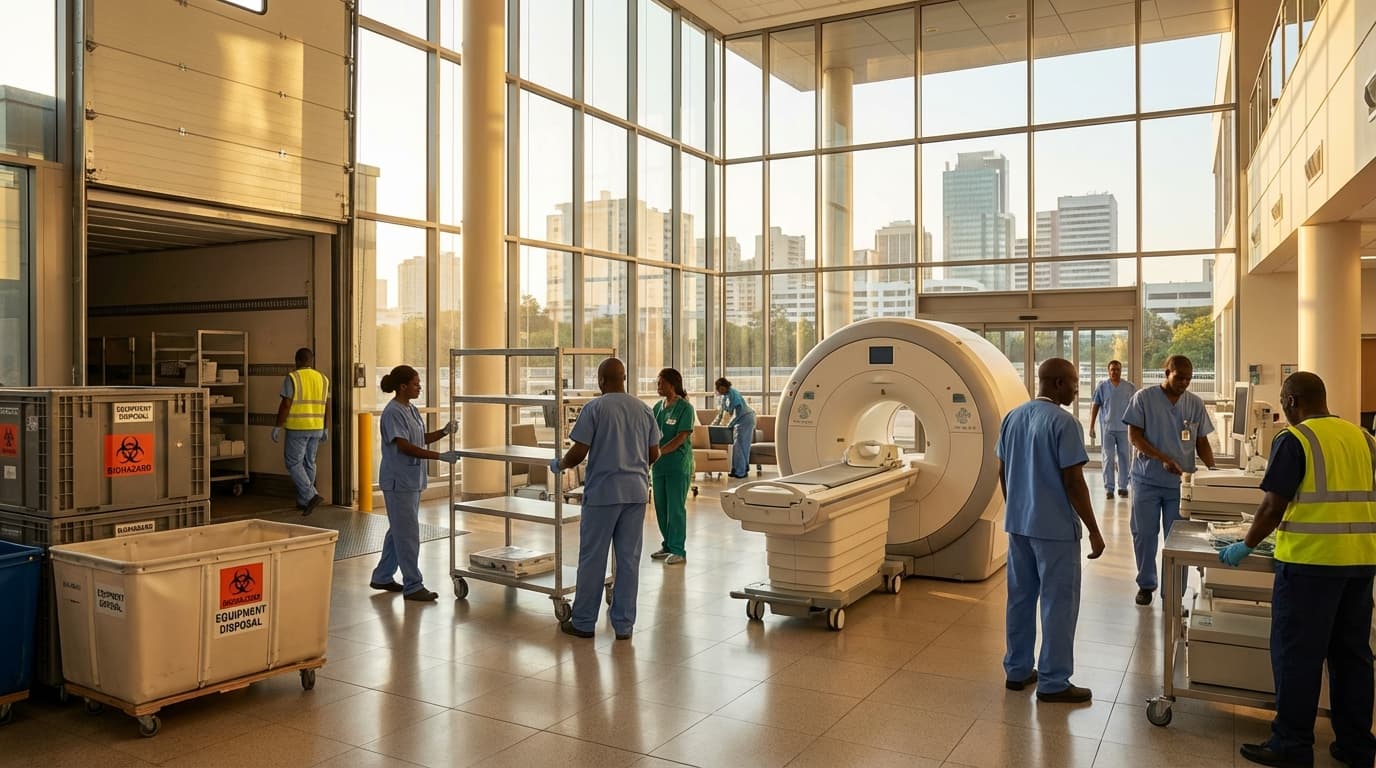
Heavy Medical Equipment De-Installation Service (MRI/CT/Cath Lab) in Sao Tome and Principe
Engineering Excellence & Technical Support
Heavy Medical Equipment De-Installation Service (MRI/CT/Cath Lab) High-standard technical execution following OEM protocols and local regulatory frameworks.
Specialized De-Installation & Logistics for Critical Imaging Systems
Expertly navigate the complex de-installation of high-value medical equipment like MRI, CT, and Cath Labs in Sao Tome and Principe. Our services encompass meticulous disassembly, secure packaging, and seamless transportation, adhering to stringent international standards for patient safety and equipment integrity.
Certified Technicians & Regulatory Compliance for Advanced Modalities
Leverage our team of certified technicians experienced in the precise de-installation of advanced medical imaging modalities. We ensure strict adherence to manufacturer protocols and local health regulations in Sao Tome and Principe, guaranteeing a safe and compliant transition for your MRI, CT, and Cath Lab equipment.
End-to-End Project Management & Risk Mitigation
Benefit from comprehensive project management for your heavy medical equipment de-installation in Sao Tome and Principe. We provide detailed planning, risk assessment, and on-site supervision for MRI, CT, and Cath Lab systems, ensuring a streamlined process with minimized disruption and complete asset protection from removal to delivery.
What Is Heavy Medical Equipment De-installation Service (Mri/ct/cath Lab) In Sao Tome And Principe?
Heavy Medical Equipment De-Installation Service (MRI/CT/Cath Lab) in Sao Tome and Principe refers to the specialized process of dismantling, preparing, and securing large-scale, complex medical imaging and diagnostic machinery such as Magnetic Resonance Imaging (MRI) scanners, Computed Tomography (CT) scanners, and Cardiac Catheterization (Cath) Laboratories. This service is critical for the relocation, disposal, or upgrade of such high-value, sensitive, and often geographically challenging equipment within healthcare facilities in Sao Tome and Principe. The process demands a high degree of technical expertise, adherence to stringent safety protocols, and often involves international logistics and regulatory compliance considerations due to the specialized nature of the equipment and the potential for global sourcing and disposal of components.
| Who Needs This Service? | Typical Use Cases |
|---|---|
| Hospitals and Diagnostic Imaging Centers in Sao Tome and Principe requiring equipment relocation. | Upgrading existing MRI, CT, or Cath Lab equipment to newer models. |
| Healthcare facilities undergoing renovations or facility closures. | Disposing of obsolete or non-functional heavy medical imaging equipment. |
| International medical equipment manufacturers or distributors involved in asset management or decommissioning. | Consolidating or centralizing imaging services at different locations. |
| Government health ministries or public healthcare providers managing medical infrastructure. | Relocating equipment between different facilities within Sao Tome and Principe or for international transfer. |
| Private healthcare investors acquiring or divesting medical facilities. | Decommissioning a facility for sale or closure, requiring the removal of all installed medical hardware. |
Key Aspects of Heavy Medical Equipment De-Installation:
- Specialized Dismantling: Involves the systematic disassembly of complex components, including superconducting magnets (for MRI), X-ray tubes and gantries (for CT and Cath Labs), patient tables, console systems, and associated infrastructure (e.g., cooling systems, shielding).
- Component Isolation and Protection: Each component is carefully isolated, cataloged, and packaged to prevent damage during transit. This often involves custom crating, shock-absorbing materials, and environmental controls (e.g., temperature and humidity).
- Handling of Hazardous Materials: De-installation may involve the safe removal and disposal of hazardous materials such as refrigerants (e.g., helium for MRI), heavy shielding materials (e.g., lead), and electronic waste, in accordance with local and international environmental regulations.
- Site Preparation and Restoration: The service may include preparing the installation site for removal, including disconnecting power, data, and cooling lines. Post-removal, basic site restoration might be required.
- Logistics and Transportation: This encompasses the planning and execution of transportation, often involving specialized transport vehicles, cranes, and trained personnel to manage the weight and dimensions of the equipment. This is particularly relevant in a location like Sao Tome and Principe, where infrastructure may present unique challenges.
- Technical Documentation and Certification: Comprehensive documentation of the de-installation process, including inventory lists, photographs, and certification of proper handling and environmental compliance, is crucial for future re-installation or disposal.
- Regulatory Compliance: Ensuring adherence to national and international regulations pertaining to medical equipment, hazardous waste disposal, and transportation of sensitive machinery.
- Project Management: Coordinated planning and execution by experienced project managers to oversee all phases of the de-installation, from initial assessment to final handover.
Who Needs Heavy Medical Equipment De-installation Service (Mri/ct/cath Lab) In Sao Tome And Principe?
Heavy medical equipment de-installation services, particularly for MRI, CT scanners, and Cath Labs, are crucial for a range of healthcare facilities and organizations in Sao Tome and Principe. This specialized service is not for the everyday clinic or doctor's office; it's for institutions dealing with complex, high-value imaging and interventional diagnostic systems. The need arises from various scenarios, including equipment upgrades, facility renovations, relocations, decommissioning of old units, or even temporary shutdowns for maintenance or relocation to a new site. These de-installations require specialized technicians with expertise in handling sensitive and bulky medical machinery, ensuring safe disconnection, careful dismantling, and proper preparation for transport or disposal, minimizing risk to personnel and the equipment itself.
| Target Customer Type | Specific Departments/Areas of Need | Reasons for De-Installation |
|---|---|---|
| Public Hospitals | Radiology Department, Cardiology Department, Imaging Services | Equipment upgrades, facility renovation, decommissioning of older units, relocation within the hospital |
| Private Hospitals and Clinics | Radiology, Cardiology, Advanced Diagnostics | Technology upgrades to remain competitive, space optimization, relocation to a new facility, end-of-lease equipment removal |
| Diagnostic Imaging Centers | MRI Suites, CT Scan Rooms, Cath Labs | Replacement of outdated technology, relocation of the entire center, expansion of services requiring new equipment installation |
| Specialized Medical Centers | Interventional Cardiology Units, Advanced Imaging Clinics | Upgrading to newer, more advanced Cath Lab systems, de-installation for maintenance requiring full system removal, closure of a specialized service |
| Government Health Ministries and Agencies | Centralized procurement and management of public health infrastructure | Rationalizing medical equipment across public health facilities, decommissioning of obsolete government-owned equipment, facilitating large-scale equipment replacement programs |
| International Aid Organizations and NGOs | Projects focused on improving healthcare infrastructure and access to medical technology | Removal of donated or legacy equipment before new installations, de-installation for equipment redistribution to other facilities, project completion requiring equipment removal |
| Medical Equipment Manufacturers and Suppliers | Service and installation departments, sales divisions managing upgrades | Performing de-installation as part of a trade-in program, removing equipment at the end of a service contract, facilitating a smooth transition for their clients |
Target Customers for Heavy Medical Equipment De-Installation Service (MRI/CT/Cath Lab) in Sao Tome and Principe:
- Public Hospitals
- Private Hospitals and Clinics
- Diagnostic Imaging Centers
- Specialized Medical Centers (e.g., Cardiology Clinics with Cath Labs)
- Government Health Ministries and Agencies
- International Aid Organizations and NGOs involved in healthcare infrastructure
- Medical Equipment Manufacturers and Suppliers (for end-of-life service contracts or upgrades)
- Research Institutions with advanced medical imaging capabilities
- Tertiary Care Facilities
- University Teaching Hospitals
Heavy Medical Equipment De-installation Service (Mri/ct/cath Lab) Process In Sao Tome And Principe
This document outlines the comprehensive workflow for the de-installation of heavy medical equipment such as MRI, CT scanners, and Cath Labs in Sao Tome and Principe. Our service is designed to ensure a safe, efficient, and compliant removal process, minimizing disruption to your facility and preparing the equipment for its next destination. The process begins with an initial inquiry and culminates in the successful de-installation and handover of the equipment.
| Stage | Description | Key Activities | Deliverables/Outcomes |
|---|---|---|---|
| Initial Inquiry and Consultation | The process begins when a client contacts our company with a request for medical equipment de-installation services. This stage involves understanding the client's specific needs and the equipment involved. | Receive client inquiry (phone, email, web form). Discuss equipment type, model, and location. Provide initial service overview and pricing structure. Schedule a preliminary consultation. | Understanding of client requirements. Initial service proposal. Agreement to proceed to the next stage. |
| Site Assessment and Planning | A thorough on-site assessment is conducted to evaluate the equipment's condition, surrounding environment, and logistical challenges for safe removal. | On-site visit by experienced technicians. Detailed inspection of the equipment (e.g., MRI magnet, CT gantry, Cath Lab console). Assessment of site access, power requirements, and structural considerations. Development of a detailed de-installation plan, including timelines, required tools, and safety protocols. Identification of potential risks and mitigation strategies. | Comprehensive site assessment report. Detailed de-installation plan. Risk assessment and mitigation plan. Finalized project timeline and cost estimate. |
| Permitting and Regulatory Compliance | Ensuring all necessary permits and adherence to local regulations in Sao Tome and Principe are secured before de-installation begins. | Identify required permits from relevant Sao Tomean authorities (e.g., Ministry of Health, environmental agencies). Submit applications and manage the permit acquisition process. Ensure compliance with all local safety and environmental regulations. Coordinate with local authorities as needed. | All required permits obtained. Confirmation of regulatory compliance. Smooth commencement of de-installation. |
| De-installation Execution | The core phase where specialized technicians meticulously dismantle the heavy medical equipment according to the approved plan. | Mobilization of skilled technicians and specialized equipment. Safe disconnection of power, cooling, and data lines. Dismantling of the main components (e.g., magnet, gantry, patient table, console). Careful packaging and securing of all parts for transport. Adherence to strict safety procedures throughout the process. | Safely dismantled equipment components. All parts cataloged and secured. Minimized site disruption. Completion of de-installation within the agreed timeframe. |
| Testing and Verification | Post-de-installation checks are performed to ensure no damage occurred to the building infrastructure and that all equipment components are accounted for. | Visual inspection of the de-installation site for any damage. Verification of all removed components against the inventory list. Ensuring the site is left clean and safe. | Site ready for subsequent use. Confirmation of all components accounted for. Clearance of the de-installation area. |
| Documentation and Handover | Comprehensive documentation is provided to the client, detailing the de-installation process and all equipment removed. | Generation of a detailed de-installation report. Inclusion of photographic evidence of the process. Provision of asset lists and condition reports. Formal handover of the de-installed equipment to the client or designated logistics partner. | Comprehensive de-installation report. Asset inventory. Signed handover certificate. Client satisfaction confirmation. |
| Logistics and Transportation (Optional) | If required, our service can extend to managing the transportation of the de-installed equipment from Sao Tome and Principe to its next destination. | Coordination with shipping and freight forwarding companies. Arrangement of appropriate transport vehicles. Ensuring customs clearance and export documentation. Management of the entire transportation chain. | Equipment safely transported to its destination. All necessary shipping documentation provided. Seamless transition from de-installation to logistics. |
Key Stages of the De-Installation Process
- Initial Inquiry and Consultation
- Site Assessment and Planning
- Permitting and Regulatory Compliance
- De-installation Execution
- Testing and Verification
- Documentation and Handover
- Logistics and Transportation (Optional)
Heavy Medical Equipment De-installation Service (Mri/ct/cath Lab) Cost In Sao Tome And Principe
De-installing heavy medical equipment such as MRI, CT scanners, and Cath Labs is a specialized and intricate process. The cost in Sao Tome and Principe for such services can vary significantly due to a multitude of factors. These factors include the complexity of the equipment, the accessibility of the installation site, the need for specialized tools and handling equipment, the required level of disassembly, the urgency of the service, and the expertise of the de-installation team. Given the often limited availability of highly specialized technical teams and equipment in island nations like Sao Tome and Principe, costs can be on the higher end compared to mainland locations. Local currency pricing will be influenced by exchange rates and the sourcing of any specialized parts or personnel from abroad.
Pricing Factors:
- Equipment Type and Size: MRI, CT, and Cath Lab machines vary greatly in size, weight, and complexity. Larger, more intricate systems (e.g., high-field MRI) will naturally incur higher de-installation costs due to the need for more robust handling and potentially more extensive disassembly.
- Site Accessibility: The ease of access to the installation location is crucial. If the equipment is in a remote area, on a higher floor without adequate freight elevators, or in a cramped space, it will require more time, effort, and potentially specialized equipment (like cranes or specialized lifting devices), increasing the overall cost.
- Level of Disassembly: Some de-installations may require extensive disassembly to allow for safe transport and minimize space requirements. The more components that need to be taken apart and meticulously labeled, the longer the process and thus the higher the labor cost.
- Specialized Tools and Equipment: Heavy medical equipment often requires very specific tools for disconnection, dismantling, and lifting. The availability and cost of these specialized tools, whether locally sourced or imported, will impact the price.
- Expertise and Personnel: De-installing these sophisticated machines requires highly trained and experienced technicians. The scarcity of such specialized personnel in Sao Tome and Principe can lead to higher labor rates, and potentially the need to fly in experts from other countries, which adds significant travel and accommodation costs.
- Logistics and Transportation: While de-installation itself focuses on dismantling, the immediate subsequent logistics (e.g., preparing for transport) can sometimes be bundled. The cost of internal movement within the facility or to a designated staging area is also a consideration.
- Safety and Environmental Precautions: Strict safety protocols must be followed, especially with high-voltage equipment or components containing refrigerants (e.g., MRI cooling systems). The cost of implementing these precautions, including specialized waste disposal if applicable, will be factored in.
- Urgency and Timeline: Emergency or expedited de-installations will almost always command a premium due to the need to reallocate resources and potentially disrupt scheduled work.
- Contractual Agreements and Guarantees: The extent of warranties or guarantees offered by the de-installation service provider can also influence the price. Reputable providers offering comprehensive guarantees may charge more.
Cost Ranges in Local Currency (Sao Tomean Dobra - STD):
It is challenging to provide precise figures without a detailed site survey and equipment assessment. However, based on general industry knowledge and the specific context of Sao Tome and Principe, a rough estimate for the de-installation of a single heavy medical equipment unit (MRI, CT, or Cath Lab) could range from 20,000,000 STD to 150,000,000 STD or potentially higher. This is a very broad range and is heavily dependent on the factors listed above. The lower end might represent a simpler CT scanner in an accessible location with readily available local expertise, while the higher end would be for a complex MRI or Cath Lab requiring significant international specialized support and complex logistics.
| Equipment Category | Estimated De-installation Cost Range (STD) |
|---|---|
| Compact CT Scanner | 20,000,000 - 50,000,000 |
| Standard CT Scanner / MRI (Low-Field) | 40,000,000 - 90,000,000 |
| High-Field MRI / Cath Lab | 70,000,000 - 150,000,000+ |
Key Factors Influencing Heavy Medical Equipment De-Installation Costs
- Equipment Type and Size (MRI, CT, Cath Lab)
- Site Accessibility and Location
- Required Level of Disassembly
- Need for Specialized Tools and Equipment
- Availability and Cost of Expert Personnel
- Logistics and Internal Transportation
- Safety and Environmental Compliance
- Service Urgency and Timeline
- Service Provider's Guarantees and Reputation
Affordable Heavy Medical Equipment De-installation Service (Mri/ct/cath Lab) Options
Relocating or decommissioning complex medical equipment like MRI, CT scanners, and Cath Labs requires specialized de-installation services. Securing affordable options without compromising safety and regulatory compliance is paramount for healthcare facilities. This guide outlines cost-effective strategies and explains the value of service bundles.
| Service Bundle Type | Description | Value Proposition / Cost-Saving Strategies |
|---|---|---|
| Basic De-installation Package | Includes core de-installation procedures, disconnection of utilities, and basic disassembly. Primarily focused on safely separating the main components. | Cost-Saving: Lowest upfront cost. Suitable for facilities with internal resources for transportation and warehousing. Value: Essential for basic removal when other services are handled separately. |
| Comprehensive De-installation & Crating | Extends the basic package to include specialized crating and packaging for each component, ensuring maximum protection during transit. | Cost-Saving: Reduces risk of damage during transport, minimizing repair costs and delays. Value: Protects valuable assets, simplifying logistics and insurance claims. |
| Full-Service Relocation (De-installation to Re-installation Site) | Encompasses de-installation, meticulous crating, transportation by specialized medical equipment movers, and pre-installation site preparation at the new location. | Cost-Saving: Streamlined process, often with bundled pricing discounts. Minimizes project management overhead. Value: Turnkey solution for seamless relocation, reducing internal workload and ensuring continuity of care. |
| De-installation & Asset Recovery | Combines de-installation with an assessment for potential resale or refurbishment of older equipment, often managed by the service provider. | Cost-Saving: Potential to offset de-installation costs through the sale of salvaged components or whole units. Value: Maximizes return on investment by turning decommissioned equipment into revenue. |
| Emergency/Rush De-installation | Prioritized service for urgent situations, often involving overtime or expedited logistics. | Cost-Saving: Not a cost-saving strategy itself, but offers crucial uptime and avoids potential revenue loss due to extended downtime. Value: Minimizes disruption in critical situations. |
Key Considerations for Affordable De-Installation:
- Expertise is Non-Negotiable: While seeking affordability, never compromise on the certified technicians and engineers experienced with your specific equipment. Improper de-installation can lead to irreparable damage, safety hazards, and significant repair costs, far outweighing initial savings.
- Thorough Site Assessment: A detailed pre-de-installation assessment is crucial. This allows service providers to accurately estimate labor, specialized tools, and time required, leading to more precise quotes and fewer unexpected charges.
- Phased De-installation: For larger projects, consider a phased approach if possible. This can sometimes spread costs and minimize disruption, though it may not always be the most cost-effective if the entire system needs to come offline at once.
- Equipment Condition and Age: The condition and age of the equipment can influence de-installation complexity and potential for reuse or resale, impacting the overall cost-benefit analysis.
- Logistics and Transportation Planning: Efficient planning for rigging, crating, and transportation can significantly reduce costs. Explore options for specialized medical equipment movers who understand the unique handling requirements.
- Regulatory Compliance: Ensure the de-installation service is fully compliant with all relevant local, state, and federal regulations, including environmental and safety standards. Non-compliance can result in hefty fines and delays.
Verified Providers In Sao Tome And Principe
Finding verified healthcare providers in Sao Tome and Principe is crucial for ensuring quality medical care. Franance Health distinguishes itself by rigorously vetting its network, ensuring that all listed providers meet stringent criteria for qualifications, experience, and ethical practice. This commitment to verification provides patients with the confidence that they are receiving care from competent and trustworthy professionals. When seeking healthcare services in Sao Tome and Principe, partnering with a platform like Franance Health, known for its verified providers and their established credentials, represents the most reliable and safest choice.
| Provider Type | Key Credentials/Verification Points | Franance Health Assurance |
|---|---|---|
| Doctors (General Practitioners & Specialists) | Medical Degree (MD/DO), Specialty Board Certifications, Valid Medical License (Sao Tome and Principe), Clinical Experience Records | Franance Health verifies medical school accreditation, board certification status, and current license validity. Reviews and peer endorsements are also considered. |
| Nurses (RNs, LPNs) | Nursing Degree/Diploma, Professional Nursing License, Relevant Certifications (e.g., ACLS, BLS) | Franance Health confirms nursing education and license registration. Experience in specific nursing fields is also reviewed. |
| Dentists | Dental Degree (DDS/DMD), Dental License, Specializations (e.g., Orthodontics, Periodontics) | Verification of dental school credentials, licensing, and any specialized training. |
| Pharmacists | Pharmacy Degree, Pharmacy License, Continuing Education Compliance | Franance Health checks pharmacy degree authenticity and current license status. |
| Hospitals & Clinics | Accreditation (if applicable), Regulatory Compliance, Quality of Facilities, Staff Qualifications | While direct accreditation may vary, Franance Health reviews facility standards, adherence to local health regulations, and the credentials of their affiliated medical staff. |
Why Franance Health Verified Providers in Sao Tome and Principe are the Best Choice:
- Rigorous Vetting Process: Franance Health employs a comprehensive screening process to confirm the authenticity of medical licenses, certifications, and educational backgrounds of all its listed providers.
- Emphasis on Experience and Expertise: Beyond basic qualifications, Franance Health assesses the practical experience and specialization of its healthcare professionals, ensuring they are equipped to handle diverse medical needs.
- Commitment to Ethical Standards: Providers on the Franance Health platform are expected to adhere to the highest ethical and professional conduct, prioritizing patient well-being and confidentiality.
- Improved Patient Safety and Trust: By offering access to verified providers, Franance Health significantly reduces the risk of encountering unqualified or fraudulent practitioners, fostering a sense of security for patients.
- Streamlined Access to Quality Care: Franance Health simplifies the process of finding reliable healthcare, saving patients time and reducing the stress associated with searching for trustworthy medical assistance.
Scope Of Work For Heavy Medical Equipment De-installation Service (Mri/ct/cath Lab)
This Scope of Work (SOW) outlines the services required for the professional de-installation of heavy medical equipment, specifically Magnetic Resonance Imaging (MRI) scanners, Computed Tomography (CT) scanners, and Cardiac Catheterization (Cath Lab) systems. The objective is to ensure safe, compliant, and efficient removal of these complex systems from their current locations, preparing them for transport or storage. This SOW details the technical deliverables and standard specifications that will govern the de-installation process.
| Phase/Activity | Description | Technical Deliverables | Standard Specifications / Compliance |
|---|---|---|---|
| Pre-De-installation Planning & Site Survey | Detailed assessment of the equipment, its environment, access routes, and potential challenges. | Site survey report, including site-specific de-installation plan, risk assessment, and logistics plan. | Manufacturer's de-installation manual, relevant electrical safety standards (e.g., NFPA 70), radiation safety regulations (for CT/Cath Lab), magnetic field safety guidelines (for MRI). |
| Equipment Isolation & Power Down | Safely disconnecting all power, data, and ancillary connections to the equipment. | Confirmation of complete power isolation, logged and signed off. | Lockout/Tagout procedures (OSHA compliant), manufacturer's shutdown procedures. |
| Component Disassembly & Removal | Systematic dismantling of the equipment into manageable components, following manufacturer specifications. | Inventory of all removed components, including serial numbers and condition assessment. | Manufacturer's de-installation procedures, use of specialized tools and lifting equipment, anti-static precautions. |
| Coolant Management (MRI) | Safe and environmentally compliant draining and handling of cryogen coolants (e.g., Helium) for MRI systems. | Documentation of coolant disposal or transfer, with appropriate manifests. | Environmental regulations for hazardous materials handling, manufacturer's cryogen handling procedures, adherence to cryogen supplier protocols. |
| Shielding Removal (MRI/CT) | Careful removal of RF shielding (MRI) and lead/concrete shielding (CT), if applicable. | Proper labeling and staging of shielding materials for transport or disposal. | Manufacturer's specifications for shielding removal, safe lifting techniques. |
| Cable Management & Labeling | Organized and secure management of all removed cables and wiring. | Clear labeling of all cable bundles and individual cables for re-installation. | Standard electrical cable management practices. |
| Packaging & Protection | Appropriate packaging of all disassembled components to prevent damage during transit. | Custom-built crates or protective wrapping, shock-absorbing materials. | Manufacturer's recommendations for packaging sensitive components, anti-static bags for electronics. |
| Site Restoration | Restoration of the de-installation area to a clean and safe condition. | Removal of all debris and waste materials, minor repairs to the immediate area if required. | Hospital's facilities management guidelines. |
| Documentation & Handover | Comprehensive report detailing the entire de-installation process. | Final de-installation report, including photographic evidence, component inventory, and handover sign-off. | Client sign-off on completed work, adherence to contractual obligations. |
Key Objectives of De-Installation Service
- Safe and secure disconnection and dismantling of all equipment components.
- Adherence to all relevant safety regulations, manufacturer guidelines, and site-specific protocols.
- Minimal disruption to hospital operations and adjacent areas.
- Proper containment and protection of delicate components during de-installation.
- Detailed documentation of the de-installation process and status.
- Preparation of equipment for transportation (e.g., crating, securing).
Service Level Agreement For Heavy Medical Equipment De-installation Service (Mri/ct/cath Lab)
This Service Level Agreement (SLA) outlines the response times and uptime guarantees for the De-Installation Service of Heavy Medical Equipment, specifically MRI, CT, and Cath Lab systems. This SLA is designed to ensure timely and efficient de-installation processes, minimizing disruption to operations and ensuring the integrity of the equipment during the de-installation phase. All defined times are in business hours unless otherwise specified. Business hours are defined as Monday through Friday, 8:00 AM to 5:00 PM local time, excluding public holidays.
Definitions:
- Critical Incident: An event that renders the de-installation process critically stalled or at risk of significant equipment damage or data loss, requiring immediate attention.
- Urgent Incident: An event that significantly impedes the de-installation progress but does not pose an immediate risk of critical damage or data loss.
- Standard Incident: An issue that does not significantly impede de-installation progress but requires resolution to ensure a smooth process.
- Uptime Guarantee: In the context of de-installation, this refers to the guaranteed availability of the service provider's qualified technicians and specialized tools to commence and complete the de-installation within the agreed-upon timeframe, free from preventable delays caused by the service provider.
| Incident Severity | Response Time (Acknowledgement) | On-Site Remediation/Commencement Time | Resolution Target | Uptime Guarantee (for de-installation process) |
|---|---|---|---|---|
| Critical Incident | 1 Hour | 4 Business Hours | Within 24 Business Hours of On-Site Commencement | 95% of scheduled de-installation time, excluding client-caused delays, site readiness issues, or pre-existing environmental conditions. |
| Urgent Incident | 2 Business Hours | 8 Business Hours | Within 48 Business Hours of On-Site Commencement | 97% of scheduled de-installation time, excluding client-caused delays, site readiness issues, or pre-existing environmental conditions. |
| Standard Incident | 4 Business Hours | 16 Business Hours | Within 72 Business Hours of On-Site Commencement | 99% of scheduled de-installation time, excluding client-caused delays, site readiness issues, or pre-existing environmental conditions. |
Key Performance Indicators (KPIs)
- Service Provider's acknowledgment of an incident report.
- Service Provider's commencement of on-site remediation or diagnostic activities.
- Completion of de-installation stages as per project schedule.
- Resolution of technical issues impacting de-installation progress.
- Availability of specialized tooling and trained personnel.
Frequently Asked Questions

Ready when you are
Let's scope your Heavy Medical Equipment De-Installation Service (MRI/CT/Cath Lab) in Sao Tome and Principe project in Sao Tome and Principe.

Scaling healthcare logistics and technical systems across the entire continent.