
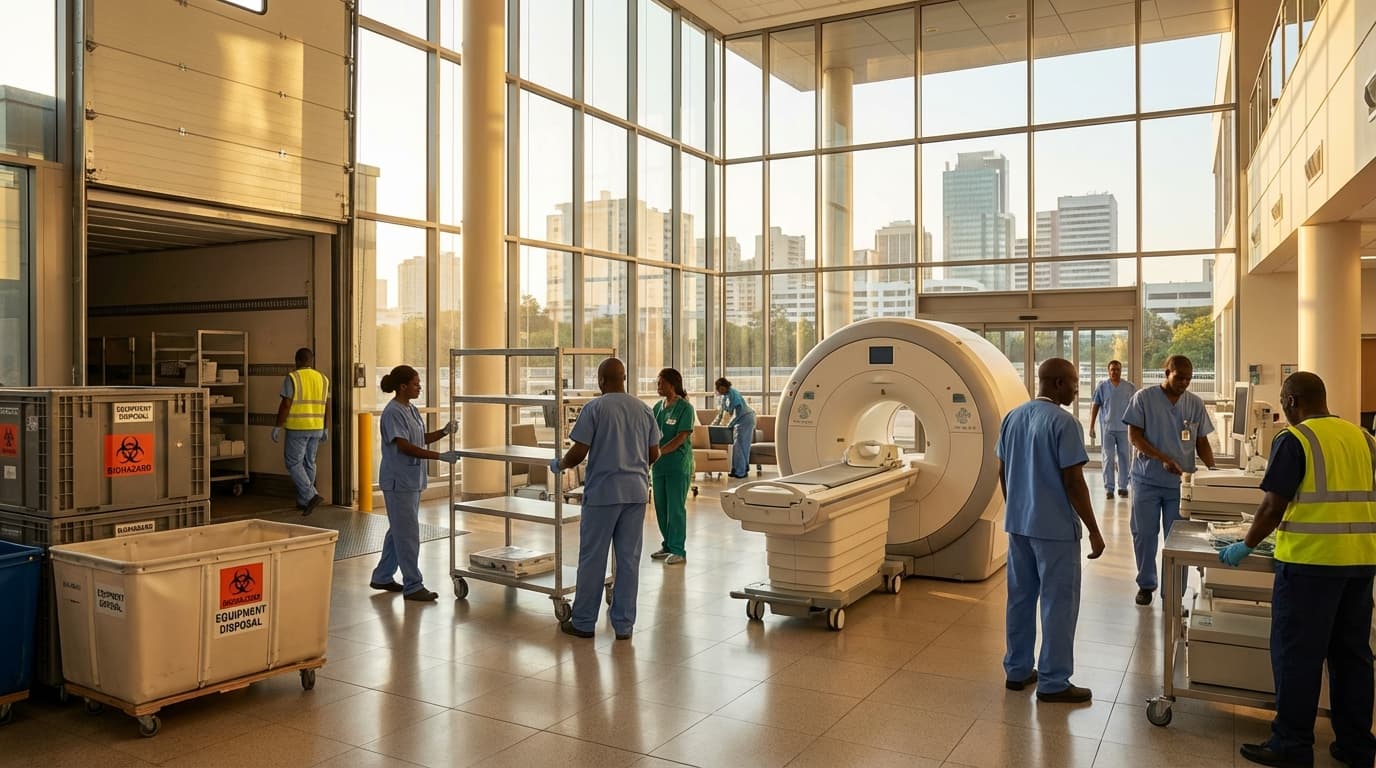
Decommissioning Service for Medical Devices in Sao Tome and Principe
Engineering Excellence & Technical Support
Decommissioning Service for Medical Devices High-standard technical execution following OEM protocols and local regulatory frameworks.
Regulatory Compliance Assurance
Ensuring strict adherence to Sao Tome and Principe's medical device regulations and international decommissioning standards (e.g., ISO 14971 for risk management throughout the lifecycle). Our service guarantees all documentation, data sanitization, and disposal processes meet or exceed legal requirements, mitigating legal and reputational risks.
Secure Data Sanitization & Environmental Disposal
Implementing advanced data destruction protocols to permanently erase sensitive patient and operational data from medical devices, complying with data privacy laws. We utilize environmentally responsible disposal methods, including specialized recycling and hazardous waste management, preventing e-waste pollution and promoting sustainability.
Integrated Lifecycle Management & Asset Tracking
Providing a seamless, end-to-end decommissioning solution that integrates with your existing asset management systems. We offer comprehensive tracking and reporting throughout the entire process, from initial assessment and secure transportation to final disposition, ensuring full visibility and auditability of all decommissioned medical equipment.
What Is Decommissioning Service For Medical Devices In Sao Tome And Principe?
Decommissioning service for medical devices in Sao Tome and Principe refers to the formalized process of retiring and removing medical equipment from active clinical use. This service ensures that devices are handled in a safe, environmentally responsible, and legally compliant manner, thereby mitigating risks to patient safety, data privacy, and environmental integrity. The service encompasses a spectrum of activities, from the initial assessment and planning to the final disposal or repurposing of the equipment. Proper decommissioning is critical to prevent unauthorized use of outdated or malfunctioning equipment, manage biohazardous materials, and comply with national regulations concerning medical waste and asset lifecycle management.
| Who Needs Decommissioning Service? | Typical Use Cases | ||||||
|---|---|---|---|---|---|---|---|
| Healthcare facilities (hospitals, clinics, diagnostic centers) in Sao Tome and Principe that are upgrading their medical equipment, relocating, closing down specific departments, or experiencing natural obsolescence of their existing inventory. | Routine replacement of older imaging systems (e.g., X-ray, MRI, CT scanners) with newer technologies. | End-of-life disposal of laboratory equipment (e.g., centrifuges, analyzers). | Removal of patient monitoring systems and infusion pumps as they are replaced. | Decommissioning of surgical equipment due to wear and tear or technological advancements. | Handling of medical devices containing hazardous materials (e.g., old radiology equipment with lead shielding, devices with mercury switches). | Closure or sale of healthcare institutions, requiring the responsible removal of all medical assets. | Compliance with regulatory requirements for asset retirement and waste management. |
Key Components of Medical Device Decommissioning
- Asset Identification and Inventory: Comprehensive cataloging of devices slated for decommissioning, including serial numbers, model information, and current location.
- Functional and Data Verification: Assessment of the device's operational status and the secure erasure or destruction of any stored patient data (PHI/PII) in accordance with data privacy regulations.
- Disinfection and Decontamination: Thorough cleaning and sterilization to eliminate biological contaminants and ensure safe handling and transport.
- Electrical and Mechanical Safety Checks: Verification that the device is rendered inoperable to prevent accidental activation or misuse.
- Environmental Assessment and Waste Management: Identification of hazardous materials (e.g., mercury, radioactive isotopes, batteries) and planning for their specialized disposal according to environmental regulations.
- Logistical Planning and Transportation: Secure and compliant transportation of devices from their original location to the designated disposal or recycling facility.
- Documentation and Certification: Issuance of certificates of decommissioning, data destruction, and waste disposal for auditable record-keeping.
- Secure Disposal/Recycling: Execution of disposal or recycling methods that adhere to environmental standards and prevent reintroduction into unauthorized markets.
Who Needs Decommissioning Service For Medical Devices In Sao Tome And Principe?
Decommissioning services for medical devices are crucial for ensuring the safe, secure, and compliant disposal or repurposing of outdated or no-longer-needed medical equipment. This process is particularly vital in a healthcare landscape like Sao Tome and Principe, where resource management and adherence to international standards are paramount.
| Target Customer Type | Specific Departments/Units Likely to Require Decommissioning Services | Reasons for Decommissioning |
|---|---|---|
| Public Hospitals and Clinics | Radiology, Pathology, Surgery, Intensive Care Units (ICUs), Emergency Departments, General Wards, Central Sterilization Supply Departments (CSSDs), Biomedical Engineering Departments | Technological obsolescence, equipment malfunction, upgrade to newer technology, space optimization, compliance with disposal regulations. |
| Private Hospitals and Clinics | Similar to public hospitals but may also include specialized units like Cardiology, Oncology, Dermatology, Dental Clinics, Fertility Clinics | Cost-effectiveness through asset management, maintaining a modern and efficient facility, risk mitigation from outdated equipment, data security. |
| Medical Research Institutions | Laboratories conducting clinical trials, diagnostic research, and any unit utilizing specialized analytical or imaging equipment | End of research project lifecycle, equipment no longer suitable for research needs, upgrade to more advanced research tools, data integrity and security. |
| Diagnostic Laboratories | Hematology, Biochemistry, Microbiology, Immunology, Molecular Diagnostics labs | Calibration issues, replacement with automated systems, reduced testing volume, compliance with biohazard disposal. |
| Government Health Agencies | Ministry of Health departments responsible for national health infrastructure and public health programs | Consolidating resources, managing national medical equipment inventory, ensuring compliance with national and international health regulations, disaster preparedness equipment rotation. |
| Non-Governmental Organizations (NGOs) with Healthcare Programs | Mobile clinics, remote health posts, project-specific healthcare facilities | Project completion or transition, equipment replacement due to wear and tear in challenging environments, adherence to donor/funding agency requirements for asset disposal. |
Target Customers for Medical Device Decommissioning Services in Sao Tome and Principe:
- Public Hospitals and Clinics
- Private Hospitals and Clinics
- Medical Research Institutions
- Diagnostic Laboratories
- Government Health Agencies
- Non-Governmental Organizations (NGOs) with Healthcare Programs
Decommissioning Service For Medical Devices Process In Sao Tome And Principe
This document outlines the standard workflow for decommissioning medical devices in Sao Tome and Principe, covering the process from initial inquiry to the final execution of decommissioning. It is designed to ensure that medical devices are disposed of safely, ethically, and in compliance with relevant regulations, protecting public health and the environment. The process involves several key stages, including client engagement, assessment, planning, execution, and documentation.
| Stage | Description | Key Activities | Responsible Party | Deliverables |
|---|---|---|---|---|
| The client (e.g., hospital, clinic, research facility) initiates contact regarding the need for medical device decommissioning. | Receive and acknowledge inquiry, gather basic information about the devices and facility. | Client, Service Provider | Acknowledged inquiry |
| A detailed assessment of the devices to be decommissioned and the site conditions. | On-site inspection of devices, condition assessment, inventory, identification of potential hazards, site survey. | Service Provider (Technical Team) | Decommissioning needs assessment report, preliminary device inventory |
| Based on the assessment, a comprehensive proposal and cost estimate are provided to the client. | Develop detailed scope of work, cost breakdown, timeline, methodologies, safety protocols, draft proposal. | Service Provider | Formal proposal and quotation |
| Formalization of the service agreement between the client and the service provider. | Review and negotiation of terms, signing of the service contract, payment schedule confirmation. | Client, Service Provider | Signed service contract |
| Creation of a detailed plan for the safe and compliant decommissioning of each device. | Device-specific decommissioning procedures, waste segregation and disposal plan, risk assessment and mitigation strategies, environmental impact assessment, scheduling. | Service Provider (Technical & Safety Team) | Approved Decommissioning Plan |
| Ensuring all necessary resources and approvals are in place before execution. | Procurement of materials and equipment, obtaining necessary permits/licenses, personnel mobilization and training, client coordination for site access and disruption management. | Service Provider | Preparedness confirmation, site access arrangements |
| Carrying out the physical decommissioning of medical devices according to the approved plan. | Disassembly, cleaning, decontamination, defacement of proprietary information, removal of hazardous components, safe handling and packaging. | Service Provider (Decommissioning Crew) | Decommissioned devices, safely packaged components |
| Proper segregation, transportation, and disposal of all waste generated. | Identification of waste streams (hazardous, non-hazardous, recyclable), transportation to licensed disposal/recycling facilities, compliance with environmental regulations. | Service Provider (Waste Management Team) | Waste manifests, disposal certificates |
| Providing the client with comprehensive documentation confirming the completion of the service. | Issuance of decommissioning certificates for each device, final report detailing activities, waste disposal records, photographic evidence. | Service Provider | Decommissioning Certificates, Final Report |
| Ensuring client satisfaction and addressing any residual queries. | Client debriefing, addressing any outstanding issues, record archival. | Service Provider, Client | Client satisfaction confirmation, archived records |
Decommissioning Service Workflow for Medical Devices in Sao Tome and Principe
- Inquiry and Initial Contact
- Needs Assessment and Site Visit
- Proposal and Quotation
- Contract Agreement
- Decommissioning Plan Development
- Pre-Decommissioning Preparation
- On-Site Execution of Decommissioning
- Waste Management and Disposal
- Certification and Final Documentation
- Post-Decommissioning Follow-up
Decommissioning Service For Medical Devices Cost In Sao Tome And Principe
Decommissioning medical devices in São Tomé and Príncipe involves a process of safely removing them from service, often including data sanitization, dismantling, and environmentally responsible disposal. The cost of this service is influenced by several key factors, leading to a range of pricing. Understanding these factors is crucial for healthcare facilities to budget effectively. The specific currency used for these transactions in São Tomé and Príncipe is the Dobra (STD). While official exchange rates are available, local service providers may operate with slightly varied pricing structures.
| Device Category | Estimated Cost Range (Dobra - STD) |
|---|---|
| Small, Non-Complex Devices (e.g., patient monitors, basic lab equipment) | 5,000 - 25,000 |
| Medium Complexity Devices (e.g., ultrasound machines, small X-ray units) | 20,000 - 75,000 |
| Large/High Complexity Devices (e.g., CT scanners, MRI machines, large surgical equipment) | 70,000 - 300,000+ |
| Specialized Hazardous Waste Disposal (per item/kg, depending on material) | Varies significantly, could be an additional 10,000 - 100,000+ STD per item |
| Data Sanitization (per device, depending on method) | 5,000 - 50,000 |
Key Pricing Factors for Medical Device Decommissioning in São Tomé and Príncipe
- Type and Complexity of the Device: More sophisticated and larger devices (e.g., MRI machines, CT scanners) require specialized tools, expertise, and often more extensive dismantling and disposal procedures compared to simpler equipment (e.g., examination tables, basic lab equipment).
- Number of Devices: A bulk decommissioning of multiple devices may result in a lower per-unit cost due to economies of scale for the service provider.
- Condition of the Device: Devices requiring extensive disassembly or those containing hazardous materials (e.g., older X-ray machines with lead shielding) can incur higher disposal costs.
- Data Sanitization Requirements: If devices contain sensitive patient data, comprehensive data sanitization (wiping or physical destruction) is mandatory and adds to the cost. The level of sanitization required (e.g., DoD standards) will impact pricing.
- Disposal Method: Environmentally sound disposal is paramount. Costs vary depending on whether the device can be recycled, requires specialized hazardous waste handling, or needs to be transported to a certified disposal facility.
- Transportation Costs: The distance from the facility to the disposal or recycling center, as well as the accessibility of the location for service vehicles, will influence the overall price.
- Regulatory Compliance: Adherence to local environmental and health regulations for disposal can add to the service provider's operational costs, which are then passed on to the client.
- Service Provider Expertise and Reputation: Established and certified decommissioning specialists may command higher prices due to their proven track record, insurance, and adherence to best practices.
- Urgency of Service: Rush requests or time-sensitive decommissioning projects might incur additional fees.
- Location within São Tomé and Príncipe: While the Dobra is the national currency, logistical challenges or the availability of specialized services in more remote areas might slightly impact pricing.
Affordable Decommissioning Service For Medical Devices Options
Decommissioning medical devices is a critical but often overlooked aspect of healthcare facility management. It ensures data security, environmental compliance, and efficient resource allocation. Finding an affordable decommissioning service is paramount for many organizations, especially those with budget constraints. This document outlines value bundles and cost-saving strategies to help you make informed decisions when selecting a decommissioning provider.
| Cost-Saving Strategy | Description | Potential Impact on Cost |
|---|---|---|
| Bundle Selection | Carefully choose a value bundle that precisely matches your needs. Avoid paying for services you don't require. | High (Avoids overspending on unnecessary services) |
| Consolidated Decommissioning | Schedule decommissioning for multiple devices or locations simultaneously to reduce logistical costs and administrative overhead. | Medium to High (Leverages economies of scale) |
| Early Planning & Scheduling | Proactive planning allows for better negotiation with providers and potentially securing lower rates for off-peak service. | Medium (Secures better pricing) |
| Prioritize Data Security Standards | Understand the specific data sanitization standards required. NIST 800-88 or DoD 5220.22-M are common; ensure you're not paying for higher standards than necessary. | Medium (Avoids over-specification) |
| Negotiate for Resale/Recycling Credits | If your devices have resale potential or valuable recyclable components, negotiate a clear revenue share or credit towards decommissioning costs. | Medium to High (Direct cost reduction or offset) |
| Inquire About Volume Discounts | If decommissioning a large number of devices, inquire about tiered pricing or volume discounts offered by the service provider. | Medium (Reduces per-unit cost) |
| Compare Multiple Quotes | Always obtain quotes from at least 3-5 reputable decommissioning service providers to ensure competitive pricing. | High (Ensures market-competitive rates) |
| Leverage Internal Resources (where applicable) | For simpler tasks like physical transport or basic asset tagging, consider if internal staff can assist, reducing outsourced costs. | Low to Medium (Reduces outsourced scope) |
| Long-Term Contracts | For ongoing decommissioning needs, explore longer-term contracts which may offer more favorable pricing. | Medium (Secures stable and potentially lower rates) |
| Responsible Waste Management | Ensure the provider adheres to environmentally sound disposal practices, avoiding potential future fines or cleanup costs. | Low (Prevents future liabilities) |
Understanding Value Bundles in Medical Device Decommissioning
- {"title":"Core Decommissioning Package","description":"This foundational bundle typically includes essential services such as data wiping (to HIPAA and other relevant standards), physical destruction of storage media (if required), asset inventory and tracking, and basic certification of disposal. It's designed for straightforward decommissioning needs."}
- {"title":"Compliance & Reporting Bundle","description":"This package adds advanced reporting and compliance verification. It might include detailed audit trails, certificates of destruction with chain-of-custody documentation, environmental impact reports, and compliance verification for specific regulatory bodies (e.g., FDA, EPA). Ideal for highly regulated environments or those undergoing audits."}
- {"title":"Logistics & Transport Bundle","description":"This bundle focuses on the physical removal and transportation of devices. It can cover on-site dismantling, secure packaging, scheduled pick-ups, and transportation to the decommissioning facility, often including specialized handling for sensitive or large equipment."}
- {"title":"Resale & Recycling Optimization Bundle","description":"This value-added bundle aims to maximize return on investment. It includes assessment for potential resale of functional or refurbished devices, responsible recycling of non-reusable components (e.g., precious metals recovery), and a credit or revenue share back to the client."}
- {"title":"Comprehensive Managed Service Bundle","description":"This is the most integrated option, combining elements from all other bundles. It offers a turnkey solution from initial planning and scheduling to final reporting and asset disposition, often with dedicated account management and proactive lifecycle planning for medical equipment."}
Verified Providers In Sao Tome And Principe
When seeking healthcare in Sao Tome and Principe, verifying the credentials of providers is paramount. Franance Health stands out as a premier choice, offering a rigorous vetting process that ensures patients receive care from highly qualified and trustworthy medical professionals. Our commitment to patient safety and quality care means that every provider listed under Franance Health has undergone a comprehensive verification of their licenses, certifications, and professional history. This meticulous approach guarantees that you are accessing healthcare services from practitioners who meet the highest international standards. Choosing a Franance Health verified provider means peace of mind, knowing you are in capable and ethical hands. Their dedication to ongoing professional development and adherence to best practices further solidifies their position as the best choice for your health needs.
| Provider Category | Key Verification Points for Franance Health | Benefits for Patients |
|---|---|---|
| General Practitioners | Medical License, Board Certification, Continuing Medical Education (CME) | Accurate diagnosis, comprehensive primary care, referrals to specialists. |
| Specialist Physicians (e.g., Cardiologists, Dermatologists) | Specialty Board Certification, Fellowship Training, Hospital Privileges | Expert diagnosis and treatment for specific medical conditions, advanced care. |
| Surgeons | Surgical Board Certification, Years of Surgical Experience, Surgical Outcomes Data | Safe and effective surgical procedures, optimal recovery protocols. |
| Dentists | Dental License, Specialization Certifications (if applicable), Professional Association Memberships | Comprehensive oral health care, preventative treatments, restorative procedures. |
| Nurses | Nursing License, Specialization Certifications (e.g., Critical Care, Pediatrics) | High-quality patient care, assistance during medical procedures, patient education. |
Why Choose Franance Health Verified Providers:
- Rigorous credential verification process.
- Ensures compliance with international healthcare standards.
- Peace of mind through trusted and ethical practitioners.
- Access to professionals committed to ongoing development.
- Prioritization of patient safety and quality care.
Scope Of Work For Decommissioning Service For Medical Devices
This Scope of Work (SOW) outlines the requirements for the decommissioning of medical devices. It details the technical deliverables, standard specifications, and procedures necessary to ensure safe, compliant, and environmentally responsible removal of medical equipment from service. The objective is to minimize risks to personnel, patients, and the environment, while adhering to all relevant regulations and industry best practices. This SOW covers the entire process from initial assessment to final documentation.
| Deliverable | Description | Standard Specification/Reference |
|---|---|---|
| Decommissioning Plan | A detailed plan outlining the scope, methodology, timeline, safety protocols, and resource allocation for the decommissioning project. | Internal Company Policy, Relevant Regulatory Guidelines (e.g., FDA, EU MDR, local environmental agencies) |
| Device Inventory and Verification Report | A comprehensive list of all devices to be decommissioned, including make, model, serial number, location, and status. | HIPAA Compliance (if applicable for patient data), Manufacturer's Specifications |
| Decontamination Certificate | Confirmation that devices have been decontaminated according to approved protocols to remove biohazards and chemical residues. | CDC Guidelines, Manufacturer's Cleaning Protocols, OSHA Standards |
| Data Sanitization/Destruction Report | Proof of secure erasure or physical destruction of all sensitive patient and operational data from devices with storage capabilities. | NIST SP 800-88 Rev. 1 (Guidelines for Media Sanitization), HIPAA Security Rule, Manufacturer's Data Security Guidelines |
| Disposal Manifest/Certificate of Destruction | Documentation verifying the proper and environmentally responsible disposal or recycling of decommissioned devices and their components. | EPA Regulations (RCRA), Local Hazardous Waste Regulations, Certified E-Waste Recycler Standards |
| Final Project Report | A summary report of the entire decommissioning process, including a list of all completed tasks, challenges encountered, and confirmation of compliance. | Client-Specific Requirements, Project Management Best Practices |
| Risk Assessment and Mitigation Plan | Identification of potential hazards associated with decommissioning and the strategies to mitigate them. | OSHA Safety Standards, Industry-Specific Risk Management Frameworks |
| Waste Classification and Tracking Records | Documentation detailing the classification and quantity of all waste streams generated during decommissioning, and their subsequent disposal. | EPA Hazardous Waste Regulations, DOT Shipping Regulations (if applicable) |
Key Stages and Activities
- Site Assessment and Planning
- Device Identification and Inventory
- Decontamination Procedures
- Data Sanitization/Destruction
- Disassembly and Removal
- Packaging and Transportation
- Waste Management and Disposal
- Documentation and Certification
Service Level Agreement For Decommissioning Service For Medical Devices
This Service Level Agreement (SLA) outlines the response times and uptime guarantees for the Decommissioning Service for Medical Devices provided by [Your Company Name] (hereinafter referred to as "Provider") to [Client Company Name] (hereinafter referred to as "Client"). This SLA is an addendum to the Master Service Agreement (MSA) dated [Date of MSA].
| Service Component | Priority Level | Response Time Target | Resolution Time Target | Service Uptime Guarantee |
|---|---|---|---|---|
| Decommissioning Service Initiation & Scheduling | Critical | 2 Business Hours | 8 Business Hours | 99.9% |
| Decommissioning Service Initiation & Scheduling | Major | 4 Business Hours | 24 Business Hours | 99.9% |
| Decommissioning Service Initiation & Scheduling | Minor | 8 Business Hours | 3 Business Days | 99.9% |
| On-site Execution of Decommissioning | Critical (e.g., safety hazard identified during process) | 1 Business Hour | 4 Business Hours | N/A (On-site service is event-driven, uptime guarantee applies to support and scheduling) |
| On-site Execution of Decommissioning | Major (e.g., unexpected equipment failure hindering progress) | 2 Business Hours | 8 Business Hours | N/A |
| Data Sanitization Integrity Verification | Critical | 4 Business Hours | 12 Business Hours | 99.9% |
| Data Sanitization Integrity Verification | Major | 8 Business Hours | 24 Business Hours | 99.9% |
| Disposal/Refurbishment Coordination & Documentation | Critical | 4 Business Hours | 12 Business Hours | 99.9% |
| Disposal/Refurbishment Coordination & Documentation | Major | 8 Business Hours | 24 Business Hours | 99.9% |
| Technical Support & Inquiry | Critical | 1 Business Hour | 4 Business Hours | 99.9% |
| Technical Support & Inquiry | Major | 2 Business Hours | 8 Business Hours | 99.9% |
| Technical Support & Inquiry | Minor | 4 Business Hours | 2 Business Days | 99.9% |
Definitions
- Decommissioning Service: The complete process of safely and securely removing medical devices from operation, including data sanitization, physical dismantling, and responsible disposal or refurbishment, in compliance with all relevant regulations.
- Downtime: Any period during which the Decommissioning Service is unavailable to the Client, preventing the initiation or completion of scheduled decommissioning activities.
- Scheduled Maintenance: Planned periods for system updates, upgrades, or preventative maintenance communicated to the Client in advance.
- Emergency Maintenance: Unplanned maintenance required to address critical issues affecting the Decommissioning Service.
- Response Time: The maximum time allowed for the Provider's technical support to acknowledge a reported issue and begin troubleshooting.
- Resolution Time: The maximum time allowed to fully resolve a reported issue.
- Service Uptime: The percentage of time the Decommissioning Service is operational and available to the Client, excluding Scheduled Maintenance.
- Critical Issue: An issue that renders the Decommissioning Service completely unavailable or causes significant disruption to core decommissioning functions.
- Major Issue: An issue that impacts a significant portion of the Decommissioning Service but does not completely prevent its use, or significantly degrades performance.
- Minor Issue: An issue that has a minimal impact on the Decommissioning Service's functionality or performance.
Frequently Asked Questions

Ready when you are
Let's scope your Decommissioning Service for Medical Devices in Sao Tome and Principe project in Sao Tome and Principe.

Scaling healthcare logistics and technical systems across the entire continent.