
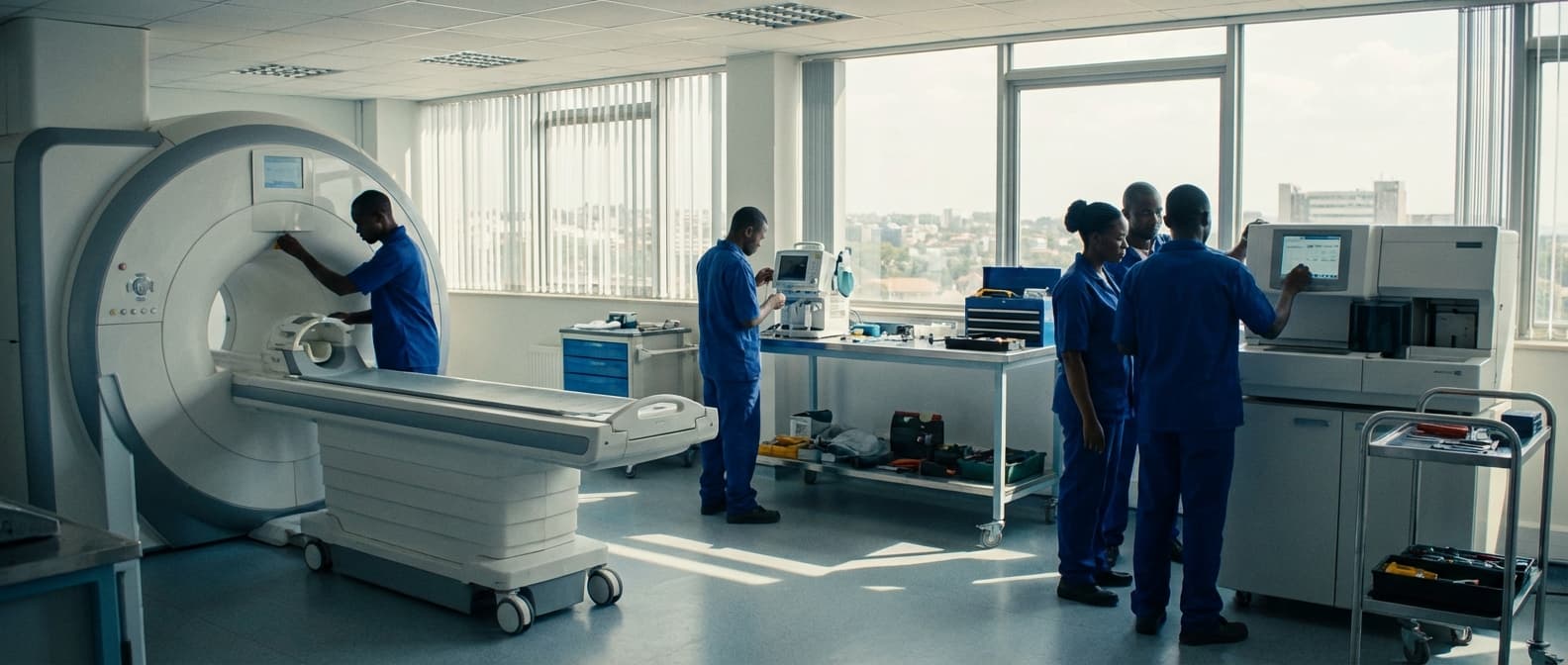
Comprehensive Maintenance Contract (CMC) Management Service (Parts & Labor) in Sao Tome and Principe
Engineering Excellence & Technical Support
Comprehensive Maintenance Contract (CMC) Management Service (Parts & Labor) High-standard technical execution following OEM protocols and local regulatory frameworks.
Proactive Parts & Labor Optimization
Leverage our CMC to ensure critical spare parts are always stocked and maintenance schedules are optimized, minimizing downtime for your essential equipment in Sao Tome and Principe. Our expert technicians are ready with the right parts and skills for immediate deployment.
Guaranteed Uptime & Cost Control
Secure predictable operational continuity with our comprehensive CMC. We provide a fixed service fee covering all parts and labor, eliminating unexpected repair costs and guaranteeing the peak performance of your machinery throughout Sao Tome and Principe.
End-to-End Maintenance Lifecycle Management
From routine inspections and preventative measures to emergency repairs, our CMC service in Sao Tome and Principe covers the entire maintenance lifecycle. We manage everything, ensuring compliance, efficiency, and the extended lifespan of your assets with integrated parts and labor support.
What Is Comprehensive Maintenance Contract (Cmc) Management Service (Parts & Labor) In Sao Tome And Principe?
Comprehensive Maintenance Contract (CMC) Management Service (Parts & Labor) in Sao Tome and Principe refers to the outsourced management and execution of all aspects of maintaining critical assets, encompassing both the supply of necessary spare parts and the provision of skilled labor for their installation, repair, and preventive upkeep. This service aims to ensure the operational readiness, longevity, and optimal performance of equipment and infrastructure by proactively addressing potential failures and rectifying existing issues.
| Who Needs CMC Management Service? | Typical Use Cases in Sao Tome and Principe | |||||||||
|---|---|---|---|---|---|---|---|---|---|---|
| Industries reliant on continuous operations: Sectors where downtime incurs significant financial losses, reputational damage, or safety risks. | Power Generation and Distribution: Maintaining turbines, generators, transformers, substations, and distribution networks. | Telecommunications Infrastructure: Managing base stations, fiber optic networks, data centers, and transmission equipment. | Oil and Gas Sector: Maintenance of exploration, production, and refining equipment, including pumps, compressors, pipelines, and offshore platforms. | Manufacturing and Industrial Plants: Ensuring the operational integrity of production lines, machinery, and automated systems. | Healthcare Facilities: Upkeep of critical medical equipment such as MRI machines, X-ray devices, ventilators, and laboratory instruments. | Transportation and Logistics: Maintenance of airport infrastructure, port equipment (cranes, conveyors), and fleet vehicles. | Hospitality and Tourism: Management of hotel infrastructure, including HVAC systems, electrical grids, water treatment plants, and elevators. | Government and Public Infrastructure: Maintenance of public utilities, water supply systems, and essential public services. | Companies with Limited In-house Technical Expertise: Organizations that lack the specialized skills or resources to manage complex asset maintenance internally. | Businesses seeking to focus on core competencies: Companies that prefer to outsource non-core functions to specialized service providers to improve efficiency and reduce operational burden. |
Key Components of CMC Management Service (Parts & Labor):
- Asset Inventory and Classification: Detailed cataloging of all maintainable assets, including their specifications, age, criticality, and maintenance history.
- Preventive Maintenance (PM) Planning & Execution: Development and implementation of schedules for routine inspections, lubrication, calibration, cleaning, and minor adjustments to prevent unexpected failures.
- Corrective Maintenance (CM) Management: Establishment of protocols for responding to equipment breakdowns, including fault diagnosis, repair scheduling, and emergency response.
- Spare Parts Management: Procurement, inventory control, warehousing, and logistics for all required spare parts. This includes forecasting demand, managing stock levels, and ensuring availability of genuine or equivalent parts.
- Labor Management: Deployment, supervision, and management of qualified technicians and engineers for performing maintenance tasks. This can involve in-house teams, third-party contractors, or a hybrid model.
- Performance Monitoring & Reporting: Continuous tracking of key performance indicators (KPIs) such as Mean Time Between Failures (MTBF), Mean Time To Repair (MTTR), asset uptime, and maintenance costs. Regular reporting to the client on service performance and asset health.
- Technical Support & Troubleshooting: Provision of expert advice and assistance for complex technical issues and operational challenges.
- Warranty Management: Overseeing and facilitating warranty claims for parts and equipment.
- Safety & Compliance: Ensuring all maintenance activities adhere to local safety regulations, environmental standards, and industry best practices.
- Budgeting & Cost Control: Developing and managing the maintenance budget, optimizing resource allocation, and identifying cost-saving opportunities.
- Technology Integration: Potentially utilizing Computerized Maintenance Management Systems (CMMS) or Enterprise Asset Management (EAM) software for streamlined operations and data analysis.
Who Needs Comprehensive Maintenance Contract (Cmc) Management Service (Parts & Labor) In Sao Tome And Principe?
Comprehensive Maintenance Contract (CMC) Management Services for Parts & Labor are crucial for organizations in Sao Tome and Principe that rely on complex or critical equipment and infrastructure. These services ensure optimal performance, minimize downtime, and extend the lifespan of assets, ultimately contributing to operational efficiency and cost savings. The target customers are typically businesses and government entities that have significant investments in machinery, technology, or facilities requiring regular upkeep and prompt repair.
| Customer Segment | Key Departments Benefiting from CMC Management Service |
|---|---|
| Industrial Operations | Production/Manufacturing, Operations, Engineering, Maintenance, Procurement |
| Telecommunications | Network Operations, Technical Support, Infrastructure Management, Field Operations |
| Healthcare | Biomedical Engineering, Facilities Management, IT Department, Clinical Operations |
| Government Agencies | Public Works, IT Department, Infrastructure Management, Logistics, Department of Health |
| Energy & Utilities | Operations, Engineering, Maintenance, Grid Management, Procurement |
| Hospitality | Facilities Management, Engineering, IT Department, Housekeeping (for integrated systems) |
| Financial Institutions | IT Department, Operations, Branch Operations, Facilities Management |
| Transportation & Logistics | Operations, Fleet Management, Maintenance, IT Department, Terminal Operations |
| Educational Institutions | IT Department, Facilities Management, Research & Development Labs, Academic Departments (for specialized equipment) |
| Specialized IT Infrastructure Companies | IT Operations, Network Administration, Systems Engineering, Data Center Management |
Target Customers & Departments in Sao Tome and Principe Requiring CMC Management Service (Parts & Labor):
- Large-scale Industrial Operations (Manufacturing, Agro-industry)
- Telecommunications Providers
- Healthcare Institutions (Hospitals, Clinics)
- Government Agencies (Infrastructure, Public Services)
- Energy and Utilities Companies (Power Generation, Water Supply)
- Hospitality Sector (Large Hotels, Resorts)
- Financial Institutions (Banks with extensive branch networks)
- Transportation and Logistics Companies (Ports, Airlines)
- Educational Institutions (Universities, Research Centers)
- Companies with Specialized IT Infrastructure
Comprehensive Maintenance Contract (Cmc) Management Service (Parts & Labor) Process In Sao Tome And Principe
This document outlines the Comprehensive Maintenance Contract (CMC) Management Service (Parts & Labor) Process in Sao Tome and Principe. It details the workflow from the initial inquiry to the successful execution of maintenance services, ensuring a structured and efficient approach for clients requiring ongoing support for their assets.
| Stage | Description | Key Activities | Responsible Parties | Output/Deliverable |
|---|---|---|---|---|
| Initial contact from a potential client seeking CMC services for their equipment or assets. | Receive and acknowledge inquiry, understand client's assets, existing maintenance status, specific needs, service level expectations, and budget constraints. Site visit may be conducted. | Client, Service Provider Sales Team | Detailed understanding of client's requirements, asset inventory, service scope. |
| Creation of a tailored proposal outlining the scope of services, terms, and pricing. | Analyze requirements, determine necessary parts, labor hours, expertise. Develop a comprehensive proposal including service inclusions, exclusions, response times, spare parts strategy, and pricing. Prepare a formal quotation. | Service Provider Technical & Sales Team | Formal Proposal Document, Detailed Quotation. |
| Discussion and finalization of the terms and conditions of the CMC agreement. | Client reviews proposal and quotation. Negotiation on pricing, service levels, payment terms, warranty, and termination clauses. Both parties agree on the final contract terms. Legal review may be involved. | Client, Service Provider Management & Legal Team | Signed Comprehensive Maintenance Contract (CMC). |
| Formal commencement of the maintenance contract and integration of the client into the service provider's system. | Activate the contract in the service management system. Assign account manager and service engineers. Conduct client onboarding session to explain service procedures, contact points, and escalation processes. Establish communication channels. | Service Provider Operations & Account Management Team | Activated CMC record, Client onboarding materials, Designated points of contact. |
| Proactive planning and execution of scheduled maintenance to prevent failures. | Develop a preventive maintenance schedule based on asset type, manufacturer recommendations, and usage. Communicate schedule to client. Deploy technicians for routine inspections, cleaning, lubrication, calibration, and part replacement as per schedule. | Service Provider Operations & Field Technicians | Completed preventive maintenance tasks, Maintenance reports, Updated asset service history. |
| Handling of unexpected equipment failures or performance issues. | Client reports a fault or issue. Service provider receives the request (via phone, email, portal). Prioritize the request based on severity. Dispatch qualified technicians to diagnose and repair the issue. Provide status updates to the client. | Client, Service Provider Service Desk & Field Technicians | Fault reported and logged, Diagnosis report, Repair completion confirmation. |
| Ensuring availability of necessary spare parts for both preventive and corrective maintenance. | Maintain an inventory of critical spare parts. Procure parts from approved suppliers based on demand forecasts and contract requirements. Manage stock levels, quality control, and warehousing. Track parts usage and associated costs. | Service Provider Procurement & Inventory Management | Sufficient spare parts inventory, Parts requisition and delivery records. |
| Mobilization and efficient execution of maintenance tasks by skilled personnel. | Assign appropriately skilled technicians to tasks. Ensure technicians have the necessary tools, equipment, and safety training. Oversee the execution of maintenance activities, ensuring adherence to quality standards and procedures. | Service Provider Operations & Field Technicians | On-site service delivery, Completed maintenance work, Timesheets. |
| Ensuring the quality of services rendered and providing transparent reporting to the client. | Conduct post-service quality checks. Document all maintenance activities, parts used, and labor hours. Generate regular performance reports for the client, including service history, uptime, and costs. Obtain client sign-off on completed work. | Service Provider Quality Assurance & Account Management | Service reports, Performance metrics, Client sign-off documents. |
| Issuing invoices for services rendered and managing payment collection. | Generate invoices based on the contract terms, including parts, labor, and any agreed-upon fees. Submit invoices to the client. Follow up on payments and manage accounts receivable. | Service Provider Finance & Account Management | Issued invoices, Payment records. |
| Periodically reviewing the contract and planning for its renewal or termination. | Conduct periodic reviews of the CMC performance with the client. Discuss any changes in requirements or asset status. Initiate renewal discussions well in advance of the contract expiry date. Facilitate contract termination if necessary. | Client, Service Provider Account Management & Management | Contract renewal agreement or termination notice. |
Key Stages of CMC Management Service Workflow
- Inquiry & Requirement Gathering
- Proposal Development & Quotation
- Contract Negotiation & Agreement
- Service Plan Activation & Onboarding
- Preventive Maintenance Scheduling
- Corrective Maintenance Request & Response
- Parts Procurement & Inventory Management
- Labor Deployment & Service Execution
- Quality Assurance & Reporting
- Invoicing & Payment
- Contract Renewal & Review
Comprehensive Maintenance Contract (Cmc) Management Service (Parts & Labor) Cost In Sao Tome And Principe
Managing Comprehensive Maintenance Contracts (CMC) for machinery and equipment in Sao Tome and Principe involves costs for both parts and labor. These costs can fluctuate significantly based on several key pricing factors. A CMC typically covers preventative maintenance, emergency repairs, and the replacement of worn-out parts, aiming to ensure optimal operational efficiency and minimize downtime. The local currency for Sao Tome and Principe is the Dobra (STD). It's important to note that while STD is the official currency, the Euro (EUR) is widely accepted and often used for quoting services, especially for international suppliers or complex equipment. Therefore, costs might be discussed in EUR and then converted to STD at the prevailing exchange rate.
| Equipment Category | Estimated Annual CMC Cost (Parts & Labor) in Dobra (STD) [Approximate Range] | Estimated Annual CMC Cost (Parts & Labor) in Euro (EUR) [Approximate Range] | Notes |
|---|---|---|---|
| Basic Office Equipment (Printers, Copiers, PCs) | 50,000 - 200,000 STD | 50 - 200 EUR | Primarily covers routine checks, minor part replacements (toner, drums), and basic troubleshooting. |
| Mid-Range Commercial Equipment (Small Generators, Refrigeration Units) | 150,000 - 500,000 STD | 150 - 500 EUR | Includes more frequent inspections, filter/belt replacements, and potential call-outs for minor repairs. |
| Industrial Machinery (Manufacturing equipment, Larger Generators, HVAC Systems) | 500,000 - 2,500,000+ STD | 500 - 2,500+ EUR | Significant variation based on complexity. Covers extensive preventative maintenance, major component checks, and a buffer for unexpected breakdowns and part replacements. Often involves specialized technicians. |
| Specialized/High-Tech Equipment (Medical devices, Advanced IT infrastructure) | 1,000,000 - 5,000,000+ STD | 1,000 - 5,000+ EUR | Requires highly skilled, often certified technicians. Spare parts can be very expensive and may have long lead times. Typically involves strict SLAs and OEM-dependent service. |
Key Pricing Factors for CMC Management Service (Parts & Labor) in Sao Tome and Principe:
- Type and Complexity of Equipment: High-tech, specialized, or industrial machinery will naturally incur higher maintenance costs due to the need for skilled technicians and potentially imported, expensive spare parts. Simple office equipment will be at the lower end.
- Age and Condition of Equipment: Older or poorly maintained equipment will require more frequent repairs and part replacements, driving up the overall CMC cost.
- Scope of Coverage: A contract that includes 24/7 emergency response, guaranteed uptime, and a broad range of covered issues will be more expensive than a basic preventative maintenance plan.
- Availability of Spare Parts: If spare parts are not readily available locally and need to be imported, this will significantly increase both part costs and lead times, impacting overall service pricing.
- Skill Level and Availability of Technicians: Specialized technical expertise for certain equipment might be scarce in Sao Tome and Principe, leading to higher labor rates for qualified personnel. Training and certification costs for technicians also play a role.
- Geographic Location of Service: While Sao Tome and Principe are relatively small, travel time and logistics to remote areas for maintenance can add to the labor cost.
- Contract Duration and Service Level Agreements (SLAs): Longer-term contracts might offer slight discounts. Stricter SLAs (e.g., faster response times, specific uptime guarantees) will command higher prices.
- Supplier Reputation and Experience: Established and reputable service providers with a proven track record may charge more for their expertise and reliability.
- Brand of Equipment: Original Equipment Manufacturer (OEM) parts and authorized service providers often come at a premium compared to third-party options.
Affordable Comprehensive Maintenance Contract (Cmc) Management Service (Parts & Labor) Options
Managing maintenance contracts for equipment, especially across multiple locations or diverse asset types, can be a significant undertaking. Our Affordable Comprehensive Maintenance Contract (CMC) Management Service (Parts & Labor) offers a streamlined and cost-effective solution. We handle the complexities of vendor negotiation, service scheduling, performance monitoring, and financial reconciliation, ensuring your assets are optimally maintained and you receive the best value. This service is designed to prevent unexpected breakdowns, extend equipment lifespan, and minimize operational disruptions. We focus on proactive maintenance strategies and leverage our industry expertise to identify and implement significant cost savings. Our value proposition lies in the comprehensive nature of our service, covering both parts and labor, and our commitment to delivering demonstrable savings through intelligent contract management.
| Value Bundle Option | Description | Key Cost-Saving Strategies | Ideal For |
|---|---|---|---|
| Essential Care Bundle | Covers routine preventative maintenance, critical part replacement, and emergency repairs for a defined set of core assets. | Standardized pricing for common parts, bulk purchasing discounts, optimized service routing, scheduled preventative maintenance to avoid costly emergency repairs. | Small to medium-sized businesses with a manageable asset base and predictable maintenance needs. |
| Advanced Performance Bundle | Includes all features of the Essential Care Bundle, plus proactive performance monitoring, advanced diagnostics, and access to specialized technicians for high-priority equipment. | Predictive maintenance analytics, proactive component replacement based on usage patterns, access to OEM-certified technicians at negotiated rates, reduced downtime by addressing issues before they escalate. | Businesses with critical, high-utilization equipment or those operating in demanding environments. |
| Total Asset Lifecycle Bundle | A comprehensive solution encompassing all aspects of maintenance, from initial installation support, full lifecycle maintenance (preventative, corrective, and predictive), to end-of-life recommendations and disposal planning. | Long-term vendor partnerships with volume discounts, integrated spare parts inventory management, negotiated extended warranties, proactive obsolescence management, optimized replacement strategies to minimize total cost of ownership. | Large enterprises with extensive and diverse asset portfolios, seeking complete control and optimization of their maintenance budget and asset performance. |
Key Features and Benefits
- End-to-End Contract Management: From initial vendor selection and contract negotiation to ongoing performance tracking and renewal management, we cover every aspect.
- Parts & Labor Inclusion: Our contracts explicitly include both the cost of replacement parts and the labor required for repairs and preventative maintenance.
- Proactive Maintenance Scheduling: We optimize service schedules to prevent breakdowns rather than simply reacting to them, reducing downtime and emergency repair costs.
- Vendor Performance Monitoring: We hold service providers accountable to contract terms and service level agreements (SLAs), ensuring quality and timeliness.
- Cost Optimization: Through strategic negotiation and leveraging our purchasing power, we aim to reduce overall maintenance expenditures.
- Risk Mitigation: Minimize the risk of costly equipment failures and unexpected repair bills.
- Centralized Reporting & Analytics: Gain clear visibility into maintenance activities, costs, and asset performance.
- Scalable Solutions: Our services adapt to your specific needs, whether you have a few critical assets or a large, distributed fleet.
Verified Providers In Sao Tome And Principe
In Sao Tome and Principe, accessing reliable and trustworthy healthcare providers is paramount. Franance Health has emerged as a leading organization dedicated to verifying and promoting healthcare professionals and facilities that meet the highest standards of quality and ethical practice. This commitment to verification ensures that patients receive safe, effective, and compassionate care. Franance Health's rigorous credentialing process scrutinizes qualifications, experience, and adherence to regulatory guidelines, offering peace of mind to individuals seeking medical services. By choosing Franance Health-verified providers, individuals in Sao Tome and Principe can be confident they are engaging with healthcare professionals who are not only skilled but also dedicated to patient well-being and upholding the integrity of the medical profession. This dedication to transparency and quality makes Franance Health credentials the benchmark for excellence in healthcare within the region.
| Provider Type | Key Verification Criteria | Benefit to Patients |
|---|---|---|
| Doctors | Medical degree, licensure, specialization certifications, continuing education, practice history. | Access to highly qualified specialists with proven expertise. |
| Hospitals and Clinics | Infrastructure, equipment, hygiene standards, staff qualifications, patient safety protocols, emergency preparedness. | Safe and well-equipped facilities offering comprehensive care. |
| Nurses and Allied Health Professionals | Nursing degree/diploma, licensure, specialized training, certifications, ethical conduct. | Skilled and compassionate care from trained professionals. |
| Diagnostic Laboratories | Accreditation, equipment calibration, quality control measures, qualified technicians, turnaround times. | Accurate and timely diagnostic results for effective treatment planning. |
Why Franance Health Credentials Represent the Best Choice:
- Rigorous qualification and experience verification for all providers.
- Ensured adherence to local and international healthcare standards and regulations.
- Commitment to ethical practice and patient-centered care.
- Enhanced patient trust and confidence in healthcare services.
- Facilitation of access to a network of reputable and skilled medical professionals.
- Promotion of a culture of continuous improvement and quality within the healthcare sector.
Scope Of Work For Comprehensive Maintenance Contract (Cmc) Management Service (Parts & Labor)
This Scope of Work (SOW) outlines the requirements for a Comprehensive Maintenance Contract (CMC) Management Service, encompassing both parts and labor. The service provider will be responsible for the proactive and reactive maintenance of specified equipment to ensure optimal performance, minimize downtime, and extend the operational lifespan of the assets. This document details the technical deliverables and standard specifications expected from the service provider.
| Category | Description | Technical Deliverables | Standard Specifications |
|---|---|---|---|
| Preventive Maintenance (PM) | Scheduled maintenance activities to inspect, clean, lubricate, adjust, and replace worn components. This aims to prevent failures and ensure optimal performance. | Detailed PM schedules for each equipment type. Completion reports for each PM visit, including findings and actions taken. Recommendations for component replacements based on usage and condition. Calibration certificates for relevant equipment. | PM tasks to be performed according to manufacturer recommendations and industry best practices. Frequency of PM to be defined based on equipment criticality and usage. Qualified technicians with specific certifications. Use of manufacturer-approved lubricants, filters, and consumables. |
| Corrective Maintenance (CM) / Breakdown Maintenance | Unscheduled maintenance required to repair equipment that has failed or is malfunctioning. | Response time commitment for on-site arrival after notification. Diagnosis and root cause analysis of failures. Repair execution within agreed timeframes. Post-repair testing and verification of functionality. Spare parts management and procurement. | 24/7 availability for emergency support. Availability of common spare parts on-site or within defined delivery times. Use of genuine or equivalent quality spare parts. Minimizing Mean Time To Repair (MTTR). |
| Spare Parts Management | Ensuring the availability of necessary spare parts to support both preventive and corrective maintenance activities. This includes inventory management, procurement, and warehousing. | Detailed spare parts catalog with part numbers, descriptions, and stock levels. Inventory reports (stock on hand, usage, reorder points). Procurement process for non-stocked or critical parts. Quality assurance for all incoming spare parts. | Minimum stock levels to be maintained for critical components. Lead times for procurement of various parts. Supplier qualification process. Traceability of spare parts. |
| Labor Management | Management of all personnel involved in maintenance activities, ensuring they are qualified, skilled, and adequately resourced. | Qualified and certified technicians for specific equipment. Supervision and coordination of all maintenance teams. Training and skill development plans for technicians. Time tracking and reporting for labor hours. | Technician-to-equipment ratio to be defined. Background checks and security clearances where required. Adherence to all labor laws and company policies. Regular performance reviews of personnel. |
| Reporting and Documentation | Provision of regular and ad-hoc reports on all maintenance activities, equipment status, and costs. | Monthly/Quarterly/Annual maintenance reports. Equipment performance and reliability reports. Cost analysis and budget tracking. Incident/Failure reports. Maintenance history logs for each asset. | Reports to be provided in a standardized format (e.g., PDF, Excel). Data accuracy and completeness. Timely submission of all reports. Secure storage and retrieval of all documentation. |
| Asset Management & Record Keeping | Maintaining a comprehensive database of all covered assets and their associated maintenance history. | Centralized asset register with details (serial number, model, location, installation date). Detailed maintenance history for each asset. Tracking of warranty status for parts and equipment. Lifecycle cost analysis. | Use of a robust Computerized Maintenance Management System (CMMS). Regular updates and verification of asset data. Ensuring data integrity and security. |
| Quality Assurance & Control | Implementing processes to ensure the quality of all maintenance activities and repairs. | Regular audits of maintenance procedures and execution. Customer satisfaction surveys. Root cause analysis for recurring issues. Implementation of corrective actions based on QA findings. | Adherence to ISO 9001 or equivalent quality management standards. Key Performance Indicators (KPIs) for quality. Defined escalation procedures for quality concerns. |
| Health, Safety, and Environment (HSE) | Ensuring all maintenance activities are conducted in compliance with HSE regulations. | Adherence to all site-specific safety rules and regulations. Provision of safety training for all personnel. Risk assessments for maintenance tasks. Incident reporting and investigation. | Compliance with local and international HSE standards. Availability of Personal Protective Equipment (PPE). Emergency response plans. |
Key Objectives of CMC Management Service
- Ensure consistent and reliable operation of all covered equipment.
- Minimize unplanned downtime through proactive maintenance strategies.
- Efficiently manage spare parts inventory and procurement.
- Coordinate and oversee all labor activities, including scheduled and unscheduled repairs.
- Maintain accurate and up-to-date maintenance records.
- Provide timely reporting on equipment status, maintenance activities, and cost analysis.
- Ensure compliance with all relevant safety and regulatory standards.
- Optimize maintenance costs while maintaining high service levels.
Service Level Agreement For Comprehensive Maintenance Contract (Cmc) Management Service (Parts & Labor)
This Service Level Agreement (SLA) outlines the response times and uptime guarantees for the Comprehensive Maintenance Contract (CMC) Management Service, covering both parts and labor. This SLA is an integral part of the overall CMC contract and defines the expected performance standards for the provider.
| Issue Severity | Response Time (Contact to Acknowledgment) | On-Site Response Time (Acknowledgment to Arrival) | Target Resolution Time | Uptime Guarantee |
|---|---|---|---|---|
| Emergency | 1 Hour (during Service Hours) | 4 Business Hours | 8 Business Hours (for initial diagnosis/temporary fix, major repairs may take longer depending on parts availability) | 99.5% (excluding scheduled maintenance) |
| Urgent | 2 Business Hours (during Service Hours) | 8 Business Hours | 2 Business Days | 99.5% (excluding scheduled maintenance) |
| Standard | 4 Business Hours (during Service Hours) | Next Business Day | 5 Business Days | 99.5% (excluding scheduled maintenance) |
Key Definitions
- Service Hours: The defined period during which support services are available (e.g., 9 AM - 5 PM Local Time, Monday - Friday, excluding public holidays).
- Emergency: A critical system failure that renders the primary function of the equipment unusable and significantly impacts business operations.
- Urgent: A critical component failure or performance degradation that significantly impacts the primary function of the equipment but does not necessarily halt all operations.
- Standard: A non-critical issue, including scheduled maintenance, routine checks, or minor performance issues that do not significantly impact operations.
- Downtime: The period during which the equipment is not operational or accessible due to a fault or scheduled maintenance, as measured from the time a fault is reported to the service provider until the equipment is restored to full operational status.
- Resolution: The successful rectification of a reported issue, restoring the equipment to its agreed-upon operational state. This may involve repair, replacement, or a workaround confirmed by the client.
- Uptime Guarantee: The minimum percentage of time the equipment is expected to be operational and available during the contract period.
Frequently Asked Questions

Ready when you are
Let's scope your Comprehensive Maintenance Contract (CMC) Management Service (Parts & Labor) in Sao Tome and Principe project in Sao Tome and Principe.

Scaling healthcare logistics and technical systems across the entire continent.