
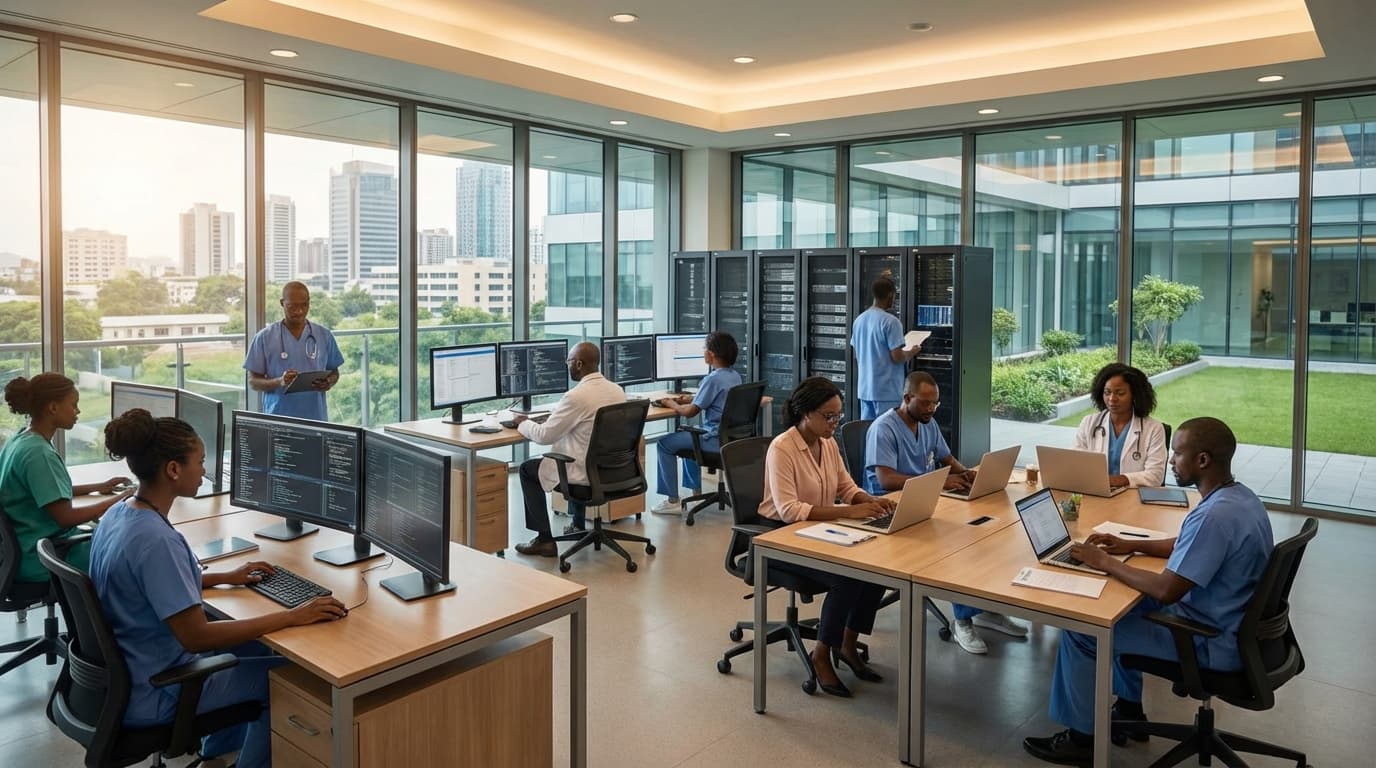
Radiology Reader & Reporting Support in Sao Tome and Principe
Engineering Excellence & Technical Support
Remote radiology reading and reporting services High-standard technical execution following OEM protocols and local regulatory frameworks.
Secure Cloud-Based Image Archiving
Implement a robust, HIPAA-compliant cloud storage solution for radiology images, ensuring secure offsite backups and facilitating rapid retrieval of patient studies for both local reporting and remote expert consultation, overcoming potential infrastructure limitations in Sao Tome and Principe.
AI-Powered Preliminary Read Assistance
Integrate cutting-edge Artificial Intelligence algorithms to provide preliminary analysis and highlight potential abnormalities on radiological scans. This assists local radiologists by prioritizing urgent cases, reducing reporting turnaround times, and improving diagnostic accuracy, especially for complex or subtle findings.
Tele-Reporting & Expert Collaboration Platform
Establish a secure tele-reporting platform enabling local healthcare providers to submit imaging studies for interpretation by remote, subspecialty radiologists. This ensures access to high-level expertise, bridging geographical gaps and enhancing the quality of care for the population of Sao Tome and Principe.
What Is Radiology Reader & Reporting Support In Sao Tome And Principe?
Radiology Reader & Reporting Support in Sao Tome and Principe refers to the provision of expert radiologist interpretation and diagnostic reporting services for medical imaging studies performed within the nation. This service bridges geographical and resource gaps, enabling healthcare providers in Sao Tome and Principe to access specialized radiological expertise for accurate diagnosis and patient management. It involves the remote analysis of medical images (such as X-rays, CT scans, MRI, ultrasound) by qualified radiologists who then generate comprehensive, structured reports. These reports are crucial for informing clinical decision-making, guiding treatment plans, and ensuring appropriate patient care. The service is particularly valuable in regions where local availability of subspecialized radiologists may be limited or absent.
| Stakeholder/Need | Description of Need | Typical Use Cases |
|---|---|---|
| Hospitals and Clinics in Sao Tome and Principe | Lack of on-site subspecialized radiologists; need for timely and accurate interpretation of complex imaging studies; limited access to advanced imaging modalities. | Interpretation of routine and complex X-rays, CT scans, MRI scans, and ultrasounds; emergency radiology services (e.g., stroke imaging, trauma); subspecialty consultations for oncology, cardiology, neurology, etc.; second opinions on challenging cases. |
| Referring Physicians | Requirement for expert diagnostic opinions to guide patient management, treatment planning, and follow-up protocols. | Confirmation of diagnoses; exclusion of specific pathologies; characterization of disease extent; monitoring of treatment response; identification of complications. |
| Patients in Sao Tome and Principe | Access to high-quality diagnostic imaging interpretation, regardless of geographical location, ensuring equitable healthcare. | Diagnosis of acute and chronic medical conditions; pre-operative assessment; post-operative monitoring; management of chronic diseases requiring regular radiological follow-up. |
| Healthcare Administrators/Government Health Ministries | Enhancement of diagnostic capabilities; improvement of healthcare outcomes; cost-effectiveness of radiology services; capacity building for local healthcare systems. | Establishing remote radiology services as a cost-effective alternative to recruiting and retaining a full spectrum of subspecialist radiologists; improving patient referral pathways and reducing medical tourism for diagnostic services; data analytics for public health surveillance and resource allocation. |
Key Components of Radiology Reader & Reporting Support
- Image Transmission and Archiving: Secure and efficient digital transfer of medical images from healthcare facilities in Sao Tome and Principe to off-site reading centers. Robust Picture Archiving and Communication Systems (PACS) and/or cloud-based solutions are employed for data integrity and accessibility.
- Expert Radiological Interpretation: Analysis of transmitted images by board-certified or fellowship-trained radiologists with expertise in various subspecialties (e.g., neuroradiology, musculoskeletal radiology, abdominal imaging, thoracic radiology).
- Diagnostic Report Generation: Creation of detailed, structured, and clinically relevant reports that outline imaging findings, differential diagnoses, and recommendations. These reports are typically generated using standardized templates and electronic reporting systems.
- Turnaround Time (TAT) Management: Adherence to predefined TATs for report delivery, ensuring timely access to diagnostic information for clinicians. Critical findings are often communicated urgently to the referring physician.
- Quality Assurance and Peer Review: Implementation of rigorous QA protocols, including peer review of reports, to maintain diagnostic accuracy and consistency.
- Technical Support and Integration: Provision of technical assistance for image acquisition, transmission, and integration with local Electronic Health Record (EHR) or Hospital Information System (HIS) platforms.
Who Needs Radiology Reader & Reporting Support In Sao Tome And Principe?
Radiology reader and reporting support services are crucial for improving diagnostic accuracy, efficiency, and accessibility of medical imaging services. In Sao Tome and Principe, these services are particularly valuable for healthcare facilities facing challenges such as a shortage of specialized radiologists, limited access to advanced reporting tools, and the need for second opinions, especially for complex cases or in remote areas. The primary beneficiaries of such support are healthcare providers aiming to enhance patient care through timely and precise radiological interpretations.
| Target Customer Group | Description of Needs | Relevant Departments | Potential Benefits |
|---|---|---|---|
| Public Hospitals and Clinics | High patient volume, potential shortage of radiologists, need for consistent and accurate reporting to support patient management and public health initiatives. | Radiology, Emergency, Internal Medicine, Surgery, Pediatrics, Oncology | Improved diagnostic turnaround time, enhanced accuracy, reduced radiologist workload, better patient outcomes, support for training local staff. |
| Private Hospitals and Imaging Centers | Competitive market, need for high-quality and efficient reporting to attract and retain patients, desire for advanced reporting capabilities and subspecialty interpretations. | Radiology, Cardiology, Neurology, Oncology, Orthopedics | Increased capacity for complex cases, faster reporting, improved service offering, potential for telemedicine integration, competitive advantage. |
| Rural Health Posts and Dispensaries | Limited access to on-site radiology expertise, reliance on remote consultations or referrals, need for basic interpretations of X-rays and ultrasounds. | General Medicine, Primary Care | Extended reach of diagnostic services, enabling earlier detection of conditions, improved management of common ailments, reduced need for patient travel. |
| Specialized Medical Clinics | Require highly specific interpretations of imaging for their subspecialty, often dealing with complex diagnostic challenges, need for expert second opinions. | Cardiology, Oncology, Neurology, Orthopedics, Pulmonology | Access to subspecialty expertise without requiring full-time hires, more precise diagnoses for targeted treatments, support for research and advanced diagnostics. |
| Emergency Departments | Urgent need for rapid and accurate interpretation of emergency imaging (e.g., trauma, stroke), critical for timely intervention and patient disposition. | Emergency Medicine, Trauma Surgery | Expedited diagnosis and treatment, improved patient flow, reduced risk of missed critical findings in time-sensitive situations. |
Target Customers and Departments for Radiology Reader & Reporting Support in Sao Tome and Principe
- Public Hospitals and Clinics
- Private Hospitals and Imaging Centers
- Rural Health Posts and Dispensaries
- Specialized Medical Clinics (e.g., Cardiology, Oncology, Neurology)
- Emergency Departments
- Surgical Departments
- Internal Medicine Departments
- Pediatric Departments
- Oncology Departments
- Cardiology Departments
- Neurology Departments
- Emergency Medicine Departments
- Primary Care Physicians
Radiology Reader & Reporting Support Process In Sao Tome And Principe
This document outlines the typical workflow for radiology reader and reporting support in Sao Tome and Principe. The process is designed to ensure efficient and accurate interpretation of radiological images and timely delivery of reports to referring physicians. It typically involves patient registration, image acquisition, preliminary reading, detailed reporting, and final report dissemination.
| Step | Description | Key Personnel Involved | Technology/Tools Used | Output/Outcome |
|---|---|---|---|---|
| The patient is registered in the healthcare system, and a referral for a radiological examination is made by a referring physician. This includes patient demographics, clinical history, and the specific imaging requested. | Reception staff, Referring Physician, Patient | Hospital Information System (HIS), Referral Forms | Registered patient, Confirmed imaging request |
| The requested radiological images (e.g., X-ray, CT, MRI, Ultrasound) are acquired using the appropriate equipment by a radiographer or technician. | Radiographer/Technician | Radiology Imaging Equipment (X-ray machine, CT scanner, MRI scanner, Ultrasound machine) | Digital radiological images |
| In cases of acute conditions or emergencies, a radiologist may perform a quick, preliminary review of images to identify immediate critical findings. This is not a full report. | Radiologist | PACS (Picture Archiving and Communication System) | Identification of critical findings (if any) |
| A qualified radiologist meticulously examines the acquired images, correlating them with the clinical information provided. They identify abnormalities, measure lesions, and formulate a diagnostic opinion. | Radiologist | PACS, High-resolution medical monitors | Diagnostic findings and impressions |
| The radiologist dictates their findings and conclusions into a voice recording system. This includes a description of the images, the interpretation, and any recommendations. | Radiologist | Voice dictation software/hardware, Digital recorder | Audio recording of the radiology report |
| A medical transcriptionist listens to the dictated audio and transcribes it into a written report. | Medical Transcriptionist | Transcription software, Headphones, Computer | Written draft of the radiology report |
| The radiologist reviews the transcribed report for accuracy, completeness, and clarity. They make any necessary corrections and sign off on the final report. | Radiologist | PACS, HIS, Word processing software | Validated and signed radiology report |
| The final, signed report is sent to the referring physician. This can be done electronically via PACS/HIS, via secure email, or in hard copy. | Radiology Department Staff, Referring Physician | PACS, HIS, Email, Printer | Report received by the referring physician |
| All acquired images and their corresponding reports are securely archived in the PACS and HIS for future reference, legal purposes, and continuity of care. | IT Department, Radiology Department Staff | PACS, HIS, Storage servers | Secure and accessible medical records |
Radiology Reader & Reporting Support Process
- Patient Registration & Referral
- Image Acquisition
- Preliminary Image Review (Optional/Urgent Cases)
- Detailed Image Interpretation (Reading)
- Report Dictation
- Report Transcription
- Report Review & Validation
- Report Distribution
- Archiving
Radiology Reader & Reporting Support Cost In Sao Tome And Principe
Providing accurate and timely radiology reading and reporting is crucial for healthcare in Sao Tome and Principe. The cost associated with these services is influenced by several key factors, impacting the overall price range in the local currency, the Dobra (STN). These factors include the complexity of the imaging modality (e.g., X-ray, CT, MRI), the number and type of views or slices, the urgency of the report, the experience and specialization of the radiologist, and the infrastructure and operational costs of the facility providing the service. Emerging technologies and advanced interpretation techniques can also contribute to higher costs. It's important to note that pricing can vary significantly between public and private healthcare providers, with private facilities generally commanding higher rates due to overheads and perceived service quality. Geographic location within Sao Tome and Principe may also play a minor role due to accessibility and operational differences.
| Service Type | Estimated Price Range (STN) | Notes |
|---|---|---|
| Basic X-ray Interpretation (e.g., Chest X-ray, Bone X-ray) | 300 - 700 STN | Standard reporting time, common examinations. |
| Complex X-ray Interpretation (e.g., Multiple views, Skeletal surveys) | 500 - 1,000 STN | Requires more detailed analysis or multiple images. |
| CT Scan Interpretation (Per Scan/Region) | 1,500 - 4,000 STN | Varies based on the number of slices, contrast usage, and anatomical region. |
| MRI Scan Interpretation (Per Scan/Region) | 2,500 - 6,000 STN | Generally higher cost due to complexity and scan time. Varies by region and contrast. |
| Ultrasound Interpretation (Per Study) | 800 - 2,000 STN | Covers abdominal, pelvic, musculoskeletal, or vascular ultrasounds. |
| STAT/Emergency Reporting Surcharge | Add 30% - 50% | For urgent requests requiring immediate interpretation. |
| Specialized Reporting (e.g., Mammography, Interventional Radiology) | 3,000 - 8,000+ STN | Requires highly specialized radiologists and potentially more complex procedures. |
| Second Opinion/Consultation | 1,000 - 3,000 STN | For a radiologist to review an existing report and images. |
Key Pricing Factors for Radiology Reading & Reporting Support
- Complexity of Imaging Modality (X-ray, CT, MRI, Ultrasound)
- Number and Type of Views/Slices
- Urgency of Report (Standard vs. STAT/Emergency)
- Radiologist Experience and Specialization
- Facility Infrastructure and Operational Costs
- Technological Advancements and Interpretation Techniques
- Type of Healthcare Provider (Public vs. Private)
- Geographic Location
Affordable Radiology Reader & Reporting Support Options
Finding reliable and affordable radiology reader and reporting support is crucial for healthcare facilities, especially those facing budget constraints or a shortage of radiologists. Fortunately, several options exist that can significantly reduce costs while maintaining high-quality diagnostic services. These options range from leveraging technology to strategic outsourcing. Understanding value bundles and implementing smart cost-saving strategies are key to maximizing efficiency and affordability. Value bundles often combine multiple services at a discounted rate, while cost-saving strategies focus on optimizing existing resources and exploring alternative solutions.
| Strategy | Description | Cost-Saving Benefit | Considerations |
|---|---|---|---|
| Value Bundles | Packages that combine multiple services (e.g., image interpretation, final reporting, subspecialty reads, overnight coverage) at a predetermined price. | Reduced per-service cost, predictable budgeting, simplified vendor management. | Ensure the bundle meets specific needs; compare bundled pricing against individual service costs. |
| Volume-Based Pricing | Cost per study decreases as the volume of interpretations increases. | Economies of scale, lower per-unit cost for higher demand. | Requires consistent and predictable imaging volumes; negotiate tiered pricing. |
| Off-Peak Hours/Offshore Teleradiology | Utilizing radiologists in different time zones for overnight or weekend reads. | Significantly lower labor costs compared to domestic, peak-hour radiologists. | Potential for slight delays in urgent findings; ensure clear communication protocols and quality control. |
| Subspecialty Pooled Resources | Accessing subspecialty expertise (e.g., neuroradiology, musculoskeletal) through a shared teleradiology pool rather than hiring dedicated in-house specialists. | Avoids high salaries and underutilization of specialized radiologists. | Depends on the teleradiology provider's network and availability of desired subspecialists. |
| AI Integration for Triage & Preliminary Reads | Using AI to identify potential abnormalities, allowing human radiologists to focus on complex cases and final reporting. | Increases radiologist efficiency, reduces turnaround time for normal studies, and allows for more focused expert reads. | Initial investment in AI software; requires validation and workflow integration with existing systems. |
| Managed Workflow Solutions | Outsourcing the entire reading workflow, including preliminary reads, final reports, and quality assurance, to a specialized provider. | Comprehensive cost savings through integrated services; frees up internal resources. | Requires a high degree of trust in the vendor; ensure service level agreements (SLAs) are robust. |
Affordable Radiology Reader & Reporting Support Options
- Teleradiology Services: Outsourcing reads to remote radiologists can be a cost-effective alternative to hiring in-house staff, especially for specialized subspecialties or after-hours coverage.
- AI-powered Diagnostic Tools: Artificial intelligence can assist radiologists by flagging potential abnormalities, prioritizing urgent cases, and improving workflow efficiency, indirectly reducing reading time and costs.
- Remote Interpretation Platforms: These platforms facilitate secure sharing of images and reports with external radiologists, enabling flexible and cost-efficient reading solutions.
- Flexible Staffing Models: Engaging locum tenens radiologists or part-time readers can provide coverage without the long-term commitment and overhead of full-time employees.
- Managed Services & Partnerships: Collaborating with specialized radiology groups can offer comprehensive reading and reporting services, often with bundled pricing and integrated technology.
- In-house Training & Upskilling: Investing in training existing medical imaging professionals to assist with preliminary reads or to become proficient in specific modalities can reduce reliance on external services.
- Optimized PACS & RIS Systems: Ensuring efficient Picture Archiving and Communication Systems (PACS) and Radiology Information Systems (RIS) minimizes downtime, reduces manual effort, and improves reporting turnaround times.
Verified Providers In Sao Tome And Principe
In the pursuit of reliable healthcare in Sao Tome and Principe, identifying verified providers is paramount. Franance Health stands out as a leading organization offering a network of accredited and highly qualified medical professionals. Their rigorous credentialing process ensures that all affiliated practitioners meet stringent standards of expertise, experience, and ethical conduct. Choosing Franance Health means opting for a healthcare experience characterized by trust, competence, and a patient-centered approach. Their commitment to quality assurance provides peace of mind for individuals seeking medical services in Sao Tome and Principe.
| Credential Aspect | Franance Health Assurance | Patient Benefit |
|---|---|---|
| Licensing & Certification | Verified and up-to-date | Ensures providers are legally qualified. |
| Professional Experience | Minimum required experience often exceeded | Access to seasoned and skilled practitioners. |
| Specialized Training | Documented completion of relevant specializations | Guarantees expertise in specific medical areas. |
| Continuing Education | Proof of ongoing professional development | Providers stay current with medical advancements. |
| Ethical Conduct Review | Adherence to strict ethical codes | Promotes patient trust and respectful care. |
Why Franance Health Credentials Represent the Best Choice:
- Rigorous Verification Process: Franance Health meticulously vets all providers to ensure they possess the necessary licenses, certifications, and a proven track record.
- Focus on Expertise: Their network comprises specialists and general practitioners with demonstrable skills and in-depth knowledge in their respective fields.
- Commitment to Patient Safety: Adherence to international best practices and ethical guidelines is a core tenet of Franance Health's credentialing.
- Access to Quality Care: By partnering with Franance Health, patients gain access to a curated selection of trusted healthcare professionals.
- Enhanced Patient Confidence: The "verified" status signifies a commitment to transparency and reliability, fostering greater trust between patients and providers.
Scope Of Work For Radiology Reader & Reporting Support
This Scope of Work (SOW) outlines the services required for Radiology Reader & Reporting Support. The objective is to provide qualified radiologists to interpret medical imaging studies and generate comprehensive reports, ensuring accurate diagnoses and timely patient care. This SOW details the technical deliverables, standard specifications, and operational requirements for the provision of these services.
| Deliverable | Description | Standard Specifications / Requirements | Acceptance Criteria |
|---|---|---|---|
| Radiology Image Interpretation | Reading and analysis of various medical imaging modalities (e.g., X-ray, CT, MRI, Ultrasound, Nuclear Medicine). | Interpretation performed by board-certified or equivalent qualified radiologists. Adherence to established radiologic interpretation protocols and best practices. Compliance with client's PACS/RIS system integration and workflow requirements. | Accuracy and completeness of interpretations as validated by clinical outcomes or peer review. Timely completion of readings within agreed-upon turnaround times (TATs). |
| Radiology Report Generation | Creation of detailed, clear, and concise diagnostic reports based on image interpretation. | Reports must include findings, impressions, and recommendations. Use of standardized reporting templates as provided or agreed upon. Reports generated in a structured format (e.g., DICOM SR or HL7). | Clarity, conciseness, and diagnostic accuracy of reports. Adherence to specified reporting format and content requirements. Timely submission of reports through the designated reporting system. |
| Quality Assurance & Peer Review | Participation in quality assurance processes and peer review of interpretations and reports. | Radiologists will participate in ongoing QA programs. Submission of a defined percentage of reports for peer review as per client's QA policy. Active engagement in feedback and corrective action processes. | Demonstrated improvement in reporting quality and accuracy based on QA metrics. Successful completion of assigned peer review tasks. |
| Turnaround Time (TAT) Compliance | Adherence to agreed-upon TATs for preliminary and final reports. | Specific TATs for different modalities and urgency levels to be defined in the service level agreement (SLA). Real-time tracking and reporting of TAT performance. | Meeting or exceeding agreed-upon TAT targets for a defined percentage of cases (e.g., 95%). |
| System Integration & Data Security | Secure integration with the client's Picture Archiving and Communication System (PACS) and Radiology Information System (RIS). | Secure, HIPAA-compliant (or equivalent) data transmission and access protocols. Utilization of client-approved connectivity methods (e.g., VPN, secure FTP). Strict adherence to data privacy and security policies. | Successful and secure integration with client systems. No security breaches or data compromises. Compliance with all data access and usage policies. |
| Communication & Collaboration | Effective communication with referring physicians and healthcare teams. | Proactive notification of critical findings. Availability for consultation as needed. Use of client-specified communication channels (e.g., secure messaging, phone). | Responsiveness to inquiries. Documented instances of effective communication leading to improved patient care. |
| Specialized Services (if applicable) | Provision of subspecialty radiology expertise (e.g., Neuroradiology, Musculoskeletal, Pediatric Radiology). | Radiologists must possess relevant subspecialty fellowship training and experience. Interpretation and reporting within the designated subspecialty area. | Accurate interpretation and reporting within the subspecialty domain, as evidenced by peer review and clinical correlation. |
Key Objectives:
- Enhance radiology reading capacity and expertise.
- Improve turnaround times for image interpretation and reporting.
- Ensure high-quality, accurate, and consistent radiological diagnoses.
- Provide specialized reading services as required by the client.
- Maintain compliance with all relevant healthcare regulations and standards.
Service Level Agreement For Radiology Reader & Reporting Support
This Service Level Agreement (SLA) outlines the commitment for Radiology Reader & Reporting Support services, focusing on response times for critical issues and uptime guarantees for essential systems. This agreement ensures timely and reliable access to radiologist expertise and reporting platforms, minimizing delays in patient care.
| Service Component | Response Time (Critical Incident) | Response Time (Routine Inquiry) | Uptime Guarantee |
|---|---|---|---|
| Radiology Reader Support (Critical Case) | 15 minutes acknowledgement, 1 hour initial assessment | 4 business hours | N/A (on-demand expertise) |
| Radiology Reader Support (Routine Consultation) | 4 business hours | 8 business hours | N/A (on-demand expertise) |
| Reporting Support (Urgent Report Dictation/Review) | 30 minutes acknowledgement, 2 hours initial turnaround | 6 business hours | N/A (service-based) |
| Reporting Support (Standard Report Dictation/Review) | 8 business hours | 24 business hours | N/A (service-based) |
| PACS & RIS System Availability | 15 minutes acknowledgement, 4 hours resolution target for critical outages | 8 business hours for non-critical issues | 99.5% monthly uptime |
| Reporting Workstation Availability | 15 minutes acknowledgement, 2 hours resolution target for critical issues | 8 business hours for non-critical issues | 99.0% monthly uptime |
Key Service Components
- Radiology Reader Support: Assistance with image interpretation, complex case review, and second reads.
- Reporting Support: Generation, review, and finalization of radiology reports.
- System Uptime: Ensuring availability of PACS, RIS, and reporting workstations.
- Escalation Procedures: Defined pathways for addressing critical issues.
Frequently Asked Questions

Ready when you are
Let's scope your Radiology Reader & Reporting Support in Sao Tome and Principe project in Sao Tome and Principe.

Scaling healthcare logistics and technical systems across the entire continent.