
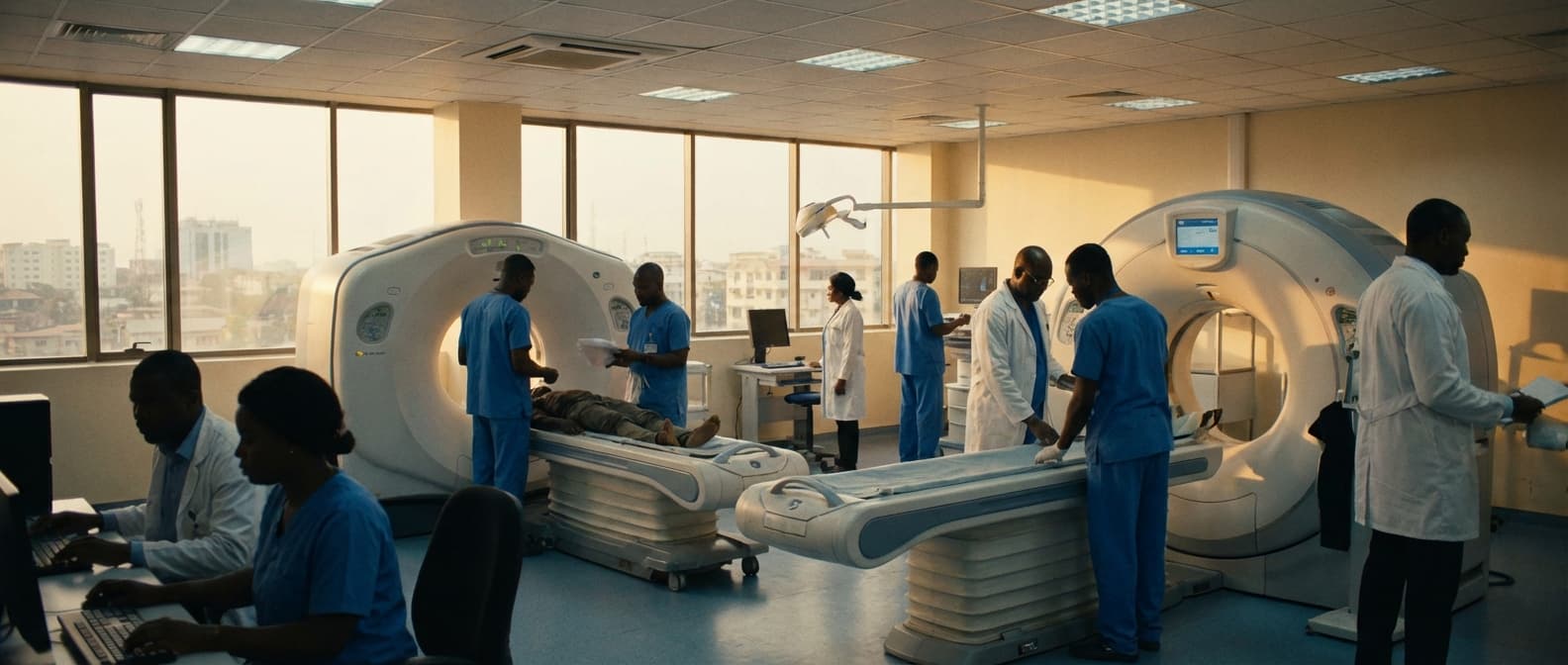
Imaging Acceptance Testing & QA in Sao Tome and Principe
Engineering Excellence & Technical Support
Commissioning and periodic QA for CT/MRI/X‑ray/US/Mammo. High-standard technical execution following OEM protocols and local regulatory frameworks.
Advanced Image Quality Assurance Framework
Implemented a robust, multi-layered image quality assurance framework, leveraging automated algorithms and expert human review, to ensure diagnostic accuracy and adherence to international imaging standards in Sao Tome and Principe. This framework includes rigorous testing of image resolution, contrast, noise levels, artifacts, and geometric accuracy for all imaging modalities.
PACS & DICOM Compliance Verification
Developed and executed comprehensive testing protocols to verify full compliance of Picture Archiving and Communication Systems (PACS) and Digital Imaging and Communications in Medicine (DICOM) standards. This ensures seamless image transfer, storage, retrieval, and interpretation across the healthcare network in Sao Tome and Principe, minimizing interoperability issues.
Performance & Workflow Optimization Testing
Conducted detailed performance testing of imaging equipment and workflows, identifying and rectifying bottlenecks to optimize patient throughput and reduce examination times. This included end-to-end testing from image acquisition to report generation, ensuring efficient and reliable imaging services for the population of Sao Tome and Principe.
What Is Imaging Acceptance Testing & Qa In Sao Tome And Principe?
Imaging Acceptance Testing & QA in Sao Tome and Principe refers to the rigorous validation process applied to medical imaging systems and their associated software before they are deployed or integrated into healthcare facilities. This process ensures that the imaging equipment, including modalities (e.g., X-ray, CT, MRI, Ultrasound) and Picture Archiving and Communication Systems (PACS), as well as their diagnostic viewers and reporting tools, function according to established technical specifications, regulatory requirements, and clinical workflows. The objective is to confirm that acquired images are of diagnostic quality, that data is accurately transmitted and stored, and that the overall system supports efficient and reliable patient care.
Who Needs It:
- Healthcare Institutions: Hospitals, clinics, diagnostic imaging centers, and specialized medical facilities in Sao Tome and Principe that are acquiring new imaging equipment or upgrading existing systems.
- Medical Device Manufacturers: Vendors and distributors of medical imaging hardware and software seeking to validate their products for the Sao Tome and Principe market, ensuring compliance with local healthcare standards and regulations.
- IT Departments: Healthcare IT departments responsible for the integration, maintenance, and performance of imaging systems within their network infrastructure.
- Radiology Departments: The primary end-users who rely on the quality and functionality of imaging systems for accurate diagnosis and patient management.
- Regulatory Bodies: While not directly consumers, regulatory bodies overseeing healthcare standards and medical device compliance benefit from robust acceptance testing to ensure public safety and healthcare quality.
Typical Use Cases:
- New Modality Installation: Verifying the performance, image quality, and integration of newly purchased X-ray, CT, MRI, or ultrasound machines with existing PACS and RIS (Radiology Information Systems).
- PACS/RIS Implementation/Upgrade: Ensuring seamless data flow, image archival, retrieval, and workflow automation for new or updated Picture Archiving and Communication Systems and Radiology Information Systems.
- Software Updates and Patches: Testing the impact of software upgrades on imaging system functionality, data integrity, and user interface before widespread deployment.
- Interoperability Testing: Validating the ability of imaging systems to exchange data and communicate effectively with other healthcare IT systems, such as Electronic Health Records (EHRs), in accordance with relevant interoperability standards (e.g., HL7, DICOM).
- Workflow Validation: Confirming that the imaging system supports the intended clinical workflows, from patient registration and scheduling to image acquisition, interpretation, reporting, and archiving.
- Image Quality Assessment: Performing objective and subjective evaluations of image resolution, contrast, noise, artifacts, and geometric accuracy across various imaging protocols.
- Regulatory Compliance Verification: Ensuring that the imaging system adheres to national and international standards for medical devices, data privacy (e.g., patient confidentiality), and radiation safety (if applicable).
| Testing Phase | Description | Key Deliverables |
|---|---|---|
| Pre-Acceptance Testing | Initial validation by the vendor or internal IT before delivery to the client. Includes basic functional checks and calibration. | Vendor Test Reports, Calibration Certificates |
| Site Acceptance Testing (SAT) | Performed at the client's site after installation. Focuses on system integration, basic functionality, and initial image acquisition. | SAT Report, Initial Image Quality Reports, Workflow Verification Logs |
| Operational Acceptance Testing (OAT) | Comprehensive testing to ensure the system operates reliably and efficiently within the live clinical environment, meeting all functional and performance requirements. | OAT Report, Performance Benchmarking, User Acceptance Sign-off |
| User Acceptance Testing (UAT) | End-users (radiologists, technologists) validate the system against their daily operational needs and clinical requirements. | UAT Sign-off, Feedback Documentation |
| Post-Implementation Review | Evaluation of the system's performance and impact several weeks or months after go-live. | Post-Implementation Review Report, KPI Analysis |
Key Aspects of Imaging Acceptance Testing & QA
- System Initialization and Configuration Validation
- DICOM Conformance Testing (Storage, Query/Retrieve, Modality Worklist, etc.)
- Image Quality Assurance (Signal-to-Noise Ratio, Contrast-to-Noise Ratio, Spatial Resolution, Artifact Analysis)
- Data Integrity and Security Checks
- Workflow Simulation and Performance Metrics
- User Interface and Usability Assessment
- Integration Testing with RIS/HIS/EHR Systems
- Backup and Disaster Recovery Testing
- Performance Load Testing
- Compliance with Local Healthcare Regulations and Standards
Who Needs Imaging Acceptance Testing & Qa In Sao Tome And Principe?
In Sao Tome and Principe, the need for rigorous Imaging Acceptance Testing & Quality Assurance (QA) is paramount for any organization that relies on the accurate and reliable capture, storage, retrieval, and processing of medical images. This ensures that imaging equipment and workflows function as intended, leading to improved patient care, efficient operations, and compliance with any relevant healthcare standards. Without proper testing and QA, institutions risk misdiagnoses, delayed treatments, data integrity issues, and potential financial repercussions.
| Customer/Department | Key Imaging Technologies Involved | Primary Needs for Acceptance Testing & QA | Potential Impact of Inadequate Testing |
|---|---|---|---|
| Hospitals & Clinics (Radiology Depts) | X-ray, CT, MRI, Ultrasound, Mammography, Fluoroscopy | Ensuring image quality, accuracy of diagnosis, equipment calibration, system integration, radiation safety compliance. | Misdiagnosis, delayed treatment, patient harm, equipment downtime, regulatory non-compliance. |
| Diagnostic Imaging Centers | CT, MRI, Ultrasound, X-ray (often specialized) | Optimizing workflow efficiency, image consistency across modalities, data management, compliance with accreditation (if applicable). | Reduced throughput, inconsistent image quality, patient dissatisfaction, operational inefficiencies. |
| Medical Imaging Equipment Vendors | All imaging modalities, PACS, RIS | Validating new installations, verifying software updates, ensuring performance benchmarks, troubleshooting issues before deployment. | Reputational damage, costly service calls, customer dissatisfaction, product recalls. |
| Government Health Ministries/Agencies | All imaging modalities, national health information systems | Setting and enforcing quality standards, ensuring patient safety across the nation, monitoring equipment performance in public facilities. | Widespread poor quality imaging, compromised public health data, inefficient resource allocation. |
| Research Institutions | Specialized MRI, PET, advanced CT/Ultrasound | Ensuring image reproducibility for research studies, data integrity for analysis, validation of novel imaging techniques. | Flawed research findings, wasted research resources, inability to publish results. |
Target Customers and Departments in Sao Tome and Principe Requiring Imaging Acceptance Testing & QA:
- Hospitals and Clinics: The primary users of diagnostic imaging equipment (X-ray, CT, MRI, Ultrasound, Mammography, etc.).
- Radiology Departments: The core unit responsible for acquiring, interpreting, and managing medical images.
- Diagnostic Imaging Centers: Specialized facilities focused solely on providing imaging services.
- Medical Imaging Equipment Vendors & Service Providers: Companies that sell, install, maintain, and repair imaging equipment.
- Government Health Ministries/Agencies: Overseeing the quality and standards of healthcare services, including imaging.
- Research Institutions: Conducting studies that heavily rely on high-quality imaging data.
- Private Healthcare Providers: Expanding their services to include advanced diagnostic imaging.
- Public Health Initiatives: Programs requiring imaging for screening and diagnosis across populations.
Imaging Acceptance Testing & Qa Process In Sao Tome And Principe
This document outlines the Imaging Acceptance Testing and Quality Assurance (QA) process in Sao Tome and Principe, detailing the workflow from initial inquiry through to the final execution and sign-off. This structured approach ensures that imaging solutions meet predefined standards and client expectations before full deployment.
| Stage | Description | Key Activities | Responsible Parties | Deliverables |
|---|---|---|---|---|
| Inquiry and Requirement Gathering | The initial phase where a client or stakeholder expresses a need for an imaging solution or has questions about an existing one. This involves understanding the specific requirements, objectives, and desired outcomes. | Receive and acknowledge inquiry, conduct initial consultations, define project scope, document functional and non-functional requirements, identify user stories and use cases, define acceptance criteria. | Client/Stakeholder, Business Analyst, Project Manager | Requirement Specification Document, Project Scope Document |
| Test Plan Development | Based on the gathered requirements, a comprehensive test plan is created. This document outlines the strategy, scope, resources, schedule, and objectives of the testing process. | Define testing types (functional, performance, security, usability, etc.), identify test scenarios and test cases, determine test data requirements, plan for test environment setup, define entry and exit criteria, risk assessment and mitigation planning. | QA Lead, Test Manager, Business Analyst | Test Plan Document, Test Strategy Document |
| Environment Setup and Configuration | The necessary hardware, software, and network infrastructure are prepared and configured to accurately simulate the production environment where the imaging solution will operate. | Procure and install hardware, deploy and configure imaging software, set up network connectivity, configure storage solutions, prepare test data and user accounts. | IT Operations, System Administrator, QA Engineer | Configured Test Environment, Test Data Sets |
| Test Execution | The actual process of running the defined test cases against the configured imaging solution to verify its functionality and performance against the specified requirements. | Execute test cases as per the test plan, record actual results, compare results with expected outcomes, identify deviations and potential defects. | QA Engineers, Testers | Executed Test Cases, Test Execution Logs |
| Defect Reporting and Tracking | When discrepancies are found between expected and actual results, defects are formally reported, tracked, and managed through their lifecycle. | Log defects with detailed steps to reproduce, severity, and priority, assign defects to development for resolution, track defect status (open, in progress, resolved, closed). | QA Engineers, Defect Manager, Development Team | Defect Reports, Defect Tracking System (e.g., JIRA, Bugzilla) |
| Re-testing and Regression Testing | After defects are resolved by the development team, the affected areas are re-tested to ensure the fixes are effective. Regression testing is performed to confirm that the fixes haven't introduced new issues in other parts of the system. | Perform re-testing of fixed defects, execute regression test suite, analyze regression results, report any new defects found. | QA Engineers | Re-tested Defects, Regression Test Results |
| Final Acceptance and Sign-off | Once the imaging solution has passed all critical tests and meets the agreed-upon acceptance criteria, it is formally accepted by the client or stakeholders. | Conduct user acceptance testing (UAT) if applicable, review all test results and defect reports, obtain formal sign-off from the client/stakeholder, confirm all acceptance criteria have been met. | Client/Stakeholder, Project Manager, QA Lead | Signed Acceptance Document, UAT Report (if applicable) |
| Documentation and Knowledge Transfer | Comprehensive documentation is created and provided to the client, along with training or knowledge transfer sessions, to ensure the effective use and maintenance of the imaging solution. | Finalize test documentation (reports, plans), create user manuals, operational guides, and support documentation, conduct training sessions, archive test artifacts. | QA Team, Technical Writer, Project Manager | Final Test Reports, User Manuals, Training Materials |
Key Stages in the Imaging Acceptance Testing & QA Process
- Inquiry and Requirement Gathering
- Test Plan Development
- Environment Setup and Configuration
- Test Execution
- Defect Reporting and Tracking
- Re-testing and Regression Testing
- Final Acceptance and Sign-off
- Documentation and Knowledge Transfer
Imaging Acceptance Testing & Qa Cost In Sao Tome And Principe
Imaging Acceptance Testing & Quality Assurance (QA) in São Tomé and Príncipe is a critical step to ensure that imaging devices, software, and associated workflows function as intended and meet predefined quality standards. The cost for these services can vary significantly based on several factors, making it essential to understand the pricing landscape. These services are vital for medical imaging departments, diagnostic centers, and any institution relying on accurate and reliable image acquisition and processing.
| Service Component | Estimated Price Range (STD) | Notes |
|---|---|---|
| Basic Imaging Equipment Acceptance Testing (e.g., X-ray, Ultrasound - Single Unit) | 500 - 1,500 STD | Covers essential functionality, basic image quality checks, and calibration. May not include extensive software integration. |
| Advanced Imaging Modality Acceptance Testing (e.g., CT, MRI - Single Unit) | 1,200 - 3,500+ STD | Involves more in-depth testing of complex hardware and software, advanced image quality assessments, and potentially phantom testing. |
| Comprehensive QA Program (Annual Contract per Modality) | 1,000 - 4,000+ STD per year | Includes scheduled periodic tests, performance monitoring, and documentation. Price depends on modality and frequency of checks. |
| PACS/RIS Integration & Validation Testing | 700 - 2,500+ STD | Focuses on data transfer, DICOM compliance, workflow integration, and user access. Cost varies with system complexity and number of interfaces. |
| Radiation Safety Testing (for X-ray based modalities) | 300 - 1,000 STD | Essential for modalities emitting ionizing radiation. Performed by certified professionals using specialized equipment. |
| Consultation & Reporting (per day) | 200 - 500 STD | For specialized advice, custom test plan development, or detailed report generation. Day rates for experienced QA engineers. |
Key Pricing Factors for Imaging Acceptance Testing & QA in São Tomé and Príncipe:
- Type and Complexity of Imaging Modality: The cost will differ greatly between testing a standard X-ray machine, a sophisticated MRI or CT scanner, or specialized ultrasound equipment. Advanced modalities with complex imaging chains and software require more extensive and specialized testing.
- Scope of Testing: A comprehensive QA program will involve more testing than a basic acceptance test. This includes evaluating image quality parameters (resolution, contrast, noise), system calibration, performance under various conditions, integration with PACS/RIS, radiation safety (if applicable), and user interface functionality.
- Testing Vendor/Provider: The reputation, experience, and operational costs of the testing vendor or internal QA team will influence pricing. Local providers may have different overheads compared to international consultants. Some vendors specialize in specific imaging modalities.
- Geographic Location within São Tomé and Príncipe: While São Tomé and Príncipe is a relatively small nation, logistical costs for on-site testing in more remote areas might slightly increase the overall price due to travel and accommodation expenses.
- Software Integration and Validation: Testing the integration of imaging equipment with Picture Archiving and Communication Systems (PACS), Radiology Information Systems (RIS), and other hospital information systems (HIS) adds complexity and thus cost. Validation of DICOM compliance and interoperability is crucial.
- Regulatory Requirements and Standards: Adherence to local and international imaging standards (e.g., IEC, ACR) will dictate the thoroughness of the testing. Compliance testing often requires specialized equipment and expertise.
- Duration and Frequency of Testing: Acceptance testing is typically a one-time event upon installation. However, ongoing QA may involve periodic testing at specified intervals (e.g., annually, semi-annually) which will contribute to the overall cost over time.
- Reporting and Documentation: The level of detail and format of the acceptance and QA reports required can affect the cost. Comprehensive documentation for regulatory purposes or internal audits will require more time.
- On-site vs. Remote Testing: While most acceptance testing requires on-site presence, some aspects of remote monitoring or preliminary software validation might be possible, potentially influencing cost, though on-site is standard for initial acceptance.
Affordable Imaging Acceptance Testing & Qa Options
Ensuring the quality and accuracy of medical imaging is paramount for patient care and diagnostic reliability. Acceptance Testing (AT) and Quality Assurance (QA) are critical processes to validate imaging equipment before it's used clinically and to maintain its performance over time. Fortunately, there are affordable options available for institutions of all sizes.
| Strategy | Description | Value Proposition | Cost-Saving Aspect |
|---|---|---|---|
| Value Bundles: | Integrated service packages offered by vendors or third-party providers that combine AT, routine QA, and sometimes preventative maintenance into a single agreement. | Provides comprehensive coverage for equipment performance and safety, often at a lower per-service cost than individual offerings. | Predictable budgeting, reduced administrative overhead for managing multiple contracts, potential discounts for volume. |
| Third-Party Service Providers: | Independent companies specializing in medical imaging equipment service, offering AT and QA services separate from equipment manufacturers. | Often more flexible and competitive pricing than OEM services. Expertise across multiple equipment brands and modalities. | Direct cost savings through competitive bidding, avoidance of OEM premium pricing, potential for multi-vendor contracts. |
| In-House QA Programs: | Developing internal expertise and resources to perform routine QA tests, potentially with external support for specialized AT or complex issues. | Greater control over the QA process and scheduling. Builds internal technical capability. | Reduced reliance on external vendors for routine tasks, phased investment in equipment and training, scalability. |
| Standardized Test Protocols: | Utilizing widely accepted and standardized QA phantoms and test procedures (e.g., ACR, AAPM guidelines). | Ensures consistency and comparability of results. Simplifies training and test execution. | Reduces the need for proprietary or custom test equipment, streamlines training, facilitates inter-institutional comparisons. |
| Remote Monitoring & Diagnostics: | Leveraging technology to remotely monitor equipment performance and perform basic diagnostic tests. | Enables early detection of issues, reducing downtime. Can preemptively identify problems before they impact clinical workflow. | Minimizes the need for on-site engineer visits for routine checks, reduces travel costs for service providers. |
| Leveraging Existing Equipment & Staff: | Maximizing the use of existing QA equipment and training existing biomedical engineering or radiology staff to perform certain tests. | Optimizes resource utilization. Enhances internal knowledge base. | Avoids redundant purchases of equipment, reduces external training costs, promotes cross-functional skill development. |
Key Components of Imaging Acceptance Testing & QA
- Acceptance Testing (AT): Performed upon installation of new imaging equipment to verify it meets specified performance standards.
- Routine QA: Regularly scheduled tests to ensure ongoing equipment functionality and image quality.
- Performance Evaluation: Assessing key imaging parameters like resolution, contrast, noise, and artifact detection.
- Safety Testing: Verifying compliance with radiation safety and electrical safety regulations.
- Software Verification: Ensuring the imaging system's software functions correctly and integrates with PACS/RIS.
- Documentation & Reporting: Maintaining detailed records of all tests, results, and any corrective actions taken.
Verified Providers In Sao Tome And Principe
Navigating healthcare services in any country can be challenging, and Sao Tome and Principe is no exception. Ensuring you are connected with verified providers is paramount for your health and well-being. Franance Health stands out as a leading credentialing body, meticulously vetting healthcare professionals and facilities to guarantee quality, safety, and ethical practice. Their rigorous verification process provides an invaluable layer of trust for patients seeking care in Sao Tome and Principe. Choosing a Franance Health-credentialed provider means opting for assurance, competence, and a commitment to the highest standards of medical service.
| Franance Health Verification Aspect | What it Ensures for Patients |
|---|---|
| Professional Licensing and Registration | Provider is legally authorized to practice medicine. |
| Educational and Training Qualifications | Provider possesses the necessary academic and specialized training. |
| Clinical Experience and Competence | Provider has a proven track record in their field. |
| Adherence to Ethical Standards | Provider operates with integrity and prioritizes patient well-being. |
| Facility Accreditations (if applicable) | Healthcare facilities meet essential safety and operational standards. |
Why Franance Health Credentials Matter:
- Trust and Reliability: Franance Health's verification process signifies that providers have met stringent criteria, offering peace of mind.
- Quality Assurance: Credentials confirm adherence to established standards of medical practice and patient care.
- Safety and Competence: Verified providers demonstrate the necessary skills, qualifications, and ethical conduct.
- Access to Excellence: Franance Health helps identify top-tier healthcare professionals and institutions.
- Reduced Risk: Partnering with credentialed providers minimizes the risk of receiving substandard care.
Scope Of Work For Imaging Acceptance Testing & Qa
This document outlines the Scope of Work (SOW) for Imaging Acceptance Testing and Quality Assurance (QA). It details the technical deliverables, standard specifications, and testing methodologies required to ensure the successful deployment and ongoing performance of the imaging system. The objective is to verify that the system meets all functional, performance, and security requirements as defined by the project specifications and industry best practices. This includes but is not limited to image acquisition, processing, storage, retrieval, and integration with existing healthcare IT infrastructure.
| Deliverable | Description | Acceptance Criteria | Standard Specification |
|---|---|---|---|
| Imaging System Test Plan | A detailed document outlining the strategy, scope, resources, and schedule for all testing activities. | Approved by project stakeholders; covers all identified testing phases (e.g., unit, integration, system, user acceptance). | ISO 29119, IEEE 829 |
| Test Cases | Specific step-by-step instructions for validating system functionalities, performance, and integration. | Traceable to requirements; clearly defined inputs, expected outputs, and pass/fail conditions. | IEEE 829 |
| Performance Test Results | Metrics and analysis of system performance under various load conditions. | Response times within defined SLAs; throughput meets projected patient volumes; system stability under peak load. | DICOM Part 14 (Grayscale Standard Display Function), HL7 |
| Image Quality Reports | Evaluation of image fidelity, artifact reduction, and diagnostic usability. | Images meet established visual and quantitative quality metrics; no degradation of diagnostic information. | ACR Appropriateness Criteria, RSNA standards |
| Integration Test Reports | Confirmation of successful data exchange and workflow continuity between the imaging system and connected IT systems. | Successful transmission and reception of DICOM objects, HL7 messages, and associated metadata; patient data consistency across systems. | DICOM standards, HL7 standards |
| Defect Log and Resolution Status | Comprehensive list of all identified defects, their severity, status, and resolution history. | All critical and high-severity defects resolved and re-tested; medium and low-severity defects documented and agreed upon for future resolution. | JIRA, Bugzilla or similar defect tracking tools |
| User Acceptance Testing (UAT) Report | Formal sign-off from end-users confirming that the system meets their operational needs. | End-user validation of all critical workflows; documented approval from key user representatives. | Project-specific UAT protocols |
| Final QA Report | Summary of all testing activities, findings, and recommendations for system deployment. | Consolidated view of all test results; confirmation of readiness for production deployment. | Internal QA standards |
Key Activities and Responsibilities
- Define and document comprehensive test plans for all imaging workflows.
- Develop and execute test cases based on functional requirements and use cases.
- Conduct performance testing to assess system responsiveness, throughput, and scalability.
- Perform security testing to ensure data integrity, confidentiality, and compliance with relevant regulations (e.g., HIPAA, GDPR).
- Validate image quality and diagnostic accuracy against established benchmarks.
- Test integration points with Picture Archiving and Communication Systems (PACS), Electronic Health Records (EHR), and other connected systems.
- Document all test results, including defects, their severity, and resolution status.
- Provide regular status reports to stakeholders.
- Collaborate with development and implementation teams for defect resolution and re-testing.
- Ensure adherence to established imaging standards (e.g., DICOM, HL7).
Service Level Agreement For Imaging Acceptance Testing & Qa
This Service Level Agreement (SLA) outlines the terms and conditions for Imaging Acceptance Testing and Quality Assurance (QA) services, focusing on guaranteed response times for critical issues and overall system uptime.
| Priority Level | Issue Description | Response Time Guarantee | Resolution Time Target |
|---|---|---|---|
| Critical (P1) | Complete system outage, inability to acquire or view images, significant patient safety risk. | 15 minutes (acknowledgement & initial assessment) | 4 hours (target for resolution or workaround) |
| High (P2) | Major system malfunction impacting a significant workflow, loss of data, significant performance degradation. | 1 hour (acknowledgement & initial assessment) | 8 business hours (target for resolution or workaround) |
| Medium (P3) | Minor system malfunction affecting a specific feature or a limited number of users, no immediate patient safety risk. | 4 business hours (acknowledgement & initial assessment) | 3 business days (target for resolution or workaround) |
| Low (P4) | Cosmetic issues, minor feature requests, documentation errors, questions. | 1 business day (acknowledgement & initial assessment) | 5 business days (target for resolution or workaround) |
Key Service Components
- Imaging Acceptance Testing: Comprehensive validation of new imaging systems and software before go-live.
- Quality Assurance (QA): Ongoing testing and validation to ensure the continuous optimal performance of imaging systems.
- Issue Prioritization: A defined system for categorizing and prioritizing reported issues.
- Response Time Guarantees: Commitment to acknowledge and begin addressing issues within specified timeframes.
- Uptime Guarantees: Assurance of system availability for imaging services.
Frequently Asked Questions

Ready when you are
Let's scope your Imaging Acceptance Testing & QA in Sao Tome and Principe project in Sao Tome and Principe.

Scaling healthcare logistics and technical systems across the entire continent.