
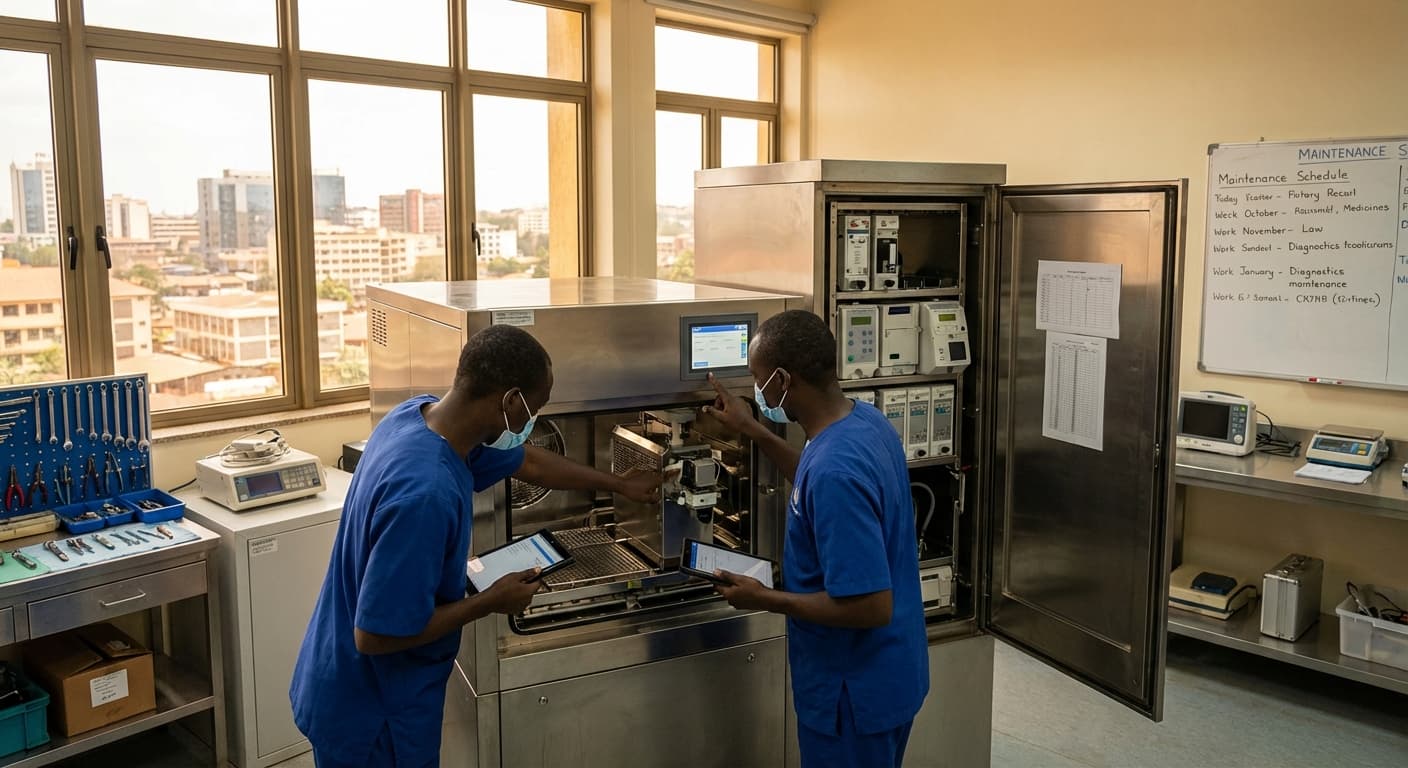
Total Cost of Ownership (TCO) & Lifecycle Budgeting Service in Sao Tome and Principe
Engineering Excellence & Technical Support
Total Cost of Ownership (TCO) & Lifecycle Budgeting Service High-standard technical execution following OEM protocols and local regulatory frameworks.
Optimized Asset Lifespan Costing
Our service leverages advanced analytics to precisely forecast and manage the Total Cost of Ownership (TCO) for your assets in Sao Tome and Principe, from acquisition through disposal. We identify critical wear points, predict maintenance needs, and factor in operational efficiencies to extend asset lifespan and significantly reduce long-term expenditure.
Predictive Budgeting for Lifecycle Events
We provide robust lifecycle budgeting that anticipates all future costs, including capital expenditures, operational expenses, and end-of-life decommissioning. Our models incorporate local market dynamics in Sao Tome and Principe, ensuring your budgets are accurate, resilient, and proactively address unforeseen expenses, minimizing financial surprises.
Performance-Driven Maintenance & Efficiency Integration
Our TCO and lifecycle budgeting service goes beyond mere cost tracking. We integrate performance data from your operations in Sao Tome and Principe to identify opportunities for efficiency gains and optimized maintenance strategies. This proactive approach minimizes downtime, reduces resource consumption, and ensures your assets deliver maximum value throughout their entire lifecycle.
What Is Total Cost Of Ownership (Tco) & Lifecycle Budgeting Service In Sao Tome And Principe?
Total Cost of Ownership (TCO) and Lifecycle Budgeting (LCB) services in São Tomé and Príncipe are strategic financial management methodologies applied to assets, projects, or entire systems over their complete lifespan. TCO quantifies all direct and indirect costs associated with acquiring, operating, maintaining, and ultimately disposing of an asset. Lifecycle Budgeting, conversely, translates these TCO principles into a structured budgetary framework, forecasting and allocating funds for all phases of an asset's existence, from initial planning to eventual decommissioning and disposal. This service is critical for organizations and government entities in São Tomé and Príncipe aiming for long-term financial predictability, optimized resource allocation, and the mitigation of unforeseen expenditures. It moves beyond initial capital outlay to encompass the full spectrum of financial implications.
| Who Needs TCO & LCB Services? | Typical Use Cases in São Tomé and Príncipe | |||
|---|---|---|---|---|
| Government Ministries and Agencies (e.g., Ministry of Finance, Ministry of Infrastructure, Ministry of Environment): For public infrastructure projects, fleet management, and capital asset acquisition. | Procurement and management of public transportation systems (buses, ferries). | Development and maintenance of public utilities (water, electricity, telecommunications infrastructure). | Acquisition and lifecycle management of government vehicles and IT equipment. | Environmental impact assessments for large-scale projects, including disposal costs. |
| Large Corporations and Parastatals (e.g., in Energy, Telecommunications, Agriculture, Tourism): For significant capital investments and operational efficiency improvements. | Evaluating the long-term cost-effectiveness of new power generation plants or grid upgrades. | Managing telecommunications network expansion and maintenance. | Optimizing the operational and maintenance budgets for agricultural machinery or processing facilities. | Assessing the financial viability of new hotel developments and their ongoing operational costs. |
| International Development Organizations and NGOs: For project planning, grant management, and sustainable development initiatives. | Budgeting for the entire lifecycle of infrastructure funded by development aid (e.g., schools, hospitals, roads). | Determining the long-term affordability of projects in sectors like healthcare and education. | Ensuring the sustainability of projects beyond the initial funding period. | |
| Financial Institutions and Investors: For risk assessment and investment appraisal. | Evaluating the financial risks and returns of projects involving significant asset acquisition. | Performing due diligence on potential investments in infrastructure or industrial assets. |
Key Components of TCO & Lifecycle Budgeting Services:
- Initial Acquisition Costs: Purchase price, installation, licensing, initial training, and setup.
- Operating Costs: Energy consumption, consumables, routine maintenance, personnel, and software subscriptions.
- Maintenance and Repair Costs: Scheduled preventative maintenance, unscheduled repairs, spare parts inventory, and third-party service contracts.
- Upgrade and Modification Costs: Costs associated with improvements, enhancements, or adaptations to meet evolving requirements.
- Downtime and Productivity Loss: Quantifying the financial impact of system or asset unavailability.
- Decommissioning and Disposal Costs: Costs related to asset removal, data sanitization, environmental remediation, and disposal fees.
- Financial Costs: Interest on loans, depreciation, and potential obsolescence.
- Risk Assessment and Contingency Planning: Identifying potential cost overruns and establishing contingency reserves.
Who Needs Total Cost Of Ownership (Tco) & Lifecycle Budgeting Service In Sao Tome And Principe?
Organizations and governmental bodies in Sao Tome and Principe seeking to optimize their financial planning, asset management, and strategic investment decisions will benefit significantly from Total Cost of Ownership (TCO) and Lifecycle Budgeting services. These services are crucial for understanding the true, long-term financial impact of acquiring, operating, maintaining, and ultimately disposing of assets, projects, or services. This goes beyond initial purchase price to encompass all associated costs over their entire lifespan, enabling more informed and sustainable financial strategies.
| Target Customer Segment | Key Departments Involved | Primary Needs & Benefits | Examples of Applications |
|---|---|---|---|
| Public Sector Organizations & Government Ministries | Ministry of Finance, Ministry of Public Works, Ministry of Planning, Procurement Departments, IT Departments | Ensuring long-term fiscal responsibility, optimizing public spending, preventing unexpected maintenance costs, supporting sustainable development initiatives, transparent resource allocation. | Infrastructure projects (roads, buildings, ports), public transportation fleets, IT systems for government agencies, energy infrastructure. |
| Large Enterprises & Corporations | Finance Department, Procurement Department, Operations Management, Asset Management, IT Department, Strategic Planning | Maximizing return on investment (ROI), reducing operational expenditures, informed capital expenditure decisions, competitive advantage through efficient resource utilization, accurate financial forecasting. | Fleet management, IT hardware and software acquisitions, manufacturing equipment, office building leases/purchases, energy-efficient upgrades. |
| Infrastructure Development Projects | Project Management Offices (PMOs), Engineering Departments, Finance & Accounting, Legal Departments, Operations & Maintenance Teams | Accurate project budgeting beyond initial construction, identifying long-term maintenance and operational costs, securing financing based on realistic projections, ensuring project viability over its intended lifespan. | Construction of new power plants, water treatment facilities, telecommunication networks, housing developments, transportation hubs. |
| Utilities & Service Providers | Operations & Maintenance, Finance Department, Asset Management, Planning & Engineering, Procurement | Optimizing service delivery costs, planning for asset replacement and upgrades, managing regulatory compliance costs, ensuring long-term service sustainability and affordability. | Water and sanitation networks, electricity grids, telecommunications infrastructure, waste management services. |
| Financial Institutions & Investment Funds | Investment Analysis, Risk Management, Portfolio Management, Due Diligence Teams | Accurate valuation of assets for investment purposes, identifying potential long-term liabilities of investee companies, supporting sound investment decisions, assessing the financial sustainability of projects. | Evaluating investments in infrastructure, real estate, technology companies, or any asset with a significant operational lifecycle. |
| Non-Governmental Organizations (NGOs) & Development Agencies | Program Management, Finance Department, Operations, Procurement, Monitoring & Evaluation (M&E) | Ensuring the long-term sustainability of programs and projects, maximizing the impact of donor funding, transparent financial reporting, responsible use of limited resources. | Implementing community development projects, health initiatives, educational programs with long-term asset needs, agricultural development projects. |
Who Needs TCO & Lifecycle Budgeting Services in Sao Tome and Principe?
- Public Sector Organizations & Government Ministries
- Large Enterprises & Corporations
- Infrastructure Development Projects
- Utilities & Service Providers
- Financial Institutions & Investment Funds
- Non-Governmental Organizations (NGOs) & Development Agencies
Total Cost Of Ownership (Tco) & Lifecycle Budgeting Service Process In Sao Tome And Principe
This document outlines the typical workflow for providing Total Cost of Ownership (TCO) and Lifecycle Budgeting services in Sao Tome and Principe, from initial inquiry to the final execution and reporting of results. The process is designed to be comprehensive, ensuring clients receive accurate and actionable insights for their asset and project management decisions.
| Phase | Activities | Key Deliverables | Responsible Parties | Duration (Typical) |
|---|---|---|---|---|
| Client contacts service provider to discuss TCO/Lifecycle Budgeting needs. Understanding of project/asset context, objectives, and initial concerns. Preliminary discussion of service applicability. | Understanding of client needs, preliminary assessment of project scope, agreement to proceed with proposal. | Client, Service Provider Consultant | 1-3 Days |
| Detailed discussion to define specific assets/projects, scope of analysis (e.g., time horizon, inclusions/exclusions), required data types, and key decision points. Development of a formal service proposal outlining methodology, deliverables, timeline, and fees. | Signed Service Proposal detailing project scope, methodology, deliverables, timeline, and cost. | Service Provider Consultant, Client | 3-7 Days |
| Gathering of all relevant data: initial acquisition costs, operational expenses (maintenance, energy, labor), repair/replacement costs, disposal costs, residual values, inflation rates, discount rates, performance data, etc. Data validation and verification. | Cleaned and validated dataset, preliminary data insights. | Service Provider Analyst, Client (Data Provision) | 1-4 Weeks (depending on data complexity and availability) |
| Application of TCO and lifecycle costing methodologies. Development of financial models incorporating all identified cost components over the specified lifecycle. Calculation of various cost metrics (e.g., initial cost, operating cost, total lifecycle cost, NPV, IRR). | Detailed TCO model, lifecycle cost breakdown, key cost drivers identified. | Service Provider Analyst/Modeler | 1-3 Weeks |
| Exploring different operational, economic, and technological scenarios. Performing sensitivity analysis to understand the impact of key variables (e.g., fuel prices, maintenance costs, project lifespan) on overall TCO. Identification of critical risk factors. | Scenario analysis results, sensitivity charts, risk assessment report. | Service Provider Analyst/Modeler | 3-7 Days |
| Compilation of findings into a comprehensive report. Presentation of TCO and lifecycle costs, scenario outcomes, and sensitivity analysis. Development of strategic recommendations for cost optimization, investment decisions, and risk mitigation. | Final TCO & Lifecycle Budgeting Report with executive summary, detailed analysis, and actionable recommendations. | Service Provider Consultant/Analyst, Client | 1-2 Weeks |
| Assistance in implementing recommended strategies. Development of budgeting frameworks, training client teams on TCO principles, and setting up ongoing monitoring mechanisms. | Implementation plan, training materials, monitoring framework. | Service Provider Consultant, Client | Variable (as per agreement) |
| Formal handover of all deliverables. Post-project review to gather feedback on the process and outcomes. Ensuring client satisfaction and identifying potential future engagements. | Project closure confirmation, client feedback, lessons learned. | Service Provider Consultant, Client | 1-2 Days |
Total Cost of Ownership (TCO) & Lifecycle Budgeting Service Process (Sao Tome and Principe)
- Inquiry & Initial Consultation
- Scope Definition & Proposal Development
- Data Collection & Analysis
- TCO & Lifecycle Cost Modeling
- Scenario Planning & Sensitivity Analysis
- Reporting & Recommendations
- Implementation Support & Monitoring (Optional)
- Project Closure & Review
Total Cost Of Ownership (Tco) & Lifecycle Budgeting Service Cost In Sao Tome And Principe
Calculating the Total Cost of Ownership (TCO) and Lifecycle Budgeting for services in Sao Tome and Principe involves a nuanced approach, considering various economic, logistical, and operational factors unique to the island nation. Unlike more developed economies with readily available data, pricing in Sao Tome and Principe can be highly variable and influenced by import costs, local labor rates, infrastructure limitations, and currency fluctuations (the local currency is the Dobra, but the Euro is widely used as a de facto standard and often for pricing). When assessing TCO, it's crucial to look beyond the initial purchase or subscription price and account for ongoing expenses such as maintenance, energy consumption, support, training, disposal, and potential downtime costs. Lifecycle budgeting requires projecting these costs over the entire lifespan of the service or asset.
| Service/Asset Type | Estimated Initial Cost Range (EUR) | Estimated Annual Operating Cost Range (% of Initial Cost) | Notes |
|---|---|---|---|
| Basic IT Infrastructure (e.g., Office PCs, Printers) | €500 - €1,500 per unit | 10% - 25% | Includes import duties, basic setup. Operating costs cover power, consumables, and minor repairs. Higher end for more robust machines. |
| Server Hardware (On-Premise) | €3,000 - €15,000+ | 15% - 30% | Highly dependent on specifications. Operating costs include power, cooling, maintenance contracts, and potential replacement parts. Consider power stability. |
| Cloud Services (e.g., SaaS, IaaS - Monthly Subscription) | €50 - €500+ per month | N/A (ongoing operational cost) | Pricing is per user/resource and scales with usage. Factors include data transfer, storage, and support tiers. Potential for currency hedging is important. |
| Telecommunications (Internet & Voice - Monthly) | €100 - €500+ per month | N/A (ongoing operational cost) | Varies by bandwidth, provider, and service level. Reliability and speed are key considerations. |
| Software Licenses (Perpetual + Annual Support) | €1,000 - €10,000+ (initial license) | 15% - 25% (annual support) | Initial cost can be high. Annual support covers updates and basic technical assistance. Subscription models might be more predictable. |
| Machinery/Equipment (Industrial/Specialized) | €10,000 - €100,000+ | 10% - 40% | Extremely variable. Operating costs include energy, specialized maintenance, spare parts (often imported), and operator training. |
Key Pricing Factors for TCO & Lifecycle Budgeting in Sao Tome and Principe
- Import Duties and Taxes: Significant levies on imported goods and services, impacting initial acquisition costs.
- Logistics and Shipping: High costs associated with transporting goods and equipment to an island nation, including freight, insurance, and customs clearance.
- Local Labor Costs: While generally lower than in developed countries, skilled labor can command higher rates due to scarcity and demand.
- Infrastructure Reliability: Costs associated with ensuring reliable power, internet connectivity, and physical security, especially in areas with less developed infrastructure.
- Currency Exchange Rates: Fluctuations between the Dobra (STD) and the Euro (EUR) can impact the cost of imported components and services priced in foreign currency. Many businesses operate with EUR as their primary financial reference.
- Maintenance and Support Availability: The cost of securing reliable local or remote maintenance and support, which may involve travel expenses for technicians.
- Software Licensing Models: Subscription-based vs. perpetual licenses, and the cost of ongoing updates and support.
- Energy Consumption: The cost of electricity, which can be a significant operational expense, particularly for energy-intensive services.
- Training and Skill Development: Costs associated with training local staff to manage and operate the service or asset.
- Disposal and End-of-Life Costs: Fees for responsible disposal or recycling of equipment, which can be more complex and costly on an island.
- Local Market Competition: The level of competition for specific services can influence pricing, though specialized services may have fewer providers.
Affordable Total Cost Of Ownership (Tco) & Lifecycle Budgeting Service Options
Our Affordable Total Cost of Ownership (TCO) & Lifecycle Budgeting Service Options are designed to provide businesses with comprehensive financial planning and cost optimization throughout the entire lifecycle of their assets and projects. We understand that upfront costs are only a fraction of the true expense. Our services focus on identifying and mitigating hidden costs, maximizing asset longevity, and ensuring predictable budgeting for predictable outcomes. We offer flexible value bundles to suit various business needs and budgets, coupled with expert-driven cost-saving strategies.
| Value Bundle | Description | Key Cost-Saving Strategies Included | Ideal For |
|---|---|---|---|
| Essential TCO Insights | Covers core TCO components for key assets, focusing on operational and maintenance costs. | Standardized data collection, benchmark analysis, basic maintenance optimization, supplier negotiation. | Small to medium-sized businesses, projects with defined lifecycles, initial cost assessments. |
| Integrated Lifecycle Budgeting | Expands on Essential TCO with detailed lifecycle budgeting, including capital expenditure planning and disposal forecasting. | Scenario planning, predictive maintenance scheduling, energy efficiency audits, renewal/replacement strategies, end-of-life cost analysis. | Growing businesses, organizations with complex asset portfolios, long-term project planning. |
| Strategic Asset Optimization | The most comprehensive bundle, integrating TCO and lifecycle budgeting with strategic recommendations for asset performance, innovation, and risk management. | Total asset lifecycle management, technology refresh planning, vendor relationship management, service level agreement (SLA) optimization, sustainability cost analysis, risk-adjusted budgeting. | Large enterprises, organizations undergoing digital transformation, businesses with critical infrastructure, high-value asset management. |
| Customized Solutions | Tailored service packages designed to address specific industry needs, unique asset types, or specialized project requirements. | Bespoke data modeling, industry-specific cost drivers, specialized risk assessments, custom reporting frameworks. | All business sizes and industries with unique or complex requirements. |
Key Features & Benefits
- Comprehensive TCO Analysis: Go beyond initial purchase price to include acquisition, operation, maintenance, support, and disposal costs.
- Lifecycle Budgeting: Develop realistic and actionable budgets covering the entire lifespan of assets and projects.
- Risk Mitigation: Proactively identify and address potential cost overruns and unforeseen expenses.
- Informed Decision-Making: Provide data-driven insights to support strategic procurement and investment decisions.
- Performance Optimization: Recommend strategies to enhance asset performance and reduce operational expenditures.
- Extended Asset Lifespan: Implement best practices for maintenance and support to maximize useful life.
- Predictable Financial Planning: Achieve greater financial certainty and control over long-term expenses.
Verified Providers In Sao Tome And Principe
Navigating healthcare in a foreign country can be challenging. For those seeking high-quality medical services in Sao Tome and Principe, identifying verified providers is paramount. Franance Health stands out as a leading entity, offering a robust network of accredited and vetted medical professionals and facilities. Their rigorous credentialing process ensures that all associated providers meet stringent international standards for patient care, safety, and ethical practice. This commitment to quality makes Franance Health the premier choice for individuals and families requiring reliable and exceptional healthcare services on the islands. By prioritizing transparency and excellence, Franance Health empowers patients with the confidence to receive the best possible medical attention.
| Service Category | Franance Health Advantage | Why it Matters for Patients |
|---|---|---|
| General Practice | Access to licensed and experienced general practitioners. | Ensures accurate initial diagnoses and effective primary care. |
| Specialist Consultations | Connection with a wide range of medical specialists (e.g., cardiology, dermatology, pediatrics). | Provides expert medical advice and treatment for specific health concerns. |
| Surgical Procedures | Services at accredited surgical facilities with qualified surgeons. | Guarantees safe and effective surgical interventions. |
| Diagnostic Services | Availability of advanced imaging and laboratory services through verified centers. | Facilitates precise diagnosis and monitoring of health conditions. |
| Emergency Care | Partnerships with facilities equipped to handle medical emergencies. | Ensures prompt and critical care when needed most. |
Key Advantages of Choosing Franance Health Verified Providers:
- Strict Credentialing Process: Ensuring all providers meet international quality and safety standards.
- Access to Top Medical Professionals: Connecting patients with highly skilled and experienced doctors and specialists.
- Comprehensive Network of Facilities: Including accredited hospitals, clinics, and diagnostic centers.
- Patient-Centric Approach: Prioritizing comfort, safety, and effective treatment for all patients.
- Trust and Reliability: Offering peace of mind through verified and reputable healthcare services.
Scope Of Work For Total Cost Of Ownership (Tco) & Lifecycle Budgeting Service
This document outlines the Scope of Work (SOW) for a Total Cost of Ownership (TCO) and Lifecycle Budgeting Service. The service aims to provide a comprehensive financial analysis of an asset, system, or project over its entire lifespan, from acquisition through disposal. This includes identifying, quantifying, and forecasting all direct and indirect costs associated with the entity. The goal is to enable informed decision-making, optimize resource allocation, and manage financial risks effectively.
| Phase | Key Activities | Technical Deliverables | Standard Specifications / Considerations |
|---|---|---|---|
| Phase 1: Planning & Data Gathering | Define scope and boundaries of the TCO analysis. Identify key stakeholders and their requirements. Establish data collection methodologies and sources. Gather historical cost data and operational information. | TCO & Lifecycle Budgeting Project Plan Stakeholder Requirements Document Data Collection Plan Initial Data Inventory | Clear definition of the asset/system/project lifecycle stages. Identification of all relevant cost categories (e.g., CAPEX, OPEX, disposal). Data privacy and security protocols established. Data validation and cleansing procedures defined. |
| Phase 2: Cost Identification & Quantification | Identify direct and indirect costs across all lifecycle stages. Quantify initial acquisition/implementation costs. Estimate operational and maintenance costs. Forecast costs related to upgrades, repairs, and replacements. Determine end-of-life disposal or decommissioning costs. | Cost Breakdown Structure (CBS) Initial TCO Model Risk Register (initial identification) | Consistency in cost categorization across all inputs. Use of reliable historical data and industry benchmarks where available. Consideration of inflation, currency fluctuations, and market trends. Documentation of assumptions made during quantification. |
| Phase 3: Financial Modeling & Analysis | Develop a dynamic financial model incorporating identified costs. Incorporate discount rates for Net Present Value (NPV) calculations. Perform sensitivity analysis and scenario planning. Calculate key financial metrics (e.g., NPV, IRR, Payback Period). Analyze cost drivers and their impact. | Detailed TCO Financial Model (e.g., Excel, specialized software) Sensitivity Analysis Report Scenario Planning Outcomes Key Financial Metrics Summary | Model should be transparent, auditable, and user-friendly. Appropriate discount rates and assumptions for NPV calculations. Scenarios should represent plausible best-case, worst-case, and most-likely outcomes. Assumptions for sensitivity analysis clearly documented. |
| Phase 4: Budget Development & Reporting | Translate TCO analysis into a comprehensive lifecycle budget. Develop budget proposals and recommendations. Prepare final TCO and lifecycle budget reports. Present findings and recommendations to stakeholders. | Lifecycle Budget Document Executive Summary Report Detailed TCO & Lifecycle Budget Report Presentation Materials | Budget should align with organizational financial policies and procedures. Recommendations should be actionable and prioritized. Reporting format should be clear, concise, and tailored to the audience. Data visualization techniques used to enhance understanding. |
| Phase 5: Monitoring & Review (Optional, depending on service scope) | Establish a framework for ongoing cost tracking and monitoring. Regularly review actual costs against the lifecycle budget. Identify deviations and implement corrective actions. Update TCO model based on actual performance and changing conditions. | Cost Monitoring Framework Performance Review Reports Updated TCO Model | Clear KPIs for cost performance. Defined frequency for reviews and updates. Process for change management and budget adjustments. |
Key Objectives of TCO & Lifecycle Budgeting Service
- Establish a baseline understanding of all cost components.
- Develop a robust financial model for projecting future expenditures.
- Identify cost-saving opportunities and potential efficiencies.
- Quantify risks and uncertainties impacting the budget.
- Support strategic investment and procurement decisions.
- Enhance long-term financial planning and control.
- Provide a framework for performance monitoring and evaluation against budget.
Service Level Agreement For Total Cost Of Ownership (Tco) & Lifecycle Budgeting Service
This Service Level Agreement (SLA) outlines the guaranteed response times and uptime for the Total Cost of Ownership (TCO) & Lifecycle Budgeting Service. It is designed to ensure consistent and reliable service delivery, enabling our clients to effectively manage their IT investments and long-term financial planning.
| Service Component | Uptime Guarantee | Response Time (Critical Issue) | Response Time (High Priority Issue) | Response Time (Normal Priority Issue) |
|---|---|---|---|---|
| TCO Calculation Engine & Reporting | 99.9% Monthly | 1 hour | 4 business hours | 8 business hours |
| Lifecycle Budgeting Tool | 99.9% Monthly | 1 hour | 4 business hours | 8 business hours |
| Data Integration & Synchronization | 99.5% Monthly | 2 hours | 8 business hours | 24 business hours |
| User Support & Technical Assistance | N/A (response time based) | 4 business hours | 8 business hours | 16 business hours |
| System Maintenance & Updates | N/A (scheduled) | N/A | N/A | Scheduled maintenance windows will be communicated at least 7 days in advance. Uptime during scheduled maintenance is not guaranteed. |
Service Components Covered
- TCO Calculation Engine & Reporting
- Lifecycle Budgeting Tool
- Data Integration & Synchronization
- User Support & Technical Assistance
- System Maintenance & Updates
Frequently Asked Questions

Ready when you are
Let's scope your Total Cost of Ownership (TCO) & Lifecycle Budgeting Service in Sao Tome and Principe project in Sao Tome and Principe.

Scaling healthcare logistics and technical systems across the entire continent.