
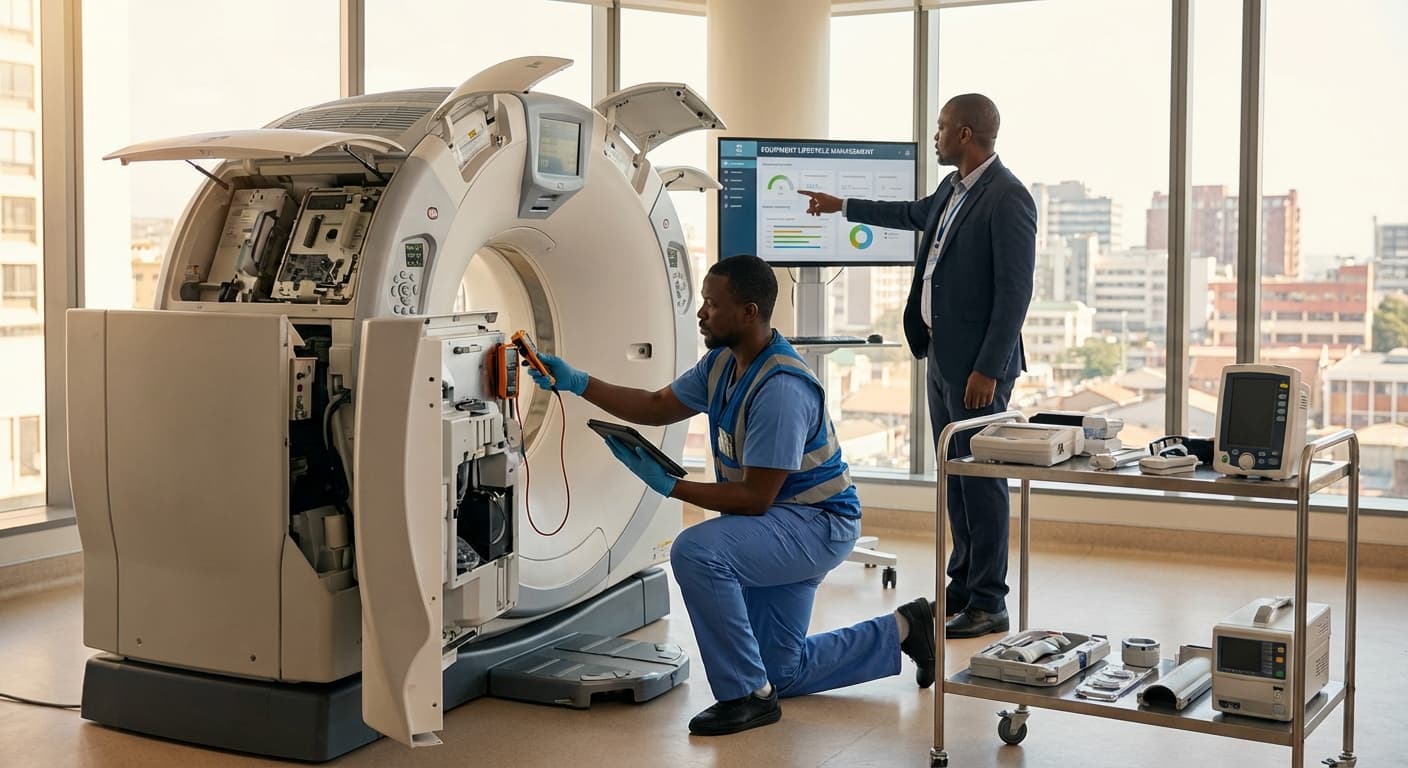
Equipment Replacement Planning & Obsolescence Strategy Service in Sao Tome and Principe
Engineering Excellence & Technical Support
Equipment Replacement Planning & Obsolescence Strategy Service High-standard technical execution following OEM protocols and local regulatory frameworks.
Proactive Obsolescence Forecasting
Leveraging advanced analytics and global market intelligence to predict component and equipment obsolescence timelines for key industries in Sao Tome and Principe. This ensures timely replacement planning, mitigating risks of operational disruptions and cost overruns.
Strategic Sourcing & Vendor Partnerships
Establishing robust relationships with international and local suppliers to secure access to critical spares and identify viable replacement equipment options. Our service navigates complex logistics and trade regulations specific to Sao Tome and Principe to ensure cost-effective procurement.
Lifecycle Management & Decommissioning
Developing comprehensive strategies for the entire lifecycle of critical assets, from initial acquisition to safe and compliant decommissioning and disposal. This includes optimizing maintenance schedules, planning for phased upgrades, and ensuring adherence to environmental standards within Sao Tome and Principe.
What Is Equipment Replacement Planning & Obsolescence Strategy Service In Sao Tome And Principe?
Equipment Replacement Planning and Obsolescence Strategy Service in Sao Tome and Principe refers to a specialized consulting offering focused on developing and implementing proactive plans for the systematic retirement, replacement, and lifecycle management of physical assets, with a particular emphasis on mitigating the risks and impacts associated with technological and functional obsolescence. This service aids organizations in making informed decisions regarding asset disposition, capital expenditure, and technological upgrades to maintain operational efficiency, competitive advantage, and regulatory compliance within the specific economic and industrial landscape of Sao Tome and Principe.
| Need For Service | Typical Use Cases |
|---|---|
| Organizations operating critical infrastructure (e.g., power generation, water treatment, telecommunications) in Sao Tome and Principe where asset failure can have significant economic and social consequences. | Developing a long-term capital investment roadmap for a national utility company to replace aging power generation turbines and transmission equipment to ensure energy security. |
| Manufacturing and industrial enterprises seeking to maintain or enhance production efficiency and product quality by upgrading outdated machinery and automation systems. | A food processing plant in Sao Tome and Principe needs to replace its obsolete packaging machinery to meet international quality standards and increase production throughput. |
| Companies in sectors heavily influenced by technological advancements (e.g., ICT, healthcare) that require regular updates to remain competitive and compliant. | A healthcare provider in Sao Tome and Principe requires a plan to replace its outdated diagnostic imaging equipment with newer, more accurate technologies to improve patient care and attract medical tourism. |
| Public sector entities and government agencies responsible for managing a diverse portfolio of public assets and ensuring their reliable service delivery. | The Ministry of Transport in Sao Tome and Principe needs to plan for the replacement of its aging fleet of public transport buses and municipal vehicles. |
| Organizations facing challenges with spare parts availability, maintenance costs, and skilled labor for legacy equipment. | A mining operation in Sao Tome and Principe is experiencing increasing downtime due to the unavailability of spare parts for its decade-old excavation equipment, necessitating a replacement strategy. |
| Businesses seeking to minimize operational risks associated with equipment failure, safety hazards, and environmental non-compliance. | A tourism resort in Sao Tome and Principe needs to assess and plan the replacement of its aging HVAC and water heating systems to ensure guest comfort and prevent potential safety issues. |
Key Components of the Service
- Asset Inventory and Assessment: Comprehensive cataloging of all existing equipment, including acquisition dates, specifications, condition, and operational history.
- Obsolescence Identification and Analysis: Evaluating equipment against technological advancements, performance degradation, and availability of spare parts and support.
- Risk Assessment: Quantifying the potential impact of equipment failure, obsolescence, and non-compliance on operational continuity, safety, and financial performance.
- Replacement Strategy Development: Formulating a phased approach to equipment replacement, considering financial constraints, technological roadmaps, and operational priorities.
- Lifecycle Cost Analysis: Evaluating the total cost of ownership, including acquisition, operation, maintenance, and disposal, for both existing and potential replacement assets.
- Technology Scouting and Forecasting: Monitoring emerging technologies and industry trends relevant to the organization's sector within the Sao Tome and Principe context.
- Disposal and Decommissioning Planning: Establishing environmentally sound and cost-effective strategies for the removal and disposal of retired equipment.
- Implementation Support and Monitoring: Assisting in the execution of the replacement plan and establishing mechanisms for ongoing monitoring and adjustment.
Who Needs Equipment Replacement Planning & Obsolescence Strategy Service In Sao Tome And Principe?
Equipment replacement planning and obsolescence strategy services are crucial for organizations in Sao Tome and Principe to ensure operational continuity, mitigate financial risks, and maintain a competitive edge. These services help businesses proactively manage the lifecycle of their assets, preventing unexpected breakdowns, costly emergency replacements, and the integration challenges associated with outdated or unsupported technology. By anticipating and planning for equipment obsolescence, companies can optimize their capital expenditure, reduce downtime, and improve overall efficiency in the unique economic and logistical landscape of Sao Tome and Principe.
| Industry/Sector | Typical Equipment Requiring Planning | Key Obsolescence Concerns |
|---|---|---|
| Oil and Gas | Drilling rigs, pumps, turbines, control systems, subsea equipment | Safety regulations, technological advancements, availability of specialized parts and expertise, environmental compliance |
| Telecommunications | Network infrastructure (switches, routers, base stations), transmission equipment, data centers | Rapid technological evolution (e.g., 5G rollout), cybersecurity vulnerabilities, software updates and support expiration |
| Agriculture | Tractors, harvesters, processing machinery, irrigation systems | Wear and tear, difficulty in sourcing spare parts for older models, efficiency improvements with newer technologies |
| Tourism and Hospitality | HVAC systems, kitchen equipment, IT infrastructure, generators | Guest experience impact from breakdowns, energy efficiency of older units, reliability for continuous operation |
| Fishing and Aquaculture | Vessels, engines, fishing gear, processing equipment, water quality monitoring systems | Corrosion, engine reliability, availability of marine-grade spare parts, efficiency of processing machinery |
| Infrastructure Development | Construction machinery, heavy lifting equipment, utility infrastructure (e.g., power transformers, water pumps) | High usage and wear, safety standards, integration with new systems, cost of replacement vs. upgrade |
| Government and Public Services | Fleet vehicles, IT equipment, office machinery, specialized operational equipment (e.g., emergency services) | Budget constraints, long procurement cycles, availability of maintenance services, security of IT systems |
Target Customers & Departments in Sao Tome and Principe
- {"items":["Oil and Gas (Exploration and Production, Refining)","Telecommunications","Agriculture (Cocoa, Coffee, Palm Oil)","Tourism and Hospitality","Fishing and Aquaculture","Infrastructure Development (Ports, Roads, Utilities)","Government and Public Services"],"title":"Key Industries"}
- {"items":["Large enterprises with significant capital investments in machinery and technology.","Companies operating in sectors with rapid technological advancements or stringent regulatory requirements.","Organizations with a focus on long-term asset management and operational efficiency.","Businesses facing increasing challenges with spare parts availability or maintenance support for aging equipment.","Entities seeking to modernize their infrastructure and improve sustainability."],"title":"Target Customer Profiles"}
- {"items":["Operations/Production Management: Responsible for day-to-day operations and ensuring equipment reliability.","Maintenance & Engineering: Oversees equipment upkeep, repairs, and the technical aspects of replacement.","Finance & Procurement: Manages capital budgets, procurement processes, and financial planning for asset lifecycle.","IT/Technology Management: For technology-specific equipment and software obsolescence.","Asset Management: Dedicated teams focused on optimizing the value and performance of company assets.","Risk Management: Identifies and mitigates risks associated with equipment failure and obsolescence.","Strategic Planning: Integrates long-term asset strategies with overall business objectives."],"title":"Key Departments & Stakeholders"}
Equipment Replacement Planning & Obsolescence Strategy Service Process In Sao Tome And Principe
This document outlines the typical workflow for our Equipment Replacement Planning & Obsolescence Strategy Service in Sao Tome and Principe, guiding clients from initial inquiry to the successful execution of the strategy.
| Phase | Key Activities | Deliverables/Outcomes |
|---|---|---|
| Inquiry & Assessment | Initial consultation, needs definition, scope discussion | Understanding of client requirements, service scope confirmation |
| Proposal & Agreement | Proposal development, negotiation, contract signing | Formal service agreement, defined project parameters |
| Data Collection | Asset inventory, site visits, information gathering | Comprehensive equipment asset register |
| Risk Assessment | Obsolescence risk analysis, categorization | Identified high-risk assets, obsolescence risk profile |
| Strategy Development | Replacement forecasting, vendor identification, budget planning | Proactive replacement plan, recommended strategies |
| Review & Approval | Presentation of draft strategy, feedback incorporation, final approval | Approved Equipment Replacement Plan & Obsolescence Strategy |
| Implementation Support | Procurement assistance, installation coordination, decommissioning | New equipment operational, obsolete equipment managed |
| Monitoring & Refinement | Performance tracking, plan updates, ongoing reviews | Optimized asset lifecycle, continuous improvement |
| Closure & Post-Service | Final reporting, project close-out, ongoing support | Effective asset management framework, long-term partnership |
Service Workflow
- 1. Initial Inquiry & Needs Assessment:
- Client expresses interest in equipment replacement planning and obsolescence management.
- Initial consultation to understand the client's current situation, objectives, key equipment assets, and any specific pain points related to aging or obsolete equipment.
- Discussion of service scope, desired outcomes, and preliminary budget considerations.
- Introduction to the service offering and its benefits within the Sao Tome and Principe operational context.
- 2. Proposal Development & Agreement:
- Based on the needs assessment, a detailed proposal is prepared, outlining:
- Specific services to be provided (e.g., asset inventory, risk assessment, replacement forecasting, vendor identification, budget planning).- Methodology and tools to be employed.- Project timeline and key milestones.- Deliverables and reporting structure.- Service fees and payment terms.- Proposal review and negotiation with the client.
- Formal agreement (contract) signing to initiate the service.
- 3. Data Collection & Asset Inventory:
- Collaborative effort to gather comprehensive data on existing equipment.
- This includes (but is not limited to):
- Asset identification (make, model, serial number).- Purchase dates and original cost.- Maintenance history and costs.- Performance data and operational status.- Warranty information.- Location and user information.- Site visits and interviews with operational staff may be conducted.
- 4. Obsolescence Risk Assessment & Analysis:
- Evaluation of each asset's risk of becoming obsolete.
- Factors considered include:
- Age of the equipment.- Availability of spare parts and technical support.- Manufacturer's end-of-life announcements.- Technological advancements and industry standards.- Regulatory compliance requirements.- Impact on operational continuity and safety.- Categorization of assets based on obsolescence risk level.
- 5. Replacement Planning & Strategy Development:
- Development of a proactive replacement plan based on the risk assessment and client objectives.
- This involves:
- Prioritizing equipment for replacement.- Forecasting optimal replacement timelines.- Identifying suitable replacement technologies and vendors, considering local availability and support in Sao Tome and Principe.- Developing preliminary budget estimates for replacement cycles.- Exploring alternative strategies (e.g., refurbishment, extended support contracts).- 6. Strategy Review & Approval:
- Presentation of the draft equipment replacement plan and obsolescence strategy to the client.
- Detailed discussion of findings, recommendations, and financial implications.
- Incorporation of client feedback and adjustments to the strategy.
- Formal client approval of the final strategy and associated budget.
- 7. Implementation Support & Execution Oversight:
- Assistance with the procurement process for new equipment (e.g., RFI/RFP development, vendor selection).
- Coordination of installation and commissioning activities.
- Support for the decommissioning and disposal of obsolete equipment, adhering to local regulations.
- Facilitation of staff training on new equipment.
- Ongoing monitoring of the implemented strategy and performance.
- 8. Ongoing Monitoring & Strategy Refinement:
- Regular reviews of the equipment lifecycle and obsolescence status.
- Periodic updates to the replacement plan based on operational changes, market trends, and technological advancements.
- Performance reporting and analysis of cost savings and operational improvements.
- Continuous refinement of the obsolescence strategy to ensure long-term asset management effectiveness.
- 9. Project Closure & Post-Service Support:
- Formal project closure upon completion of the initial implementation phase.
- Final reporting and documentation.
- Availability of post-service support for ongoing consultation and strategy adjustments.
- Building a long-term partnership for continuous asset management excellence.
Equipment Replacement Planning & Obsolescence Strategy Service Cost In Sao Tome And Principe
Planning for equipment replacement and managing obsolescence is crucial for businesses in Sao Tome and Principe to ensure operational efficiency, avoid costly breakdowns, and maintain a competitive edge. The cost of these specialized services in Sao Tome and Principe is influenced by a variety of factors, making it difficult to provide a single fixed price. These services typically involve assessing current equipment lifecycles, forecasting future needs, identifying potential obsolescence risks, developing replacement strategies, and potentially sourcing new equipment.
Key Pricing Factors:
- Scope of the Project: A comprehensive assessment covering all company assets will naturally cost more than a focused review of a specific critical piece of machinery. The number of assets, their complexity, and the depth of analysis required are primary drivers.
- Complexity of Equipment: Evaluating and strategizing for highly specialized or custom-built equipment is more complex and therefore more expensive than for standard off-the-shelf items.
- Data Availability and Quality: The ease with which service providers can access reliable data on equipment performance, maintenance history, and original specifications will impact cost. If extensive data gathering or audits are required, costs will increase.
- Consultant Expertise and Experience: Highly experienced consultants with a proven track record in asset management and obsolescence strategies command higher fees.
- Service Provider Reputation and Size: Larger, well-established consulting firms may have higher overheads and therefore higher rates compared to smaller, local providers.
- Timeline and Urgency: Rush projects or accelerated timelines often incur premium charges.
- Geographic Location within Sao Tome and Principe: While Sao Tome and Principe is relatively small, travel and logistical costs for on-site assessments might differ slightly between the capital city and more remote areas, though this is usually a minor factor.
- Market Demand: The current demand for such specialized services within Sao Tome and Principe can influence pricing. If demand is high and supply of skilled providers is limited, costs may rise.
- Technology Utilized: The use of advanced asset management software or simulation tools by the service provider can add value but might also contribute to the overall cost.
Estimated Cost Ranges (in local currency - Dobra, STD):
Given the nascent stage of specialized consulting services in some sectors in Sao Tome and Principe, it's important to note that pricing can be less standardized than in more mature markets. Prices are often negotiated on a project-by-project basis. However, based on the factors above, the following ranges are approximate. These figures represent consulting fees and do not include the cost of actual equipment procurement or disposal.
- Basic Assessment & Report (Limited Scope): For smaller businesses or a review of a few key assets, this could involve a desktop analysis and a basic report on current status and immediate obsolescence risks.
* **Range:** 200,000 STD - 750,000 STD
- Standard Equipment Replacement Planning & Obsolescence Strategy: This would involve a more in-depth analysis of a significant portion of a company's assets, including data gathering, lifecycle forecasting, and a documented strategy with recommendations.
* **Range:** 750,000 STD - 2,500,000 STD
- Comprehensive Asset Management & Obsolescence Strategy (Large Scale/Complex Assets): For large enterprises with extensive and complex equipment portfolios, this service would encompass detailed lifecycle management, risk assessment, financial planning for replacements, and strategic recommendations for phasing out obsolete equipment.
* **Range:** 2,500,000 STD - 10,000,000+ STD (or a percentage of asset value for very large projects)
Important Considerations:
- Negotiation: Always be prepared to negotiate pricing with service providers. Clearly define the deliverables and scope of work.
- Local vs. International Providers: While international firms might offer a higher level of specialized expertise, local or regional consultants may offer more competitive pricing and a better understanding of the local business environment.
- Request for Proposals (RFPs): For significant projects, issuing an RFP to multiple qualified providers is the best way to obtain accurate and comparable quotes.
- Value Proposition: Focus on the long-term value and return on investment that these services can provide, rather than solely on the initial cost.
| Service Level | Approximate Cost Range (STD) |
|---|---|
| Basic Assessment & Report (Limited Scope) | 200,000 - 750,000 |
| Standard Equipment Replacement Planning & Obsolescence Strategy | 750,000 - 2,500,000 |
| Comprehensive Asset Management & Obsolescence Strategy (Large Scale/Complex Assets) | 2,500,000 - 10,000,000+ |
Factors Influencing Equipment Replacement Planning & Obsolescence Strategy Service Costs
- Scope of the Project
- Complexity of Equipment
- Data Availability and Quality
- Consultant Expertise and Experience
- Service Provider Reputation and Size
- Timeline and Urgency
- Geographic Location within Sao Tome and Principe
- Market Demand
- Technology Utilized
Affordable Equipment Replacement Planning & Obsolescence Strategy Service Options
Our Affordable Equipment Replacement Planning & Obsolescence Strategy Service offers a comprehensive approach to managing your asset lifecycle, ensuring you avoid costly disruptions and reactive expenditures. We provide structured planning and proactive strategies to identify and mitigate obsolescence risks. Our value bundles are designed to cater to various organizational needs and budgets, providing tailored solutions that deliver significant cost savings and operational efficiencies. By understanding your current asset landscape and future requirements, we help you make informed decisions, optimize capital allocation, and extend the useful life of your critical equipment where feasible, ultimately reducing your total cost of ownership.
| Value Bundle Name | Core Offerings | Target Audience | Estimated Cost Savings Potential | Key Benefits |
|---|---|---|---|---|
| Essential Plan | Basic obsolescence tracking, annual review of critical assets, identification of immediate replacement needs. | Small to medium-sized businesses (SMBs) with limited asset management resources. | 5-10% on reactive repairs and emergency purchases. | Reduces immediate financial shocks, provides basic foresight. |
| Growth Plan | Comprehensive asset inventory, multi-year replacement roadmap, basic cost-benefit analysis, supplier engagement guidance. | Growing businesses needing structured asset management and budget predictability. | 10-15% on planned replacements and operational downtime. | Improves budget accuracy, optimizes procurement, minimizes unplanned downtime. |
| Enterprise Plan | Full lifecycle asset management, advanced obsolescence forecasting, detailed ROI analysis, strategic sourcing, risk assessment and mitigation, integration with ERP systems. | Large enterprises with complex operations and significant capital investment in equipment. | 15-25% on capital expenditure, operational efficiencies, and risk reduction. | Maximizes ROI on asset investments, ensures business continuity, strategic competitive advantage. |
| Custom Solutions | Tailored to specific industry needs, regulatory requirements, or unique asset portfolios. | Organizations with specialized asset management challenges. | Variable, based on scope and complexity. | Highly specific and impactful cost reductions and risk management. |
Key Service Features and Value Proposition
- Proactive Obsolescence Identification: Early detection of end-of-life, end-of-support, and end-of-manufacture dates.
- Strategic Replacement Planning: Development of multi-year capital expenditure plans for equipment renewal.
- Cost-Benefit Analysis: Evaluation of repair vs. replace scenarios to maximize ROI.
- Supplier Negotiation Support: Leveraging planned purchases for better pricing and terms.
- Risk Mitigation Strategies: Implementing contingency plans for critical equipment dependencies.
- Inventory Optimization: Reducing excess or outdated spare parts inventory.
- Extended Asset Lifespan Solutions: Exploring refurbishment, upgrade, or alternative sourcing options.
- Compliance and Security Assurance: Ensuring equipment meets current and future regulatory and cybersecurity standards.
- Customizable Service Packages: Flexible options to fit diverse operational and financial requirements.
Verified Providers In Sao Tome And Principe
Navigating the healthcare landscape in any foreign country can be a daunting task. For those seeking medical services in Sao Tome and Principe, identifying trustworthy and highly qualified healthcare providers is paramount. Franance Health stands out as a beacon of reliability, offering a curated network of verified medical professionals and facilities. Our rigorous credentialing process ensures that every provider within our network meets the highest international standards for expertise, ethics, and patient care. This dedication to quality control is what positions Franance Health as the premier choice for accessing healthcare in Sao Tome and Principe, providing peace of mind and ensuring you receive the best possible medical attention.
| Credential Type | Verification Standard | Franance Health Assurance |
|---|---|---|
| Medical Licenses & Certifications | Official governmental and professional body validation | Verified against recognized national and international standards. |
| Professional Experience | Documented years of practice and specialization | Cross-referenced with reputable institutions and peer reviews. |
| Ethical Conduct & Compliance | Adherence to medical ethics codes and regulatory frameworks | Background checks and ongoing monitoring for best practices. |
| Continuing Medical Education (CME) | Mandatory participation in ongoing training and skill development | Confirmation of active engagement in advanced medical education. |
Why Franance Health is Your Best Choice for Verified Providers in Sao Tome and Principe
- Uncompromising Credentialing Process: We meticulously vet each provider, verifying licenses, certifications, experience, and adherence to ethical guidelines. This ensures you are connected with genuine experts.
- Focus on Patient Well-being: Our network is built on a foundation of compassionate and patient-centered care. We prioritize providers who demonstrate empathy and a commitment to individual health outcomes.
- Access to Specialized Care: Franance Health facilitates access to a diverse range of medical specialties, ensuring that your specific health needs are met by the most appropriate professionals.
- Seamless Healthcare Navigation: We simplify the process of finding and engaging with healthcare providers, offering guidance and support throughout your medical journey in Sao Tome and Principe.
- Trust and Transparency: Our commitment to transparency means you can have confidence in the qualifications and ethical standing of every provider recommended by Franance Health.
Scope Of Work For Equipment Replacement Planning & Obsolescence Strategy Service
This document outlines the Scope of Work (SOW) for a consulting service focused on Equipment Replacement Planning and Obsolescence Strategy. The objective is to develop a robust framework for proactive equipment lifecycle management, ensuring operational continuity, cost optimization, and mitigation of risks associated with obsolete equipment. This service will provide the client with a clear roadmap for identifying, prioritizing, and executing equipment replacements, alongside a comprehensive strategy for managing the obsolescence of existing assets.
| Technical Deliverable | Description | Standard Specification / Format | |
|---|---|---|---|
| Equipment Inventory Database & Analysis Report | A comprehensive, digitized inventory of all critical equipment, including age, condition, maintenance history, and operational criticality. Analysis will highlight key trends and potential risks. | Microsoft Excel or similar spreadsheet software (CSV, XLSX). Detailed equipment attribute fields including Manufacturer, Model, Serial Number, Installation Date, Last Major Overhaul, Maintenance Cost (YTD), Failure Rate (last 3 years), Expected Lifespan, criticality rating (e.g., High, Medium, Low), Vendor Support Status. | |
| Equipment Replacement Prioritization Matrix | A matrix that ranks equipment for replacement based on pre-defined criteria (e.g., failure risk, cost of ownership, obsolescence, regulatory compliance, strategic importance). | Microsoft Excel or similar spreadsheet software (XLSX). Columns for Equipment ID, Equipment Name, Risk Score, Cost of Ownership Score, Obsolescence Score, Strategic Importance Score, Total Priority Score, Recommended Action (Replace/Refurbish/Monitor), Justification. | Visual representation (e.g., scatter plot) of equipment based on key prioritization factors. |
| Obsolescence Risk Assessment Report | Identification of equipment at risk of obsolescence due to end-of-life support, lack of spare parts, or outdated technology. Includes mitigation strategies. | Microsoft Word or PDF document. Sections for Executive Summary, Methodology, Risk Identification (categorized by type: technical, commercial, regulatory), Impact Assessment, Mitigation Options (e.g., end-of-life support extensions, alternative suppliers, strategic replacements), Recommended Actions, Timeline. | Heat map or risk matrix illustrating obsolescence risk levels. |
| Cost-Benefit Analysis (CBA) Reports (per prioritized item/group) | Detailed financial analysis comparing the cost of replacement against the benefits (e.g., reduced downtime, improved efficiency, lower maintenance costs, avoidance of obsolescence penalties). | Microsoft Excel or similar spreadsheet software (XLSX) with clear financial modeling. Includes 'As-Is' costs (maintenance, downtime), 'To-Be' costs (new equipment, installation, training), quantified benefits, Net Present Value (NPV), Internal Rate of Return (IRR), Payback Period. Summary in Microsoft Word or PDF. | Standardized template for CBA allowing for consistent comparison. |
| Strategic Equipment Replacement Roadmap | A phased plan outlining recommended equipment replacements over a specified period (e.g., 3-5 years), including budget estimates, resource requirements, and dependencies. | Microsoft Project or similar project management software (MPP) or a detailed Gantt chart in Microsoft Excel/PowerPoint. Includes phases, key milestones, dependencies, estimated costs per phase, key stakeholders. Accompanying Microsoft Word or PDF document summarizing the roadmap, assumptions, and critical success factors. | Visual Gantt chart representation with clear project timelines and dependencies. |
| Maintenance & Support Strategy Recommendations for Aging Equipment | Guidelines for extending the life of existing equipment where replacement is not immediately feasible, focusing on optimized maintenance and sourcing strategies. | Microsoft Word or PDF document. Recommendations on proactive maintenance schedules, critical spare parts management, vendor engagement strategies, re-manufacturing/refurbishment options, and internal/external technical support models. | Checklist of best practices for managing aging assets. |
| Equipment Management KPI Dashboard & Report | Definition and setup of key performance indicators to track the effectiveness of the replacement strategy and overall equipment health. | Microsoft Excel dashboard or integration with client's existing Business Intelligence (BI) tool. KPIs may include: Mean Time Between Failures (MTBF), Mean Time To Repair (MTTR), Equipment Uptime Percentage, Total Cost of Ownership (TCO) per asset class, Percentage of Obsolete Assets, Replacement Cycle Adherence. Report in Microsoft Word or PDF. | Visualizations (charts, graphs) for key metrics. |
| Training Materials & Session Reports | Documentation and presentations for training client personnel on the implemented strategies, tools, and processes. | Microsoft PowerPoint presentations, user guides (Microsoft Word/PDF), training session attendance records, and feedback forms. | Standardized training module templates. |
Key Service Components
- Current State Assessment of Equipment Inventory
- Development of Equipment Replacement Prioritization Criteria
- Obsolescence Risk Assessment and Mitigation Strategies
- Cost-Benefit Analysis for Replacement Options
- Development of a Strategic Equipment Replacement Roadmap
- Recommendations for Maintenance and Support Strategies for Aging Equipment
- Establishment of Key Performance Indicators (KPIs) for Equipment Management
- Training and Knowledge Transfer to Client Personnel
Service Level Agreement For Equipment Replacement Planning & Obsolescence Strategy Service
This Service Level Agreement (SLA) outlines the guaranteed response times and uptime for the Equipment Replacement Planning & Obsolescence Strategy Service. It aims to ensure proactive management of IT assets, minimizing disruption and maximizing operational efficiency through timely support and reliable service delivery.
| Service Component | Response Time Guarantee (Business Hours) | Uptime Guarantee (Platform Availability) |
|---|---|---|
| Initial response to critical issues (e.g., major data loss risk due to obsolescence) | 1 Business Hour | N/A (Issue resolution is prioritized) |
| Initial response to high-priority issues (e.g., impending EOL impacting core operations) | 2 Business Hours | N/A (Issue resolution is prioritized) |
| Initial response to medium-priority issues (e.g., standard EOL notification requiring planning) | 4 Business Hours | N/A (Issue resolution is prioritized) |
| Initial response to low-priority issues (e.g., general inquiry, informational request) | 8 Business Hours | N/A (Issue resolution is prioritized) |
| Availability of the core Equipment Replacement Planning & Obsolescence Strategy platform (e.g., data portal, reporting tools) | N/A | 99.5% |
| Delivery of scheduled monthly/quarterly obsolescence reports | Within 2 Business Days of scheduled delivery date | N/A (Deliverable commitment) |
| Availability for scheduled consultation/strategy sessions | N/A | 100% for pre-scheduled appointments |
Key Service Components
- Proactive identification of End-of-Life (EOL) and End-of-Support (EOS) for IT equipment.
- Development and maintenance of an IT equipment inventory and lifecycle management system.
- Recommendations for equipment refresh and replacement cycles.
- Strategy development for managing technology obsolescence and emerging technology adoption.
- Consultation and support for procurement processes related to equipment replacement.
- Regular reporting on equipment status, risks, and planned replacements.
Frequently Asked Questions

Ready when you are
Let's scope your Equipment Replacement Planning & Obsolescence Strategy Service in Sao Tome and Principe project in Sao Tome and Principe.

Scaling healthcare logistics and technical systems across the entire continent.