
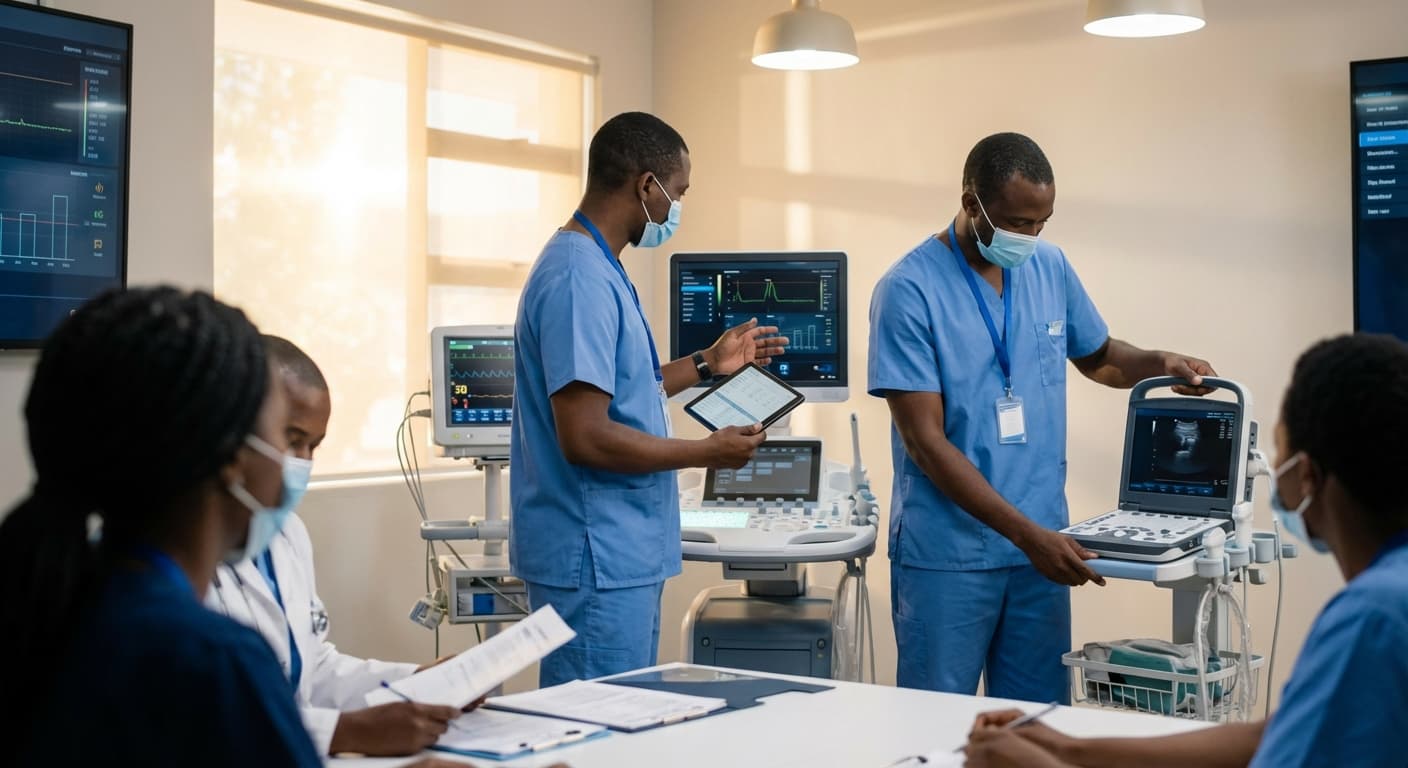
Clinical Needs Assessment for Medical Equipment in Sao Tome and Principe
Engineering Excellence & Technical Support
Clinical Needs Assessment for Medical Equipment High-standard technical execution following OEM protocols and local regulatory frameworks.
Comprehensive Needs Identification & Prioritization
Leveraging a multi-stakeholder approach, including healthcare professionals, administrators, and Ministry of Health representatives, to conduct thorough clinical needs assessments for medical equipment. This process prioritizes essential equipment based on disease burden, existing infrastructure, and projected healthcare demands, ensuring targeted and impactful resource allocation.
Infrastructure & Capacity Building Integration
Integrating medical equipment needs assessment with an evaluation of existing healthcare infrastructure, human resource capacity, and maintenance capabilities. This holistic approach ensures that procured equipment is not only clinically appropriate but also sustainable, with adequate training and support structures in place for effective long-term utilization.
Cost-Effectiveness & Sustainability Modeling
Implementing robust cost-effectiveness analysis and total cost of ownership modeling for recommended medical equipment. This includes evaluating initial purchase price, operational costs, maintenance, spare parts, and training, to ensure long-term financial sustainability and maximize the return on investment for the healthcare system in Sao Tome and Principe.
What Is Clinical Needs Assessment For Medical Equipment In Sao Tome And Principe?
A Clinical Needs Assessment (CNA) for Medical Equipment in Sao Tome and Principe is a systematic process to identify, quantify, and prioritize the medical equipment required to deliver safe, effective, and accessible healthcare services within the nation's health infrastructure. This assessment examines the current state of healthcare provision, analyzes existing equipment inventories, identifies gaps in capabilities, and determines the specific equipment necessary to meet the evolving health needs of the population. It encompasses the evaluation of existing infrastructure, human resource capacity, technological appropriateness, and sustainability considerations, all within the socio-economic and epidemiological context of Sao Tome and Principe.
| Who Needs It? | Typical Use Cases | ||||
|---|---|---|---|---|---|
| Ministry of Health (Ministério da Saúde) of Sao Tome and Principe: For national health sector planning, budget allocation, and strategic procurement of medical equipment. | Public Healthcare Facilities (Hospitals, Health Centers, Clinics): To identify specific equipment deficits and inform their individual procurement plans. | Non-Governmental Organizations (NGOs) and International Aid Organizations: To guide their support and investment in the healthcare sector, ensuring alignment with national priorities. | Healthcare Providers and Clinicians: To advocate for necessary equipment that improves diagnostic and therapeutic capabilities. | Medical Equipment Manufacturers and Suppliers: To understand the specific market demands and tailor their product offerings. | Funding Agencies and Development Partners: To assess the viability and impact of proposed investments in medical equipment. |
| Establishing new healthcare facilities or expanding existing ones: To ensure appropriate equipment is procured from the outset. | Upgrading existing medical technology: To replace outdated or obsolete equipment with more advanced and efficient solutions. | Responding to emerging public health challenges (e.g., pandemics, endemic diseases): To identify and procure essential equipment for diagnosis, treatment, and surveillance. | Improving the quality of care in specific medical specialties: To address deficiencies in equipment for areas such as diagnostics (radiology, laboratory), surgery, anesthesia, and critical care. | Developing national or regional healthcare strategies: To inform the long-term vision for medical equipment availability and utilization. | Facilitating evidence-based procurement decisions: To ensure resources are allocated efficiently to equipment that provides the greatest health benefit. |
Key Components of a Clinical Needs Assessment for Medical Equipment:
- Data Collection and Analysis: Gathering comprehensive data on disease prevalence, demographic trends, existing healthcare facilities (hospitals, clinics, health posts), current medical equipment status (inventory, condition, utilization, maintenance), and workforce expertise.
- Gap Identification: Comparing the current equipment inventory and capabilities against established healthcare standards, treatment protocols, and the projected health needs of the population.
- Prioritization of Needs: Ranking identified equipment requirements based on factors such as impact on patient outcomes, public health significance, cost-effectiveness, feasibility of integration, and alignment with national health priorities.
- Equipment Specification Development: Defining detailed technical specifications, quantities, and types of medical equipment required, including considerations for maintenance, training, and consumables.
- Infrastructure Assessment: Evaluating the suitability of existing facilities to house, power, and operate the proposed medical equipment.
- Human Resource Evaluation: Assessing the availability of trained personnel for operation, maintenance, and repair of the identified equipment.
- Sustainability Planning: Incorporating considerations for long-term funding, maintenance, spare parts availability, and end-of-life management of the equipment.
- Recommendations and Reporting: Generating a comprehensive report detailing findings, prioritized equipment lists, budget estimates, and strategic recommendations for procurement, deployment, and utilization.
Who Needs Clinical Needs Assessment For Medical Equipment In Sao Tome And Principe?
A comprehensive clinical needs assessment for medical equipment is crucial for optimizing healthcare delivery in Sao Tome and Principe. This assessment identifies the specific equipment required by healthcare facilities to effectively diagnose, treat, and manage patient conditions, thereby improving patient outcomes and resource allocation. It ensures that investments in medical technology are aligned with the actual clinical demands, preventing the acquisition of underutilized or inappropriate equipment and ensuring the availability of essential tools for healthcare professionals.
| Healthcare Facility Type | Key Departments/Units Requiring Assessment | Rationale for Needs Assessment |
|---|---|---|
| Public Hospitals | All departments (e.g., Surgery, Internal Medicine, Pediatrics, Radiology, ICU, Emergency) | Ensuring equitable access to essential and advanced medical equipment for the majority of the population, aligning with national health priorities and capacity building. |
| Health Centers | General practice, minor procedures, basic diagnostics (e.g., vital signs monitoring, basic laboratory tests) | Determining the most appropriate and cost-effective equipment for primary healthcare services, crucial for early detection and management of common illnesses in remote areas. |
| Private Clinics and Hospitals | Specialized departments (e.g., Cardiology, Ophthalmology, Dentistry, Dermatology, Diagnostics) | Identifying niche equipment needs to provide specialized services, enhance patient comfort, and maintain competitiveness, while also potentially serving a segment of the population with higher purchasing power. |
| Diagnostic Laboratories | Hematology, Chemistry, Microbiology, Pathology | Ensuring the availability of accurate and efficient diagnostic tools to support clinical decision-making across all healthcare levels. |
| NGOs with Healthcare Programs | Maternal and child health, infectious disease control, mobile clinics | Tailoring equipment procurement to specific project goals and target populations, often in underserved or remote regions. |
| Ministry of Health (MoH) | Planning, procurement, and policy departments | Informing national health strategies, budget allocation, and ensuring standardization and quality control of medical equipment across the country. |
Target Customers and Departments for Clinical Needs Assessment
- Public Healthcare Facilities
- Private Healthcare Facilities
- Non-Governmental Organizations (NGOs) with Healthcare Programs
- Ministry of Health (MoH)
- Hospitals (General and Specialized)
- Health Centers (Primary and Secondary Care)
- Clinics
- Diagnostic Laboratories
- Surgical Departments
- Internal Medicine Departments
- Pediatric Departments
- Obstetrics and Gynecology Departments
- Emergency Departments
- Radiology and Imaging Departments
- Anesthesiology Departments
- Intensive Care Units (ICUs)
- Rehabilitation Centers
Clinical Needs Assessment For Medical Equipment Process In Sao Tome And Principe
This document outlines the workflow for conducting a Clinical Needs Assessment for Medical Equipment in Sao Tome and Principe, from the initial inquiry to the final execution. This process is crucial for ensuring that healthcare facilities acquire appropriate and essential medical equipment, aligning with national health priorities and resource availability.
| Stage | Key Activities | Responsible Parties | Output |
|---|---|---|---|
| Receiving formal request, defining purpose | Ministry of Health, Healthcare Institutions, Donors | Mandate to conduct assessment |
| Defining scope, objectives, methodology, timeline, budget | Assessment Team, Ministry of Health | Detailed assessment plan |
| Developing questionnaires, interview guides, site visit protocols | Assessment Team | Data collection tools |
| Meetings, workshops with MoH, clinicians, managers | Assessment Team, Stakeholders | Stakeholder input and buy-in |
| Surveys, interviews, site visits, data review | Assessment Team, Healthcare Staff | Raw assessment data |
| Identifying needs, prioritizing gaps, assessing feasibility | Assessment Team | Analyzed data, preliminary findings |
| Compiling findings, recommendations, prioritized list | Assessment Team | Draft needs assessment report |
| Presenting draft report, incorporating feedback | Assessment Team, Key Stakeholders | Validated needs assessment report |
| Finalizing prioritized equipment list, developing procurement strategy | Ministry of Health, Procurement Department | Prioritized equipment list, procurement roadmap |
| Procurement, installation, training, maintenance planning | Ministry of Health, Procurement, Healthcare Facilities | Acquired and operational medical equipment |
Workflow Stages and Key Activities
- {"title":"1. Initial Inquiry and Mandate","description":"The process begins with a formal request or mandate to conduct a needs assessment. This can originate from the Ministry of Health (MoH), international partners, or specific healthcare institutions seeking to upgrade or expand their equipment inventory."}
- {"title":"2. Scoping and Planning","description":"Defining the scope of the assessment is critical. This involves identifying the specific regions, healthcare facilities (hospitals, health centers), and types of medical equipment to be covered. A detailed plan, including objectives, methodology, timelines, budget, and team composition, is developed."}
- {"title":"3. Data Collection Methodology Design","description":"A robust methodology for data collection is established. This typically includes surveys, interviews with healthcare professionals (doctors, nurses, technicians), site visits to assess existing infrastructure and equipment, and review of patient data and health statistics."}
- {"title":"4. Stakeholder Consultation","description":"Engaging with all relevant stakeholders is vital. This includes the MoH, healthcare facility managers, clinicians, biomedical engineers, procurement officers, and representatives from potential funding agencies or donors."}
- {"title":"5. Data Collection","description":"The planned data collection activities are executed. This involves distributing questionnaires, conducting interviews, performing site inspections, and gathering information on current equipment inventory, maintenance status, user needs, and unmet clinical demands."}
- {"title":"6. Data Analysis","description":"Collected data is systematically analyzed to identify gaps in essential medical equipment, prioritize needs based on clinical impact and frequency of use, and assess the technical and operational feasibility of acquiring new equipment."}
- {"title":"7. Report Generation","description":"A comprehensive report is compiled, detailing the findings of the assessment, including a prioritized list of required medical equipment, justification for each item, estimated costs, and recommendations for procurement, training, and maintenance."}
- {"title":"8. Validation and Review","description":"The draft report is presented to key stakeholders for review and validation. This ensures accuracy, consensus, and alignment with national health strategies before finalization."}
- {"title":"9. Prioritization and Planning for Procurement","description":"Based on the validated assessment, a definitive list of prioritized medical equipment is established. This forms the basis for future procurement plans, budget allocations, and funding proposals."}
- {"title":"10. Implementation and Monitoring","description":"The procurement of identified medical equipment is initiated. This stage also involves planning for installation, user training, and the establishment of robust maintenance and service frameworks to ensure the long-term functionality of the acquired equipment."}
Clinical Needs Assessment For Medical Equipment Cost In Sao Tome And Principe
This clinical needs assessment focuses on understanding the pricing of essential medical equipment in Sao Tome and Principe. Accurate cost data is crucial for healthcare planning, budgeting, and ensuring equitable access to quality medical services. The pricing of medical equipment is influenced by a complex interplay of global and local factors, leading to significant price variations. Understanding these drivers is essential for effective procurement and resource allocation within the nation's healthcare system.
| Equipment Category | Estimated Price Range (Local Currency - STN) | Notes |
|---|---|---|
| Basic Diagnostic Tools (e.g., Stethoscope, Blood Pressure Monitor, Thermometer) | 500 - 3,000 STN | Prices vary significantly based on brand quality and features. Manual BP monitors are generally cheaper than digital ones. |
| Laboratory Equipment (e.g., Microscope, Centrifuge, Basic Hematology Analyzer) | 50,000 - 500,000 STN | Entry-level manual microscopes are at the lower end. Automated analyzers are considerably more expensive. Import duties and calibration costs are significant. |
| Imaging Equipment (e.g., Portable Ultrasound Machine, Basic X-ray Unit) | 300,000 - 2,000,000 STN | Portable units are more affordable than fixed installations. The cost of maintenance, power supply reliability, and trained personnel are critical factors. |
| Surgical Instruments (e.g., Basic Surgical Tray, Laparoscopic Set) | 20,000 - 250,000 STN | Depends on the complexity and specialization of the instruments. Stainless steel quality and brand play a role. |
| Patient Monitoring Equipment (e.g., Vital Signs Monitor, ECG Machine) | 80,000 - 600,000 STN | Multi-parameter monitors with advanced features are at the higher end. Connectivity and data management capabilities increase cost. |
| Sterilization Equipment (e.g., Autoclave) | 70,000 - 400,000 STN | Steam autoclaves are more common and generally less expensive than gas or plasma sterilizers. Size and capacity are key differentiators. |
| Anesthesia Machines | 800,000 - 3,000,000 STN | Requires specialized installation, training, and maintenance. Advanced features like ventilation control significantly increase price. |
| Hospital Beds (Manual) | 15,000 - 60,000 STN | Basic manual beds are relatively affordable. Electric or specialized beds are much more costly. |
| Wheelchairs and Mobility Aids | 5,000 - 50,000 STN | Manual wheelchairs are at the lower end. Electric wheelchairs and specialized mobility devices are significantly more expensive. |
| Consumables (e.g., Syringes, Gloves, Bandages per box/unit) | 100 - 500 STN | Prices are for individual units or small boxes and are highly susceptible to import costs and distributor markups. |
Key Pricing Factors for Medical Equipment in Sao Tome and Principe
- Global Market Demand and Supply: Fluctuations in international demand for specific equipment can drive up prices. Likewise, disruptions in global supply chains, as experienced during the COVID-19 pandemic, significantly impact availability and cost.
- Technological Advancements: Newer, more sophisticated equipment often comes with a higher price tag due to advanced features and research and development costs.
- Brand and Manufacturer Reputation: Established, reputable brands often command higher prices due to perceived quality, reliability, and after-sales support.
- Import Duties and Taxes: Sao Tome and Principe's import regulations, including tariffs and value-added tax (VAT), directly increase the landed cost of medical equipment.
- Transportation and Logistics Costs: The geographical isolation of Sao Tome and Principe, coupled with the need for specialized shipping and handling for sensitive medical equipment, contributes significantly to overall costs.
- Currency Exchange Rates: Fluctuations in the exchange rate between the local currency (Dobra - STD/STN) and major international currencies (USD, EUR) directly impact the cost of imported equipment.
- Local Distributor Markups: Local distributors and agents add their own profit margins, which are a crucial component of the final retail price.
- Maintenance and Service Contracts: The cost of ongoing maintenance, calibration, and repair services, often bundled with or offered separately from the initial purchase, needs to be factored in.
- Training and Installation Costs: The expense associated with training healthcare professionals on the use of new equipment and its initial installation is an important consideration.
- Volume of Purchase: Larger bulk orders from government institutions or major hospitals may sometimes qualify for discounts, influencing per-unit pricing.
- Age and Condition of Equipment (for refurbished/used): When considering refurbished or used equipment, its age, condition, and remaining lifespan significantly influence its price.
Affordable Clinical Needs Assessment For Medical Equipment Options
Securing appropriate medical equipment is crucial for effective patient care, but budget constraints can present significant challenges. This guide outlines strategies for conducting an affordable clinical needs assessment and leveraging value bundles and cost-saving techniques to acquire the best possible equipment within financial limitations.
| Strategy | Description | Cost-Saving Potential | Considerations |
|---|---|---|---|
| Value Bundling | Purchasing multiple related pieces of equipment or services from a single vendor at a discounted package price. This can include equipment, installation, training, and extended warranties. | Significant discounts on individual items; simplified procurement and vendor management. | Ensure the bundle truly meets all your needs; compare bundle prices to individual item costs from multiple vendors. |
| Refurbished/Certified Pre-Owned | Acquiring medical equipment that has been previously used, professionally restored to meet manufacturer specifications, and often comes with a warranty. | 50-80% cost reduction compared to new equipment; environmentally friendly. | Thoroughly vet the vendor's refurbishment process and warranty; verify service history and certifications. |
| Leasing/Rental | Acquiring equipment on a temporary or long-term usage basis without outright ownership, often with maintenance included. | Lower upfront capital expenditure; predictable operating costs; access to updated technology. | Total cost over time can exceed purchase price; ensure lease terms are favorable and include necessary services. |
| Group Purchasing Organizations (GPOs) | Collaborating with other healthcare facilities to collectively negotiate prices with manufacturers and distributors, leveraging larger purchasing volumes. | Access to pre-negotiated discounts; reduced administrative burden for procurement. | Understand GPO membership fees and contract terms; ensure the GPO offers contracts relevant to your needs. |
| Consignment or Trade-In Programs | Selling or trading in old equipment when purchasing new to offset costs. Some vendors offer consignment services for older, functional equipment. | Reduces net cost of new equipment; recovers value from underutilized assets. | Negotiate fair trade-in values; understand consignment fees and timelines. |
| Open-Source or Lower-Tech Alternatives | Exploring if less technologically advanced but still clinically effective equipment can meet the need, or if open-source diagnostic tools are available (less common for hardware). | Substantial cost reduction; simpler maintenance and training. | Requires careful clinical validation to ensure it meets patient safety and efficacy standards; may have limitations in advanced features. |
Steps for an Affordable Clinical Needs Assessment
- Define Core Clinical Requirements: Clearly identify the essential functions and performance specifications needed for each piece of equipment based on current and anticipated patient demographics and treatment protocols. Avoid over-specifying.
- Prioritize Equipment Needs: Categorize equipment into 'must-have,' 'highly desirable,' and 'optional.' Focus budget allocation on the 'must-have' items first.
- Research Existing Equipment: Inventory and assess the condition and capabilities of current equipment. Can existing assets be upgraded or repurposed instead of purchasing new?
- Consult Clinical Staff: Involve end-users (doctors, nurses, technicians) early in the process to gather direct insights into their operational needs and identify potential inefficiencies or redundant equipment.
- Explore Refurbished/Used Options: Investigate reputable vendors offering certified refurbished or gently used medical equipment. This can significantly reduce acquisition costs without compromising quality for many items.
- Consider Lease-to-Own or Rental Agreements: For high-cost or infrequently used equipment, explore leasing or rental options to avoid large upfront capital expenditures. This can also provide access to newer technology.
- Standardize Equipment: Where feasible, standardize on specific models or brands to simplify training, maintenance, and procurement, potentially leading to bulk discounts.
- Develop a Phased Acquisition Plan: If comprehensive upgrades are needed, plan purchases over several budget cycles to spread the financial impact.
- Seek Grant Opportunities: Research and apply for grants from government agencies, foundations, or non-profit organizations that support healthcare infrastructure improvements.
Verified Providers In Sao Tome And Principe
Navigating healthcare options in Sao Tome and Principe can be challenging. Ensuring you are accessing verified and reputable providers is paramount for your well-being. Franance Health stands out as a leading entity in this landscape, offering a network of credentialed professionals and facilities. Their commitment to stringent verification processes guarantees that every provider listed under their umbrella meets high standards of expertise, ethical practice, and patient care. This dedication to quality assurance provides peace of mind for individuals seeking medical services. Choosing Franance Health's network means opting for reliability, professionalism, and ultimately, the best possible healthcare outcomes in Sao Tome and Principe.
| Provider Type | Franance Health Verification Criteria | Benefits for Patients |
|---|---|---|
| Doctors (General Practitioners & Specialists) | Valid medical license, verifiable qualifications and degrees, professional liability insurance, clean disciplinary record. | Access to competent and licensed medical professionals for accurate diagnosis and treatment. |
| Hospitals & Clinics | Adherence to national health regulations, adequate facility infrastructure, qualified medical staff, patient safety protocols, quality management systems. | Safe and well-equipped healthcare environments with trained personnel. |
| Laboratories & Diagnostic Centers | Accreditation by relevant health authorities, calibrated equipment, skilled technicians, adherence to quality control standards. | Reliable and accurate diagnostic results crucial for effective treatment planning. |
| Pharmacies | Valid operating licenses, qualified pharmacists, secure storage of medications, adherence to dispensing regulations. | Access to safe and legitimate pharmaceuticals from trusted sources. |
Key Advantages of Choosing Franance Health Verified Providers
- Unparalleled assurance of medical expertise and qualifications.
- Commitment to ethical medical practices and patient-centered care.
- Access to a comprehensive network of specialists and facilities.
- Streamlined and trustworthy healthcare experience.
- Reduced risk of encountering unqualified or substandard medical services.
- Enhanced confidence in the quality and safety of your healthcare.
Scope Of Work For Clinical Needs Assessment For Medical Equipment
This document outlines the Scope of Work (SOW) for a comprehensive Clinical Needs Assessment for Medical Equipment. The objective is to identify, evaluate, and prioritize medical equipment requirements across various clinical departments to ensure optimal patient care, operational efficiency, and technological advancement. This SOW details the technical deliverables expected and the standard specifications to be adhered to throughout the assessment process.
| Deliverable | Description | Standard Specifications/Format | Key Considerations |
|---|---|---|---|
| Project Charter and Detailed Work Plan | Formal document outlining project objectives, scope, stakeholders, timelines, resources, and risk management strategies. | Standard project management documentation, including Gantt charts and RACI matrices. | Clear definition of success metrics; stakeholder buy-in. |
| Inventory of Existing Medical Equipment | Comprehensive list of all current medical equipment, including make, model, age, condition, maintenance history, and location. | Database format (e.g., Excel, SQL) with standardized fields for each equipment item. | Verification of inventory data through physical checks. |
| Departmental Clinical Workflow Analysis Reports | Detailed reports on current clinical workflows, identifying bottlenecks, inefficiencies, and areas where equipment plays a critical role. | Narrative reports, process flow diagrams (e.g., BPMN), and qualitative data summaries. | Focus on patient journey, staff interaction, and resource utilization. |
| Needs Assessment Questionnaires and Interview Transcripts | Tools and records used to gather input from clinical staff regarding current equipment performance, unmet needs, and desired future capabilities. | Standardized questionnaire templates; anonymized interview transcripts. | Ensuring diverse representation of clinical roles and perspectives. |
| Gap Analysis Report | Comparison of current equipment capabilities against identified future clinical needs, highlighting deficiencies and areas requiring investment. | Structured report with tables and charts detailing identified gaps per department/specialty. | Alignment with organizational strategic goals and patient population trends. |
| Prioritized List of Medical Equipment Requirements | Ranked list of required medical equipment, categorized by urgency, clinical impact, and financial feasibility. | Excel or similar format with columns for equipment type, justification, priority level, estimated cost, and potential ROI. | Clear justification for each prioritization decision. |
| Technical Specifications for Recommended Equipment | Detailed technical requirements for each recommended piece of equipment, including performance metrics, compatibility, safety standards, and integration capabilities. | Standardized technical specification sheets (e.g., following ISO, IEC standards) including performance, electrical, mechanical, and software requirements. | Consideration of interoperability with existing IT infrastructure (e.g., EMR, PACS). |
| Vendor Research and Preliminary Market Analysis Summary | Overview of potential vendors, available technologies, and preliminary cost estimates for recommended equipment. | Summary report with vendor profiles, product comparisons, and indicative pricing. | Focus on reputable vendors with strong service and support networks. |
| Final Needs Assessment Report and Presentation | Comprehensive document summarizing the entire assessment process, findings, recommendations, and justification for proposed investments. Includes an executive summary and detailed appendices. | Professional report format (PDF) with an accompanying presentation (PowerPoint or similar). | Actionable recommendations and a clear roadmap for procurement and implementation. |
| Risk Assessment and Mitigation Plan for Procurement | Identification of potential risks associated with the procurement and implementation of new equipment, along with strategies to mitigate them. | Risk register format detailing identified risks, probability, impact, and mitigation actions. | Consideration of supply chain disruptions, training needs, and budget overruns. |
Key Phases of the Clinical Needs Assessment
- Phase 1: Project Initiation and Planning
- Phase 2: Current State Analysis
- Phase 3: Future State Definition and Gap Analysis
- Phase 4: Equipment Prioritization and Recommendations
- Phase 5: Reporting and Documentation
Service Level Agreement For Clinical Needs Assessment For Medical Equipment
This Service Level Agreement (SLA) outlines the response times and uptime guarantees for the Clinical Needs Assessment service provided for medical equipment. This service ensures that healthcare providers receive timely and accurate assessments to make informed decisions about medical equipment procurement, maintenance, and utilization. The primary objective is to minimize disruption to clinical operations and optimize patient care.
| Service Component | Service Level Objective (SLO) | Measurement Method | Reporting Frequency |
|---|---|---|---|
| Initial Response to New CNA Request (Standard) | Within 4 business hours | Timestamp of request logging vs. timestamp of acknowledgement | Monthly |
| Initial Response to New CNA Request (Urgent - defined as critical impact to patient care) | Within 2 business hours | Timestamp of request logging vs. timestamp of acknowledgement | Monthly |
| Completion of Standard CNA Report | Within 10 business days of assessment completion | Timestamp of assessment commencement vs. timestamp of report delivery | Monthly |
| Completion of Urgent CNA Report | Within 5 business days of assessment completion | Timestamp of assessment commencement vs. timestamp of report delivery | Monthly |
| Service Uptime Guarantee | 99.5% | Percentage of uptime calculated over a monthly period, excluding scheduled maintenance windows. | Monthly |
| Scheduled Maintenance Window | Maximum of 4 hours per month, to be scheduled with prior notification (minimum 48 hours) | Duration of scheduled downtime | Monthly |
Key Service Components and Definitions
- Clinical Needs Assessment (CNA): The process of evaluating the current and future clinical requirements for medical equipment within a healthcare facility. This includes assessing patient demographics, service lines, technological advancements, and operational efficiency.
- Response Time: The maximum time allowed for the service provider to acknowledge and begin addressing a support request or initiate a scheduled assessment after it has been officially logged.
- Resolution Time: The maximum time allowed to fully resolve a reported issue or complete a scheduled assessment, depending on its complexity and severity.
- Uptime Guarantee: The percentage of time the CNA service is available and functional for scheduled consultations, data input, and report generation. This excludes scheduled maintenance windows.
- Downtime: Any period during which the CNA service is unavailable or not functioning as intended, excluding scheduled maintenance.
Frequently Asked Questions

Ready when you are
Let's scope your Clinical Needs Assessment for Medical Equipment in Sao Tome and Principe project in Sao Tome and Principe.

Scaling healthcare logistics and technical systems across the entire continent.