
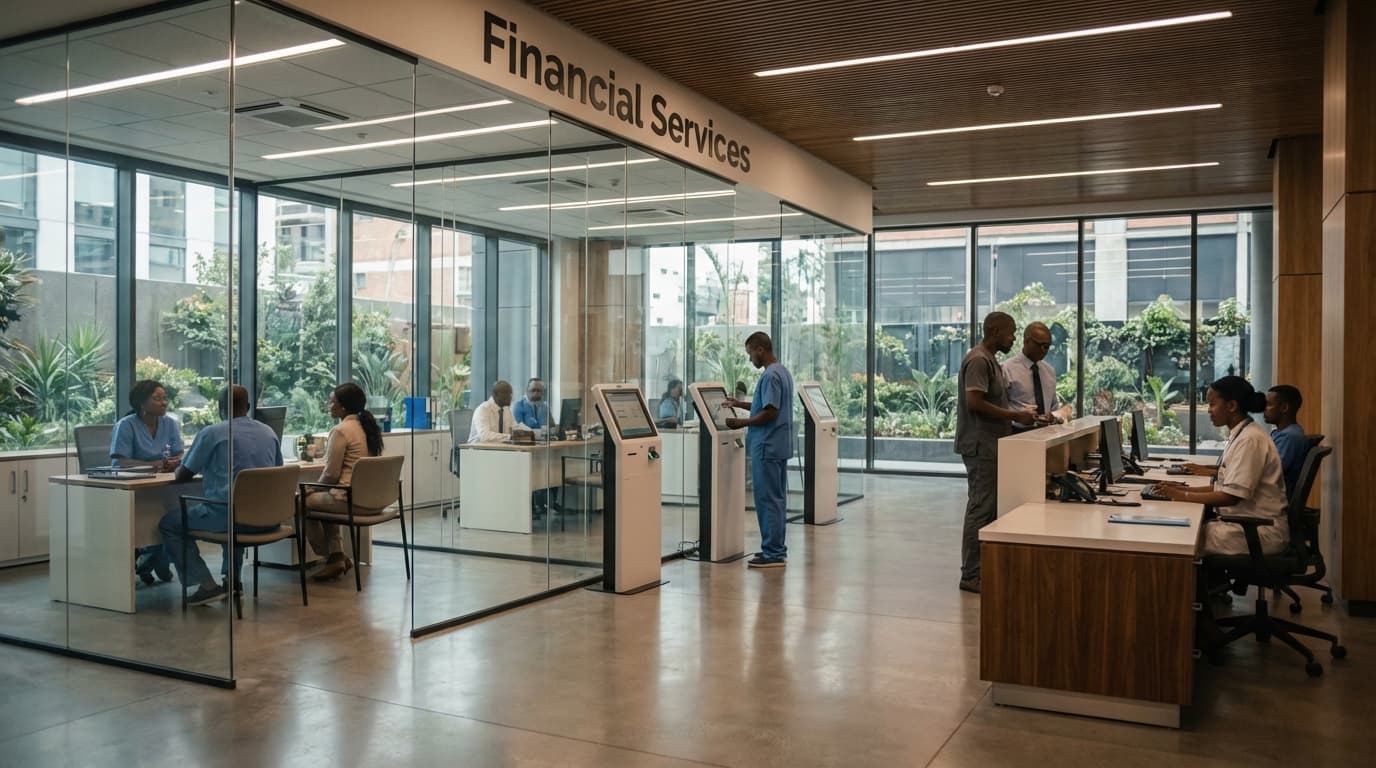
Medical Equipment Financing in Sao Tome and Principe
Engineering Excellence & Technical Support
Leasing and financing solutions for medical equipment High-standard technical execution following OEM protocols and local regulatory frameworks.
Tailored Loan Structures for Medical Needs
We offer flexible financing options, including term loans and leasing agreements, specifically designed to accommodate the acquisition of critical medical equipment, from diagnostic imaging machines to surgical instrumentation, ensuring a manageable repayment schedule aligned with your facility's revenue cycle.
Optimized Equipment Lifecycle Management
Our financing solutions can be structured to include maintenance and upgrade packages, enabling you to access the latest medical technology while ensuring optimal equipment uptime and performance, thereby reducing operational disruptions and enhancing patient care delivery.
Risk Mitigation through Asset-Backed Financing
Leveraging the acquired medical equipment as collateral allows for more favorable loan terms and interest rates, providing a secure financing framework that protects your institution's cash flow and facilitates long-term strategic investment in healthcare infrastructure.
What Is Medical Equipment Financing In Sao Tome And Principe?
Medical Equipment Financing in Sao Tome and Principe refers to the provision of capital by financial institutions to healthcare providers for the acquisition, upgrade, or replacement of medical devices and technology. This service addresses the significant capital expenditure associated with purchasing advanced medical equipment, facilitating its integration into healthcare infrastructure within the nation. It encompasses various financial instruments, including term loans, leases, and vendor financing, tailored to the specific needs and financial capacity of the borrowing entity. The primary objective is to enable healthcare facilities to enhance diagnostic capabilities, therapeutic interventions, and overall patient care delivery through access to modern medical technology, thereby improving health outcomes and the healthcare system's efficiency within the specific economic and regulatory landscape of Sao Tome and Principe.
| Entity | Need | Typical Use Cases |
|---|---|---|
| Public Hospitals | Limited government budgets for capital expenditure, need for widespread access to basic and advanced medical technology. | Acquisition of diagnostic imaging equipment (X-ray, ultrasound), laboratory analyzers, surgical instruments, patient monitoring systems, essential hospital beds and furniture. |
| Private Clinics and Hospitals | Desire to offer specialized services, compete with other providers, and attract a higher-paying clientele. | Procurement of MRI and CT scanners, advanced laparoscopic surgical systems, specialized dental equipment, endoscopy units, physiotherapy equipment, and state-of-the-art laboratory instrumentation. |
| Non-Governmental Organizations (NGOs) and Charities | Mission-driven to improve healthcare access in underserved areas, often reliant on external funding. | Financing of mobile clinics, community health centers, essential medical supplies and equipment for remote areas, and diagnostic tools for specific public health initiatives (e.g., malaria, HIV/AIDS). |
| Research and Educational Institutions | Requirement for specialized equipment for training medical professionals and conducting research. | Acquisition of advanced simulation equipment for medical training, specialized laboratory research equipment (e.g., gene sequencers, advanced microscopes), and cadaveric training facilities. |
Key Aspects of Medical Equipment Financing
- Access to Capital: Provides essential funding for acquiring expensive medical devices.
- Technology Modernization: Facilitates upgrades to outdated equipment and adoption of new technologies.
- Improved Patient Care: Enables enhanced diagnostic and treatment capabilities, leading to better patient outcomes.
- Operational Efficiency: Contributes to streamlining workflows and increasing throughput in healthcare facilities.
- Risk Mitigation: Shifts the capital burden from immediate expenditure to structured repayment plans.
- Specialized Financial Products: Offers tailored loan structures, leasing options, and vendor partnerships.
Who Needs Medical Equipment Financing In Sao Tome And Principe?
Medical equipment financing is crucial for numerous entities in Sao Tome and Principe seeking to upgrade, expand, or acquire essential medical technology. This financing enables healthcare providers to offer better patient care, adopt modern diagnostic and treatment methods, and improve operational efficiency. Without it, the adoption of advanced medical equipment would be significantly hindered, impacting the quality and accessibility of healthcare services.
| Department/Area | Typical Equipment Needs | Financing Justification |
|---|---|---|
Target Customers for Medical Equipment Financing in Sao Tome and Principe
- {"title":"Public Hospitals and Clinics","description":"Government-funded healthcare facilities that often face budget constraints and require financing to maintain and upgrade their medical infrastructure."}
- {"title":"Private Hospitals and Clinics","description":"For-profit healthcare institutions looking to invest in state-of-the-art equipment to attract more patients and offer specialized services."}
- {"title":"Diagnostic Imaging Centers","description":"Facilities specializing in X-ray, CT scans, MRI, ultrasound, and other imaging services that rely heavily on expensive, high-tech equipment."}
- {"title":"Laboratories (Clinical and Research)","description":"Laboratories requiring advanced equipment for testing, analysis, and research purposes."}
- {"title":"Specialized Medical Practices","description":"Practices focused on specific areas like cardiology, ophthalmology, dentistry, physiotherapy, etc., that need specialized equipment."}
- {"title":"Non-Governmental Organizations (NGOs) & Charities","description":"Organizations involved in healthcare provision, particularly in underserved areas, who may secure financing for equipment donations or direct purchases."}
- {"title":"Medical Training Institutions","description":"Educational bodies that need modern medical equipment for training future healthcare professionals."}
Medical Equipment Financing Process In Sao Tome And Principe
This document outlines the typical workflow for securing medical equipment financing in Sao Tome and Principe, from the initial inquiry to the final execution of the agreement. The process involves several key stages, with specific steps and stakeholders involved at each phase. Understanding this workflow is crucial for healthcare providers seeking to acquire new or upgrade existing medical equipment.
| Stage | Key Activities | Primary Stakeholders | Key Documents/Outputs |
|---|---|---|---|
| Healthcare provider expresses interest in financing medical equipment. Initial discussion about needs, budget, and financing options (loan vs. lease). | Healthcare Provider, Financial Institution/Lender, Equipment Vendor (potentially) | Initial inquiry letter/email, Preliminary needs assessment, Discussion notes |
| Applicant submits required documentation for verification of legal status, financial health, and operational capacity. | Healthcare Provider, Financial Institution/Lender | Business registration documents, Financial statements (audited), Tax compliance certificates, Operating licenses, Identification of key personnel |
| Provider identifies specific medical equipment required. Obtains detailed quotations from approved or preferred vendors. | Healthcare Provider, Equipment Vendor | Detailed equipment specifications, Pro-forma invoices, Equipment brochures/technical datasheets |
| Lender evaluates the applicant's creditworthiness, financial stability, and the viability of the proposed financing. Risk assessment is performed. | Financial Institution/Lender (Credit Department) | Credit report, Financial analysis, Risk assessment report |
| If approved, the lender issues a financing proposal outlining terms, conditions, interest rates, repayment schedule, and any collateral requirements. Loan/lease agreement is drafted. | Financial Institution/Lender, Healthcare Provider | Financing proposal, Loan/Lease agreement, Security documents (if applicable) |
| Both parties review the agreement. Legal counsel for the provider may be involved. Compliance with local regulations is ensured. | Healthcare Provider, Financial Institution/Lender, Legal Counsel | Reviewed and approved Loan/Lease agreement, Legal opinions (if required) |
| Upon signing the agreement, funds are disbursed to the equipment vendor or directly to the provider, depending on the agreement structure. | Financial Institution/Lender, Equipment Vendor, Healthcare Provider | Disbursement confirmation, Payment receipts |
| Equipment is delivered, installed, and commissioned by the vendor. Provider confirms satisfactory installation. | Equipment Vendor, Healthcare Provider | Installation and commissioning reports, Acceptance certificates |
| Regular repayment of installments as per the agreement. Lender may conduct periodic reviews or site visits. Maintenance and operational compliance are the provider's responsibility. | Healthcare Provider, Financial Institution/Lender | Repayment schedule, Bank statements, Periodic financial reports, Site visit reports (if any) |
Medical Equipment Financing Workflow in Sao Tome and Principe
- Inquiry and Initial Assessment
- Documentation and Eligibility Verification
- Equipment Selection and Quotation
- Credit Assessment and Underwriting
- Proposal and Agreement Generation
- Legal and Regulatory Review
- Loan/Lease Disbursement
- Equipment Installation and Commissioning
- Ongoing Monitoring and Repayment
Medical Equipment Financing Cost In Sao Tome And Principe
Financing medical equipment in Sao Tome and Principe presents a unique set of considerations, primarily influenced by the island nation's economic landscape, the specific type of equipment, and the chosen financing method. Local currency, the Dobra (STD), is used for all transactions, but the availability and cost of financing can be significantly impacted by international currency exchange rates, import duties, and the perceived risk for lenders. Pricing factors include the cost of the equipment itself (often higher due to import logistics and taxes), interest rates set by local banks or specialized financing companies, administrative fees, insurance premiums for the equipment, and the loan term. The absence of a highly developed capital market means that financing options might be more limited compared to larger economies, potentially leading to higher interest rates. Furthermore, the scarcity of specialized medical equipment manufacturers within the country necessitates reliance on imports, adding to the overall cost. Government incentives or partnerships for essential medical equipment can sometimes influence pricing, but these are not always readily available. For most small to medium-sized medical facilities, leasing might be a more accessible option than outright purchase, spreading the cost over time and potentially reducing the upfront financial burden. However, the interest or lease rates can still be substantial.
| Financing Type | Estimated Cost Range (STD) | Notes |
|---|---|---|
| Bank Loan (e.g., for smaller diagnostic tools, essential consumables manufacturing equipment) | 15% - 30% Annual Interest Rate | Requires substantial collateral, longer approval process. Interest rates are typically higher due to limited liquidity and higher perceived risk in the local market. |
| Leasing (e.g., for imaging equipment, larger surgical apparatus) | Variable monthly payments; effectively incorporates interest and depreciation | Can be more accessible for newer facilities. Total cost over the lease term can be higher than outright purchase due to financing charges. |
| Supplier Credit (less common for high-value equipment) | Negotiable interest rates/payment terms | Often offered for specific brands or with specific purchase volumes. May involve higher initial purchase price to compensate for financing. |
| Microfinance (for very small clinics or individual practitioners needing basic equipment) | 20% - 40% Annual Interest Rate | Higher interest rates due to the nature of microfinance, but with smaller loan amounts and more flexible repayment schedules. |
Key Pricing Factors for Medical Equipment Financing in Sao Tome and Principe
- Equipment Purchase Price (including import duties, taxes, and shipping)
- Interest Rates (influenced by local bank rates, inflation, and perceived risk)
- Administrative and Processing Fees
- Insurance Costs (for the equipment itself)
- Loan Tenor/Lease Term
- Upfront Deposit/Down Payment (if applicable)
- Currency Exchange Rate Fluctuations (for imported equipment)
- Lender's Profit Margin and Risk Premium
- Government Tariffs and Regulations
Affordable Medical Equipment Financing Options
Securing affordable medical equipment financing is crucial for healthcare providers looking to expand services, upgrade technology, or replace aging assets without straining their operating budget. Beyond traditional loans, innovative financing solutions and strategic planning can significantly reduce costs. This guide explores key financing options, the advantages of value bundles, and practical cost-saving strategies.
| Strategy | Description | Potential Cost Savings |
|---|---|---|
| Value Bundles (Equipment + Services) | Purchasing or leasing equipment with integrated service contracts, maintenance agreements, training, and software updates. This often includes preventative maintenance, emergency repairs, and software upgrades for a fixed period. | Reduced downtime through proactive maintenance, predictable budgeting for service costs, potential discounts for bundled packages, and avoidance of expensive out-of-warranty repairs. Streamlined vendor management. |
| Negotiate Bulk Discounts | If acquiring multiple pieces of equipment or upgrading several units of the same type, negotiate a larger discount with the vendor. This applies to both purchase and lease agreements. | Lower upfront cost or reduced monthly lease payments per unit. Improved leverage due to volume commitment. |
| Consider Refurbished or Certified Pre-Owned Equipment | Many high-quality medical devices are available as refurbished or certified pre-owned. These units are typically inspected, repaired, and warranted by the manufacturer or a reputable third party. | Significant reduction in initial capital outlay compared to new equipment. Often comes with a warranty, mitigating risk. |
| Extend Equipment Lifespan Strategically | Instead of automatically upgrading with every new model, assess the actual need for the latest technology. Maintain existing equipment properly to maximize its useful life. | Avoids unnecessary capital expenditure on frequent upgrades. Lower financing costs by deferring new purchases. |
| Explore Different Financing Structures | Compare offers from various lenders. A slightly higher interest rate on a shorter term might be more cost-effective than a lower rate on a much longer term, especially when considering the total interest paid. | Minimizes total interest paid over the life of the financing. Opportunity to secure more favorable terms by shopping around. |
| Phased Acquisition | Instead of financing all needed equipment at once, acquire critical items first and then finance additional equipment as the budget allows or revenue streams increase. | Manages cash flow more effectively. Reduces the immediate financial burden and allows for more strategic planning. |
| Lease vs. Buy Analysis | Conduct a thorough analysis comparing the long-term costs of leasing versus purchasing equipment, considering factors like depreciation, maintenance costs, and potential resale value. | Ensures the most financially advantageous decision for your specific operational needs and financial goals. |
Key Affordable Medical Equipment Financing Options
- Leasing (Operating & Capital): Operating leases offer the lowest monthly payments and allow for technology upgrades. Capital leases function more like ownership, building equity over time.
- Loan Financing: Traditional term loans from banks or specialized medical equipment lenders provide ownership of the equipment. Interest rates and terms vary significantly.
- Medical Equipment Financing Companies: These specialized lenders understand the unique needs and risks associated with healthcare equipment, often offering tailored solutions.
- Sale-Leaseback: If you own medical equipment outright, a sale-leaseback can provide immediate capital by selling the equipment to a financing company and then leasing it back.
- Government Grants & Programs: Explore federal, state, and local grants, as well as programs like the Small Business Administration (SBA) loans, which may offer favorable terms for healthcare providers.
- Bundled Financing & Service Contracts: Some vendors offer packages that combine equipment purchase or lease with ongoing maintenance, training, and support.
Verified Providers In Sao Tome And Principe
When seeking healthcare services in Sao Tome and Principe, ensuring the credibility and quality of providers is paramount. Franance Health stands out as a beacon of trust, offering a network of verified healthcare professionals and facilities. This verification process is rigorous, encompassing a deep dive into qualifications, experience, ethical standing, and adherence to international healthcare standards. Franance Health's commitment to these stringent criteria ensures that patients receive safe, effective, and compassionate care. Choosing a Franance Health-affiliated provider means opting for peace of mind, knowing that you are in the hands of practitioners who have met the highest benchmarks for excellence in the region.
| Provider Type | Franance Health Verification Benefits | Why it's the Best Choice |
|---|---|---|
| Doctors & Specialists | Verified qualifications, licensed to practice, documented experience, patient testimonials reviewed. | Access to highly competent medical professionals, assurance of appropriate treatment and diagnosis. |
| Hospitals & Clinics | Accreditation status, equipment standards, hygiene protocols, emergency preparedness, staff qualifications. | Safe and well-equipped facilities, reliable emergency care, adherence to quality medical infrastructure. |
| Diagnostic Centers | Accuracy of tests, up-to-date technology, qualified technicians, data security measures. | Trustworthy and accurate diagnostic results, reliable basis for treatment decisions. |
| Pharmacies | Legitimate licensing, proper drug storage, qualified pharmacists, authentic medication sourcing. | Access to genuine and safe medications, expert advice on prescriptions. |
Why Franance Health Credentials Matter
- Rigorous Qualification Verification: Franance Health meticulously checks the academic and professional credentials of all its listed providers.
- Experience Assessment: We evaluate the practical experience and specialized expertise of each healthcare professional.
- Ethical Standards Review: Providers must demonstrate a commitment to ethical medical practices and patient well-being.
- Adherence to International Standards: Franance Health ensures that its network complies with recognized global healthcare benchmarks.
- Continuous Monitoring: Our commitment extends to ongoing assessment to maintain the highest quality of care.
- Patient-Centric Approach: Verified providers prioritize patient comfort, communication, and personalized treatment plans.
Scope Of Work For Medical Equipment Financing
This Scope of Work (SOW) outlines the technical deliverables and standard specifications required for a medical equipment financing project. It details the expected performance, features, and quality standards for the financed medical equipment to ensure it meets the operational needs and regulatory requirements of the healthcare facility. The objective is to secure financing for medical equipment that is reliable, efficient, and aligns with industry best practices.
| Equipment Category | Key Technical Specifications | Standard Compliance | Performance Metrics |
|---|---|---|---|
| Diagnostic Imaging (e.g., MRI, CT Scanner) | Field strength (Tesla), spatial resolution, scan time, detector type, image reconstruction algorithms. | FDA, CE, DICOM compatibility. | Image quality indices (e.g., SNR, CNR), throughput (scans/hour), downtime percentage. |
| Surgical Equipment (e.g., Robotic Surgery System, Anesthesia Machine) | Degrees of freedom, instrument precision, integrated monitoring capabilities, safety features, ventilation modes. | FDA, CE, ISO 13485. | Accuracy of movements, response time, alarm reliability, patient safety incident rate. |
| Patient Monitoring Systems | Parameters monitored (ECG, SpO2, NIBP, etc.), waveform fidelity, alarm management, data logging capacity, connectivity. | IEC 60601 series, FDA, CE. | Accuracy of measurements, alarm latency, data integrity, system uptime. |
| Laboratory Analyzers (e.g., Hematology, Chemistry) | Throughput (tests/hour), analytical precision (CV%), detection limits, reagent compatibility, automation level. | CLIA, CAP, ISO 15189. | Accuracy and precision of results, reagent consumption, sample processing time, calibration stability. |
| Therapeutic Equipment (e.g., Ventilators, Dialysis Machines) | Pressure/flow control, therapy modes, patient interface options, safety interlocks, infection control features. | FDA, CE, ISO 13485. | Reliability of therapy delivery, patient outcome measures, ease of use, maintenance requirements. |
Technical Deliverables
- Detailed technical specifications for each piece of medical equipment, including manufacturer, model, serial number, and key performance indicators (KPIs).
- Proof of compliance with relevant regulatory standards (e.g., FDA, CE marking, local health authority approvals).
- Installation and commissioning reports, verifying successful setup and initial functionality.
- User manuals, service manuals, and maintenance schedules for all equipment.
- Training materials and records for designated hospital staff on equipment operation and basic maintenance.
- Warranty certificates and service agreements.
- Software licenses and updates, if applicable.
- Calibration certificates and test reports for accuracy and precision.
- Safety certifications and electrical compliance documentation.
- Inventory management integration capabilities, if specified.
Service Level Agreement For Medical Equipment Financing
This Service Level Agreement (SLA) outlines the response times and uptime guarantees for medical equipment financing services provided by [Your Company Name] to [Client Name]. This agreement is supplementary to the main Medical Equipment Financing Agreement and aims to ensure the continued operational readiness of financed equipment.
| Service Component | Definition | Service Level Target | Measurement Method | Remedy for Breach |
|---|---|---|---|---|
| Equipment Uptime Guarantee | The percentage of time the financed medical equipment is expected to be operational and available for use, excluding scheduled maintenance. | 99.5% Uptime per calendar month | Monitored via [Client's provided monitoring system] or reported by the client with verifiable documentation. | Service Credits applied to the next monthly financing payment, calculated as [X]% of the monthly payment for every 0.1% of uptime missed below the target. |
| Critical Issue Response Time | For issues that render the equipment completely non-operational and directly impact patient care or critical procedures. | Within 4 business hours of notification | Time of email/phone notification to [Your Company Name]'s designated support channel. | Escalation to senior management. Potential for expedited repair or replacement support (if applicable and agreed upon in the main agreement). |
| High Priority Issue Response Time | For issues that significantly degrade equipment performance or functionality but do not render it completely non-operational. | Within 8 business hours of notification | Time of email/phone notification to [Your Company Name]'s designated support channel. | Service Credits applied to the next monthly financing payment, calculated as [Y]% of the monthly payment for each incident requiring more than 24 business hours for initial diagnosis. |
| Standard Issue Response Time | For non-critical issues that affect minor functionality or do not directly impact patient care. | Within 24 business hours of notification | Time of email/phone notification to [Your Company Name]'s designated support channel. | No direct financial remedy, but consistent failure to meet this target may trigger a review of the service. |
Key Service Components
- Uptime Guarantees: Ensuring financed medical equipment remains operational and available for use.
- Response Times: Defining the maximum allowable time for [Your Company Name] to acknowledge and begin addressing reported issues.
- Resolution Targets: Setting expectations for the timely resolution of identified problems.
- Reporting: Detailing the frequency and content of performance reports.
Frequently Asked Questions

Ready when you are
Let's scope your Medical Equipment Financing in Sao Tome and Principe project in Sao Tome and Principe.

Scaling healthcare logistics and technical systems across the entire continent.