
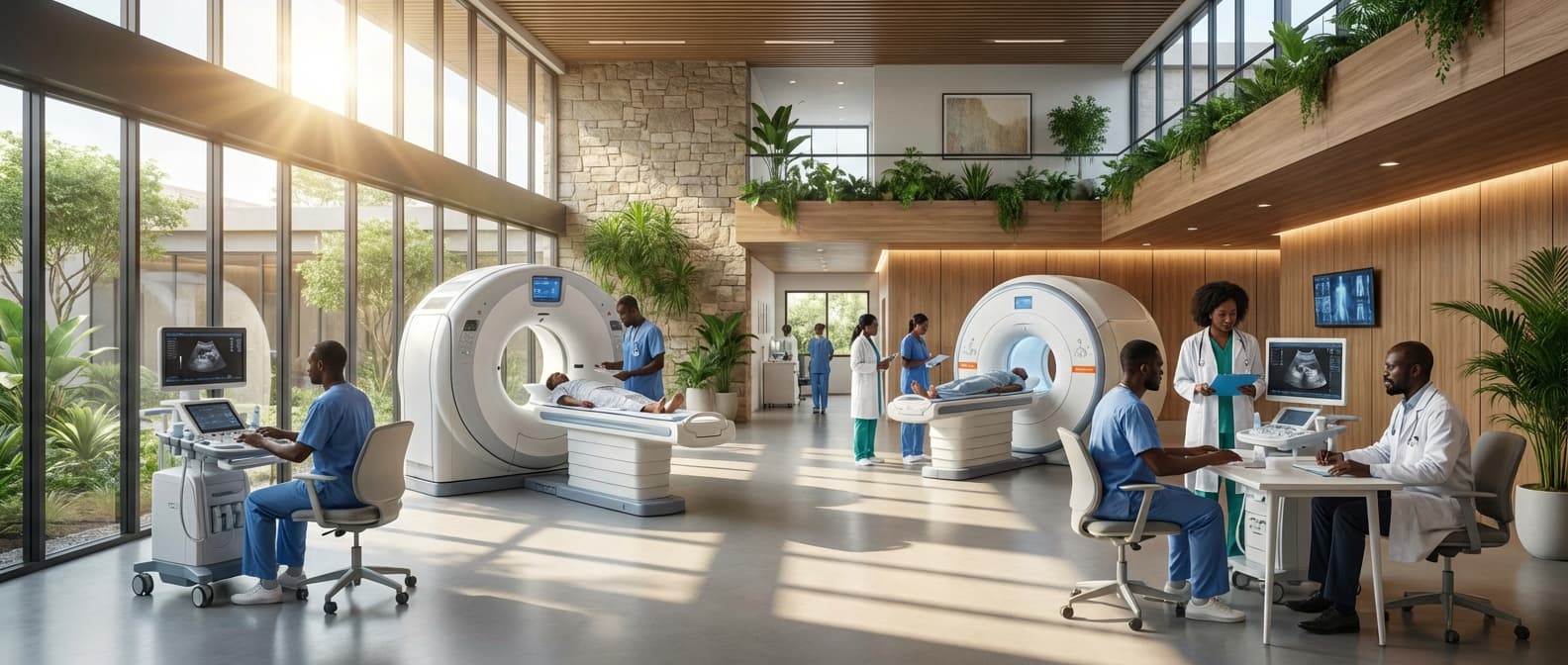
Endoscopy Solutions in Sao Tome and Principe
Engineering Excellence & Technical Support
Advanced endoscopic equipment delivering superior visualization and diagnostic precision for minimally invasive procedures. High-standard technical execution following OEM protocols and local regulatory frameworks.
Advanced Imaging for Enhanced Visualization
Our state-of-the-art endoscopy systems in Sao Tome and Principe offer high-definition imaging, including zoom capabilities and spectral enhancement, enabling unparalleled visualization of mucosal detail. This empowers physicians to identify subtle abnormalities earlier, leading to improved diagnostic accuracy and patient outcomes.
Minimally Invasive Procedures with Precision Instruments
We provide a comprehensive range of flexible and rigid endoscopes along with precision-engineered biopsy forceps, snares, and retrieval devices. These tools facilitate minimally invasive diagnostic and therapeutic procedures, reducing patient discomfort, recovery time, and the risk of complications in Sao Tome and Principe's healthcare facilities.
Robotic-Assisted Endoscopy for Complex Interventions
Introducing the future of endoscopy in Sao Tome and Principe, our robotic-assisted systems offer enhanced dexterity, stability, and articulation. This technology allows for more complex interventions and procedures with greater precision, expanding the scope of what can be achieved endoscopically and improving access to advanced treatments.
What Is Endoscopy Solutions In Sao Tome And Principe?
Endoscopy solutions in São Tomé and Príncipe refer to the provision of diagnostic and therapeutic procedures utilizing endoscopes to visualize the internal structures of the body. These solutions encompass the availability of advanced endoscopic equipment, skilled medical personnel trained in endoscopic techniques, and associated support services for patients undergoing these examinations. The primary objective is to facilitate minimally invasive visualization and intervention within hollow organs and cavities.
| Who Needs Endoscopy Solutions? | Typical Use Cases | |
|---|---|---|
| Patients presenting with gastrointestinal symptoms (e.g., abdominal pain, dysphagia, chronic diarrhea, hematemesis, melena, unexplained weight loss). | Upper endoscopy (esophagogastroduodenoscopy - EGD): Diagnosis and management of conditions like gastritis, peptic ulcers, esophageal varices, Barrett's esophagus, and upper gastrointestinal malignancies. | Lower endoscopy (colonoscopy and sigmoidoscopy): Screening for colorectal cancer, diagnosis and management of inflammatory bowel disease (IBD), diverticulosis, and lower gastrointestinal bleeding. |
| Patients with respiratory symptoms (e.g., chronic cough, hemoptysis, dyspnea). | Bronchoscopy: Evaluation of the airways for conditions such as pneumonia, lung cancer, tuberculosis, and foreign body aspiration. | |
| Patients with urological symptoms (e.g., hematuria, recurrent urinary tract infections, urinary obstruction). | Cystoscopy and Ureteroscopy: Diagnosis and treatment of bladder cancer, kidney stones, and urethral strictures. | |
| Patients requiring interventional procedures. | Endoscopic Retrograde Cholangiopancreatography (ERCP): Diagnosis and treatment of biliary and pancreatic duct obstruction, gallstones, and pancreatitis. | |
| Individuals undergoing cancer screening programs. | Polypectomy: Removal of precancerous polyps during colonoscopy to prevent colorectal cancer. |
Components of Endoscopy Solutions
- Diagnostic Endoscopy: Visual inspection of internal organs for the detection of abnormalities, lesions, or diseases.
- Therapeutic Endoscopy: Interventional procedures performed during endoscopy, such as polyp removal (polypectomy), bleeding control (hemostasis), stricture dilation, and foreign body retrieval.
- Equipment and Technology: Availability of flexible and rigid endoscopes, video imaging systems, light sources, insufflation devices, and specialized endoscopic accessories (biopsy forceps, snares, injection needles, etc.).
- Personnel Expertise: Qualified gastroenterologists, pulmonologists, urologists, surgeons, and endoscopy technicians proficient in performing and assisting with endoscopic procedures.
- Ancillary Services: Pre-procedure preparation, sedation/anesthesia administration, post-procedure monitoring, and pathological analysis of tissue samples obtained during endoscopy.
Who Needs Endoscopy Solutions In Sao Tome And Principe?
Endoscopy solutions are vital for diagnosing and treating a wide range of gastrointestinal and respiratory conditions. In Sao Tome and Principe, as in many developing nations, the demand for advanced diagnostic tools like endoscopes is growing due to several factors including increasing awareness of digestive diseases, a rising burden of certain chronic conditions, and a desire to improve the quality of healthcare services.
| Customer Segment | Primary Need/Application | Potential Impact of Endoscopy Solutions |
|---|---|---|
| Public Hospitals | Diagnosis and treatment of common gastrointestinal and respiratory ailments; public health screening programs. | Improved diagnostic accuracy, reduced need for invasive surgery, early detection of diseases like stomach and colon cancer, enhanced patient outcomes. |
| Private Hospitals & Clinics | Specialized diagnostic and therapeutic procedures; catering to a discerning patient base seeking advanced healthcare. | Enhanced service offerings, competitive advantage, ability to attract and retain patients, improved revenue streams. |
| Diagnostic Centers | Focused diagnostic services; providing high-quality endoscopic examinations. | Expansion of service portfolio, increased patient throughput, establishment as a leading diagnostic provider. |
| Government Health Ministries | Public health infrastructure development; equipping national healthcare facilities; disease surveillance. | Strengthening national healthcare capacity, reducing disease burden, improving access to essential diagnostic services for the wider population. |
| Medical Training Institutions | Training healthcare professionals in endoscopic techniques and procedures. | Developing a skilled local workforce, ensuring future availability of trained endoscopists, promoting medical education and research. |
Target Customers and Departments for Endoscopy Solutions in Sao Tome and Principe
- {"items":["Hospitals (Public and Private)","Specialized Clinics (e.g., Gastroenterology, Pulmonology)","Diagnostic Centers","Government Health Ministries/Agencies (for public health initiatives and equipment procurement)","Medical Training Institutions"],"title":"Target Customers"}
- {"items":["Gastroenterology Department: For diagnosis and treatment of esophageal, stomach, small intestine, and colon diseases. This includes conditions like ulcers, gastritis, reflux disease, polyps, inflammatory bowel disease (IBD), and early detection of gastrointestinal cancers.","Pulmonology/Respiratory Department: For diagnosing and treating lung and airway conditions, such as persistent cough, unexplained bleeding, suspected lung tumors, or infections within the airways.","Surgery Department: Endoscopic procedures are increasingly used for minimally invasive surgical interventions, particularly in gastrointestinal surgery.","Emergency Department: For immediate diagnosis of acute conditions like gastrointestinal bleeding or foreign body ingestion.","Internal Medicine Department: For general diagnosis and management of a broad spectrum of diseases that may involve the gastrointestinal or respiratory systems.","Pathology Department: For obtaining tissue samples (biopsies) during endoscopic procedures for further examination."],"title":"Target Departments"}
Endoscopy Solutions Process In Sao Tome And Principe
The process of acquiring and implementing endoscopy solutions in Sao Tome and Principe, while often requiring international engagement, follows a structured workflow designed to ensure appropriate equipment selection, training, and integration into the local healthcare system. This workflow typically begins with an identified need or inquiry, progresses through rigorous evaluation and procurement, and culminates in the successful deployment and utilization of the endoscopy equipment and associated services.
| Stage | Key Activities | Responsible Parties (Typical) | Considerations for Sao Tome and Principe |
|---|---|---|---|
| Hospitals/Clinics identify a need for endoscopy. This may involve determining the type of endoscopy (gastroscopy, colonoscopy, bronchoscopy, etc.), the required features, and the anticipated volume of procedures. Inquiries can be directed to international medical equipment suppliers, distributors, or through governmental/NGO health initiatives. | Healthcare Professionals (Doctors, Nurses), Hospital Administration, Ministry of Health (potentially) | Understanding the prevalence of gastrointestinal and other relevant conditions in Sao Tome and Principe is crucial for accurate needs assessment. Availability of existing infrastructure and power supply needs to be considered. |
| Potential suppliers specializing in endoscopy equipment are identified. This might involve online research, attending medical trade shows (virtually or in person), or seeking recommendations. Pre-qualification may involve assessing the supplier's reputation, product range, and experience in similar markets. | Procurement Department, Hospital Administration, Consultants (if engaged) | Prioritizing suppliers with proven track records in developing nations or regions with similar logistical challenges is beneficial. Verifying regulatory approvals (e.g., CE marking, FDA) for equipment is essential. |
| Identified suppliers submit detailed proposals outlining the endoscopy systems, accessories, consumables, installation plan, training program, warranty, and pricing. Technical specifications are paramount, ensuring compatibility and performance. | Medical Equipment Suppliers | Proposals should clearly detail shipping costs, import duties, and local taxation. Training modules should be adaptable to different skill levels of local healthcare staff. |
| Proposals are evaluated based on technical merit, cost-effectiveness, supplier reliability, after-sales support, and training capabilities. A comparative analysis is conducted to select the best fit for the healthcare facility's requirements and budget. | Evaluation Committee (including clinical, technical, and administrative staff), Ministry of Health (potentially) | Involvement of local technicians for assessing maintainability and availability of spare parts is important. Considering long-term operational costs, including consumables and maintenance, is vital for sustainability. |
| Once a preferred supplier is identified, negotiations take place regarding pricing, payment terms, delivery schedules, warranty periods, and service level agreements (SLAs). A formal contract is signed. | Hospital Administration, Legal Department, Ministry of Health (if applicable), Medical Equipment Supplier | Ensuring clear clauses regarding customs clearance, import permits, and local regulatory compliance in the contract is critical. Payment terms should be structured to align with available funding. |
| The order is placed, and the equipment is manufactured and prepared for shipment. This stage involves managing international shipping, customs clearance in Sao Tome and Principe, and transportation to the end-user facility. | Procurement Department, Medical Equipment Supplier, Shipping/Logistics Companies, Customs Authorities | Coordinating with customs brokers and local authorities for smooth import is crucial. Planning for potential delays due to port operations or transportation infrastructure is advisable. |
| Trained technicians from the supplier or authorized local representatives install the endoscopy equipment. This includes setting up the unit, connecting it to power and other necessary utilities, and performing initial tests to ensure it functions correctly. | Medical Equipment Supplier's Technicians, Local Technical Staff | Ensuring the availability of appropriate electrical outlets, sterile water supply, and ventilation (if required) at the installation site is essential. A designated area for reprocessing and storage of endoscopes needs to be prepared. |
| Comprehensive training is provided to healthcare professionals (physicians, endoscopists, nurses, technicians) on the operation, maintenance, and troubleshooting of the endoscopy equipment. This may include theoretical sessions and hands-on practical training. | Medical Equipment Supplier's Trainers, Local Healthcare Professionals | Training should be tailored to the specific needs and skill levels of the local staff. Providing ongoing access to training materials and refresher courses is beneficial for long-term competency. |
| The supplier provides ongoing technical support, including routine maintenance, repairs, and the supply of spare parts and consumables. This ensures the longevity and optimal performance of the equipment. | Medical Equipment Supplier, Local Biomedical Engineering Department (if established) | Establishing a service contract with the supplier for regular preventive maintenance is highly recommended. Identifying and training local technicians for basic maintenance can reduce reliance on international support. |
| The utilization and performance of the endoscopy solutions are monitored. This includes tracking the number of procedures, equipment uptime, and patient outcomes. Feedback is collected to identify areas for improvement and to inform future procurement decisions. | Healthcare Professionals, Hospital Administration, Ministry of Health | Regularly evaluating the impact of endoscopy services on patient care and the healthcare system's capacity is important. Sharing success stories and challenges can inform policy and future investments. |
Endoscopy Solutions Workflow in Sao Tome and Principe
- Inquiry and Needs Assessment
- Supplier Identification and Pre-qualification
- Technical and Commercial Proposal Submission
- Evaluation and Selection
- Contract Negotiation and Signing
- Procurement and Logistics
- Installation and Commissioning
- Training and Capacity Building
- Ongoing Support and Maintenance
- Performance Monitoring and Feedback
Endoscopy Solutions Cost In Sao Tome And Principe
Navigating the cost of endoscopy procedures in Sao Tome and Principe involves understanding several key factors that influence pricing. These factors range from the complexity of the procedure and the type of endoscopy performed to the specific medical facility and the expertise of the medical professional. While precise, publicly available price lists are scarce, we can outline the typical considerations and provide estimated cost ranges in the local currency, the Sao Tome and Principe Dobra (STD).
| Endoscopy Type (Estimated Range) | Estimated Cost in STD (Low-High) |
|---|---|
| Gastroscopy (Upper Endoscopy) | 4,000 - 9,000 STD |
| Colonoscopy (Lower Endoscopy) | 5,000 - 12,000 STD |
| Sigmoidoscopy | 3,000 - 7,000 STD |
| Bronchoscopy (Diagnostic) | 7,000 - 15,000 STD |
| Cystoscopy (Diagnostic) | 4,000 - 8,000 STD |
Key Pricing Factors for Endoscopy Procedures in Sao Tome and Principe:
- Type of Endoscopy: Different procedures, such as gastroscopy (esophagus, stomach, duodenum), colonoscopy (large intestine), bronchoscopy (airways), or cystoscopy (bladder), have varying complexity and require different equipment, impacting costs.
- Facility Type: Private hospitals and specialized clinics generally command higher prices than public healthcare facilities, reflecting differences in equipment, staffing, and service levels.
- Physician's Fees: The experience and specialization of the gastroenterologist or surgeon performing the endoscopy will influence their professional fees.
- Anesthesia/Sedation: The type and duration of anesthesia or sedation used during the procedure contribute to the overall cost.
- Pre-procedure Tests: Any required blood tests, imaging, or other diagnostic evaluations before the endoscopy will add to the total expense.
- Post-procedure Care & Follow-up: This includes consultations, any necessary medications, and potential follow-up appointments.
- Materials and Consumables: The cost of disposable instruments, biopsy tools, and other materials used during the procedure.
- Location within Sao Tome and Principe: Prices may vary slightly between urban centers like Sao Tome city and more remote areas, although this difference might be less pronounced for specialized medical services.
Affordable Endoscopy Solutions Options
Endoscopy, a vital diagnostic and therapeutic procedure, can sometimes present significant cost concerns for patients and healthcare providers. Fortunately, several affordable solutions and cost-saving strategies are available to make endoscopy more accessible. Understanding these options can empower individuals to make informed decisions and help healthcare systems manage expenses effectively. This includes exploring 'value bundles' and implementing proactive 'cost-saving strategies'.
| Strategy Type | Description | Benefits |
|---|---|---|
| Value Bundles | A fixed price for a defined set of services related to an endoscopic procedure, often including pre-procedure consultations, the procedure itself, and post-procedure follow-up. This can simplify billing and offer predictable costs. | Predictable costs for patients and payers. Encourages coordination of care and reduces fragmentation. Can incentivize providers to improve efficiency and outcomes. |
| Cost-Saving Strategies | Proactive measures to reduce expenses associated with endoscopy without compromising quality of care. This can involve operational efficiencies, strategic purchasing, and patient engagement. | Reduced overall healthcare expenditure. Improved resource allocation. Enhanced patient satisfaction through transparent pricing and efficient service delivery. |
| Negotiated Contracts | Healthcare systems or insurance companies negotiate discounted rates with endoscopy providers based on volume or preferred provider status. | Lower per-procedure costs for the contracting entity and potentially for patients through reduced co-pays or deductibles. Increased patient volume for providers. |
| Outpatient Setting Focus | Performing endoscopic procedures in an outpatient or ambulatory surgery center (ASC) setting rather than an inpatient hospital setting when clinically appropriate. | Significantly lower costs due to reduced overhead and shorter length of stay. Faster recovery times for patients in many cases. |
| Equipment Cost Management | Sourcing high-quality disposable supplies or cost-effective reusable equipment, and negotiating bulk purchase agreements. | Direct reduction in supply chain costs. Careful selection of reusable equipment can lead to long-term savings despite initial investment. |
Key Affordable Endoscopy Solutions and Cost-Saving Strategies
- Value-based care models and bundled payments for endoscopic procedures.
- Negotiated contracts with endoscopy centers and hospitals.
- Utilizing cost-effective, yet high-quality, disposable or reusable endoscopic equipment.
- Focusing on preventative care and early detection to reduce the need for complex procedures.
- Exploring outpatient vs. inpatient settings for endoscopic procedures.
- Leveraging technology for remote consultations and pre-procedure assessments.
- Patient education on appropriate use of endoscopic services and alternatives.
- Generic and biosimilar medications for sedation and related treatments.
- Efficient scheduling and workflow optimization to minimize procedure time and overhead.
- Partnerships with insurance providers for pre-authorized and preferred network discounts.
Verified Providers In Sao Tome And Principe
In the realm of healthcare, particularly in emerging markets like Sao Tome and Principe, identifying and trusting verified providers is paramount for individuals seeking quality medical services. Franance Health stands out as a beacon of reliability and excellence, offering a robust network of accredited healthcare professionals and facilities. Their rigorous credentialing process ensures that every provider listed has undergone thorough vetting, guaranteeing adherence to international standards of care, ethical practices, and professional competence. This commitment to verification translates directly into patient safety, improved health outcomes, and peace of mind for those navigating the healthcare landscape.
| Franance Health Feature | Benefit for Patients in Sao Tome and Principe |
|---|---|
| Rigorous Verification Process | Ensures access to competent and ethical medical professionals. |
| Curated Network of Providers | Guarantees a higher standard of care and specialization. |
| Focus on Patient Safety | Minimizes risks associated with unqualified practitioners. |
| Reputation and Trust | Builds confidence in the healthcare system and service providers. |
| Alignment with Global Standards | Provides assurance of internationally recognized quality of care. |
Why Franance Health is the Premier Choice for Verified Providers in Sao Tome and Principe:
- Uncompromising Credentialing Standards: Franance Health employs a multi-layered vetting process that goes beyond basic licensing. It includes verification of qualifications, continuous professional development, adherence to ethical codes, and a track record of patient satisfaction.
- Access to Top-Tier Medical Professionals: By partnering with Franance Health, patients gain access to a curated network of specialists and general practitioners who have demonstrated exceptional skill and dedication.
- Enhanced Patient Safety and Trust: The verification process inherently reduces the risk of encountering unqualified or unethical practitioners, fostering a higher level of trust and confidence in the healthcare services received.
- Streamlined Healthcare Navigation: Franance Health simplifies the process of finding reliable healthcare by providing a centralized and trustworthy platform, saving patients time and reducing stress.
- Commitment to International Quality: Franance Health's standards align with global benchmarks, ensuring that patients in Sao Tome and Principe receive care comparable to that found in more developed healthcare systems.
- Data-Driven Provider Assessment: Their evaluation methods often incorporate patient feedback and outcomes data, allowing for continuous monitoring and improvement of their provider network.
Scope Of Work For Endoscopy Solutions
This Scope of Work (SOW) outlines the requirements for the procurement and implementation of Endoscopy Solutions. It details the technical deliverables, standard specifications, and associated services necessary to ensure the successful integration and operational readiness of the new endoscopy system. The objective is to provide a state-of-the-art, reliable, and efficient endoscopy solution that meets the clinical needs of the organization and enhances patient care.
| Category | Technical Deliverables | Standard Specifications | Acceptance Criteria | ||||||||
|---|---|---|---|---|---|---|---|---|---|---|---|
| Endoscopes | High-definition (HD) or 4K flexible gastroscopes, colonoscopes, and duodenoscopes (specific quantities and models to be detailed in the RFP). | Minimum resolution of 1920x1080 pixels (HD) or 3840x2160 pixels (4K). | Digital image and video capture at the specified resolution. | Field of view (FOV) of at least 150 degrees. | Working channel diameter of at least 2.8mm. | Bending radius and angulation capabilities suitable for patient anatomy. | IPX7 or higher waterproof rating. | Compatibility with provided light source and processor. | Successful insertion and manipulation without excessive force or patient discomfort. | Clear and artifact-free image and video quality during simulated use. | Demonstrated adherence to specified FOV, channel diameter, and angulation. |
| Video Processor and Light Source | Integrated or modular video processor and high-intensity LED light source. | Compatibility with all procured endoscopes. | High-definition output (HDMI or DVI). | Variable light intensity control. | Advanced image processing features (e.g., noise reduction, contrast enhancement). | User-friendly interface for image/video capture and management. | Reliable and stable light output. | Successful integration with endoscopes and monitor. | Clear display of processed images and video on the connected monitor. | Verification of all specified image processing features. | Demonstrated ability to capture and store images/videos. |
| Medical Monitor | High-definition or 4K medical-grade display monitor. | Screen size of at least 24 inches. | High contrast ratio and brightness. | Accurate color reproduction. | DICOM compatibility for image display and management. | Ergonomic design for comfortable viewing. | Clear and sharp display of endoscopic images. | Accurate color representation compared to reference images. | Successful connection and display from the video processor. | ||
| Electrosurgical Unit (ESU) & Accessories | High-frequency electrosurgical unit with multiple output modes (cut, coagulate) and safety features. | Compatible electrosurgical instruments (e.g., snares, forceps, injection needles). | Argon plasma coagulation (APC) unit (if specified). | Monopolar and bipolar output capabilities. | Footswitch and hand control options. | Safety features such as active electrode monitoring and alarm systems. | Successful activation and control of ESU functions. | Effective cutting and coagulation of simulated tissue. | Functionality of all included accessories. | Verification of safety feature activation and response. | |
| Endoscopic Imaging & Documentation System | Software solution for capturing, storing, retrieving, and managing endoscopic images and videos. | Integration with HIS/PACS for seamless data flow. | Patient data management capabilities. | Procedure reporting tools. | Image enhancement and annotation features. | Secure data storage and backup. | User authentication and access control. | Successful capture, storage, and retrieval of multiple image/video files. | Verified integration with HIS/PACS (if applicable). | Accurate patient data association with captured media. | Demonstrated functionality of reporting and annotation tools. |
| Cleaning & Disinfection Equipment | Automated endoscope reprocessor (AER) or validated manual cleaning protocols and equipment. | Compatible cleaning agents and disinfectants. | Drying and storage cabinets. | Validation of cleaning and disinfection efficacy. | Compliance with AAMI ST91 or equivalent standards. | Demonstrated successful cleaning and disinfection cycles. | Verification of absence of biological contaminants. | Proper functioning of drying and storage mechanisms. | |||
| Installation & Integration | On-site installation and configuration of all hardware and software components. | Integration with existing hospital IT infrastructure (HIS, PACS, network). | System testing and validation. | Post-installation support and troubleshooting. | Successful power-up and basic functionality of all components. | Network connectivity and data transfer verification. | Successful integration with HIS/PACS (if applicable). | Demonstration of end-to-end workflow from procedure to documentation. | |||
| Training | Comprehensive training programs for clinical staff (physicians, nurses, technicians) on system operation, maintenance, and troubleshooting. | Training materials (user manuals, video tutorials). | Hands-on practical training sessions. | Competency assessment for trained personnel. | All relevant personnel demonstrate proficiency in operating the system. | Successful completion of all training modules. | Availability of comprehensive and understandable training documentation. | ||||
| Warranty & Support | Manufacturer's warranty for all equipment (minimum 1 year). | Service Level Agreement (SLA) for technical support and maintenance. | Availability of spare parts. | Response times for critical issues. | All equipment meets or exceeds warranty specifications. | Successful resolution of all reported issues within agreed SLA. | Availability of spare parts for common consumables and critical components. |
Key Objectives of the Endoscopy Solution:
- Improve diagnostic accuracy and therapeutic capabilities.
- Enhance patient comfort and safety during procedures.
- Streamline workflow and reduce procedure turnaround times.
- Ensure seamless integration with existing hospital information systems (HIS) and Picture Archiving and Communication Systems (PACS).
- Provide comprehensive training and ongoing support for clinical and technical staff.
- Meet all relevant regulatory and compliance standards.
Service Level Agreement For Endoscopy Solutions
This Service Level Agreement (SLA) outlines the response times and uptime guarantees for Endoscopy Solutions. It is designed to ensure the consistent and reliable availability of our services to our valued clients.
| Severity Level | Description | Response Time Target | Uptime Guarantee | Extended Downtime Credit (per hour of extended downtime) |
|---|---|---|---|---|
| Severity 1 (Critical) | Service is completely unavailable. Significant business impact. No workaround available. | 15 Minutes | 99.9% | 5% of monthly subscription fee |
| Severity 2 (High) | Major functionality is unavailable or severely degraded. Significant business impact. Workaround may be available but is inefficient. | 30 Minutes | 99.5% | 3% of monthly subscription fee |
| Severity 3 (Medium) | Minor functionality is unavailable or degraded. Moderate business impact. Workaround is available. | 2 Business Hours | 99.0% | 1% of monthly subscription fee |
| Severity 4 (Low) | Service is degraded but all major functions are operational. Minimal business impact. Cosmetic issues or minor non-critical bugs. | 8 Business Hours | 98.0% | N/A |
Key Definitions
- Service: Refers to the Endoscopy Solutions platform and its associated functionalities, including but not limited to the viewing, storage, and reporting of endoscopic procedures.
- Downtime: Periods when the Service is unavailable to End Users, excluding Scheduled Maintenance.
- Scheduled Maintenance: Pre-announced periods of planned system maintenance and upgrades. Clients will be notified at least 48 hours in advance of any Scheduled Maintenance.
- Emergency Maintenance: Unplanned maintenance required to address critical issues impacting service availability.
- Response Time: The maximum time it takes for Endoscopy Solutions' support team to acknowledge and begin addressing a reported Incident.
- Resolution Time: The maximum time it takes for Endoscopy Solutions to restore the Service to operational status after an Incident is reported.
- Uptime: The percentage of time the Service is available and operational, excluding Scheduled Maintenance and Extended Downtime.
- Incident: An event that disrupts or degrades the quality of the Service, impacting End User access or functionality.
- Severity Levels: A classification of Incidents based on their impact on the Service and business operations.
- End User: Any individual authorized to access and use the Endoscopy Solutions Service.
Frequently Asked Questions

Ready when you are
Let's scope your Endoscopy Solutions in Sao Tome and Principe project in Sao Tome and Principe.

Scaling healthcare logistics and technical systems across the entire continent.