
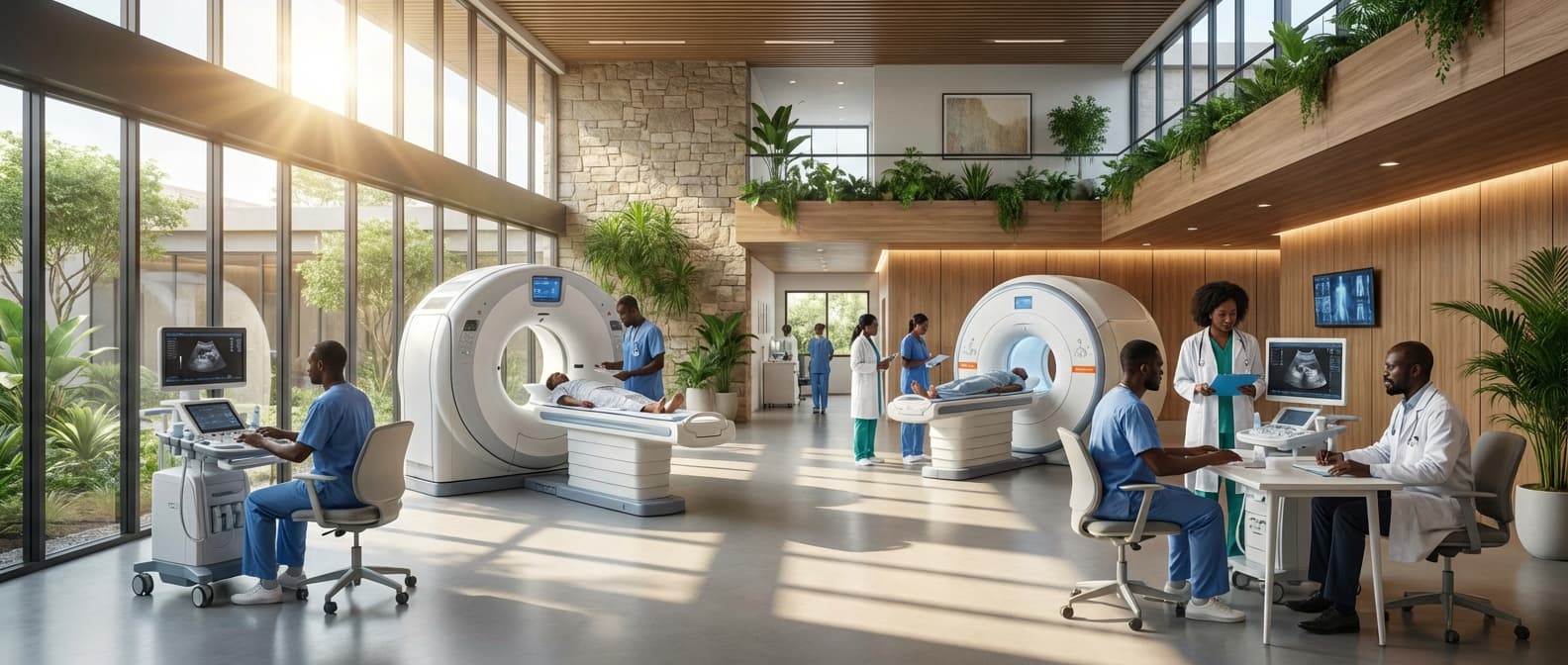
Diagnostic Imaging in Sao Tome and Principe
Engineering Excellence & Technical Support
High-resolution imaging systems including CT scanners, MRI, X-ray, and ultrasound technology for accurate clinical diagnosis. High-standard technical execution following OEM protocols and local regulatory frameworks.
Advanced Diagnostic Imaging Services Expansion
Implementation of state-of-the-art CT and MRI scanners, significantly enhancing diagnostic capabilities for a wider range of conditions, from oncological assessments to neurological disorders. This expansion ensures earlier and more accurate diagnoses for the population.
Mobile Ultrasound Units for Rural Outreach
Deployment of portable ultrasound units accompanied by trained sonographers to remote and underserved areas. This initiative brings essential diagnostic imaging directly to communities, reducing travel burdens and improving access to prenatal care and basic abdominal screenings.
Digital Radiography Network and PACS Integration
Transitioning to a fully digital radiography system with Picture Archiving and Communication System (PACS) integration. This allows for faster image acquisition, enhanced image quality, secure digital storage, and seamless remote consultation capabilities for improved patient care and specialist collaboration.
What Is Diagnostic Imaging In Sao Tome And Principe?
Diagnostic imaging in Sao Tome and Principe refers to the utilization of medical imaging techniques to visualize the internal structures of the human body for diagnostic and interventional purposes. This service encompasses a range of non-invasive and minimally invasive technologies that generate visual representations of organs, tissues, bones, and blood vessels. The primary objective is to assist healthcare professionals in the accurate diagnosis, staging, and monitoring of diseases and injuries, as well as guiding therapeutic procedures. The availability and scope of diagnostic imaging services in Sao Tome and Principe, like in many developing nations, may vary across public and private healthcare facilities, with potential limitations in advanced modalities and widespread accessibility. However, essential imaging services are crucial for providing comprehensive medical care.
| Patient Population | Indications for Diagnostic Imaging | Typical Use Cases |
|---|---|---|
| Individuals presenting with acute pain or trauma (e.g., suspected fractures, head injuries) | To assess the extent of injury, identify fractures, dislocations, or internal bleeding. | Radiography for fractures, CT for head trauma and internal injuries, Ultrasound for soft tissue trauma. |
| Patients with suspected infections (e.g., pneumonia, appendicitis) | To identify sources of infection, assess organ involvement, and guide antimicrobial therapy. | Chest X-ray for pneumonia, Ultrasound for appendicitis and abdominal abscesses, CT for complex intra-abdominal infections. |
| Individuals with suspected cardiovascular or cerebrovascular conditions (e.g., stroke, deep vein thrombosis) | To visualize blood vessels, detect blockages, clots, or aneurysms, and assess blood flow. | Ultrasound for DVT and carotid artery assessment, CT angiography for stroke evaluation (where available). |
| Pregnant women | To monitor fetal growth and development, assess placental position, and detect congenital anomalies. | Obstetric Ultrasound for routine prenatal care and anomaly screening. |
| Patients undergoing pre-operative assessment or post-operative follow-up | To evaluate organ status, identify pathology, and monitor treatment response. | Various modalities depending on the surgical site and procedure. |
| Individuals with symptoms suggestive of internal organ pathology (e.g., abdominal pain, jaundice) | To visualize abdominal organs, detect masses, cysts, or structural abnormalities. | Abdominal Ultrasound for liver, gallbladder, kidney, and pelvic organ assessment, CT for more complex cases. |
| Patients with neurological symptoms (e.g., persistent headaches, weakness) | To investigate potential brain lesions, tumors, or cerebrovascular events. | CT for acute neurological events (hemorrhage, infarct), MRI for more detailed brain and spinal cord imaging (where available). |
Components of Diagnostic Imaging Services in Sao Tome and Principe
- Radiography (X-ray): Fundamental imaging modality for visualizing bones, lungs, and certain soft tissues. Essential for fracture detection, pneumonia diagnosis, and screening.
- Ultrasound (Sonography): Utilizes sound waves to create images of soft tissues, organs (e.g., liver, kidneys, uterus), and blood flow. Widely used in obstetrics, gynecology, abdominal imaging, and vascular studies.
- Computed Tomography (CT) Scan: Employs X-rays to create cross-sectional images of the body, providing detailed anatomical information. Valuable for trauma assessment, stroke detection, cancer staging, and complex anatomical evaluation.
- Magnetic Resonance Imaging (MRI) (Limited Availability): While potentially less widespread, MRI uses magnetic fields and radio waves to produce highly detailed images of soft tissues, brain, spinal cord, and musculoskeletal structures. Its availability is likely concentrated in larger urban centers or specialized private clinics.
- Fluoroscopy: Real-time X-ray imaging used to guide procedures such as barium studies (digestive tract imaging), angiography, and orthopedic interventions.
- Reporting and Interpretation: Crucially, diagnostic imaging requires skilled radiologists or imaging specialists to interpret the generated images and provide diagnostic reports to referring physicians.
Who Needs Diagnostic Imaging In Sao Tome And Principe?
Diagnostic imaging plays a crucial role in modern healthcare, aiding in the detection, diagnosis, and monitoring of a wide range of medical conditions. In a country like Sao Tome and Principe, where healthcare resources may be limited, understanding who specifically benefits from these services is paramount for strategic planning, resource allocation, and service delivery. Target customers for diagnostic imaging range from the general population seeking primary care to specialized patient groups requiring advanced diagnostics. Key departments within healthcare facilities will also have distinct needs and utilization patterns for imaging services.
| Department/Service | Primary Users of Diagnostic Imaging | Common Imaging Modalities Used | Key Diagnostic Applications |
|---|---|---|---|
| Outpatient Clinics / Primary Care | General practitioners, nurses, patients presenting with common ailments | X-ray (plain radiography) | Fracture detection, pneumonia, basic soft tissue assessment |
| Emergency Department / Accident & Emergency | Emergency physicians, trauma surgeons, nurses, patients with acute conditions | X-ray, Ultrasound, CT scans (if available) | Trauma assessment (fractures, internal bleeding), acute abdominal pain, neurological emergencies |
| Internal Medicine / General Medicine | Internists, general physicians, patients with systemic diseases | X-ray, Ultrasound, CT scans, MRI (if available) | Pneumonia, heart conditions, gastrointestinal issues, kidney problems, oncological staging |
| Surgery (General, Orthopedic, etc.) | Surgeons, surgical residents, patients undergoing or recovering from surgery | X-ray, Ultrasound, CT scans, MRI | Pre-operative planning, post-operative complications (e.g., infections, fluid collections), fracture assessment |
| Maternity / Obstetrics & Gynecology | Obstetricians, gynecologists, midwives, pregnant patients | Ultrasound | Fetal growth monitoring, anomaly screening, placental assessment, gynecological abnormalities |
| Pediatrics | Pediatricians, neonatologists, nurses, children | X-ray, Ultrasound | Congenital anomalies, bone growth assessment, identification of infections |
| Radiology Department (as a service provider) | Radiologists, radiographers, all referring physicians | All available modalities (X-ray, Ultrasound, CT, MRI) | Comprehensive diagnostic interpretation and reporting across all specialties |
Target Customers for Diagnostic Imaging in Sao Tome and Principe
- General Population (for initial diagnosis and screening)
- Patients with Acute Injuries (e.g., fractures, trauma)
- Patients with Chronic Diseases (e.g., cardiovascular, respiratory, oncological conditions)
- Pregnant Women (for prenatal monitoring)
- Pediatric Patients (for congenital abnormalities, growth disorders)
- Surgical Candidates (pre-operative assessment and post-operative monitoring)
- Patients with Neurological Symptoms (e.g., stroke, head injury)
- Patients requiring follow-up for existing conditions
- Individuals undergoing health check-ups or screenings
Diagnostic Imaging Process In Sao Tome And Principe
Diagnostic imaging services in Sao Tome and Principe are integral to healthcare delivery, aiding in the diagnosis and management of various medical conditions. The workflow typically begins with a physician's inquiry or referral, progresses through patient preparation and the imaging procedure itself, and concludes with the interpretation of the images and the communication of findings back to the referring physician. While infrastructure and resource availability can vary, the general process aims to provide timely and accurate diagnostic information.
| Stage | Key Activities | Responsible Personnel | Key Considerations (Sao Tome and Principe) | Potential Challenges |
|---|---|---|---|---|
| Physician identifies a need for diagnostic imaging based on patient's clinical presentation. Referral may be verbal or written. | Referring Physician | Clinical need assessment. Availability of specific imaging modalities. Urgency of the request. | Lack of awareness of available services. Inadequate clinical information provided. |
| Booking the appointment. Providing patients with instructions regarding diet, medication, and any necessary preparations (e.g., contrast agents). | Administrative Staff, Imaging Technologist | Patient education and communication. Availability of appointment slots. Patient comprehension of instructions. | Limited communication channels. Low health literacy. Difficulty in accessing specific pre-procedure materials. |
| Verifying patient identity, collecting demographic information, and obtaining informed consent for the procedure. | Administrative Staff, Imaging Technologist | Patient identification accuracy. Understanding of consent form. Patient's right to refuse. | Language barriers. Illiteracy affecting consent process. Lack of standardized registration systems. |
| Performing the imaging procedure using the appropriate equipment (e.g., positioning the patient, operating the machine, administering contrast if needed). | Imaging Technologist | Technologist's skill and experience. Equipment functionality and maintenance. Availability of consumables (e.g., contrast media). | Outdated or malfunctioning equipment. Shortage of trained technologists. Interruption of power supply. Limited availability of contrast agents. |
| Processing the acquired images (digital or film). Ensuring image quality meets diagnostic standards. | Imaging Technologist, Medical Physicist (if available) | Image clarity and accuracy. Adherence to quality control protocols. | Limited access to advanced processing software. Lack of regular equipment calibration. Insufficient quality control measures. |
| A qualified radiologist reviews the images, identifies abnormalities, and formulates a diagnosis. | Radiologist | Radiologist's expertise. Workload of radiologists. Availability of specialized radiologists. | Severe shortage of radiologists. Heavy workload leading to delays. Lack of subspecialty expertise. |
| Compiling a comprehensive report detailing the imaging findings, interpretation, and recommendations. | Radiologist, Medical Secretary (if available) | Clarity and conciseness of the report. Timeliness of report completion. | Dictation and transcription challenges. Lack of standardized reporting templates. |
| Transmitting the finalized report to the physician who requested the imaging. | Administrative Staff, Radiologist | Secure and timely delivery of the report. Ensuring the correct physician receives the report. | Inefficient or slow communication channels (e.g., fax, postal mail). Lost reports. Difficulty in reaching remote physicians. |
| The referring physician uses the imaging report to guide further patient management, including treatment decisions, additional tests, or consultations. | Referring Physician | Integration of imaging findings into overall patient care. Patient adherence to management plans. | Misinterpretation of reports. Lack of access to follow-up imaging. Patient's inability to afford further treatment. |
Diagnostic Imaging Workflow in Sao Tome and Principe
- Physician Referral/Inquiry
- Patient Scheduling and Pre-Procedure Instructions
- Patient Registration and Consent
- Image Acquisition (X-ray, Ultrasound, CT, MRI)
- Image Processing and Quality Assurance
- Radiologist Interpretation
- Report Generation
- Report Delivery to Referring Physician
- Follow-up and Further Management
Diagnostic Imaging Cost In Sao Tome And Principe
Diagnostic imaging plays a crucial role in modern healthcare, enabling accurate diagnosis and personalized treatment plans. In Sao Tome and Principe, the cost of these services can vary significantly based on several factors. The availability of advanced technology, the specialization of the radiologist, the complexity of the procedure, and the specific clinic or hospital offering the service all contribute to the final price. For instance, a basic ultrasound might be more affordable than an MRI scan, which requires more sophisticated equipment and a longer interpretation time. Geographic location within Sao Tome and Principe can also influence pricing, with services in the capital city of Sao Tome potentially being more expensive due to higher operational costs. Furthermore, whether the imaging is performed in a public or private facility will heavily impact the cost, with private facilities generally charging higher fees. The inclusion of contrast agents, if required for certain scans, will also add to the overall expense. Understanding these contributing factors is essential for patients seeking to estimate their out-of-pocket expenses for diagnostic imaging in Sao Tome and Principe.
| Imaging Modality | Estimated Cost Range (STD) | Notes |
|---|---|---|
| X-ray (e.g., Chest X-ray) | 300 - 800 | Basic imaging, widely available. |
| Ultrasound (e.g., Abdominal, Pelvic) | 400 - 1,200 | Common for soft tissue imaging and pregnancy. |
| CT Scan (e.g., Head CT) | 3,000 - 7,000 | Requires specialized equipment, interpretation can add cost. |
| MRI Scan (e.g., Knee MRI) | 8,000 - 20,000+ | Most advanced, highest cost due to equipment and interpretation complexity. Availability may be limited. |
| Mammography | 1,500 - 4,000 | Specific to breast imaging. |
Key Pricing Factors for Diagnostic Imaging in Sao Tome and Principe
- Availability of advanced imaging technology (e.g., MRI, CT scanners vs. X-ray, Ultrasound)
- Specialization and experience of the radiologist/technician
- Complexity and duration of the imaging procedure
- Type of facility (public hospital vs. private clinic)
- Geographic location within Sao Tome and Principe (e.g., capital city vs. other regions)
- Need for contrast agents
- Inclusion of diagnostic interpretation in the price
Affordable Diagnostic Imaging Options
Navigating the costs of diagnostic imaging can be a significant concern for many. Fortunately, a range of affordable options and strategies exist to help patients manage these expenses without compromising the quality of care. Understanding value bundles and implementing smart cost-saving measures are key to accessing necessary imaging services more affordably.
| Cost-Saving Strategy | Description | How to Implement |
|---|---|---|
| Compare Prices | Different imaging facilities, even within the same network, can have vastly different pricing for the same procedures. Shopping around is crucial. | Contact multiple imaging centers and hospitals in your area. Ask for the out-of-pocket cost for your specific procedure. Utilize online price comparison tools if available. |
| Inquire About Self-Pay Discounts | Many imaging providers offer significant discounts for patients paying out-of-pocket, especially if booked directly without insurance involvement for elective procedures. | When scheduling, ask if there's a 'cash price' or 'self-pay discount' available. |
| Negotiate with Providers | If facing high costs, don't hesitate to discuss your financial situation with the imaging facility's billing department. They may be willing to negotiate payment plans or reduced rates. | Call the billing department and explain your concerns. Ask if they have financial assistance programs or can offer a lower rate. |
| Utilize Insurance Benefits Wisely | Understand your deductible, co-pays, and co-insurance. Know if your insurance plan has a preferred provider network for imaging. | Review your insurance policy documents. Call your insurance provider to clarify your coverage and in-network facilities. Ensure your doctor orders imaging at an in-network facility. |
| Consider Outpatient Imaging Centers | Outpatient imaging centers are often significantly less expensive than hospital-based imaging departments for the same services. | Ask your doctor if an outpatient imaging center is an appropriate alternative to a hospital setting for your scan. |
| Ask About Generic or Alternative Imaging | In some cases, a less expensive imaging modality might be sufficient for diagnosis, or a slightly less detailed scan could meet your needs. | Discuss with your ordering physician if there are less expensive imaging options that would still provide the necessary diagnostic information. |
| Seek Medical Second Opinions (for treatment planning) | While not directly reducing imaging costs, a second opinion on a diagnosis based on imaging can prevent unnecessary follow-up scans or treatments. | If you're seeking treatment recommendations, get a second opinion from another specialist. |
Value Bundles in Diagnostic Imaging
- {"title":"What are Value Bundles?","description":"Value bundles are pre-negotiated packages of diagnostic imaging services often offered at a fixed price. These bundles typically group related tests that are commonly ordered together for a specific condition or procedure, such as a full cardiac workup or a series of orthopedic scans. The aim is to provide a more predictable and often lower overall cost compared to paying for each service individually."}
- {"title":"Benefits of Value Bundles","description":"By bundling services, providers can streamline administrative processes and potentially reduce overhead, passing those savings onto patients. They also offer cost transparency, allowing patients to understand the total expense upfront. Bundles can encourage the use of appropriate, evidence-based imaging protocols, leading to more efficient care."}
- {"title":"Finding Value Bundles","description":"Value bundles are increasingly offered by imaging centers, hospital networks, and some third-party administrators. Patients should inquire with their healthcare providers, imaging facilities, and insurance companies about the availability of such packages, especially for common diagnostic needs."}
Verified Providers In Sao Tome And Principe
In the pursuit of reliable and high-quality healthcare services in Sao Tome and Principe, identifying verified providers is paramount. Franance Health has emerged as a leading entity, consistently demonstrating a commitment to excellence and patient well-being. Their credentials and approach make them a distinguished choice for individuals and families seeking dependable medical care in the region.
| Provider Name | Key Services Offered | Notable Credentials/Affiliations | Patient Feedback Highlights |
|---|---|---|---|
| Franance Health | General Medicine, Pediatrics, Gynecology, Diagnostics, Specialist Consultations | International Healthcare Standards Compliance, Certified Medical Personnel | Highly professional staff, efficient service, compassionate care, modern facilities |
| Centro de Saude de Sao Tome | Primary Healthcare, Vaccinations, Basic Diagnostics, Maternity Services | Government-regulated health center | Accessible basic care, essential public health services |
| Clinica Sao Jose | General Practice, Minor Surgeries, Dental Services | Local medical licenses | Friendly atmosphere, reliable local doctor |
Why Franance Health is the Best Choice:
- Accreditation and Certifications: Franance Health adheres to rigorous international and local healthcare standards, holding recognized accreditations that validate their operational quality and patient safety protocols.
- Experienced Medical Professionals: The organization boasts a team of highly qualified and experienced doctors, nurses, and specialists, many of whom have received training and experience from reputable institutions globally.
- Comprehensive Service Offerings: Franance Health provides a wide spectrum of medical services, from general practice and diagnostics to specialized treatments, ensuring that patients can receive integrated care under one roof.
- State-of-the-Art Facilities and Technology: Investment in modern medical equipment and infrastructure allows Franance Health to offer advanced diagnostic and treatment capabilities, enhancing the accuracy and effectiveness of healthcare delivery.
- Patient-Centric Approach: A core tenet of Franance Health is their dedication to patient satisfaction, emphasizing compassionate care, clear communication, and personalized treatment plans.
- Commitment to Ethical Practices: Upholding the highest ethical standards in medical practice, Franance Health prioritizes patient confidentiality, informed consent, and transparency in all aspects of their services.
Scope Of Work For Diagnostic Imaging
This document outlines the Scope of Work (SOW) for Diagnostic Imaging services. It details the technical deliverables expected from the service provider and establishes standard specifications to ensure the quality, accuracy, and timely delivery of imaging reports and associated data. The scope encompasses a range of diagnostic imaging modalities, including but not limited to X-ray, CT scans, MRI scans, Ultrasound, and Nuclear Medicine. The provider is responsible for the acquisition, interpretation, and reporting of all imaging studies.
| Imaging Modality | Standard Image Quality | Report Content Requirements | Turnaround Time (TAT) - Routine | Turnaround Time (TAT) - Urgent |
|---|---|---|---|---|
| X-ray (Radiography) | Clear visualization of anatomical structures, absence of motion blur, appropriate contrast and exposure. | Patient demographics, date of exam, referring physician, clinical indication, detailed description of findings, impression, and recommendations. | Within 24 hours | Within 4 hours |
| CT Scan | Axial, coronal, and sagittal reconstructions; appropriate windowing and leveling for optimal visualization of tissues; absence of artifacts. | Similar to X-ray, with specific attention to anatomical detail, volumetric analysis where applicable, and characterization of lesions. | Within 24 hours | Within 2 hours |
| MRI Scan | High signal-to-noise ratio, accurate anatomical depiction, artifact reduction, appropriate contrast enhancement and sequences for specific pathologies. | Similar to CT scan, with emphasis on tissue characterization, diffusion-weighted imaging (DWI), and perfusion imaging where applicable. | Within 24 hours | Within 2 hours |
| Ultrasound | Clear visualization of target anatomy, appropriate Doppler interrogation, accurate measurements, and absence of shadowing artifacts where possible. | Similar to X-ray, with specific emphasis on size, morphology, echogenicity, and vascularity of visualized structures. | Within 24 hours | Within 4 hours |
| Nuclear Medicine | Adequate lesion conspicuity, appropriate quantification of uptake where applicable, clear visualization of anatomical distribution. | Similar to X-ray, with specific attention to tracer uptake patterns, functional information, and correlation with anatomical imaging if performed concurrently. | Within 48 hours | Within 12 hours |
Key Technical Deliverables
- High-quality digital imaging files (e.g., DICOM format) for all performed studies.
- Comprehensive, accurate, and timely diagnostic imaging reports, including findings, impressions, and recommendations, authored by board-certified radiologists.
- Secure electronic transmission of all imaging studies and reports to the designated healthcare facility or Picture Archiving and Communication System (PACS).
- Ability to provide preliminary reports within a specified turnaround time (TAT) for urgent cases.
- Maintenance of an audit trail for all image access and report modifications.
- Archiving of all imaging studies and reports for a minimum of [Specify Duration, e.g., 7 years] as per regulatory requirements.
- Adherence to all applicable healthcare regulations, including HIPAA, ACR, and other relevant standards.
- On-demand access to historical imaging studies and reports for comparison and continuity of care.
- Integration capabilities with existing hospital information systems (HIS) and electronic health records (EHR) where applicable.
Service Level Agreement For Diagnostic Imaging
This Service Level Agreement (SLA) outlines the performance standards and guarantees provided by [Imaging Provider Name] (the "Provider") to [Client Name] (the "Client") for diagnostic imaging services. This SLA applies to all diagnostic imaging procedures ordered and performed under the terms of the overarching service contract between the parties.
| Service Metric | Definition | Guaranteed Level | Measurement Period |
|---|---|---|---|
| System Uptime | Percentage of time diagnostic imaging systems and related IT infrastructure are operational and accessible. | 99.9% | Monthly |
| Critical Emergency Imaging Acquisition Start Time | Time from confirmed urgent request receipt to the commencement of image acquisition. | ≤ 15 minutes | Per Event |
| Routine Imaging Acquisition Start Time | Time from confirmed scheduled request receipt to the commencement of image acquisition. | ≤ 60 minutes | Per Event |
| Routine Report Turnaround Time (TAT) | Time from image acquisition completion to final report delivery. | ≤ 24 Business Hours | Per Report |
| Urgent Report Turnaround Time (TAT) | Time from image acquisition completion to final report delivery for urgent cases. | ≤ 4 Business Hours | Per Report |
| STAT Report Turnaround Time (TAT) | Time from image acquisition completion to final report delivery for STAT cases. | ≤ 1 Business Hour | Per Report |
Key Service Metrics and Guarantees
- Service Availability (Uptime): The Provider guarantees a minimum uptime of 99.9% for all diagnostic imaging systems and related IT infrastructure required to deliver the services outlined in this agreement.
- Response Time for Critical Emergencies: For critical emergency imaging requests (e.g., acute stroke, trauma requiring immediate imaging), the Provider commits to commencing image acquisition within 15 minutes of receiving a confirmed, urgent request.
- Response Time for Routine Imaging: For standard, non-urgent imaging requests, the Provider commits to commencing image acquisition within 60 minutes of receiving a confirmed, scheduled request.
- Report Turnaround Time (TAT) - Routine: Final diagnostic reports for routine imaging procedures will be delivered to the Client within 24 business hours of image acquisition completion.
- Report Turnaround Time (TAT) - Urgent: Final diagnostic reports for urgent imaging procedures (as mutually defined by Client and Provider) will be delivered to the Client within 4 business hours of image acquisition completion.
- Report Turnaround Time (TAT) - STAT: Final diagnostic reports for STAT imaging procedures (requiring immediate interpretation) will be delivered to the Client within 1 business hour of image acquisition completion.
Frequently Asked Questions

Ready when you are
Let's scope your Diagnostic Imaging in Sao Tome and Principe project in Sao Tome and Principe.

Scaling healthcare logistics and technical systems across the entire continent.