
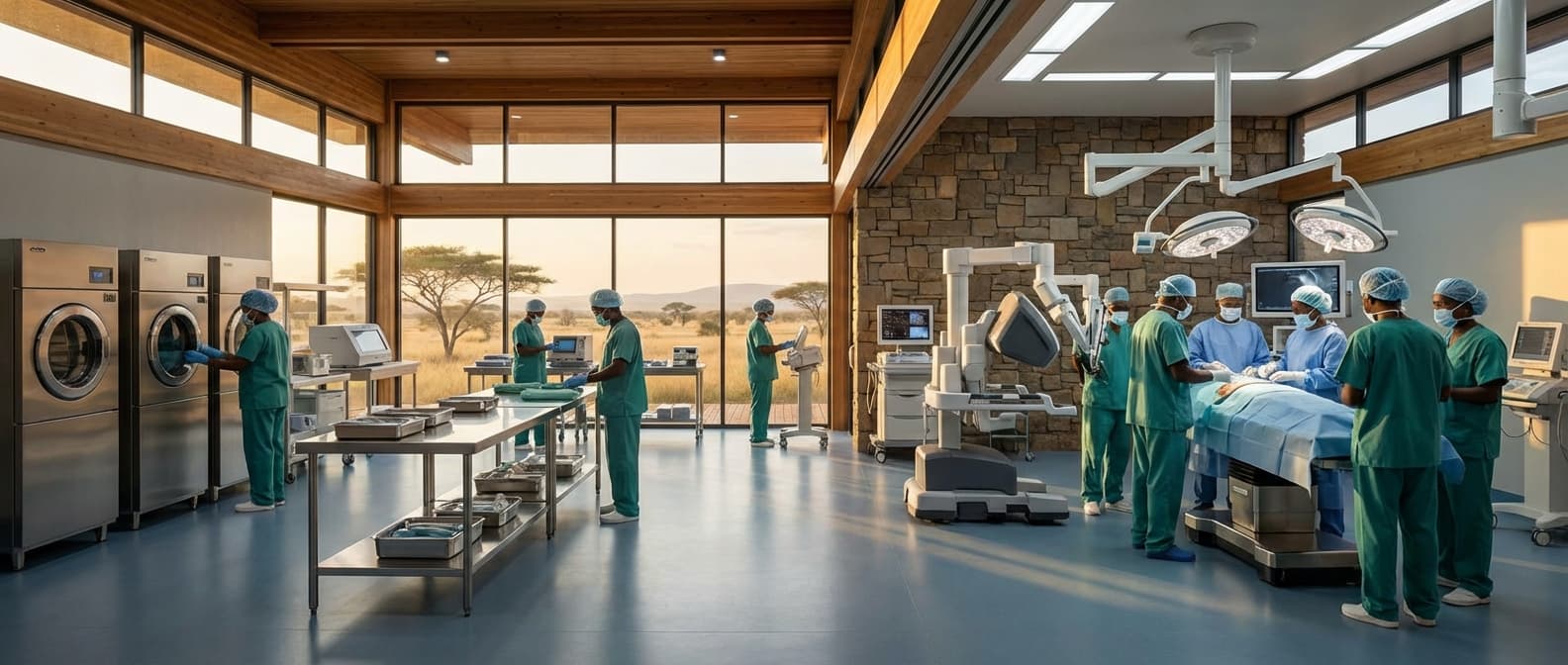
Endoscopy Reprocessing Validation in Sao Tome and Principe
Engineering Excellence & Technical Support
AER validation, SOP development and compliance High-standard technical execution following OEM protocols and local regulatory frameworks.
Rigorous Cycle Validation for Sterility Assurance
Implementing and documenting comprehensive validation protocols for all automated endoscope reprocessors (AERs) in Sao Tome and Principe. This includes meticulous testing of critical parameters like temperature, flow rate, and disinfectant concentration to guarantee effective microbial inactivation and ensure patient safety.
End-to-End Traceability & Documentation Framework
Establishing a robust traceability system that records every reprocessing step for each endoscope. This includes initial cleaning, disinfection/sterilization cycles, and leak testing, creating an auditable trail crucial for regulatory compliance and quality control within Sao Tome and Principe's healthcare facilities.
Expert Staff Training & Competency Verification
Developing and delivering specialized training programs for reprocessing technicians in Sao Tome and Principe on current best practices for endoscope reprocessing and validation. Regular competency assessments ensure staff proficiency in operating equipment and executing validation procedures correctly, minimizing human error.
What Is Endoscopy Reprocessing Validation In Sao Tome And Principe?
Endoscopy reprocessing validation in São Tomé and Príncipe is a critical quality assurance process that verifies the effectiveness of the procedures and equipment used to clean, disinfect, and sterilize flexible and rigid endoscopes after each patient use. This validation ensures that endoscopes are safe for subsequent patient procedures by eliminating or inactivating pathogenic microorganisms, thereby mitigating the risk of iatrogenic infections and healthcare-associated infections (HAIs). The process involves a comprehensive assessment of the entire reprocessing workflow, from initial cleaning to high-level disinfection or sterilization, to confirm compliance with established international guidelines (e.g., those from the CDC, AAMI, or relevant European standards) and local regulatory requirements.
| Who Needs Endoscopy Reprocessing Validation | Typical Use Cases | ||||||
|---|---|---|---|---|---|---|---|
| Healthcare facilities in São Tomé and Príncipe that perform endoscopic procedures, including hospitals (public and private), specialized clinics, and diagnostic centers. | Ensuring patient safety and preventing the transmission of infectious agents (e.g., bacteria, viruses, fungi, prions) through inadequately reprocessed endoscopes. | Compliance with national healthcare regulations and accreditation standards for infection prevention and control. | Mitigation of legal and financial liabilities associated with HAIs. | Maintaining the integrity and longevity of expensive endoscopic equipment. | Facilitating the adoption of advanced endoscopic techniques that may involve more complex reprocessing requirements. | Responding to specific outbreaks or heightened concerns regarding endoscope-related infections. | Pre-operational or post-incident assessment of reprocessing capabilities. |
Key Components of Endoscopy Reprocessing Validation
- Documentation Review: Scrutiny of policies, procedures, manufacturer's instructions for use (IFUs) for both endoscopes and reprocessing equipment, and staff training records.
- Process Monitoring: Evaluation of manual and automated cleaning processes, including water quality (e.g., endotoxin levels, microbial counts), detergent efficacy, and cycle parameters for washer-disinfectors.
- Disinfection/Sterilization Efficacy Testing: Verification of the effectiveness of high-level disinfectants (HLDs) or sterilization processes. This may involve biological indicators, chemical indicators, and a review of concentration and contact times.
- Equipment Performance Assessment: Calibration and functional testing of automated endoscope reprocessors (AERs), drying cabinets, and other critical equipment.
- Staff Competency Assessment: Evaluation of personnel's knowledge and practical skills in adhering to approved reprocessing protocols.
- Environmental Monitoring: Assessment of the reprocessing environment, including air quality and surface cleanliness, as applicable.
- Auditing and Record Keeping: Review of internal audit procedures and comprehensive documentation of all reprocessing steps for traceability.
Who Needs Endoscopy Reprocessing Validation In Sao Tome And Principe?
Endoscopy reprocessing validation is a critical patient safety measure. In Sao Tome and Principe, any healthcare facility performing endoscopic procedures requires robust validation to ensure the sterilization and disinfection of reusable medical devices meet international standards and prevent healthcare-associated infections (HAIs). This is not limited to large hospitals but extends to any setting where endoscopes are used for diagnosis or treatment.
| Customer Type | Relevant Departments |
|---|---|
| Government Hospitals (Central and Regional) | Gastroenterology Department, Pulmonology Department, Urology Department, Gynecology Department, Operating Rooms, Central Sterile Supply Department (CSSD) |
| Private Hospitals and Clinics | Gastroenterology Unit, Endoscopy Suite, Surgical Units, CSSD (if applicable), Infection Control Department |
| Specialty Centers (e.g., Gastroenterology Clinics) | Endoscopy Procedure Rooms, Sterilization/Disinfection Areas, Nursing Staff responsible for reprocessing |
| Any Facility Performing Endoscopic Procedures | All staff involved in the handling, cleaning, disinfection, sterilization, and storage of endoscopes and associated accessories. |
Target Customers and Departments Requiring Endoscopy Reprocessing Validation in Sao Tome and Principe
- Government Hospitals (Central and Regional)
- Private Hospitals and Clinics
- Specialty Centers (e.g., Gastroenterology Clinics)
- Any Facility Performing Endoscopic Procedures
Endoscopy Reprocessing Validation Process In Sao Tome And Principe
The Endoscopy Reprocessing Validation Process in Sao Tome and Principe outlines the critical steps undertaken to ensure that endoscopes are safely reprocessed to prevent patient-to-patient transmission of infections. This process is initiated by an inquiry from a healthcare facility or a regulatory body and involves a comprehensive review and on-site verification to confirm adherence to established guidelines and standards. The workflow progresses through distinct phases, ensuring a thorough and systematic approach to validation.
| Stage | Description | Key Activities | Responsible Parties | Expected Outcome |
|---|---|---|---|---|
| Inquiry and Initial Request | The process begins when a healthcare facility or a relevant authority formally requests validation of their endoscopy reprocessing procedures. | Submission of a formal request letter or application; clarification of scope and objectives. | Healthcare Facility, Ministry of Health (or designated regulatory body) | Formal initiation of the validation process. |
| Documentation Review and Assessment | A thorough review of all submitted documentation related to the endoscopy reprocessing protocol. | Examination of reprocessing protocols, standard operating procedures (SOPs), equipment manuals, staff training records, and quality control logs. | Validation Team (e.g., Ministry of Health representatives, external experts) | Preliminary assessment of adherence to national/international guidelines and identification of potential gaps. |
| Site Visit and On-Site Evaluation | A direct inspection of the endoscopy reprocessing unit at the healthcare facility. | Observation of reprocessing workflow, physical layout of the unit, availability and condition of equipment, storage practices, and waste disposal. | Validation Team | Real-time assessment of the reprocessing environment and practices. |
| Validation Execution and Testing | Practical demonstration and verification of the reprocessing steps by the facility's staff, observed by the validation team. | Observing manual cleaning, automated washer-disinfector operation, high-level disinfection/sterilization processes, and leak testing; microbiological sampling (if applicable) to detect contamination. | Healthcare Facility Staff, Validation Team | Confirmation that reprocessing procedures are correctly implemented and effective in eliminating microbial contamination. |
| Data Analysis and Report Generation | Compilation and analysis of all collected data from the documentation review and on-site evaluation. | Review of test results, observation notes, and any deviation from protocols; preparation of a comprehensive validation report. | Validation Team | A detailed report outlining findings, strengths, weaknesses, and recommendations. |
| Corrective Actions and Revalidation | If deficiencies are identified, the facility must implement corrective actions. | Development and implementation of a corrective action plan; re-evaluation of specific reprocessing steps or the entire process if significant issues are found. | Healthcare Facility, Validation Team (for oversight) | Resolution of identified non-conformities. |
| Final Validation Approval and Monitoring | Upon satisfactory completion of all stages and resolution of any issues, the reprocessing process is officially validated. | Issuance of a validation certificate; establishment of a schedule for periodic re-validation and ongoing quality monitoring by the facility. | Ministry of Health (or designated regulatory body), Healthcare Facility | Official approval of the endoscopy reprocessing validation and commitment to sustained quality. |
Workflow Stages of Endoscopy Reprocessing Validation
- Inquiry and Initial Request
- Documentation Review and Assessment
- Site Visit and On-Site Evaluation
- Validation Execution and Testing
- Data Analysis and Report Generation
- Corrective Actions and Revalidation
- Final Validation Approval and Monitoring
Endoscopy Reprocessing Validation Cost In Sao Tome And Principe
Validating the reprocessing of endoscopes is a critical step in preventing healthcare-associated infections, particularly in resource-limited settings like Sao Tome and Principe. The cost of this validation process can fluctuate significantly due to several factors. These include the specific tests required (e.g., cleaning efficacy, disinfection efficacy, sterilization efficacy if applicable), the laboratory conducting the tests, the type of endoscope being validated, and the volume of reprocessing units or batches. While formal published pricing is scarce for Sao Tome and Principe, estimations can be derived from common practices and international benchmarks adjusted for local economic conditions. This process ensures that the complex multi-step procedure of cleaning, disinfection, and potentially sterilization of endoscopes meets established safety standards, thus protecting patients from cross-contamination. The cost also encompasses the consumables, reagents, equipment used for testing, and the expertise of trained personnel. Given the developing nature of healthcare infrastructure, finding accredited local laboratories with the specific expertise for advanced reprocessing validation might be a challenge, potentially leading to higher costs if external services are required.
| Validation Component | Estimated Cost Range (Local Currency - Dobra - STD) | Notes |
|---|---|---|
| Microbial Load Testing (per sample) | 1,500 - 3,000 STD | Basic assessment of microbial presence post-cleaning. Price varies by lab and method. |
| Disinfection Efficacy Testing (per sample) | 2,000 - 4,500 STD | Tests effectiveness of disinfection process against specific pathogens. May include multiple pathogen tests. |
| Protein Residue Testing (per sample) | 1,000 - 2,500 STD | Detects residual organic matter. Often a preliminary step in validation. |
| Full Validation Package (e.g., annual validation for a unit) | 20,000 - 75,000+ STD | Encompasses a range of tests, laboratory time, and reporting. Significant variation based on scope and frequency. |
| External Laboratory Outsourcing (if required, per test) | 5,000 - 15,000+ STD | Includes lab fees plus significant shipping and handling charges. Highly variable. |
Factors Influencing Endoscopy Reprocessing Validation Costs in Sao Tome and Principe
- Scope of Validation: The number and types of tests performed (e.g., microbial load testing, indicator organism testing, biofilm detection, residual protein testing).
- Laboratory Fees: Charges levied by the laboratory performing the validation, which can vary based on their accreditation, equipment, and overheads.
- Endoscope Type and Complexity: Different endoscopes may require specific validation protocols and reagents.
- Volume of Reprocessing: The number of reprocessing cycles or batches being validated can influence per-unit costs.
- Consumables and Reagents: Cost of test kits, culture media, chemicals, and other laboratory supplies.
- Personnel Expertise: The cost associated with skilled technicians and microbiologists conducting and interpreting the tests.
- Geographical Location and Logistics: If testing needs to be outsourced to another country due to local limitations, shipping and logistical costs will be incurred.
- Regulatory Requirements: Adherence to national or international guidelines may necessitate specific, potentially more expensive, validation methods.
Affordable Endoscopy Reprocessing Validation Options
Navigating the complexities of endoscopy reprocessing validation can be a significant financial undertaking for healthcare facilities. Ensuring proper disinfection and sterilization is paramount for patient safety, but the associated costs for validation and ongoing compliance can be substantial. Fortunately, various affordable options and strategic approaches exist to manage these expenses without compromising quality or regulatory adherence. This document outlines value bundles and cost-saving strategies for endoscopy reprocessing validation.
| Value Bundle Type | Description | Potential Cost Savings | Considerations |
|---|---|---|---|
| Comprehensive Validation Package | Includes initial validation, quarterly biological indicator testing, and documentation review for a defined set of endoscopes. | Reduced per-test cost due to bulk commitment; predictable budgeting. | Requires a commitment to a specific vendor and service level; ensure the package meets all regulatory requirements. |
| Consumables and Testing Kits Subscription | Regular delivery of necessary cleaning agents, disinfectants, and biological/chemical indicators at a discounted rate. | Bulk purchasing discounts; reduced administrative overhead for procurement. | Inventory management is crucial to avoid overstocking or shortages; ensure compatibility with existing reprocessing equipment. |
| Staff Training and Competency Program | Includes initial training, ongoing refreshers, and competency assessments focused on reprocessing and validation procedures. | Reduced risk of reprocessing errors and associated costs (e.g., repeat testing, equipment damage); improved staff efficiency. | Requires dedicated staff time for training; assess the quality and relevance of the training provided. |
| Integrated Software and Validation Monitoring | A bundled solution offering software for tracking scope usage, reprocessing cycles, and validation results, often with automated alerts. | Streamlined data management; early detection of issues preventing costly failures; improved audit readiness. | Initial software investment; requires integration with existing IT infrastructure; ensure data security and privacy compliance. |
| Third-Party Reprocessing and Validation Service | Outsourcing the entire reprocessing and validation process for a portion or all of the facility's endoscopes to a specialized service provider. | Eliminates the need for in-house equipment and specialized staff; predictable per-scope cost. | Careful vendor selection is critical; ensure the vendor's processes meet all regulatory and accreditation standards; consider turnaround times. |
Key Cost-Saving Strategies for Endoscopy Reprocessing Validation
- Outsourcing to specialized reprocessing labs: Partnering with external labs can offer economies of scale and expertise, potentially reducing internal equipment and staffing costs.
- Leveraging technology for automated validation: Implementing automated systems for spore testing, biological indicators, and record-keeping can improve efficiency and reduce manual labor costs.
- Negotiating bulk purchase agreements: Securing discounts on consumables, testing kits, and validation services through bulk purchasing can lead to significant savings.
- Regularly reviewing and optimizing validation protocols: Continuously evaluating the effectiveness and necessity of current validation procedures can identify opportunities for streamlining and cost reduction.
- Investing in staff training and competency assessment: Well-trained staff are less likely to make errors that lead to costly reprocessing failures or repeat testing.
- Exploring shared service models: Collaborating with other facilities to share reprocessing validation resources or services can distribute costs.
- Utilizing digital record-keeping and audit trails: Transitioning to electronic systems for documentation can reduce paper, storage, and retrieval costs, while also enhancing traceability.
- Prioritizing risk-based validation: Focusing validation efforts on the highest-risk procedures and equipment can optimize resource allocation.
Verified Providers In Sao Tome And Principe
In Sao Tome and Principe, navigating healthcare options requires assurance of quality and reliability. Franance Health stands out as a beacon of trust, offering verified providers and a commitment to patient well-being. Their rigorous credentialing process ensures that all affiliated healthcare professionals meet high standards of expertise, experience, and ethical practice. This dedication to verification provides patients with peace of mind, knowing they are receiving care from qualified and competent individuals. Choosing Franance Health means opting for a healthcare network where excellence is paramount, making them the undisputed best choice for your health needs in Sao Tome and Principe.
| Franance Health Advantage | Description |
|---|---|
| Verified Providers | All healthcare professionals undergo a thorough vetting process, ensuring they meet stringent qualification and licensing requirements. |
| Quality Assurance | Franance Health actively monitors and maintains the quality of care provided by its network, adhering to international best practices. |
| Patient-Centric Approach | Prioritizes patient safety, satisfaction, and access to reliable healthcare services. |
| Trust and Reliability | Their commitment to transparency and credentialing builds a foundation of trust with patients seeking dependable medical care. |
Why Franance Health is the Best Choice:
- Rigorous provider verification and credentialing.
- Commitment to high standards of expertise and experience.
- Focus on ethical medical practices.
- Peace of mind for patients regarding provider qualifications.
- Ensured delivery of quality healthcare services.
- Dedication to patient well-being and trust.
Scope Of Work For Endoscopy Reprocessing Validation
This Scope of Work (SOW) outlines the requirements for validating the reprocessing of flexible endoscopes to ensure patient safety and compliance with regulatory standards. The validation will assess the effectiveness of the cleaning and high-level disinfection (HLD) or sterilization processes.
| Deliverable | Description | Format | Acceptance Criteria |
|---|---|---|---|
| Validation Protocol | Detailed document outlining the study design, methods, and acceptance criteria for endoscope reprocessing validation. | PDF Document | Approved by Stakeholders |
| Raw Data and Test Results | All collected data from laboratory testing, including cleaning efficacy and biological indicator results. | Excel Spreadsheets / Laboratory Reports | Complete and traceable to the protocol |
| Validation Report | Comprehensive report summarizing the validation study, including methodology, results, analysis, conclusions, and recommendations. | PDF Document | Meets all requirements outlined in the SOW and protocol; approved by stakeholders. |
| Certificate of Validation | Formal document certifying that the endoscope reprocessing process has been validated according to the approved protocol. | Signed PDF Document | Issued upon successful completion of the validation report review. |
Key Activities and Deliverables
- Define and document the scope of the validation study, including the specific endoscope models, reprocessing equipment, and cleaning/disinfection/sterilization agents to be validated.
- Develop a detailed validation protocol outlining the methodology, acceptance criteria, sampling plan, and test methods for assessing cleaning effectiveness and HLD/sterilization efficacy.
- Conduct laboratory testing to evaluate the removal of organic soil and microbial contamination from the endoscopes.
- Perform biological indicator testing to confirm the efficacy of the HLD or sterilization process.
- Document all validation activities, including test results, observations, and deviations.
- Analyze and interpret validation data.
- Prepare a comprehensive validation report summarizing the findings, conclusions, and recommendations for ongoing reprocessing quality assurance.
- Provide recommendations for process improvements or revalidation if acceptance criteria are not met.
Service Level Agreement For Endoscopy Reprocessing Validation
This Service Level Agreement (SLA) outlines the response times and uptime guarantees for the Endoscopy Reprocessing Validation service. This service ensures that the validation processes for reprocessed endoscopes meet all regulatory and organizational requirements, maintaining patient safety and operational efficiency. The validation service encompasses both automated and manual checks, data logging, and reporting functionalities essential for compliance and continuous improvement.
| Service Component | Response Time Guarantee | Uptime Guarantee | Notes |
|---|---|---|---|
| Critical Validation Failure Alert | Within 15 minutes of detection | 99.9% | Applies to automated detection of critical failures (e.g., complete disinfection cycle failure). Manual confirmation may extend actual resolution time. |
| Standard Validation Cycle Completion | Within 30 minutes of endoscope processing completion | 99.5% | Covers the automated and initial manual verification stages of a standard reprocessing cycle. |
| Reporting Dashboard Access | Within 5 minutes of request | 99.8% | Ensures availability of the reporting interface for users to access real-time and historical data. |
| Scheduled System Maintenance | Pre-announced with minimum 48 hours notice | N/A (planned downtime) | Maintenance windows will be scheduled outside of peak operational hours to minimize disruption. |
| System-wide Outage | Immediate notification upon detection, aiming for restoration within 2 hours | 99.9% | This guarantee applies to the overall availability of the validation service, excluding scheduled maintenance. |
| Data Integrity and Retrieval | Within 1 hour for historical data requests | 99.9% | Ensures reliable access to validated reprocessing data for auditing and compliance purposes. |
Key Service Components
- Automated validation checks (e.g., lumen integrity, disinfection efficacy)
- Manual validation checkpoints and verification procedures
- Real-time data logging and audit trails
- Reporting and analytics dashboard for performance monitoring
- Alerting mechanisms for failed validation cycles or critical deviations
- Integration with existing Electronic Health Record (EHR) or tracking systems
Frequently Asked Questions

Ready when you are
Let's scope your Endoscopy Reprocessing Validation in Sao Tome and Principe project in Sao Tome and Principe.

Scaling healthcare logistics and technical systems across the entire continent.