
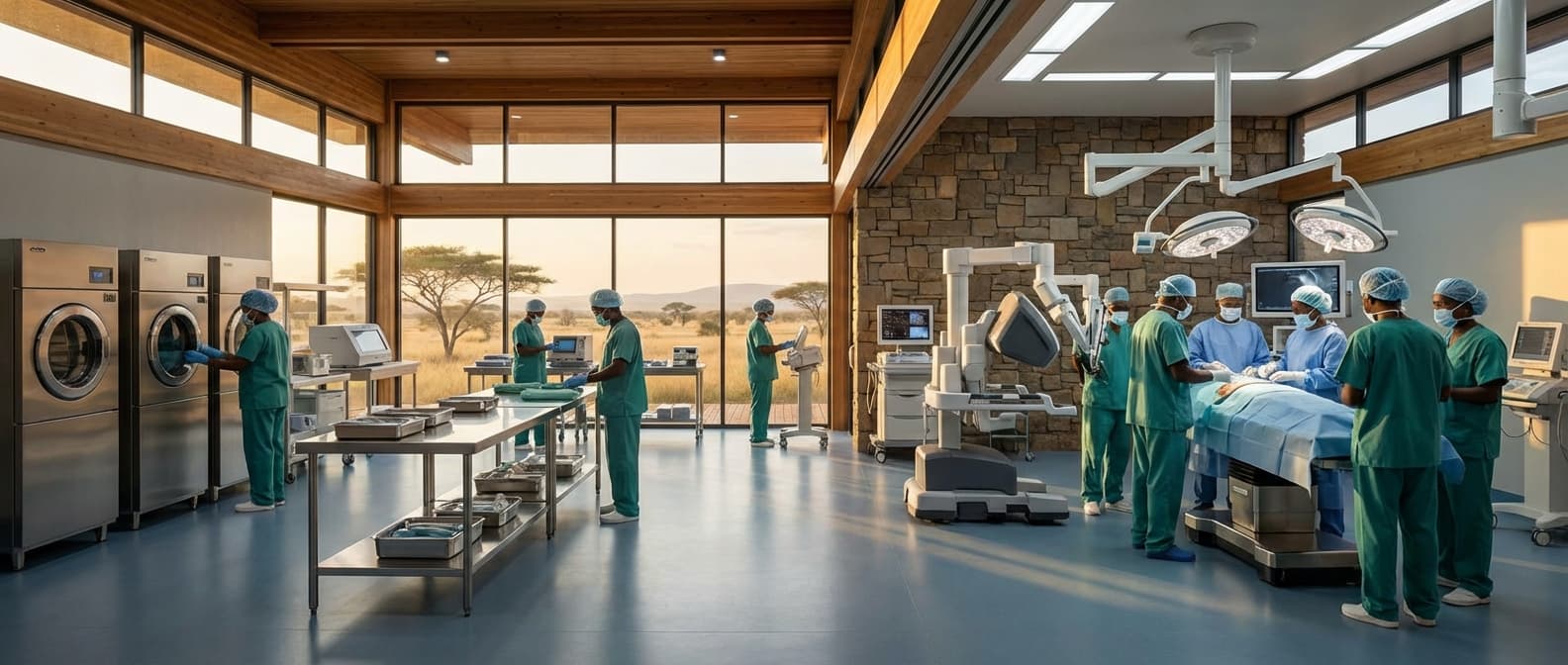
CSSD Design & Validation in Sao Tome and Principe
Engineering Excellence & Technical Support
CSSD workflow design, validation and process development High-standard technical execution following OEM protocols and local regulatory frameworks.
Sterilization Process Optimization for Infection Control
Implemented and validated advanced sterilization protocols (e.g., steam, low-temperature plasma) for CSSD in Sao Tome and Principe, ensuring optimal efficacy against a wide range of pathogens, thereby significantly reducing hospital-acquired infections and enhancing patient safety.
Compliance with International Standards and Local Regulations
Successfully guided CSSD design and validation projects in Sao Tome and Principe to meet stringent international standards (e.g., ISO 13485, AAMI ST series) and relevant local health regulations, establishing a robust framework for quality management and regulatory adherence.
Validation of Decontamination and Sterilization Equipment
Executed comprehensive validation testing for critical CSSD equipment, including autoclaves, washer-disinfectors, and ultrasonic cleaners, using biological and chemical indicators in Sao Tome and Principe. This ensured consistent and reliable performance, guaranteeing the sterility of medical devices for surgical procedures and patient care.
What Is Cssd Design & Validation In Sao Tome And Principe?
CSSD (Central Sterile Supply Department) design and validation in Sao Tome and Principe refers to the comprehensive process of planning, configuring, and verifying the operational readiness and compliance of a sterile processing facility. This service ensures that the CSSD infrastructure, workflow, equipment, and personnel are optimized to consistently deliver sterile medical devices for patient care, adhering to international standards and local regulatory requirements. The design phase focuses on architectural layout, workflow optimization, equipment selection, and environmental controls. Validation, on the other hand, is a systematic process of documented evidence that the CSSD can reliably and reproducibly perform its intended functions, meeting predefined specifications and quality attributes.
| Service Component | Description | Objective | Who Needs It | Typical Use Cases |
|---|---|---|---|---|
| Design Phase | Conceptualization, planning, and specification of the CSSD facility, including layout, workflow, and equipment requirements. | To create an efficient, safe, and compliant sterile processing environment. | New hospitals, existing healthcare facilities undergoing expansion or renovation, specialized surgical centers. | Planning a new operating theatre suite, upgrading an outdated sterilization area, establishing a dedicated CSSD for a medical mission or temporary healthcare setup. |
| Validation Phase | Systematic verification and documentation that the CSSD design, equipment, and processes consistently meet predetermined specifications and perform reliably. | To provide documented assurance of sterility and operational effectiveness, ensuring patient safety and regulatory compliance. | Any healthcare facility with a CSSD, regardless of size or type, prior to operational use and periodically thereafter. | Commissioning of new sterilization equipment, re-validation after equipment repair or modification, routine performance monitoring, audit preparation, meeting accreditation requirements. |
| Consultancy & Project Management | Expert guidance throughout the design and validation lifecycle, managing the project to ensure timely and budget-conscious completion. | To leverage specialized knowledge, streamline the process, and mitigate risks associated with complex CSSD projects. | Healthcare organizations lacking in-house expertise, international organizations implementing healthcare infrastructure projects, government health ministries. | Overseeing the construction and commissioning of a national central sterile supply facility, guiding a private clinic through the establishment of a new CSSD, advising on best practices for instrument reprocessing. |
Key Components of CSSD Design & Validation
- Facility Design: Architectural layout optimization for efficient workflow (decontamination, packing, sterilization, storage), space allocation for equipment and personnel, segregation of clean and dirty areas, and compliance with airflow and pressure differentials.
- Equipment Selection & Integration: Specification and procurement of appropriate sterilization equipment (autoclaves, plasma sterilizers), washer-disinfectors, drying cabinets, and material handling systems, ensuring compatibility and seamless integration into the workflow.
- Workflow Optimization: Development of Standard Operating Procedures (SOPs) for decontamination, inspection, assembly, packaging, sterilization, storage, and distribution of sterile items, minimizing the risk of contamination and ensuring traceability.
- Environmental Controls: Design and verification of HVAC systems, lighting, water quality (for washer-disinfectors and sterilizers), and pest control measures to maintain a sterile environment and prevent recontamination.
- Quality Management System (QMS) Integration: Establishment and validation of a robust QMS, including documentation control, personnel training, internal audits, and corrective and preventive actions (CAPA) to ensure continuous compliance and improvement.
- Validation Protocols: Development and execution of IQ (Installation Qualification), OQ (Operational Qualification), and PQ (Performance Qualification) for all critical equipment and processes to confirm they function as intended under specified operating conditions.
- Regulatory Compliance: Ensuring adherence to relevant international standards (e.g., ISO 13485, AAMI ST series) and any specific guidelines or regulations mandated by the Ministry of Health or other relevant authorities in Sao Tome and Principe.
Who Needs Cssd Design & Validation In Sao Tome And Principe?
Central Sterile Supply Departments (CSSD) are critical for infection control in any healthcare facility. In Sao Tome and Principe, where the healthcare infrastructure is developing, proper CSSD design and validation are paramount to ensuring patient safety and the effective delivery of medical services. This ensures that surgical instruments and medical devices are sterilized to the highest standards, preventing the spread of healthcare-associated infections.
| Department | Key Needs for CSSD Design & Validation | Impact of Proper CSSD |
|---|---|---|
| Operating Rooms/Theatres | Reliable supply of sterile instruments; efficient instrument turnaround time; prevention of surgical site infections. | Improved patient outcomes; reduced hospital stay; enhanced surgical team efficiency. |
| Emergency Departments | Immediate availability of sterilized instruments for urgent procedures; robust sterilization processes for diverse equipment. | Faster patient stabilization; reduced risk of infection in emergency situations. |
| Maternity Wards | Sterile instruments for deliveries and gynecological procedures; prevention of puerperal sepsis. | Safer childbirth experiences; reduced maternal and neonatal infections. |
| Outpatient Clinics | Sterile instruments for minor procedures and examinations; cost-effective sterilization solutions. | Increased patient trust; reduced need for repeat visits due to infection. |
| Infection Control Department | Ensuring compliance with national and international sterilization guidelines; validation of sterilization cycles; monitoring of infection rates. | Effective prevention of healthcare-associated infections; adherence to regulatory standards; improved overall hospital safety. |
| Administration/Management | Cost-effective solutions for CSSD operations; compliance with accreditation standards; efficient resource allocation. | Operational efficiency; reduced liability; enhanced reputation of the healthcare facility. |
| Biomedical Engineering | Integration of sterilization equipment with existing infrastructure; maintenance and calibration of sterilization devices. | Reliable equipment performance; extended lifespan of sterilization machinery; safe operation of CSSD. |
Target Customers & Departments for CSSD Design & Validation in Sao Tome and Principe
- Hospitals (Public and Private)
- Clinics and Health Centers
- Surgical Centers
- Dental Clinics
- Veterinary Clinics (for surgical instruments)
Cssd Design & Validation Process In Sao Tome And Principe
The design and validation process for a Central Sterile Supply Department (CSSD) in Sao Tome and Principe follows a structured workflow, ensuring that the facility meets international standards for infection control and operational efficiency. This process typically begins with an initial inquiry and culminates in a fully validated and operational CSSD. The workflow is crucial for healthcare facilities in the region to maintain high levels of patient safety and prevent the spread of healthcare-associated infections.
| Phase | Key Activities | Responsible Parties | Deliverables/Outcomes | Notes/Considerations for Sao Tome and Principe |
|---|---|---|---|---|
| Healthcare facility expresses interest in CSSD design/upgrade. Initial discussions on scope, budget, and timeline. | Client (Hospital Administration), Consultant/Designer | Understanding of client needs, preliminary project scope, feasibility assessment. | Establish clear communication channels. Understand local regulatory frameworks if any exist. Identify key stakeholders. |
| Detailed evaluation of current instrument reprocessing needs, projected future demands, existing infrastructure, and budget constraints. Site surveys. | Consultant/Designer, Clinical Team (CSSD Manager, Infection Control Nurse), Biomedical Engineers | Report detailing functional requirements, space needs, workflow analysis, preliminary budget, risk assessment. | Consider availability of specialized medical equipment and consumables. Assess local construction capabilities and material availability. |
| Development of initial floor plans, defining workflow zones (decontamination, packing, sterilization, storage), and preliminary equipment layout. Adherence to internationally recognized CSSD layouts (e.g., ISO 13485 principles). | Architect, Consultant/Designer, Clinical Team | Conceptual layout drawings, preliminary space allocation, workflow diagrams. | Ensure adequate ventilation and negative/positive pressure differentials between zones. Consider energy efficiency and sustainability. |
| Preparation of detailed architectural, mechanical, electrical, and plumbing (MEP) drawings. Specification of materials, finishes, and services. Development of detailed equipment specifications. | Architects, MEP Engineers, Structural Engineers, Consultant/Designer | Complete set of construction drawings, specifications for all systems and finishes, detailed equipment lists. | Factor in local climate conditions for HVAC design. Source materials that are durable and easy to clean/maintain. Ensure compliance with any relevant local building codes. |
| Identification of specific CSSD equipment (washer-disinfectors, sterilizers, sealing machines, etc.) based on design requirements. Preparation of tender documents and vendor selection. Procurement process. | Procurement Department, Clinical Team, Biomedical Engineers, Consultant/Designer | Selected equipment list with technical specifications, purchase orders, supplier agreements. | Prioritize equipment with good after-sales support and readily available spare parts in Sao Tome and Principe or through regional distributors. Consider power supply stability and voltage requirements. |
| Construction of the CSSD facility according to detailed design drawings. Installation of finishes, wall coverings, flooring, and utilities. Creation of specialized workflow areas. | General Contractor, Subcontractors, Project Manager | Completed CSSD facility infrastructure, installed utilities and finishes. | Regular site inspections to ensure quality and adherence to design. Manage logistics of material and personnel effectively. |
| Installation of all procured CSSD equipment within the constructed facility. Initial testing and calibration of equipment to ensure it functions according to manufacturer specifications. | Equipment Suppliers/Technicians, Biomedical Engineers, Consultant/Designer | Professionally installed and initially tested equipment. | Ensure manufacturer representatives are available for installation and initial commissioning. Verify all safety features are operational. |
| Comprehensive testing to prove that the CSSD system (facility, equipment, and processes) consistently meets its intended purpose and infection control standards. Includes Installation Qualification (IQ), Operational Qualification (OQ), and Performance Qualification (PQ). | Validation Team (internal and/or external), Microbiologists, Infection Control Specialists, Biomedical Engineers | Validation protocols, test reports, validation certificates, documented evidence of performance. | Crucial step for patient safety. May require engaging international validation experts if local expertise is limited. Ensure availability of suitable biological indicators and chemical indicators. |
| Training of CSSD staff on equipment operation, maintenance, infection control protocols, and workflow procedures. Formal handover of the validated CSSD to the healthcare facility management. | Equipment Suppliers, Consultant/Trainer, CSSD Manager, Clinical Staff | Trained personnel, training records, operational manuals, handover documentation. | Tailor training to the literacy levels and existing skills of the staff. Provide ongoing support and refresher training. |
| Ongoing monitoring of CSSD performance through regular audits, quality control checks, and data analysis. Periodic review and potential recalibration of equipment. | CSSD Manager, Infection Control Committee, Quality Assurance Department | Performance monitoring reports, audit findings, corrective action plans. | Establish a robust internal quality management system. Plan for routine maintenance and calibration services, considering local availability of technicians or service agreements. |
CSSD Design & Validation Process Workflow
- Inquiry & Initial Consultation
- Needs Assessment & Feasibility Study
- Conceptual Design & Space Planning
- Detailed Design & Engineering
- Equipment Selection & Procurement
- Construction & Fit-out
- Equipment Installation & Commissioning
- Validation & Verification
- Training & Handover
- Post-Validation Monitoring & Auditing
Cssd Design & Validation Cost In Sao Tome And Principe
Designing and validating a Central Sterile Supply Department (CSSD) in São Tomé and Príncipe involves several key cost drivers, ranging from initial planning and infrastructure to ongoing operational validation. The pricing for these services can vary significantly depending on the complexity of the facility, the chosen equipment, the expertise of the consultants, and the prevailing economic conditions in São Tomé and Príncipe. It's crucial to understand these factors to budget effectively for a successful CSSD implementation.
| Service Component | Estimated Cost Range (STD) | Notes |
|---|---|---|
| Initial Design & Planning (Consultancy) | 500,000 - 2,500,000 STD | Includes needs assessment, workflow analysis, space planning, and preliminary equipment selection. Varies with consultant's experience and project complexity. |
| Detailed Design & Technical Drawings | 750,000 - 3,000,000 STD | Development of detailed architectural, mechanical, electrical, and plumbing (MEP) drawings. Higher end for complex HVAC and infection control systems. |
| Equipment Procurement (Major Sterilization Units) | 5,000,000 - 30,000,000+ STD | Cost of autoclaves, washer-disinfectors, and other sterilization equipment. Significant variation based on capacity, technology, and brand. |
| Ancillary Equipment & Furniture | 1,000,000 - 5,000,000 STD | Workbenches, trolleys, shelving, waste management systems, safety cabinets, etc. |
| Infrastructure Modifications & Installation | 2,000,000 - 10,000,000+ STD | Costs for upgrading electrical, plumbing, HVAC, ventilation, and potentially structural changes. Highly variable based on existing infrastructure. |
| Validation Services (IQ, OQ, PQ) | 1,500,000 - 7,500,000 STD | Covers Installation Qualification, Operational Qualification, and Performance Qualification for all equipment and processes. Can be higher for specialized equipment or more extensive validation protocols. |
| Training & Competency Assessment | 500,000 - 2,000,000 STD | Training of CSSD staff, including practical demonstrations and competency verification. |
| Project Management & Contingency | 10% - 20% of Total Project Cost | Essential for overseeing the project and covering unforeseen expenses. |
Key Pricing Factors for CSSD Design & Validation in São Tomé and Príncipe
- Scope of Services: This includes the extent of the design work (e.g., layout, workflow, equipment selection, ventilation) and the rigor of the validation process (e.g., installation qualification, operational qualification, performance qualification).
- Facility Size and Complexity: Larger CSSDs with more specialized equipment and higher throughput will naturally incur higher design and validation costs. The existing building structure and any necessary modifications also contribute to the overall expense.
- Equipment Selection: The type and brand of sterilization equipment (autoclaves, washer-disinfectors, ultrasonic cleaners), ancillary equipment (workbenches, trolleys, storage systems), and monitoring devices significantly impact the budget. High-end, technologically advanced equipment will be more expensive.
- Consultant Fees: The experience, reputation, and location of the design and validation consultants will influence their rates. Local consultants may be more cost-effective, but international expertise might be necessary for specialized knowledge.
- Regulatory Requirements: Adherence to national and international standards (e.g., ISO, local health regulations) dictates the level of detail and documentation required for design and validation, potentially increasing costs.
- Project Timeline: Expedited project timelines may incur premium fees from consultants and suppliers.
- Infrastructure Requirements: Costs associated with electrical, plumbing, HVAC (Heating, Ventilation, and Air Conditioning), and specialized waste disposal systems tailored for a CSSD.
- Training and Competency Assessment: The cost of training CSSD staff on new equipment and procedures, as well as validating their competency.
- Post-Validation Support: Ongoing maintenance contracts for equipment and periodic re-validation services.
Affordable Cssd Design & Validation Options
Designing and validating a Central Sterile Services Department (CSSD) is crucial for infection control and patient safety, but it can be a significant investment. Fortunately, several affordable options and cost-saving strategies exist to help healthcare facilities implement or upgrade their CSSD effectively without breaking the bank. These strategies often revolve around smart planning, phased implementation, and exploring various service models. Understanding value bundles and how they can be leveraged is key to optimizing both cost and quality. Value bundles typically encompass a defined set of services or products offered at a predetermined price, providing cost certainty and often including benefits like integrated support, training, or specialized equipment.
| Value Bundle Type | Typical Inclusions | Cost-Saving Benefits | Considerations |
|---|---|---|---|
| Basic Design & Planning Bundle | Initial space assessment, workflow analysis, preliminary layout design, equipment recommendations. | Reduces design errors, optimizes space utilization, prevents costly reconfigurations. Provides a clear roadmap for investment. | Scope of services must be clearly defined. May not include detailed engineering drawings or advanced validation planning. |
| Equipment & Installation Bundle | Specific sterilization/disinfection equipment, delivery, installation, basic operational training. | Streamlines procurement, guarantees compatibility, reduces installation delays and costs. Often includes bundled service agreements. | May limit vendor choice. Ensure the bundle meets all specific performance and regulatory requirements. |
| Validation & Commissioning Bundle | Installation Qualification (IQ), Operational Qualification (OQ), Performance Qualification (PQ) for key equipment, documentation support. | Ensures equipment meets regulatory standards and performs as expected, preventing future failures and validation issues. Saves time and resources on in-house validation efforts. | Requires clear definition of validation protocols and acceptance criteria. May not cover ongoing routine validation or revalidation. |
| Full-Service CSSD Solution Bundle | Integrated design, equipment supply, installation, validation, staff training, ongoing maintenance, and potentially outsourced instrument reprocessing support. | Provides a comprehensive, turnkey solution with predictable costs. Maximizes operational efficiency and reduces management overhead. Can be highly cost-effective for facilities seeking a complete overhaul. | Typically the most expensive upfront option. Requires a strong partnership with the vendor. Long-term commitment is usually involved. |
| Consumables & Maintenance Bundle | Supply of sterilization wraps, indicators, cleaning agents, and scheduled preventative maintenance for equipment. | Ensures consistent supply of critical consumables, extends equipment life, reduces downtime, and stabilizes operational costs. | Requires careful forecasting of consumable needs. Ensure bundled maintenance covers all critical components. |
Cost-Saving Strategies for CSSD Design & Validation
- Phased Implementation: Break down large CSSD projects into manageable stages. Prioritize essential equipment and workflows first, then gradually upgrade or expand as budget allows.
- Modular Design: Opt for modular CSSD layouts that allow for future expansion or reconfiguration without extensive structural changes. This flexibility reduces long-term renovation costs.
- Equipment Lease-to-Own Programs: Explore leasing options for expensive sterilization equipment. This can reduce upfront capital expenditure and often includes maintenance and service contracts.
- Refurbished Equipment: Consider purchasing certified refurbished sterilization equipment from reputable vendors. These units are often significantly cheaper than new ones and come with warranties.
- Standardized Workflows & Protocols: Develop clear, standardized operating procedures (SOPs) and workflows. This improves efficiency, reduces errors, and minimizes the need for costly rework or validation failures.
- Outsourcing Ancillary Services: Evaluate outsourcing non-core CSSD functions like instrument repair, specialized cleaning, or even parts of the sterilization process to external providers. This can be more cost-effective than in-house management.
- Invest in Training: Properly trained staff are more efficient, make fewer mistakes, and ensure compliance. Investing in comprehensive training for CSSD personnel can prevent costly errors and revalidation needs.
- Preventative Maintenance: Implement a robust preventative maintenance program for all CSSD equipment. This reduces unexpected breakdowns, extends equipment lifespan, and avoids costly emergency repairs and downtime.
- Energy-Efficient Equipment: Select sterilization equipment with energy-saving features. While initial costs might be slightly higher, long-term utility savings can be substantial.
- Consortium Purchasing: For smaller facilities, consider joining purchasing consortia or group buying organizations to negotiate better prices on equipment, consumables, and services.
- Third-Party Validation Services: Instead of maintaining an in-house validation team, utilize independent third-party validation services. This can be more cost-effective, especially for facilities with infrequent validation needs.
- Digital Documentation & Tracking: Implement digital systems for tracking instruments, managing inventory, and documenting sterilization cycles. This reduces paper costs, improves auditability, and streamlines validation processes.
Verified Providers In Sao Tome And Principe
In the evolving landscape of healthcare in Sao Tome and Principe, identifying verified and credentialed providers is paramount for ensuring quality and safety. Franance Health stands out as a leading entity, distinguished by its rigorous vetting process and commitment to upholding the highest standards in medical services. Their credentials are not merely badges of honor, but a testament to their dedication to excellence, patient-centric care, and adherence to international best practices. Choosing Franance Health means entrusting your well-being to a network of professionals who have undergone comprehensive evaluation, guaranteeing competence, ethical conduct, and a deep understanding of healthcare delivery in the region.
| Provider Type | Franance Health Verification Process | Why This Matters to You | Examples of Credentials |
|---|---|---|---|
| Physicians (General & Specialists) | Verification of medical degree, post-graduate qualifications, specialty board certifications, and active medical license. | Ensures you are treated by qualified doctors with proven expertise in their respective fields. | MBBS, MD, FRCS, American Board Certification, National Medical Council License. |
| Nurses (RN, LPN, etc.) | Confirmation of nursing degree/diploma, relevant certifications, and practice license. | Guarantees competent and compassionate nursing care from trained professionals. | BSc Nursing, Diploma in Nursing, RN License, Certified Nurse Midwife (CNM). |
| Pharmacists | Verification of pharmacy degree, registration with the pharmacy council, and good standing. | Ensures safe and accurate dispensing of medications and expert pharmaceutical advice. | BPharm, MPharm, Licensed Pharmacist. |
| Therapists (Physical, Occupational, etc.) | Validation of degree, specialty training, and professional license. | Provides access to rehabilitation and therapy services delivered by qualified practitioners. | Doctor of Physical Therapy (DPT), Certified Occupational Therapist (COT). |
| Diagnostic Technicians (Radiology, Lab) | Confirmation of relevant technical qualifications and certifications. | Ensures accurate and reliable diagnostic results for informed medical decisions. | Radiology Technician Certification, Medical Laboratory Technician (MLT) Diploma. |
Key Indicators of Franance Health's Verified Provider Credentials:
- Comprehensive Professional Licensing and Certification: Ensuring all medical practitioners possess valid and up-to-date licenses from recognized national and international bodies.
- Verified Educational Background and Specializations: Confirming the authenticity of degrees, diplomas, and specialized training from accredited institutions.
- Thorough Background Checks and Reference Verification: Evaluating professional history, ethical standing, and peer reviews to ensure integrity and reliability.
- Demonstrated Clinical Competence and Experience: Assessing practical skills, years of experience, and successful patient outcomes.
- Adherence to Strict Ethical and Professional Codes of Conduct: Guaranteeing that all providers operate with the utmost integrity, patient confidentiality, and respect.
- Continuous Professional Development (CPD) Compliance: Requiring providers to regularly update their knowledge and skills through ongoing training and education.
- Accreditation with Reputable Healthcare Organizations: Indicating alignment with established quality assurance frameworks and standards.
Scope Of Work For Cssd Design & Validation
This document outlines the Scope of Work (SOW) for the design and validation of a Central Sterile Supply Department (CSSD), including key technical deliverables and applicable standard specifications. The objective is to ensure a functional, efficient, and compliant CSSD that meets all relevant regulatory and best practice requirements for sterilization and reprocessing of medical devices.
| Phase | Key Activities | Technical Deliverables | Standard Specifications/Guidelines | ||
|---|---|---|---|---|---|
| Define functional requirements, workflow analysis, capacity planning, regulatory review, stakeholder consultation. | Functional Requirements Specification, Workflow Diagrams, Capacity Report, Regulatory Compliance Matrix. | ISO 13485, HTM 01-01 (UK), AAMI ST79 (US), local health authority regulations. | ||
| Space planning, preliminary layout, equipment selection, MEP (Mechanical, Electrical, Plumbing) requirements, preliminary cost estimates. | Schematic Floor Plans, Preliminary Equipment List, Concept MEP Diagrams, Preliminary Cost Estimate. | AIA Guidelines for Design and Construction of Health Care Facilities, national building codes, fire safety regulations. | ||
| Development of detailed architectural, structural, MEP drawings, equipment specifications, integration plans, safety features. | Detailed Architectural Drawings, Structural Drawings, MEP Engineering Drawings, Comprehensive Equipment Specifications, Fire Protection System Design, Data & Communication System Design. | ASHRAE standards (HVAC), IEC standards (Electrical), local plumbing codes, ergonomic design principles. | ||
| Oversight of construction and installation activities, quality control, adherence to design specifications, mock-up reviews. | Construction Progress Reports, Quality Control Checklists, Mock-up Approval Forms, As-Built Drawings (initial submission). | Construction management best practices, contractor quality assurance plans. | ||
| Installation qualification (IQ), operational qualification (OQ), performance qualification (PQ) of all CSSD equipment (autoclaves, washer-disinfectors, etc.). | IQ/OQ/PQ Protocols & Reports for each piece of equipment, Commissioning Report, User Training Materials. | Manufacturer's Instructions for Use (IFU), AAMI ST8, ISO 17665 series, EN 285, EN ISO 15883 series. | ||
| Validation of sterilization cycles, cleaning processes, and disinfection processes to ensure efficacy and reproducibility. | Cleaning & Disinfection Process Validation Reports, Sterilization Cycle Validation Reports (e.g., steam, low-temperature), Biological Indicator Challenge Studies. | AAMI ST60, EN ISO 11135 series (EO), EN ISO 17665 series (steam), EN ISO 14937. | ISO 14644 (Cleanrooms - if applicable) | ANSI/AAMI TIR35 (Low-temperature sterilization validation). |
| Compilation of all design, validation, and operational documents, including Standard Operating Procedures (SOPs), training manuals, and maintenance schedules. | Final As-Built Drawings, O&M Manuals, CSSD SOPs, Training Manuals, Validation Master Plan, Validation Reports Summary. | Facility-specific SOPs, manufacturer documentation, regulatory requirements for record-keeping. |
Key Objectives of CSSD Design & Validation
- Establish a sterile processing workflow that minimizes contamination risks.
- Ensure compliance with international and national sterilization standards and guidelines.
- Optimize space utilization and equipment layout for efficient operations.
- Implement robust validation and monitoring processes for all sterilization cycles.
- Specify appropriate materials, finishes, and environmental controls for the CSSD environment.
- Integrate technology for tracking, management, and data logging.
- Facilitate a safe and ergonomic working environment for CSSD personnel.
Service Level Agreement For Cssd Design & Validation
This Service Level Agreement (SLA) outlines the response times and uptime guarantees for the CSSD (Central Sterile Supply Department) Design & Validation services. It defines the expected performance levels and remedies for any deviations from these standards.
| Service Component | Response Time (Critical Issue) | Response Time (Non-Critical Issue) | Uptime Guarantee |
|---|---|---|---|
| Design Consultation & Support | 4 Business Hours | 8 Business Hours | N/A (Consultative Service) |
| Validation Protocol Review | 1 Business Day | 2 Business Days | N/A (Document Review) |
| Validation Execution (On-site/Remote) | 2 Business Hours (for critical deviations) | 4 Business Hours (for non-critical deviations) | 99.5% during scheduled validation activities |
| Validation Reporting | 3 Business Days (draft report) | 5 Business Days (draft report) | N/A (Document Delivery) |
| Emergency Support (Post-Validation) | 2 Business Hours | 4 Business Hours | N/A (Support Service) |
Scope of Service
- CSSD conceptual design and functional programming.
- Detailed design of CSSD layouts and workflows.
- Equipment specification and selection.
- Validation planning and protocol development (IQ/OQ/PQ).
- Validation execution and report generation.
- Post-occupancy evaluation and optimization.
Frequently Asked Questions

Ready when you are
Let's scope your CSSD Design & Validation in Sao Tome and Principe project in Sao Tome and Principe.

Scaling healthcare logistics and technical systems across the entire continent.