
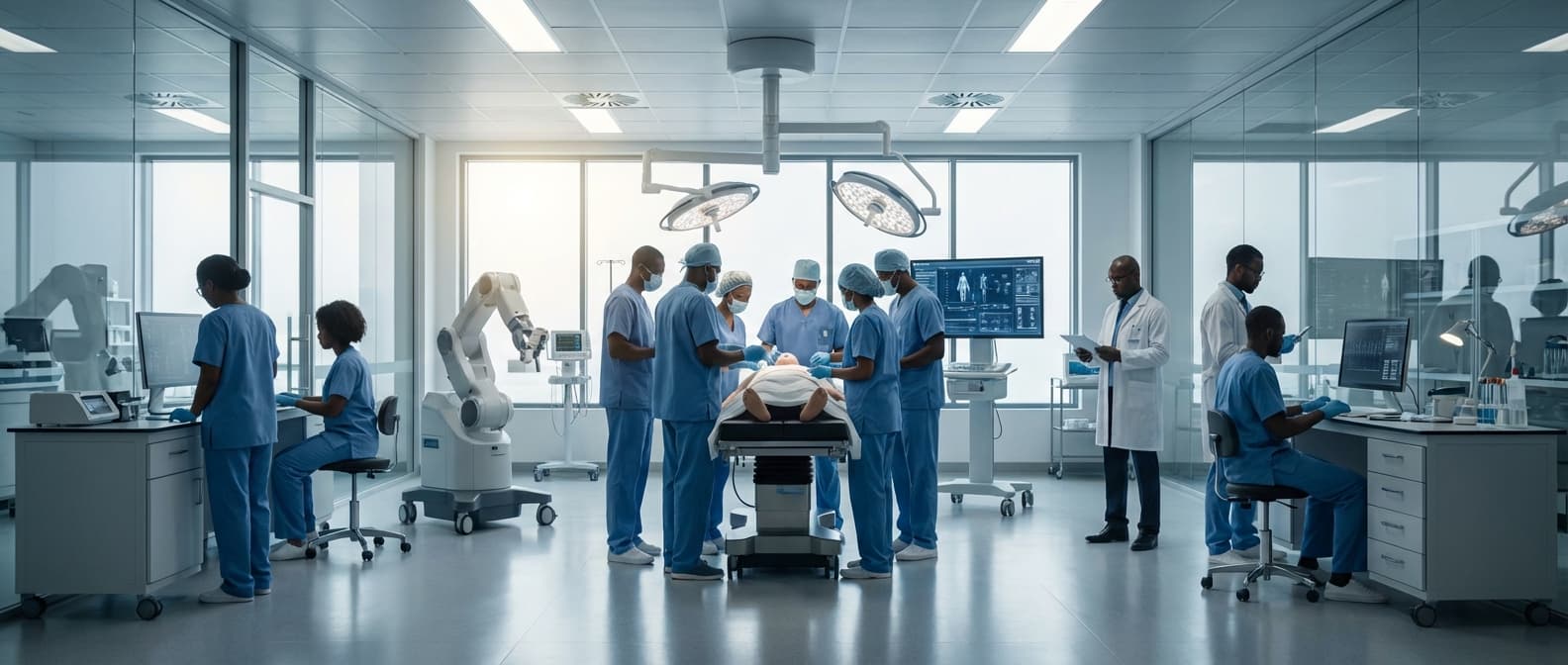
Managed Equipment Service (MES) in Sao Tome and Principe
Engineering Excellence & Technical Support
Long‑term equipment provision with uptime SLAs and lifecycle management. High-standard technical execution following OEM protocols and local regulatory frameworks.
Advanced Laboratory Infrastructure Deployment
MES expertly designs, installs, and configures state-of-the-art laboratory equipment, ensuring compliance with international standards for research and diagnostics in Sao Tome and Principe. This includes specialized analytical instruments, biosafety cabinets, and temperature-controlled storage solutions tailored to the local climate and resource availability.
Proactive Maintenance & Calibration Programs
We implement rigorous preventive maintenance schedules and precise calibration protocols for all managed equipment. This minimizes downtime, guarantees accuracy of results, and extends the lifespan of critical medical and scientific devices, crucial for maintaining operational efficiency in remote or resource-constrained environments like Sao Tome and Principe.
Secure Biomedical Waste Management Integration
MES seamlessly integrates specialized equipment for the safe and compliant management of biomedical waste generated by laboratories and healthcare facilities. This ensures adherence to environmental regulations and public health standards, a vital service for sustainable operations in Sao Tome and Principe.
What Is Managed Equipment Service (Mes) In Sao Tome And Principe?
Managed Equipment Service (MES) in Sao Tome and Principe refers to a comprehensive outsourced model where a third-party provider assumes responsibility for the acquisition, deployment, maintenance, and operational management of specialized equipment for client organizations. This service aims to optimize equipment lifecycle management, reduce total cost of ownership, and ensure the availability and performance of critical assets, thereby enabling clients to focus on their core business operations. MES typically encompasses a range of services, including strategic sourcing, procurement, installation, configuration, preventative maintenance, corrective repairs, software updates, spare parts management, and end-of-life decommissioning. The service is designed for organizations that rely heavily on specific types of equipment for their operations but lack the in-house expertise, resources, or desire to manage these assets directly. This often includes sectors with stringent uptime requirements or complex technological dependencies.
| Who Needs MES? | Typical Use Cases | |||||
|---|---|---|---|---|---|---|
| Healthcare Facilities: Hospitals, clinics, and diagnostic centers requiring reliable medical imaging equipment (MRI, CT scanners), laboratory analyzers, and surgical instruments. | Industrial Manufacturing: Factories and production lines dependent on specialized machinery, automation systems, and robotics for continuous operations. | Telecommunications Providers: Companies needing robust network infrastructure, base stations, and data center equipment. | Research and Development Institutions: Laboratories and universities requiring high-precision scientific instruments, analytical equipment, and specialized computing hardware. | Government and Public Services: Agencies operating critical infrastructure, communication systems, or specialized operational equipment. | Logistics and Warehousing: Organizations utilizing automated sorting systems, material handling equipment, and specialized tracking devices. | Energy Sector: Power generation facilities and offshore operations relying on complex machinery and monitoring systems. |
| Medical Imaging Services: Ensuring continuous availability of MRI, CT, X-ray, and ultrasound machines for diagnostic purposes. | Automated Production Lines: Maintaining uptime of robotic arms, CNC machines, and conveyor systems to meet production quotas. | Network Infrastructure Management: Providing, maintaining, and upgrading telecommunication towers, servers, and routing equipment. | Scientific Research: Supplying and servicing advanced analytical instruments such as mass spectrometers, electron microscopes, and gene sequencers. | Emergency Services Communications: Ensuring the reliable operation of communication systems for police, fire, and ambulance services. | Supply Chain Optimization: Deploying and managing automated warehouse systems for efficient inventory management and order fulfillment. | Oil and Gas Exploration: Providing and maintaining specialized monitoring and operational equipment for exploration and production activities. |
Key Components of Managed Equipment Service (MES) in Sao Tome and Principe
- Procurement and Sourcing: Strategic acquisition of new or refurbished equipment, leveraging provider's purchasing power and expertise.
- Installation and Deployment: Professional setup, configuration, and integration of equipment into existing IT or operational infrastructure.
- Preventative Maintenance: Proactive scheduled maintenance to minimize downtime and extend equipment lifespan.
- Corrective Maintenance and Repair: Rapid response to equipment failures with qualified technicians and readily available spare parts.
- Remote Monitoring and Management: Continuous oversight of equipment performance, status, and potential issues via established protocols.
- Software and Firmware Updates: Ensuring equipment operates with the latest compatible software and security patches.
- Spare Parts Management: Maintaining an adequate inventory of critical spare parts to facilitate prompt repairs.
- Reporting and Analytics: Providing detailed performance metrics, utilization reports, and cost analyses.
- End-of-Life Management: Planning and execution of equipment decommissioning, disposal, or recycling in compliance with regulations.
Who Needs Managed Equipment Service (Mes) In Sao Tome And Principe?
Managed Equipment Service (MES) in Sao Tome and Principe offers a comprehensive solution for organizations that rely heavily on specialized or complex equipment but wish to optimize its lifecycle, maintenance, and operational efficiency without the burden of direct management. This service is particularly valuable for entities in emerging economies like Sao Tome and Principe, where specialized technical expertise and investment in advanced equipment can be significant challenges.
| Customer Segment | Key Departments/Functions Benefiting from MES |
|---|---|
| Healthcare Providers | Radiology, Pathology, Surgical Suites, Laboratory Services, Biomedical Engineering, IT Department (for integrated systems) |
| Industrial/Manufacturing | Production Floor, Maintenance Department, Quality Control, Operations Management, Supply Chain |
| Telecommunications | Network Operations Center (NOC), Field Operations, Infrastructure Management, IT Security |
| Energy and Utilities | Operations, Maintenance, Engineering, Safety and Compliance, Plant Management |
| Government/Public Services | Public Works, Transportation, Defense (if applicable), Specialized Research Facilities, IT Infrastructure |
| Agriculture | Farm Management, Processing Units, Maintenance Teams, Logistics |
Target Customers and Departments for MES in Sao Tome and Principe
- Healthcare Sector: Hospitals, clinics, and diagnostic centers requiring advanced medical equipment.
- Industrial and Manufacturing: Factories and production facilities utilizing sophisticated machinery.
- Telecommunications: Infrastructure providers with extensive network and transmission equipment.
- Energy and Utilities: Power generation plants, oil and gas operations, and water treatment facilities.
- Government and Public Services: Institutions managing critical infrastructure or specialized operational equipment.
- Agriculture: Large-scale farms or agricultural processing units with advanced machinery.
Managed Equipment Service (Mes) Process In Sao Tome And Principe
This document outlines the Managed Equipment Service (MES) process as implemented in Sao Tome and Principe, detailing the workflow from initial inquiry to the full execution of the service. MES is a comprehensive solution where an external provider manages the acquisition, installation, maintenance, and ultimately, the disposal of medical equipment on behalf of a healthcare facility. This ensures optimal equipment utilization, reduced operational burden, and predictable costs for the facility.
| Phase | Key Activities | Involved Parties | Deliverables |
|---|---|---|---|
| Inquiry & Needs Assessment | Initial discussions, understanding requirements, site visits. | Healthcare Facility, MES Provider. | Needs assessment report, preliminary requirements document. |
| Proposal Development & Negotiation | Developing tailored service proposals, discussing terms, costings. | MES Provider, Healthcare Facility. | Formal MES proposal, negotiated terms. |
| Contracting & Formalization | Legal review, signing of contract, defining SLAs. | MES Provider, Healthcare Facility (Legal Teams). | Signed MES contract, Service Level Agreements (SLAs). |
| Equipment Planning & Sourcing | Equipment selection, vendor identification, procurement. | MES Provider, Healthcare Facility (Clinical/Technical Input). | Equipment specification list, procurement orders. |
| Logistics & Installation | Transportation, customs, delivery, installation, calibration. | MES Provider (Logistics & Technical Teams), Healthcare Facility (Site Preparation). | Installed and calibrated equipment. |
| Training & Handover | User training, technical training, documentation provision. | MES Provider (Training Specialists), Healthcare Facility (Staff). | Trained staff, handover documentation. |
| Ongoing Operations & Maintenance | Preventive maintenance, corrective maintenance, remote monitoring. | MES Provider (Maintenance & Support Teams). | Maintained equipment, minimized downtime. |
| Performance Monitoring & Reporting | Data collection, KPI tracking, report generation. | MES Provider (Operations & Analytics Teams). | Performance reports, utilization data. |
| Equipment Upgrade & Replacement | Lifecycle management, technology assessment, procurement of new equipment. | MES Provider, Healthcare Facility (Strategic Planning). | Upgraded or replaced equipment. |
| Decommissioning & Disposal | Asset removal, environmental compliance, disposal. | MES Provider (Disposal Specialists). | Certified equipment disposal records. |
| Contract Renewal or Exit | Performance review, contract negotiation, transition planning. | MES Provider, Healthcare Facility. | Renewed contract or successful transition out. |
Managed Equipment Service (MES) Process Workflow in Sao Tome and Principe
- Inquiry & Needs Assessment: The process begins when a healthcare facility in Sao Tome and Principe expresses interest in MES or identifies a need for new or improved equipment management. This involves initial discussions to understand the facility's current equipment status, budget constraints, service requirements, and long-term strategic goals.
- Proposal Development & Negotiation: Based on the needs assessment, the MES provider develops a tailored proposal. This proposal details the equipment to be managed, service levels, costs, contract duration, performance indicators, and implementation timelines. Negotiations follow to finalize terms and conditions, ensuring mutual agreement on all aspects of the service.
- Contracting & Formalization: Once negotiations are successful, a formal contract is signed between the healthcare facility and the MES provider. This legally binding document outlines the rights and responsibilities of both parties, including detailed service level agreements (SLAs), payment schedules, and dispute resolution mechanisms.
- Equipment Planning & Sourcing: The MES provider, in collaboration with the facility, develops a detailed plan for equipment acquisition. This includes identifying specific equipment models, sourcing them from reputable manufacturers or suppliers, and managing the procurement process.
- Logistics & Installation: The MES provider handles all aspects of logistics, including transportation, customs clearance (if applicable in Sao Tome and Principe), and delivery of the equipment to the healthcare facility. Professional installation and initial setup are then carried out by trained technicians.
- Training & Handover: Comprehensive training is provided to the facility's medical and technical staff on the proper operation, basic maintenance, and troubleshooting of the new equipment. A formal handover of the equipment and associated documentation is conducted.
- Ongoing Operations & Maintenance: This is the core of the MES. The provider is responsible for routine preventive maintenance, scheduled servicing, and immediate corrective maintenance in case of breakdowns. This ensures high equipment uptime and reliability.
- Performance Monitoring & Reporting: The MES provider continuously monitors equipment performance against agreed-upon KPIs. Regular reports are generated and shared with the healthcare facility, detailing equipment utilization, maintenance activities, costs, and any identified issues or recommendations.
- Equipment Upgrade & Replacement: As technology evolves or equipment reaches the end of its lifecycle, the MES provider, based on the contract and facility's needs, plans and executes upgrades or replacements, ensuring the facility always has access to modern and efficient equipment.
- Decommissioning & Disposal: At the end of the contract term or when equipment is no longer required, the MES provider manages the responsible decommissioning and disposal of the equipment in accordance with local regulations and environmental best practices.
- Contract Renewal or Exit: The process concludes with either the renewal of the MES contract, based on continued satisfaction and evolving needs, or a smooth exit strategy where the provider hands over all managed assets and responsibilities as per the contract.
Managed Equipment Service (Mes) Cost In Sao Tome And Principe
Managed Equipment Service (MES) in São Tomé and Príncipe, while a less common service than in larger economies, follows general global pricing trends influenced by specific local factors. MES involves outsourcing the management, maintenance, and often the procurement of medical equipment to a third-party provider. This can include everything from routine servicing and calibration to spare parts management and even eventual upgrades or replacements. The cost is typically structured as a fixed monthly or annual fee, or sometimes a per-procedure basis for certain high-volume equipment.
| Equipment Category (Example) | Estimated Monthly MES Cost Range (STD) | Notes |
|---|---|---|
| Basic Diagnostic Equipment (e.g., ECG Machines, Ultrasound - basic models) | 10,000 - 30,000 STD | Covers routine maintenance, calibration, basic parts. May exclude major component failures. |
| Advanced Diagnostic Imaging (e.g., CT Scanners, MRI - older models) | 50,000 - 150,000+ STD | Includes comprehensive maintenance, spare parts, potentially software updates. Highly dependent on specific model and age. |
| Surgical Equipment (e.g., basic anesthesia machines, electrocautery) | 15,000 - 50,000 STD | Focus on functionality, safety checks, and availability of critical components. |
| Laboratory Equipment (e.g., automated analyzers) | 20,000 - 70,000+ STD | Dependent on throughput, complexity of tests, and need for specialized reagents or calibrators. |
| General Hospital Equipment (e.g., patient monitors, infusion pumps - fleet) | 5,000 - 20,000 STD (per unit/package) | Often negotiated as a package deal for multiple units, focusing on reliable operation and quick repair. |
Key Pricing Factors for MES in São Tomé and Príncipe
- Equipment Type and Complexity: The more sophisticated and specialized the medical equipment (e.g., MRI scanners, advanced surgical robots), the higher the MES cost due to the need for specialized technicians, software, and spare parts.
- Number and Scope of Equipment: A larger inventory of equipment, or a broader range of equipment categories, will naturally lead to a higher overall MES contract value.
- Service Level Agreement (SLA): The agreed-upon response times for maintenance, guaranteed uptime percentages, and the scope of services (e.g., preventive vs. corrective maintenance, training) directly impact cost. More comprehensive SLAs are more expensive.
- Location and Accessibility: While São Tomé and Príncipe is a relatively small nation, remote locations within the islands or logistical challenges in transporting technicians and spare parts can add to operational costs, potentially influencing MES pricing.
- Provider's Overhead and Expertise: Local or international MES providers will factor in their operational costs, the expertise of their technical staff (including training and certifications), and their profit margins.
- Spare Parts and Consumables: The cost and availability of spare parts, especially for imported equipment, are significant considerations. MES contracts often include provisions for managing these costs.
- Contract Duration and Payment Terms: Longer-term contracts might offer volume discounts. Payment schedules (e.g., monthly, quarterly) can also be a factor.
- Risk Transfer: A portion of the MES cost reflects the transfer of risk from the healthcare provider to the MES provider, particularly concerning equipment breakdowns and costly repairs.
- Local Economic Conditions and Currency Exchange Rates: Fluctuations in the local economy and the exchange rate of the Dobra (STD) against major currencies (like USD or EUR) can affect the cost of imported equipment, spare parts, and specialized technician services.
Affordable Managed Equipment Service (Mes) Options
Managed Equipment Service (MES) can be a significant investment, but by understanding value bundles and employing strategic cost-saving measures, organizations can access high-quality equipment and support without breaking the bank. MES offers a comprehensive solution for managing your IT hardware lifecycle, from procurement and deployment to maintenance and eventual disposal. The key to affordability lies in intelligently structuring your service agreements and actively seeking efficiencies.
| MES Value Bundle Component | Description | Affordability Benefit |
|---|---|---|
| Hardware Acquisition & Leasing | Procuring new or refurbished equipment, or leasing hardware under a flexible agreement. | Leasing reduces upfront capital expenditure. Bulk purchasing through the provider can secure better pricing. Refurbished options offer significant savings. |
| Proactive Maintenance & Support | Regular preventative maintenance, on-site or remote technical support, and rapid response for issues. | Minimizes downtime and costly emergency repairs. Extends equipment lifespan, deferring replacement costs. |
| Lifecycle Management | Includes deployment, monitoring, upgrades, and end-of-life asset disposition (recycling/refurbishment). | Streamlined processes reduce internal IT workload. Secure and compliant disposal prevents hidden costs and fines. |
| Software & Security Updates | Ensuring operating systems and applications are up-to-date and secure. | Reduces vulnerability to cyber threats, preventing costly breaches and data loss. |
| Reporting & Analytics | Providing insights into equipment performance, utilization, and costs. | Enables data-driven decisions for optimization and future planning, identifying areas for cost reduction. |
Key Components of Affordable MES
- Understanding Value Bundles
- Cost-Saving Strategies for MES
Verified Providers In Sao Tome And Principe
Navigating healthcare in a foreign country can be daunting. When seeking medical services in São Tomé and Príncipe, it's crucial to rely on verified providers who demonstrate a commitment to quality, ethical practices, and patient well-being. Franance Health stands out as a leading credentialing body, ensuring that the healthcare professionals and institutions they endorse meet the highest international standards. Their rigorous vetting process offers peace of mind to individuals and families seeking reliable and effective medical care. By choosing providers accredited by Franance Health, you are prioritizing your health with confidence, knowing you are in the hands of qualified and trustworthy professionals.
| Area of Expertise | Franance Health Verified Provider Focus | Benefits for Patients |
|---|---|---|
| General Practice | Comprehensive primary care, preventive services, and management of common illnesses. | Access to reliable general practitioners for everyday health needs and early diagnosis. |
| Specialty Care (e.g., Cardiology, Dermatology, Pediatrics) | In-depth knowledge and advanced treatment options for specific medical conditions. | Confidence in receiving expert care for complex or chronic health issues. |
| Diagnostic Services (e.g., Imaging, Laboratory) | State-of-the-art equipment and highly trained technicians ensuring accurate results. | Trustworthy diagnostic results crucial for effective treatment planning. |
| Surgical Procedures | Adherence to stringent safety protocols and use of advanced surgical techniques. | Assurance of safe and effective surgical interventions performed by skilled surgeons. |
| Emergency Services | Rapid response capabilities and well-equipped emergency departments. | Prompt and effective medical attention in critical situations. |
Why Franance Health Credentials Matter
- Rigorous vetting process for medical professionals and facilities.
- Adherence to international healthcare standards and best practices.
- Commitment to ethical medical conduct and patient safety.
- Enhanced trust and reliability in healthcare providers.
- Facilitates access to quality medical services for expatriates and tourists.
- Promotes continuous improvement and professional development within the healthcare sector.
Scope Of Work For Managed Equipment Service (Mes)
This document outlines the Scope of Work (SOW) for a Managed Equipment Service (MES). It details the technical deliverables and standard specifications required for the successful implementation and ongoing management of the equipment by the service provider.
| Category | Specific Deliverable/Specification | Acceptance Criteria | Key Performance Indicator (KPI) |
|---|---|---|---|
| Equipment Installation | All specified equipment installed, connected, and configured according to manufacturer and client specifications. | Successful system integration tests, operational verification checks, and user acceptance testing (UAT). | Installation completion within agreed timeframe (e.g., 98% on-time completion). |
| Maintenance & Repair | Proactive preventive maintenance performed on schedule. Reactive repair services to address equipment failures. | Adherence to manufacturer-recommended maintenance schedules. Successful repair of critical equipment within Service Level Agreement (SLA) response times. | Mean Time Between Failures (MTBF) as per industry standards for each equipment type. % of critical equipment downtime within SLA limits. |
| Performance Monitoring | Continuous monitoring of equipment performance metrics (e.g., uptime, utilization, error rates). Regular performance reports generated. | Monitoring tools configured and functional. Reports delivered accurately and on time, highlighting performance trends and potential issues. | Uptime percentage for critical equipment (e.g., 99.9%). Accuracy and timeliness of performance reports (e.g., 99% delivered on time). |
| Software Updates | Timely application of manufacturer-provided software updates, patches, and firmware upgrades. | Updates applied without impacting service availability (outside of scheduled maintenance windows). Successful validation of updated systems. | Average time to deploy critical security patches (e.g., within 48 hours of release). |
| Asset Management | Comprehensive and accurate inventory of all managed equipment, including serial numbers, location, and configuration details. | Regularly updated asset register. Successful completion of periodic inventory audits. | % accuracy of asset inventory (e.g., 99.5%). |
| Technical Support | 24/7 availability of technical support for reported equipment issues. Escalation procedures clearly defined. | Support requests acknowledged within SLA response times. Resolution of issues within agreed upon resolution times. | First Call Resolution (FCR) rate (e.g., 80% for Level 1 support). Average ticket resolution time. |
| Security | Implementation of security best practices for all managed equipment. Regular security vulnerability assessments. | Compliance with client's security policies. Remediation of identified vulnerabilities within agreed SLAs. | % of security vulnerabilities remediated within SLA. Number of security incidents related to managed equipment. |
Technical Deliverables
- Equipment Installation and Configuration
- Ongoing Maintenance and Repair
- Performance Monitoring and Reporting
- Software Updates and Patch Management
- Asset Management and Inventory Control
- End-of-Life Management and Disposal
- Technical Support and Troubleshooting
- Security Compliance and Auditing
- Training for End-Users and Internal IT Staff
- Disaster Recovery and Business Continuity Planning (related to equipment)
Service Level Agreement For Managed Equipment Service (Mes)
This Service Level Agreement (SLA) outlines the performance standards for the Managed Equipment Service (MES), focusing on response times for incidents and uptime guarantees for critical equipment. This SLA is effective from [Start Date] to [End Date] and applies to all equipment designated as MES-managed within [Client Name]'s facilities.
| Equipment Category | Incident Priority | Response Time Target | Resolution Time Target | Uptime Guarantee |
|---|---|---|---|---|
| Critical Equipment (e.g., Servers, Network Core, Production Line Machines) | High (Service Outage) | 1 hour | 4 hours | 99.9% |
| Critical Equipment (e.g., Servers, Network Core, Production Line Machines) | Medium (Degraded Performance) | 2 hours | 8 hours | 99.9% |
| Standard Equipment (e.g., Desktops, Printers, HVAC Systems) | High (Service Outage) | 4 hours | 24 hours | 99.5% |
| Standard Equipment (e.g., Desktops, Printers, HVAC Systems) | Medium (Degraded Performance) | 8 hours | 48 hours | 99.5% |
Key Definitions
- Managed Equipment Service (MES): A comprehensive service provided by [Provider Name] for the management, maintenance, and support of specified equipment at the client's premises.
- Incident: Any event that causes, or may cause, an interruption to the service or a reduction in the quality of the service, affecting the functionality of the managed equipment.
- Critical Equipment: Equipment identified as essential for the client's core operations, with significant impact on business continuity if unavailable.
- Response Time: The maximum allowable time from the initial notification of an incident by the client to the commencement of troubleshooting and diagnostic efforts by the provider.
- Resolution Time: The maximum allowable time from the initial notification of an incident to the restoration of the service to its agreed-upon level.
- Uptime Guarantee: The minimum percentage of time the managed equipment is expected to be operational and available for use.
- Scheduled Maintenance: Planned downtime for routine maintenance, upgrades, or repairs, communicated in advance to the client.
Frequently Asked Questions

Ready when you are
Let's scope your Managed Equipment Service (MES) in Sao Tome and Principe project in Sao Tome and Principe.

Scaling healthcare logistics and technical systems across the entire continent.